



Rating and value of works, drawings, paintings by Anne Vallayer-Coster

Key takeaways
- Anne Vallayer-Coster’s oil-on-canvas paintings sell for between €2,670 and €2,100,000, with a “Still Life with an Alabaster Vase” selling for €2,100,000 in 2023.
- The first woman elected to the Royal Academy in 1770, she became head of Marie-Antoinette’s painting studio and produced more than 120 works renowned for their exceptional technical precision.
- Her watercolors and drawings are valued between €1,335 and €40,000, while her still lifes are experiencing a significant rise in value on the current market, with prices on the rise.
If you own a work by or after the artist Anne Vallayer-Coster, and would like to know its value, our state-approved experts and auctioneers will offer you their appraisal services.
Our specialists will carry out a free appraisal of your work, and provide you with a precise estimate of its value on the current market.
Then, if you wish to sell your work, we will direct you to the best possible arrangement to obtain the optimum price.
Rating and value of the artist Anne Vallayer-Coster
Anne Vallayer-Coster is an artist known to still life enthusiasts. Now, prices for her works are rising at the auctioneers' gavel.
Her oils on canvas are particularly prized, especially by French buyers, and the price at which they sell on the art market ranges from €1,335 to €2,100,000, a significant delta but one that speaks volumes about the value that can be attributed to the artist's works.
In 2023, his oil on canvas Nature morte au vase d'albâtre rempli de fleurs avec sur une table plusieurs espèces de fruits comme ananas, pêche, raisin sold for €2,100,000, whereas it was estimated at between €60,000 and €1,000,000. Its value has risen sharply.
Order of value from a simple work to the most prestigious
Technique used | Result |
|---|---|
Drawing - watercolor | From €1,335 to €40,000 |
Oil on canvas | From €2,670 to €2,100,000 |
Estimate in less than 24h
Style and technique by artist Anne Vallayer-Coster
Anne Vallayer-Coster, one of the leading figures in 18th-century still life painting, is distinguished by her impeccable technical mastery and realistic approach.
Her compositions, whether floral, fruit or maritime, are characterized by an astonishing precision in the representation of textures and details.
She uses bright colors and sharp contrasts to render light in a natural way, a trait she owes to her studies of perspective and drawing, but also to meticulous observation of nature.
Her talent for capturing the subtle nuances of objects, whether the brilliance of a shell or the softness of a petal, is the result of a meticulous technique, often compared to that of the Flemish masters.
Vallayer-Coster excels in the use of light and shadow, creating an illusion of depth that gives his still lifes an almost palpable dimension.
The composition of his works is characterized by a careful, sometimes almost geometric organization of elements within a harmonious framework, where each object seems to have been placed to maximize its visual impact.
She succeeds in conveying an impression of lightness and fluidity despite the richness of her subjects, a feat that testifies to her acute sense of balance.
The influence of the great traditions of Dutch and Flemish painting, combined with her own genius, makes Anne Vallayer-Coster an essential figure in the genre.
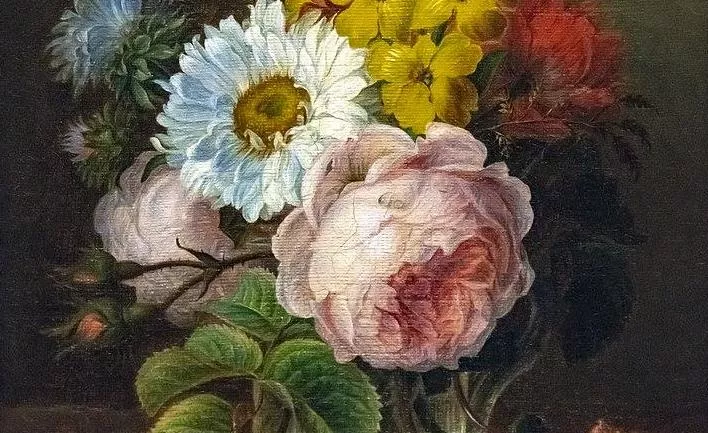
Anne Vallayer-Coster, head of the painting cabinet of the French Queen Marie-Antoinette
Anne Vallayer-Coster was born in Paris in 1744. Her father, a goldsmith who worked for the Hôtel Royal des Gobelins, passed on to her a taste for art as well as a certain refinement.
During her childhood, she spent a lot of time at the royal manufactory, where she had the opportunity to discover tapestry; many of her still lifes were inspired by cartoons and hangings created at the royal manufactory.
She was trained in painting and the technical aspects of perspective and drawing by her father, but also probably by the painter Françoise Basseporte, who was responsible for drawing the medicinal plants in the Jardin Royal, but also by the painter of tableaux de marine Claude Joseph Vernet.
At the age of 26, she submitted two still lifes to the Académie Royale, where she was elected a member in 1770. This recognition marked the start of her career.
The following year, her works were exhibited at the Salon, and critics, including Diderot, hailed her talent. In 1775, it was a painting of flowers that brought her to the attention of the general public, bringing her closer to Queen Marie-Antoinette.
Thanks to this royal patronage, she obtained a studio at the Louvre and became the Queen's drawing teacher, even earning the title of head of the painting cabinet.
Married to a lawyer, her marriage contract was signed in the presence of the Queen, underlining the closeness of this relationship.
After 1789, the overthrow of the Ancien Régime deprived her of financial and social support. However, Empress Josephine continued to buy her paintings.
Vallayer-Coster continued her production and exhibition activity, notably at the Manufacture des Gobelins.
In 1814, she donated her Nature morte aux homards to Louis XVIII, reaffirming her support for the royal family. She died in 1818, leaving a legacy marked by over 120 works, testifying to her essential contribution to the art of still life.
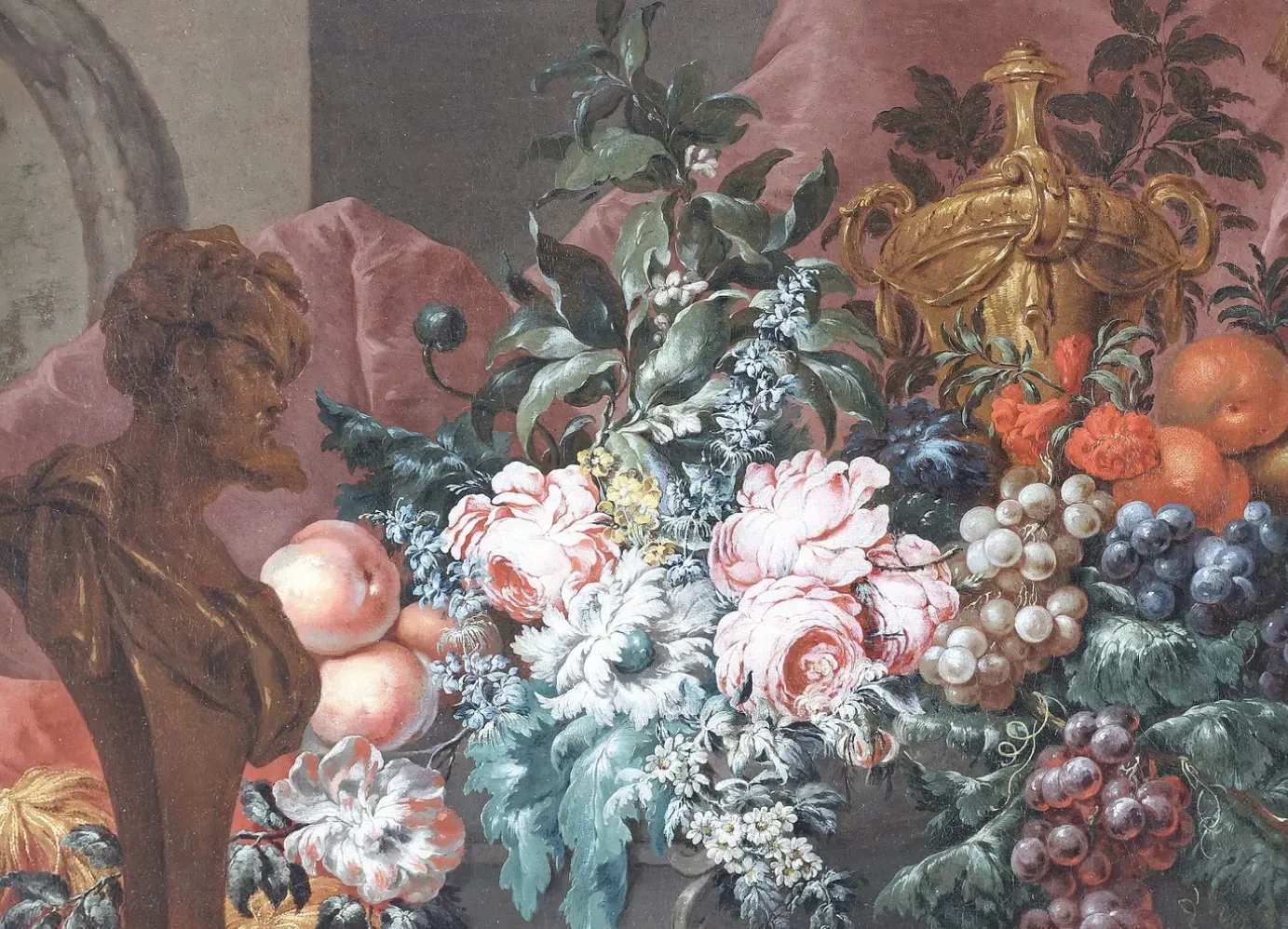
Focus on Nature morte aux homards, Anne Vallayer Coster
The work Nature morte aux homards by Anne Vallayer-Coster perfectly embodies the technical mastery and striking realism that characterize her work.
In this composition, the painter succeeds in capturing the very essence of the material, whether it's the splinters of a lobster shell or the delicate texture of the shellfish and vegetables arranged around the crustacean.
The skilfully measured light brings out the brilliance of the lobsters' brilliant red, creating plays of reflections and shadows that give depth to the scene.
Far from being simply a representation of inanimate objects, this painting becomes a subtle dialogue between matter and light, a reflection on the fragility and beauty of ephemeral things.
Vallayer-Coster breaks free from the frozen aspect one might expect from a classic still life, infusing its elements with life, an almost palpable energy.
Every object seems to vibrate under the artist's brush, every detail, meticulously observed, contributing to a composition that, though rigorous, exudes a refined elegance.
This masterpiece testifies not only to her technical skill but also to her ability to transform everyday elements into a celebration of natural beauty, an approach that made her one of the great figures of the genre in the 18th century.
The legacy of Anne Vallayer Coster about her period
The legacy of Anne Vallayer-Coster is deeply rooted in the history of 18th-century painting, marking a significant milestone in the evolution of the still life.
As the first woman elected to the Académie Royale, she broke with the conventions of her time, asserting her place among the masters of the genre.
Her technically impeccable still lifes are the fruit of meticulous observation and a refined understanding of materials. They have helped to elevate still life to the status of a major art form, far removed from mere exercises in reproduction.
His works have not only enriched the Académie's repertoire, but have also inspired generations of painters, both in France and beyond.
Vallayer-Coster's influence is felt in the way light and texture are treated in still-life painting, and his impact on late 18th-century art is undeniable.
She stands out among notable academicians such as Élizabeth Vigée le Brun, Adélaïde Labille Guiard or Louise Adélaïde Desnos.
Moreover, her role as drawing teacher at court and her proximity to Marie-Antoinette enabled her work to radiate beyond the artistic circle, helping to spread her style to salons and royal collections.
Her name remains associated with the nobility of art and precision, and as such she paved the way for many women painters of subsequent generations, consolidating her legacy as a pioneer of the genre.
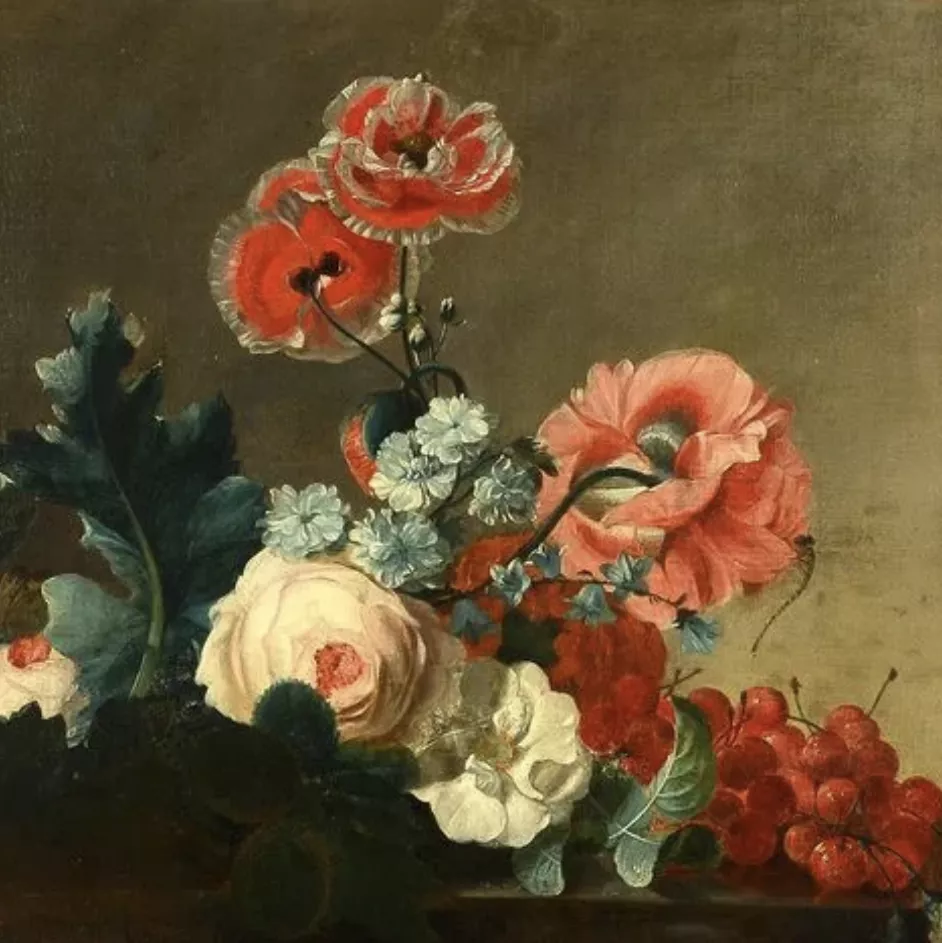
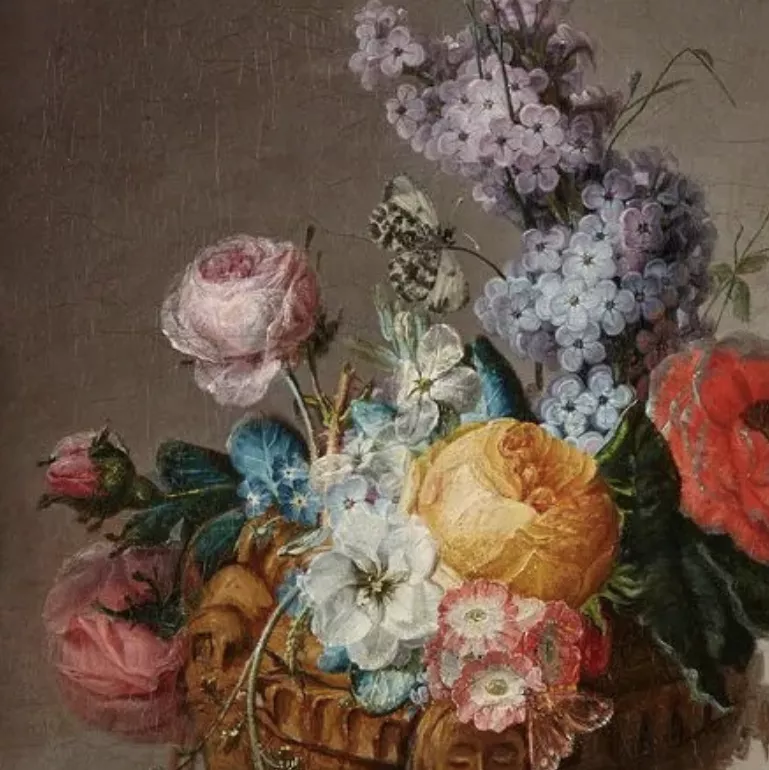
Vallayer Coster's price at auction
Anne Vallayer-Coster's price at auction testifies to the growing recognition of her talent and the importance of her work.
Long relegated to the shadow of the great masters of her time, she is now experiencing a genuine revaluation.
Her still lifes, characterized by precise execution and great finesse in the depiction of objects, are attracting sustained interest from collectors and institutions.
Auction sales have seen high prices appear for her canvases, particularly for those featuring flowers, fruit and luxury objects, themes that were dear to the French Court.
Some of her paintings, once scarcely prized, now fetch significant sums, a sign that her status as a recognized artist has been firmly established in the art world.
The rarity of her works on the market, coupled with their exceptional quality, makes them coveted by collectors and museums alike.
Witness the record-breaking sales of her greatest masterpieces in recent years, proving that her long-ignored artistic legacy is now firmly rooted in the heritage of French art history.
Recognizing the artist's signature
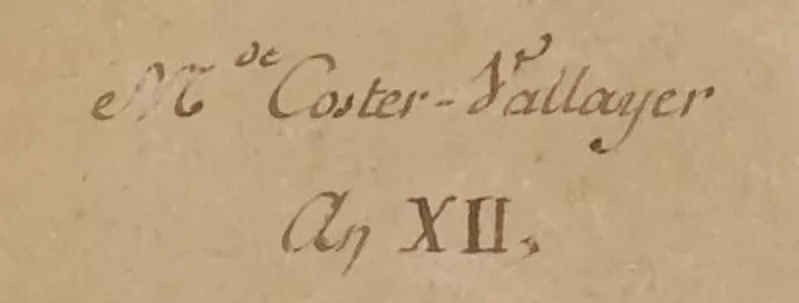
Anne Vallayer Coster doesn't necessarily sign her works. Copies may exist, which is why expertise remains important.
Knowing the value of a work
If you happen to own a work byAnne Vallayer-Coster or after the artist, don't hesitate to request a free valuation using our form on our website.
A member of our team of experts and licensed auctioneers will contact you promptly to provide you with an estimate of the market value of your work, not forgetting to send you ad hoc information about it.
If you are considering selling your work, you will also be accompanied by our specialists in order to benefit from alternatives for selling it at the best possible price, taking into account market inclinations.
Estimate in less than 24h
Works from the same period sold at auction

Estimated 600 - 800 €
Alexandre Gabriel DECAMPS (1803-1860) Two children reading.

Estimated 2 000 € - 4 000 €
DANISH SCHOOL circa 1790, entourage of Jens JUEL Presumed portrait of Sophie of Hesse-Cassel, Queen Consort of Denmark.

Estimated 1500 - 3000 €
Louis de Caullery (1580-1621), Oil on copper.

Estimated 1500 - 3500€
Neapolitan school, late 18th century, oil on canvas

Estimated 500 - 800
Late 17th-century Dutch school, entourage of Bonaventura Peteers (1614-1651), oil on canvas
Discover in the same theme

The value of furniture by renowned cabinetmaker Adam Weiswei...
If you own a piece of furniture by or after cabinetmaker Adam Weisweiler, our experts and auctioneers will be happy to advise you.
Learn more >

Rating and value of paintings by Rachel Ruysch
Rachel Ruysch is a Dutch artist of the Golden Age who produced still lifes that are highly valued at auction.
Learn more >

Rating and value of paintings by Marguerite Gérard
Marguerite Gérard is a painter and engraver, a pupil of Fragonard. Today, her works are highly valued.
Learn more >

Secure site, anonymity preserved

Auctioneer approved by the State

Free and certified estimates
Frequently asked questions
-
Who was Anne Vallayer-Coster, and what was her historical context?Anne Vallayer-Coster (1744–1818) was one of the leading figures in 18th-century still-life painting. Born in Paris, she was the first woman elected to the Royal Academy in 1770 and was appointed head of Queen Marie Antoinette’s painting studio. Her legacy includes more than 120 works, and she paved the way for many female painters who followed.
-
What is the value of a work by Anne Vallayer-Coster?The prices of Anne Vallayer-Coster’s works vary considerably depending on the medium and quality: drawings and watercolors range from €1,335 to €40,000, while her oil paintings on canvas fetch between €2,670 and €2,100,000. Her market value has been rising sharply for several years, reflecting the growing appreciation of her work in the art market.
-
How can you authenticate a work by Anne Vallayer-Coster?Anne Vallayer-Coster did not always sign her works, and copies may exist. To authenticate a work, we recommend that you request a free, no-obligation appraisal from Auctie's. Our auctioneers and certified experts will analyze your painting and provide you with an accurate estimate within 48 hours.
-
Is this a good time to sell a work by Vallayer-Coster?Yes, this is an excellent time to sell a work by Anne Vallayer-Coster. Her market value has been on a steady rise for several years, with collectors and institutions increasingly recognizing her talent. The scarcity of her works on the market, combined with their exceptional quality, makes them particularly sought-after pieces.
-
How does the appraisal process work at Auctie's?Appraisals at Auctie's are free and non-binding. Simply fill out a form on our website with information about your artwork and photos of it. A certified expert or auctioneer will contact you promptly and provide you with an estimate of the market value within 48 hours. If you decide to sell, our specialists will work with you to secure the best terms for the sale.
