



Rating and value of paintings by Rosalba Carriera

Key takeaways
- Rosalba Carriera (1673–1757), a Venetian portrait artist and pioneer of pastel painting, has seen her market value skyrocket, with works fetching up to 1.25 million euros at auction.
- Prices vary depending on the medium: miniatures range from €730 to €78,600, drawings from €1,120 to €635,700, and paintings from €2,500 to €1,250,000.
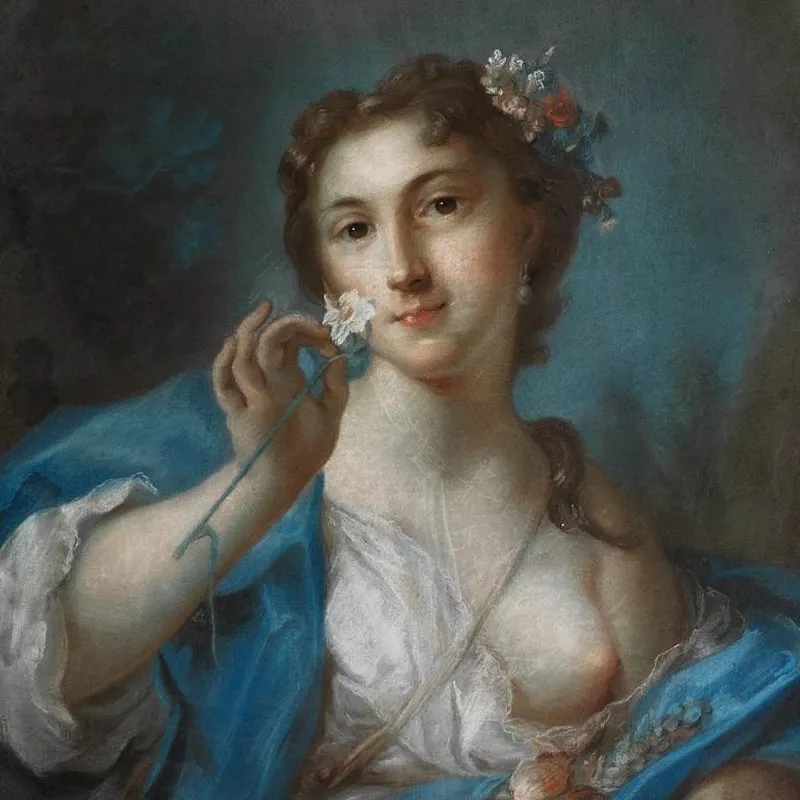
- A specialist in court portraits in pastel on blue paper, she mastered a technique of thin layers that created velvety skin tones and the diffused light characteristic of Venetian Rococo.
If you are in possession of a work by or after painter Rosalba Carriera, and would like to know its value, our state-approved experts and auctioneers will offer you their appraisal services.
Our specialists will carry out a free appraisal of your work, and provide you with an accurate estimate of its value on the current market.
Moreover, if your wish is to sell your work, we will advise you on the best device to obtain the maximum price.
Rosabla Carriera artist's rating and value
Rosabla Carriera is a well-known artist among portrait lovers. Her visibility on the art market continues to grow, her stock is exploding and she is increasingly in demand : there is speculation that her works could reach unprecedented amounts at auction.
Women artists of the 16th century, pupils in the workshops of undisputed grandmasters, produced works that are extremely sought-after today.
In 2023, your painting Portrait of Antonietta Gonsalvus sold for €1,250,000, while it was estimated at €80,000 to €120,000.
Order of value from a simple work to the most prestigious
Technique used | Result |
|---|---|
Miniature | From 730 to 78 600€ |
Drawing | From 1 120 to 635,700€ |
Painting | From 2,500 to 1 250,000 |
Estimate in less than 24h
Style and technique of a pastelist
Rosalba Carreira (1673 - 1757) was a major 18th-century Venetian portrait painter and pioneer of pastel in Europe.
She contributed to making pastel a noble and recognized technique, whereas it had previously been considered minor or preparatory. Her work bears witness to an exceptional mastery of this dry medium, which she applied to blue or laid paper, often mounted on canvas.
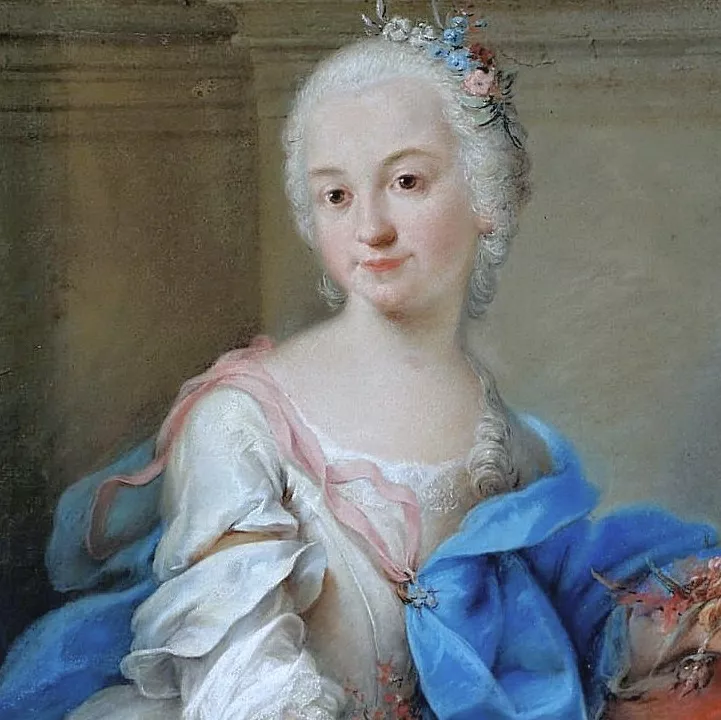
She superimposed very thin layers, without excessive blurring, and allowing a diffuse, vibrant light. Carreira embodies the light elegance of the 18th century, with idealized figures, supple poses and smoothed faces.
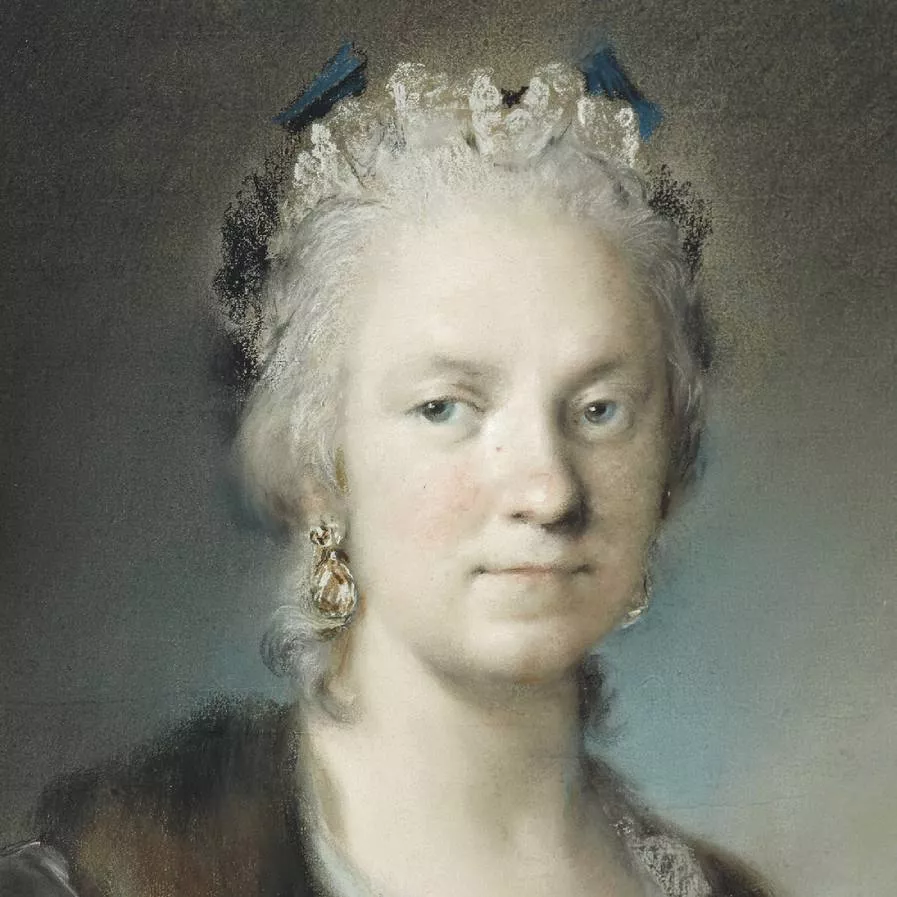
The colors are soft and pearly, dominated by pinks, celadon blues, ivories and beiges. He emphasizes the texture of fabrics, the powderiness of wigs and the reflections of jewelry, with a keen sense of detail.
She excels in portraits of the court, nobles and European patrons (princes, ambassadors or even elite women). Her models are often depicted in a reduced setting, with a neutral or vaporous background, emphasizing the gaze and expression.
Rosalba Carreira also created allegorical female figures close to the gallant and mythological imagination (Flora, Venus, Music). Her underlying drawing is often very light, even absent; she works in pastel in free but controlled strokes, with passages of air between the forms.
Light transitions are subtle, almost imperceptible, lending a velvety atmosphere to her portraits. Her touch is at once nervous in the depiction of hair, and delicate in skin tones, where she excels in rendering the dewiness of complexion.
She does not seek photographic likeness but rather an elegant, soothed presence. Her works are recognizable by their luminous clarity and chromatic delicacy.
Her influence would be direct on artists such as Chardin, Liotard, La Tour and more broadly on the vogue for pastels throughout 18th-century Europe. For many years, she remained one of the most sought-after figures on the Grand Tour, especially among British connoisseurs.
The life of Rosalba Carreira
Rosalba Carreira (1673 - 1757) is an emblematic 18th-century Venetian artist who was born in Venice in 1963 into a modest but cultured family. Her father was a civil servant and her mother a lace-maker.
She began by working on ivory miniatures for tobacco boxes, before turning to pastels, which were not highly valued at the time. She received no strict academic training, and was largely self-taught, learning through observation and practice.
She became known locally in the 1690s for her portraits of young women and members of the nobility, and was then supported by the intellectual and artistic circles of the Serenissima, notably the Academy of the Arcades.
In 1705, she became a member of the Academy of Saint Luke in Rome, confirming her official recognition as an artist. Her art attracted the Grand Tour elites, especially British and French, who came to pose for her or buy works from her.
In 1720, she stayed in Paris, where she painted several members of the court, including Louis XV as a child, and was elected to the Royal Academy of Painting and Sculpture. She received numerous royal and princely commissions, notably from Augustus III of Poland and Frederick-Augustus of Saxony.
She managed to make a living from her art without a husband or a male-run studio, which was rare at the time. Surrounded by her sister Giovanna and her niece, she led a studious and cosmopolitan family life. She nurtured an abundant correspondence with European collectors, patrons and intellectuals, notably the Abbé Conti.
She was one of the few women artists to have been able to pursue a successful career on her own, as Élizabeth Vigée le Brun, Clara Peeters or Anne Vallayer-Coster.
From 1746, she began to lose her sight, becoming totally blind in her later years. She died in Venice in 1757, aged 84, after a long and respected career.
She is today recognized as the great pastel portraitist of the 18th century, and a good number of her works are held in European collections.
Focus on Portrait of a Young Woman Holding a Rose, Rosalbla Carriera, circa 1720
This work, executed in pastel on laid paper and mounted on canvas, is in the Louvre and measures 58 x 45 cm. It depicts a young woman in mid-bust, slightly three-quarter view, gazing at the spactator.
She holds a blooming rose in her right hand, and her gesture draws the eye to her uncovered pointrine. Her hair is pulled up into a sophisticated updo, adorned with pearls and a fine veil. She is dressed in a pale blue bodice, with satiny fabric, open to a transparent muslin.
The pastel is applied in molten layers, without visible strokes, giving a diaphanous, velvety complexion. The rose is taut with very fine white and red work, luminous without being too defined, and close to an impressionist touch before its time.
The lighting is soft, coming from the front, and emphasizes the delicate modelling of the face without creating any marked shadows. The background is neutral, powdery, and enhances the figure while suggesting a vaporous atmosphere.
The face does not seek specific resemblance but proposes a model of idealized beauty, soft and balanced. The softness of the pastel hues (pink, drunken and pale blue) creates a refined tonal harmony, which is Carriera's signature.
This type of portrait was much sought-after by Grand Tour enthusiasts, particularly the English and Germans. The work represents a pivotal moment in the history of pastel, which is now considered an artistic medium in its own right.
It perfectly illustrates the Venetian rococo style, while anticipating the bourgeois portrait sensibility of the Age of Enlightenment.
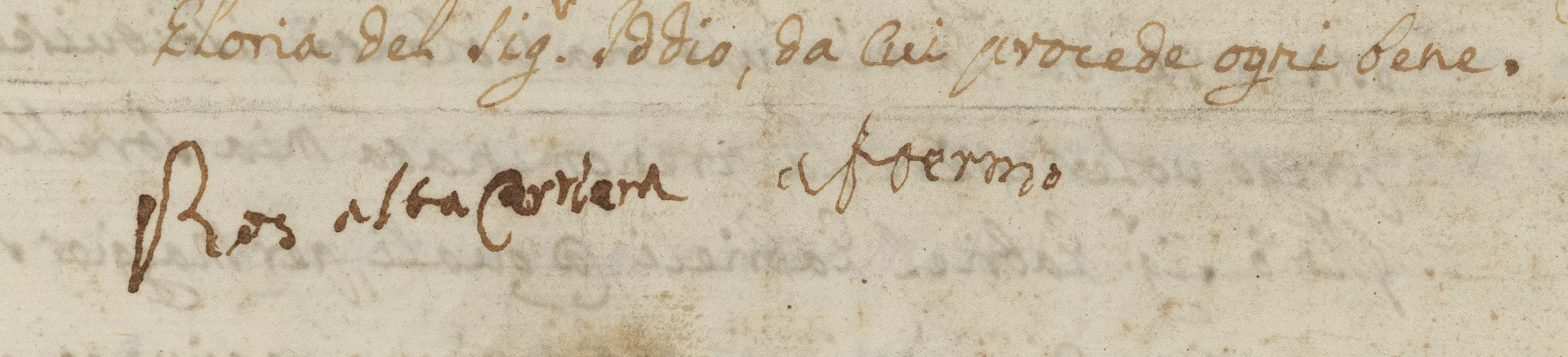
Recognizing the signature of Rosalba Carreira
Artists do not necessarily sign their works, which is why appraisal remains necessary to ensure the authenticity of your property.
How to find out the value of a work
If you own a painting by Rosalba Carreira or after the artist, don't hesitate to request a free valuation by filling in our online form.
A member of our team of experts and licensed auctioneers will contact you to provide an estimate of the market value of your work.
If you are considering selling your work, our specialists will also guide you through the various alternatives available to obtain the best possible price, taking into account market trends and the specific features of the work.
Estimate in less than 24h
Discover in the same theme

Rating and value of works, drawings, paintings by Hubert Rob...
Hubert Robert was a pre-romantic painter of the 18th century who produced mainly landscape scenes, which are valued and quoted.
Learn more >

Rating and value of paintings, drawings and miniatures by Ad...
Adelaïde Labille Guiard is an 18th-century artist who produced works whose value is exploding at auction.
Learn more >

Rating and value of prints by Utagawa Toyokuni
Utagawa Toyokuni is a Japanese artist and the founder of the Utagawa school, a pioneer in Japanese woodblock printing. His works are highly valued.
Learn more >
D'autres tableaux abstraits vendus aux enchères

Estimated 2.000 - 4.000
Serge POLIAKOFF (1900-1969), Composition en rouge et bleu. 1965, Lithograph

Estimated Between €5,000 and €8,000
Jean MIOTTE (1926-2016), acrylic on canvas

Estimated 3.000 - 5.000
Roberto MATTA (1911-2002), Composition, Gouache on canvas

Secure site, anonymity preserved

Auctioneer approved by the State

Free and certified estimates
Frequently asked questions
-
Who was Rosalba Carriera, and why are her works so highly sought after?Rosalba Carriera (1673–1757) was a leading Venetian portrait artist of the 18th century and a pioneer of pastel in Europe. She transformed pastel—long considered a minor technique—into a noble and recognized medium. Her court portraits, allegorical figures, and exceptional mastery of diffused light and pearlescent colors make her an iconic artist of the Rococo period. Her works are in high demand today, her market value is steadily rising, and she directly influenced major artists such as Chardin and La Tour.
-
What are the price ranges for Rosalba Carriera's works, by type?The value of Rosalba Carriera’s works varies considerably depending on the medium: miniatures range from €730 to €78,600, drawings from €1,120 to €635,700, and pastel paintings from €2,500 to €1,250,000. These figures reflect the significance of the subject, the condition of the work, and its provenance. For example, a major portrait can far exceed initial estimates, such as the Portrait of Antonietta Gonsalvus, which sold for €1,250,000 in 2023.
-
How do I have a work by Rosalba Carriera authenticated?To authenticate a work attributed to Rosalba Carriera, we recommend requesting a free appraisal from Auctie's by filling out our online form. A state-certified expert or auctioneer will examine your artwork and provide you with an accurate estimate. This process is non-binding and particularly important because the artist did not consistently sign her works.
-
Is this the right time to sell a work by Rosalba Carriera?Yes, this is an excellent time to sell a work by Rosalba Carriera. Her visibility in the art market continues to grow, her market value is steadily rising, and demand for her portraits and allegorical figures is on the rise. European art lovers and collectors are actively seeking out her works, creating a favorable environment for achieving a competitive price.
-
How does the appraisal and sale of a work of art take place at Auctie's?At Auctie's, appraisals are free and non-binding. Simply fill out an online form, and a certified expert or auctioneer will contact you to examine your piece and provide an estimate within 48 hours. If you decide to sell, our specialists will support you throughout the entire process, advise you on the best sales strategies, and help you achieve the best possible price based on current market trends.
