



Rating and value of paintings by Clara Peeters

Key takeaways
- Clara Peeters (1585–1655) was a Flemish pioneer of still life painting, rediscovered in the 20th century and featured in an exhibition at the Prado in 2016—the first female artist to be honored in this way.
- The artist’s works fetch record prices, notably an oil on canvas that sold for €1,141,000 in 2022, with estimates ranging from €1,540 to €1,141,000.
- Her paintings are characterized by exceptional finesse, controlled play of light, and often a miniature self-portrait concealed within metallic or glassy reflections.
If you own a work by or after the artist Clara Peeters, and would like to know its value, our state-approved experts and auctioneers will offer you their appraisal services.
Our specialists will work to carry out a free appraisal of your work, and provide you with an accurate estimate of its value on the current market.
Then, if you wish to sell your work, we'll direct you to the best possible arrangement to obtain the optimum price.
Rating and value of the artist Clara Peeters
Clara Peeters is a well-known artist among portrait lovers. Her visibility on the art market continues to grow, her quotation is exploding and she is increasingly in demand : it is speculated that her works could reach unprecedented amounts at auction.
Women artists of the 17th century, pupils in the workshops of undisputed grand masters, produced works that are extremely sought-after today.
For the latter, her oil on canvas Roses, lilies, an iris and other flowers in a terracotta vase, with a pot of carnations and a butterfly on a rim sold for €1,141,000 in 2022, against an estimate of €1,141,000 to €1,711,000, suggesting further upside potential for the artist's works.
Order of value from a simple work to the most prestigious
Technique used | Result |
|---|---|
Oil painting | From €1,540 to €1,141,000 |
Estimate in less than 24h
Style and technique by artist Clara Peeters
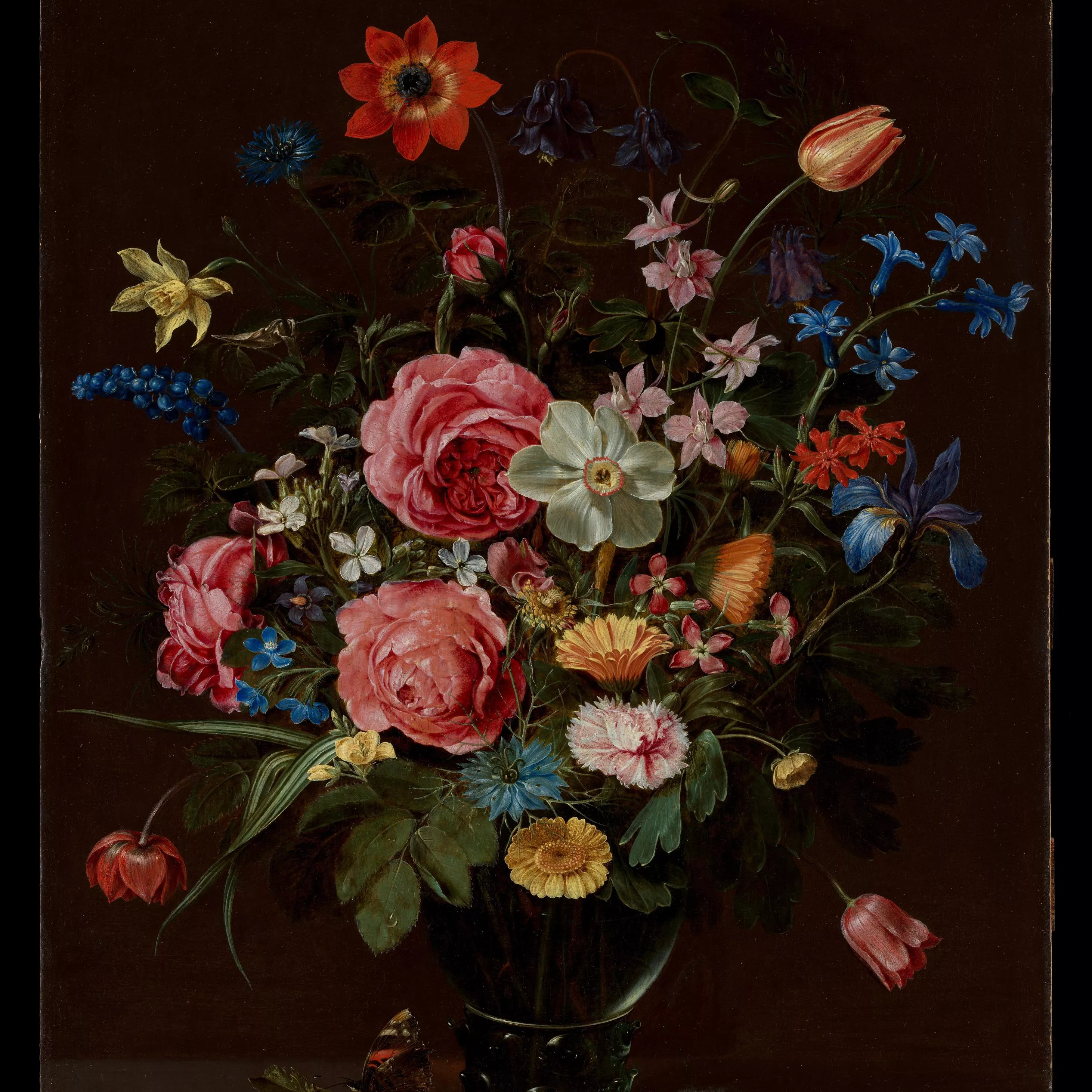
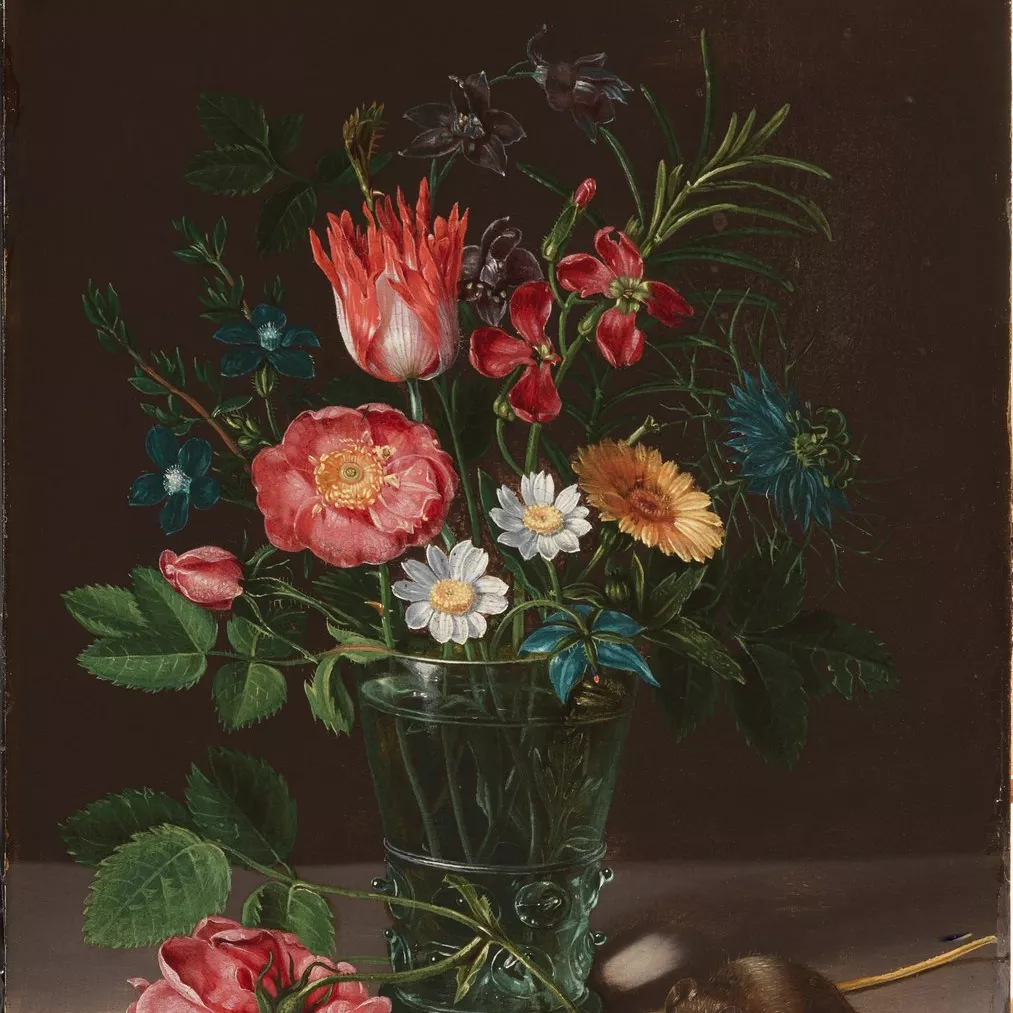
Clara Peeters (1585 - 1655) was a Dutch artist who produced mainly still lifes, in small format. The genre was still very marginal at the beginning of the artist's career. She excelled in depicting precious objects, refined foods, glassware and metal utensils, often on elaborately laid tables.
Clara Peeters' style contributed to the emergence of " banketje ", the name of the Flemish banquet still life, characterized above all by descriptive rigor.
Her line is renowned for its exceptional finesse, depicting every reflection, water pearl, knife edge or floral detail with near-goldsmith meticulousness. She plays with reflections on metal or glass, sometimes going so far as to insert her own miniature self-portrait in a carafe or tumbler.
Thanks to this process, her signature is discreet yet assertive. The artist's touch is smoothed, invisible, placed at the service of visual illusion.
Lighting often comes from a single lateral source, creating sharp shadows and controlled bursts of light. She brilliantly renders contrasting surfaces such as the moire of fabrics, the shine of pewter or silver objects, the skin of a peeled lemon or cheese.
Her compositions are intended to highlight the interplay of transparency, shine and matter, in a sensual, ordered approach. She often paints bourgeois or aristocratic meals olives, waffles, wine, exotic fruits, fish and rare spices.
The objects she depicts are arranged with great geometric rigor, often aligned along the edge of the table or placed along gentle diagonals. Her works combine domestic realism with discreet, sometimes moral symbolism (vanities, suggestions of temporality or ephemeral luxury).
At a time when too few women were allowed to paint professionally, she stood out for the technical quality and intellectual subtlety of her works. Clara Peeters thus offered a version of the still life less spectacular than some of her male contemporaries, but more striving for perfection.
Today, she is recognized as one of the founders of the genre in Flanders, and is one of the few 17th-century women artists to sign her works with regularity.
The life of Clara Peeters
Clara Peeters was born in Antwerp, in the former Spanish Netherlands, which corresponds to present-day Belgium. Almost nothing is known about her family or her training, but she shows impressive technical mastery from an early age, suggesting an apprenticeship with an already established Flemish master.
She may have been trained in a male workshop, but there is no entry in the local guild of Saint-Luc and therefore no confirmation of her official status, which was relatively typical for a woman at the time.
Her first known work is dated 1607, which would indicate that she was already painting at the age of around 13 (according to some sources). This hypothesis is still debated today, but seems to be attested by the signature.
She regularly signed her paintings, often with the words " Clara Peeters fecit ", which also shows an assertion of her authorship in a male-dominated world. She was also one of the first female artists in the Netherlands to have an identifiable career, thanks to her works, most of which are well preserved and dated.
Clara Peeters specialized early on in banquet still lifes, a genre that was booming at the time, and very much linked to Flemish bourgeois prosperity.
She was active mainly between 1607 and 1621. Her activity seems to have been centered in Antwerp, but some works suggest a passage through Amsterdam or Haarlem, where she may have come into contact with Dutch artists.
We don't know whether she was married or not, as no civil status documents confirm her family or domestic relationships. Like many female artists of the period, she disappeared from the archives after 1621, making the second half of her life completely unknown.
Despite this silence, her signed, dated and technically very coherent works point to a sustained professional career, probably in private studios or via her commissions.
Long forgotten by art history, she was rediscovered in the 20th century thanks to research into Flemish painting and women artists. She is now considered one of the pioneers of Flemish still life and a rare figure of female painter in early European modernity.
Later, other figures such as Anne Vallayer Coster or Élizabeth Vigée le Brun in France will in turn lead successful professional careers.
In 2016, the Prado Museum dedicated a monographic exhibition to her, the first dedicated to a woman artist in the museum's history.
Focus on Still Life with Cheese, Artichoke and Cherries, Clara Peeters
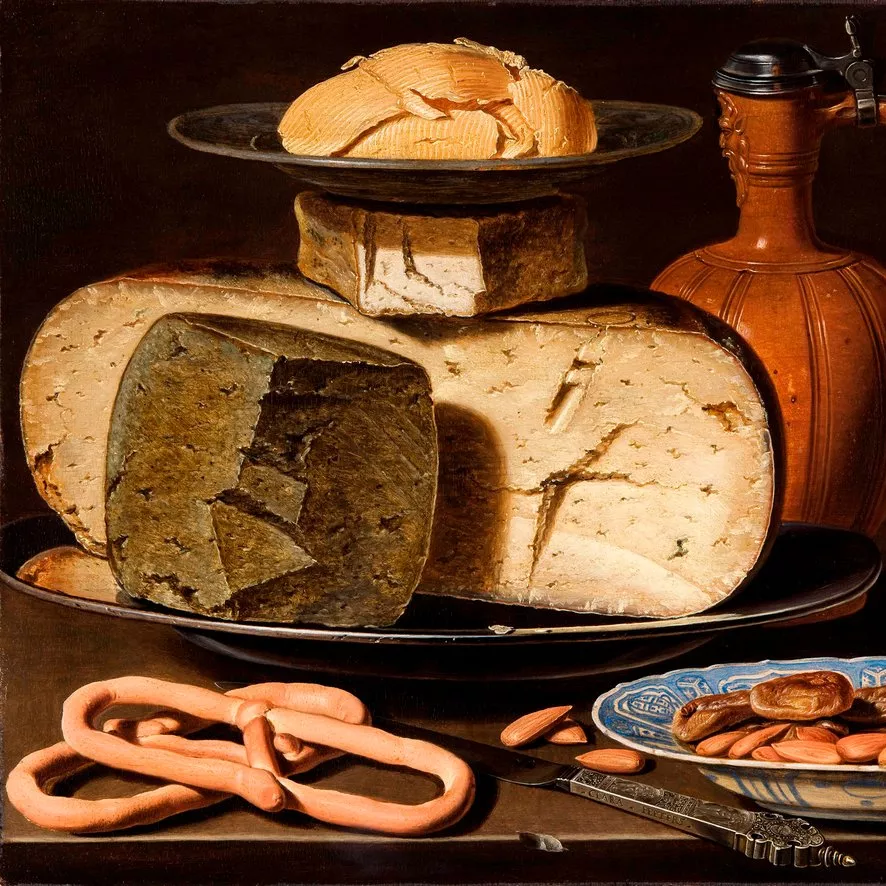
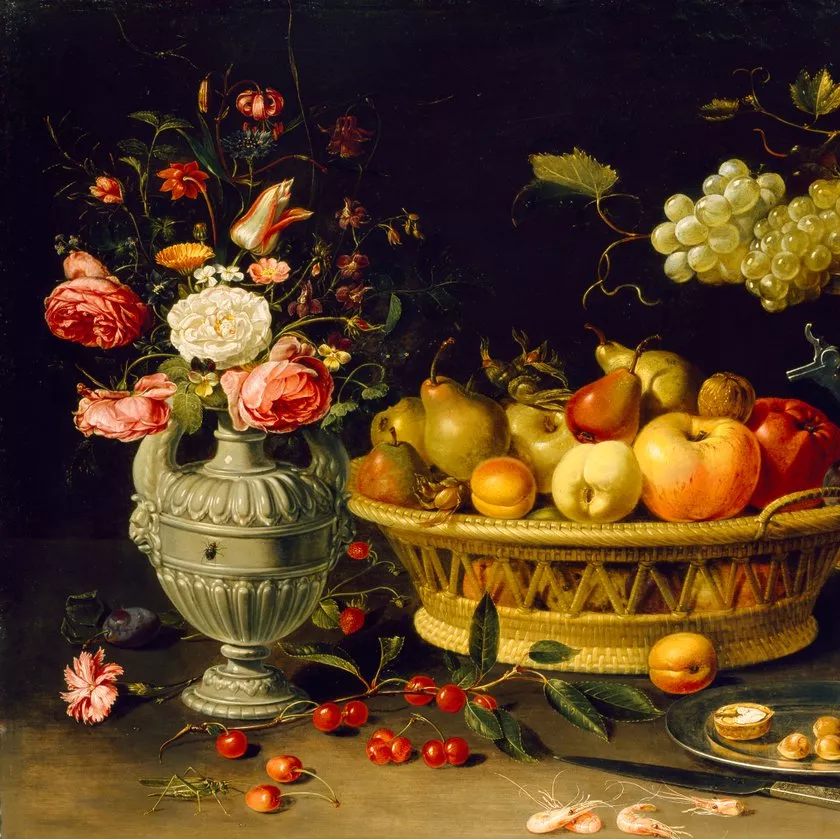
Still Life with Cheese, Artichoke and Cherries is an oil on wood panel by Clara Peeters housed at the Prado in Madrid, measuring approximately 34 x 49 cm. The work features a wooden table garnished with victuals, with a slightly bird's-eye view. Notched cheeses, artichokes, cherries, butter, bread, pewter and earthenware vessels can be seen.
The horizontal composition is tight, centered on everyday foods, which are placed with care but without theatrical emphasis. Each object is isolated but integrated into a highly controlled visual rhythm, based on circular shapes (plates, cheese, bowl, basket).
There is no visible human figure, but a very embodied presence of the human hand through cutting, biting and arranging. The details are extremely refined (grain of the bread, moisture of the cherries, softness of the butter, roughness of the artichoke).
There is also a certain contrast between matt (fruit, crumb) and shiny (metal, ceramic) surfaces, which is perfectly mastered. Peeters plays with varied textures and localized lighting effects, without overloading the image.
The light source is lateral, with sharp shadows and precise highlights accentuating the relief. In the lid of a pewter jar, we can make out in miniature a reflection in which the artist has integrated her own portrait (a practice she employs in several of her works).
This creates a relationship between viewer, painter and object, in an intentional play of mirrors. This still life is apparently intended to be humble, but is rich in symbols of fertility, consumption and temporality.
It can also be interpreted as an affirmation of the female painter in the material world, mastering the eye, the hand and the technique. Unlike some contemporary vanitas, the work suggests neither strong moralism nor drama.
This work is also an exemplar of Peeters' mature style, with dense yet legible composition, realistic rendering, discreet refinement and the signature of her talent.
It combines technical virtuosity, apparent humility of subject and silent self-affirmation, which is the hallmark of this artist long erased by history.
Recognizing the artist's signature
Clara Peeters does not necessarily sign her works. Copies may exist, which is why expertise remains important.
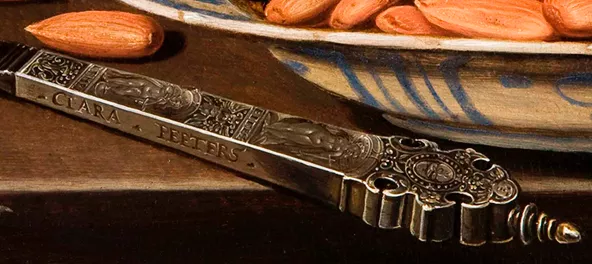
Knowing the value of a work
If you happen to own a work by Clara Peeters or after the artist, don't hesitate to request a free valuation using our form on our website.
A member of our team of experts and licensed auctioneers will contact you promptly to provide you with an estimate of the market value of your work, as well as ad hoc information about it.
If you are considering selling your work, you will also be accompanied by our specialists in order to benefit from alternatives for selling it at the best possible price, taking into account the inclinations of the market.
.Estimate in less than 24h
Discover in the same theme

Rating and value of works, drawings, paintings by Gabriel Me...
Gabriel Metsu was a 17th-century Dutch painter whose oils on panel and drawings are highly sought-after at auction.
Learn more >

Rating and value of paintings, drawings and engravings by Re...
Rembrandt Van Rijn is one of the most famous artists of the Dutch Golden Age. Today, he is one of the most highly-rated and sought-after artists of hi...
Learn more >

Rating and value of drawings and paintings by Nicolas de Lar...
Nicolas de Largillierre is a classical and Baroque painter who produced numerous portraits that command high prices at auction.
Learn more >
D'autres natures mortes vendues aux enchères

Estimated 15.000 - 20.000
Anthony II CLAESZ (1616-1642), Still life of flowers, oil on canvas

Estimated 8.000 - 12.000
Guillaume FOUACE (1837 - 1895), Still life with lobster, oil on canvas

Estimated 8.000 - 15.000
Maurice de VLAMINCK (1876-1958), Still life with jugs and leeks, oil on canvas

Estimated 4.000 - 6.000
Guillaume FOUACE (1837-1895), Still life with Roquefort cheese, Oil on canvas

Estimated 12.000 - 15.000
Paul AIZPIRI (1919-2016), Still life of flowers, Oil on canvas

Estimated 800 - 1.500
Pascal DAGNAN-BOUVERET (Paris 1852-1929 Quincey) Still life with apple and books, Oil on cardboard

Secure site, anonymity preserved

Auctioneer approved by the State

Free and certified estimates
Frequently asked questions
-
Who is Clara Peeters, and what is her historical context?Clara Peeters (1585–1655) was a Dutch artist born in Antwerp, considered one of the founders of Flemish still life painting. A pioneer among 17th-century female painters, she distinguished herself through her exceptional technical mastery and her consistent signing of her works—a rarity for a woman at that time. Long forgotten by art history, she was rediscovered in the 20th century, and in 2016 the Prado dedicated its first solo exhibition to a female artist to her.
-
What are the distinctive features of Clara Peeters' style?Clara Peeters excels at depicting small-scale still lifes, particularly Flemish banquets (“banketje”). Her brushwork is distinguished by exceptional finesse: she renders every reflection, floral detail, and surface with almost goldsmith-like precision, masterfully playing on the contrasts between materials (metal, glass, fabric, fruit). She sometimes inserts a miniature self-portrait among the painted objects, creating a subtle connection between viewer and artist within a composition characterized by geometric precision and balance.
-
What is the current price range for Clara Peeters' paintings?Clara Peeters’ works vary widely in value, ranging from 1,540 to over 1,000,000 euros, depending on their size and condition. For example, her oil on canvas painting “Roses, Lilies, an Iris, and Other Flowers in a Vase” sold for 1,141,000 euros in 2022, demonstrating significant upside potential. Her market value is steadily rising in the current market, driven by increased demand for 17th-century female artists.
-
How do I have a work by Clara Peeters authenticated and appraised?To determine the authenticity and value of a work by Clara Peeters, we recommend that you request a free, no-obligation appraisal using our online form. An expert or certified auctioneer from our team will examine your painting and provide you with an accurate assessment of its market value within 48 hours, along with all relevant information.
-
When is the right time to sell a work by Clara Peeters?Yes, now is an excellent time to sell a work by Clara Peeters. Her visibility and market value continue to rise in the art market, driven by renewed interest in 17th-century women artists and recognition of her role as a pioneer of Flemish still life. If you own such a work, our specialists will guide you in obtaining the best possible price, taking current market trends into account.
