Pierre-Antoine Martenet
Pierre-Antoine Martenet has been appraising old paintings for many years. For Auctie's, he is responsible for appraising and valuing them in our sales at Hôtel Drouot.






Key takeaways
If you own a work by Elizabeth Vigée le Brun or after, and would like to know its value, our state-approved experts and auctioneers will offer you their appraisal services.
Our specialists will work to carry out a free appraisal of your work, and will provide you with an accurate estimate of its value on the current market. Thereafter, if you wish to sell your work, we will direct you to the best possible arrangement to obtain the optimum price.
Elizabeth Vigée le Brun is a major artist of 19th century painting. Now, the prices of her works are rising at the auctioneers' gavel.
Her oils on canvas are particularly prized, especially by French buyers, and the price at which they sell on the art market ranges from €70 to €5,340,820, a considerable delta but one that speaks volumes about the value that can be attributed to the artist's works.
In 2019, an oil on canvas entitled Portrait of Mohammed Dervish Khan,was sold for €250,000, while it was estimated at between €100,000 and €150,000. Its value is on the rise.
Technique used | Result |
|---|---|
Estamp - miniature | From €70 to €5,500 |
Drawing - watercolor | From €140 to €310,000 |
Oil on canvas | From €230 to €5,340,820 |
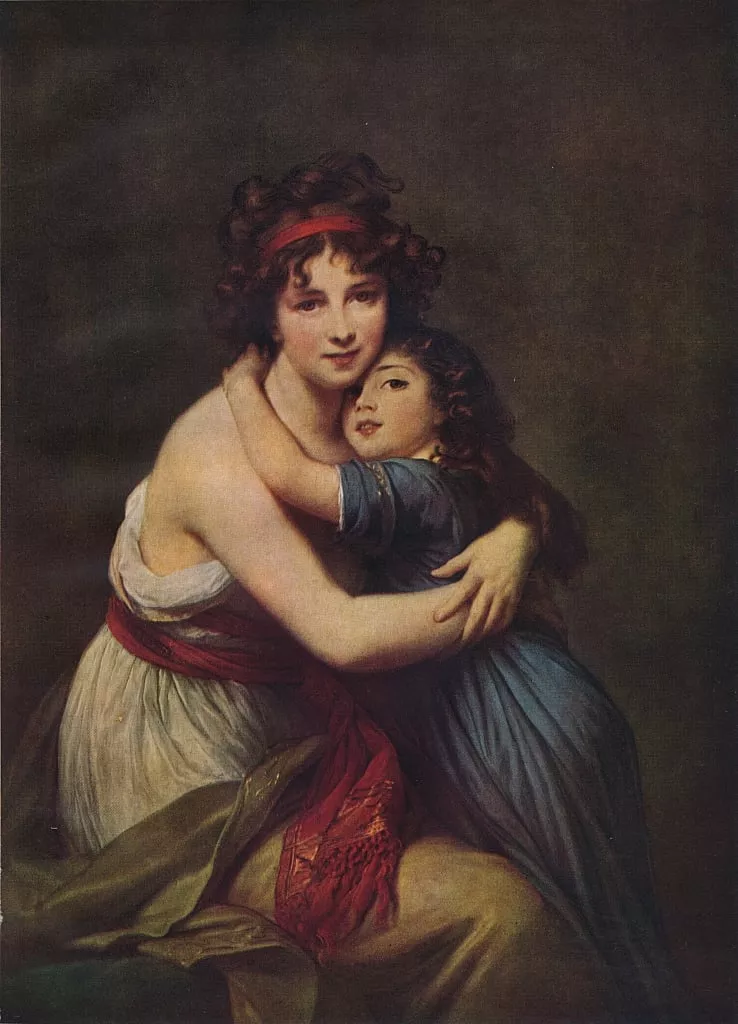
Elizabeth Vigée le Brun distinguished herself throughout her career as a portraitist. She employed the academic canons of this pictorial genre, mostly using drawing and oil on canvas as her medium.
She worked her canvases with a very high degree of precision, very concerned with detail. Vigée le Brun works mostly with women of the nobility, paying attention to the realism of their faces and dress.
Characterized by women in their thirties or forties, dressed in a rather sophisticated manner, Elizabeth Vigée le Brun often depicts women in their role as mothers, with a soft facture and meticulous features.
Élisabeth Vigée Le Brun (1755-1842) was a celebrated French painter of the Neoclassical period, renowned for her elegant portraits and exceptional artistic talent. Born in Paris, she showed her artistic gift from an early age and was encouraged by her family to pursue a career in painting.
She showed her first talents at the Trinité convent, where she was boarded in the Faubourg Saint-Antoine. Her father immediately recognized her talent and, being an artist himself, had no reservations about her becoming a painter.
His father died when she was just twelve, so she learned painting from Gabriel-François Doyen, who produced mainly history paintings. He introduced her to Gabriel Briard, a member of the Académie royale de peinture.
As a student in Briard's studio, her talent unfolded, and she began to be recognized by her peers and made the acquaintance of Joseph Vernet, who gave her much advice, supported by Jean-Baptiste Greuze.
At the age of 19, she became a member of the Académie de Saint-Luc in Paris, which was remarkable for a woman at the time, even though her father, pastellist Louis Vigée, was a member.
The artist preferred this choice to entering the Académie Royale de peinture et de sculpture, then governed by too many norms regarding women's access to this status. Nonetheless, she was a recognized painter, appreciated by her male colleagues.
However, her talent opened the doors to the Académie's public sessions. At the same time, following her move, she met Jean-Baptiste-Pierre Lebrun, a merchant and restorer, whom she decided to marry to free herself from her family. This is why she is known as Élizabeth Vigée le Brun.
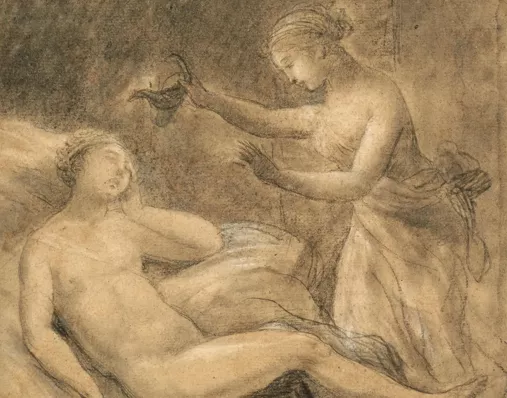
She quickly gained a reputation as a talented portrait painter, and her clientele included many prominent figures from the French nobility and high society.
Most notably, she painted the portrait of Baron Antoine-Jean Gros, then aged seven, and opened an academy where she taught painting to young pupils.
Bolstered by her success and ever-increasing number of commissions, in 1783 she was admitted to the Académie de peinture et de sculpture despite her husband's profession and the opposition of some to her being a woman. Adélaïde Labille-Guiard was admitted at the same time.
Her portraits were characterized by their realism, delicacy and sensitivity, establishing a marked contrast with the more rigid, formal style prevalent at the time. She also produced several remarkable self-portraits.
Elisabeth Vigée Le Brun enjoyed great professional success, but her career was interrupted by the French Revolution, as Anne Vallayer-Coster.
However, she managed to be a painter for the French Court, the Viennese Emperor's Court, the Russian Emperor and the Restoration.
In 1789, she left France in exile to avoid the political turmoil, traveling throughout Europe to continue painting portraits of high society, including royalty; she was notably the official portraitist of the Kingdom of Naples.
Eventually, she lived in Russia for several years under the protection of the imperial family.
After the Revolution, she returned to France in 1802 and continued her successful artistic career. She died in Paris at the age of 86, having painted many portraits and trained new artists.
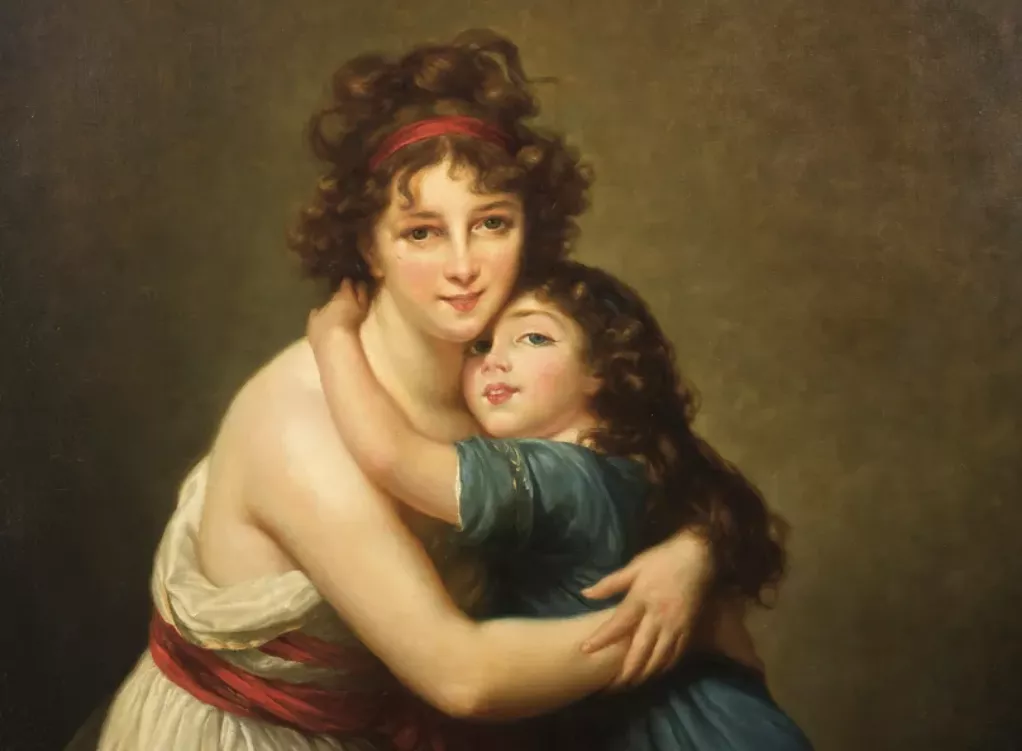
Royal portraitist Élizabeth Vigée Le Brun left her mark on art history thanks to her talent for capturing the grace and elegance of her subjects.
The titular portraitist of Queen Marie-Antoinette, she was born in Paris in 1755 and was one of the few women of her time to make her mark in a masculinized milieu.
Vigée Le Brun's creations are distinguished by their remarkable technical finesse, their delicate expression of faces and their mastery of light, which highlights the beauty of her models.
Thanks to his talent and social reputation, he was able to appeal to a prestigious clientele, and his paintings were already highly prized during his lifetime.
Today, the importance of Élizabeth Vigée Le Brun's works testifies not only to their rare, but also to their past importance. The artist's portraits have become emblems of Ancien Régime elegance, which increases their financial value.
Her paintings are regularly sold at auction at prices ranging from several hundreds of thousands to several million euros, depending on size, quality and origin. The price of a portrait of Queen Marie-Antoinette, for example, can easily exceed the highest expectations.
The value of Vigée Le Brun's works is also underpinned by their place in art history. Her style, which combines realism and idealization, has influenced many artists and continues to fascinate collectors and art historians.
Museums all over the world seek to acquire her paintings, which further enhances their prestige. In addition, retrospectives devoted to her work, such as those held at the Grand Palais in Paris or the National Gallery in London, have helped to revive interest in her work, increasing demand and, consequently, the value of her works.
In short, the works of Élizabeth Vigée Le Brun, with their royal aura and sublime technique, occupy a prime position on the art market. Their value continues to rise, buoyed by enduring admiration for an artist who captured the spirit of her age with rare sensitivity and unrivalled virtuosity.
The artist continued to paint well into old age and left a lasting legacy in the art world. Élisabeth Vigée Le Brun is today recognized as one of the most important artists of her time, having paved the way for women in the world of painting and contributed to the evolution of 18th-century French portraiture.
Vigée le Brun often signs her name at the bottom of her drawings, or oils on canvas. Copies may exist, so expertise remains important.

If you happen to own a work by or after Elizabeth Vigée le Brun, don't hesitate to request a free valuation using our form on our website.
A member of our team of experts and chartered auctioneers will contact you promptly to provide you with an estimate of the market value of your work, as well as ad hoc information about it.
If you are considering selling your work, you will also be accompanied by our specialists in order to benefit from alternatives for selling it at the best possible price, taking into account market inclinations.
Pierre-Antoine Martenet has been appraising old paintings for many years. For Auctie's, he is responsible for appraising and valuing them in our sales at Hôtel Drouot.

Rating and value of works, paintings and drawings by Albert...
Albert Maignan was a 19th-century neoclassical painter who produced mainly history paintings, which are sought-after at auction. Estimated in 24h.
Learn more >

Rating and value of sculptures and bronzes by Jean-Jacques F...
Jean-Jacques Feuchère is a Symbolist and Romantic artist whose atypical output has met with great success at auction.
Learn more >

Rating and value of sculptures and bronzes by Pierre-Nicolas...
Pierre-Nicolas Tourgueneff was a French sculptor specializing in military scenes, who produced many highly-rated works.
Learn more >
Estimated 2 000 € - 3 000 €
Delphin ENJOLRAS (1857-1945) "A Midsummer Night's Dream", Oil on canvas
Estimated 600 - 800 €
Alexandre Gabriel DECAMPS (1803-1860) Two children reading.
Estimated 9 000 - 12 000 €
Guillaume FOUACE (1837-1895) Pheasant and hare.
Estimated 600 € - 800 €
Henri ZUBER (1844-1909), Bridge at Artemare. Oil on canvas.
Estimated 2 000 € - 4 000 €
DANISH SCHOOL circa 1790, entourage of Jens JUEL Presumed portrait of Sophie of Hesse-Cassel, Queen Consort of Denmark.

Secure site, anonymity preserved

Auctioneer approved by the State

Free and certified estimates


