



Rating and value of sculptures and bronzes by Georges Lavroff

Key takeaways
- Georges Lavroff (1895–1991), a master of Russian animal sculpture, primarily created Art Deco bronzes with various patinas mounted on marble bases.
- Lavroff’s works sell for between €150 and €14,000 depending on the medium: bronze pieces fetch up to €14,000, gilded bronze up to €6,800, and terracotta starting at €250.
- His stylized animal sculptures emphasize clean lines, elongated silhouettes, and a luxurious contrast between dark bronze and light-colored bases—characteristics of Art Deco from the years 1925–1935.
If you own a work by or after the artist Georges Lavroff, and would like to know its value, our state-approved experts and auctioneers will offer you their appraisal services.
Our specialists will carry out a free appraisal of your work, and provide you with an accurate estimate of its value on the current market.
Then, if you wish to sell your work, we'll direct you to the best possible arrangement to obtain the optimum price.
Rating and value of the artist Georges Lavroff
Considered one of the masters of Russian animal sculpture, Georges Lavroff was recognized during his lifetime. He followed in the artistic vein of 19th-century animal sculptors. His legacy therefore consists mainly of sculptures made with several types of material, especially bronze.
At present, prices for his works are rising recurrently at auctioneers' gavels. His sculptures are prized above all by Russian buyers, and the price at which they sell on the art market ranges from €150 to €14,000, a considerable delta, which nevertheless speaks volumes about the value that can be attributed to Georges Lavroff's works.
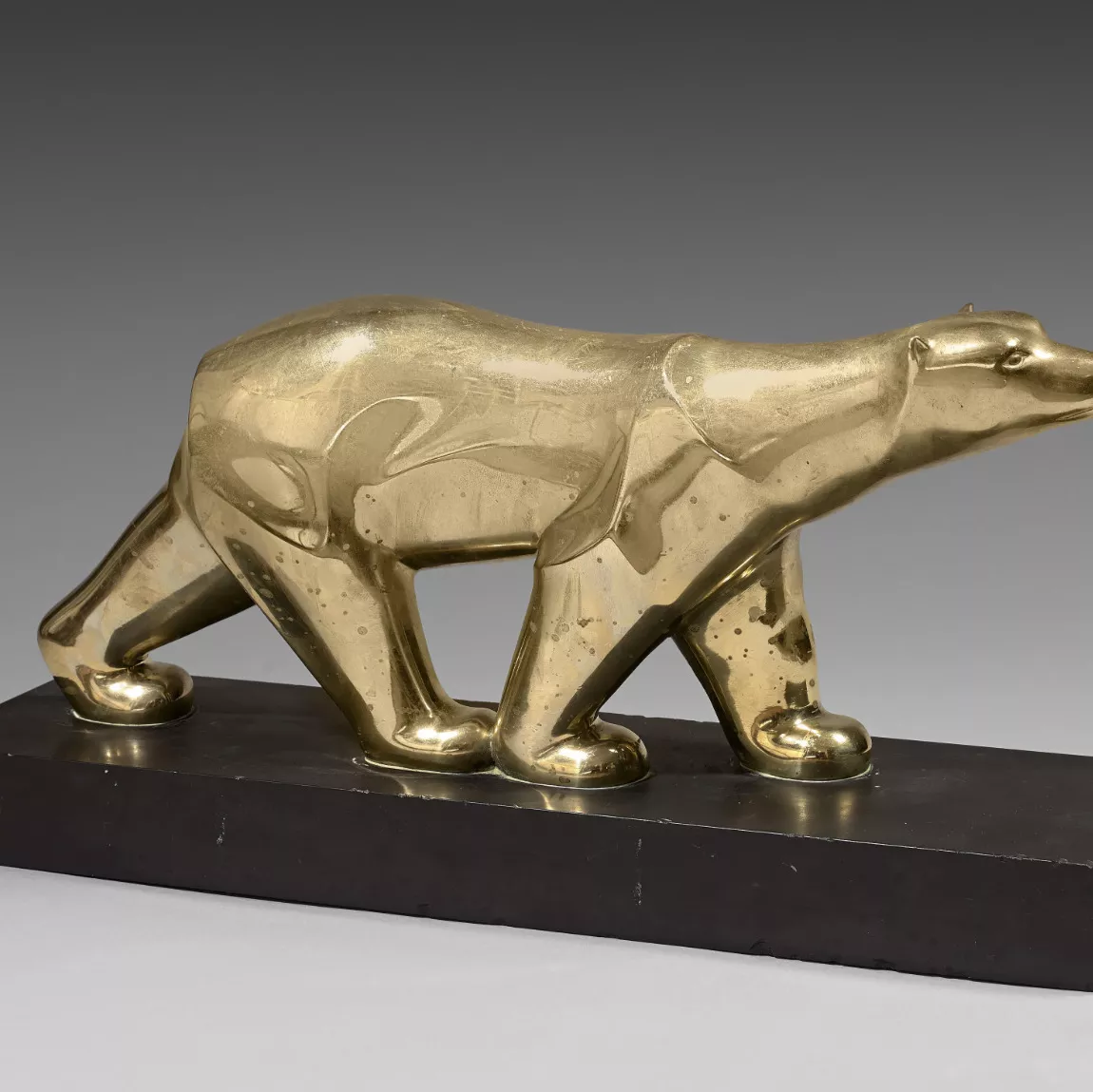
In 2013, one of his bronze sculptures, Ours polaire en marche, sold for €14,000 while it was estimated at between €3,000 and €4 000.
Order of value ranging from a simple work to the most prestigious
Technique used | Result |
|---|---|
Baked clay | From €250 to €950 |
Ceramic | From 300 to 1,050€ |
Golden bronze | From 650 to €6,800 |
Bronze | From €150 to €14,000 |
Estimate in less than 24h
Style and technique of the artist Georges Lavroff
The artist is part of sculptural neoclassicism, becoming one of the most famous and sought-after sculptors of his time in Russia. He works to some extent with marble and terracotta, but also with bronze, and it is the latter material that is most often found in his works on the auction market.
He has a predilection for bronze with various patinas (brown, green, black) often associated with marble or onyx bases typical of Art Deco. He also works in plaster for sketches and models, sometimes in ceramics and stone.
He uses lost-wax casting, guaranteeing the preservation of modeling details. The workmanship is smooth and stylized, in keeping with the Art Deco aesthetic. Volumes are simplified, contours are fluid and silhouettes elongated, expressing an impression of controlled movement.
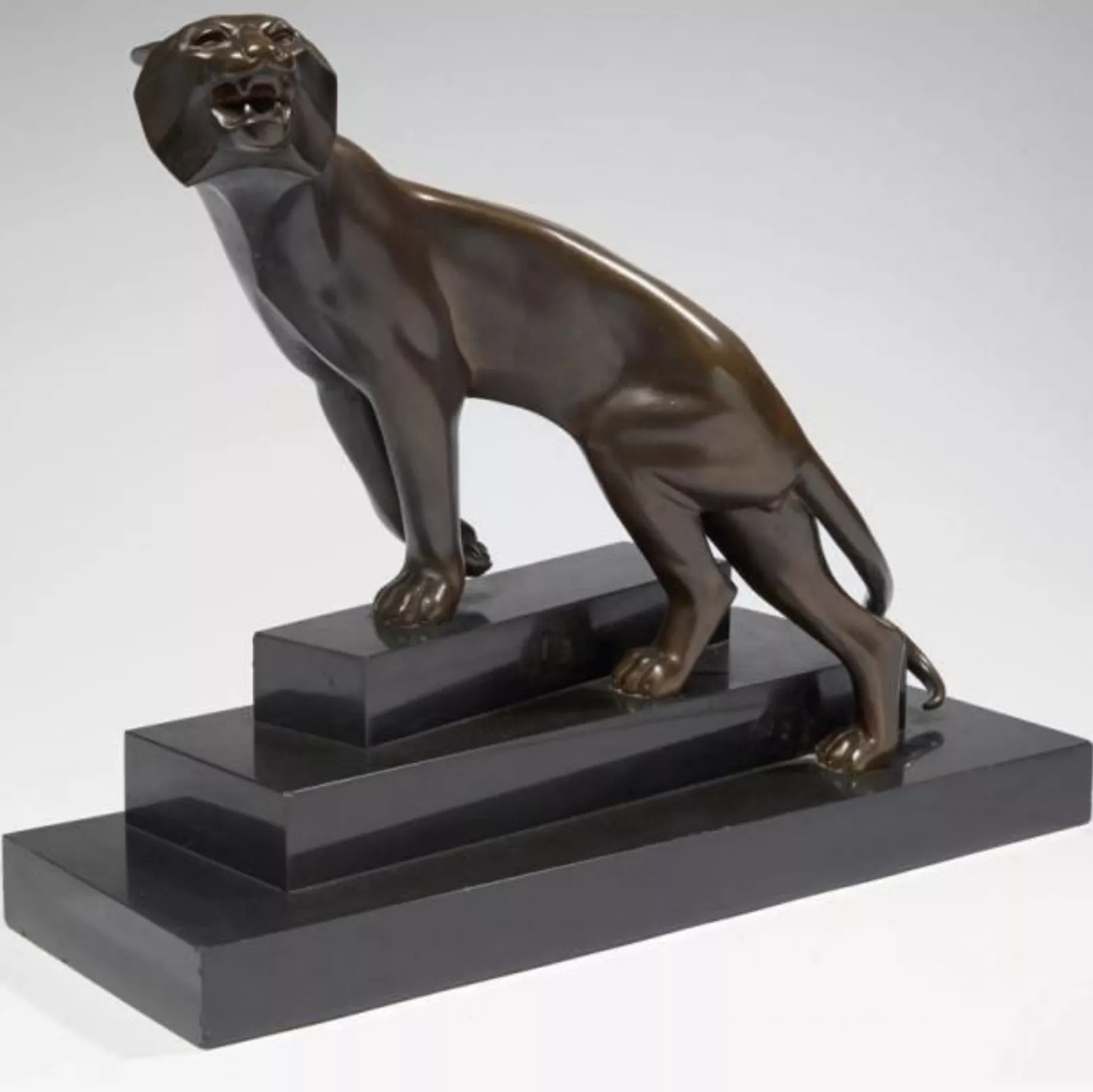
The surface is polished, with few traces and little modeling, with a search for formal purity. He specializes in animal sculpture, with panthers, lions, horses, dogs and exotic animals.
The animal figures are captured in dynamic yet stylized postures with a certain muscular tension. He also occasionally created human sculptures (nudes, allegories) treated with the same linear sobriety.
The construction is based on geometric lines of force, typical of Art Deco. He places emphasis on compact masses and elongated silhouettes, favoring harmony and elegance.
His refined patinas, with a nuanced dark brown, sometimes enhanced by green or gold highlights. He seeks a contrast between the dark bronze and the polished stone bases (light marble, veined onyx). The overall effect is one of luxury and decorative sobriety, in keeping with Art Deco interiors.
The life of Georges Lavroff
Georges Lavroff (1895-1991), a Russian artist, became an important figure in twentieth-century animal sculpture.
He was born in the Russian Empire, in the Siberian region.
He showed an early interest in art, taking classes with the painter Karonotov, before studying medicine. In Tomsk, he attended drawing and painting classes while studying medicine, until the October Revolution.
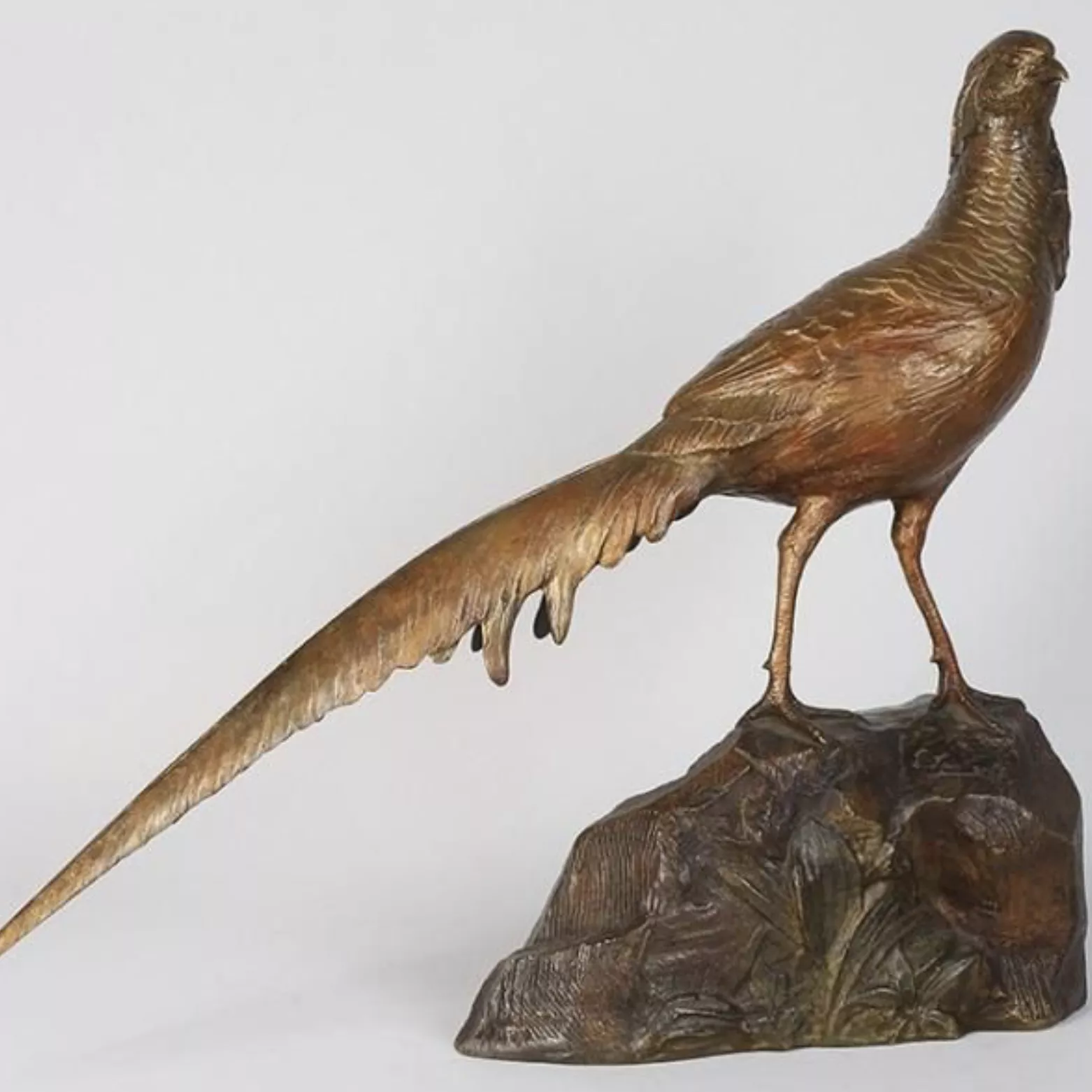
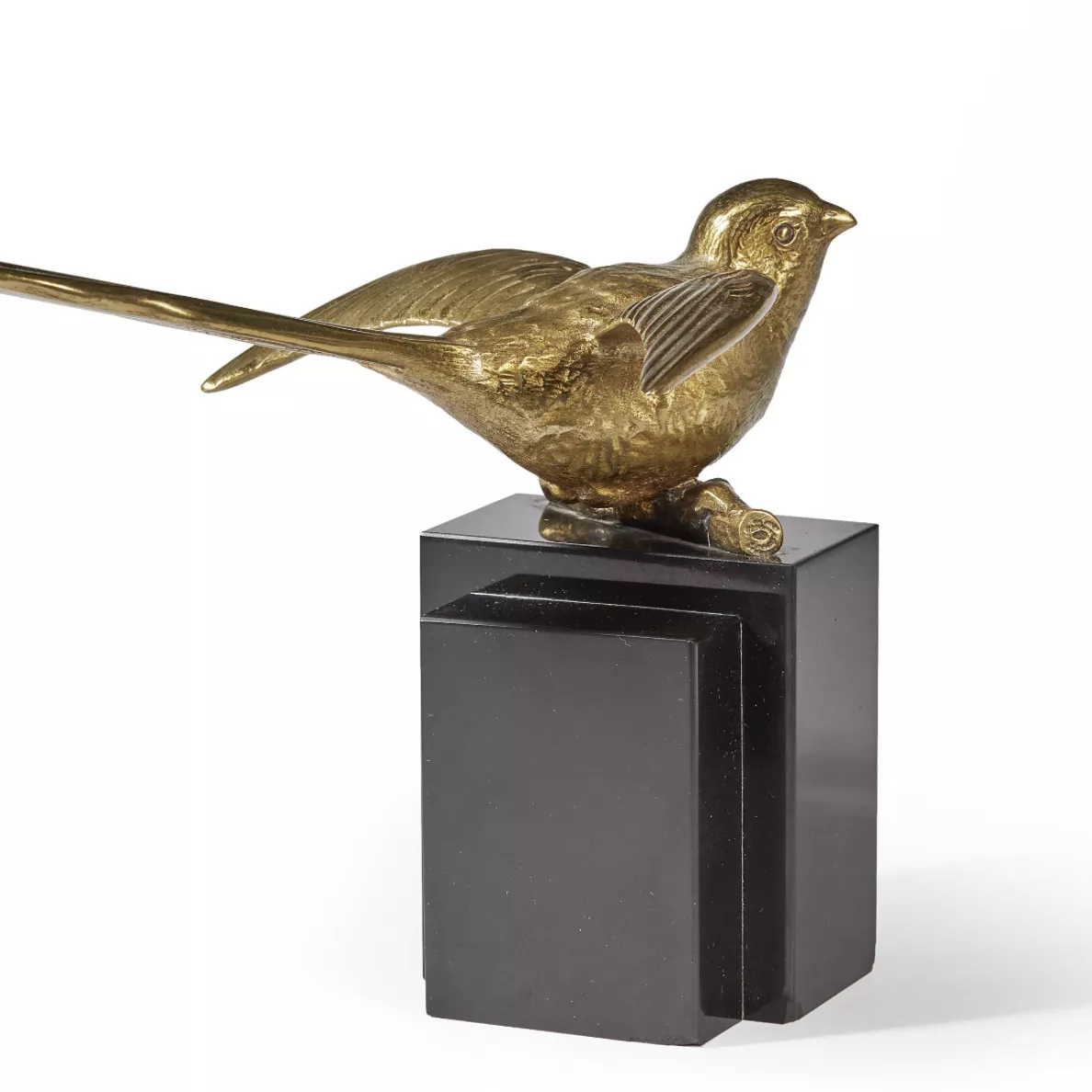
From 1922, the artist exhibited in Moscow and joined the Association of Artists of Revolutionary Russia. A fervent supporter of Soviet art, he continued to produce in Russia until 1927, when he moved to Paris, where he underwent further artistic training. He exhibited his work at the Salon des Indépendants and the Salon d'Automne. In the artistic vein of Carrier-Belleuse, he produced rather colossal animal bronzes, depicting mostly fawns and birds.
From 1935, he returned to his native country, where he became one of the official artists of the Soviet regime.
Focus on Walking panther, circa 1930, Georges Lavroff
This medium-format Art Deco animal sculpture (40 - 70 cm depending on cast) depicts a panther in lateral movement, captured in a fluid walk. Its body is elongated, slightly stretched, where the dorsal line creates a harmonious rhythm.
The head is slightly lowered, and accentuates the impression of vigilance and restrained power. The surface is polished and smooth, with few anecdotal details. The emphasis is on the overall line and muscular masses, suggested by wide planes.
There is an absence of excessive naturalism, the modeling is stylized, favoring decorative effect. The sculpture conveys an impression of suppleness and tension, the animal looking ready to pounce despite the apparent serenity of its stride.
The lines are elongated and the silhouette is streamlined, emphasizing the panther's elegant, majestic character. The combination of dark bronze and light-colored base produces a luxurious contrast effect typical of Art Deco interiors.
The panther, an animal of power, refers to an aesthetic of mastered strength. This work becomes an emblematic figure of Art Deco, where the animal becomes a decorative icon rather than a zoological study. The sculpture celebrates the aesthetics of movement as much as the formal beauty of nature.
The example is representative of Art Deco animal sculpture, with a simplification of volumes, a search for pure lines and decorative refinement. It follows in the footsteps of Pompon, but with a surplus of anatomical naturalism.
Georges Lavroff's imprint on his period
Georges Lavroff proved in Russia that classical sculpture was still alive. Like the Italians of the Renaissance, he drew inspiration from antique subjects and used their techniques. On the art market today, his bronzes are highly prized, and his marbles even more so.
An exhibition devoted entirely to him in Moscow in 1882, he is one of the artists who left a lasting mark on the Soviet regime.
His dual roots between Russia and France illustrate the circulation of artists between East and West, and the integration of foreign creators into the Parisian scene. His style is characterized by a balance between naturalism and stylization, which sets him apart from the clean lines of Pompon and the symbolism of Jouve. His panthers, horses, lions and dogs have become decorative archetypes.
His works are often produced in limited editions by Parisian foundrymen, and fed the luxury decorative object market in the years 1925 - 1935. He helped disseminate an aesthetic of elegant modernity, suited to bourgeois and cosmopolitan interiors.
His sculptures reflect the taste for exoticism and animal power characteristic of international Art Deco. He is also close to Édouard-Marcel Sandoz, with the same desire to reconcile zoological observation and decorative stylization.
He also shares with Paul Jouve a sensibility for the animal as a symbol of vitality and luxury. Less publicized than Pompon or Sandoz, Lavroff is recognized by specialized Art Deco collectors.
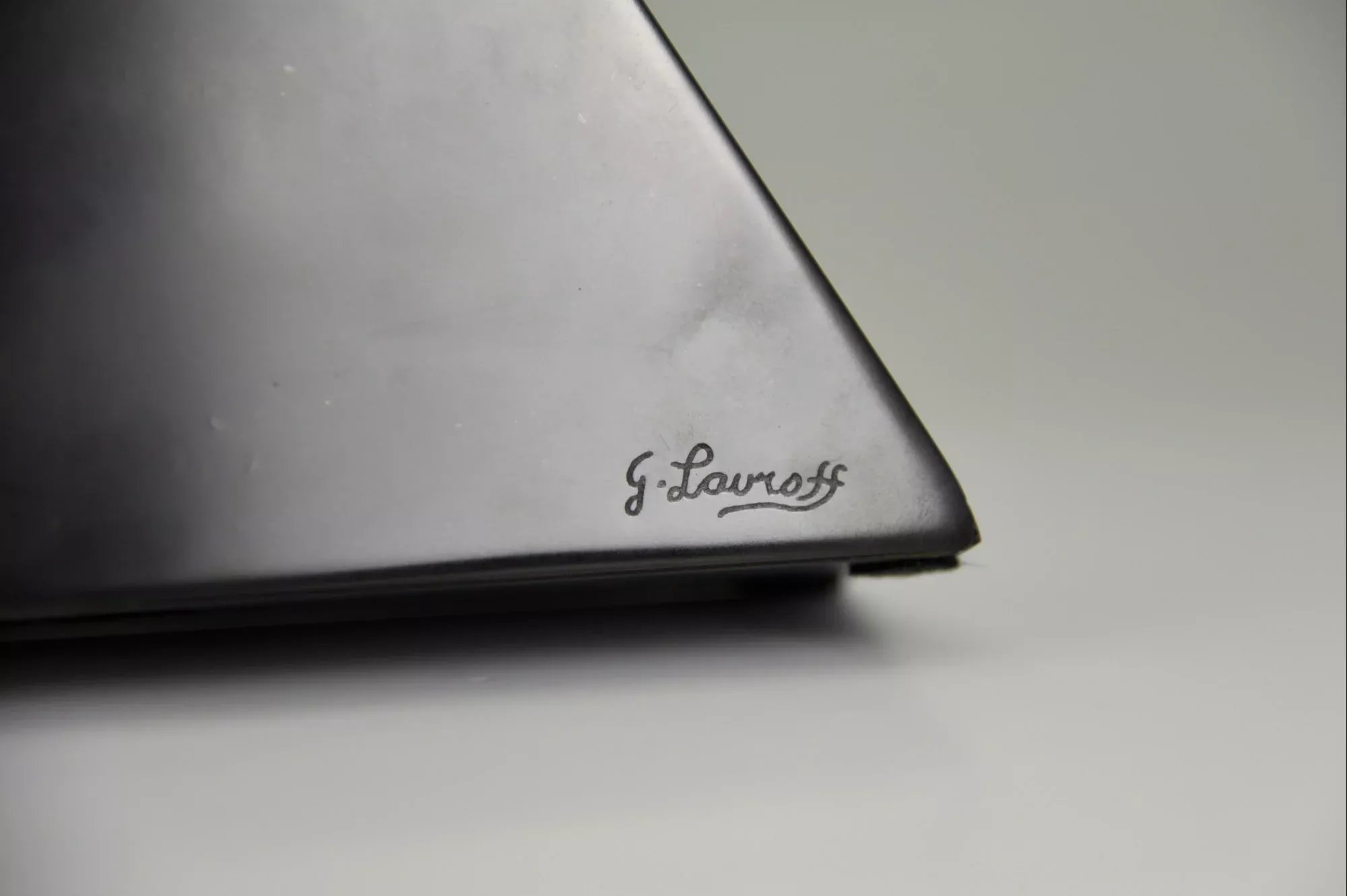
Recognizing Georges Lavroff's signature
The artist signs " G. Lavroff " on most of his sculptures. There are, however, many copies, which is why expertise is important.
Knowing the value of a work
If you happen to own a work by Georges Lavroff or after the artist, don't hesitate to request a free appraisal using our form on our website.
A member of our team of experts and certified auctioneers will contact you promptly to provide you with an estimate of the market value of your work, not forgetting to send you ad hoc information about it.
If you are considering selling your work, you will also be accompanied by our specialists in order to benefit from alternatives to sell it at the best possible price, taking into account market inclinations.
Estimate in less than 24h
Discover in the same theme

Rating and value of works, paintings, drawings by Maximilien...
Maximilien Luce is a 20th-century post-impressionist artist who produced many paintings and drawings that are quoted on the art market.
Learn more >

Rating and value of paintings by Zeng Yilu
Zeng Yilu is a Chinese artist who has produced numerous works whose value has recently increased at auction. 100% free estimate
Learn more >

Rating and value of animal sculptures and bronzes by André V...
André Vincent Becquerel is a twentieth-century animal sculptor who produced a large number of bronzes with high market liquidity.
Learn more >
Similar works sold at auction


Secure site, anonymity preserved

Auctioneer approved by the State

Free and certified estimates
Frequently asked questions
-
Who was Georges Lavroff, and what was his artistic background?Georges Lavroff (1895–1991) was a Russian sculptor considered one of the masters of 20th-century animal sculpture. Trained in Russia and then in Paris beginning in 1927, he became part of the Art Deco movement, specializing in stylized animal bronzes. His works, prized by Russian and Western collectors, combine zoological observation with modern formal elegance.
-
What is the price range for Georges Lavroff's sculptures?The prices of Georges Lavroff’s works vary considerably depending on the material and the piece: from approximately €150 to €14,000. Plain bronze pieces start at around €150 to €6,800, while gilded bronze pieces can reach €6,800. Terracotta and ceramic pieces are generally less expensive, ranging from €250 to €1,050.
-
How do I have a sculpture by Georges Lavroff authenticated?To authenticate a work by Georges Lavroff, we recommend that you request a free appraisal from Auctie's. Our state-certified auctioneers and experts will examine your sculpture and provide you with an accurate, no-obligation estimate. You can submit your request using our online form, and you’ll receive a response within 48 hours.
-
Is this a good time to sell a sculpture by Georges Lavroff?Yes, now is a good time to sell. Prices for Lavroff’s bronzes are rising steadily on the auction market, and demand remains strong, particularly among Russian collectors and Art Deco enthusiasts. The market for Art Deco animal sculptures remains vibrant, and well-authenticated works are finding buyers.
-
How does the sale of a work of art work at Auctie's?The process begins with a free, no-obligation estimate from our experts. Once you’ve accepted our offer, we’ll guide you through every step—from preparing the catalog to the auction—advising you on the best strategies to achieve the highest price. You’ll receive personalized support from our specialists throughout the entire sale.
