



Rating and value of sculptures and bronzes by Nicolas Auguste Cain

Key takeaways
- A French animal sculptor (1821–1894), Auguste Cain specialized in bronze sculptures that capture the precise anatomy and restrained vitality of both wild and domestic animals.
- Prices for his works vary considerably, ranging from €10 to €145,000, with large-scale sculptures commanding the highest estimates on the current market.
- In 2024, a bronze titled “French Cross-Breed Hounds Waiting at the Relay Point” sold for €145,000, far exceeding its estimate of €60,000 to €80,000.
If you own a work by or after the artist Auguste Cain, and would like to know its value, our state-approved experts and auctioneers will offer you their appraisal services.
Our specialists will carry out a free appraisal of your work, and provide you with an accurate estimate of its value on the current market.
Then, should you wish to sell your work, we'll direct you to the best possible arrangement to obtain the optimum price.
Rating and value of the artist Auguste Cain
Animal sculptor, Auguste Cain mainly produced bronze sculptures. At present, the prices of his works are rising recurrently at the auctioneers' gavel.
His sculptures are prized above all by French buyers, and the price at which they sell on the art market ranges from €10 to €145,000, a considerable delta, which speaks volumes, however, about the value that can be attributed to Auguste Cain's works.
In 2024, one of his bronze sculptures, French cross-breed hounds waiting at the relay point, belonging to Jacques Stern's pack, sold for €145,000 whereas it was estimated at €60,000-80,000.
Order of value from a simple work to the most prestigious
Technique used | Result |
|---|---|
Object | From €10 to €3,000 |
Luminaire | From €140 to €3,500 | Sculpture - volume | From €40 to €145,000 |
Estimate in less than 24h
Style and technique of the artist Auguste Cain
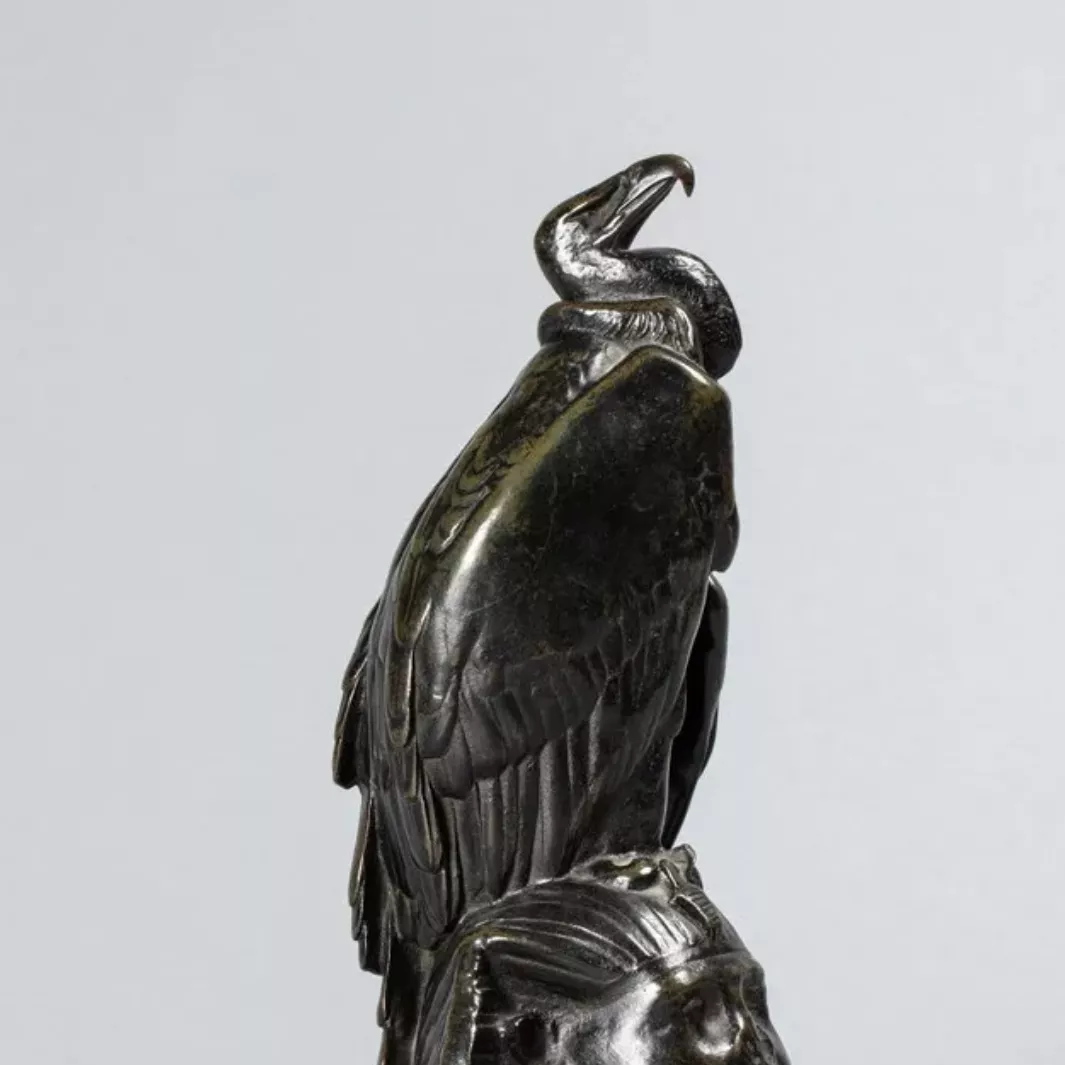
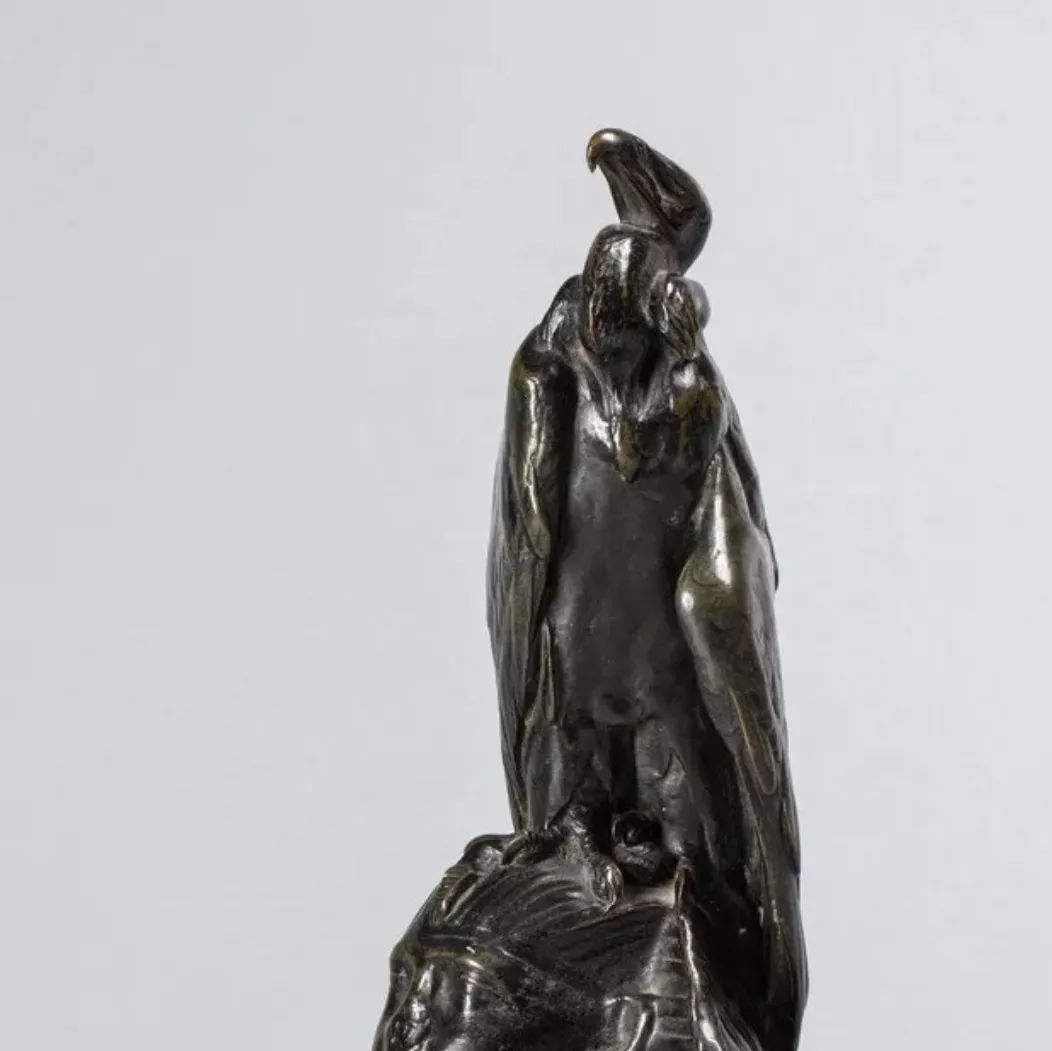
Auguste Nicolas Cain (1821 - 1894) was a master of animal sculpture. An emblematic figure of the school, he excelled in the representation of wild and domestic animals, with remarkable anatomical precision.
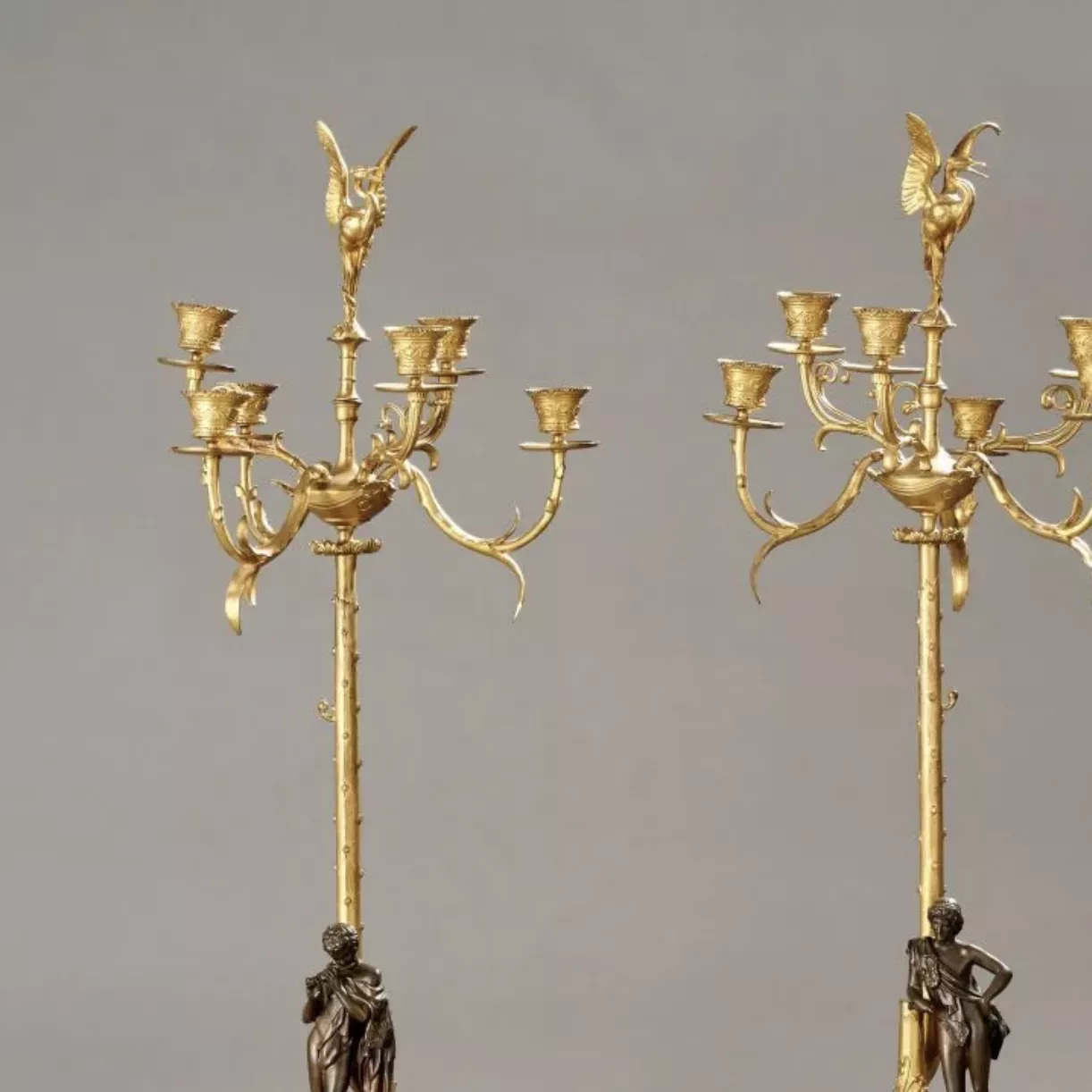
From his debut at the 1846 Salon, he produced small animal statuettes, before moving on to monumental works from 1868 onwards. He is therefore very good at both smaller formats (bronzes, boxes, candelabras) and larger-scale works : lions, tigers, dogs.
Trained under François Rude, Alexandre Guionnet and then Pierre-Jules Mêne, whose son-in-law he became in 1852, he inherited academic know-how combined with scientific observation of animals.
He studied his subjects at the Jardin des Plantes, which reinforced the anatomical veracity and expressive personality of his subjects. He founded his own foundry and then took over his father-in-law's, producing bronze models both in series and as one-offs.
The subjects are animated by restrained vitality (tigers, lions, dogs ; frozen in a moment of dramatic tension or natural calm). The anatomy is perfectly rendered, while the surface retains the marks of the work (scratches, folds of flesh, texture of the coat), giving the subjects a tactile presence.
The style is split between academic realism and expression of an animal character, with a balance between suggested movement and finished work. He created monumental sculptures commissioned for public spaces (Lion of Nubia and its prey, as well as Tigre terrassant un crocodile at the Jardin des Tuileries, Chiens de meute at the Château de Chantilly and his equestrian statue in Geneva.
His institutional reach underlines his reputation and establishes his posterity in urban and museum heritage.
Auguste Nicolas Cain and animal bronze
Auguste Nicolas Cain was born in Paris in 1821, in a rich artistic context. He first trained as a sculptor in François Rude's studio, then with Alexandre Guionnet, before joining Pierre-Jules Mêne, one of the great animal sculptors of the period.
He became Mêne's son-in-law in 1852, which also sealed his career in the world of foundry and art bronze. He presented his first animal work at the 1846 Salon, entitled Deux linottes défendant leur nid contre un loir.
It already reveals his sense of naturalistic observation and movement. The artist worked extensively from nature, regularly visiting the Jardin des Plantes, like many animal artists of the period, to draw and study her subjects.
He specialized in wild animals, particularly wild beasts, dogs, deer and birds, in contrast to other sculptors who focused more on domestic animals, and exhibited regularly at the official Salons under the Second Empire and the Third Republic.
He took over his father-in-law's foundry, enabling him to master all stages of production, from modeling to casting. He also collaborated with public authorities on decorative projects for Parisian gardens, squares and monuments.
Auguste Cain created famous animal groups for the Tuileries and the Chiens de Vénerie for the Château de Chantilly. His monumental art earned him official recognition: he was made a Chevalier de la Légion d'Honneur in 1869.
He was one of the few animal artists to go from salon bronze to the scale of urban sculpture, making a lasting mark on the public landscape. He died in Paris in 1894. He left a prolific and widely distributed body of work, both in public and private collections.
His name remains attached to his mastery of animal expression and ability to translate the energy of the living into matter, alongside other great names in animal sculpture such as Barye, Guyot or Valton.
Focus on Tigre terrassant un crocodile, 1869
Tigre terrassant un crocodile is a monumental bronze measuring (1.8 m x 2.36 x 1.1 m) cast by Thiébaut Frères, located at one of the main entrances to the Jardin des Tuileries in Paris.
The tiger dominates the scene, its paw resting on the prostrate crocodile, its dynamic posture emphasizing the fight. The interaction is realistic between two exotic species, captured in a frozen moment of deadly victory.
The tiger's expression is ferocious and its anatomy taut (the muscles, roughness of the skin and scales of the crocodile are finely defined. The artist seeks a perfect balance between anatomical realism (scientific rendering) and theatrical staging (dramatic composition).
The details of the claws, teeth and skin folds are extremely precise, testifying to careful observation in a natural environment. The surfaces are finely patinated, preserving a tactile sensation, and a natural play of light on the volumes.
This work is emblematic of the École des animaliers, continuing the tradition of Barye, Guyot or Alexandre Léonard with heightened intensity. The first exhibition at the Salon was followed by a public commission from the State. The work was thus placed in the open air, a sign of a consolidated reputation with institutions.
The sculpture marks an evolution towards monumental animal scenes, intended for public spaces. This work embodies the struggle for dominance in nature. The effect is immersive and empathetic the viewer is confronted with an almost savage proximity to the animals.
By the size of the format and the frozen violence, the work proposes a form of monumental animal theater, where nature becomes spectacle.
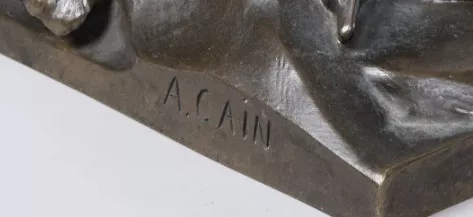
Recognizing Auguste Cain's signature
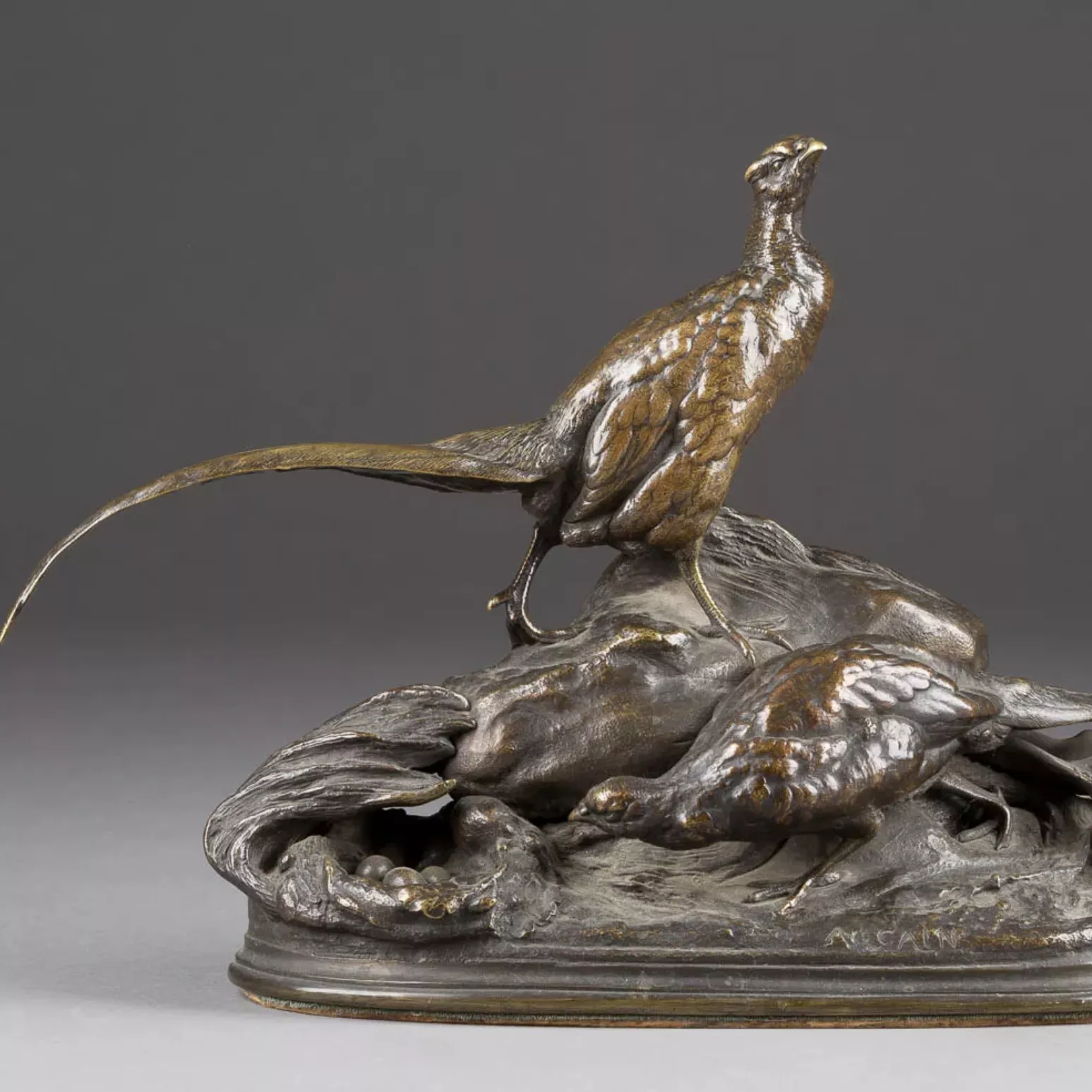
Auguste Cain sometimes signs his sculptures, most of the time. However, expertise remains paramount.
Knowing the value of a work
If you happen to own an Auguste Cain work or one after the artist, don't hesitate to request a free appraisal using our form on our website.
A member of our team of experts and certified auctioneers will contact you promptly to provide you with an estimate of the market value of your work, as well as ad hoc information about it.
If you are considering selling your work, you will also be accompanied by our specialists in order to benefit from alternatives for selling it at the best possible price, taking into account market inclinations.
Estimate in less than 24h
Discover in the same theme

Rating and value of paintings by Henri Adrien Tanoux
Adrien Tanoux was a 19th-century Orientalist and genre painter whose drawings and oil paintings are highly prized at auction.
Learn more >

Rating and value of paintings by Marie Guillemine Benoist
Marie Guillemine Benoist is a 19th-century neoclassical artist whose works are highly valued at auction.
Learn more >

Rating and value of paintings by Lady Elizabeth Thompson
Lady Elizabeth Thompson is a British artist who has worked on history and military scenes. Her works are very successful.
Learn more >
D'autres bronzes anciens vendus aux enchères

Estimated Between €5,000 and €8,000
Agathon LEONARD (1841-1923), Dancer with scarf, bronze lamp, ed. Susse frères

Estimated 3.000 - 5.000
Raoul LARCHE (1860-1912) The fisherman, Bronze with green patina

Estimated 600 - 800
Hercules Farnese, bronze, reproduction after Glycon of Athens

Estimated 1.500 - 3.000
Jules FRANCESCHI (1825-1893) Hébé et l'aigle de Jupiter, gilded bronze

Estimated 800 - 1.500
Henry Étienne DUMAIGE (1830-1888), bronze print

Estimated 1.500 - 3.000
Antoine Louis BARYE (1796-1875) Eagle and heron, bronze print with shaded brown-green patina

Secure site, anonymity preserved

Auctioneer approved by the State

Free and certified estimates
Frequently asked questions
-
Who is Auguste Cain, and what is his artistic style?Auguste Nicolas Cain (1821–1894) was a master French animal sculptor, trained by François Rude and Pierre-Jules Mêne, whose son-in-law he later became. He specialized in the precise and lifelike depiction of wild and domestic animals (lions, tigers, dogs), combining anatomical realism with scientific observation at the Jardin des Plantes. His art is characterized by a restrained vitality, perfectly rendered anatomy, and an ability to capture the energy of living creatures in bronze, ranging from small-scale works to monumental sculptures for Parisian public spaces.
-
What are the price ranges for Auguste Cain's sculptures?The prices of Auguste Cain’s works vary considerably depending on the technique and format. Light fixtures sell for between €140 and €3,500, while three-dimensional sculptures fetch between €40 and €145,000. In 2024, a major bronze sculpture exceeded its initial estimate, selling for €145,000. This wide price range reflects the diversity of his body of work, from small statuettes to large, monumental compositions.
-
How can a work attributed to Auguste Cain be authenticated?To authenticate a work by Auguste Cain, we recommend that you request a free appraisal from Auctie's using our online form. A state-certified expert or auctioneer will examine your sculpture and provide you with a detailed and reliable appraisal. This appraisal, which is non-binding on your part, will be completed within 48 hours.
-
Is this a good time to sell a sculpture by Auguste Cain?Yes, this is an excellent time to sell a work by Auguste Cain. The market for 19th-century animal sculpture is experiencing strong demand, particularly in France, and prices are rising consistently. Collectors are actively seeking out his bronzes, and recent auctions have shown sales exceeding initial estimates.
-
How does the sales process work at Auctie's?At Auctie's, the process is simple and transparent: you start by requesting a free, no-obligation appraisal from our experts and certified auctioneers. Once the estimate is provided (within 48 hours), if you wish to sell, our specialists will guide you toward the best solution to achieve the highest possible price and will support you from the appraisal through to the sale of your artwork.
