



Rating and value of works, paintings, sculptures by Max Ernst

Key takeaways
- Max Ernst's works sell for between €5 and €20,942,145, with his sculpture "The King Playing with the Queen" fetching €20.9 million in 2022.
- Oil-on-canvas paintings range from €60 to €10.2 million, while prints range from €5 to €99,950 depending on quality.
- A German-French-American surrealist artist (1891–1976), Max Ernst left his mark on the 20th century through his technical innovation and his major influence on the surrealist movement.
If you own a work by or after Max Ernst, and would like to know its value, our state-approved experts and auctioneers will offer you their appraisal services. Our specialists will carry out a free appraisal of your work, and provide you with a precise estimate of its current market value. Then, if you'd like to sell your work, we'll guide you towards the best possible arrangement to obtain the optimum price.
Rating and value of the artist Max Ernst
The artist Max Ernst leaves behind a classic body of work, consisting mainly of Surrealist paintings. Today, prices for his works are skyrocketing under auctioneers' hammers. His paintings are highly prized, especially by English and American buyers. The price at which they sell on the art market ranges from €5 to €20,942,145, a very substantial difference, but one that speaks volumes about the value that can be attributed to Max Ernst's works. In 2022, his surrealist bronze sculpture Le roi jouant avec la reine sold for €20,942,145, whereas it was estimated at between €8,000,000 and €12,000,000. Its value is at its highest in recent years.
Order of value from a simple work to the most prestigious
Technique used | Result |
|---|---|
Estamp | From €5 to €99,950 |
Drawing - watercolor | From 20 to 876 540€ |
Oil on canvas | From 60 to 10,252,950€ |
Volume sculpture | From 170 to 20,942,145€ |
Estimate in less than 24h
Style and technique of artist Max Ernst
Max Ernst produced mainly prints, but also sculptures and paintings. He was part of the Surrealist movement and was influenced by the Dada group. Throughout his career, he lived in several countries and met many different artists, multiplying his sources of inspiration.
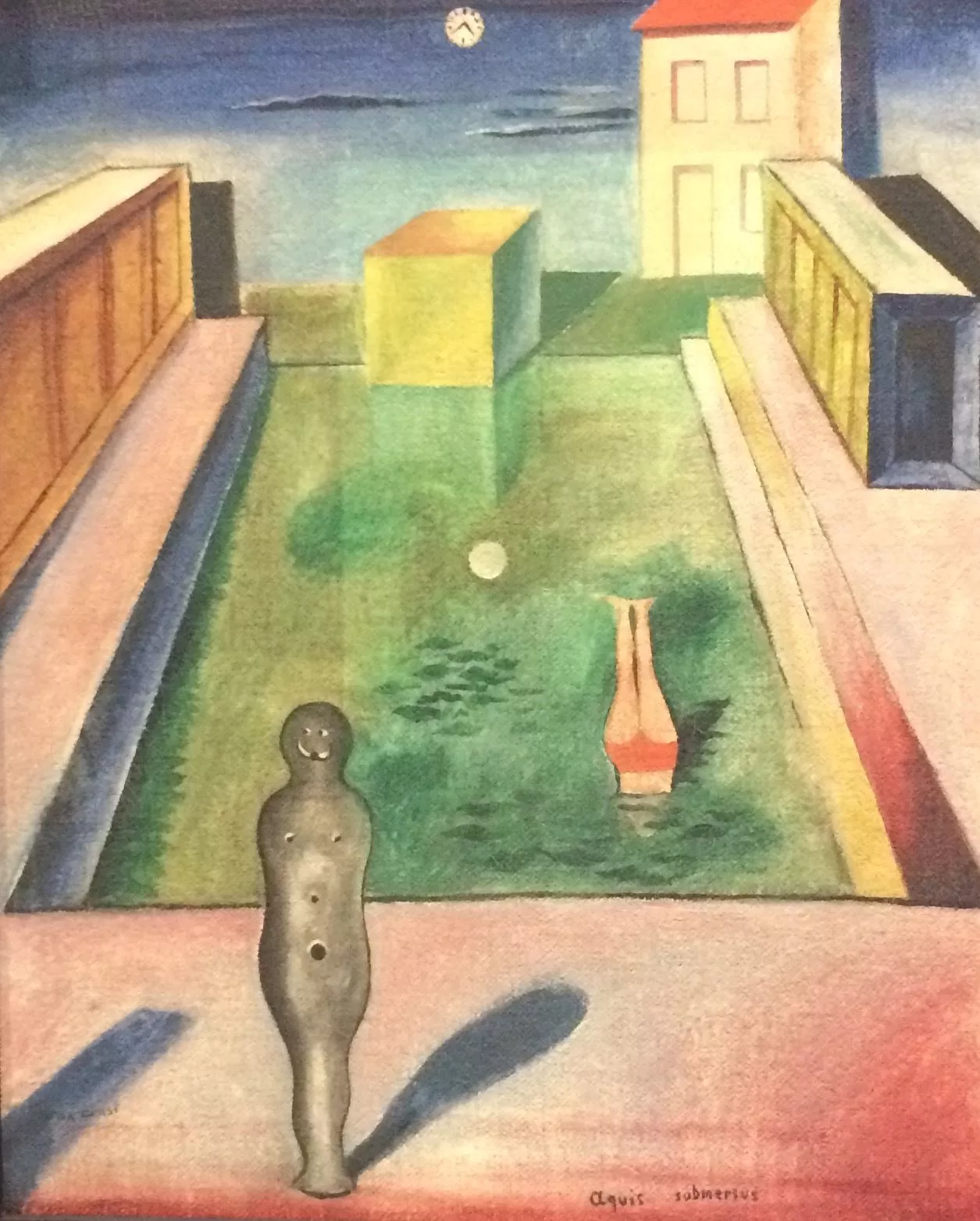
Max Ernst, international figure of surrealism
Max Ernst (real name Maximilian Maria Ernst), a German, French and American artist, was born in 1891 in the Rhineland province of the German Empire. His father, Philippe Ernst, was a painter. He studied philosophy in Bonn, but soon realized that his vocation was pictorial and sculptural art. He exhibited with the Cavalier Bleu group in Berlin in 1911, then rubbed shoulders with Robert Delaunay and Guillaume Appolinaire, and moved to Paris. He was mobilized during the First World War, and married Luise Strauss.
After fighting at the front, he remained in Cologne, where he rubbed shoulders with members of the Dada movement. He became friends with Paul Klee and experimented with collage, like Picasso and Braque at the same time. He exhibited some of his collages with the Dada group. The exhibition is closed for disturbing the peace, under the same conditions as that of Georg Baselitz. He becomes friends with Tristan Tzara and Sophie Tauber. He returns to Paris for further successful exhibitions. He collaborates with Joan Miro to decorate shows. He leaves the group of Surrealist intellectuals because of Paul Éluard, who wants to convert him to Trotzkyism a few years later.
In 1939, he is one of the artists who have taken refuge in Marseille and Aix-en-Provence with Chagall, who are in the sights of the Nazis. The United States will grant him a visa to go into exile in New York, thanks to Varian Fry and the American Relief Committee for Artists. He left with Peggy Guiggenheim, his partner at the time. There, his painting was influenced by abstract expressionism. He worked with André Breton and Marcel Duchamp. He then moved to Arizona, where he married again, and returned to France. He spent the rest of his life between his home in Touraine and Paris, where he died in 1976.
Max Ernst's imprint on his period
Max Ernst marked his time with his provocative spirit and constant artistic renewal. He played a major role in the evolution of the 20th-century French Surrealist group and experimented with new artistic techniques throughout his life. Today, his work is highly prized at auction, and collectors play a major role in preserving his work, even if some of his works are exhibited in museums.
Recognizing the artist's signature
Not all Max Ernst's works are signed. They may be at the bottom of the painting, but if you think you own one, it's best to have it appraised to be sure of the originality of your property.
Knowing the value of a work
If you happen to own a work by Max Ernst or after the artist, don't hesitate to request a free appraisal using our form on our website. A member of our team of experts and certified auctioneers will contact you promptly to provide you with an estimate of the market value of your work, as well as any relevant information about it. If you wish to sell your work, you will also be accompanied by our specialists in order to benefit from alternatives to sell it at the best possible price, taking into account the inclinations of the market.
Estimate in less than 24h
Works from the same period sold at auction

Estimated 15.000 - 20.000 €
Alfred Auguste Janniot (1889-1968) attributed to : Very large bas-relief

Estimated 80 € - 120 €
Paul COLIN (1892-1985) "Impression de", Rugby au casino de Paris 1928.

Estimated 4.000 - 6.000 €
GASTON CHAISSAC (1910-1964) Composition 1947, Gouache and Indian ink on paper.

Estimated 100-200€
Vassiliew Slavik, Oil on canvas
Discover in the same theme

Value and quotation of works, paintings by Jean Fusaro
Jean Fusaro, a 20th-century painter, produced a number of important works that are appreciated and quoted on the art market. Estimated in 24h.
Learn more >

Rating and value of works, fashion drawings, paintings by Ge...
Georges Barbier was a twentieth-century French illustrator and fashion designer who produced drawings and paintings listed at auction.
Learn more >

Rating and value of paintings by Harold Speed
Harold Speed is an English painter who has produced valuable and successful works at auction. Estimated in 24h.
Learn more >

Secure site, anonymity preserved

Auctioneer approved by the State

Free and certified estimates
Frequently asked questions
-
Who is Max Ernst, and what is his role in art history?Max Ernst (1891–1976) was a major figure in international Surrealism. A German, French, and American artist, he left his mark on the 20th century through his innovative spirit and constant experimentation. Influenced by the Dada movement after World War I, he collaborated with the greatest artists of his time (Miró, Breton, Duchamp) and successfully adapted his style while in exile in the United States, drawing inspiration in particular from Abstract Expressionism.
-
What is the price range for Max Ernst's works at auction?Prices for works by Max Ernst vary considerably depending on the medium and the piece. Prints range from €5 to €99,950, drawings and watercolors from €20 to €876,540, oil-on-canvas paintings from €60 to over 10 million euros, and three-dimensional sculptures from €170 to over 20 million euros. The sculpture “The King Playing with the Queen” fetched €20,942,145 in 2022, far exceeding its initial estimate.
-
How can I authenticate a Max Ernst artwork that I own?Not all of Max Ernst's works are signed, which makes authentication difficult. We recommend that you request a free, no-obligation appraisal from Auctie's by filling out the form on our website. A certified expert or auctioneer will examine your artwork and provide you with an accurate estimate as well as the necessary information regarding its authenticity.
-
Is this the right time to sell a work by Max Ernst?Yes, this is an excellent time to sell a work by Max Ernst. His market value is at its highest in several years, driven by strong international demand, particularly from British and American buyers. The market shows a continued appreciation for his surrealist paintings and sculptures, as evidenced by the fact that his works have exceeded estimates at recent auctions.
-
How does the appraisal process work at Auctie's?The appraisal is completely free and non-binding. Simply fill out a form on our website with details and photos of your artwork. A state-certified expert or auctioneer will contact you within 48 hours to provide an accurate assessment of its market value. If you decide to proceed, we’ll then guide you through the best options for selling your piece at the highest possible price.
