



Value and quotation of works, ceramics by Théodore Deck

Key takeaways
- Théodore Deck’s ceramics fetch prices ranging from €30 to €66,300, with a pair of vases selling for €66,300 in 2013, exceeding its initial estimate.
- “Deck blue” is the artist’s distinctive signature—a deep, nuanced turquoise color found in all his creations and instantly recognizable.
- Théodore Deck (1829–1900) remains a pioneer of Art Nouveau without adhering to any specific movement, combining technical innovation and formal perfection in his works.
If you own a piece made by the artist Théodore Deck or in the taste, and would like to know its value, our state-approved experts and auctioneers will offer you their appraisal services.
Our specialists will carry out a free appraisal of your ceramic, and provide you with a precise estimate of its value on the current market.
Then, if you wish to sell your piece, we'll direct you to the best possible arrangement to obtain the optimum price.
Rating and value of the artist Théodore Deck
Théodore Deck is a French ceramist known to faience enthusiasts. If you own one, it may be worth more than you think. On the art market, the prices of his works can be very high at the auctioneers' gavel.
His ceramics are particularly prized and the price at which they sell on the art market ranges from €30 to €66,300, a fairly substantial range, but one that says a lot about the value that can be attributed to Théodore Deck's works.
In 2013, a pair of earthenware "elephant" vases sold for €66,300 while they were estimated at between €30 000 and €40 000.
Order of value from simple faience to the most prestigious
Object type | Estimation |
|---|---|
Luminaire | 350 to 28 300€ |
Ceramic vase | 50 to 66 300€ |
Estimate in less than 24h
Style and technique of artist Théodore Deck
Théodore Deck develops a style all his own, a kind of visual singularity that makes all the richness of his work.
Green, turquoise blue and touches of purple, which he handles with great subtlety, can be found in all his creations, but it is above all the deep, nuanced turquoise blue that will become his true signature.
This distinctive blue will bear the name "Deck blue" and become a color in its own right, recognizable among all. Deck is not just a ceramist, but a true innovator.
Although he is considered a precursor of Art Nouveau, he eludes any strict definition of an artistic movement.
In fact, he has this particularity of being one of those artists whose work, as a whole, becomes a reference, without needing to be attached to a particular school or movement.
His work, off the beaten track, eludes classification and forges a place of its own in art history.
His pieces, of great finesse, are the fruit of meticulous workmanship, a dialogue between tradition and modernity, and a quest for perfection in form and color. With him, ceramics become sculpture, objects become works of art in their own right.
Théodore Deck, with his unique mastery of ceramics and his distinctive style, is stylistically close to many artists who, like him, have combined innovation and tradition in their work.
He shares an affinity with artists of the Arts and Crafts movement, such as William Morris, whose attention to the beauty of handcrafted forms and use of nature-inspired motifs come together in Deck's creations, particularly in the intensity of his colors and richness of his textures.
His work is also similar to that of certain Art Nouveau artists, although he is not directly associated with this movement.
The influence of Art Nouveau can be seen in the use of fluid, organic motifs, such as those seen in the creations of Émile Gallé, whose decorative lines and forms recall Deck's quest for harmony between material and nature.
In addition, his taste for technical experimentation and the search for new visual effects brings him closer to the world of the precursors of modern ceramics, such as artists like Jacques and Dani Ruelland, who have also explored new approaches while remaining rooted in artisan tradition.
Finally, his work also shares similarities with the work of Gustave Moreau in that both express a sensitivity to color and a highly personal approach, outside the mainstream, resulting in work where technique and poetry meet.
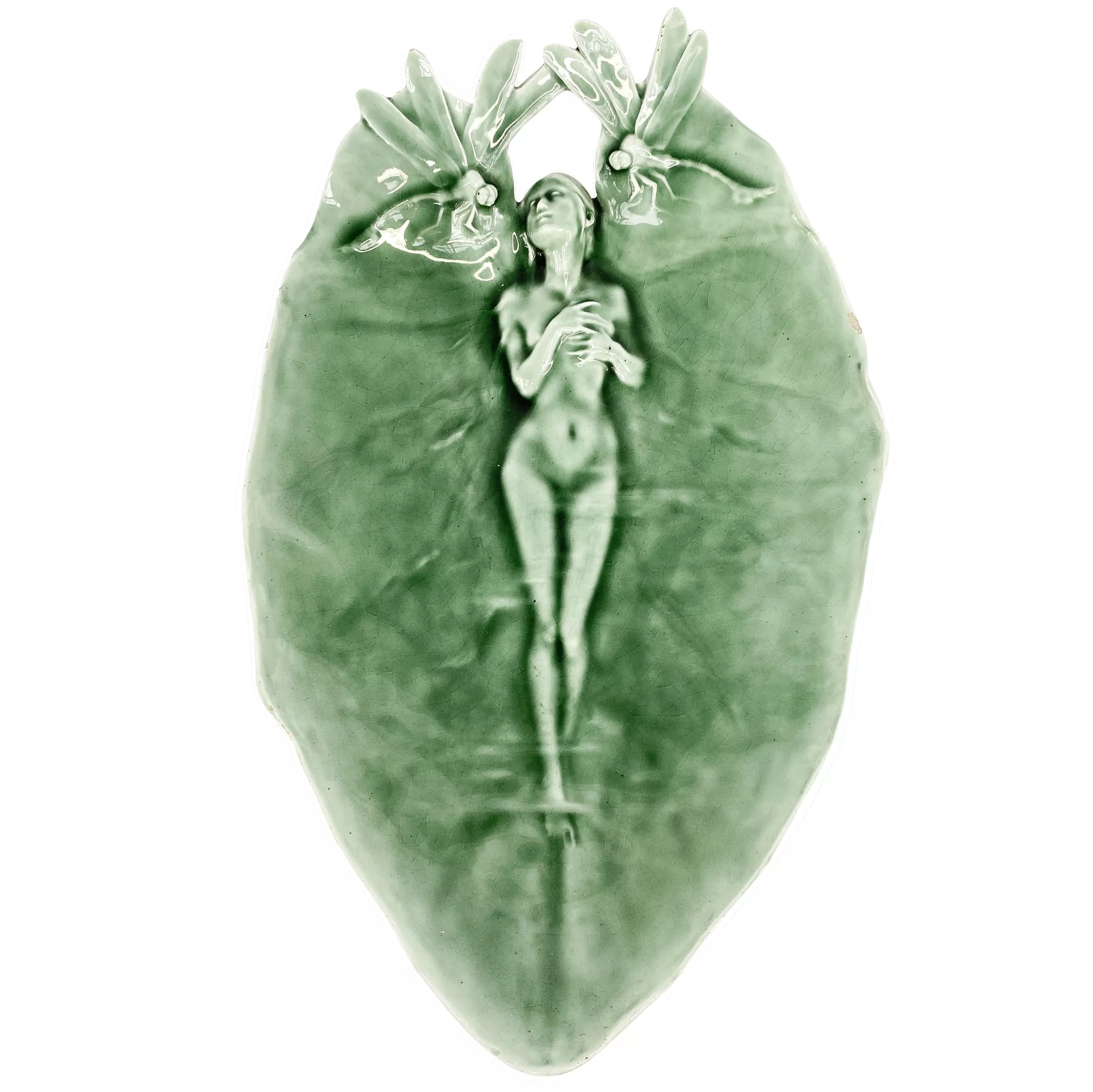
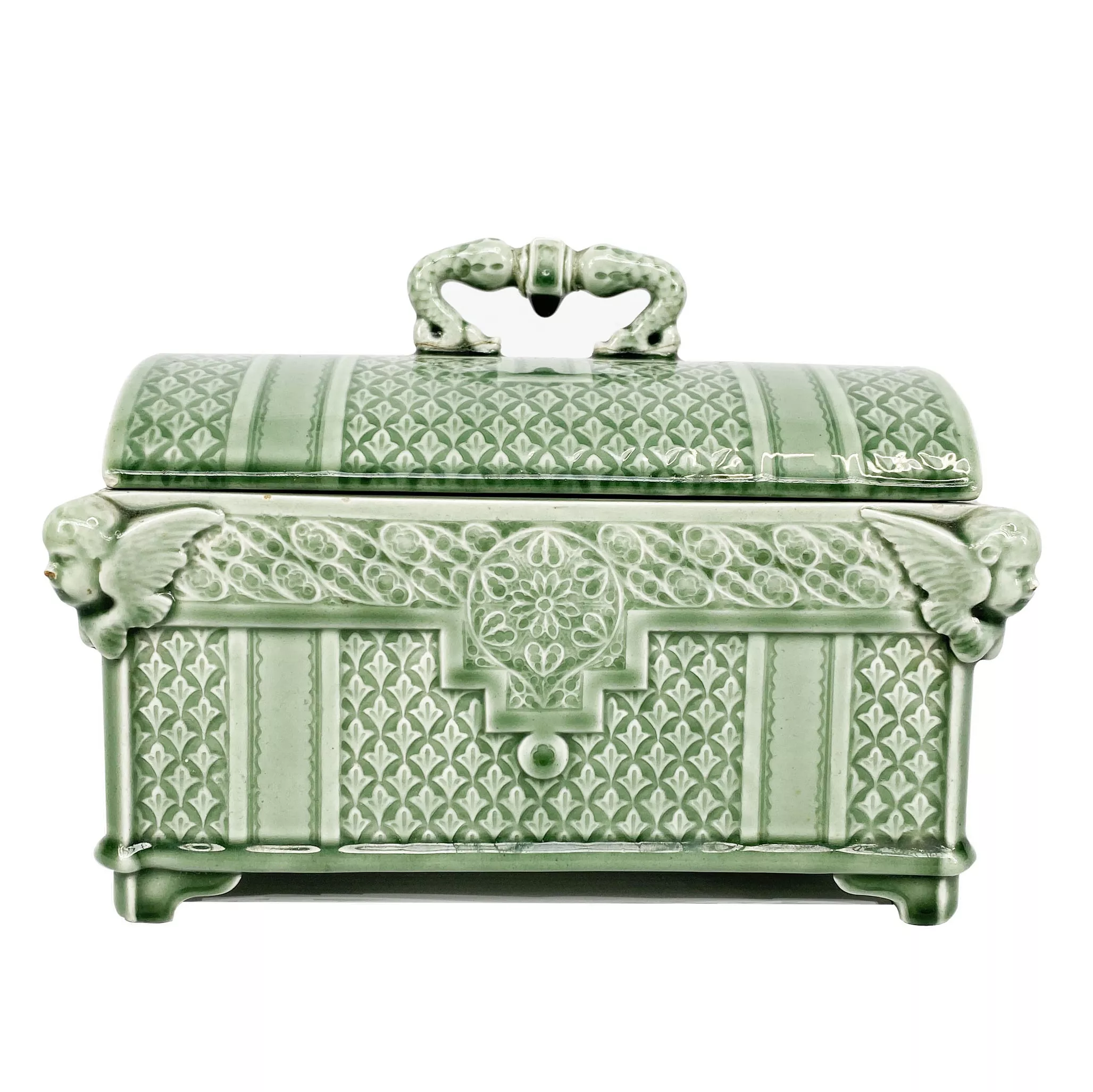
Théodore Deck, from Alsace to the Deck factory
Théodore Deck (1829-1900), a French artist, became a key figure in French and international ceramics. He belonged to no specific movement, but over the course of his career developed his own technique and style.
Born in Alsace, in the Haut-Rhin department, Deck showed an early interest in the sciences, but it was to ceramics that he decided to turn, inspired by the work of a potter in Switzerland.
He then apprenticed with a potter, where he learned several techniques, including inlaying colored pastes. At the same time, he drew and worked with sculptors, nurturing his artistic vision.
His desire to deepen his knowledge prompted him to leave for Germany, following the route of the King of Cologne and the kaolin deposits. This trip enabled him to perfect his skills and receive prestigious commissions.
He then left for Paris, where he worked in several workshops before the 1848 revolution. His brother joined him in Paris, and together they founded the Deck factory, a workshop where he displayed all his skills.
He took part in numerous exhibitions, including the 1862 Exposition Universelle and the Exposition des Arts Industriels. His works were also shown throughout Europe, and his reputation grew beyond the borders.
Deck also wrote to share his research and techniques in ceramics, long before his appointment, four years before his death, as director of the Sèvres factory.
He then left the running of the factory to his brother and his descendants, thus ensuring the continuity of his work.
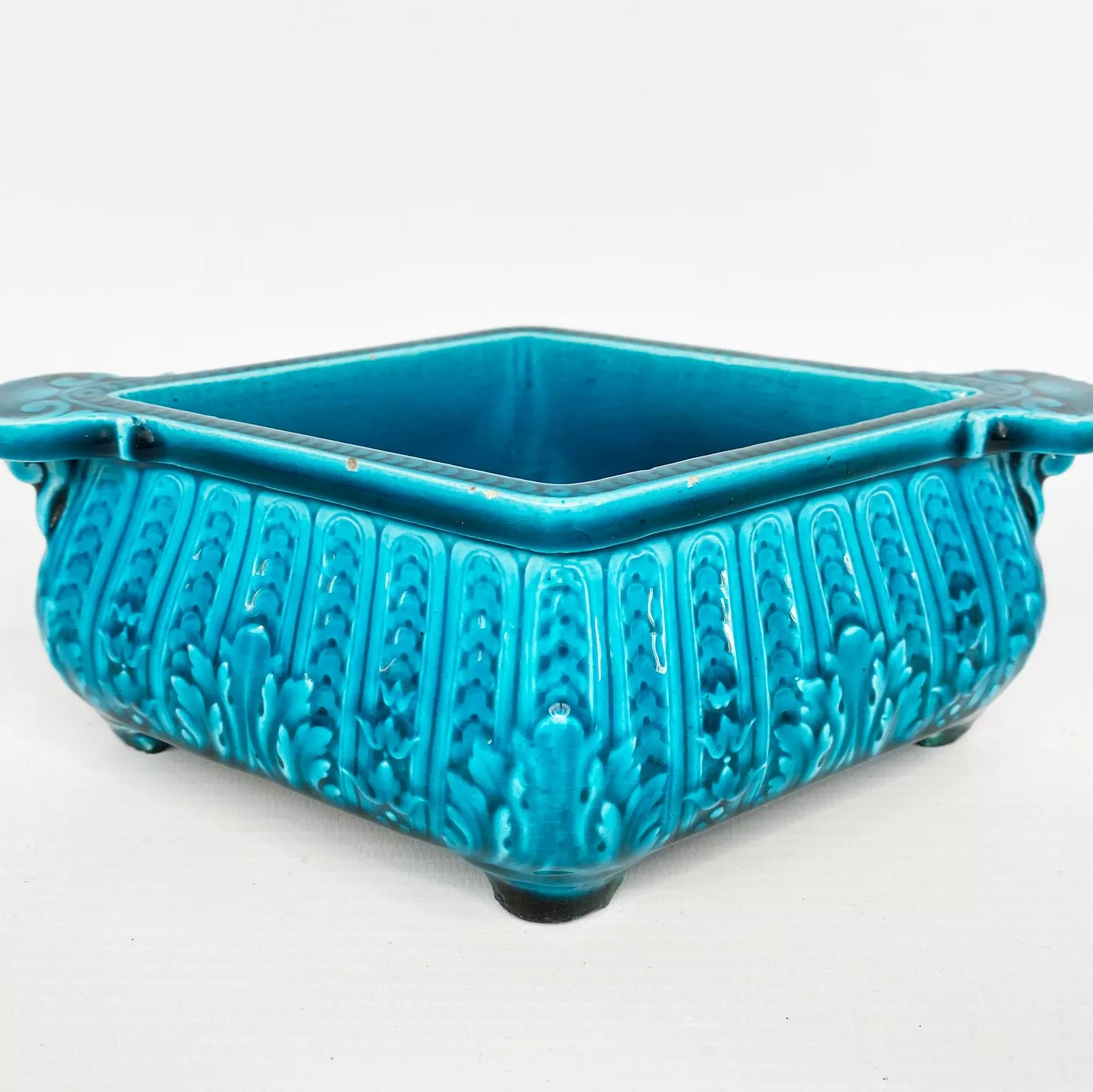
Focus on Théodore Deck's Vase aux pivoines
The Turquoise Vase with Peonies by Théodore Deck is a masterpiece that perfectly illustrates the singularity of his art, where the intense, deep turquoise blue makes a striking statement.
This blue, soon to be known as the famous "Deck blue", is here sublimated by the depth of the enamel, a unique, almost mysterious blue that seems to capture and reflect light.
On this vibrant blue canvas, Deck composes a decoration of peonies in relief, sculpted with remarkable meticulousness. The dazzling white flowers contrast delicately with the turquoise background, as if floating on a shimmering surface.
Each petal is carefully modeled, the curves softened, almost caressing, giving the work a sensual dimension that invites attentive observation.
Deck doesn't just follow traditions; he reinvents them. Inspired by Asian art, from which he adopts certain motifs, he twists the forms to suit his personal vision, without ever falling into imitation.
Far from being mere ornaments, his peonies appear as genuine sculptures, testifying to his ambition to go beyond utilitarian ceramics.
The almost silky-smooth glaze surface reveals his technical virtuosity; it captures every sliver of light, varying from turquoise to midnight blue depending on the angle, lending the work a fascinating depth.
The Vase turquoise aux pivoines is more than an object: it is an artistic statement. With it, Deck affirms that ceramics can rise to the rank of the fine arts, through the finesse of its execution and the richness of its details.
There is, in this work, a constant dialogue between tradition and innovation, a quest for perfection that places Deck outside any current, while at the same time making him a precursor.
Through this piece, ceramics become sculpture, and the object is transformed into a true work of art, witness to Deck's rare talent for making each creation as powerful as it is iconic.
Itinerary of an exceptional ceramist
The value of his works
In the eyes of art experts and collectors, Théodore Deck is remarkable for his artistic singularity. He has a growing inspiration throughout his career and innovates in his art to the very end.
The majority of his works are held in private collections, which is why they are present on the auction market.
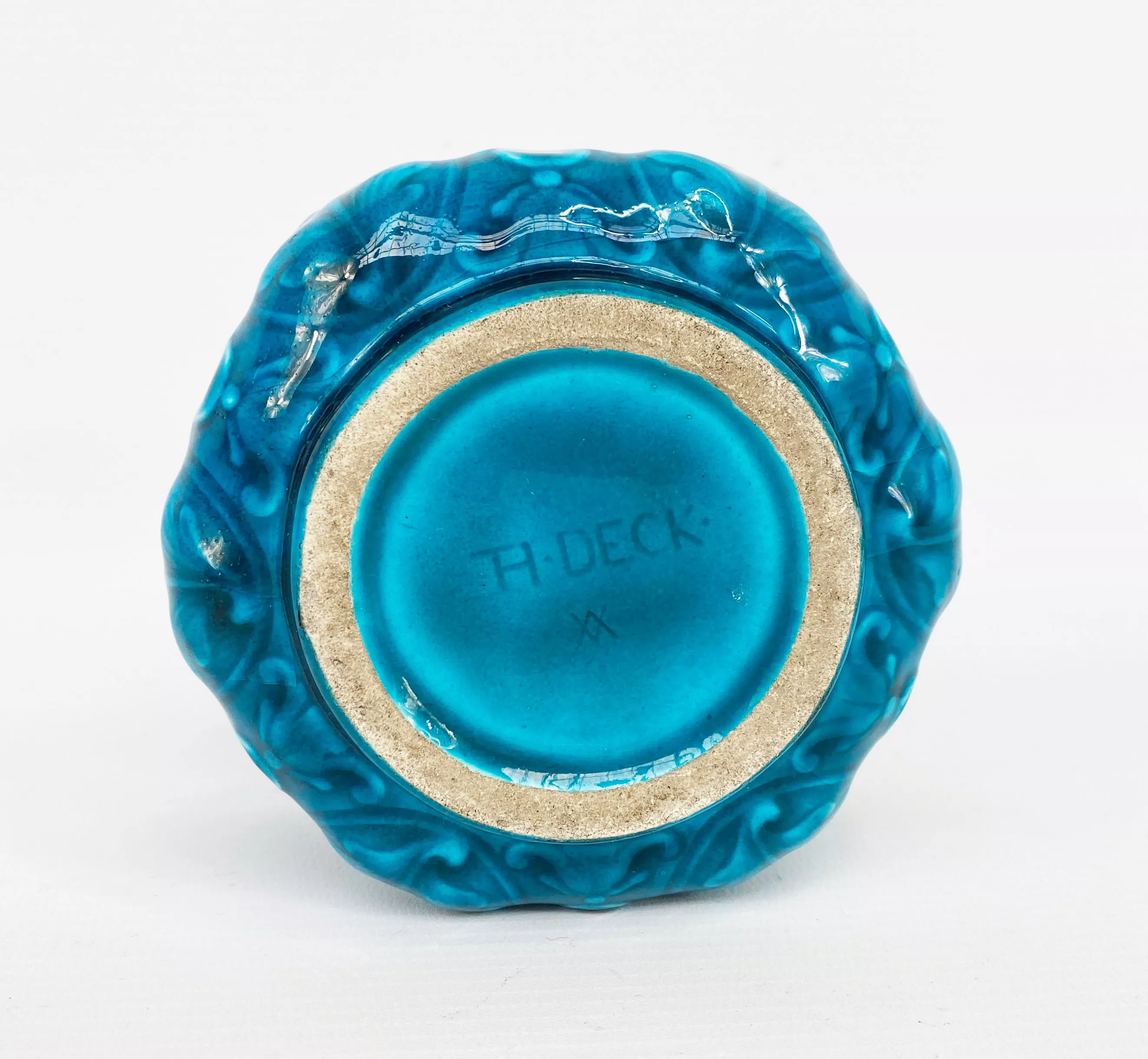
Recognizing Théodore Deck's signature
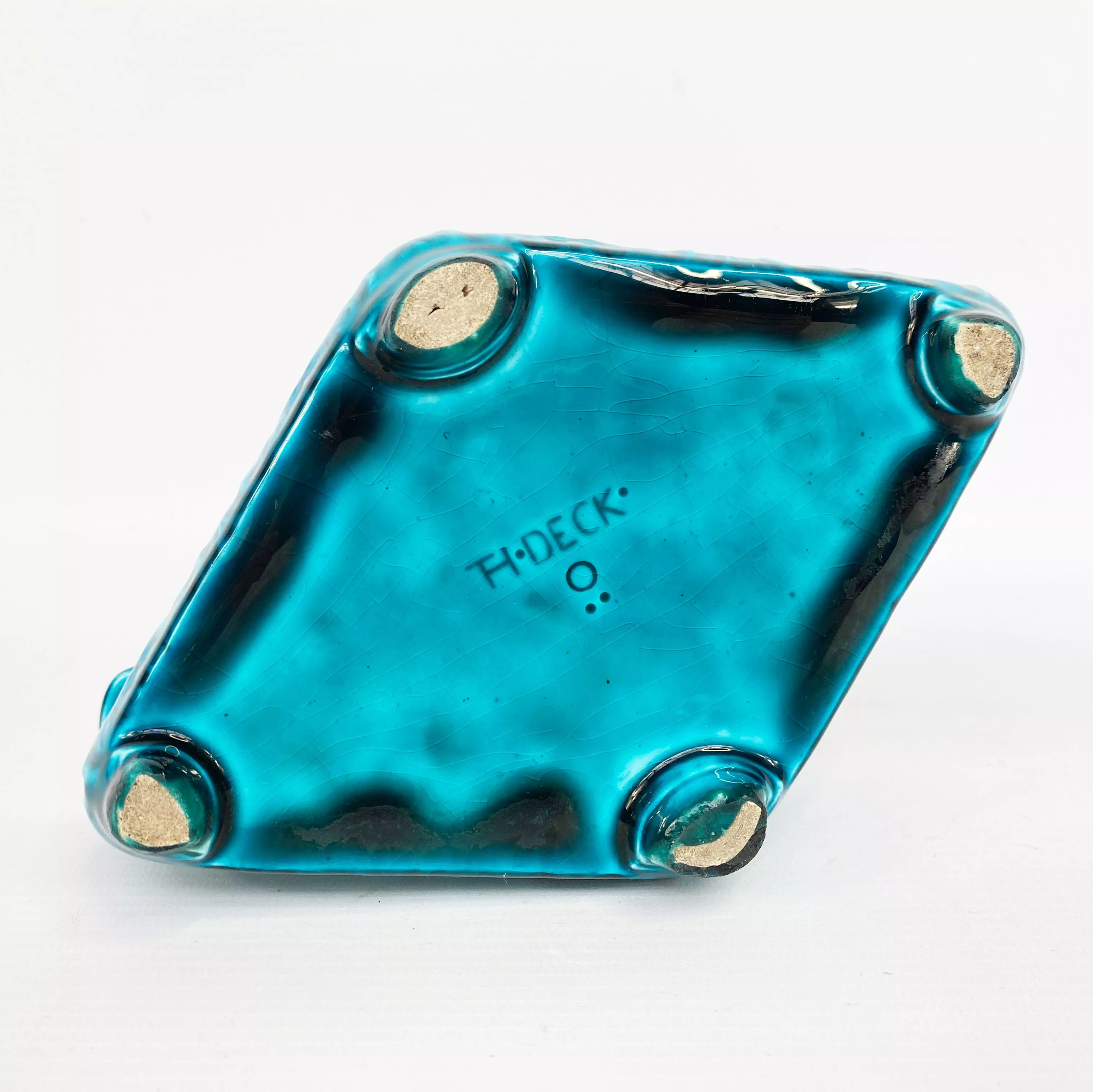
Theodore Deck's ceramics are normally signed and dated on the back of the ceramic. However, as his work is little mastered and copied, it is important to consult an expert.
Knowing the value of a work
If you happen to own a work by or after Theodore Deck, don't hesitate to request a free appraisal using our form on our website.
A member of our team of experts and licensed auctioneers will contact you promptly to provide you with an estimate of the market value of your work, not forgetting to send you ad hoc information about it.
If you are considering selling your work, you will also be accompanied by our specialists in order to benefit from alternatives for selling it at the best possible price, taking into account market inclinations.
Estimate in less than 24h
Discover in the same theme

Rating and value of works, drawings, paintings by Fernand Ve...
Fernand Verhaegen is a twentieth-century Belgian painter who produced drawings and oils on canvas that are highly regarded on the auction market.
Learn more >

Rating and value of paintings by Lin Fengmian
Lin Fengmian is an avant-garde Chinese painter who has produced numerous paintings that are highly valued on the art market.
Learn more >

Rating and value of paintings by Léon Zack
Léon Zack is a Russian abstract painter who produced works that are highly rated and valued at auction. 100% free estimate!
Learn more >
Other similar works sold at auction

Estimated 2.000 - 4.000 €
PABLO PICASSO (1881-1973) ATELIER MADOURA " Profil de femme n° 67 " Round plate.

Estimated Between €3,000 and €5,000
Camille Fauré, enamelled vase with geometric decoration

Estimated 800 - 1.500€
Théodore Deck, earthenware planter

Estimated 500 - 1.000
In the style of Théodore DECK (1823-1891) Amphora vase with gazelles

Estimated 1.000 - 2.000
Théodore DECK (1823-1891), Round planter in glazed earthenware

Estimated 600 - 800
Théodore DECK (1823-1891), Large polychrome ceramic duck

Secure site, anonymity preserved

Auctioneer approved by the State

Free and certified estimates
Frequently asked questions
-
Who is Théodore Deck, and why are his works so highly prized?Théodore Deck (1829–1900) was a leading French ceramic artist, known for revolutionizing the art of ceramics by blending tradition and modernity. Although a pioneer of Art Nouveau, he defies strict classification and has established himself as a key figure thanks to his distinctive style, particularly his famous “Deck blue,” a deep turquoise blue that became his signature. His works, characterized by great technical finesse and exceptional artistic richness, are today highly sought after by collectors around the world.
-
What is the price range for Théodore Deck's ceramics and vases?Prices for Théodore Deck’s works vary considerably depending on the type and quality: ceramic vases can be estimated at between €50 and €66,300, while light fixtures range from €350 to €28,300. In 2013, a pair of earthenware “elephant” vases sold for €66,300, despite being estimated at between €30,000 and €40,000, illustrating the potential for appreciation of these exceptional pieces.
-
How can you authenticate a work by Théodore Deck and verify its authenticity?Théodore Deck’s ceramics are typically signed and dated on the back of the piece. However, since his work has been copied, it is essential to consult an expert to verify authenticity. At Auctie's, you can request a free, no-obligation appraisal from our auctioneers and certified experts, who will provide you with a comprehensive evaluation within 48 hours.
-
How can I get a free appraisal of a Théodore Deck ceramic piece at Auctie's?To find out the value of your artwork, simply request a free appraisal using the form on our website. A member of our team of experts and certified auctioneers will contact you promptly to provide you with a precise estimate of your item’s market value, along with relevant information. This appraisal is non-binding and free of charge.
-
How can I sell a piece of ceramics by Théodore Deck for the best price?Auctie's guides you from the appraisal to the auction to ensure the best possible sale of your artwork. After a free appraisal, our specialists will offer you the best options for selling your piece, taking current market trends into account. Entrusting your ceramics to a licensed auction house ensures exposure to international collectors and maximizes the value of your collection.
