



Rating and value of paintings by Friedrich Friedrich Vordemberge Glidewart

Key takeaways
- Works by Friedrich Vordemberge Glidewart, a German painter of geometric abstraction, sell for between €15 and €280,000, depending on the technique used.
- In 2015, his painting “Composition No. 42” exceeded its estimate (€100,000–150,000) by fetching €280,000 at auction.
- A pioneer of pure abstraction as early as the 1920s, he was a member of the De Stijl group and a leading figure in the European geometric avant-garde.
If you own a work by or after Friedrich Vordemberge Glidewart, and would like to know its value, our state-approved experts and auctioneers will offer you their appraisal services.
Our specialists will carry out a free appraisal of your work, and provide you with an accurate estimate of its value on the current market.
Then, should you wish to sell your work, we will direct you to the best possible arrangement to obtain the optimum price.
Rating and value of the artist Friedrich Vordemberge Glidewart
The artist Friedrich Vordemberge Glidewart leaves behind a classic oeuvre, consisting mainly of abstract paintings. Now, prices for his works are exploding under the auctioneer's hammer.
His paintings are highly prized, especially by German and American buyers. The price at which they sell on the art market ranges from €15 to €280,000, a very substantial range but one that speaks volumes about the value that can be attributed to the works of Friedrich Vordemberge Glidewart.
In 2015, his light-toned oil on canvas Composition n°42 sold for €280,000, while it was estimated at between €100,000 and €150,000. Its value is at its highest in recent years.
Order of value from a simple work to the most prestigious
Technique used | Result |
|---|---|
Estamp - multiple | From €15 to €8,200 |
Drawing - watercolor | From €50 to €46,000 |
Oil on canvas | From €200 to €280,000 |
Estimate in less than 24h
Artist's style and technique Friedrich Vordemberge Glidewart
Friedrich Vordemberge Glidewart is a German painter who gradually adopted radical geometric abstraction : he was one of the first German artists to adopt pure abstraction, in the 1920s.
He eliminated all figurative references in order to focus exclusively on the relationships between lines, shapes and colors in pictorial space.
His vocabulary is formal and uncluttered, his works based on simple elements : circles, squares, straight lines, which are arranged in rigorously calculated compositions. He aims for a universal language, based on order, clarity and balance.
His palette is deliberately restricted : he uses primary colors (yellow, red, blue), black and white, in the tradition of De Stjil, to whom Mondrian belongs, but also Vantongerloo, Van Doesburg and Van der Leck.
This chromatic limitation reinforces the intensity of each element in the composition. He also establishes a close link with Constructivism, being a member of the Cercle et Carré group, then Abstraction-Création, and shares with the Constructivists a rational vision of art where structure prevails over emotion and the surface is treated as a field of pure forces.
He is influenced by design and architecture. Being trained in architecture and design, he applies principles derived from modern architecture to the visual arts: modularity, visual functionality, mathematical precision in the arrangement of forms.
He conducts work on space and visual tension, as each painting is thought of as a dynamic construction : forms are not simply juxtaposed but interact according to relationships of tension, rhythm and density, thus giving the image a continuous inner force.
Through his methodical approach to abstraction, coupled with his demand for formal clarity, Friedrich Vordemberge Glidewart established himself as a major figure of the geometric avant-garde.
His work, marked by great rigor, anticipates essential research in the field of concrete art and minimalism.
The life of Friedrich Vordemberge Glidewart
Friedrich Vordemberge Glidewart was born in Osnabrück in 1899. He went on to study architecture and design in Hanover. This multi-faceted training had a lasting influence on his approach to painting, which he saw from the outset as a constructed, rational and organized space.
He was one of the pioneers of geometric abstraction in Germany, breaking away from all figurative references in the 1920s and moving towards radical abstraction, becoming one of the first German artists to champion an entirely non-objective art form.
He was close to the European avant-gardes, joining the De Stijl group alongside Theo Van Doesburg as early as 1927, and became actively involved in the Cercle et Carré and then Abstraction-Création movements, where he helped define an international geometric art.
He was committed to universal art. Convinced that art must transcend national and emotional boundaries, he promotes a universal plastic language that is based on elementary forms and mathematical relationships.
His work bears witness to a constant desire for clarity, balance and visual logic.
After the Nazi regime came to power, his work was classified as " degenerate art ". He therefore left Germany and settled in the Netherlands.
He went on to teach in Switzerland and Holland, where he developed an academic career while pursuing his plastic research.
His work is discreet but seminal he died in Ulm in 1962. Although his name is much less famous than those of Mondrian or Malevich, his influence is essential to the development of concrete art and post-war geometric abstraction.
Friedrich Vordemberge Glidewart therefore embodies a rigorous and visionary figure of European abstraction. With his work at the crossroads of art, design and architecture, he helped lay the foundations of an objective, universal plastic language, whose influence endures in contemporary minimalist and constructivist art.
Focus on Composition n°15, Friedrich Vordemberge Glidewart, 1925
Composition n°15 is an example of early geometric abstraction. Completed in 1924, this work perfectly embodies the principles of non-objective art that Friedrich Vordemberge Glidewart championed from the outset. The work is made up of simple geometric shapes (rectangles, lines, circles) distributed according to a rigorous grid, without any reference to reality.
The construction of space is millimetric, the composition entirely mastered : the shapes are never placed at random but respond to an internal logic, often based on mathematical proportions.
The painting space becomes a dynamic field of tension between elements, where each form influences the reading of the other.
His palette is restricted, which induces a visual contrast. The artist uses a deliberately limited palette that is dominated by black, white and primary tones (blue, red, yellow), in direct echo of the principles of the De Stijl group.
This chromatic reduction enhances the structure's legibility and gives the whole an almost architectural clarity.
The painting is thought of as architecture : The surface of the painting is treated like a constructed plan, the forms are laid out with an engineer's precision, but without rigidity.
Some obliques introduce dynamics, breaking with pure frontality.
The aim is not to illustrate an idea but to produce an autonomous, sensitive and measured balance.
The work imposes itself without narrative but full of internal tension : there is no narrative, no symbol that disturbs the image. The painting functions as a pure visual object.
Yet, far from being cold, it exudes a restrained energy, produced by the meticulous arrangement of shapes and the silent vibration of colors.
In conclusion, Composition n°15 illustrates Friedrich Vordemberge Glidewart's ambition to create a constructed, universal painting, free from pathos. In this respect, it occupies a central place in the history of European abstract art, and anticipates the research of post-war concrete art and minimalism.

The auction market value of Friedrich Vordemberge Glidewart's works
Friedrich Vordemberge Glidewart's works are extremely highly valued at auction. His paintings are sought after by many collectors.
Stemming from a very particular artistic, sociological and historical context, Friedrich Vordemberge Glidewart's works are particularly prized as unique historical witnesses to the creative context relating to degenerate art, and even after.
His paintings exude a particular aura, imbued with anger, a desire for freedom and a certain violence characteristic of society during this period.
Friedrich Vordemberge Glidewart's imprint on his period
Friedrich Vordemberge Glidewart marked his time with his provocative spirit and constant artistic renewal.
He made a major contribution to redefining abstraction and the avant-garde in Germany, even though his name is little known to the general public today.
His works are extremely successful at auction.
Recognizing the artist's signature
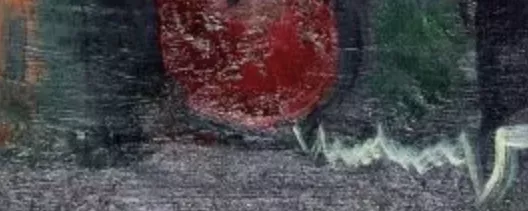
Not all Friedrich Vordemberge Glidewart's works are signed. They may be at the bottom of the painting, but if you think you own one, it's best to have it appraised to be sure of the originality of your property.
Knowing the value of a work
If you happen to own a work by or after Friedrich Vordemberge Glidewart, don't hesitate to request a free valuation using our form on our website.
A member of our team of experts and certified auctioneers will contact you promptly to provide you with an estimate of the market value of your work, as well as ad hoc information about it.
If you wish to sell your work, you will also be accompanied by our specialists in order to benefit from alternatives for selling it at the best possible price, taking into account the inclinations of the market.
.Estimate in less than 24h
Discover in the same theme

Rating and value of Serge Mouille's lamps, furniture and lig...
Serge Mouille is a twentieth-century French designer who produced furniture and lighting fixtures that are highly prized at auction.
Learn more >

Rating and value of paintings, drawings and engravings by Gi...
Giorgio Morandi is an Italian Futurist painter who has produced works that are listed and valued on the auction market.
Learn more >

Rating and value of paintings by Gaston Balande
Gaston Balande is a French landscape painter who produced works that are highly valued at auction. Estimate in 24h.
Learn more >
D'autres tableaux abstraits vendus aux enchères

Estimated 2.000 - 4.000
Serge POLIAKOFF (1900-1969), Composition en rouge et bleu. 1965, Lithograph

Estimated Between €5,000 and €8,000
Jean MIOTTE (1926-2016), acrylic on canvas

Estimated 3.000 - 5.000
Roberto MATTA (1911-2002), Composition, Gouache on canvas

Secure site, anonymity preserved

Auctioneer approved by the State

Free and certified estimates
Frequently asked questions
-
Who is Friedrich Vordemberge Glidewart, and what is his artistic background?Friedrich Vordemberge Glidewart (1899–1962) was a German painter and pioneer of geometric abstraction who trained in architecture and design. He joined the De Stijl group in 1927 and participated in the Cercle et Carré and Abstraction-Création movements, establishing himself as a major figure in the European geometric avant-garde alongside Mondrian and Van Doesburg. His work, characterized by radical abstraction and formal clarity, had a profound influence on postwar Concrete Art and Minimalism.
-
What are the price ranges for works by Friedrich Vordemberge Glidewart, broken down by medium?Prices vary considerably depending on the medium: prints and multiples sell for between €15 and €8,200, drawings and watercolors for between €50 and €46,000, while oil paintings on canvas—his major works—fetch between €200,000 and €280,000. The artist’s market value is currently at its highest, as illustrated by the 2015 sale of *Composition No. 42* for €280,000—well above its initial estimate.
-
How can you authenticate a work by Friedrich Vordemberge Glidewart?To authenticate a work by this artist, we recommend that you request a free, no-obligation appraisal from Auctie's using our online form. A certified expert or auctioneer will examine your item and provide you with a detailed response within 48 hours, including information regarding authentication and authenticity.
-
Is this a good time to sell a work by Friedrich Vordemberge Glidewart?Yes, now is an excellent time to sell a work by Vordemberge Glidewart. His market value is at an all-time high, particularly among German and American collectors. His historical significance as a pioneer of geometric abstraction and a witness to the Nazis’ “degenerate art” ensures strong demand for his compositions.
-
How does the process of selling a work of art at Auctie's work?The process begins with a free, no-obligation appraisal conducted by our experts and certified auctioneers, who will contact you within 48 hours. If you decide to sell, we’ll then guide you every step of the way—from preparation to the auction—offering you the best options to get the highest possible price based on current market trends.
