



Rating and value of paintings by César Domela

Key takeaways
- César Domela (1900–1992), a leading Dutch abstract artist of the 20th century, is seeing his value rise on the contemporary art market.
- Prices for his works range from €20 to €334,000 depending on the medium: paintings can fetch up to €334,000, while drawings can reach up to €80,000.
- The artist is known for incorporating relief, industrial materials, and diagonal lines, breaking free from Mondrian’s orthogonal rigor as early as 1926.
If you own a work by or after the artist César Domela, and would like to know its value, our state-approved experts and auctioneers will offer you their appraisal services.
Our specialists will work to carry out a free appraisal of your work, and provide you with an accurate estimate of its value on the current market.
Then, should you wish to sell your work, we will direct you to the best possible arrangement to obtain the optimum price.
Rating and value of the artist César Domela
Considered one of the most famous abstract artists of the 20th century, César Domela leaves behind an artistic identity of his own.
At present, the prices of his works are rising at the auctioneers' gavels, his stock is on the rise.
His canvases and other works are particularly prized, especially by French buyers, and the price at which they sell on the art market ranges from €20 to €334,000, a considerable delta but one that speaks volumes about the value that can be attributed to Domela's works.
In 2007, his composition entitled Neoplastic composition no.5 O, and dating from 1926 sold for €334,000 in 2024, while it was estimated at between €151,800 and €227,700.
Order of value from a simple work to the most prestigious
Technique used | Result |
|---|---|
Estamp - multiple | From €20 to €5,400 |
Sculpture - volume | From €270 to €36,700 |
Drawing - watercolor | From €200 to €80,000 |
Painting | From €180 to €334,000 |
Estimate in less than 24h
Style and technique of artist César Domela
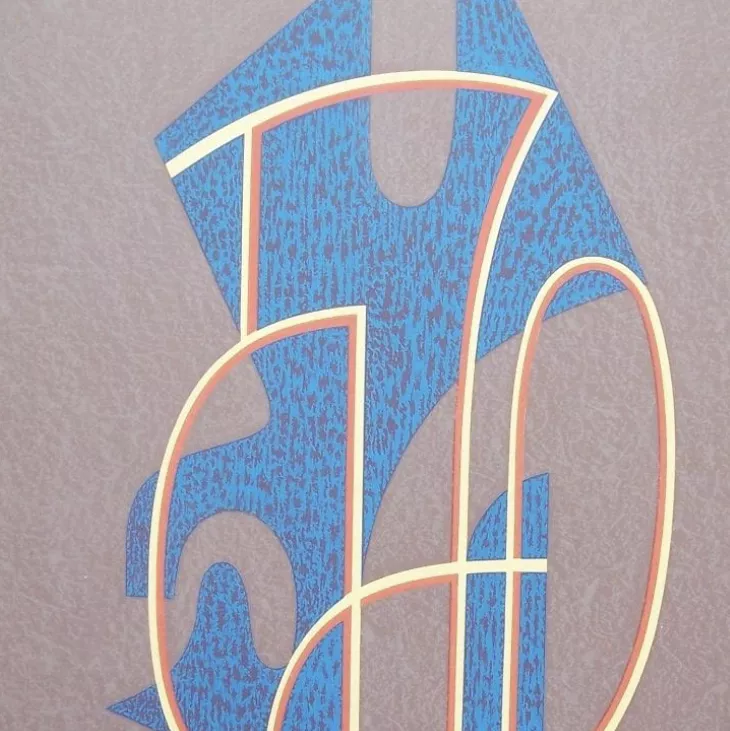
The works of César Domela are characterized by a plastic language influenced by Neoplasticism. The artist is quite close to the De Stijl group and constructivism. He develops an aesthetic in which the balance of forms takes precedence over any narrative.
Domela adopts a formal rigor that is inspired by Mondrian, yet he quickly detaches himself from it to move towards a freer, asymmetrical approach.
The artist uses relief and bas-relief, which sets him apart from other neoplastic artists. He integrates three-dimensionality into his compositions, and introduces elements in relief - thus creating a dialogue between painting and sculpture - while playing with cast shadows.
His palette is rather restricted, but he always retains a certain expressiveness. Domela favors sober colors (black, white, gray, beige) that he punctuates with touches of red, blue or yellow.
This contrast reinforces the visual tension between forms and empty spaces. He conducts research into industrial materials, exploiting metal, Plexiglas and other modern materials to structure his works, asserting an aesthetic with links to architecture and design.
The approach to composition is dynamic, breaking with Mondrian's strict orthogonality by introducing obliques, superimpositions and tensions between elements. This dynamic creates an internal movement and rhythm of his own.
The influence of Bahaus and Constructivism is persistent. His work is part of a search for harmony between art and industry, between abstraction and functionality, influencing concrete art and 20th-century graphic design.

The life of César Domela
César Domela (1900 - 1992) was a Dutch painter and neoplastician.
His father was the founder of the anarcho-socialist movement, and he had a genuine admiration for him, remaining close to the working class for many years, which had a lasting influence on his work.
In 1914, he went to Paris and met Henri Laurens. Two years later, he became interested in ethnology and started a collection of primitive art, at the same time beginning to draw.
Despite his admiration for his father, he did not wish to pursue the same political career as his father, and moved to Switzerland, in the canton of Ticino, with a particular interest in the Book of Tao, traditional Chinese teaching.
His first paintings, like many artists of his time, were figurative, though close to synthetic cubism. During this period, he produced mainly still lifes and landscapes.
In 1923, he left for Berlin, and exhibited for the first time with members of the Novembergruppe. He then returned to Paris to work in Laurens' studio.
From 1926, De Stijl magazine published one of his works, after he had met Piet Mondrian,Theo van Doesburg and Bart van der Leck.
Subsequently, he opposed Mondrian by introducing the diagonal into his compositions. Thanks to Mondrian, he was included in Katherine Drier's collection.
In 1927, he was exhibited at the Salon des Indépendants, and took part in several exhibitions across the Atlantic, notably at the Brooklyn Museum and the Museum of Modern Art in New York, alongside Kandinsky and Mondrian, among others.
He then took part in the journal Cercle et carré, founded by Michel Seuphor and Joaquin Torres Garcia.
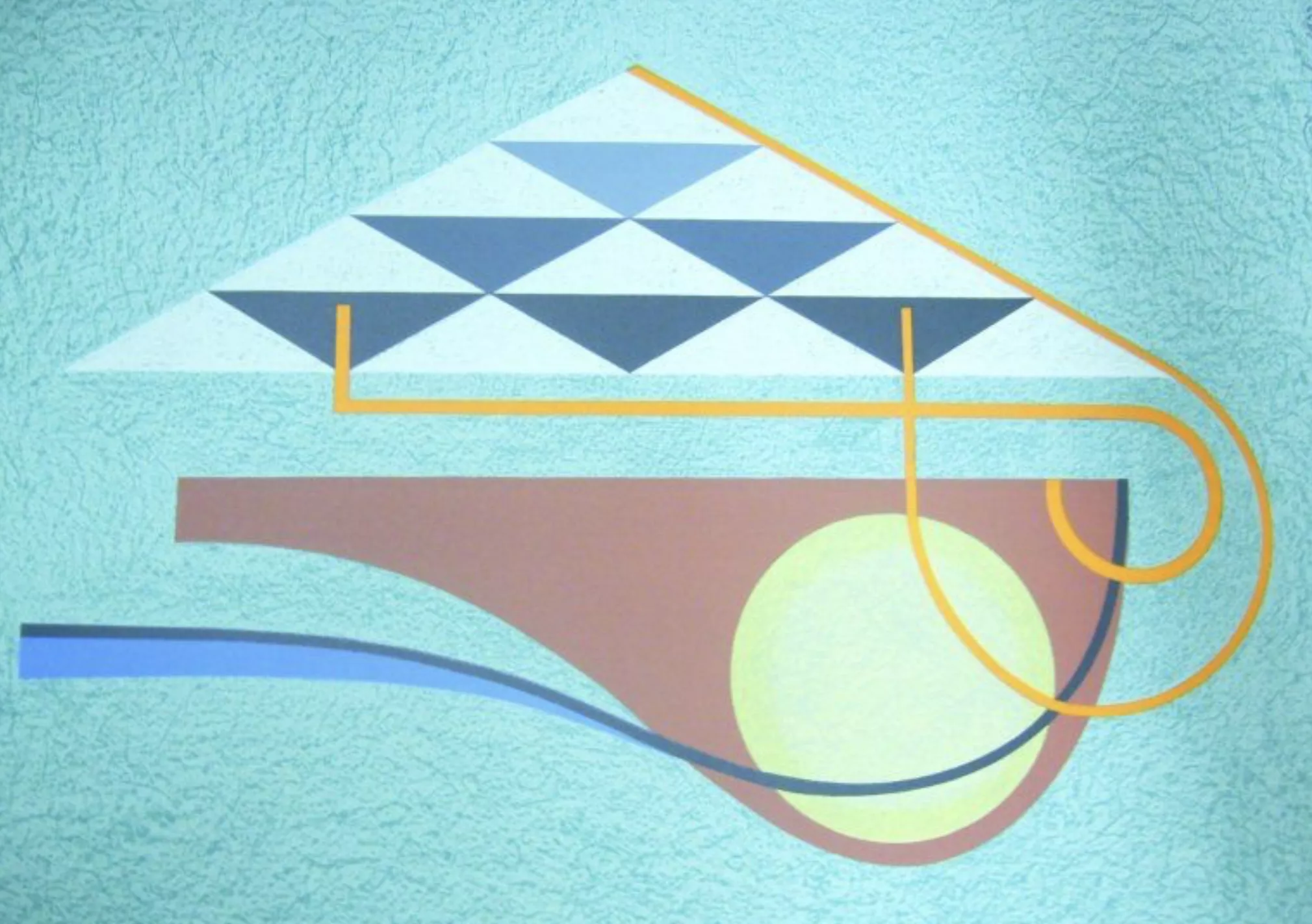
From 1932 onwards, he chose to introduce curves into his compositions, opposing or combining them with existing straight lines.
Throughout his life, he participated in numerous exhibitions, both collective and monographic. He founded the magazine Plastique with Hans Arp and Sophie Tauber-Arp.
An album of reproductions of his works, with a preface by Kandinsky, was published in 1943, the latter with a preface by Vassily Kandinsky.
In 1951, he took part in the De Stijl exhibition at Amsterdam's Stedelijk Museum, alongside all the noéplasticians including Vantongerloo. The same museum will devote two retrospectives to him, just after the one in Rio de Janeiro and Sao Paulo.
Domela traveled extensively during his career, and gave a series of lectures at New York University. At the end of his life, he traveled to India and exhibited in Calcutta, dying in 1992.
Domela and Mondrian - putting them into perspective
Focus on Composition with Red, Blue and Yellow, Mondrian, 1930, and Relief no. 24, César Domela, 1929-1930.
In these two works, which undeniably dialogue, we denote some differences in the approaches of the two artists.
With regard to formal approach and composition, Mondrian applies a rigorous, orthogonal structure, with black lines separating flat areas of primary colors and white. His approach is based on a controlled balance between shapes and voids.
Domela, although close to neoplasticism, introduces a break with this strict orthogonality. He plays with obliques and superimpositions in Relief n°24, giving the work greater dynamism and a sense of internal movement.
With regard to the use of colors and materials, Mondrian as usual limited himself to primary colors (red, blue, yellow) and non-colors (white, black, gray) - creating a visual harmony that is intended to be timeless and universal.
Domela uses a sober palette, but incorporates industrial materials such as metal and Plexiglas. This materiality transforms the work into a hybrid object between painting and sculpture.
As for the relationship between surface and depth, Mondrian's canvas is entirely flat and reliefless. Each element thus fits into an unchanging grid, and the absence of depth contributes to the quest for pure, universal art.
In Domela's work, we see an exploration of bas-relief with the integration of elements in volume - allowing light and shadow to become essential components of the work and bringing additional complexity to the reading of forms.
Mondrian here remains faithful to the dogma of neoplasticism, as he would until the end of his life, influencing minimalism and modern design with Composition with red, blue and yellow as well as his other works.
Domela, although trained in this universe, gradually emancipated himself from it by experimenting with new prisms with three-dimensionality and constructivism. The latter paved the way for a more tactile, architectural approach to abstraction.
So, while Mondrian embodied absolute rigor and a universal ideal here, Domela introduced a more experimental, material dynamic as far as he was concerned.
Where Mondrian advocates a timeless purity, Domela seeks an interaction between art and space - indeed, announcing through this work future developments in abstraction and design.
Although César Domela is less well known to the general public and art historians today, his contribution to neoplasticism remains indispensable to understanding the concepts underlying this movement.
Recognizing the artist's signature
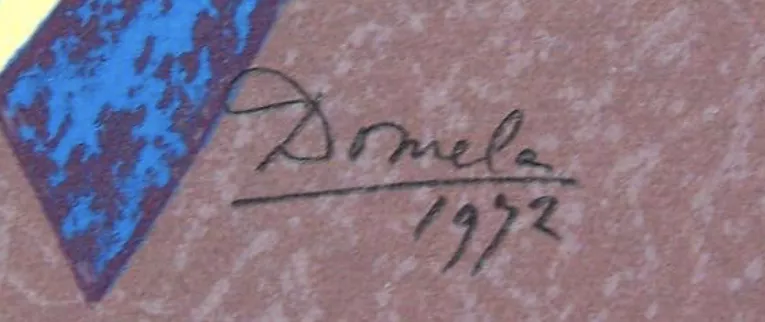
César Domela very often signs his works, most often at the bottom of the painting, in a color that contrasts with the background.
Knowing the value of a work
If you happen to own a work by or after César Domela, don't hesitate to request a free valuation using our form on our website.
A member of our team of experts and certified auctioneers will contact you promptly to provide you with an estimate of the market value of your work, as well as any relevant information about it.
If you're thinking of selling your work, our specialists will also help you find alternatives to sell it at the best possible price, taking into account market trends.
Estimate in less than 24h
Discover in the same theme

Value and quotation of works, paintings by Louis Buisseret
Louis Buisseret, a member of the Nervia group, is a relatively unknown but sought-after artist. The price of his works is stable. Estimate in less tha...
Learn more >

Rating and value of paintings by Sergio de Castro
Sergio de Castro is a Franco-Argentinian abstract painter of the 20th century. He has produced works that are quoted and valued at auction.
Learn more >

Rating and value of paintings by Henri Matisse
Henri Matisse is a Fauvist painter who produced works that are highly valued at auction. 24h estimate.
Learn more >
D'autres tableaux abstraits vendus aux enchères

Estimated 2.000 - 4.000
Serge POLIAKOFF (1900-1969), Composition en rouge et bleu. 1965, Lithograph

Estimated Between €5,000 and €8,000
Jean MIOTTE (1926-2016), acrylic on canvas

Estimated 3.000 - 5.000
Roberto MATTA (1911-2002), Composition, Gouache on canvas

Secure site, anonymity preserved

Auctioneer approved by the State

Free and certified estimates
Frequently asked questions
-
Who is César Domela, and what is his artistic background?César Domela (1900–1992) was a Dutch painter and Neoplasticist considered one of the most famous abstract artists of the 20th century. Closely associated with the De Stijl movement and Constructivism, he developed an aesthetic influenced by Mondrian but gradually broke away from it by introducing diagonal lines, relief, and industrial materials. His work reflects a quest for harmony between art, industry, and architecture.
-
What are the price ranges for César Domela's works?Prices for works by César Domela vary considerably depending on the medium and the prestige of the piece: prints range from €20 to €5,400, sculptures from €270 to €36,700, drawings and watercolors from €200 to €80,000, and paintings from €180 to €334,000. His market value is currently on the rise in the art market.
-
How can you authenticate a work by César Domela?To authenticate a work by César Domela, we recommend that you request a free, no-obligation appraisal from Auctie's using our online form. A state-certified expert or auctioneer will contact you shortly to examine the artwork and provide you with an accurate estimate of its market value within 48 hours.
-
Is this the right time to sell a work by César Domela?Yes, now is a good time to sell a work by César Domela. The artist’s market value is currently on the rise, and his paintings and sculptures are particularly sought after by French and international buyers. The art market is increasingly recognizing his significance within Neoplasticism and 20th-century abstraction.
-
How does the appraisal and sale of a work of art take place at Auctie's?The free appraisal begins with a request submitted through our website. A certified expert or auctioneer will contact you promptly to appraise your artwork with no obligation. If you decide to sell, our specialists will guide you through the process from appraisal to auction, offering you the best options for selling your artwork at the highest possible price based on current market trends.
