



Rating and value of paintings, drawings and sculptures by Nicolas Schöffer

Key takeaways
- Nicolas Schöffer’s sculptures sell for between €40 and €39,000, with a metal piece from 1970 selling for €39,000 at auction in 2014.
- Prices vary by medium: prints from €40 to €1,700, paintings from €140 to €4,420, drawings from €120 to €5,000, and sculptures from €130 to €39,000.
- Schöffer (1912–1992) revolutionized sculpture by incorporating movement, light, and electronics, transforming the object into an interactive operational system.
If you own a work of art by or after Nicolas Schöffer, and would like to know its value, our state-approved experts and auctioneers will offer you their appraisal services.
Our specialists will carry out a free appraisal of your work, and provide you with an accurate estimate of its value on the current market.
Then, should you wish to sell your work, we will direct you to the best possible arrangement to obtain the optimum price.
Rating and value of Nicolas Schöffer's works
Nicolas Schöffer produced unique sculptures. Now, prices for his creations can rise considerably under the auctioneer's hammer. His sculptures are particularly prized, by buyers from all over the world.
The price at which they sell on the art market ranges from €40 to €39,000, at the moment, a consequent gap but one that says a lot about the value that can be attributed to the works of Nicolas Schöffer, whose output is very abundant.
In 2014, his metal sculpture Sans titre, dating from 1970 sold for €39,000, originally estimated at between €35,000 and €45,000.
The upside potential for Nicolas Schöffer's works on the auction market is therefore quite significant. Sculpture, particularly in metal, has been very successful of late, setting auction records.
Order of value from a simple work to the most prestigious
Technique used | Result |
|---|---|
Estamp - multiple | From €40 to €1,700 |
Painting | From €140 to €4,420 |
Drawing - watercolor | From €120 to €5,000 |
Sculpture - volume | From €130 to €39,000 |
Estimate in less than 24h
Style and technique of the artist Nicolas Schöffer
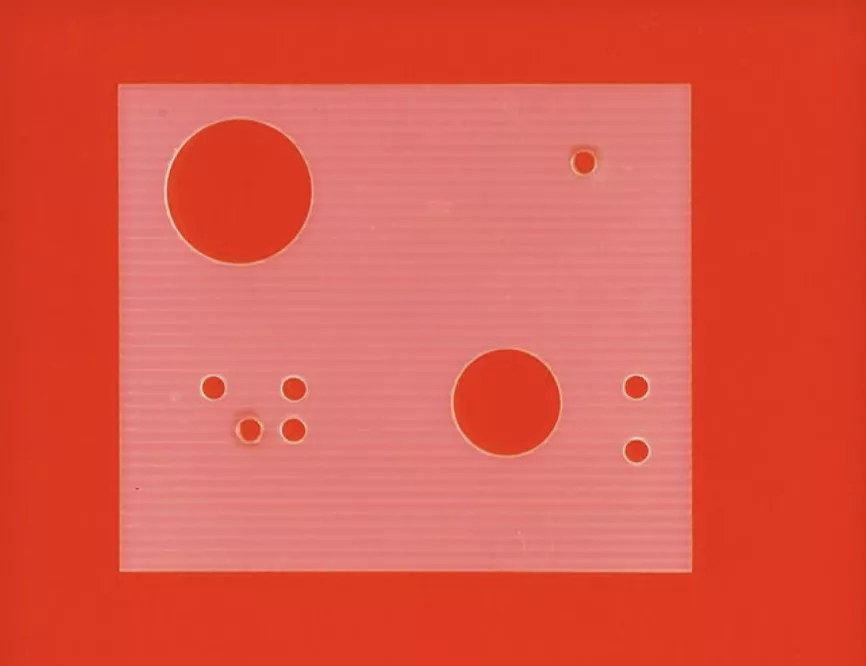
In Nicolas Schöffer's sculpture, structure no longer rests on mass, it relies on emptiness, axis, articulation. Form is not given from the outset; it is constructed over time, by rotation, diffraction, displacement.
The material, often polished aluminum or steel, is chosen not for its density but for its ability to reflect light, to project a moving image, to inscribe the structure in its immediate environment.
The sculpture doesn't impose itself as a closed volume, it functions as a network, a field, an optical machine.
The technique doesn't follow a traditional plastic protocol. It integrates motors, sensors and electronic devices. Movement is not simulated, but real, regulated, sometimes random, sometimes programmed.
Light becomes a constituent part of the work, cutting through, orienting, modifying perception. For Nicolas Schöffer, sculpture doesn't represent a form, it organizes a visual situation. It does not fix an image, it produces an event.
It is not seen as an object, but as a process, an operative system in which space, time and the gaze are inseparable.
.
The career of Nicolas Schöffer
Nicolas Schöffer was born in Kalocsa, Hungary, in 1912. He moved to Paris in 1936, where he first studied at the École nationale supérieure des beaux-arts. He began by painting, which he practiced according to a rigorous, geometric logic, structured by line.
Early on, he abandoned the closed surface of the painting to explore depth, space and volume. From the 1940s, he developed a way of thinking about form as articulation, where the visible is conceived as a system interacting with its environment.
He exhibited from 1949, first at the Salon des Réalités Nouvelles, then in galleries, where he presented his first spatiodynamiques.
In the 1950s, he integrated light, sound and mechanical movement. He collaborated with engineers, architects and composers. His works were programmable, reactive, open-ended and conceived on the scale of urban space.
CYSP 1, a mobile cybernetic sculpture created in 1956, marked a turning point. He received public commissions, took part in international exhibitions, and developed a theoretical reflection on the city, time and technology.
He published several texts in which he defined his concepts: spatiodynamism, chronodynamism, luminoart.
He died in 1992, leaving a dense body of work consisting of objects, projects and texts that shift sculpture towards an art of the system, the program and active perception.
Focus on CYSP 1, Nicolas Schöffer, 1956
In CYSP 1 (1956), the structure is not organized around a volume, it is articulated from an axis, arms, panels, motors. It's not based on visible form, but on a program, a logic of response.
Sculpture is no longer a stable object set in space, it becomes an autonomous system, capable of moving, perceiving, reacting to variations in light and sound.
The material, mainly polished metal, is used not for its mass but for its ability to capture and reflect, to create interference, to inscribe the structure in a constantly modulating flow of light. There is no pedestal, no frontage, no privileged point of view. The gaze doesn't rest, it follows.
Space is not contained, it is traversed. Light doesn't reveal form, it constitutes it. Movement is not an external animation, it is internal to the system. Temporality is not added to the object, it organizes it.
CYSP 1 is not conceived as a mobile sculpture in the classical sense of the term, but as a perceptive machine, where each displacement triggers a reconfiguration of the whole. The aim is not to produce a form, but a situation.
The work functions according to a cybernetic logic, in which the parameters of the environment become active data. The viewer is no longer in front of the object, but enters its field of action.
In Nicolas Schöffer, CYSP 1 represents nothing. It generates. It captures. It modulates. It transforms the relationship between sculpture, space and time into a regulated dynamic, without center, without fixed image, entirely defined by the interaction between machine, place and gaze.
Nicolas Schöffer's imprint on his period
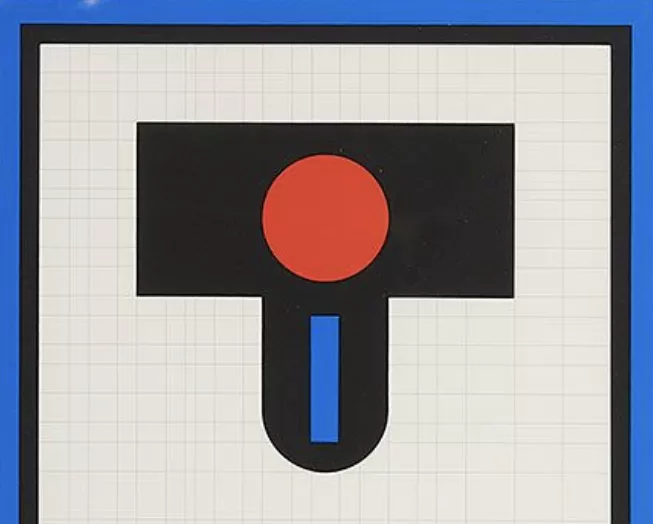
In Nicolas Schöffer's work, the imprint is not inscribed in a recognizable form, it manifests itself in a displacement of the very conditions of sculpture.
It's no longer a question of producing an object in space, but of thinking of sculpture as an operative system, capable of integrating movement, light, sound and duration.
At a time marked by the rise of abstraction, the generalization of industrial design and the emergence of the first digital technologies, he doesn't seek to represent progress, he incorporates its logics. He doesn't represent the machine, he adopts its structures.
His influence doesn't pass through a style, it acts by contamination. It transforms the way we conceive the work, no longer as a form to be contemplated, but as a device to be activated.
The vocabulary he establishes - spatiodynamism, chronodynamism, luminoart - redefines the boundaries between art, science and the environment. For Schöffer, sculpture is no longer a volume, it becomes an interface.
It no longer responds to a formal tradition, it proposes a new perceptive grammar. This gradual but rigorous mutation permanently alters the plastic issues of its time, imposing a model in which the work ceases to be an object and becomes a relational field.
The influences of Nicolas Schöffer
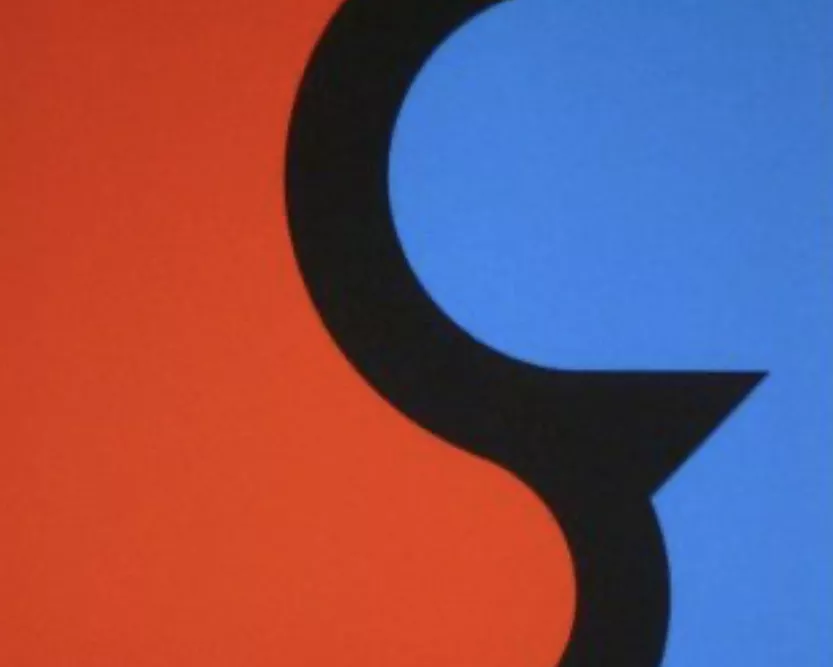
In Nicolas Schöffer's work, influence does not translate into the adoption of a style, it operates as a transformation of the very conditions of the work.
He thus confronts sculpture with the logics of engineering, architecture and the physical sciences, taking movement, light and structure as the object of analysis. He sees volume as a dynamic datum, inseparable from duration and the environment.
In this way, he inscribes his work in a broader reflection on perception, crossing the contributions of Bauhaus with those of nascent cybernetics, and establishes correspondences with artists such as Moholy-Nagy or Calder.
His approach is based on the conviction that art, freed from material fixity, can become an operator of relationships, an active interface between the work and its context.
In this way, he joins the research of figures better known to the general public, such as Jean Tinguely, whose interest in movement he shares, but whose chaotic and absurd dimension he rejects.
Contrary to Tinguely, Schöffer imposes regulation, programming, coherence. Where Giacometti proposes a tensioning of the body in space, Schöffer constructs a space without a body, defined by flows, axes, measurable variations.
The influence he absorbs doesn't produce a recognizable aesthetic, it redefines the operating framework of sculpture: form becomes system, matter becomes flux, time becomes structure.
Recognizing Nicolas Schöffer's signature
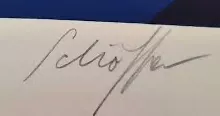
Nicolas Schöffer doesn't always sign his works. If you think you own one, it's best to have it appraised.
Knowing the value of a work
If you happen to own a Nicolas Schöffer creation or think you might, don't hesitate to request a free appraisal using our form on our website.
A member of our team of experts and licensed auctioneers will contact you promptly to provide you with an estimate of the market value of your piece, as well as any relevant information about it.
If you wish to sell your property, you will also be accompanied by our specialists in order to benefit from alternatives for selling it at the best possible price, taking into account the inclinations of the market.
.Estimate in less than 24h
Discover in the same theme

The value of Raymond Subes furniture
Raymond Subes, a 20th-century architect and designer, designed a great deal of highly-prized art deco furniture.
Learn more >

Rating and value of works, drawings, paintings by Maxime Noi...
Maxime Noiré is a twentieth-century Orientalist painter who produced drawings and oil on canvas that are quite popular at auction.
Learn more >

Rating and value of paintings by Mersad Berber
Mersad Berber is a twentieth-century Bosnian artist who has produced works that are highly rated and valued at auction. Estimated in 24h.
Learn more >
D'autres tableaux abstraits vendus aux enchères

Estimated 2.000 - 4.000
Serge POLIAKOFF (1900-1969), Composition en rouge et bleu. 1965, Lithograph

Estimated Between €5,000 and €8,000
Jean MIOTTE (1926-2016), acrylic on canvas

Estimated 3.000 - 5.000
Roberto MATTA (1911-2002), Composition, Gouache on canvas

Secure site, anonymity preserved

Auctioneer approved by the State

Free and certified estimates
Frequently asked questions
-
Who was Nicolas Schöffer, and what was his contribution to modern sculpture?Nicolas Schöffer (1912–1992) was a Hungarian sculptor based in Paris who revolutionized sculpture by incorporating movement, light, and electronics. He developed concepts such as spatiodynamism and chronodynamism, transforming sculpture from a static object into a programmable dynamic system. His work CYSP 1 (1956), the first cybernetic sculpture, marked a turning point toward sculpture functioning as a perceptive machine capable of reacting to its environment.
-
What are the prices at which Nicolas Schöffer's works sell?Prices for Nicolas Schöffer’s works vary considerably depending on the medium and the artist’s reputation: prints sell for between €40 and €1,700, paintings between €140 and €4,420, drawings and watercolors between €120 and €5,000, and sculptures between €130 and €39,000. In 2014, his 1970 sculpture *Untitled* sold for €39,000. Sculptures, particularly those made of metal, are currently enjoying growing popularity in the art market.
-
How can you authenticate a work by Nicolas Schöffer?To authenticate a work by Nicolas Schöffer, we recommend that you request a free appraisal from Auctie's using our online form. A certified expert or auctioneer will examine your piece and provide you with a reliable appraisal within 48 hours, with no obligation. This professional guidance is particularly important given that Schöffer did not consistently sign his works.
-
Is this a good time to sell a work by Nicolas Schöffer?Yes, now is a good time to sell a work by Nicolas Schöffer. Sculpture—particularly metal sculpture—is in high demand and is fetching record prices at auction. There is significant upside potential for his works on the auction market, especially since he produced a large body of work that is highly sought after by collectors worldwide.
-
How does the appraisal process work at Auctie's?Appraisals at Auctie's are free and non-binding. You submit a request via our online form, and a certified expert or auctioneer will examine your piece and provide you with an accurate estimate of its market value within 48 hours. If you decide to sell, our specialists will then work with you to find the best solution and secure the best possible price based on current market trends.
