



Rating and value of drawings and photographs by Gustav Klucis

Key takeaways
- Prices for works by Gustav Klucis range from €230 to €16,000, with the most sought-after photographs and drawings fetching several thousand euros at auction.
- A Latvian Constructivist artist (1895–1938) who mastered photomontage, Klucis integrated pure geometry, typography, and imagery to create revolutionary Soviet visual propaganda.
- His propaganda works, particularly his photographs, are attracting growing interest among collectors of 20th-century Russian art, with prices on the rise in the market.
If you own a work by or based on the artist Gustav Klucis and would like to know its value, our state-approved experts and auctioneers will guide you.
Our specialists will carry out a free appraisal of your work, and provide you with an accurate estimate of its value on the current market. Then, if you wish to sell your work, we'll direct you to the best possible arrangement to obtain the optimum price.
Artist's rating and value
Gustav Klucis's work is uncommon and fairly highly rated on the auction market. His works arouse interest among collectors and art lovers, particularly those who appreciate twentieth-century Russian painting.
The quotation of his works is currently on the rise on the art market, and the price at which his works sell on the art market ranges from €230 to €16,000, at the moment, a considerable delta but one that speaks volumes about the value that can be attributed to the artist's works.
The most sought-after pieces are his propaganda works (drawings and photographs). Thus, a work signed by Klucis can fetch thousands of euros at auction, such as his photograph October to the World, dating from 1932 adjudged for €10,000 in 2007, whereas it was estimated at between €7,400 and €11,000.
Order of value from the most basic to the most prestigious
Technique used | Result |
|---|---|
Photography | From €230 to €9,600 |
Painting | From €10,000 to €11,000 | Drawing - watercolor | From €400 to €16,000 |
Estimate in less than 24h
Gustav Klucis's style and technique
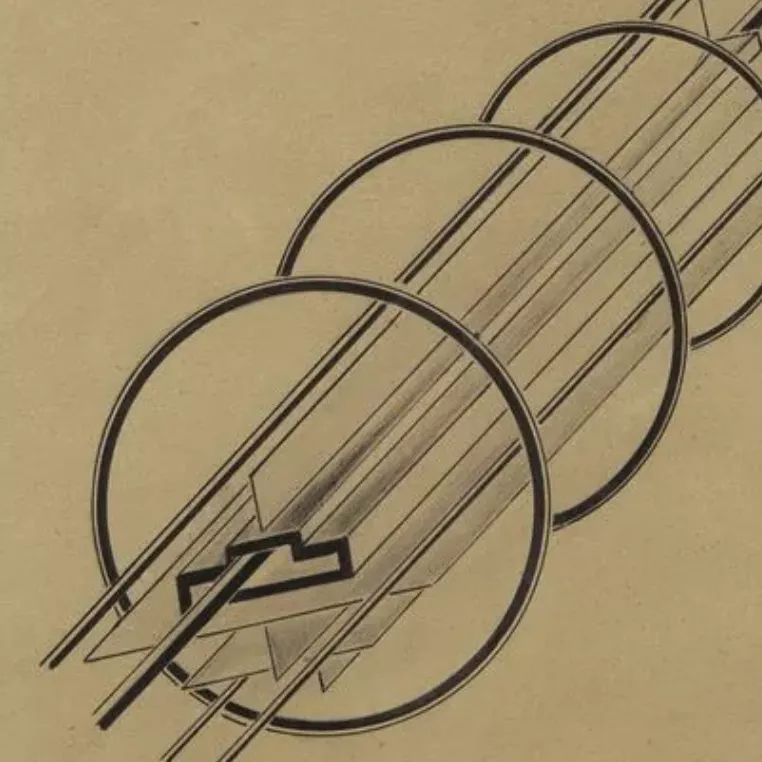
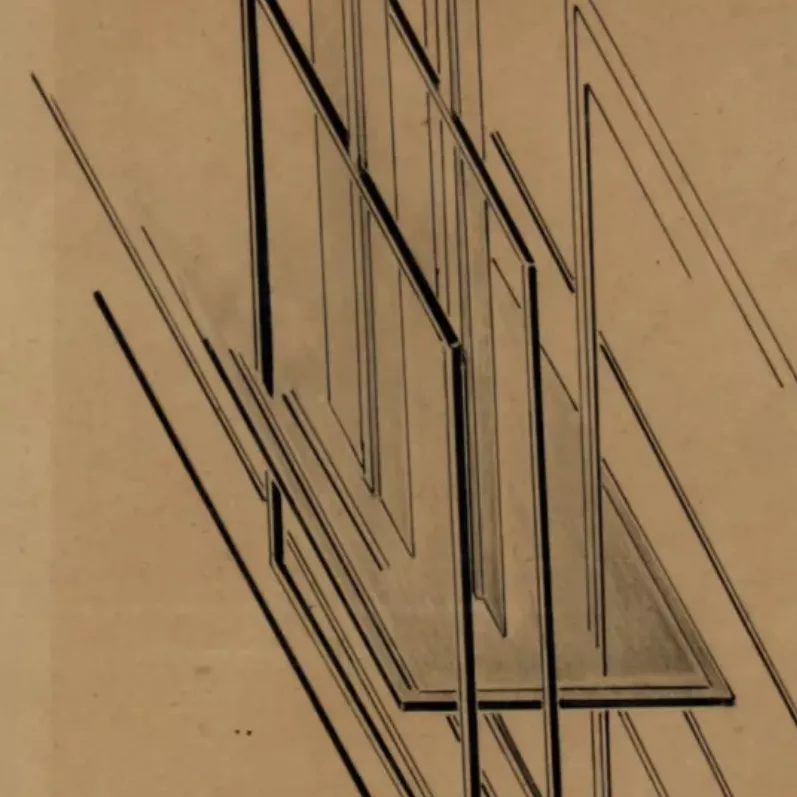
Gustav Klucis's style and technique are fully in line with the dynamics of Constructivism, a radical movement that transformed the way art and architecture were conceived in line with revolutionary ideals.
In his works, the artist develops a visual language of photomontages, which he orchestrates with geometric precision and advanced abstraction.
Far from limiting himself to a simple juxtaposition of images, Klucis integrates the principles of pure geometry, where the horizontality and verticality of forms come together to suggest movement, momentum.
The choice of diagonal lines and curves reinforces the dynamic aspect, indicating ceaseless progress towards a promising future.
The streamlined human figures are often juxtaposed with industrial elements, their formalism communicating harmony between the individual and the machine. But what particularly marks his approach is the subtle integration of text into his compositions.
Typography, unified with images, becomes an integral part of the visual message, underscoring the convergence between art and propaganda.
Through his photomontages, Klucis succeeds in expressing the concept of modernity and social transformation, fusing form and content so that each image becomes both an aesthetic and ideological manifesto.
The life of Gustav Klucis
Gustav Klucis, born in Latvia in 1895, is a key figure in the Russian Constructivist movement. From his formative years at the Academy of Fine Arts in St. Petersburg, he stood out for his unwavering commitment to revolution, a revolution he saw in the radical transformation of art.
His name is found spelled in two forms: Gustav Klucis and Gustav Klustis.
Far from being a mere spectator, he became an actor of change, a craftsman of the new Soviet aesthetic.
Through bold photomontages, Klucis experimented with the superimposition of cut-out images, playing with typography and geometric shapes to produce a dynamic, moving vision of Soviet society.
In his works, workers' faces, machines and symbols of the state merge to become a homogeneous whole, the reflection of a new era. Yet his art, though resolutely modern, did not escape the demands of the Stalinist regime.
His quest for aesthetic purity was combined with the idea of propaganda, making him an artist who was both an innovator and a conformist. Power forced him into a certain submission, dictating the acceptable forms in art, but Klucis, without ever denying his commitment, managed to inscribe his practice in a double game.
The tragic end of his career, halted in 1938 during the Stalinist purges, put an abrupt end to his contribution to Soviet art.
Focus on The Proletarian, Gustav Klucis
One of Gustav Klucis's most striking works, The Proletarian, perfectly embodies the ambition of the image-maker he was. In this composition, photomontage becomes a weapon of revolutionary propaganda.
The face of the worker, a central figure in Soviet society, is arranged with elements of aggressive typography, fragments of images of machines and tools. The whole is arranged with a geometric precision that evokes both the rigor and the drive for efficiency of the new times.
This energetic montage affirms the idealism of the revolution while suggesting the dynamism of the Soviet future. The figures are fragmented, decomposed, but in this deconstruction appears a new form of unity, a unity of the working class.
This is the ambiguity of Klucis's work: while his art is an affirmation of the power of the people, it is also a reflection of the order imposed by Stalinist power.
The clean, almost severe lines and striking contrasts between light and shadow underline the tension between creative freedom and the constraints of the regime.
At the heart of this visual interplay lies a question about the use of art in the service of the revolution: can one be the artist of the state and the revolutionary artist at the same time?
Klucis responds, no doubt, by offering a vision of the world where form and propaganda merge, creating a new iconography of Soviet man.
Gustav Klutsis's imprint on his period
Gustav Klutsis left an indelible mark on the art of the early 20th century, particularly through the emergence of photomontage as a propaganda technique.
At a time when the Russian Revolution marked a profound turning point in history, Klutsis became the interpreter of a resolutely modernist and avant-garde vision, where the break with classical pictorial traditions became a revolutionary act in itself.
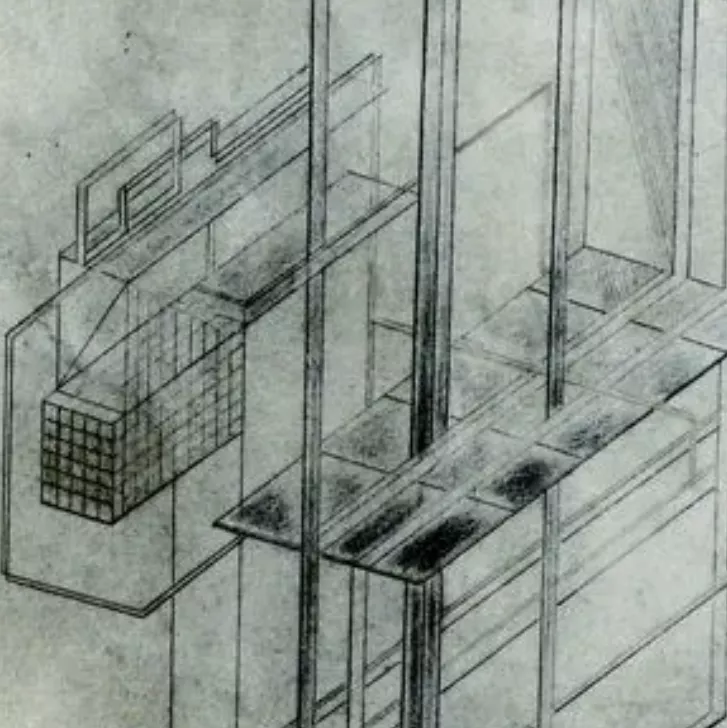
Far from being merely a vehicle for political messages, his work reinvents art by integrating elements of photography, collage and graphic design, thus contributing to the evolution of Soviet art in a direction where form and message are inseparable.
His works, with their clean lines and assemblages of image fragments, reflect not only the ideals of the Bolshevik regime, but also the aspiration for a collective, functional art form.
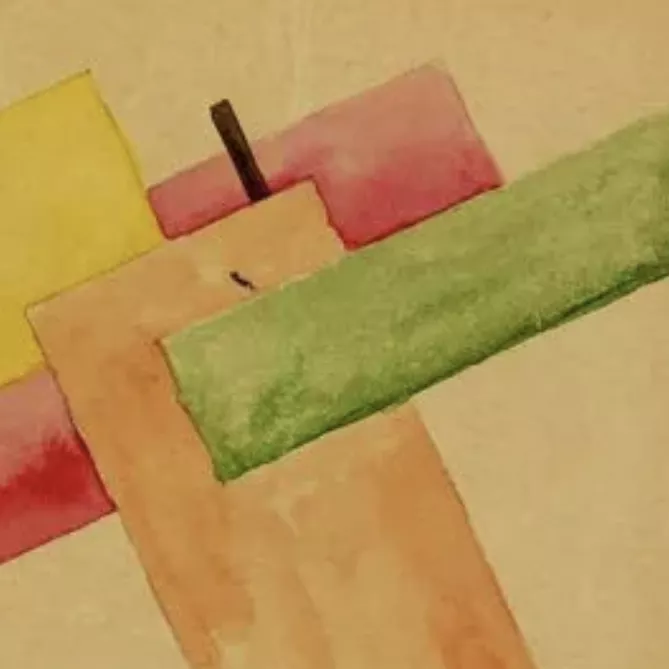
Klutsis's compositions, marked by a bold use of space and bright colors, thus participate in the creation of a new iconography, a new way of seeing and representing Soviet man, reinvented by the state.
His legacy is that of an artist who knew how to use his art to reflect a society in the throes of transformation, while prefiguring the visual mutations of the following decades, in an era when art and politics had become inseparable.
The stylistic influences of Gustav Klutsis
Gustav Klutsis was part of an artistic context marked by the effervescence of the Russian and European avant-gardes of the early 20th century.
His stylistic influences were drawn from Cubism and Futurism, which explored the fragmentation of form and the energy of modernity, while incorporating the precepts of Russian Constructivism, a movement focused on the social utility of art.
This approach is also found among his Russian contemporaries such as Alexander Deineka, Boris Grigoriev and Lyubov Popova, whose geometric, structured works dialogue with Klutsis's experimentations.
Observing the work of artists such as El Lissitzky or Alexander Rodchenko, Klutsis adopts the use of photomontage and typography, tools that he pushes to a striking level of visual impact.
However, he is distinguished by a particular mastery of composition, where photographic elements are organized in dramatic and dynamic arrangements, reflecting a unique spirit of visual propaganda.
He also shares with painters such as Kazimir Malevich or Wassily Kandinsky a fascination with abstraction and utopia, although he is keen to maintain a more direct link with reality.
By blending local and international influences, Klutsis managed to inscribe his work in a dual dynamic: a celebration of Soviet ideals and a redefinition of modern visual languages.
His ability to combine technical innovation with ideological commitment makes him a key figure of the Russian avant-garde.
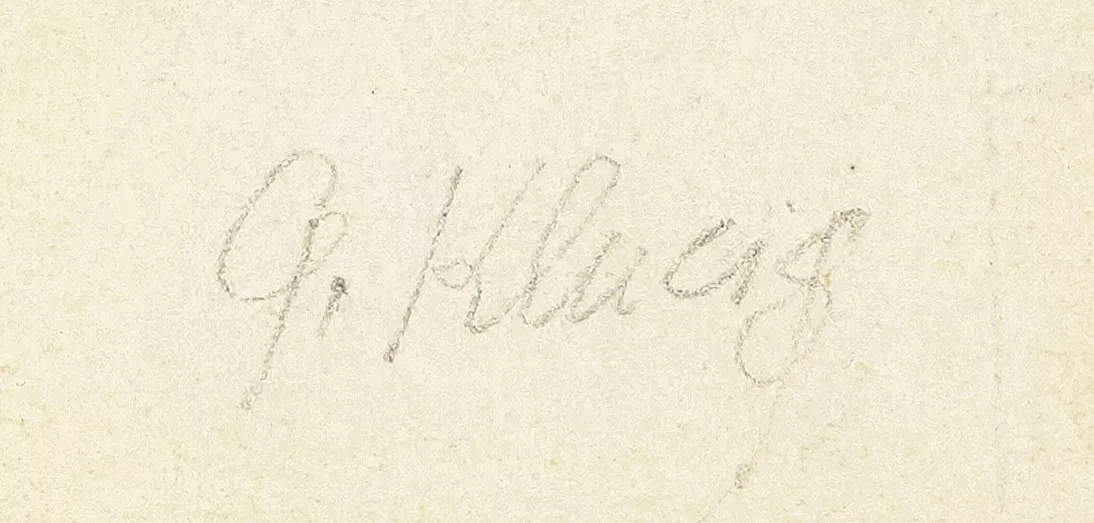
His signature
Not all Gustav Klutsis's works are signed. It is also possible that they are copies, or that the inscription has faded over time, which is why expertise is essential.
Expertise your property
If you own a work by Gustav Klutsis, don't hesitate to request a free appraisal by filling in our online form.
A member of our team of experts and certified auctioneers will contact you to provide an estimate of the market value of your work.
If you are considering selling your work, our specialists will also guide you through the various alternatives available to obtain the best possible price, taking into account market trends and the specific features of each work.
Estimate in less than 24h
Discover in the same theme

Rating and value of Claude Lalanne's sculptures
Claude Lalanne is a twentieth-century French artist whose sculptures set auction records.
Learn more >

Rating and value of paintings by Janet Sobel
Janet Sobel is a pioneering drip artist. In the shadow of Pollock, her works are nevertheless highly valued at auction.
Learn more >

Edvard Munch (1863–1944) Market Data – Estimates and Values...
Discover Edvard Munch's market value: prices, auction records, and appraisal criteria. Auctie's will appraise your artwork for free in less than 24 ho...
Learn more >

Secure site, anonymity preserved

Auctioneer approved by the State

Free and certified estimates
Frequently asked questions
-
Who was Gustav Klucis, and what is his role in art history?Gustav Klucis (1895–1938) was a Latvian artist and a leading figure in Russian Constructivism. Trained at the St. Petersburg Academy of Fine Arts, he distinguished himself through his bold photomontages, which combined cut-out images, typography, and geometric shapes to express the ideals of the Soviet Revolution. His work reinvented art by fusing propaganda with modern aesthetics, although he tragically perished during the Stalinist purges of 1938.
-
What are the most sought-after types of works by Gustav Klucis, and how do their prices vary?Klucis’s most sought-after works are his propaganda drawings and photographs. Prices vary considerably depending on the medium: photographs range from €230 to €9,600, drawings and watercolors from €400 to €16,000, and paintings from €10,000 to €11,000. His iconic works, such as “October to the World” (1932), can fetch several thousand euros at auction.
-
How can you authenticate a work by Gustav Klucis and determine its value?Auctie's offers a free, no-obligation appraisal of your Gustav Klucis works by certified auctioneers and experts. Simply fill out the online form: a member of our team will contact you within 48 hours to provide an accurate estimate of your item’s market value, taking into account its specific characteristics and current market trends.
-
Why is now the right time to sell a work by Gustav Klucis?Gustav Klucis's market value is currently on the rise, making this an opportune time to sell. Collectors’ interest in 20th-century Russian art and Constructivism continues to grow, and Klucis’s propaganda works are particularly popular among enthusiasts of the European avant-garde.
-
How does the sale of a work of art work at Auctie's, and what services are offered?Auctie's supports sellers from the initial free appraisal through to the final auction sale. After our specialists have appraised your artwork, we guide you toward the best sales strategy based on the item’s characteristics and market trends, in order to achieve the best possible price for your piece.
