



Rating and value of paintings by Boris Grigoriev

Key takeaways
- Boris Grigoriev, a 20th-century Franco-Russian painter, has works that fetch market prices ranging from €170 to €2,555,000 at auction.
- Oil paintings make up the majority of his body of work and sell for between €600 and €2,555,000, while his watercolor drawings range from €170 to €960,000.
- His masterpiece, “Shepherd of the Hills” (1920), sold for €2,555,000 in 2008, matching its high estimate of €2,700,000.
If you own a work by or after the artist Boris Grigoriev, and would like to know its value, our state-approved experts and auctioneers will offer you their appraisal services.
Our specialists will carry out a free appraisal of your work, and provide you with an accurate estimate of its value on the current market.
Then, should you wish to sell your work, we will direct you to the best possible arrangement to obtain the optimum price.
Rating and value of the artist Boris Grigoriev
Boris Grigoriev is a Franco-Russian painter of the 20th century. He leaves behind a unique body of work reflecting his moods and personality. This legacy is made up of paintings, the majority of which are oil on canvas.
Today, prices for his works are reaching unprecedented levels at auction. His paintings and other works are particularly prized, especially by French and Russian buyers, and the price at which they sell on the art market ranges from €170 to €2,555,000, a considerable delta but one that speaks volumes about the value that can be attributed to Grigoriev's works.
In 2008, a predominantly green polychrome composition entitled Shepherd of the Hills, dating from 1920, sold for €2,555,000 while it was estimated at between €2,000,000 and €2,700,000.
Order of value from a simple work to the most prestigious
Technique used | Result |
|---|---|
Estamp - multiple | From €250 to €4,200 |
Drawing - watercolor | From €170 to €960,000 |
Painting | From €600 to €2,555,000 |
Estimate in less than 24h
Boris Grigoriev, exploring human psychology
In the 1920s, in his portraits such as Woman in Kimono (Hermitage Museum, St. Petersburg), Grigoriev chose to explore human psychology through energetic brushstrokes and vivid colors.
Like his contemporaries, such as Amedeo Modigliani, who favored simplicity of line and form to convey the essence of his models, Grigoriev, through the combination of bright tones and elongated forms, creates faces that, though stylized, express great emotional intensity.
The brushstroke is full of vigor and, far from being smooth or controlled, gives way to a certain movement that testifies to the artist's impetuosity.
This approach is marked by a striking contrast between warm colors - oranges, reds, yellows - and darker tones, which reinforces the impact of the features.
The construction of the face seems almost sculptural, each area meticulously built up, but in a way that is more instinctive than rational.
The eyes, often exaggerated, immediately capture attention, conveying not only the individual but also a broader perception of the human soul. Grigoriev uses light and shadow not to create a realistic illusion, but to accentuate the almost theatrical dimension of his subjects.
This is not a simple representation, but a genuine emotional staging where form and color come to serve a purpose that goes beyond the mere surface of appearance.
The artist, influenced by Expressionism and Symbolism, succeeds in giving his figures a certain monumentality, but also an intensity specific to the psychology of his models.
Both stylistically close to surrealists like Max Ernst and historically close to artists like Nicolas de Staël, Grigoriev succeeded in establishing himself as an important figure in 20th-century Russian painting.
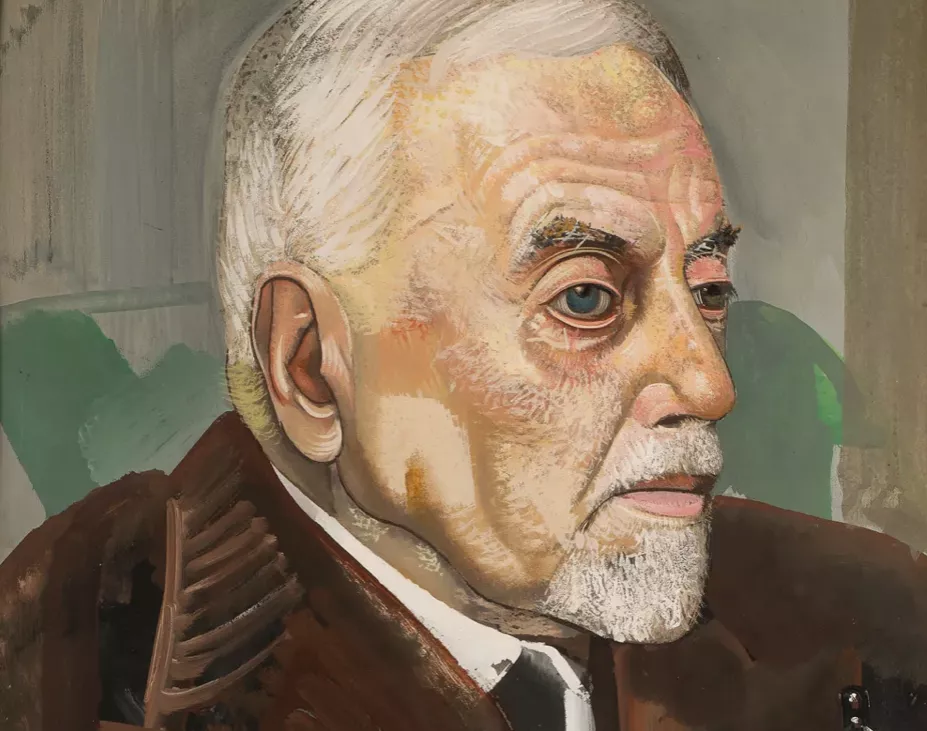
Boris Grigoriev, his life, his work
Boris Grigoriev was born in St. Petersburg in 1886, in a tsarist Russia in the throes of change. At an early age, he showed a definite talent for painting and entered the Imperial Academy of Fine Arts, where he acquired the solid foundations of an academic training. However, even during his formative years, he moved away from rigid conventions and turned to the modern currents sweeping across Europe.
On his first trips to Paris in 1910, he encountered the artistic avant-gardes of the time, in particular Fauve and Symbolist artists.
Grigoriev's art then took on a new dimension, integrating both a mastery of classical forms and a freedom of expression.
His portraits, at the beginning of the 20th century, reveal this fusion between academic rigor and a more intimate search for the human psyche. This unique blend soon made its mark on the European art scene.
After experiencing the turmoil of the Russian Revolution, the artist left his country for good in 1920. He settled in Paris, where he continued his research into the human form and portraiture.
In his works, Grigoriev seeks to capture not only the appearance of his models, but also their essence, creating compositions that oscillate between formal rigor and soulful expression.
The Paris years were a period of great production for him, when the influence of French artists, combined with his own Russian roots, was reflected in portraits of unique emotional intensity.
Through his work, Grigoriev doesn't just illustrate faces: he captures souls, in a desire to transcend mere representation.
The artist thus remains faithful to his artistic ideal, that of a painting where inner research and technique harmonize with strong emotional expression.
Focus on The Young Woman with the Red Bodice, 1924
In his 1924 portrait, entitled The Young Woman with the Red Bodice (Museum of Russian Art, St. Petersburg), Boris Grigoriev reveals the full complexity of his stylistic research.
This painting, both vivid and intimate, plunges us into the world of the young woman, captured in a natural pose but at the same time highly codified by palette and form.
The red, dominant on the model's bodice, immediately catches the eye, creating a striking contrast with the softness of the skin tones and the shadows that shape her face.
The sensuality of the portrait lies in this opposition between the warmth of the colors and the rigor of the structure of the forms, in a palpable tension that gives rise to a form of psychological depth.
The use of light and shadow, characteristic of Grigoriev's work, introduces a genuine emotional dimension.
The carefully sketched facial contours show the artist's academic heritage while expressing an intensity that borders on expressionism.
The young woman's silhouette almost seems to vibrate, suggesting that she is not simply a frozen subject but a person in motion, with a history and personality that invite themselves into the viewer's gaze.
This portrait thus becomes much more than a mere representation; it offers a plunge into the intimate, an attempt to capture not just the appearance, but the very soul of the model.
The subtle blend of classical and modern techniques makes this work a shining example of Grigoriev's style, a style in which every brushstroke seems to vibrate with the tension between rigor and emotion.
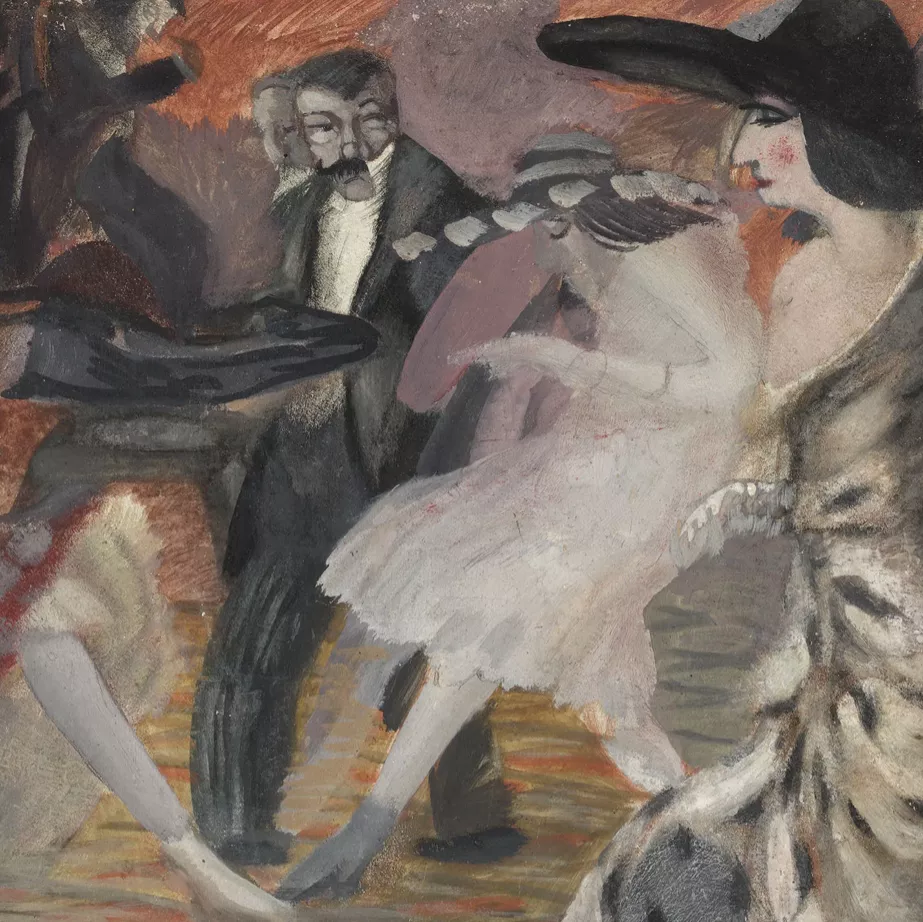
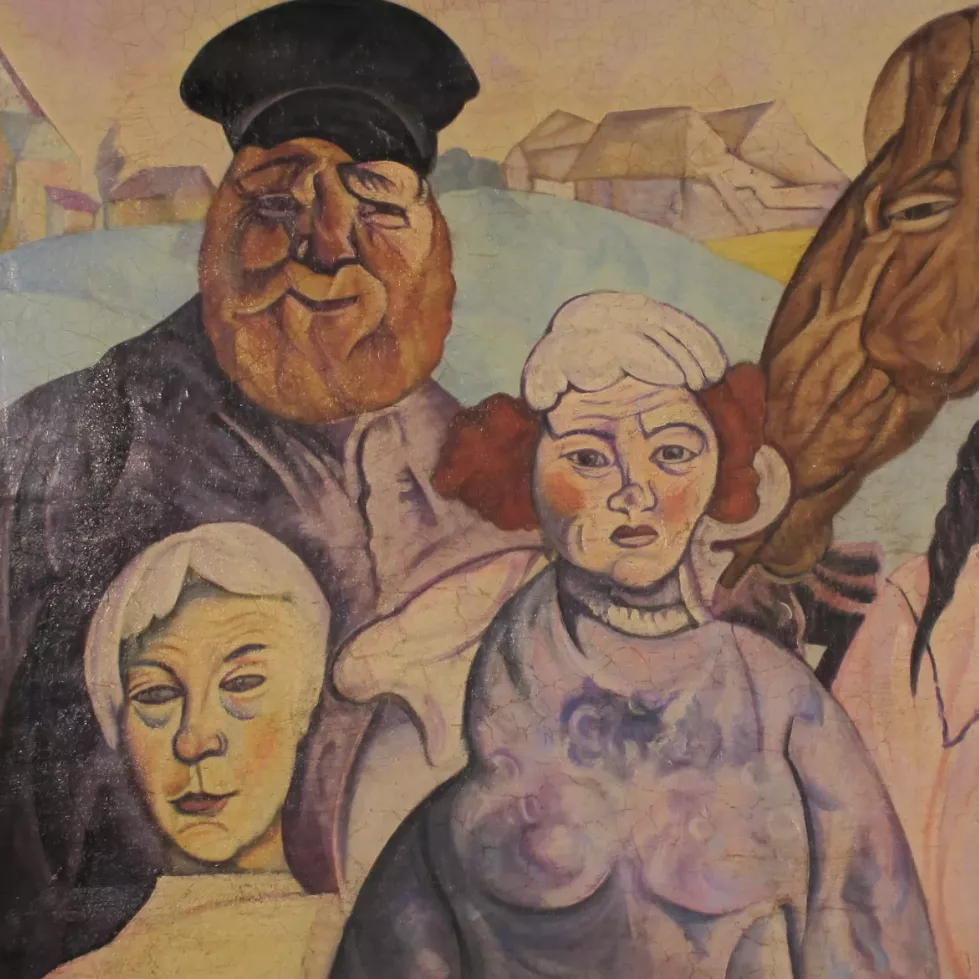
Boris Grigoriev's imprint on his period
Boris Grigoriev, in the 1920s, established himself as a central figure in Russian art, notably through his exploration of the tensions between tradition and modernity.
Early on his arrival in Paris, his style, marked by penetrating realism, drew on the influences of European artists while remaining deeply rooted in his Russian culture. This duality is perfectly illustrated in his portraits and genre scenes, where he manages to marry the codes of academic painting with aspirations for a freer, more personal expression.
Grigoriev, in search of renewal, also explores the means of a more intimate representation, where every gesture, every stroke seems to respond to a need for pure truth, far from the smooth appearances and conventions of the past.
In Parisian salons as well as in Russian artistic circles, Grigoriev became the mouthpiece of an era in the throes of change, bearing witness to a Russian society disrupted by social and political upheaval.
His works, often characterized by faces devoid of artifice, express a raw, unvarnished humanity, a kind of transparency of subject that echoed the concerns of his time.
The psychological depth that emanates from his characters does not stop at mere external presentation, but also reveals an inner complexity.
Grigoriev's impact lies in his ability to destabilize conventions while respecting the very essence of representation.
His canvases reveal an expressive power that, without conforming to traditional canons, seeks to capture the truth, the soul of the characters he paints, and in so doing, he upsets the hierarchy of forms while giving them a new breadth.
Thus, through his intense, sensitive approach, he became a witness to and a major player in the transformation of the artistic landscape of his time, not only in Russia but also in European circles, where he imposed a personal gaze rooted in vibrant modernity.
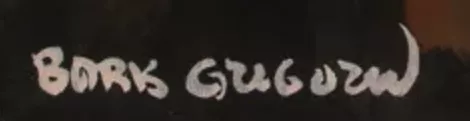
Recognizing Boris Grigoriev's signature
Often, Boris Grigoriev's works are signed at the bottom of the painting. He signs " Boris Grigoriev " often in a dark tone.
Knowing the value of a work
If you happen to own a work by or after Boris Grigoriev, don't hesitate to request a free appraisal using our form on our website.
A member of our team of experts and certified auctioneers will contact you promptly to provide you with an estimate of the market value of your work, as well as ad hoc information about it.
If you are considering selling your work, you will also be accompanied by our specialists in order to benefit from alternatives for selling it at the best possible price, taking into account the inclinations of the market.
.Estimate in less than 24h
Discover in the same theme

Rating and value of statues, bronzes and marbles by Pierre T...
Pierre Travers is a 20th-century sculptor who has produced works in marble and bronze that are sought-after and quoted on the auction market.
Learn more >

Rating and value of paintings by Jean Fautrier
Jean Fautrier is an abstract painter of the 20th century, quoted at auction, who produced works whose value is quite high. 24h estimate.
Learn more >

Rating and value of drawings and paintings by Georges d'Espa...
Georges d'Espagnat was a 20th-century Symbolist painter who produced numerous paintings that command high prices at auction.
Learn more >
D'autres tableaux expressionnistes vendus aux enchères


Secure site, anonymity preserved

Auctioneer approved by the State

Free and certified estimates
Frequently asked questions
-
Who is Boris Grigoriev, and what is his artistic background?Boris Grigoriev (1886–1960) was a 20th-century Franco-Russian painter who trained at the Imperial Academy of Fine Arts in Saint Petersburg before settling in Paris in 1920. A leading figure in modern Russian art, he explored human psychology through expressionist portraits characterized by vivid colors and great emotional intensity, blending the Russian academic tradition with influences from the European avant-garde.
-
What is the price range for Boris Grigoriev's works at auction?The value of Boris Grigoriev’s works varies considerably depending on the medium and quality: prints and multiples range from €250 to €4,200, drawings and watercolors from €170 to €960,000, and paintings from €600 to €2,555,000. These prices reflect the wide variety of works available on the market and their growing popularity among French and Russian collectors.
-
How can I authenticate a work by Boris Grigoriev and get an estimate?To authenticate a work by Boris Grigoriev, we recommend that you request a free, no-obligation appraisal using the form on our website. A state-certified expert or auctioneer from our team will contact you promptly to examine your artwork and provide you with an accurate assessment of its current market value, usually within 48 hours.
-
How can you recognize Boris Grigoriev's authentic signature?Authentic works by Boris Grigoriev usually bear his signature at the bottom of the painting, written as “Boris Grigoriev” in a dark color. This signature is an important indicator of authenticity, although only a thorough examination by our experts can definitively confirm a work’s authenticity.
-
How do I sell a work by Boris Grigoriev at Auctie's?If you’d like to sell a work by Boris Grigoriev, Auctie’s will guide you every step of the way: a free appraisal, advice on the best sales strategies to achieve the highest possible price, and access to our network of collectors and institutional buyers. Our specialists will guide you through every step of the process, right up to the auction.
