



Rating and value of Amedeo Modigliani's works

Key takeaways
- Modigliani, a leading figure of the School of Paris (1884–1920), has seen his market value rise steadily among collectors worldwide.
- His drawings command the highest prices, notably "Head of a Caryatid," which sold for €1,139,840 in 2016, while his oil paintings have fetched over 141 million euros.
- His stone and marble sculptures remain the rarest and most exceptional, with prices regularly exceeding one million euros.
Painter, draughtsman, sculptor... Modigliani is a major figurative artist of the 20th century, Amedeo Modigliani (1884-1920) is a leading representative of the Paris School. A highly prized artist by collectors the world over, his high value continues to rise.
If you own a work by or based on the artist Modigliani and would like to know its value, our state-approved experts and auctioneers will guide you. Our specialists will carry out a free appraisal of your work, and provide you with a precise estimate of its value on the current market. Thereafter, if you wish to sell your work, we will direct you to the best possible arrangement to obtain the optimum price.
Rating and value of the artist
Largely unrecognized during his lifetime but now acclaimed for his genius, Modigliani has established himself as a sure bet on the art market. Despite his varied artistic output, his drawings command the highest price among collectors and can sell for over €1 million, as evidenced by his pencil on paper Tête de Cariatide adjugated €1,139,840 in 2016 at Christie's.
Order of value from a work "after" Modigliani to an "authentic" work by Modigliani
Technique | Estimation |
|---|---|
Drawing | From €2,000 to €1,139,840 |
Estamp | From €200 to €6,000 |
Sculpture (marble, bronze, stone) | From €7,000 to €50,437,800 |
Oil painting | From €24,000 to €141,572,800 |
Estimate in less than 24h
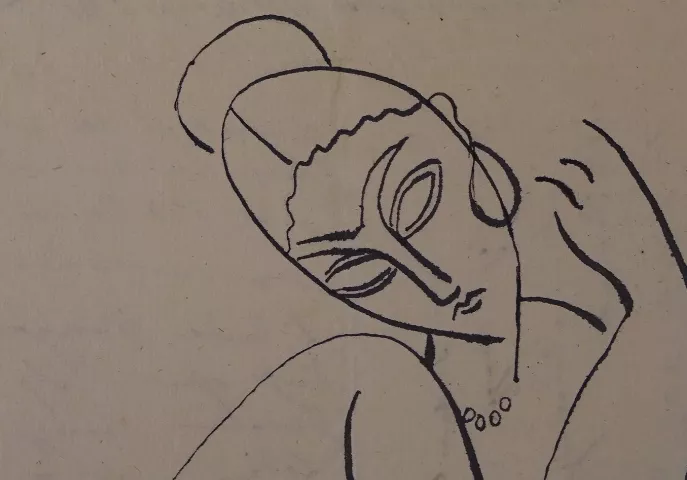
Modigliani, one of the most highly regarded artists of the École de Paris
Originally Italian, Modigliani was born in Livorno in 1884.
He showed a choleric temperament from an early age, and was a pampered child especially by his mother, since he was ill from infancy. She raised him alone with his two sisters in Sardinia.
Myth and sources from the family's various diaries indicate that Modigliani discovered his vocation when he was in the throes of a psychic delirium after contracting typhoid fever.
He began by drawing portraits, an artistic genre that was to play a major role in his work, both in painting and sculpture. By the age of thirteen, he was already taking drawing lessons, supported by his mother. Not considering himself suited to school, he chose to enter the Beaux-Arts academy a year later, a decision that strongly displeased the rest of his family.
He was then the youngest student at the Beaux-Arts and trained alongside a landscape painter who moved away from academicism to seek more reality, and favored color over drawing. Here he met Gino Romiti, who taught him the art of the nude.
Despite his very avant-garde style, he was greatly influenced by Gothic, Renaissance and Pre-Raphaelist painters. He was then fascinated by Naples and Pompeii, which led him in the direction of sculpture thanks to the discovery of archaizing sculptures at these sites.
From 1902, he attended the Free School of the Nude in Florence and then the School of Fine Arts in Venice. He led a rather decadent life, however, and said he preferred to work in cafés or brothels.
He spent time with Manuel Ortiz de Zarate, who introduced him to Impressionism and the caricatures of Toulouse-Lautrec, probably speeding up his arrival in Paris.
From 1906 onwards, he attended the Colarossi academy in Paris and spent lavishly, quickly running through his savings. He moved constantly and was regularly evicted from the apartments he occupied. Exuberant and alcoholic, he regularly provoked incidents: starting fires, regular arrests, his existence was far from calm and stable.
Little by little, a prisoner of his addictions, he could no longer create and paint without drinking or consuming narcotics. Many believe they stimulated his creative impulses and helped him unfold his genius. However, despite his financial difficulties, he retained a legendary charisma and generosity that left a lasting impression.
He invented " drawings to drink ", frequenting cafés, particularly those in Montparnasse he portrayed people in exchange for a drink or money. It was also there that he met and befriended many avant-gardists : Cocteau, Kisling, Foujita, Survage, van Dongen, Braque ...
Modigliani knew many artists of his time and realistically painted portraits of many of them. He did not anticipate Post-Impressionism and his creative process was disrupted. He questioned himself and moved closer to Cubism, influenced in particular by Braque.
He managed to get himself exhibited in a number of galleries, and organized a solo show in 1917 at the Galerie Berthe Weil. Then, fleeing the end of the war, he went to work in Provence with Soutine, Zborowski (his dealer and supporter), Foujita and Jeanne Hébuterne, his companion.
Returning to Paris in 1919, he began to enjoy success with the public, but much less so with his declining health. He continued to paint until the end and refused treatment, dying in hospital at the age of 35.
Learn more about the life of Modigliani and Jeanne Hébuterne
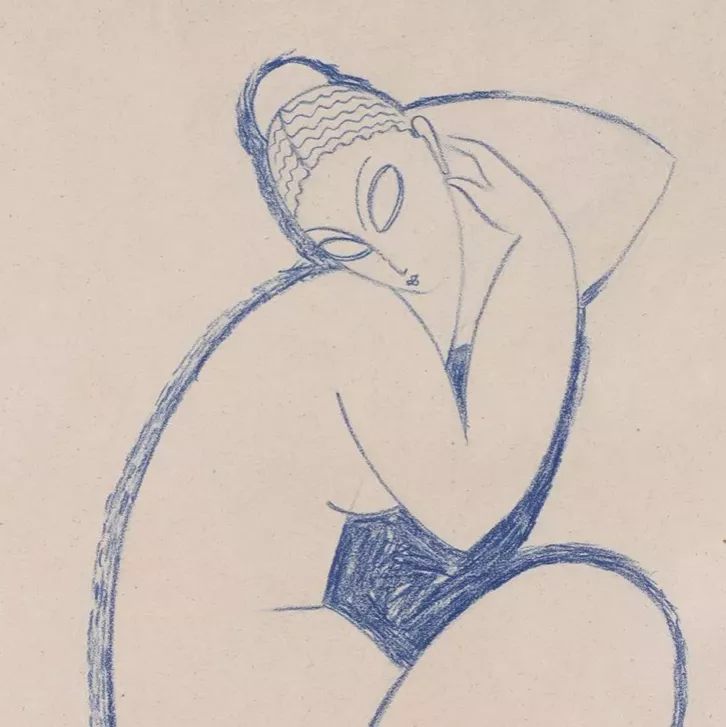
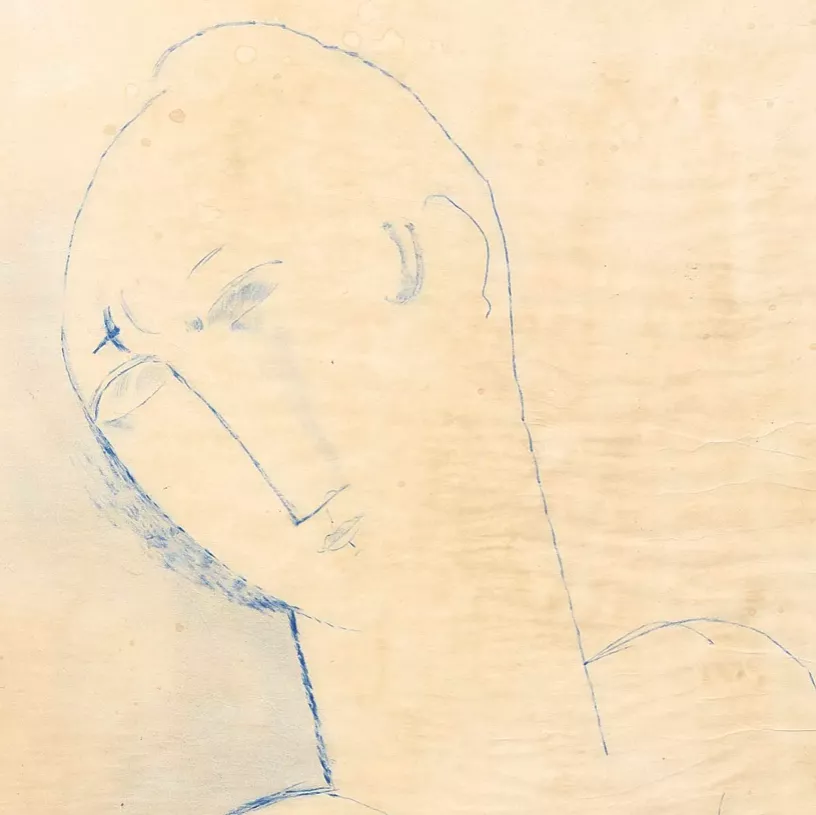
Focus on the Tête Rouge, 1915
Modigliani doesn't fit into any particular movement, and instead operates a synthesis of different currents, and different influences. Although intellectually close to the Cubists without actually being one, he followed in Cézanne's footsteps, particularly in his drawing technique.
Portraits, whether in sculpture or painting, were very important to Modigliani. He devoted much of his life to it. In Red Head, the artist combines this Cubist influence with a more primitive one, reminiscent of African masks, particularly those from Gabon.
Sometimes tortured and prone to fits of anger, the painter conveys a certain malaise, through the use of deep black and blood-red. Modigliani creates a falsely off-axis portrait, proving that he has thought through every square centimeter of his composition, which seems fractured around the red head.
He painted this picture five years before his death, probably the period when he was nevertheless happiest. Less poor, under Zborowski's protection, he had complete freedom to create, even if he was totally imprisoned by his addictions. Paradoxically, however, he cannot paint or sculpt without them. This portrait seems to cry out his confinement, his autonomy that he is forced to assume, his cracks and his darkness.
The success of Modigliani's works on the auction market
Whether sculptures, drawings or paintings, Modigliani's works possess a very high quotation on the auction market.
Collectors, as well as some private individuals, greatly appreciate his work, and are prepared to bid unprecedented sums in the hope of owning one of his works. Not officially a member of any particular movement, his unique and extravagant personality sets him apart from the other artists of his time.
His story and the various obstacles he encountered in his career contribute to making him a myth, and to exuding a singular aura from his works.
The artist's works and style
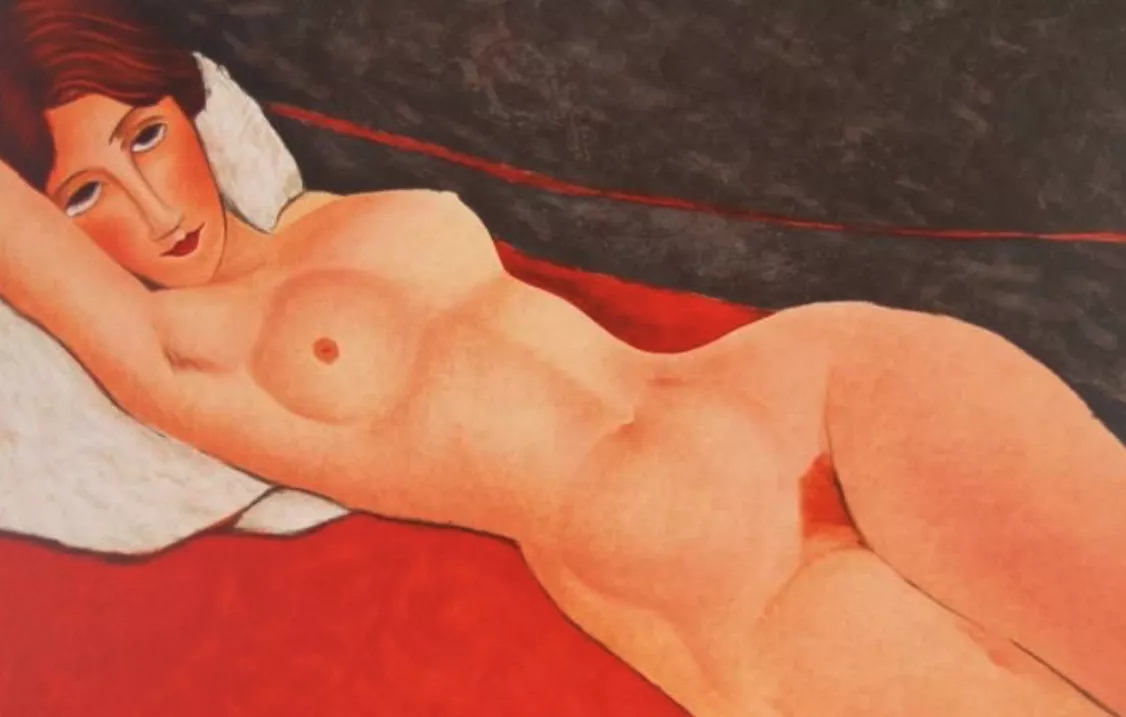
First a painter, sculptor and then draughtsman, Modigliani's works are varied.
Modigliani's paintings are common in museums but rare in auction rooms. His characteristic portraits with stretched faces and livid eyes are highly sought-after, fetching several tens of thousands of euros at auction for drawings, and tens of millions for oil on canvas.
As rare as his paintings, Modigliani's sculptures are extremely prized. The artist worked in many techniques, including bronze, marble, stone and copper.
His bronze works remain the most common, and can exist in several copies. Sculptures created in stone, whether sandstone, marble or other materials, are considered rare and exceptional pieces, and their price can easily exceed the million euro mark.
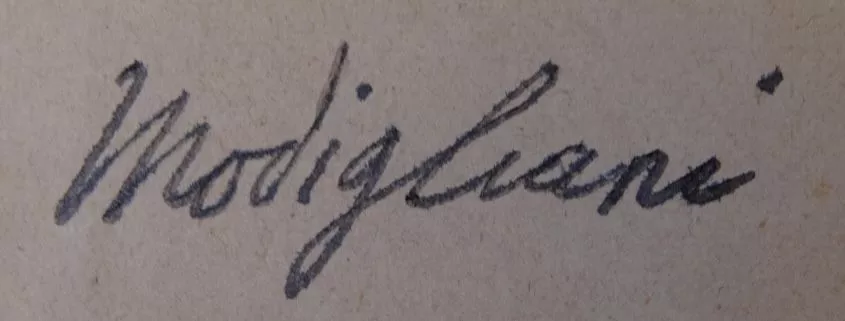
The artist's signature
Not all of Modigliani's works are signed.
Although there are variations, here is a first example of his signature:
Expertise your property
If you own a work by Modigliani, don't hesitate to request a free appraisal by filling in our online form. A member of our team of experts and chartered auctioneers will contact you to provide an estimate of the market value of your work signed Modigliani or after Modigliani.
If you are considering selling your piece of art, our specialists will also guide you through the various alternatives available to obtain the best possible price for your work, taking into account market trends and the specific features of each object.
Estimate in less than 24h
Discover in the same theme

Rating and value of works, drawings, sculptures by Robert Fi...
Robert Filliou is a 20th-century contemporary artist who has produced works that are sought-after and quoted at auction.
Learn more >

Rating and value of paintings, drawings and lithographs by J...
Joan Mitchell is an American Expressionist artist who has produced paintings and other works that are highly rated at auction. Estimate in 24h
Learn more >

Rating and value of paintings, drawings and lithographs by M...
Michel Kikoine is a Russian painter of the École de Paris who has produced works that are successful and highly valued at auction.
Learn more >
Other works from the same period sold at auction

Estimated 3.000 - 5.000€
Camille Fauré (1874-1956), Enamelled vase

Estimated 18000 € - 20000 €
Paul JOUVE (1878-1973): "Panther on the march

Estimated 1 500 € - 2 000 €
Attributed to Jacques ADNET (1900-1984) Chest of drawers with wood structure and base sheathed in black saddle-stitched leather and imitation leather.

Estimated 2.000 - 4.000 €
PABLO PICASSO (1881-1973) ATELIER MADOURA " Profil de femme n° 67 " Round plate.

Estimated 15.000 - 20.000 €
Jacques MAJORELLE (1886-1962) - Fishermen embarking, Abidjan, Ivory Coast - Oil on canvas.

Secure site, anonymity preserved

Auctioneer approved by the State

Free and certified estimates
Frequently asked questions
-
Who is Amedeo Modigliani, and what is his artistic context?Amedeo Modigliani (1884–1920) was a major Italian painter, draftsman, and sculptor of the 20th century and a leading figure of the School of Paris. Although little recognized during his lifetime, he is now acclaimed for his genius and has established himself as a sure bet on the art market. His work is characterized by a unique synthesis of various artistic influences, notably Cubist and Primitive, without officially belonging to any single movement.
-
What are the price ranges for Modigliani's works, broken down by medium?Estimates vary considerably depending on the medium: drawings range from 2,000 to over one million euros (for example, a *Head of a Caryatid* sold for €1,139,840 in 2016), prints from 200 to 6,000 euros, sculptures from 7,000 to over 50 million euros, and oil paintings from 24,000 to over 141 million euros. These price ranges reflect the work’s authenticity, rarity, and condition.
-
How can a work attributed to Modigliani be authenticated?To authenticate a Modigliani work, we recommend that you request a free, no-obligation appraisal from our state-certified experts and auctioneers. Our team will analyze your artwork and provide you with an accurate appraisal within 48 hours, taking into account all criteria related to authenticity and market value.
-
Is this the right time to sell a Modigliani painting?Yes, this is an excellent time to sell a Modigliani work. His market value has continued to rise, and the artist remains highly sought after by collectors around the world. Modigliani’s works continue to fetch record prices at auction, making them a stable and valued investment in both the contemporary and historical art markets.
-
How does the sale of a work of art work at Auctie's?Auctie's supports you every step of the way: our experts first provide a free, no-obligation appraisal, and then we guide you toward the best approach to get the highest price. Our licensed auctioneers then manage the entire sales process through to the auction, taking into account market trends and the specific characteristics of your artwork.
