



Russian Art Market: Valuation and Auctions

Key takeaways
- The value of Russian art varies widely depending on the artist, the period, the provenance, and the quality of craftsmanship, encompassing icons, imperial gold and silverware, and 20th-century avant-garde works.
- An antique icon without an oklad sells for between 1,000 and 15,000 euros, while a Fabergé piece can exceed several hundred thousand euros.
- The Russian avant-garde (Malevich, Kandinsky, Tatlin) is the segment most sought after by institutions, with auction prices frequently exceeding one million euros.
Icons, avant-garde art, and imperial gold and silverware: the value of Russian art varies greatly depending on the artist, the period, and the provenance of the work.
Below you’ll find all our valuation guides dedicated to Russian art—icons, paintings, avant-garde works, and objets d’art. Each guide details the price ranges observed at auction and the factors that determine a work’s value before it is entrusted to our state-certified auctioneers.
Guides on this art movement
See all guides >
Rating and value of drawings and paintings by Vladimir Baran...
Vladimir Baranoff Rossiné is a painter associated with Cubism whose works command high prices and are highly valued at auction.
Learn more >

Rating and value of paintings by Vilhelms Purvitis
Vilhelms Purvitis is a major Latvian painter who has produced many works that are highly valued at auction.
Learn more >

Rating and value of paintings by Dimitri Mikhailovich Krasno...
Dimitri Mikhailovich Krasnopevtsev is a Russian artist who has worked on metaphysical still life. His works have a high value.
Learn more >

Rating and value of paintings by Vasily Surikov
Vasily Sourikov is a Russian realist painter who belongs to the itinerants. His works are highly valued.
Learn more >

Rating and value of paintings by Marianne von Werefkin
Marianne von Werefkin is a 20th-century Russian and Swiss artist who produced expressionist works of high value.
Learn more >

Rating and value of paintings by Martiros Saryan
Martiros Saryan is an Armenian painter influenced by Fauvism and Symbolism, who has produced paintings that are highly regarded and valued.
Learn more >

Rating and value of paintings by Serguei Vinogradov
Serguei Vinogradov is a Russian painter somewhere between realism and impressionism, who has produced numerous works of great value.
Learn more >

Rating and value of paintings by Vasily Polenov
Vassili Polenov is a painter of religious subjects and Russian landscapes who has produced many works of great value.
Learn more >

Rating and value of paintings by Igor Grabar
Igor Grabar is a Russian landscape painter who produced realistic paintings in the 20th century, which are highly valued and appreciated.
Learn more >

Rating and value of paintings by Alexei Savrassov
Alexei Savrassov was a 19th-century Russian landscape painter who produced many highly-rated and valuable paintings.
Learn more >

Rating and value of paintings by Marko Celebonovik
Marko Celebonovik is a Serbian figurative painter who has produced many works that are highly rated and valued at auction.
Learn more >

Rating and value of paintings by Léon Zack
Léon Zack is a Russian abstract painter who produced works that are highly rated and valued at auction. 100% free estimate!
Learn more >
Understanding the Value of Russian Art
What Is the Market Value of a Russian Art Object?
The market value of a Russian art object refers to the reference value assigned to it by the secondary market at a given moment, based on its category, its artist or workshop, its age, its condition, the strength of its documentation, and the current state of international demand.
Russian art constitutes a particularly vast and diverse segment of the art market, encompassing categories as varied as Orthodox icons, imperial gold and silverwork, academic or realist painting, and the avant-garde movements of the early 20th century, each governed by its own pricing logic.
This market has been structured internationally since the major sales by the Russian diaspora in the 20th century, when the descendants of émigrés who fled the 1917 Revolution gradually sold the collections assembled by their families.
Since the 2000s, it has experienced renewed vigor, driven by a new generation of Russian and international collectors eager to bring this exceptionally rich artistic and religious heritage back to the market or to preserve it.
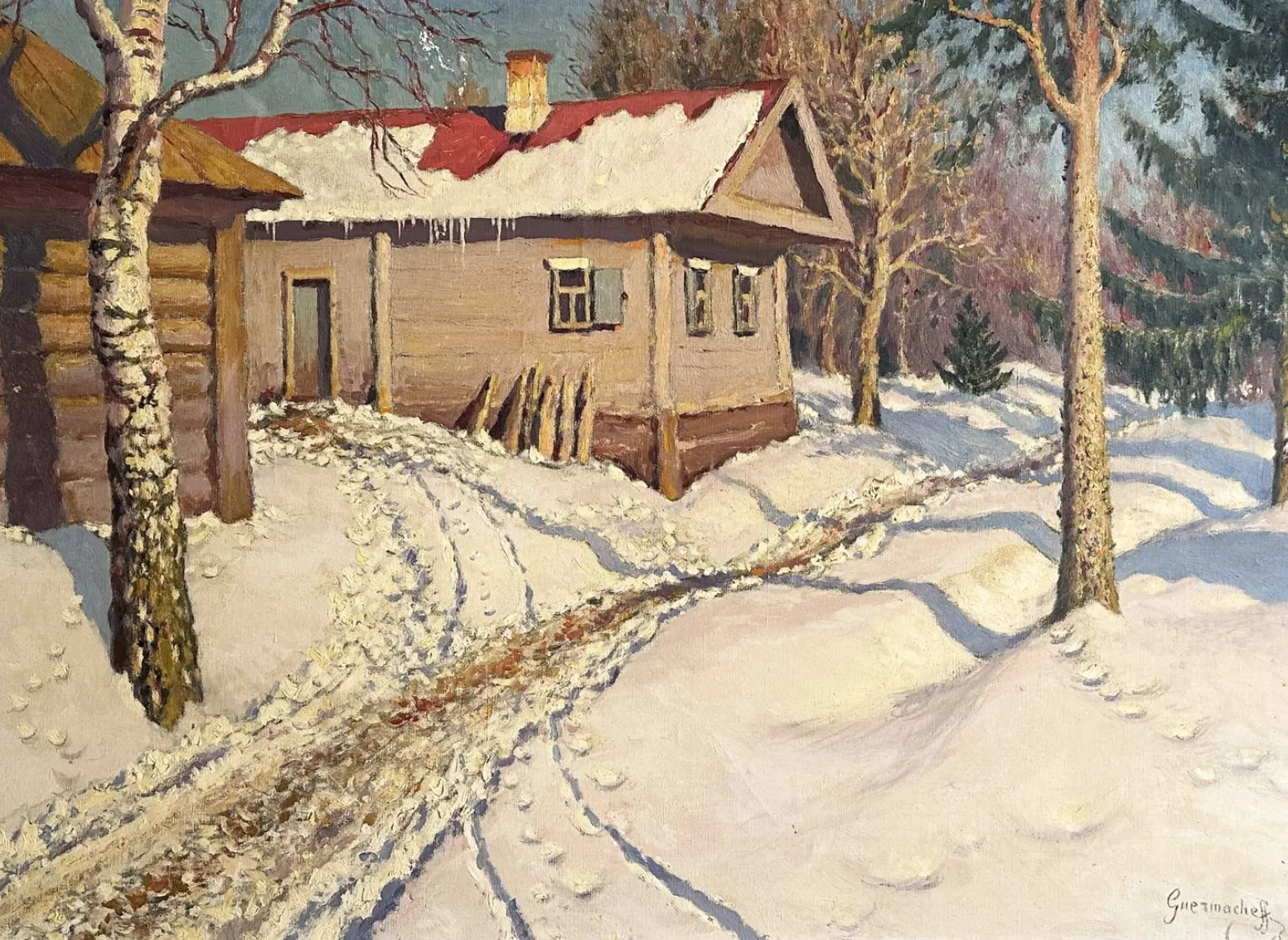
Why Russian Art Captivates the Art Market
Russian art captivates with the diversity and uniqueness of its genres, which do not always have direct equivalents in Western artistic traditions. The Orthodox icon, an object of devotion before it is a work of art, carries a spiritual significance that transcends its mere aesthetic value.
Imperial goldsmithing, particularly pieces from the House of Fabergé, embodies the absolute refinement of the Romanov court and continues to fascinate collectors far beyond Russia’s borders.
Finally, Russian painting—from 19th-century academicism to the revolutionary avant-garde—bears witness to an artistic vitality that has been overlooked for far too long in the West.
This fascination is fueled by several converging factors: the objective rarity of certain categories, particularly imperial objects that escaped confiscation and destruction during the Soviet period, the exceptional historical significance attached to objects that bear witness to the fall of an empire, and the depth of what is now a global demand, driven not only by Russian collectors but also by American, British, and Asian collectors, who have been particularly active in this segment for several decades.
Category | Period | Characteristics | Market Demand Level |
Ancient Orthodox Icon | 15th–19th century | Painted wood, tempera, sometimes enhanced with an oklad | Steady, specialized collectors and religious institutions |
Imperial silverware and Fabergé | 18th–early 20th century | Cloisonné enamel, vermeil, precious stones, workshop hallmarks | Exceptional, very high auction prices |
Academic and Realist Painting (École des Ambulants) | 1860–1910 | Historical scenes, landscapes, portraits, social criticism | Very active, Russian and international demand |
Russian avant-garde | 1910–1930 | Suprematism, Constructivism, radical formal innovations | Highly supported, institutional |
Soviet art and Socialist Realism | 1930–1980 | Official iconography, scenes of production, portraits | Active, market in consolidation |
Russian silverware and decorative objects | 18th–20th centuries | Samovars, kovsh, precious boxes, tableware | Active, broad buyer base |
Estimate in less than 24h
The criteria that determine the value of a Russian artwork
The market value of a piece of Russian art is determined by a hierarchy of criteria that the auctioneer weighs according to the category in question.
For icons, the age of the piece, the quality of the painting, the regional school to which they belong—Novgorod, Moscow, or the Old Believers—and the possible presence of a precious-metal oklad are decisive factors.
For gold and silverware, the presence of an identified workshop hallmark—particularly that of the Fabergé house or its principal master craftsmen—significantly increases the value compared to an anonymous piece of comparable craftsmanship. For paintings, the artist’s identity is paramount, with a considerable gap between the major figures of the Itinerant School or the avant-garde and less well-documented artists.
The price ranges observed on the secondary market illustrate this range. An antique icon of average quality, without an oklad, can range from 1,000 to 15,000 euros.
An icon with a silver or vermeil oklad, or one attributed to a prestigious regional school, ranges from 5,000 to 80,000 euros. A common piece of Russian silverware, such as a samovar or kovsh, sells for between 500 and 10,000 euros, while a piece attributed to the Fabergé workshop can exceed several hundred thousand euros, with some imperial eggs having fetched tens of millions of dollars at public auction.
A painting by a major artist of the Russian avant-garde frequently exceeds one million euros.
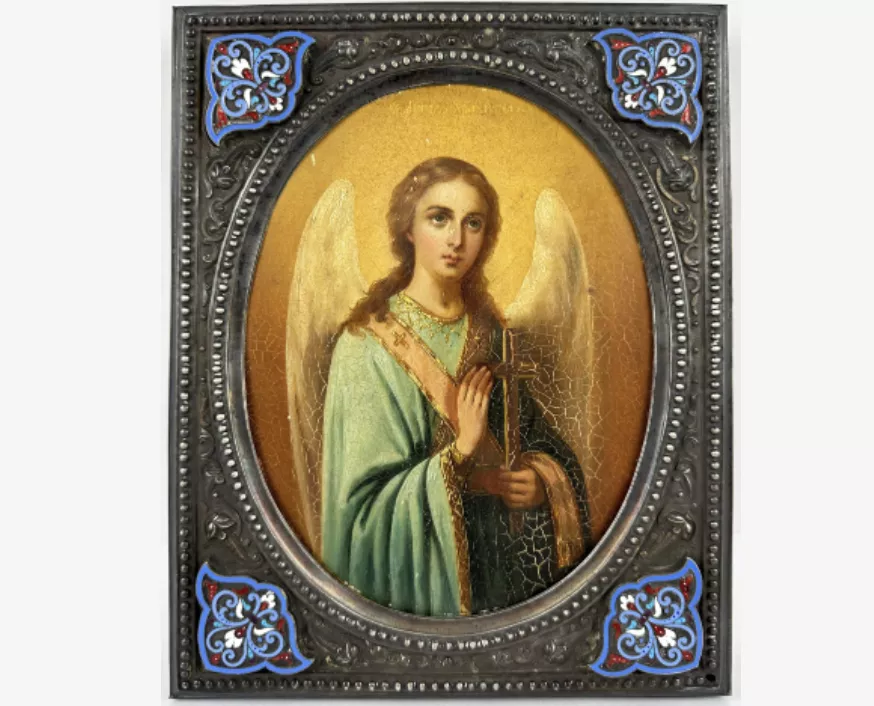
Icons, paintings, and silverware: a comprehensive guide to Russian art
Orthodox icons and oklad: a market of its own
Orthodox icons follow very specific valuation rules, distinct from those of Western painting.
Their value does not lie in the originality of the composition, as Orthodox religious iconography has repeated canonical models over several centuries, but rather on the quality of execution, the age of the panel and the paint layer, and the possible identification of a school or regional workshop recognized for its excellence.
The oklad—a precious metal frame that partially covers the icon while revealing the faces and hands of the figures—is a value-adding element in its own right; the quality of the goldsmithing, hallmark, and the presence of gemstones or enamels are evaluated independently of the painting itself.
Icons of the Old Believers—a religious movement that rejected the liturgical reforms of the 17th century and perpetuated traditional painting techniques with particular rigor—are today highly sought after by specialized collectors for the purity of their execution.
The major historic regional schools—Novgorod for its refined archaism, Moscow for its sophistication—constitute essential points of reference for attribution that the expert systematically draws upon in his or her appraisal work.
Category | Characteristics | Indicative Price Range | Market Demand |
Ancient icon without oklad, standard quality | Painted wood, tempera, unidentified school | 1,000 — 15,000 € | Active market, broad buyer base |
Icon with silver or vermeil oklad | Precious metal setting, sometimes enameled | €5,000 — €80,000 | Steady demand, specialized collectors |
Icon from a prestigious regional school (Novgorod, Old Believers) | Exceptional pictorial quality, age | €10,000 — €200,000 | Highly sought-after, institutional |
Common silverware (samovar, kovsh, silverware) | No identified prestigious workshop | €500 — €10,000 | Active, accessible, highly liquid |
Silverware attributed to Fabergé or an associated master silversmith | Identified workshop hallmark, cloisonné enamel, precious stones | €50,000 — several million € | Exceptional, international |
Academic or Ambulants-style painting (documented artist) | Historical scene, landscape, portrait | €10,000 — €300,000 | Very active, Russian and international demand |
Russian avant-garde painting (major artist) | Suprematism, Constructivism, formal innovation | €500,000 — several million € | Institutional, exceptional |
Russian painting and the avant-garde: the most sought-after works
The School of the Wanderers, this movement of realist painters who, beginning in the 1870s, organized traveling exhibitions throughout the Russian Empire to make art accessible beyond the academic circles of St. Petersburg, produced a body of work comprising historical scenes, portraits, and landscapes of great narrative power.
Ivan Shishkin for his forest landscapes, Ivan Aivazovsky for his spectacular seascapes, and Ilya Repin for his psychological portraits, are among the most sought-after figures of this generation, whose market value has risen significantly since the opening of the Russian art market in the 1990s.
The Russian avant-garde—from Kasimir Malevich’s Suprematism to Vladimir Tatlin’s Constructivism, including Vasily Kandinsky’s abstract explorations—constitutes the most prestigious and institutionally sought-after segment of Russian painting.
These works, whose production was often limited and whose circulation was hampered by the political upheavals of the early 20th century, are now considered major milestones in the history of world art, which explains their exceptional value when they appear on the market with impeccable documentation.
Estimate in less than 24h
Get a Free Appraisal of Your Russian Art
A certified appraisal by a licensed auctioneer in less than 24 hours
Appraising a piece of Russian art requires a broad understanding of a wide range of categories, from Orthodox religious iconography to imperial goldsmith hallmarks and the history of Russian artistic movements.
This technical diversity, combined with the proven presence on the market of numerous copies and misattributions—particularly for objects purportedly from the House of Fabergé—requires a rigorous appraisal conducted by a professional trained in the specifics of this complex market.
As a licensed auctioneer, Auctie’s possesses this cross-disciplinary expertise and offers a free appraisal, with a certified response within 24 hours.
Whether you have inherited a family heirloom, wish to have a piece of Russian silverware or an antique painting appraised, or are considering compiling an inventory of a Russian art collection, the process is the same: submit your item to a trained expert who can accurately assess its value.
What You Need to Provide for an Online Appraisal
For an icon, please provide clear photographs of the front and, if possible, the edges and back of the panel, as well as close-up details of the oklad, if present, and of any visible hallmarks or inscriptions.
The precise dimensions and condition of the wooden backing—including any cracks or previous restorations—must be noted.
For a piece of goldsmith’s work, photographs of the entire piece and of the hallmarks—usually located on the underside of the piece or in a discreet area—are essential: these hallmarks are the most decisive factor in identifying the piece’s attribution to a workshop or master goldsmith.
For a painting, clear photographs of the front and back, a close-up of the signature, and any known provenance information—such as a collection label, purchase invoice, or catalog entry—must be provided.
Any document attesting to the piece’s origin—particularly if it comes from a family collection within the Russian diaspora—must be reported, as provenance is a key factor in determining value and ensuring legal certainty in this market.
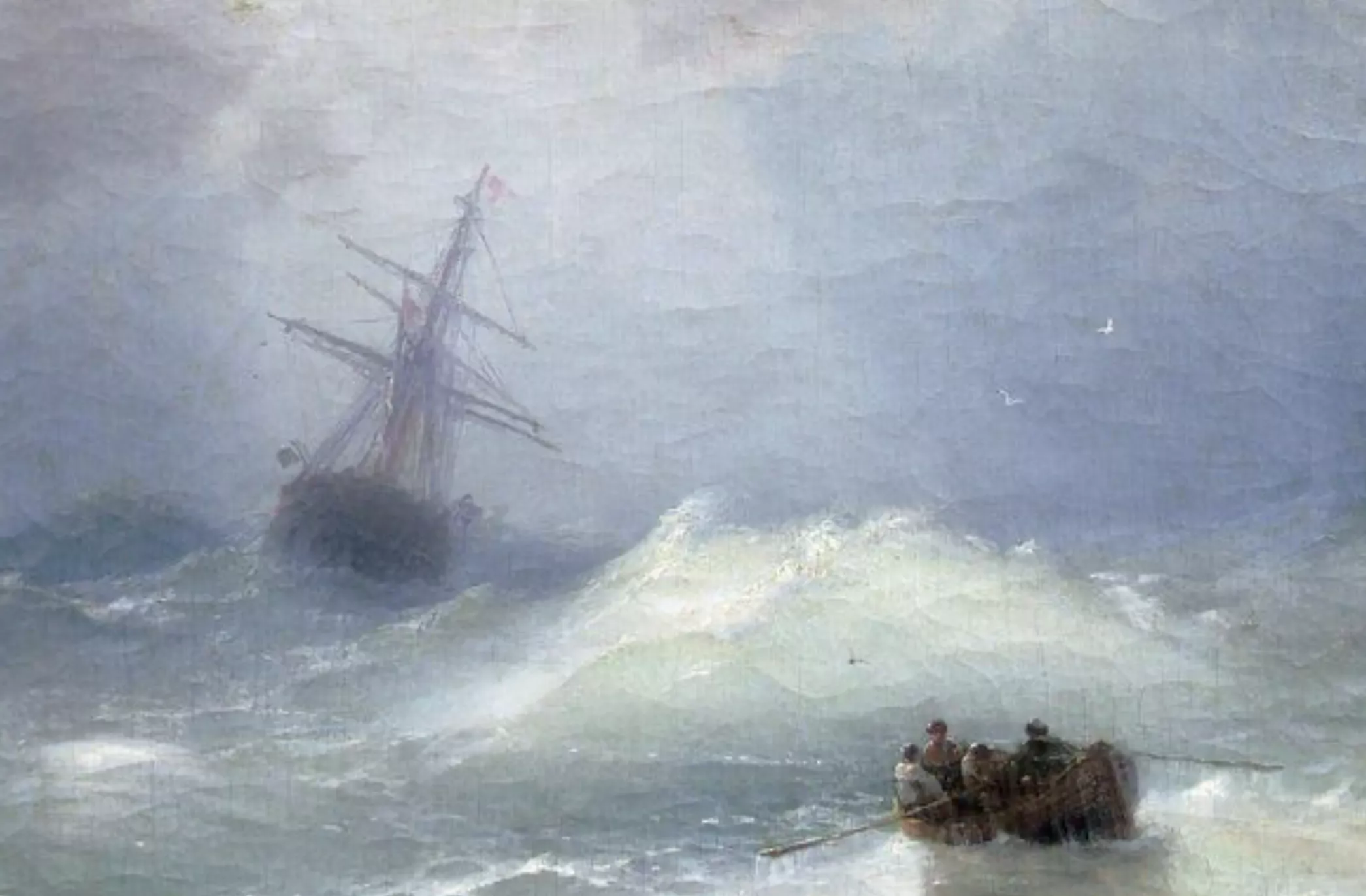
Hallmarks, Signatures, and Provenance: The Cornerstones of Valuation
Hallmarks, Signatures, and Attributions: Their Impact on Value
The authentication of a piece of Russian art relies on the combined examination of several elements, depending on the category in question.
For goldsmithing, the hallmark is the central element of appraisal: the workshop or master goldsmith’s hallmark, the fineness mark certifying the precious metal content, and the city and year of manufacture marks according to the Russian marking system.
The Fabergé company employed numerous master goldsmiths whose personal hallmarks, combined with the company’s hallmark, allow for precise dating and attribution; however, this system has also been the subject of countless forgeries, requiring expert scrutiny.
For icons, the examination focuses on the painting technique, the composition of the wooden panel and its preparation, as well as the style, which allows the work to be linked to a regional school and a specific period.
For paintings, the signature and stylistic comparison with the artist’s documented works remain the primary tools of expertise. For major artists of the avant-garde and the École des Ambulants, catalogs raisonnés and reference archives are authoritative and are systematically consulted.
Level of Documentation | Impact on the appraisal |
Clearly identified and authenticated workshop or master goldsmith’s hallmark | Maximum guarantee; very significant premium, particularly for Fabergé |
Work listed in the artist’s catalog raisonné (painting) | Maximum guarantee; often an essential condition for sale |
Work published in specialized literature or exhibited in a retrospective | Strong scholarly backing; significant increase in value |
Work accompanied by a written appraisal from a recognized specialist in Russian art | Good guarantee; reassures the buyer and facilitates the sale |
Documented provenance from a collection of the Russian diaspora | High value; rare and sought-after traceability |
Piece without a hallmark, signature, or identifiable provenance | Maximum uncertainty; high risk of a copy or erroneous attribution |
Provenance and Condition: Their Impact on Valuation
The provenance of a piece of Russian art is a particularly decisive factor in building trust in this market, given the turbulent history that has affected the circulation of these objects since the 1917 Revolution.
A piece that can be shown to have left Russia with an emigrant family before or shortly after the Revolution, and to have been preserved ever since by that same family in Western Europe or America, enjoys a legitimacy and legal certainty that buyers value very highly, particularly for imperial objects whose subsequent Soviet provenance can raise complex questions.
The condition of the item requires specific attention depending on the category. Icons, painted on wood and traditionally coated with an oil varnish that darkens over time, may have undergone earlier restorations—sometimes poorly executed—which can be revealed by examination under ultraviolet light.
Gold and silverware must be examined to detect any repairs, stone replacements, or alterations to the particularly fragile cloisonné enamel. For paintings, typical alterations—such as craquelure, repainting, and abrasive cleaning—must be investigated with the same rigor as for any other work of art.
Selling a Russian Artwork at Auction with Auctie's
From the reserve price to the final bid: how the price is determined
Auctions are the most advantageous method of sale for high-quality Russian art objects, in a market where demand—now largely international—can generate fierce competition among several collectors interested in the same piece, particularly for imperial objects and the rarest icons.
The reserve price, set in consultation with the seller, must be determined with particular attention to the specific category of the object, as the valuation criteria—as we have seen—differ significantly between icons, gold and silverware, and paintings.
For major pieces—particularly those likely to be attributed to the House of Fabergé or to the leading figures of the Russian avant-garde—the dynamics of the auction can lead to final prices far exceeding the initial estimates. The auctioneer plays a vital role in driving this process by engaging specialized collectors and institutions likely to be interested in an exceptional piece.
Hôtel Drouot and online auctions: reaching the right bidders
Auctie’s holds its auctions at Hôtel Drouot, the leading auction venue in continental Europe, founded in 1852 and, since the major dispersals of Russian diaspora collections in the 20th century, one of the world’s most active venues for the sale of Russian art.
For a piece of Russian art, Drouot offers unparalleled visibility among French and European specialists in this market, as well as among an international clientele that closely follows Parisian auctions dedicated to this body of work.
The auctions are also accessible online in real time, allowing collectors based in Moscow, New York, London, or Hong Kong to bid directly from their home countries.
For Russian art, for which the strongest demand today comes from a truly global audience, this international dimension has become absolutely crucial to achieving the best hammer price.
Estimate in less than 24h
Estate Planning, Inheritance: Valuing Inherited Russian Art
Inventory and Distribution of an Estate
Russian art objects frequently appear in the estates of families with ties to the diaspora that emerged following the 1917 Revolution, or more broadly, in the estates of families who built collections through travel or acquisitions during the 20th century.
These pieces—which may have been passed down for generations without their current owners knowing their precise value or even their exact origin, whether they are family heirlooms, silverware, or antique paintings—can represent a significant asset in an estate, particularly for the rarest items in this market.
Auctie’s regularly works alongside notaries to compile comprehensive estate inventories that include Russian works of art.
Each piece is appraised individually, with particular attention paid to questions of attribution—which are often complex given the turbulent history of this collection’s dissemination. The resulting report is an official, legally binding document that can be included in the estate file without reservation.
Confidentiality of the process and preservation of anonymity
The circumstances leading to the appraisal of Russian art are often personal: the discovery of a piece in a family inheritance linked to the history of the diaspora, the reorganization of a collection, or the decision to sell after a long period of ownership.
Auctie’s handles each case with absolute discretion. The owner’s identity is never disclosed to third parties without their explicit consent, and the pieces may be offered for sale under complete anonymity if the consignor so desires.
This confidentiality is a fundamental commitment of Auctie’s, valid at every stage of the relationship, from the initial contact through to the receipt of the proceeds from the sale.
Entrust the appraisal of your Russian art to Auctie’s
A piece of Russian art deserves an appraisal that reflects the diversity of this market and the complexity of its history.
The distinction between the valuation criteria specific to icons, gold and silverware, and paintings; the decisive importance of hallmarks and attributions in a market prone to counterfeits; and the exceptional historical significance of many pieces: these are all factors that only a licensed auctioneer, well-versed in the specifics of Russian art, can assess with the rigor they require.
Auctie’s guides you from the initial appraisal through to the final auction, offering the expertise of a state-certified appraiser and the discretion your financial decisions deserve. The appraisal is free, confidential, and non-binding, and you’ll receive a response within 24 hours.
Discover in the same theme

Rating and value of paintings and drawings by Alexandre Altm...
Alexandre Altmann is a Russian post-impressionist painter who has produced works that are highly rated and valued at auction.
Learn more >

Rating and value of paintings by Alexander Deineka
Alexander Deineka is a Russian artist who has produced engaged art, and works that are highly rated and valued at auction. 24h estimate
Learn more >

Market Value and Price of Alexandra Exter's Paintings, Drawi...
Alexandra Exter is a Franco-Ukrainian artist of modern art who has produced works that are highly rated and valued at auction.
Learn more >
Estimate in less than 24h
Frequently asked questions
-
What are the price ranges for Russian art based on the type of work?Prices vary considerably depending on the category. An antique icon without a setting of standard quality ranges from 1,000 to 15,000 euros, while an icon with a silver or vermeil setting ranges from 5,000 to 80,000 euros. Common silverware (such as samovars and kovshs) sells for between 500 and 10,000 euros, but a piece attributed to Fabergé can exceed several hundred thousand euros. A Russian avant-garde painting by a major artist frequently exceeds one million euros.
-
How can you authenticate a Russian work of art and avoid counterfeits?The authentication of a Russian work of art is based on an examination of several factors: workshop marks, signatures, documented provenance, and the quality of craftsmanship. Since many copies and misattributions circulate on the market—particularly for Fabergé pieces—it is essential to have your item appraised by a certified auctioneer. Auctie's offers a free, no-obligation appraisal conducted by an expert trained in the specifics of the Russian market, with a response within 24 hours.
-
What criteria determine the value of a Russian work of art?The value is determined by a hierarchy of criteria weighted according to category. For icons: age, quality of craftsmanship, regional school (Novgorod, Moscow, Old Believers), and the presence of an oklad. For gold and silverware: identification of the workshop hallmark, particularly Fabergé. For paintings: the artist’s identity, provenance, condition, and documentation. Provenance and hallmarks are the essential pillars of valuation.
-
Is this the right time to sell Russian art?Yes, the Russian art market has been experiencing sustained growth since the 2000s, driven by a new generation of Russian and international collectors. Demand remains particularly strong for antique icons, imperial gold and silverware, paintings by the Wanderers, and the Russian avant-garde. Collectors worldwide remain very active in this segment, ensuring strong liquidity for well-documented and authenticated pieces.
-
How does the appraisal process work at Auctie's, and how can I sell my Russian art?The appraisal is free, non-binding, and certified by a licensed auctioneer within 24 hours. You provide clear photographs of your item, including details of hallmarks, signatures, and known provenance. After the appraisal, Auctie’s guides you through the entire process: lot preparation, catalog creation, outreach to international collectors, and auction sale.
