



Rating and value of paintings by Vasily Polenov

Key takeaways
- A 19th-century Russian painter (1844–1927), Polenov’s works fetch prices ranging from €30 to €4.2 million, depending on the medium and the rarity of the piece.
- His oil-on-canvas paintings sell for between €270 and €4.2 million, particularly his landscapes and biblical scenes of Jerusalem, which are highly prized by collectors.
- His style blends Impressionist naturalism with Russian academicism, featuring a bright and vibrant palette that liberated landscape painting from the academic constraints of the 19th century.
If you own a work by or based on the artist Vasily Polenov and would like to know its value, our state-approved experts and auctioneers will guide you.
Our specialists will carry out a free appraisal of your work, and provide you with a precise estimate of its value on the current market.
Then, if you wish to sell your work, we will direct you to the best possible arrangement to obtain the optimum price.
Artist's rating and value
A 19th-century Russian artist, Vasily Polenov has a high rating on the auction market. Having worked mainly in Canada, he is one of the best-known painters of his time.
Appreciated, Polenov's works sell for between €30 and €4,200,000 on the art market, a sizeable delta but one that speaks volumes about the value that can be attributed to the artist's works.
In 2011, a landscape painting entitled He that is without sin, dating from 1908, sold for €4,200,0000, whereas it was estimated at between €1,400,000 and €2,100,000. The result was therefore well over twice the high estimate.
Order of value from the most basic to the most prestigious
Technique used | Result |
|---|---|
Estamp - multiple | From 30 to 50 € |
Drawing - watercolor | From €270 to €19,300 |
Oil on canvas | From €270 to €4,200 120 |
Estimate in less than 24h
The artist's style and technique
Vassili Polenov's style and technique are in a fairly classical vein, in form to the Russian academic canons of the time. Several crucial points stand out.
Firstly, Polenov's works are imbued with a naturalism inspired by Impressionism. Gradually, he moves away from the strict realism of Russian academism, towards a more spontaneous style and a more luminous approach.
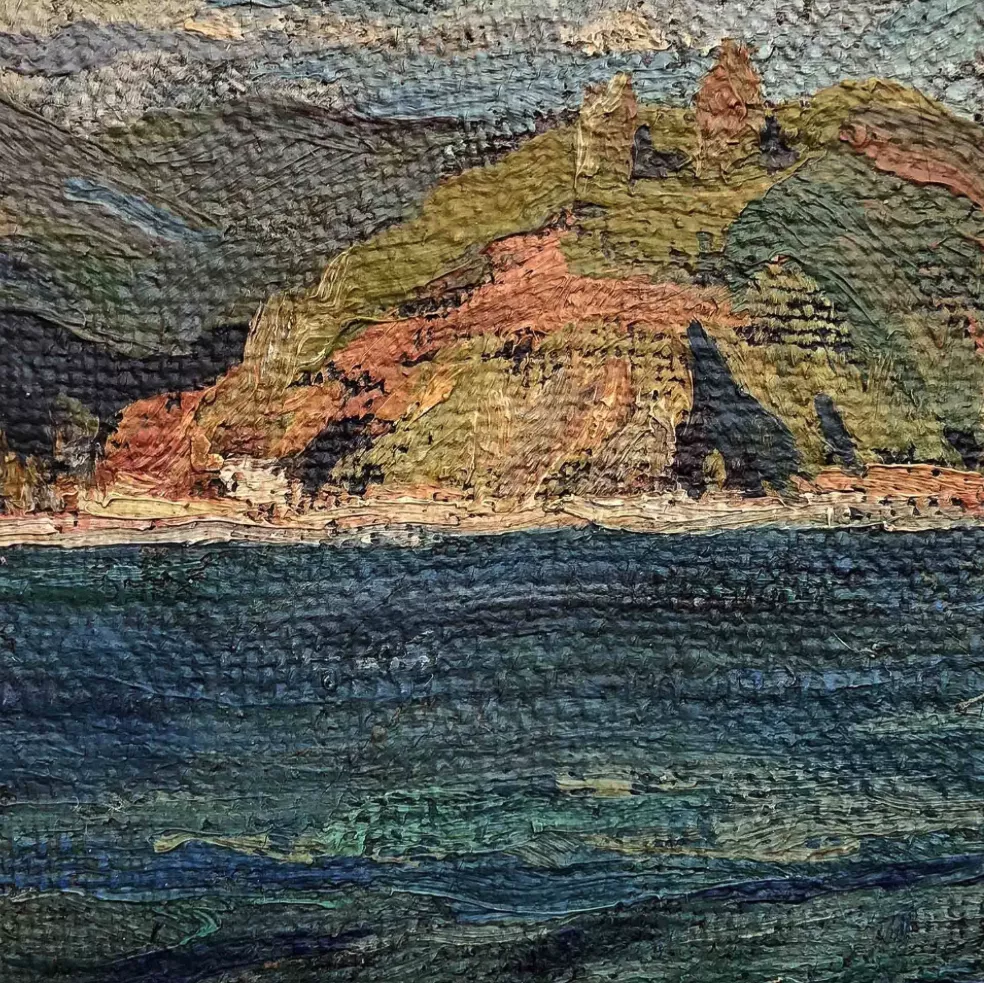
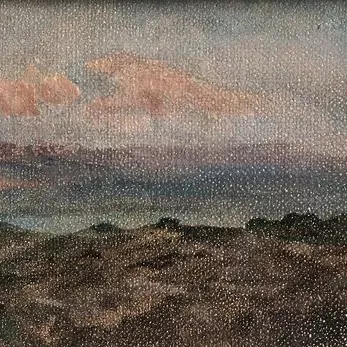
His palette is clear and vibrant. In this sense, he moves away from the dark tones favored by his contemporaries, favoring softer contrasts. An adept of pastel tones and the play of light, he developed a technique that gives his works a feeling of serenity and poetic realism.
Polenov paints with a touch that is at once supple and fluid, light and dynamic, often materializing in small, juxtaposed strokes that most often evoke a certain freedom in the composition. In this way, he captures the subtleties of the nature he depicts, bringing his landscapes to life.
Polenov also pays particular attention to architectural and historical details. Taking a keen interest in these disciplines, he incorporates precise old buildings and cityscapes into his compositions - particularly in his works depicting the Holy Land.
In several canvases, he depicts scenes from Palestine and Jerusalem, taking great care to faithfully convey the atmosphere of the place.
Polenov is also influenced by theater and the openness of space. Playing with wide perspectives, especially in his landscapes, he extends the horizon to infinity thanks to his sense of depth, giving his works an impression of space and grandeur that breaks with the more confined aesthetics of academic realism in several respects.
Polenov therefore works on perspective and the opening up of space, not limiting his works to a simple visual transcription. They convey a meditative atmosphere and a quest for timeless beauty.
Whether in landscapes or biblical scenes, Polenov infuses his compositions with a spiritual dimension transcending mere representation.
The life of Vassili Polenov
Vassili Dmitrievitch Polenov (1844-1927), an emblematic figure among Russian landscape painters, was an artist from Saint Petersburg who was particularly noted for his views of Jerusalem and Palestine.
Born of Russian nobility, he was trained in drawing and music from an early age. His father, an archaeologist, quickly gave him a taste for art and science. As a child, he met Karl Brioullov and Roman Kouzmine. His mother was also an illustrator and writer.
He grew up near the Finnish border - where he had the opportunity to observe and depict many landscapes. In 1860, his father took him and his two brothers on a trip to northern Russia. They visited Moscow, Novgorod and Souzdal, among other places.
In these cities, Vassili Polenov made his first sketches of ancient ruins. He went on to study with Pavel Chistiakov and then at the Imperial Academy of Fine Arts, where he was in the same class as Ilia Répine.
At the same time, in order to remain faithful to his family heritage, the artist also studied law at the University of St. Petersburg - graduating with a doctorate.
.In his day, he was considered one of the best students at the Académie Impériale des Beaux-Arts, and even received the " grande médaille d'or " for his painting La résurrection de la fille de Jaïre, thus affirming his inclination for religious subjects. This was the first time he had worked on the representation of Christ in an academic setting.
Thanks to this award, he was able to become a Russian state scholarship boarder abroad. After four years of travel, in Germany, Switzerland, Italy (where he became a great admirer of Veronese) and France, he spent some time in Paris
There he met up with Répine and set up his studio in Paris, frequenting the circle of Russian artists. He was helped by Alexeï Bogolioubov, official painter to the Russian navy, who played a major role in the careers of young artists at the time, introducing them to collectors and dealers.
He tried his hand at creating painted ceramics, which enabled him to generate additional income. During this period, he tried his hand at many pictorial genres, including historical scenes, still lifes, portraits and landscapes.
He eventually found himself in Normandy with Répine following the influences of the Fontainebleau School, where he produced numerous landscapes. This period soon came to an end due to the Russo-Ottoman conflict, forcing him to return to Russia and take up arms - as a war painter.
He then settled in Moscow and refocused his production on Russian landscapes. His work was spotted by Vladimir Stassov, a member of the Société des Ambulants. Breaking with academic conventions, one of their aims was to promote literacy in Russia.
He also frequented the Ambramstevo circle, where he met many artists, not all of whom were painters. Constantin Korovine was one of them.
In the latter part of his career, he taught at the Moscow Academy of Painting and became a member of the St. Petersburg Academy of Fine Arts.
Vassili Polenov's imprint on his time
Vassili Polenov left a considerable imprint on his time. First and foremost, he ushered in a new era in Russian landscape painting, helping to free it from its academic straitjacket, pushing it towards a more poetic and luminous dimension.
With an approach that blends realism and impressionism, Polenov influenced many artists who moved away from rigid compositions in favor of a more vivid representation of nature.
Polenov's work thus stands out as a bridge between tradition and modernity. Trained to respect academic canons, he manages to renew them by integrating both Western influences (especially Impressionist), without denying Russian artistic identity, just like Savrassov.
Savrassov's work marked a transition from the classicism of the 19th century to a freer, more sensitive style of painting, setting the stage for developments in the early 20th century.
Polenov also established himself as a model for the Ambulants, and played a key role in the democratization of art in Russia. The artist helped to make painting accessible to a wider public, and inspired a new generation of artists - who would in turn turn turn their attention to landscapes and scenes of everyday life.
While Academism still valued historical and religious themes, Polenov played with its codes in his religious scenes, notably in Christ and the Adulteress. The approach is more human and realistic, and exerts an influence on the way religious subjects are treated in the future.
He also exerts a lasting impact on scenography and theater, thanks to his work on sets and the way he composes his canvases - like stage directions, so much so that Russian directors will be influenced by his approach to framing.
His signature
Not all of Vasily Polenov's works are signed.
Although there are variations, here's a first example of his signature:

Expertise your property
If you happen to own a work by or after Vasily Polenov, don't hesitate to request a free appraisal by filling in our form on our website.
A member of our team, made up of experts and licensed auctioneers, will contact you promptly to provide an estimate of the value of your work, and will ensure that you receive ad hoc information about it.
If you are planning to sell your work, you will also be accompanied by our specialists in order to benefit from alternatives for selling it at the best possible price, taking into account the inclinations of the market and its specificities.
Estimate in less than 24h
Discover in the same theme

Rating and value of works, paintings by Gustave Courbet
Gustave Courbet was a 19th-century painter and leader of the realist movement. He painted many canvases of high value.
Learn more >

Rating and value of drawings, watercolors, paintings by Augu...
Auguste Pelletier was a 19th-century French illustrator who produced works that are highly regarded and valued at auction.
Learn more >

Rating and value of paintings by Conrad Wise Chapman
Conrad Wise Chapman was a 19th-century American landscape and military painter who produced works of high value.
Learn more >
D'autres tableaux russes anciens vendus aux enchères


Secure site, anonymity preserved

Auctioneer approved by the State

Free and certified estimates
Frequently asked questions
-
Who is Vassili Polenov, and what is his artistic background?Vasily Polenov (1844–1927) was a major 19th-century Russian painter, originally from Saint Petersburg and trained at the Imperial Academy of Fine Arts alongside Ilya Repin. An artist from the Russian nobility, he is known for his luminous landscapes and scenes from the Holy Land, marking the transition from classical academicism to a freer, more sensitive style of painting influenced by Impressionism. He played a key role in the modernization of Russian landscape painting and the democratization of art in Russia through his involvement with the Wanderers’ Society.
-
What is the price range for works by Vasily Polenov?Vasily Polenov’s works sell for between €30 and €4,200,000 on the art market, depending on the medium and provenance. Prints and multiples range from €30 to €50, drawings and watercolors from €270 to €19,300, while oil-on-canvas paintings—his major works—can fetch several million euros. Exceptional pieces, such as landscape paintings or biblical scenes, regularly exceed their initial estimates.
-
How can you authenticate a work by Vasily Polenov?To authenticate a work by Vassili Polenov, we recommend that you submit your piece for a free appraisal through Auctie's. Our team of experts and state-certified auctioneers will conduct a detailed appraisal, provide you with an accurate estimate of your item’s value, and advise you on its authenticity. This process is non-binding, and you will receive a response within 48 hours.
-
Is this the right time to sell a work by Vassili Polenov?Yes, this is a good time to sell a work by Vasily Polenov. The artist commands high prices on the auction market, and his landscapes and biblical scenes are in steady demand. Auction results regularly exceed estimates, reflecting sustained interest among collectors in this key figure of 19th-century Russian painting.
-
How does the appraisal and sale of a work of art take place at Auctie's?Appraisals at Auctie's are free and non-binding: simply fill out a form on our website, and a certified expert or auctioneer will contact you within 48 hours with an accurate valuation. If you decide to sell, our specialists will guide you every step of the way, offering you the best options for selling your artwork at the best price, taking into account current market trends and conditions.
