



Rating and value of paintings by Marianne von Werefkin

Key takeaways
- A leading figure in the Russian avant-garde, Werefkin’s works are valued between 4,700 and 413,700 euros, with her untitled tempera painting fetching 413,700 euros in 2024.
- Her watercolor drawings are valued at 260,000 to 340,000 euros, while her paintings command a much wider price range, reflecting their rarity on the market.
- An Expressionist painter since 1906, she favors free use of color and chromatic tension to express inner life rather than visible reality.
If you own a work by or based on the artist Marianne von Werefkin and would like to know its value, our state-approved experts and auctioneers will guide you.
Our specialists will carry out a free appraisal of your work, and provide you with a precise estimate of its value on the current market.
Then, if you wish to sell your work, we will direct you to the best possible arrangement to obtain the optimum price.
Rating and value of the artist
A major artist of the Russian avant-garde, Marianne von Werefkin is rapidly establishing herself as a sure bet on the art market.
Sought after by collectors the world over, the artist's works boast a high rating that continues to grow.
As a result, a signed work by Werefkin can fetch tens of thousands of euros at auction, as evidenced by his tempera Ohne Title (Sans titre), adjudged €413,700 in 2024, whereas it was estimated at between €230,000 and €350,000. His works are rare on the market, suggesting record-breaking auctions to come.
Order of value from a single work to the most prestigious
Technique used | Result |
|---|---|
Drawing - watercolor | From €260 to €340,000 |
Painting | From €4,700 to €413,700 |
Estimate in less than 24h
The artist's works and style
In Maria von Werefkin's painting, color retains this property of suggesting dramatic intensity and expression, the emotional qualities of figures.
But this is at the cost of a shift: it no longer defines a particular object but a global space, traversed by chromatic tensions and linear rhythms. Form fades away, but the plastic forces that were attached to it, i.e. the vibration of hues, remain.
To reverse the academic formula, in Werefkin's Expressionism, color no longer melts into figuration and narrative: it floats in a free state. Autoportrait (fig. 1), a tempera on cardboard dated 1910, is one of the first works in which she pushes this principle to its paroxysm.
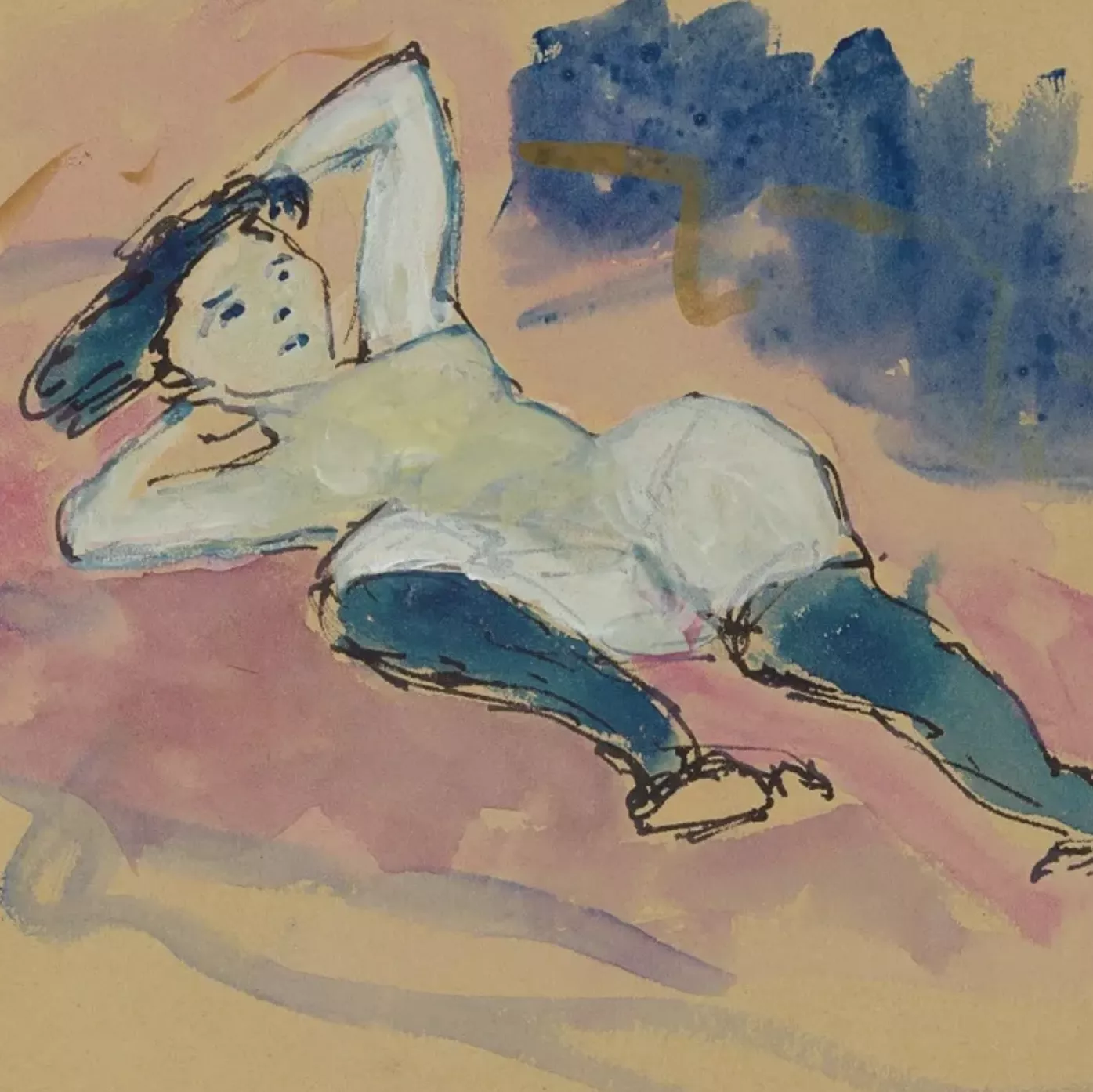
There is a preparatory drawing that vividly demonstrates the specificity of pictorial treatment compared to graphic line: while drawing circumscribes forms with relative precision, painting inflicts a substantial conversion on them, taking them from a defined outline to dissolution in the flow of color.
The line dominated in the sketch: in painting, it's the color system that takes over and engulfs the figure. In this incunabulum of his expressionism, the classical portraitist's craft seems to retrace the course of history.
But it's at the cost of subverting its founding principles: a shift has taken place, a dislocation, and color has become detached from drawing.
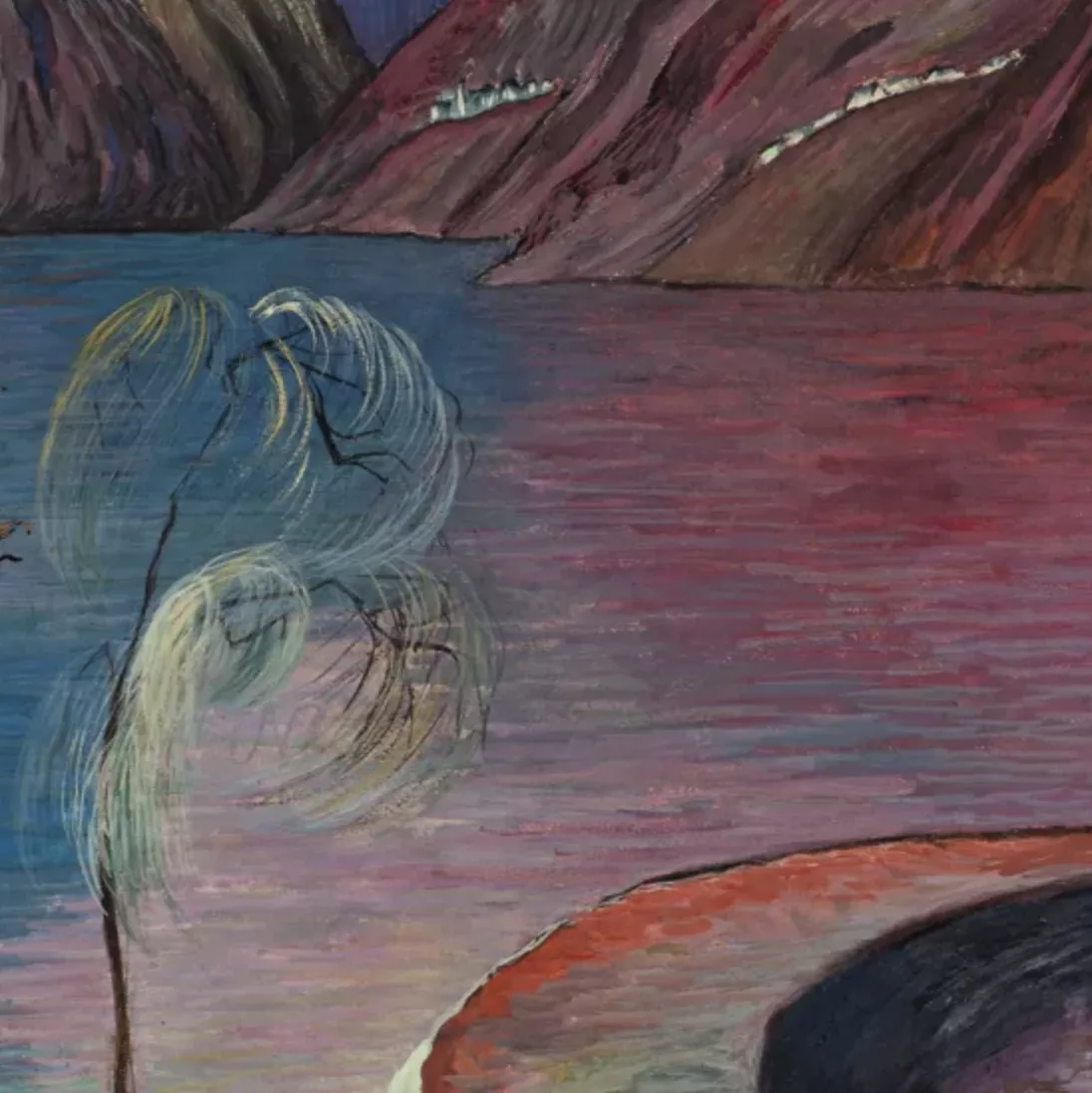
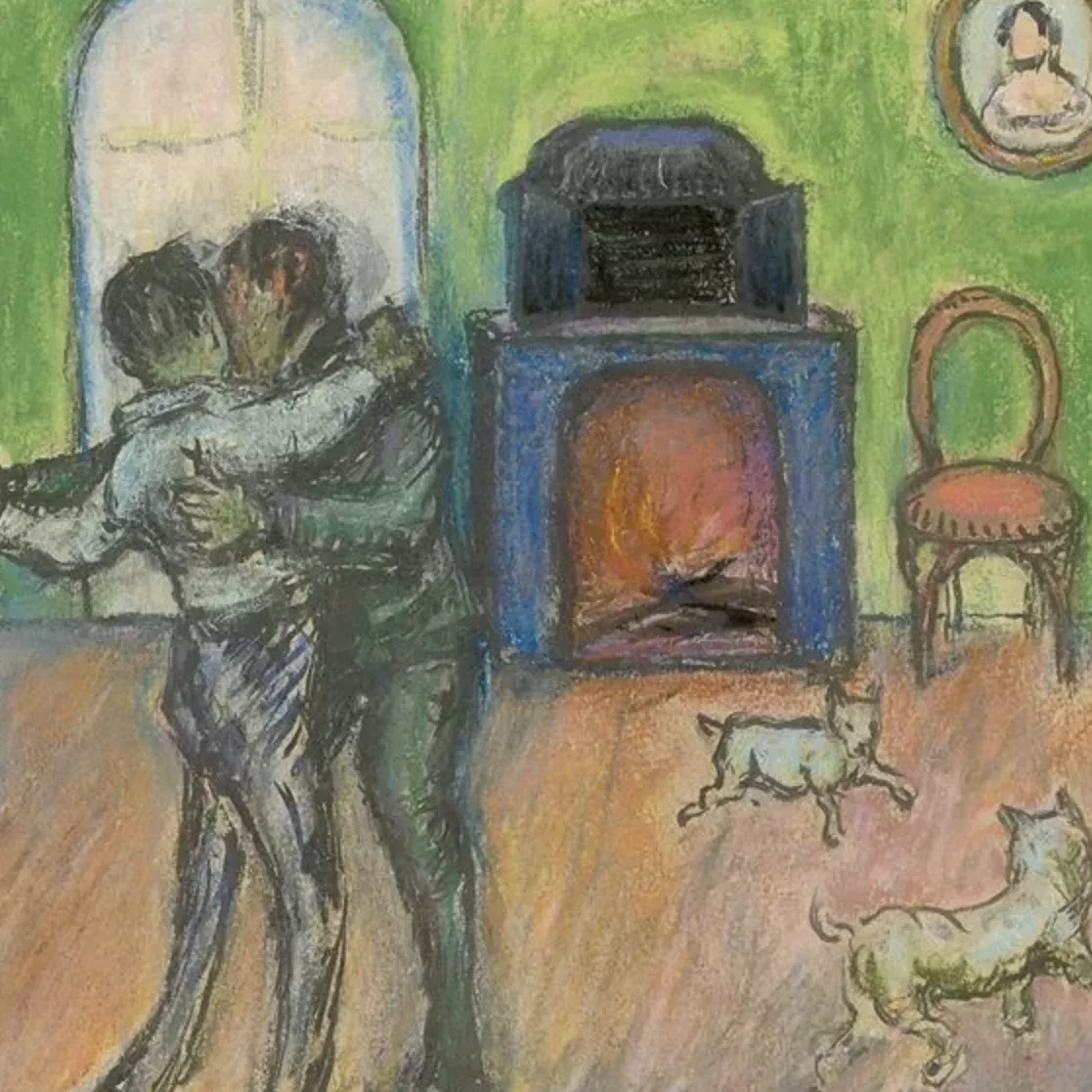
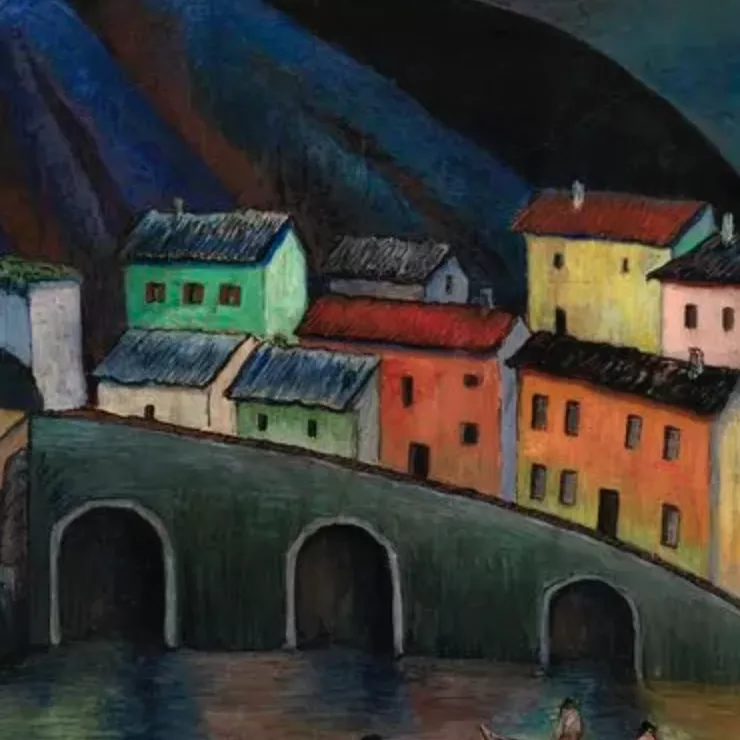
This "perversion" of academic codes would become more pronounced in Werefkin's later canvases. In his major works such as La Cavalière (fig. 2) and La Ville Rouge (fig. 3), painted at the same time and in a similar style - so similar is their construction - the real subject seems to be color itself: the line has disappeared, but the contrasting hues persist, exploring every possible combination, cold and warm, bright and muted, in broad flat tints or nervous strokes that simulate effects of light and movement.
In these compositions, which correspond to the paroxysm of his Expressionist period, space reaches its breaking point and form loses almost all materiality.
Then, stripped of its descriptive role, no longer coinciding with a pre-existing contour, color is now devoted to defining a purely psychological space, varying intensities and tensions in a continuous field, as the gesture is responsible for in the pictorial element.
The only exception to this detour from classical drawing is the frozen, stylized faces of certain figures which, through their hieratic fixity, episodically rediscover their traditional function. Werefkin's world is all about chromatic saturation.
This aspect of his painting is related to his rejection of a naturalistic transcription of the world. "I want to paint not what I see, but what I feel", she asserts.
It's understandable that, refusing the slavish imitation of reality, she chose, among plastic means, that which privileged pure expression and visual intensity.
By way of comparison, we might recall the Fauvism of Matisse and Derain: they too explored the power of color, but according to a more decorative and structured principle.
Werefkin's expressionism, by exacerbating contrasts and superimposing discordant harmonies, achieves a chromatic tension that more or less transposes the inner exaltation that inhabits her work.
The life of Marianne von Werefkin
Marianne von Werefkin was born in 1860 into an aristocratic Russian family, in a world where art established itself as an essential language. A pupil of Ilia Répine, she inherited a plastic rigor that anchored her work in the tradition of realism.
But this know-how, far from being an end in itself, was put to the test: in 1896, she moved to Munich with Alexej von Jawlensky and suspended her practice. Ten years of waiting, analysis and meditation on modern art.
When she returns to painting, the transformation is complete. Realism is no longer a necessity, but a starting point that Expressionism overcomes. Color is emancipated, becomes a vector of tension, a substitute for drawing, a medium for an inner reality.
Through the Neue Künstlervereinigung München, then the Blaue Reiter (which also influenced other artists such as Baselitz), she inscribed her work in a movement that rejected imitation to liberate vision. The war shattered this momentum, and exile in Switzerland shifted her struggle: precariousness and isolation did not extinguish the demand, they concentrated it.
Until her death in 1938, painting remained a place of experience where figuration wavered under the thrust of an absolute expressive necessity.
.
Focus on Autoportrait, Marianne von Werefkin
In Autoportrait, Marianne von Werefkin abandons the seductiveness of line for a more abrupt truth. The face, sculpted by shadow, emerges from a dark background where color no longer plays an ornamental role but one of tension.
The gaze, fixed and piercing, is not turned towards the viewer but beyond, towards an interiority that escapes. Nothing here seeks effect, everything is ordered around a rigorous economy: modelling dissolves in the light, contours fade away, only a confrontation between figure and space remains.
The pictorial material itself participates in this dispossession, thick in places, rougher elsewhere, as if painting refused to be a mere transcription to become an act.
This face, far from idealization, is not a portrait in the classical sense, but a presence, a point of rupture between the visible and that which overflows it.
In this staging of deprivation, color, usually at Werefkin a terrain of daring, is held back, concentrated, to the point of tearing itself away from its own expressive function. The lipstick, reduced to a line, is no longer a statement but a flaw.
The blue, locked in shadow, absorbs itself into obscurity. The deep black background doesn't envelop, but isolates, detaches, forcing the figure to stand on its own, unsupported. The absence of superfluous detail gives way to a construction in which each element vibrates with the same necessity.
In this enclosed space, the gaze becomes the ultimate vanishing point, a breakthrough that opens onto nothing but the unknown. Werefkin doesn't seek to seduce or convince, she exposes a naked truth, where painting is no longer description but pure tension, a struggle between form and its disappearance.
Marianne von Werefkin's imprint on her period
Marianne von Werefkin's imprint on her period is not in the obviousness of an immediately recognizable style, but in a shift, a discreet yet decisive break.
Her role was not that of a leader, but of a spur, a subterranean force that altered the way we look without ever imposing dogma.
Through her, expressionist painting abandoned the simple transcription of emotions to take on a broader tension, where the visible no longer merely reflects interiority, but questions it, confronts it, puts it to the test.
In her work, color does not serve a fixed grammar; it oscillates between bursts and retentions, accumulating in masses before suspending, as if held back on the edge of a revelation.
What she bequeaths to her generation is not a system but a disorder, a vertigo that contaminates representation and pushes painting beyond its primary function.
Werefkin was not a revolutionary in the manifest sense of the term, but a flaw in certainty, a displacement whose echo is measured less in immediacy than in persistence.
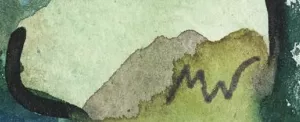
Her signature
Not all Marianne von Werefkin's works are signed.
Although there are variants, here is a first example of her signature:
Expertise your property
If you own a work by Marianne von Werefkin, don't hesitate to request a free valuation by filling in our online form. A member of our team of experts and licensed auctioneers will contact you to provide an estimate of the market value of your work.
If you are considering selling your work, our specialists will also guide you through the various alternatives available to obtain the best possible price, taking into account market trends and the specific features of each object.
Estimate in less than 24h
Discover in the same theme

Rating and value of works, drawings, paintings by Henry de G...
Henry de Groux was a twentieth-century painter from Brussels. A sickly, committed artist, he depicted scenes of torture and war that were highly rated...
Learn more >

Rating and value of paintings by Vasudeo Gaitonde
Vasudeo Gaintonde is a twentieth-century Indian abstract painter whose works are highly valued at auction.
Learn more >

Rating and value of paintings by Virginie Demont Breton
Virginie Demont Breton is a 19th-century naturalist artist whose paintings are highly valued at auction.
Learn more >
D'autres tableaux expressionnistes vendus aux enchères


Secure site, anonymity preserved

Auctioneer approved by the State

Free and certified estimates
Frequently asked questions
-
Who was Marianne von Werefkin, and what was her artistic context?Marianne von Werefkin (1860–1938) was a major artist of the Russian avant-garde and a key figure in German Expressionism. A student of the realist Ilya Repin, she radically transformed her approach after moving to Munich in 1896, developing an expressionism based on color as a vehicle for pure emotion. She was involved in the Neue Künstlervereinigung München and Der Blaue Reiter movements, rejecting imitation in favor of the liberation of inner vision.
-
What are the prices and values of Marianne von Werefkin's works?Marianne von Werefkin’s works command high and rising prices and are sought after by collectors worldwide. Her drawings and watercolors sell for between €260,000 and €340,000, while her paintings range from €4,700 to €413,700. A record was set in 2024 when her tempera painting “Untitled” sold for €413,700, exceeding its initial estimate of €230,000 to €350,000. The scarcity of his works on the market suggests that further records are likely to follow.
-
How can you authenticate a work by Marianne von Werefkin?To authenticate a work by Marianne von Werefkin, you can request a free appraisal from Auctie's by filling out our online form. A state-certified expert or auctioneer will contact you to examine the work and provide you with an accurate estimate of its market value, with no obligation on your part.
-
Is this the right time to sell a work by Marianne von Werefkin?Yes, now is a good time to sell a work by Werefkin. The artist’s market value continues to rise, and her works are sought after by collectors around the world. Their scarcity on the market and recent record-breaking results at public auctions demonstrate sustained interest and strong demand for her work.
-
How does the appraisal and sale of a work of art take place at Auctie's?A free appraisal at Auctie's begins with submitting an online request. A certified expert or auctioneer will contact you within 48 hours to appraise your artwork with no obligation. If you’d like to sell, our specialists will guide you through the various options available, taking into account market trends and the specific characteristics of your item, to help you get the best possible price.
