



Art Deco Appraisals and Auctions

Geometric lines, lacquer, and precious woods: Art Deco values vary widely depending on the designer, the quality of craftsmanship, and the rarity of the piece.
Below you’ll find all our valuation guides dedicated to Art Deco—signed furniture, lighting fixtures, chryselephantine sculptures, and objets d’art. Each guide details the price ranges observed at auction and the factors that determine a piece’s value before it is entrusted to our state-certified auctioneers.
Guides on this art movement
See all guides >
Rating and value of vases and paintings by François Décorche...
François Décorchemont is a French Art Nouveau glass artist, ceramicist, and painter whose works fetch high prices at auction.
Learn more >

Rating and value of sculptures and bronzes by Paul Howard Ma...
Paul Howard Manship is an American sculptor who created sculptures—primarily in bronze—that command high prices and values at auction.
Learn more >

Rating and value of Jacques Duval-Brasseur's furniture and s...
Jacques Duval-Brasseur is an iconic French designer of the 1970s. His works are highly valued at auction.
Learn more >

Rating and value of animal sculptures and bronzes by André V...
André Vincent Becquerel is a twentieth-century animal sculptor who produced a large number of bronzes with high market liquidity.
Learn more >

Rating and value of sculptures, marbles and bronzes by Josep...
Joseph Antoine Bernard is a sculptor somewhere between Art Deco and Symbolism, who produced numerous works of great value.
Learn more >

Ratings and values of sculptures, bronzes and marbles by Égi...
Égide Rombaux is a Belgian sculptor whose work falls somewhere between Symbolism and Art Nouveau. Today, his works are highly valued.
Learn more >

Rating and value of Maximilien Fiot's sculptures, bronzes an...
Maximilien Fiot was an animal sculptor of the second half of the 19th century who produced numerous works of high value.
Learn more >

Rating and value of Charles Greber's vases and ceramics
Charles Greber is a French ceramist who has produced works that can be highly valued at auction. 24h estimate.
Learn more >

Here's why Boucheron jewelry prices are skyrocketing at auct...
The Auctie's team explains the mechanisms behind the increase in Boucheron prices on the auction market.
Learn more >

Rating and value of sculptures and bronzes by Georges Chauve...
Georges Chauvel is a figurative sculptor of the first half of the 20th century, and has produced some highly-rated and valuable works.
Learn more >

Rating and value of paintings by Tamara de Lempicka
Tamara de Lempicka is a twentieth-century artist who has produced many works that are highly valued at auction.
Learn more >

Rating and value of Luc Lanel's services, dishes and silverw...
Luc Lanel is a twentieth-century artist and designer who has produced numerous pieces of silverware that are highly prized and valued.
Learn more >
Understanding the Value of an Art Deco Piece
What Is Market Value in the Art Deco Market?
The market value of an Art Deco piece refers to the benchmark value assigned to it by the secondary market at a given time, based on the identity of the designer or the company that produced it, the nature of the object, the materials used, its condition, the strength of the documentation, and the current state of international demand.
Art Deco is now one of the most robust and internationally recognized segments of the 20th-century decorative arts market, driven by demand that ranges from traditional European collectors to the most active Asian and North American enthusiasts.
This movement, which takes its name from the 1925 International Exhibition of Modern Decorative and Industrial Arts in Paris, embodies an elegant modernity that stands in stark contrast both to the organic curves of the Art Nouveau that preceded it and to the more radical minimalism of the functionalist design that followed it.
This middle ground—between the tradition of French luxury craftsmanship and a resolutely modern sensibility—explains the enduring appeal this style continues to hold for collectors, whether they seek the most exquisite furniture or the most accessible decorative objects.

Art Deco and Art Nouveau: What Are the Differences in the Market?
Art Deco and Art Nouveau, although both rooted in the French tradition of high-quality decorative arts, are distinguished by significantly different aesthetics and market dynamics.
Art Nouveau, which dominated decorative design between 1890 and 1910, emphasized curved lines, stylized plant motifs, and an organic continuity between structure and decoration, championed by figures such as Émile Gallé, Louis Majorelle, and Hector Guimard.
Art Deco, which came to the fore in the 1920s and 1930s, broke with this aesthetic to adopt clean geometric lines, contrasting precious materials—ivory, lacquer, shagreen, gilded bronze, and a formal rigor that evoked the emerging industrial modernity more than nature.
In terms of the market, Art Deco today enjoys a structurally broader and more international demand than Art Nouveau, partly due to its greater aesthetic compatibility with contemporary interiors.
The leading names in Art Deco furniture, with Ruhlmann at the forefront, command prices that far exceed those of the most renowned Art Nouveau designers—with the notable exception of René Lalique, whose work spans precisely these two periods and whose market value remains very strong in both styles.
Style | Period | Designers and Houses | Market Demand Level |
Art Nouveau (for comparison) | 1890–1910 | Émile Gallé, Louis Majorelle, Hector Guimard | Steady, established niche market |
Art Deco, luxury furniture | 1920–1935 | Émile-Jacques Ruhlmann, Jules Leleu, Jean-Michel Frank | Exceptional, very high auction prices |
Art Deco, glassware and lighting fixtures | 1920–1935 | René Lalique, Daum, specialized manufacturers | Very active, broad international audience |
Art Deco, lacquerware, and precious objects | 1920–1935 | Jean Dunand, specialized lacquer workshops | Very strong, luxury segment |
Modernism and the transition to design | 1930–1950 | Jean Prouvé (early career), Jacques Adnet | Active, market in consolidation |
Modern French design (Art Deco influence) | 1950–1970 | Charlotte Perriand, Jean Prouvé (mature period) | Very strong, with significant recent growth |
Estimate in less than 24h
The criteria that determine the market value of an Art Deco piece
The market value of an Art Deco piece is determined by a hierarchy of criteria that the auctioneer weighs according to the category of the object in question. For furniture, the designer’s identity is decisive: a chest of drawers or a desk stamped “Ruhlmann” commands prices far beyond those of a piece of the same style but of anonymous origin.
The quality and rarity of the materials—rosewood veneer, ivory or shagreen inlays, gilded bronze, also play a significant role, as does the piece’s original condition, since Art Deco furniture has often undergone restorations or modifications that can significantly affect its value.
The price ranges observed on the secondary market illustrate this wide variation. A common piece of glassware by Daum or Lalique can range from 500 to 8,000 euros. A light fixture or small accent piece by a renowned designer ranges from 5,000 to 80,000 euros, depending on the model’s rarity.
A large piece of furniture by Ruhlmann, Leleu, or Jean-Michel Frank sells for between 50,000 and several hundred thousand euros, with some exceptional pieces having exceeded one million euros at public auction.
Jean Dunand’s lacquerware, particularly screens and large panels, can reach comparable heights when they are of museum quality.
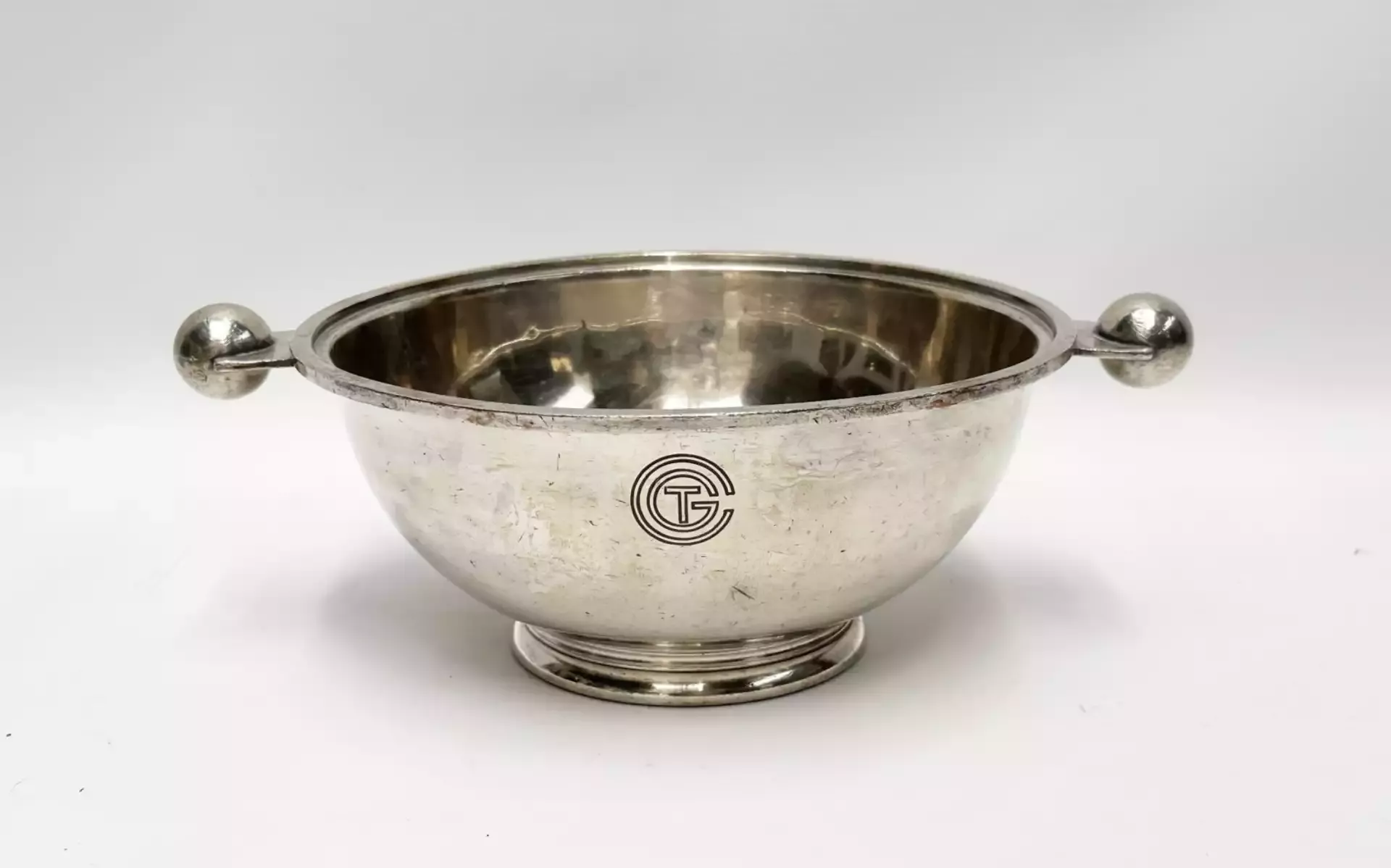
Furniture, glassware, lighting fixtures: all Art Deco items appraised
The hierarchy of Art Deco pieces and its impact on market value
In the Art Deco market hierarchy, prestigious furniture crafted by leading cabinetmakers occupies the very pinnacle of value. Émile-Jacques Ruhlmann, whose workshop produced pieces of unparalleled craftsmanship and formal elegance, remains the undisputed benchmark for French Art Deco furniture; with his creations in precious woods enhanced by ivory inlays constituting the most sought-after pieces in this market.
Jules Leleu and Jean-Michel Frank—the latter having developed a more minimalist, mineral-inspired aesthetic that foreshadowed certain trends in modernism—round out this top tier of the hierarchy.
Glassware and lighting fixtures, produced in larger quantities by manufacturers such as Lalique and Daum, occupy an intermediate position that makes them more accessible to a broader audience of collectors, while the rarest pieces and most iconic models still command the highest prices.
Jean Dunand’s lacquerware—a technique of extreme technical precision inherited from Asian craftsmanship but reinvented in a fully Art Deco spirit—constitutes a category of its own, whose rarity and sophistication justify a valuation comparable to that of the most sought-after prestige furniture.
Category | Characteristics | Indicative Price Range | Market Demand |
Prestigious furniture (Ruhlmann, Leleu, Jean-Michel Frank) | Precious woods, inlays, exceptional craftsmanship | €50,000 — several million € | Exceptional, international |
Lacquer by Jean Dunand (screen, panel) | Exceptional craftsmanship, rarity, museum-quality | €100,000 — several million € | Very popular, prestige segment |
Small furniture piece signed by a renowned designer | Rare model, preserved in its original condition | €5,000 — €80,000 | Active market, specialized collectors |
Glassware by René Lalique (vase, bottle, statuette) | High-quality casting, model identified in the catalog | €500 — €50,000 | Very active, broad international audience |
Signed Art Deco lighting (Daum and other manufacturers) | Glass paste, wrought iron, period model | €1,000 — €30,000 | Active, broad buyer base |
Ironwork and decorative objects from specialized workshops | Exquisite metalwork, geometric motifs | €500 — €15,000 | Active, affordable segment |
Signed furniture and lacquerware by Dunand: the most sought-after pieces
Furniture by Ruhlmann, particularly the pieces presented at major exhibitions of the 1920s—notably the 1925 Exposition, which marked the height of his workshop’s influence—rank among the absolute pinnacles of the 20th-century furniture market.
Their design, which combines a silhouette of classic elegance with technical execution of rare perfection—particularly in the work of veneering and inlay—makes them benchmark pieces that museums and the world’s leading collectors vie for whenever they appear on the market.
Jean Dunand’s lacquerwork, which employs an extremely complex technique—inherited from traditional Asian lacquer but reinvented for subjects and forms that are quintessentially Art Deco, such as stylized figures, animals, geometric patterns enhanced with crushed eggshell or precious metal powder—have become major collector’s items, whose rarity is heightened by the considerable time required to create them.
As such, Dunand’s large lacquered screens are exceptional pieces, and their appearance at public auction is always an event closely followed by specialized collectors around the world.
Estimate in less than 24h
Get a Free Appraisal of an Art Deco Piece
A certified appraisal by a licensed auctioneer in less than 24 hours
Appraising an Art Deco piece requires in-depth knowledge of the major designers and manufacturers of that period, as well as the ability to distinguish an original piece from a reproduction or a piece inspired by the Art Deco style but created at a later date—a distinction that has a significant impact on value.
A certified auctioneer has the necessary training to identify hallmarks, manufacturer’s marks, and the technical characteristics specific to each designer, and to precisely place a piece within its creator’s body of work.
Auctie’s offers this appraisal service free of charge, with a certified response within 24 hours. Whether you’ve inherited an Art Deco piece of furniture, wish to have a piece of glassware or a light fixture from this period appraised, or are considering compiling an estate inventory, the process is the same: submit your piece to a trained expert capable of accurately assessing its value.
What you need to provide for an online appraisal
For a piece of furniture, please provide clear photographs of the entire piece and significant details—legs, hardware, joints—as well as a close-up of any stamps or signatures, typically found under the tabletop or inside a drawer.
The precise dimensions and the exact nature of the materials—when identifiable (such as rosewood, ivory, or shagreen)—must be specified. Any information regarding provenance—such as an old purchase receipt, a mention in an auction catalog, or a reference in a specialized publication—must be provided.
For glassware and small objects, photographs of the entire piece and of the signature or manufacturer’s mark—usually engraved on the underside—are essential. The condition of the item—including chips, cracks, and visible restorations—must be described in detail. In cases of doubt regarding attribution or authenticity, a physical examination will be offered before any steps are taken to list the item for sale.
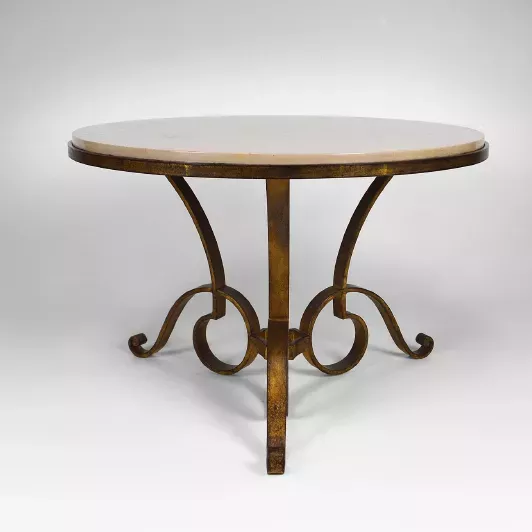
Signature, provenance, and authenticity: the pillars of valuation
Stamps, Signatures, and Manufacturer’s Marks: Their Impact on Value
The authentication of an Art Deco piece relies on a careful examination of the hallmarks, signatures, and maker’s marks that traditionally appear on high-quality pieces.
For furniture, the cabinetmaker’s mark—applied in accordance with industry standards—must be compared to documented examples from the relevant workshop, as some marks have been forged to fraudulently inflate the value of pieces of lesser quality.
For glassware, the signature—whether engraved, molded, or etched—varies according to the production periods of each manufacturer, allowing a trained expert to establish a precise date.
For the movement’s leading designers, reference catalogs and workshop archives are the definitive sources on the market. Florence Camard’s works on Ruhlmann are the essential reference for this cabinetmaker, as are the studies on the work of René Lalique, whose period model catalogs allow for the precise identification of each piece.
A piece listed in one of these documentary collections benefits from scientific validation, which directly translates into its market value.
Level of Documentation | Impact on the valuation |
Piece stamped by a major designer, model identified in a period catalog | Maximum assurance; very significant premium on value |
Piece published in specialized literature or exhibited in a retrospective | Strong scholarly endorsement; significant increase in value |
Piece accompanied by a written appraisal from a recognized specialist in the designer or period | Good guarantee; provides reassurance to the buyer and facilitates the sale |
Piece with a legible stamp or signature but without additional documentation | Solid foundation; reliable estimate based on direct attribution |
Art Deco-style piece without an identifiable mark | Conservative estimate; value based solely on the quality of craftsmanship |
Piece that has been reconstructed, extensively restored, or produced in a later period | Significant depreciation; transparency is essential at the time of sale |
Provenance and Condition: Their Impact on Value
The provenance of an Art Deco piece is a key factor in building trust in this market. A piece of furniture whose original acquisition can be traced, particularly when it was commissioned for a documented private interior or featured in a historic exhibition such as the one in 1925, enjoys a legitimacy and narrative appeal that collectors value very highly.
For glassware, having been part of a recognized specialized collection is also a highly valued provenance factor.
The condition of the item requires specific attention depending on the category. For furniture, the integrity of the veneer, inlays, and original patina is essential: a botched restoration or excessive repolishing can significantly devalue a piece, particularly when it has altered the characteristic patina of period precious woods.
For glassware, cracks, chips, and changes in the patina must be examined carefully, as certain Lalique pieces in particular are sensitive to thermal shock, which can cause cracks invisible to the naked eye but detectable upon close inspection.
Sell an Art Deco piece at auction with Auctie's
From the reserve price to the final bid: how the price is determined
Auctions are the most advantageous method of sale for high-quality Art Deco pieces, in a market where international demand—particularly strong for prestigious furniture and exceptional lacquerware—can generate intense competition among multiple collectors interested in the same item.
The reserve price, set in consultation with the seller, must be determined with particular attention to the specific category of the object, as the pricing logic—as we have seen—varies significantly between high-end furniture and mass-produced decorative objects.
For major pieces signed by the greatest names, the dynamics of the auction can lead to final prices far exceeding initial estimates, as several collectors and institutions are likely to engage in intense competition to acquire an exceptional piece.
The auctioneer plays a vital role in facilitating this process by engaging networks of specialized collectors and interior designers active in this highly sought-after segment.
Hôtel Drouot and online auctions: reaching the right bidders
Auctie’s holds its auctions at Hôtel Drouot, the leading auction venue in continental Europe, founded in 1852 and frequented by a dense network of dealers, interior designers, and collectors specializing in 20th-century decorative arts.
For an Art Deco piece, Drouot offers optimal visibility among French and European enthusiasts of this iconic style, complemented by an online presence that significantly expands the reach of each auction on an international scale.
An American collector passionate about 1920s French design, an Asian interior designer seeking a signed piece for a prestigious interior project, or a collector from the Gulf region drawn to the refinement of Dunand’s lacquerware can bid in real time from their home countries.
For Art Deco—whose reputation and timeless elegance appeal to a decidedly international audience—this global reach is almost always decisive in securing the highest hammer price.
Estimate in less than 24h
Estate Planning, Inheritance: Valuing Inherited Art Deco Furniture
Inventory and Distribution of an Estate
Art Deco pieces are frequently found in the estates of families whose furnishings were acquired in the 1920s and 1930s, a period when this style was highly fashionable among a discerning bourgeois and aristocratic clientele.
These pieces, sometimes kept for decades without their current owners knowing their exact value or even the identity of the designer, can represent a considerable asset in an estate, particularly when they are pieces signed by the greatest names in cabinetmaking from that period.
Auctie’s regularly collaborates with notaries to compile comprehensive estate inventories that include Art Deco furniture and objects.
Each piece is appraised individually: identification of the designer or manufacturer, description of the materials and condition, and estimation of the market value as of the reference date. The resulting report is an official document that is legally binding and can be included in the estate file without reservation.
Confidentiality and Anonymity Preserved
The circumstances that lead to having inherited Art Deco furnishings appraised are often personal: an estate settlement, a move, estate reorganization, or a decision to sell after a long period of ownership.
Auctie’s handles each case with absolute discretion. The owner’s identity is never disclosed to third parties without their explicit consent, and the items may be offered for sale under complete anonymity if the owner so desires.
This confidentiality is a core commitment of Auctie’s, valid at every stage of the relationship, from the initial contact through to the receipt of the proceeds from the sale.
Entrust the appraisal of your Art Deco piece to Auctie’s
An Art Deco piece deserves an appraisal that matches the refinement of this style and the diversity of the designers who championed it.
The distinction between high-end furniture and mass-produced decorative objects, the decisive importance of hallmarks and manufacturer’s marks, and the strength of a demand that is now truly international: these are all factors that only a licensed auctioneer, well-versed in the specifics of Art Deco, can assess with the rigor they require.
Auctie’s guides you from the initial appraisal through to the final auction, offering the expertise of a state-certified appraiser and the discretion your financial decisions deserve. The appraisal is free, confidential, and non-binding, and you’ll receive a response within 24 hours.
Discover in the same theme

Rating and value of drawings, furniture and armchairs by Pau...
Paul Iribe was an Art Deco designer and decorator. He produced works that are highly valued and quoted.
Learn more >

Rating and value of works, objects and drawings by Erté
Erté is a 20th-century furniture and fashion designer who is highly prized at auction. His works are highly prized.
Learn more >

Rating and value of works, vases by André Thuret
André Thuret, a 20th-century glassmaker, has produced works of rare elegance that are listed and valuable. Estimate in less than 24h.
Learn more >
Estimate in less than 24h
Frequently asked questions
-
Quelles sont les fourchettes de prix pour les différents types d'objets Art déco ?La cote varie considérablement selon le type et le créateur. Une pièce de verrerie Lalique se situe entre 500 et 50 000 euros, un petit mobilier signé entre 5 000 et 80 000 euros, tandis qu'un meuble de prestige signé Ruhlmann ou Leleu peut atteindre 50 000 euros à plusieurs millions d'euros. Les laques de Jean Dunand et les grands paravents se négocient également à des niveaux comparables au mobilier de prestige.
-
Comment faire authentifier une pièce Art déco et vérifier sa valeur ?Auctie's propose une estimation gratuite et sans engagement par un commissaire-priseur agréé par l'État. L'expert examine l'estampille, la signature, les matériaux et les caractéristiques techniques pour authentifier la pièce et en déterminer la cote précise. La réponse est certifiée en moins de 24 heures après transmission de photographies nettes et des informations sur l'objet.
-
Quels sont les critères principaux qui déterminent la valeur d'une pièce Art déco ?La valeur dépend de l'identité du créateur (Ruhlmann, Leleu, Lalique, Dunand), de la qualité et de la rareté des matériaux (palissandre, ivoire, galuchat, bronzes dorés), de l'état d'origine de la pièce et de sa documentation. Pour un meuble, la présence d'une estampille authentique augmente considérablement la cote par rapport à une pièce anonyme de même style.
-
Est-ce le bon moment pour vendre une pièce Art déco ?Oui, l'Art déco constitue actuellement l'un des segments les plus solides du marché des arts décoratifs du XXe siècle. La demande s'étend à une clientèle internationale large, des collectionneurs européens aux amateurs asiatiques et nord-américains. Cette stabilité et cette reconnaissance mondiale en font une période favorable pour la vente.
-
Comment se déroule la vente d'une pièce Art déco chez Auctie's ?Auctie's vous accompagne de l'estimation à l'adjudication en tant que maison de ventes aux enchères. Après une estimation gratuite et sans engagement par un commissaire-priseur agréé, votre pièce est cataloguée, photographiée et mise en vente aux enchères. Ce processus garantit une valorisation optimale et une transparence totale avec les acheteurs potentiels.
