



Rating and value of sculptures and bronzes by Georges Chauvel

Key takeaways
- Sculptures by Georges Chauvel, a 20th-century French sculptor, sell for between €90 and €11,400, depending on the material and quality.
- Bronzes are the most valuable category, with prices ranging from €700 to €11,400, while terracotta and ceramics are less expensive.
- The artist, who trained at the École des Beaux-Arts in Paris, focuses on feminine and mythological themes in an Art Deco style characterized by dark patinas.
If you own a work by or after the artist Georges Chauvel, and would like to know its value, our state-approved experts and auctioneers will offer you their appraisal services.
Our specialists will carry out a free appraisal of your work, and provide you with a precise estimate of its value on the current market.
Then, should you wish to sell your work, we will direct you to the best possible arrangement to obtain the optimum price.
Rating and value of the artist Georges Chauvel
Georges Chauvel is recognized during his lifetime. He belongs to the artistic vein of figurative sculptors of the 20th century. His legacy therefore consists mainly of sculptures made from several types of material, especially bronze.
At present, the prices of his works are rising recurrently at auctioneers' gavels. His sculptures are prized above all by French and French buyers, and the price at which they sell on the art market ranges from €90 to €11,400, a considerable delta, which speaks volumes, however, about the value that can be attributed to Georges Chauvel's works.
One of his bronze sculptures, Nu assis au collier, sold for up to €11,000.
Order of value from a simple work to the most prestigious
Technique used | Result |
|---|---|
Baked clay | From 90 to 400€ |
Ceramics | From 320 to 800€ |
Bronze | From €700 to €11,400 |
Estimate in less than 24h
Style and technique by artist Georges Chauvel
Georges Chauvel is a French sculptor of the early 20th century, who blends modern figurative with classical references. He was part of the post-First World War " retour à l'ordre " movement, which consisted of a modernity tempered by the use of classical, stylized and balanced forms.
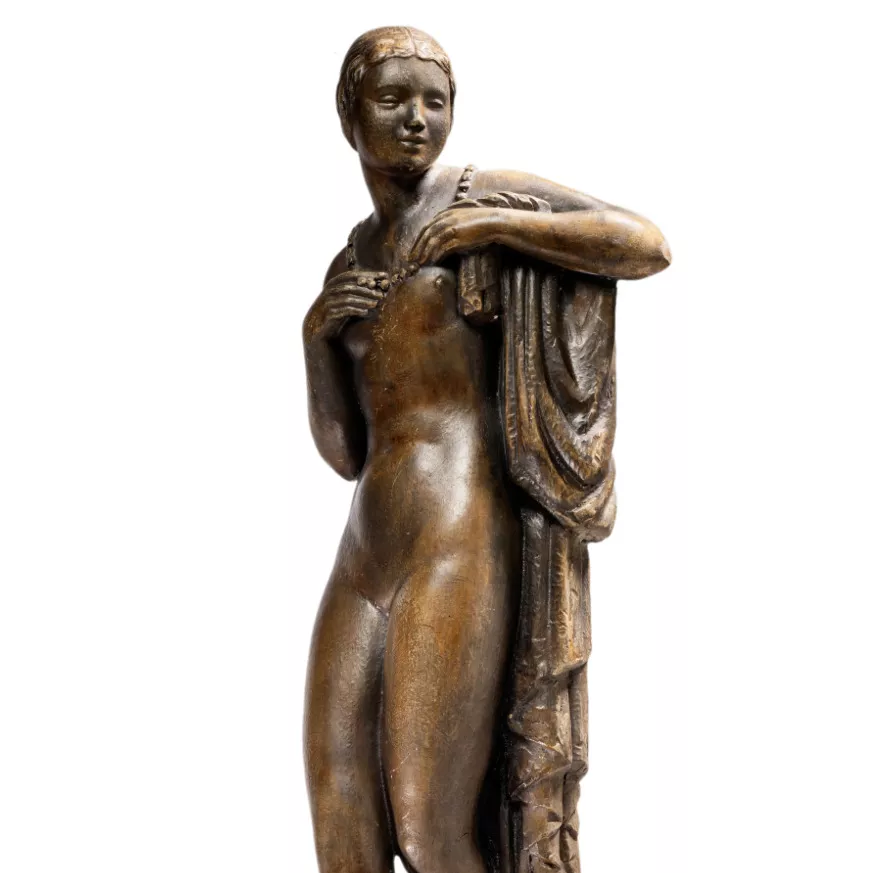
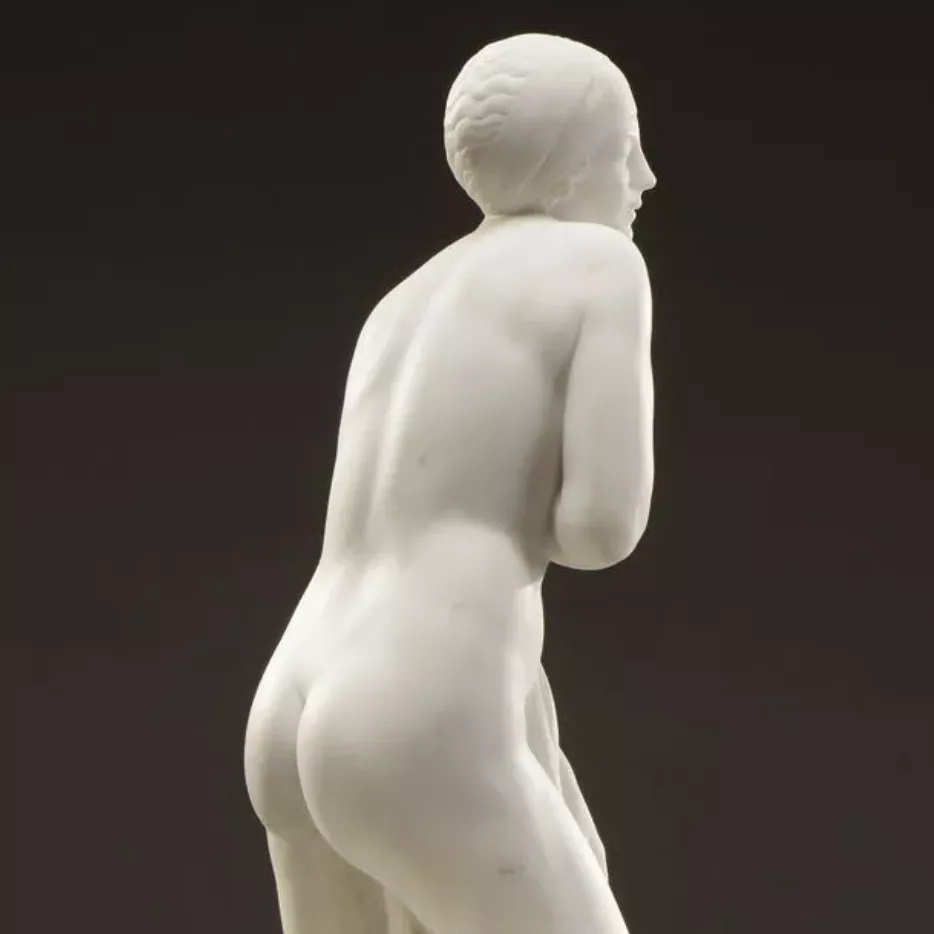
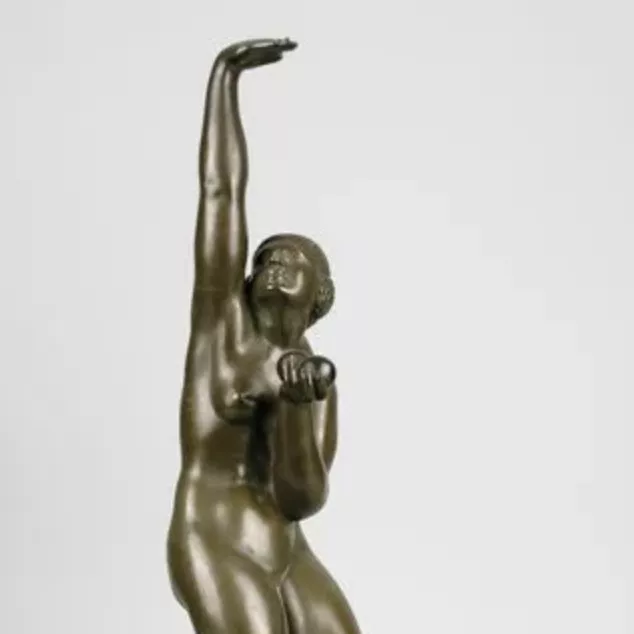
His work shows a strong orientation towards mythological, allegorical and feminine themes, with busts, female figures, nudes, decorative motifs and beings in motion.
He works with an Art Deco aesthetic for some of his works, with elegance, geometric stylization and balance between straight and curved lines. His elegance is linear : female silhouettes are treated with grace, a certain economy of decoration without complete neutralization of form.
His favored mediums are bronze and sometimes stone or plaster to produce mostly preparatory models. He used brown or dark patinas to enhance the surface and modeling, typical of Art Deco bronzes.
His plaster models were then transposed into bronze, and several lots feature plaster sculptures signed " G. Chauvel ". He paid great attention to working with skin, folds and hair, but purification was relative and stylization prevailed over outrageous naturalism.
He created large-scale monuments and public works, including war memorials, and large-scale figures, requiring a mastery of structure, pedestals and interaction with the site of the work.
After 1945, he also worked as a restorer for works at the Château de Versailles.
The life of Georges Chauvel
Georges Félicien Eugène Joseph Chauvel (Elbeuf, 1886 - 1962, Val-Saint-Germain) was a figurative sculptor of the first half of the 20th century, who first trained for three years at the École des Beaux-Arts in Paris, in Alphonse Guilloux's studio.
In 1917, he exhibited Le lanceur de grenades, acquired by Henri Leblanc, and a replica was given to New Zealand soldiers. In 1919, he exhibited at the Salon des Indépendants, marking the start of his public career.
While his body of work for private use (bronze, plaster, ceramic and terracotta sculptures) was relatively small, he worked on larger-scale public projects such as war memorials in the 1920s.
Among his most famous works is Femme endormie (1934, marble, 100 x 200 x 58 cm, 1600 kg). He also created public sculptures in Paris (Nu féminin marchant dans le jardin de Reuilly) and other cities.
After 1945, he participated in the restoration of statues in the park of the Château de Versailles, and also worked as a creator of models for ceramics.
His sculptures can be found in various museums (Musée de la Piscine in Roubaix, Musée des Années Trente, Musée de l'Armée in Paris). He is buried at the Val-Saint-Germain cemetery, and his tomb was surmounted by one of his works, which has been abandoned or stolen according to sources.
His work has also been photographed, notably by Marc Vaux.
Market segmentation and artist's rating
Few public sales are listed for Georges Chauvel, only 68 according to Artprice. The historical range of realized prices extends from USD 100 to USD 21,250. A bust of Jeune femme made around 1930 recently sold for 21,250 USD.
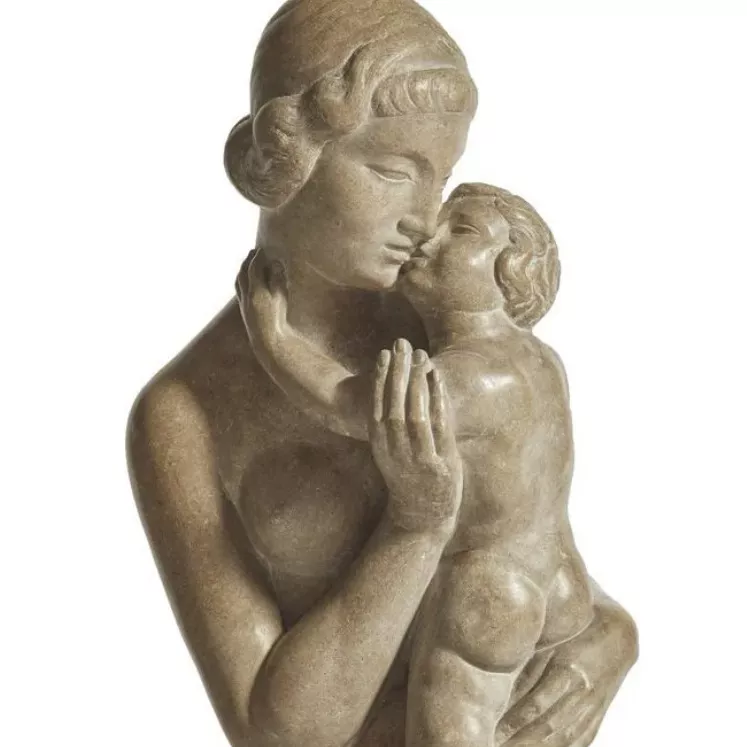
Recently, Maternité (a 1-meter-high stone sculpture was estimated at between 6,000 and 8,000€. Buste d'une jeune femme (bronze, circa 1930) was estimated at €4,000 to €5,000. Baigneuse au drapé (bronze, 52 cm) was estimated at €1,800 to €2,000.
Valued works include bronze sculptures, busts, female figures, nudes and decorative models. The premium segment is made up of important pieces including large signed sculptures (marble, quality bronze, antique patina).
The intermediate segment is made up of medium-sized bronzes, decorative figures and busts. The intermediate segment is made up of medium-sized bronzes, decorative figures and busts.
In the accessible segment, we find small sculptures, ceramics, less sought-after frequent models. Typical buyers are art deco and French sculpture collectors, specialized galleries and enthusiasts of classical decorative figures.
The secondary market is dominant as most transactions go through auctions or specialized galleries. The market is located geographically in France, especially Paris, in Western Europe, with American customers interested in art deco.
The artist's reputation is moderate, as Albert Féraud, Pierre Traverse and Jean Joachim. His works appear at public sales and are modulated according to model quality, condition, patina, signature and provenance.
Recognizing Georges Chauvel's signature
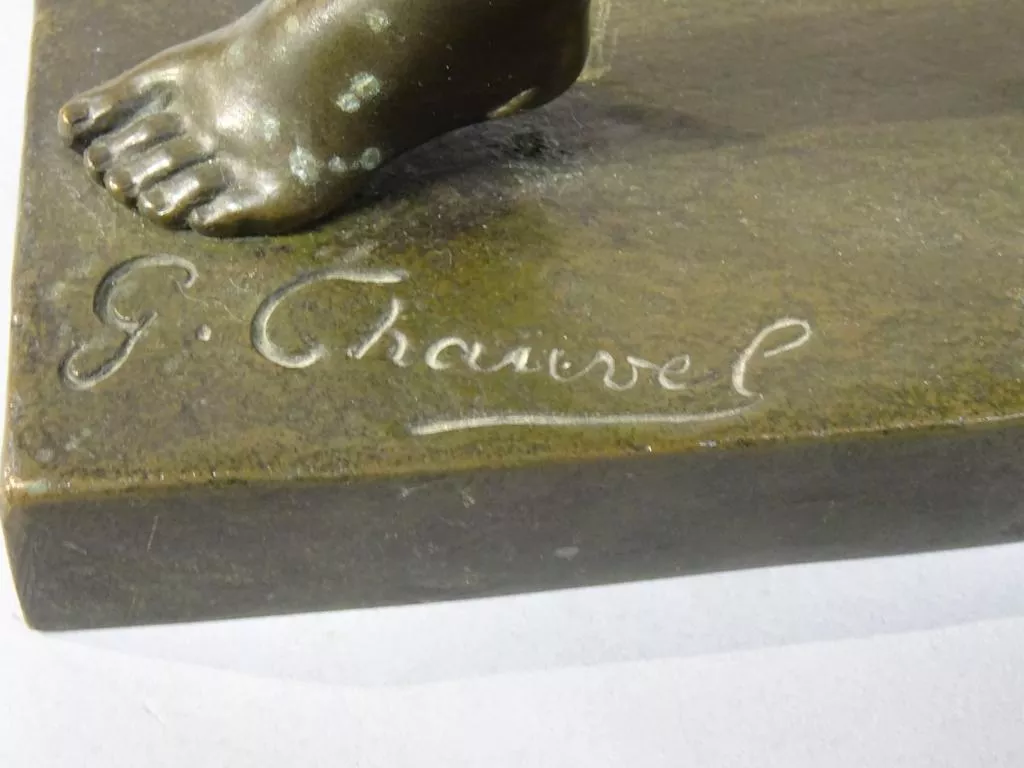
The artist signs " G. Chauvel " on most of his sculptures. There are, however, many copies, which is why expertise is important.
Knowing the value of a work
If you happen to own a work by or after Georges Chauvel, don't hesitate to request a free valuation using our form on our website.
A member of our team of experts and certified auctioneers will contact you promptly to provide you with an estimate of the market value of your work, as well as ad hoc information about it.
If you are considering selling your work, you will also be accompanied by our specialists in order to benefit from alternatives for selling it at the best possible price, taking into account market inclinations.
Estimate in less than 24h
Discover in the same theme

Rating and value of Karl Lagerfeld's fashion designs
Karl Lagerfeld is a German fashion designer and great couturier of the 20th century. He has produced many valuable fashion designs.
Learn more >

Cote and value of paintings by Françoise Gilot
Françoise Gilot is a 20th-century cubist and abstract artist whose drawings and oils on canvas are gaining in value at auction.
Learn more >

Rating and value of drawings and paintings by Tran Dinh Tho
Tran Dinh Tho is a modern Vietnamese painter whose paintings on lacquer and silk are highly prized and valued.
Learn more >
D'autres bronzes anciens vendus aux enchères

Estimated Between €5,000 and €8,000
Agathon LEONARD (1841-1923), Dancer with scarf, bronze lamp, ed. Susse frères

Estimated 3.000 - 5.000
Raoul LARCHE (1860-1912) The fisherman, Bronze with green patina

Estimated 600 - 800
Hercules Farnese, bronze, reproduction after Glycon of Athens

Estimated 1.500 - 3.000
Jules FRANCESCHI (1825-1893) Hébé et l'aigle de Jupiter, gilded bronze

Estimated 800 - 1.500
Henry Étienne DUMAIGE (1830-1888), bronze print

Estimated 1.500 - 3.000
Antoine Louis BARYE (1796-1875) Eagle and heron, bronze print with shaded brown-green patina

Secure site, anonymity preserved

Auctioneer approved by the State

Free and certified estimates
Frequently asked questions
-
Who is Georges Chauvel, and what is his artistic style?Georges Chauvel (1886–1962) was a French figurative sculptor of the first half of the 20th century who trained at the École des Beaux-Arts in Paris. His work is part of the “return to order” movement that emerged after World War I, blending modern figurative art with classical references and Art Deco aesthetics. He specialized in mythological, allegorical, and feminine themes, working primarily in bronze, stone, and plaster.
-
What are the price ranges for Georges Chauvel's sculptures and bronzes?The prices of Georges Chauvel’s works vary considerably depending on the technique and quality: terracotta pieces range from €90 to €400, ceramics from €320 to €800, and bronzes—the most sought-after—from €700 to €11,400. Large, signed bronzes and high-quality busts can reach the upper end of the estimate range, while small sculptures or ceramics remain more affordable.
-
How can you authenticate and appraise a work by Georges Chauvel?To authenticate a sculpture or bronze by Georges Chauvel, we recommend that you request a free appraisal from our certified auctioneers and experts. There are many copies in circulation, which is why an appraisal is important. Our team will contact you promptly to provide you with an accurate estimate of your artwork’s market value, with no obligation.
-
Is this the right time to sell a work by Georges Chauvel?Yes, now is a good time to sell a work by Georges Chauvel. Prices for his sculptures are consistently rising on the auction market, and demand remains strong among collectors of Art Deco and French sculpture. The market remains active in France, Western Europe, and among American buyers interested in Art Deco.
-
How does the appraisal and sale of a work of art take place at Auctie's?Appraisals at Auctie's are free and non-binding. Submit your artwork using our form, and a certified expert or auctioneer will contact you shortly to provide you with an appraisal within 48 hours. If you decide to sell, our specialists will guide you through the process—from the appraisal to the auction—to help you achieve the best possible price.
