



Rating and value of statues, bronzes and marbles by Pierre Traverse

Key takeaways
- Sculptures by Pierre Traverse (1892–1979) sell for between €30 and €18,000, with bronzes fetching up to €32,280 at auction.
- Traverse worked with a variety of materials: terracotta (€180–€6,000), porcelain (€350–€6,150), and bronze, reflecting the classical elegance of the early 20th century.
- His minimalist style and idealized human figures, subtly influenced by Art Deco, remain highly sought after by collectors of contemporary classical art.
If you own a work by or after Pierre Traverse, and would like to know its value, our state-approved experts and auctioneers will offer you their appraisal services.
Our specialists will carry out a free appraisal of your work, and provide you with a precise estimate of its value on the current market.
Then, should you wish to sell your work, we will direct you to the best possible arrangement to obtain the optimum price.
Rating and value of Pierre Traverse's works
Pierre Traverse has produced some unique sculptures. The most famous are those in Limoges, often featured at auction. Now, prices for these creations can rise considerably under auctioneers' gavels.
His sculptures are particularly prized, by buyers from all over the world. The price at which they sell on the art market ranges from €30 to €18,000, at the moment, a consequent gap but one that says a lot about the value that can be attributed to Traverse's works.
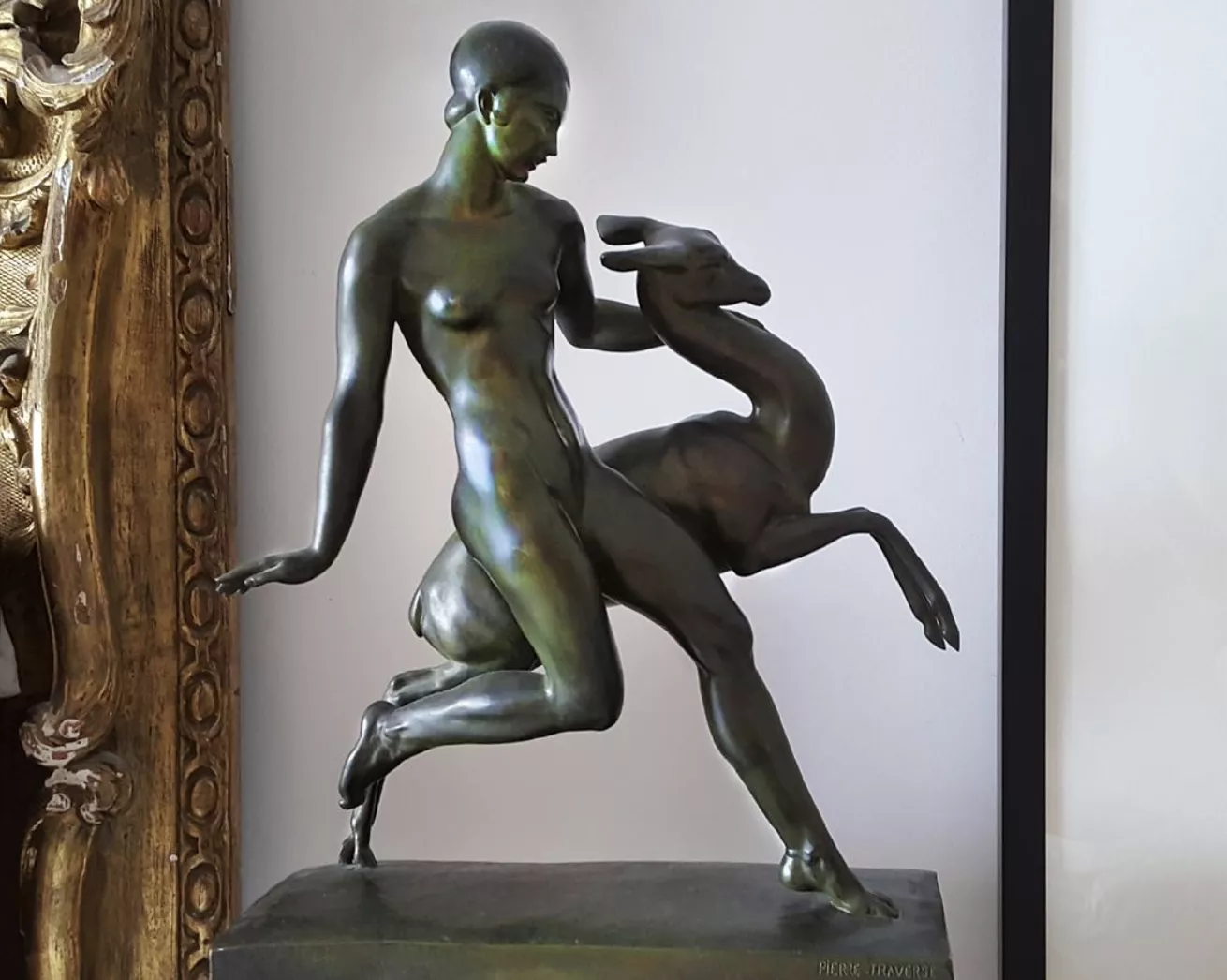
In 2015, his bronze sculpture Naked Woman and a Gazelle sold for €32,280, originally estimated between €11,740 and €17,600.
Order of value from a simple work to the most prestigious
Technique used | Result |
|---|---|
Fired clay | From €180 to €6,000 |
Ceramics - porcelain | From 350 to 6,150€ |
Bronze | From 900 to 32,280€ |
Estimate in less than 24h
Style and technique by artist Pierre Traverse
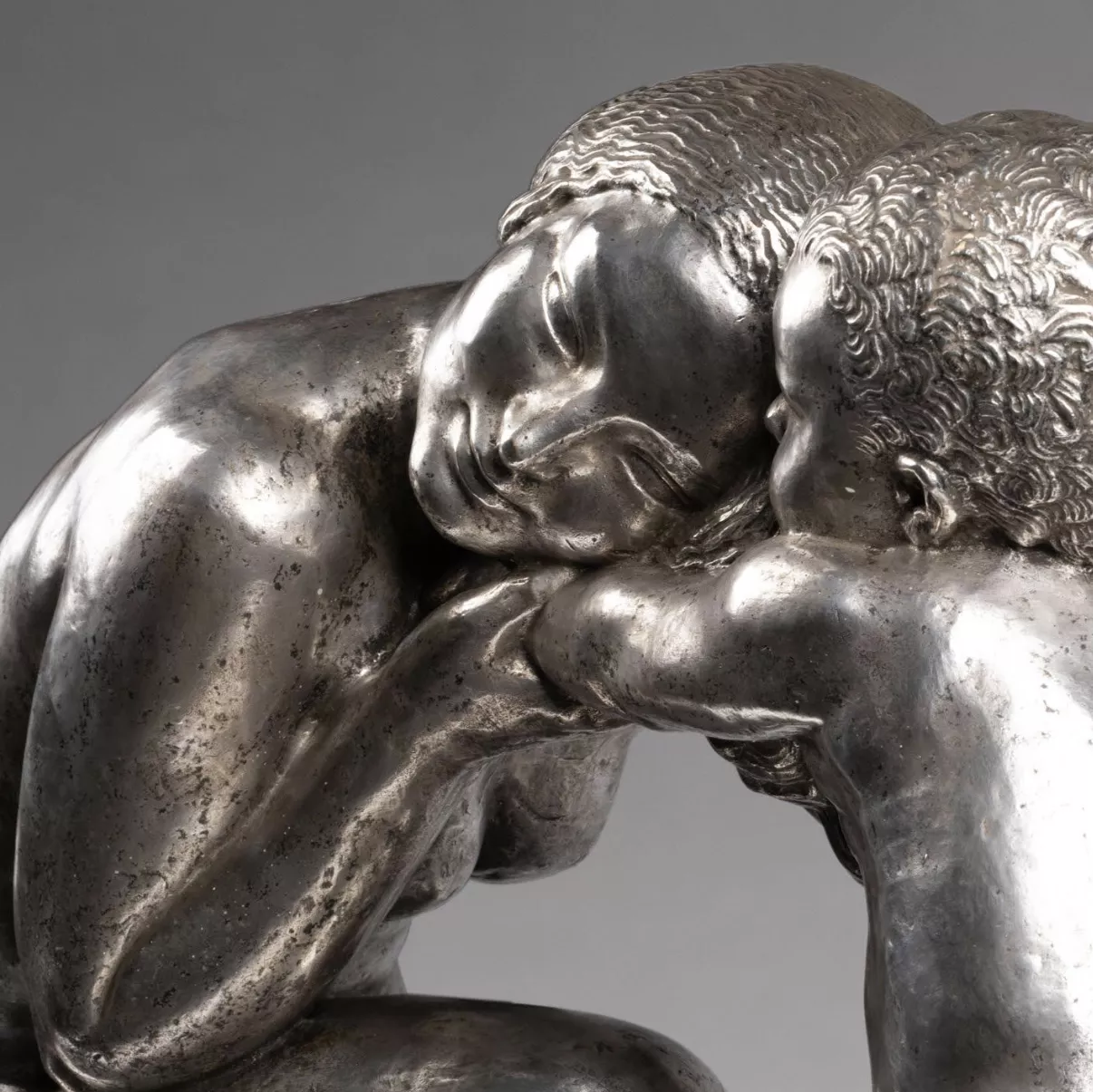
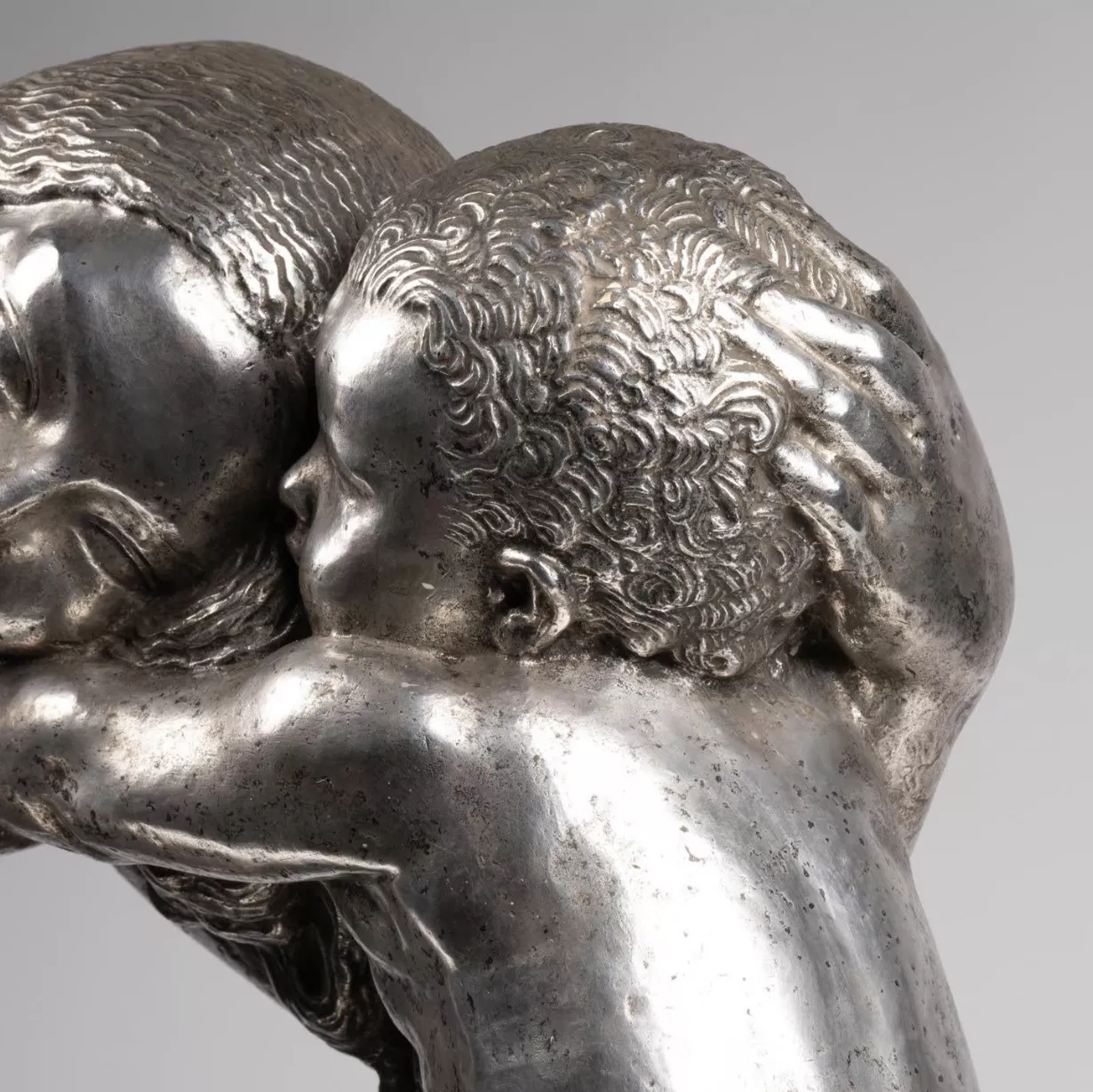
Pierre Traverse is known for his sculptures with elegant, clean lines, created in a variety of materials such as marble, bronze, and stone, but also terracotta, which allows him softer textural effects.
His style remains rooted in a classical aesthetic, borrowing from the harmonious, idealized forms of the early 20th century, with particular attention to proportions and balanced volumes.
While he is not directly attributed to any specific movement, some of his works reveal a discreet Art Deco influence, perceptible in the precision of detail, the subtle stylization of silhouettes, and the sober modernity of his compositions.
Traverse favors timeless themes, drawing on the mythological repertoire and the human figure to convey a universal, soothing beauty.
His work is part of a sculptural tradition that values the finesse of human expression and the nobility of materials, with each piece conceived as a tribute to form and matter in their purest simplicity.
The life of Pierre Traverse
Pierre Traverse (1892 - 1979) was a French sculptor born in Saint-André-de-Cubzac, Gironde.
His father, a miner of kaolin deposits, steered him towards sculpture at an early age, sending him to study at the Ecole Nationale des Arts Décoratifs in Limoges, where he acquired his first technical grounding.
There he developed a rigorous mastery of materials, with particular attention to modeling and fine detail.
In 1910, he joined the Beaux-Arts de Paris and entered Jean-Antoine Injalbert's studio, although Traverse later confided that this teaching would not bring him anything significant.
Shortly afterwards, he returned to the Dordogne to be reunited with his family, but his career was interrupted by the First World War: mobilized at the front, he was wounded, which slowed down his artistic career.
On his return, he resumed his career with determination. By 1920, he was exhibiting at the Salon des Artistes Français, quickly capturing the attention of critics and the public alike.
His work earned him numerous commissions in France and abroad, notably in the United States, consolidating his reputation.
Traverse then travels to Rome, where he refines his style, and his success is confirmed with the 1937 World's Fair, for which he creates a striking sculpted group.
This piece brings him further recognition and earns him appointment as secretary hors concours of the Salon des artistes français, a title that underlines his importance in the art world.
Traverse continued to exhibit there until the 1950s, but a review by André Malraux, who declared his style "old-fashioned", put an abrupt end to his public career.
Pierre Traverse died in Paris, leaving a body of work marked by a classical aesthetic and impeccable technique, which testifies to his attachment to the idealized forms of the turn of the century and a profound mastery of noble materials.
Exhibition Pierre Traverse in Gaujac
Focus on Jeune Fille à la colombe, Pierre Traverse
Jeune fille à la colombe by Pierre Traverse exemplifies the sobriety and precision that characterize his style. Created in marble, the sculpture depicts a young woman delicately holding a dove in her hands.
Traverse adopts clean, uncluttered lines here, lending the work a quiet elegance. The girl's gentle expression and the careful positioning of her hands convey a search for harmony and peace, accentuated by the choice of the dove as a symbol of purity.
Traverse favors a simple, balanced composition here, avoiding any decorative overload.
The attention paid to the details of the face and hands testifies to the artist's technical mastery. Traverse strives to represent the human figure in an idealized form, in perfect conformity with classical canons.
The modeling is smooth, the features are softened, and every curve seems calculated to accentuate the impression of calm and restraint. This approach recalls academic traditions and Traverse's taste for a timeless aesthetic, where the essential takes precedence over ornament.
The posture of the young girl, upright but not rigid, expresses the serenity characteristic of the subjects dear to Traverse. Here, he distinguishes himself by a formal simplicity that could evoke a certain influence of Art Deco, although he does not claim its codes.
Traverse prefers to stick to a measured style, which emphasizes the purity of the human form and the nobility of materials, without seeking audacity or complexity.
This work thus embodies Pierre Traverse's attachment to the classical values of sculpture. Jeune fille à la colombe is part of an aesthetic that resists the modernist trends of the time, focusing on an ideal of soothing, balanced beauty.
With this sculpture, Traverse continues an artistic tradition, celebrating simple elegance and technical mastery, far removed from avant-garde trends, and thus helping to affirm the persistence of a renewed classicism in the twentieth century.
The success of Pierre Traverse's sculptures
Pierre Traverse leaves a discreet but solid imprint on the twentieth-century artistic landscape. Sculpting in a resolutely classical style, he embodies an attachment to the formal traditions and aesthetic canons inherited from academic sculpture, while adding a personal sensibility.
Stylistically, he is both close to artists such as René Lalique, Auguste Rodin or Jean-Baptiste Carpeaux.
His works, marked by sober elegance and impeccable technical mastery, met the expectations of a public still sensitive to pre-war artistic values.
Traverse won over both French and American patrons, taking his sculptures abroad, a sign of recognition beyond borders. However, the move towards more modern, often abstract styles has gradually relegated his work to a classicism perceived as conservative.
While his public career was curbed by critics, notably André Malraux, Traverse's work remains a precious testimony to the aesthetic values of his time, and recalls the continuity of a sculptural tradition that relied on technical excellence and timeless beauty.
Traverse produced exceptional pieces, whose form and motifs would evolve over the course of his career. Despite the end of his fame in the late '40s, he remains a much-appreciated artist today.
Pierre Traverse's works have enjoyed considerable success at auction, illustrating the sustained interest they arouse among collectors.
His sculptures, whether in marble, bronze or stone, are distinguished by restrained elegance and impeccable technical mastery.
These characteristics make his pieces particularly sought-after, both by lovers of classical art and by those attracted by the aesthetics of the early 20th century.
The simplicity of the lines and the harmony of the forms lend his works a timeless beauty, making them all the more attractive on the art market.
A major factor in their success is the rarity of his creations, particularly his idealized human figures and animal representations, which have become symbols of grace and serenity.
Collectors appreciate this quest for formal perfection and the balance between understated modernity and classicism.
In addition, auction prices testify to a growing recognition for Traverse's work, who, although not a leading artist in the avant-garde currents of his time, manages to carve out a place for himself among the most respected sculptors of his era.
The rarity and quality of his works also mean that they are sought after by institutions and private collectors keen to preserve an artistic heritage that celebrates a purer, nobler vision of sculpture.
This auction success thus reflects the recognition of a sculptural heritage that combines finesse, tradition and discreet modernity, and which continues to be appreciated in the contemporary art world.
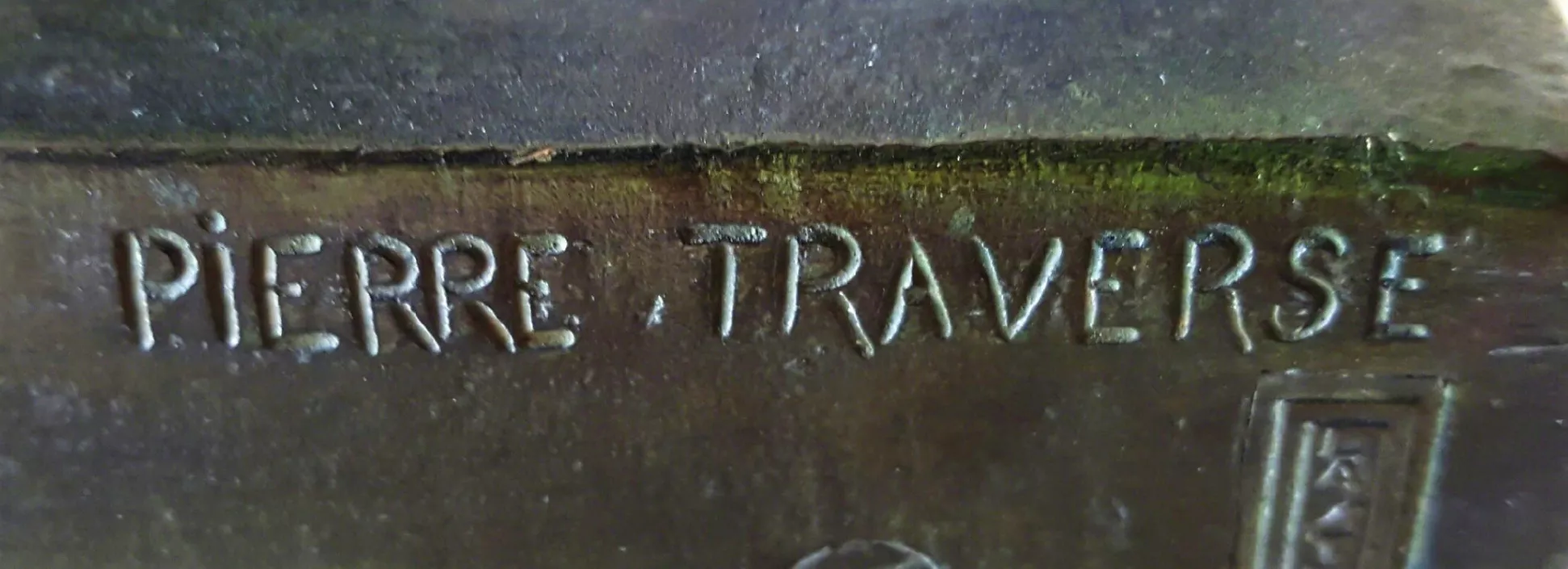
Recognizing Pierre Traverse's signature
Traverse doesn't always sign his works. If you think you own one, it's best to have it appraised.
Knowing the value of a work
If you happen to own a Pierre Traverse creation, or think you might, don't hesitate to request a free appraisal using our form on our website.
A member of our team of experts and licensed auctioneers will contact you promptly to provide you with an estimate of the market value of your piece, not forgetting to send you ad hoc information about it.
If you wish to sell your property, you will also be accompanied by our specialists in order to benefit from alternatives to sell it at the best possible price, taking into account market inclinations.
Estimate in less than 24h
Discover in the same theme

Rating and value of Axel Salto's ceramics, stoneware and scu...
Axel Salto is a 20th-century Danish ceramist who produced stoneware pieces that are appreciated and sought-after at auction. His price has risen sharp...
Learn more >

Rating and value of paintings by Michel Moreno
Michel Moreno is a French contemporary artist who has produced works of considerable value at auction.
Learn more >

Rating and value of Fernand Dresse's paintings and furniture
Fernand Dresse is a Belgian artist who produced paintings and furniture that are highly valued at auction. 24h estimate
Learn more >
Works from the same period sold at auction


Secure site, anonymity preserved

Auctioneer approved by the State

Free and certified estimates
Frequently asked questions
-
Who is Pierre Traverse, and what is his historical context?Pierre Traverse (1892–1979) was a French sculptor born in Gironde who studied at the School of Decorative Arts in Limoges and the École des Beaux-Arts in Paris. He distinguished himself with a resolutely classical style and impeccable technical mastery of fine materials (marble, bronze, stone). Although his public career came to an end in the 1950s following criticism from André Malraux, his works remain highly prized by collectors for their understated elegance and timeless beauty.
-
What is the price range for Pierre Traverse's sculptures?Prices for works by Pierre Traverse generally range from €30 to €18,000, depending on the material and provenance. Bronze works command the highest prices (up to €32,280), while terracotta pieces range from €180 to €6,000 and ceramics from €350 to €6,150. A notable example: his bronze sculpture “Nude Woman and a Gazelle” sold in 2015 for 32,280 €, exceeding its initial estimate.
-
How can you authenticate a sculpture by Pierre Traverse?Since Pierre Traverse does not always sign his works, professional authentication is strongly recommended. Auctie's offers a free, no-obligation appraisal via an online form. A state-certified expert or auctioneer will contact you within 48 hours to examine your item and provide you with an accurate appraisal, along with relevant information regarding its authenticity.
-
Is this a good time to sell a sculpture by Pierre Traverse?Yes, now is a good time to sell. Pierre Traverse’s works have been consistently successful at auction, with growing interest from collectors of classical and early 20th-century art. The rarity of his works and the growing recognition of his sculptural legacy are driving up prices, particularly for bronze pieces and idealized figures.
-
How does the appraisal and sale process work at Auctie's?The appraisal is free and non-binding: simply fill out an online form, and a certified expert will contact you within 48 hours to examine your item and provide a market value. If you’d like to sell, our specialists will guide you through the process from appraisal to auction, exploring the best options to secure the highest possible price based on current market trends.
