



Rating and value of sculptures, paintings and drawings by Jean-Baptiste Carpeaux

Key takeaways
- Carpeaux’s sculptures sell for between €80 and €780,000, with marble busts fetching record prices such as €398,000 in 2023.
- The artist works in a wide range of media: prints (€100–€430), watercolor drawings (€150–€21,340), oil paintings (€1,140–€360,000), and three-dimensional sculptures.
- A 19th-century French sculptor (1827–1875), Carpeaux mastered marble and bronze with an expressive, naturalistic style influenced by the Italian Renaissance and the Baroque.
If you own a work by or after the artist Jean-Baptiste Carpeaux, and would like to know its value, our state-approved experts and auctioneers will offer you their appraisal services.
Our specialists will carry out a free appraisal of your work, and provide you with a precise estimate of its value on the current market.
Then, if you wish to sell your work, we will direct you to the best possible arrangement to obtain the optimum price.
Rating and value of the artist Jean-Baptiste Carpeaux
Carpeaux is an artist from the Romantic group. His legacy includes sculptures, paintings, prints and drawings. Now, prices for his works are exploding at auctioneers' gavels.
His sculptures are particularly prized especially by French buyers, and the price at which they sell on the Art market ranges between €80 and €780,000, a considerable delta but one that speaks volumes about the value that can be attributed to Carpeaux's works.
In 2023, a marble bust, Flore acroupie, was sold for €398,000 while it was estimated at between €60,000 and €80,000. The artist's quotation is high and varies according to the quantity of works present on the auction market.
Order of value from a single work to the most prestigious
Technique used | Result |
|---|---|
Estamp | From €100 to €430 |
Drawing - watercolor | From 150 to 21 340€ |
Oil on canvas | From 1,140 to €360,000 |
Volume sculpture | From €80 to €780,000 |
Estimate in less than 24h
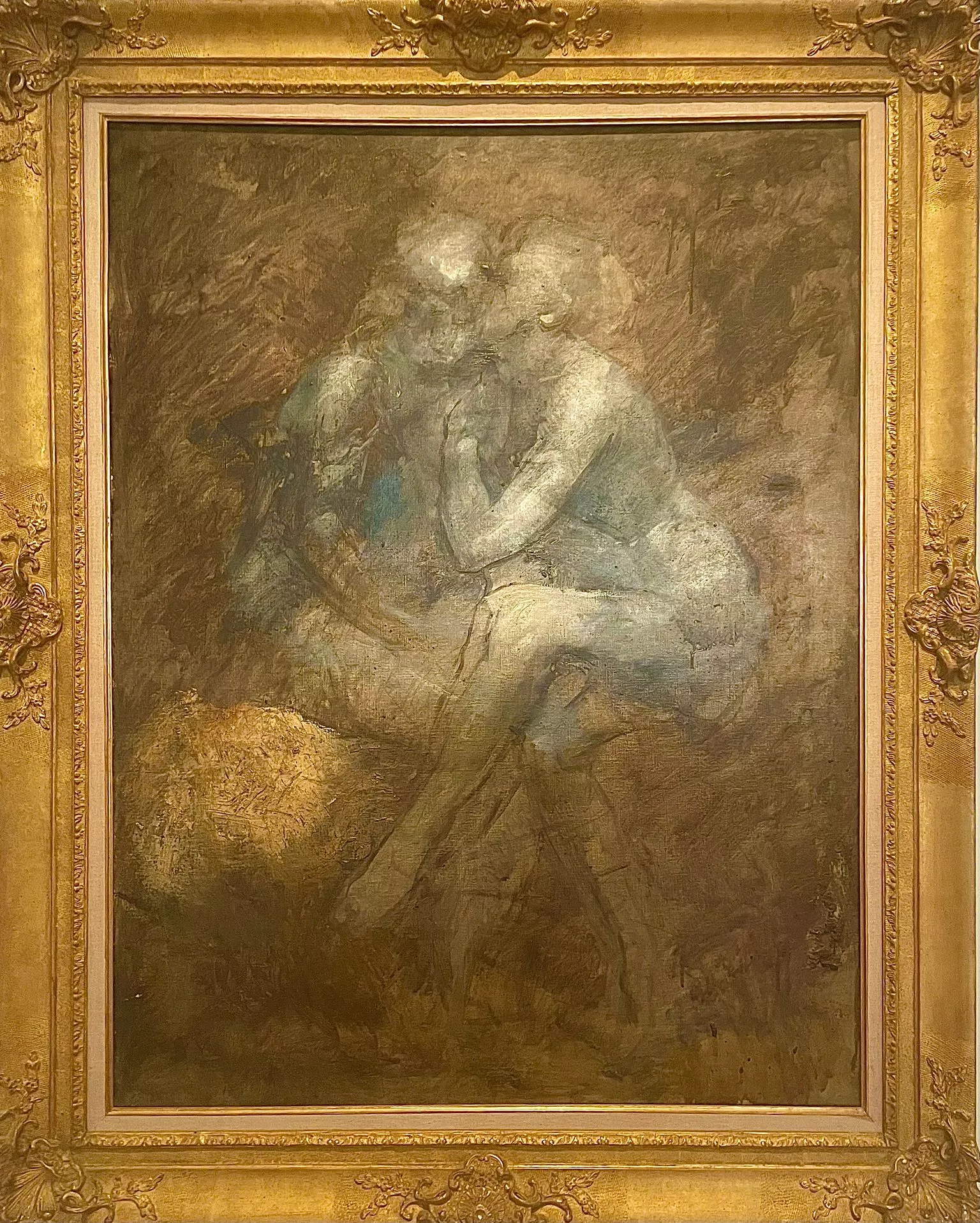
Style and technique of artist Jean Basptiste Carpeaux
Jean-Baptiste Carpeaux was a 19th-century artist who produced sculptures marked by an expressive, naturalistic style.
He worked mainly with marble and bronze to create busts, human figures in motion, and monumental compositions. His works, such as La Danse or Le Génie de la Science, are distinguished by their dynamism and fine detail.
He followed in the footsteps of the great classical sculptors, while introducing a more emotional and lively dimension to his subjects, influenced by his masters such as François Rude, as well as his studies in Italy.
Other contemporary sculptors, such as Auguste Rodin or Jules Dalou, will take up certain elements of Carpeaux's sculptural language, particularly in their treatment of the human figure and attention to expression.
The life of Jean-Baptiste Carpeaux
Jean-Baptiste Carpeaux (1827-1875) was a renowned French sculptor, whose works profoundly marked 19th-century art through their expressiveness and energy.
Born in Valenciennes into a modest family, he showed an early talent for drawing and sculpture. Encouraged by his family and friends, Carpeaux moved to Paris at the age of 11 to study art.
He then entered the École des Beaux-Arts de Paris, where he became a pupil of sculptor François Rude, a master who influenced his early creations. Carpeaux quickly made a name for himself with his technical skill and his ability to breathe real vitality into his subjects.
After winning the prestigious Prix de Rome in 1854, he left for Italy, where he was strongly influenced by Renaissance art and the Baroque sculptures of masters such as Michelangelo and Bernini.
This stay in Italy marked a decisive turning point in his work, and it was there that he began to develop his style characterized by emotional realism and great attention to anatomical detail.
His first works exhibited at the Salon were widely acclaimed, and he began to attract the attention of critics and the public.
On his return to France, Carpeaux was entrusted with important public commissions. It was at the age of 36 that he created one of his most famous works, La Danse, for the façade of the Opéra Garnier in Paris.
This monumental sculpture, celebrating vitality and joie de vivre, caused a sensation and provoked controversy due to the sensuality of the bodies in motion, but it made a definitive mark on art history.
Thereafter, he followed up his success with major works such as Le Génie de la Science and Le Pêcheur à la coquille.
Carpeaux also excelled at creating busts of leading figures of his time, capturing the expressions and souls of his models with almost photographic precision.
Although recognized and admired during his lifetime, Jean-Baptiste Carpeaux often suffered from health problems and depression. Towards the end of his career, he retired to Normandy, but continued to work on ambitious projects.
He died in 1875 at the age of 48, leaving behind a remarkable artistic legacy. His works, which still adorn many public places today, make him one of the most influential and admired sculptors of his time, alongside figures such as Auguste Rodin.
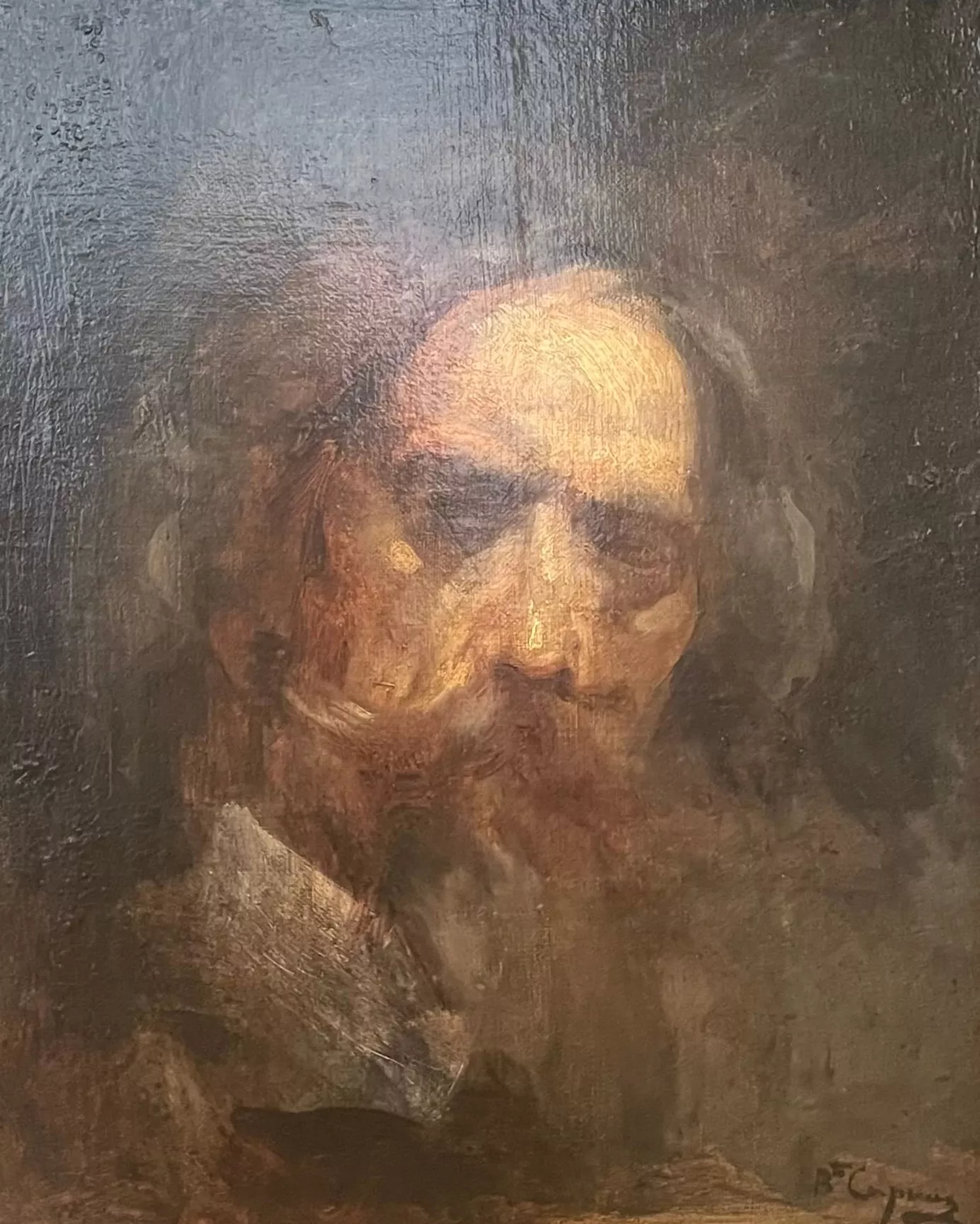
Focus on Carpeaux's marble bust on the cover
This marble bust by Jean-Baptiste Carpeaux perfectly illustrates the artist's talent for capturing the grace and expressiveness of his subjects. With her face turned slightly to the left, the young woman exudes a remarkable gentleness and serenity.
Carpeaux manages, through this delicate, natural pose, to breathe an inner life into the marble, giving the impression that the model is frozen in a moment of peaceful introspection.
This ability to make emotion palpable, while preserving the elegance and refinement of the sculpture, is one of the hallmarks of his art.
The treatment of the face is particularly successful: the features are finely sculpted, every curve of the face is soft, lending the model a delicate beauty.
The slightly lowered eyes add to the impression of reverie, while the mouth, subtly sketched, seems almost ready to come to life. Carpeaux excels in the representation of flesh, as evidenced by the smooth, polished texture of the face, which contrasts subtly with the rest of the work.
This contrast is also present in the treatment of the hair, worked with extreme finesse, but which retains a rougher texture, accentuating the liveliness and naturalness of the hairstyle.
The bust is adorned with floral motifs, particularly on the upper part of the dress, adding a decorative dimension to the work. These carefully integrated motifs evoke a connection with nature and reinforce the impression of softness and femininity emanating from the sculpture.
The flowers seem to be an extension of the model herself, as if they were an integral part of her being, a frequent procedure with Carpeaux, who liked to play with symbolic elements to enrich his compositions.
This floral motif, as well as the drape of the dress, are delicately treated, with meticulous attention to detail.
This bust also bears witness to the influence of the Baroque style in Carpeaux's work, particularly in his treatment of volumes and movement. The slight inclination of the head, the subtle twist of the neck, all contribute to animate the sculpture in a very natural way.
The dynamism contained in this pose recalls the works of Bernini, whom Carpeaux particularly admired. This Baroque influence is reflected in the expressiveness of the work, where the emphasis is on capturing a fleeting moment, a suspended movement.
Finally, we can't ignore the technical mastery Carpeaux demonstrates in this marble sculpture. The material, often considered difficult to work with, seems here to be modeled with disconcerting ease.
The sculptor succeeds in transforming the hardness of marble into a living, almost carnal material, capable of conveying the lightness of a head of hair or the tenderness of a gaze.
This technical virtuosity, combined with a unique artistic sensitivity, makes this bust an emblematic work by Jean-Baptiste Carpeaux, who here demonstrates his genius for capturing the humanity and beauty of his models.
A poet's response to Carpeaux's "why born a slave?"? - MET
The legacy of Carpeaux
Jean-Baptiste Carpeaux left behind an artistic legacy marked by his mastery of the human form and his ability to express intense emotions through sculpture.
His works continue to be admired for their dynamism and emotional power, and he is considered one of the most important sculptors of 19th-century France.
Private collectors play a large role in the preservation of his work in view of the greatness of his output, even though some of his works are exhibited in museums.
Recognizing Jean-Baptiste Carpeaux's signature
Carpeaux doesn't always sign his works. If you think you own one, it's best to have it appraised. The signature may differ depending on the type of work: sculpture, drawing or painting. There are also copies, which is why expertise is important.
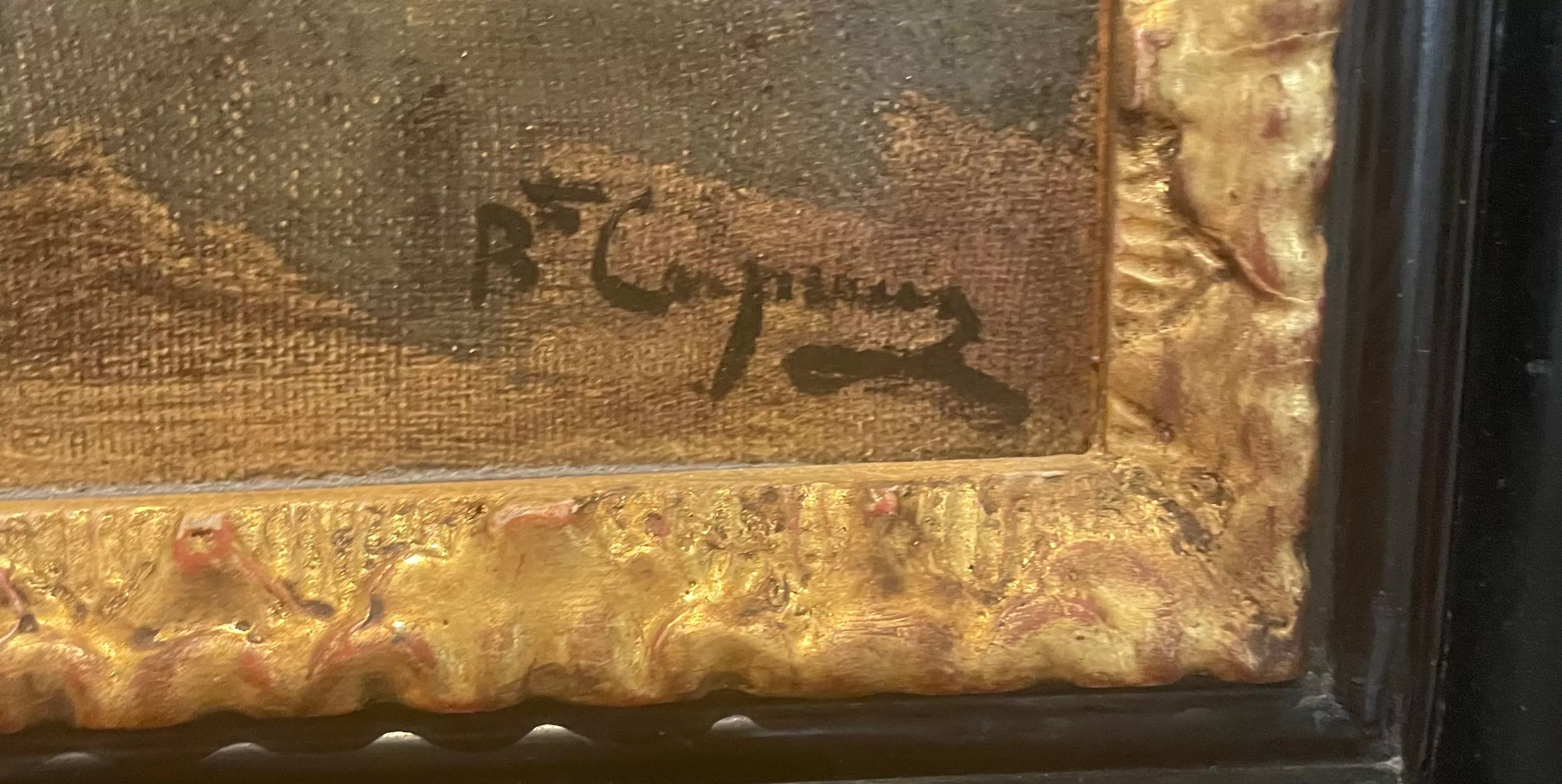
Knowing the value of a work
If you happen to own a work by or after Jean-Baptiste Carpeaux, don't hesitate to request a free appraisal using our form on our website. A member of our team of experts and certified auctioneers will contact you promptly to provide you with an estimate of the market value of your work, as well as any relevant information about it. If you are considering selling your work, you will also be accompanied by our specialists in order to benefit from alternatives for selling it at the best possible price, taking into account market inclinations.
Estimate in less than 24h
Works from the same period sold at auction

Estimated 300 - 400 €
Glazed ceramic statue of Zeus

Estimated 2 000 € - 3 000 €
Delphin ENJOLRAS (1857-1945) "A Midsummer Night's Dream", Oil on canvas

Estimated 10.000 - 15.000 €
Ebridge Ayer BURBANK(1858-1949), Young African-American boy, Oil on panel.

Estimated 1.000 - 2.000 €
Napoléon Bonaparte (1769-1821), Manuscript in pen and ink on paper.

Estimated 8000 - 12000 €
Raymond THIBESART (1874-1968) Apple trees in blossom Oil on canvas.

Estimated 800 - 1.500€
Barye, seated lion
Discover in the same theme

The value of works, paintings by Victor Gabriel Gilbert
Victor Gabriel Gilbert was a painter of genre scenes at the end of the 19th century. His works are still of great value today.
Learn more >

Rating and value of works, paintings by Louise Hersent
Louise Hersent is a little-known 19th-century painter who produced oil on canvas works that can be valuable at auction.
Learn more >

Rating and value of drawings and paintings by Jules Jacques...
Jules Jacques Veyrassat was a 19th-century painter associated with the Barbizon School whose works command high prices and are highly valued.
Learn more >

Secure site, anonymity preserved

Auctioneer approved by the State

Free and certified estimates
Frequently asked questions
-
Who was Jean-Baptiste Carpeaux, and what is his significance in art history?Jean-Baptiste Carpeaux (1827–1875) was a leading 19th-century French sculptor associated with the Romantic movement. A student of François Rude and winner of the Prix de Rome in 1854, he distinguished himself through his expressive and naturalistic style, influenced by the Italian Renaissance and Baroque masters such as Bernini. His monumental works, including *La Danse* for the Opéra Garnier, had a profound impact on the art of his time through their emotional dynamism and technical finesse.
-
What are the price ranges for Jean-Baptiste Carpeaux's works, broken down by type?Prices for Carpeaux’s works vary considerably depending on the medium used: prints range from €100 to €430, drawings and watercolors from €150 to €21,340, oil-on-canvas paintings between €1,140 and €360,000, and three-dimensional sculptures between €80 and €780,000. Sculptures, which are particularly prized by French collectors, represent the highest-value segment of the market. These price ranges reflect the importance of the subject matter, provenance, and condition of each piece.
-
How can I have a work by Jean-Baptiste Carpeaux appraised to determine its authenticity and value?If you own a work attributed to Carpeaux, we recommend that you request a free, no-obligation appraisal from Auctie's by filling out our online form. A state-certified expert or auctioneer will contact you shortly to examine your item and provide you with an accurate estimate of its market value within 48 hours. This appraisal is essential, particularly given the existence of copies and the fact that Carpeaux did not always sign his works.
-
Is this the right time to sell a work by Jean-Baptiste Carpeaux?Yes, this is an excellent time to sell a work by Carpeaux. The artist’s market value is currently high, and his works are attracting growing interest in the art market, as evidenced by the strong demand from French collectors for his sculptures. Auction results regularly exceed estimates, reflecting the market’s continued appreciation of this 19th-century artist.
-
How does the process of selling a Carpeaux artwork at Auctie's work?At Auctie's, the process begins with a free, no-obligation appraisal conducted by our experts and licensed auctioneers. Once authentication and valuation have been confirmed, we guide you through the entire sales process, offering you the best options for selling your artwork at the optimal price, taking into account market trends and the preferences of potential buyers.
