



Rating and value of paintings, still lifes by Henri Théodore Fantin Latour

Key takeaways
- Fantin-Latour’s floral still lifes sell for between €1,600 and €3,712,930 and are particularly sought after by British and American buyers.
- In 2022, *Still Life with Daisy Queens* fetched €1,918,070 at auction, exceeding its initial estimate of €697,480 to €929,970.
- A 19th-century French painter (1836–1904), Fantin-Latour excelled at still lifes, portraits, and Symbolist compositions, mastering chiaroscuro and precise detail.
If you own a work by or after the artist Henri Fantin-Latour, and would like to know its value, our state-approved experts and auctioneers will offer you their appraisal services.
Our specialists will carry out a free appraisal of your work, and will provide you with an accurate estimate of its value on the current market.
Then, if you wish to sell your work, we will direct you to the best possible arrangement to obtain the optimum price.
Rating and value of the artist Henri Fantin-Latour
Fantin-Latour is an artist who emerged from symbolism and realism. His legacy consists mainly of paintings. Today, prices for his paintings are skyrocketing under auctioneers' gavels.
His flower still lifes are particularly prized above all by English and American buyers, and the price at which they sell on the Art market ranges from €10 to €1,053,650, a considerable delta but one that speaks volumes about the value that can be attributed to Fantin-Latour's paintings.
In 2022, a painting entitled Nature morte aux reines-marguerites, sold for €1,918,070 while it was estimated at between €697,480 and €929,970.
The artist's quotation is very high and varies according to the quantity of works present on the auction market.
Order of value from a single work to the most prestigious
Type of composition | Result |
|---|---|
Landscape | From 600 to 53 000€ |
Portrait | From 500 to 164 270€ |
Still life | From €1,600 to €3,712,930 |
Estimate in less than 24h
Style and technique of the artist Henri Fantin-Latour
Henri Fantin-Latour was part of the realist movement, and also produced symbolist works. He worked in the painter's classic media: drawing, print and oil on canvas.
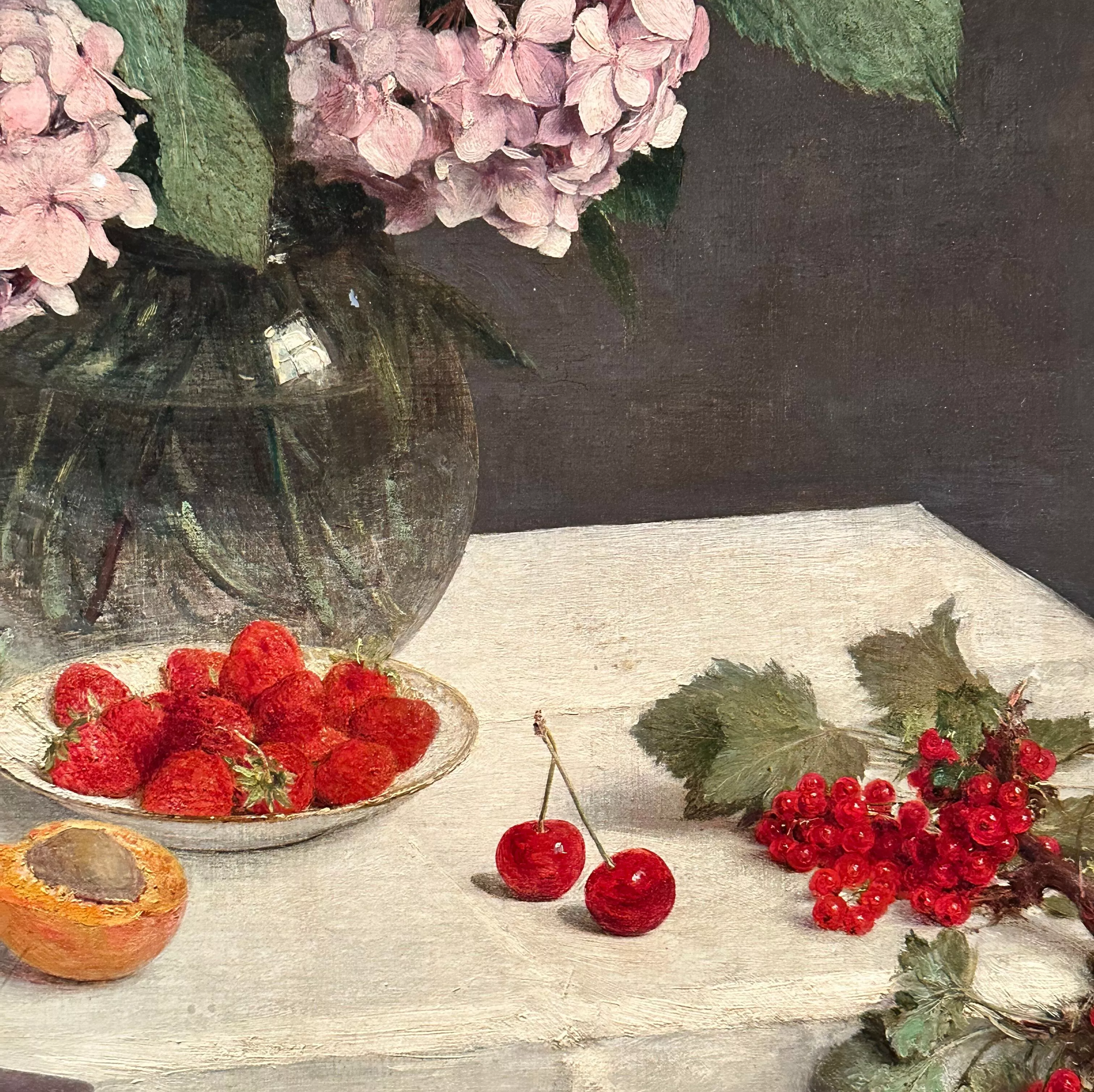
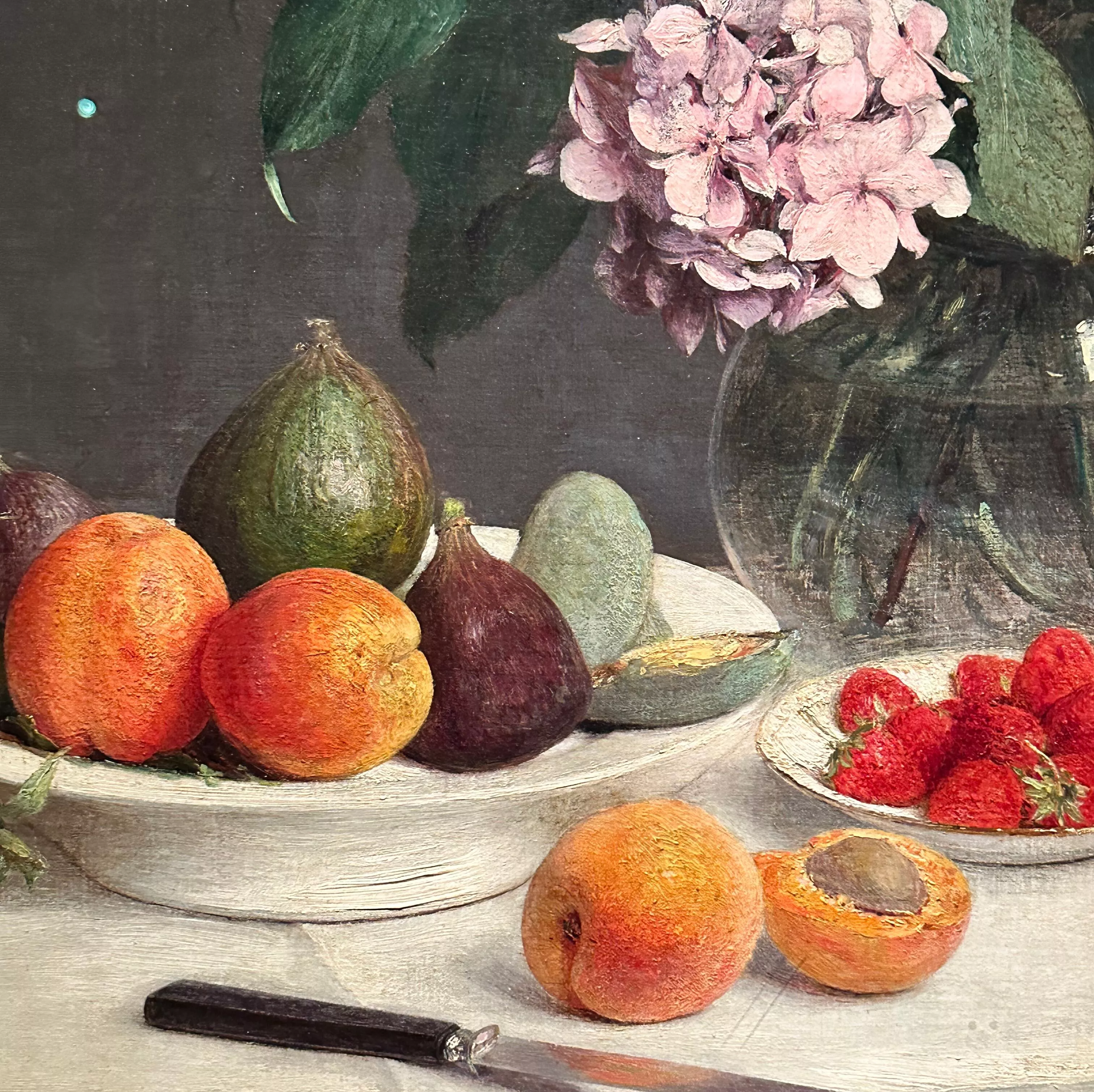
Having tried his hand at traditional mythological and religious subjects, as well as portraiture - a genre in which the painter excelled thanks to his technical mastery of chiaroscuro, Henri Théodore Fantin-Latour's talent is mainly expressed in his still lifes of flowers, compositions in which he excelled.
Henri Fantin-Latour was part of the realist movement, and also produced symbolist works. He worked in the painter's classic media: drawing, print and oil on canvas.
Having explored traditional themes, he approached mythological and religious subjects with a touch of sobriety and rigor, always emphasizing the finesse of the details.
His portraits, marked by a technical mastery of chiaroscuro, demonstrate a keen sense of light and shadow, giving his works a particular depth.
Each face seems imbued with a certain gravity, reflecting a meticulous search for the truth of expressions. However, it is in his still lifes of flowers that his talent is most fully revealed.
Fantin-Latour excels at capturing the fragility and vivacity of petals, capturing the texture and transparency of flowers with an almost photographic precision.
Her bouquets, often arranged with deliberate simplicity, exude an intimate, peaceful atmosphere, where every detail is carefully considered, from the subtle nuances of the colors to the softness of the light reflections.
The artist succeeds in bringing these compositions to life, making each still life a suspended moment, imbued with beauty and delicacy.
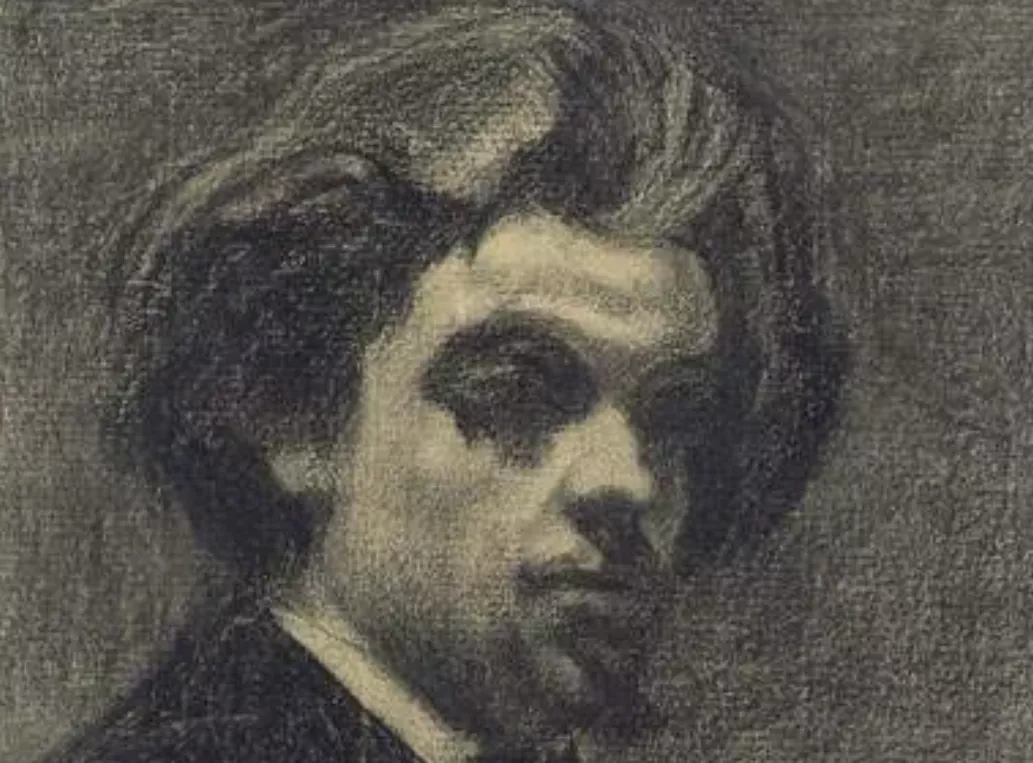
Henri Fantin-Latour, virtuoso of flower still lifes
Henri Théodore Fantin-Latour (1836-1904) was a 19th-century French painter, particularly renowned for his flower still lifes and portraits. Born in Grenoble, he received his first painting lessons from his father, Théodore Fantin-Latour.
In 1850, he left his hometown for Paris, where he enrolled at the Petite École de Dessin. Four years later, he entered the Beaux-Arts de Paris and studied alongside Edgar Degas.
At this time, he produced many self-portraits, often marked by dark tones, which already testify to his taste for chiaroscuro.
It was at the Louvre that he met James Whistler, who became a friend and artistic advisor. Fantin-Latour traveled several times to London, where he developed a circle of admirers and clients.
During this period, he also learned the art of engraving from Edwin Edwards, an influential English engraver, and this know-how enriched his practice. In the 1860s, he began to gain recognition in England, his works being regularly exhibited at the Royal Academy.
It was at this time that he turned to still lifes, a genre he chose to assert his singularity in the face of academic conventions, which relegated these subjects to the bottom of the artistic hierarchy.
His flower paintings are distinguished by the finesse of his brushwork and the precision of his details, with each petal and leaf seeming to vibrate under the light.
Alongside his still lifes, Henri Fantin-Latour excelled in the art of portraiture. His canvases, often bathed in soft light, reflect a great mastery of chiaroscuro. His attention to the features and expression of his models lends his portraits a striking psychological depth. In France, he befriended artists such as Manet, Renoir and Monet, exhibiting alongside them.
Although he was close to Impressionist circles, he retained a more realistic approach, distinguished by his attention to detail and meticulous technique.
In the 1870s, he married Victoria Dubourg, also a painter, who became his muse and artistic support. Their relationship, marked by great complicity, contributed to the blossoming of his career.
In addition to his flower paintings and portraits, Fantin-Latour explored symbolism, notably through his printsmaking. These works, often imbued with mystery, reveal a more poetic and introspective aspect of his work.
Henri Fantin-Latour died in 1904 in Buré, after a prolific career that left behind a body of work marked by a constant search for beauty and truth, in the tradition of an art both intimate and universal.
Focus on Hommage à Delacroix, Henri Fantin-Latour
The painting Hommage à Delacroix by Henri Fantin-Latour, painted in 1864, is an emblematic work that testifies to the artist's admiration for Eugène Delacroix, master of Romanticism.
This composition, featuring a dozen figures, brings together painters and writers of the period in an act of collective veneration.
Among the most recognizable faces are those of Manet, Courbet, and the writer Baudelaire, all gathered around the portrait of Delacroix, prominently placed in the center of the painting.
The scene takes place in an interior, where the atmosphere is imbued with solemnity and respect.
This densely packed painting captures the precise moment when Delacroix, although still alive, already embodies the tutelary figure of an art in full transformation.
Fantin-Latour's use of chiaroscuro accentuates the intensity of glances and gestures, while creating a striking contrast between light and shadow.
The color palette, both rich and subtle, magnifies the characters while underscoring the importance of the historical moment they share.
The arrangement of the figures, as if frozen in a moment of admiration, testifies to Fantin-Latour's deep veneration for Delacroix, but also to the personal bond he had with the artist and his contemporaries.
The choice of this composition, which blends collective portraiture and homage to a master, perfectly illustrates Delacroix's influence on Fantin-Latour's work and on the 19th-century artistic movement as a whole.
The meticulous craftsmanship and richness of detail demonstrate the artist's mastery, while the authenticity of the characters and the depth of their expression reveal an ability to capture the essence of the creative spirit of the age.
Hommage à Delacroix is not just a portrait of a generation, it is a visual manifesto, a declaration of the importance of the Romantic artist's legacy in the history of modern art.
Fantin-Latour's legacy
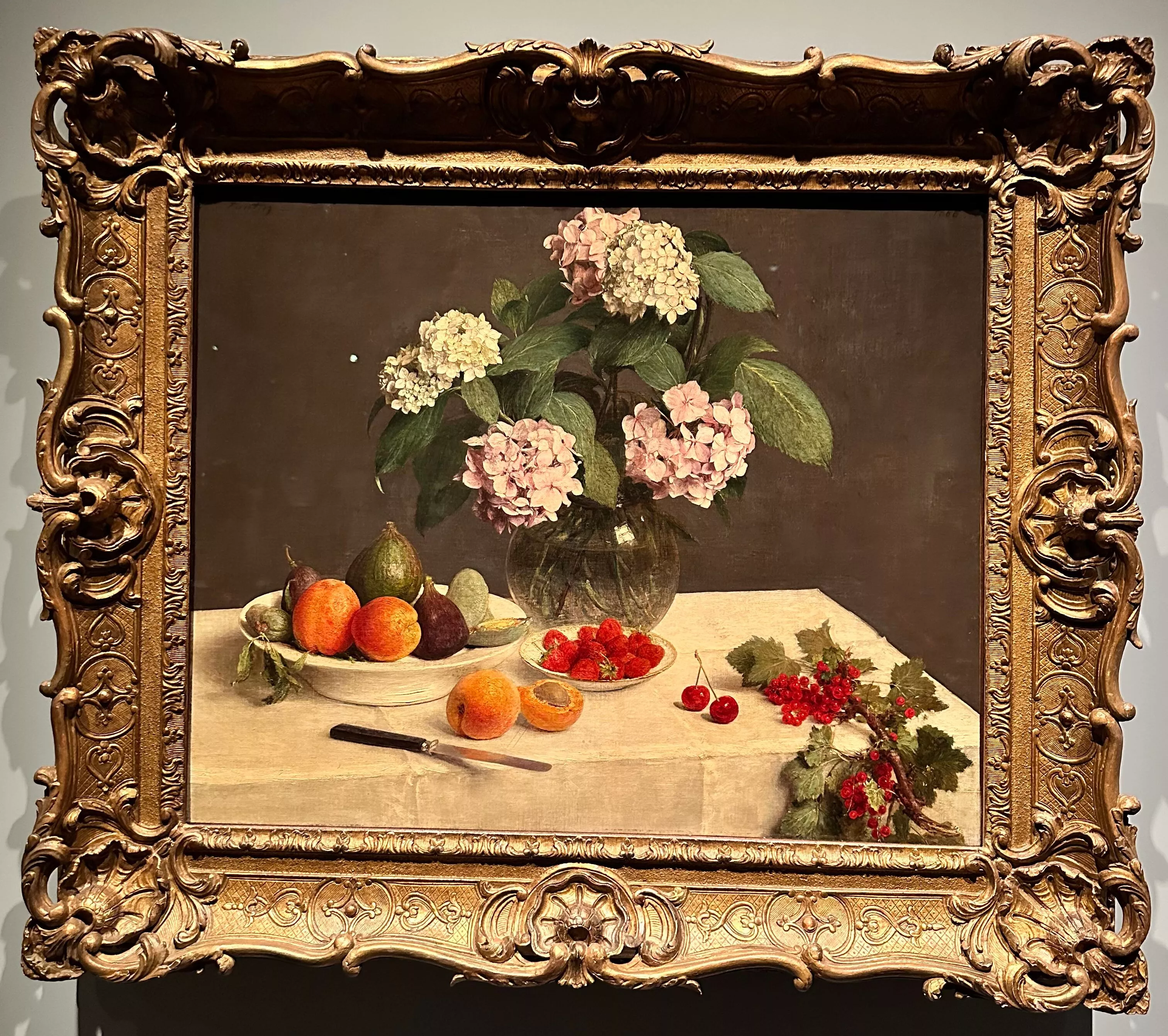
Fantin-Latour leaves behind an artistic legacy marked by his mastery of still life and his artistic versatility.
His works continue to be admired for their precision and emotional power, and he is considered one of the most important artists of 19th-century France.
He died leaving behind a considerable artistic legacy, heralding the artistic currents that were to follow and the interest in photography in art he also left behind a substantial collection of erotic clichés.
Private collectors play a major role in the preservation of his work in view of the magnitude of his output, even if some of his works are exhibited in museums.
Recognizing Fantin-Latour's signature
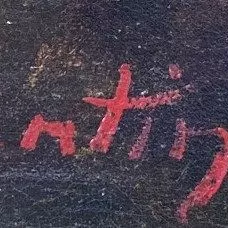
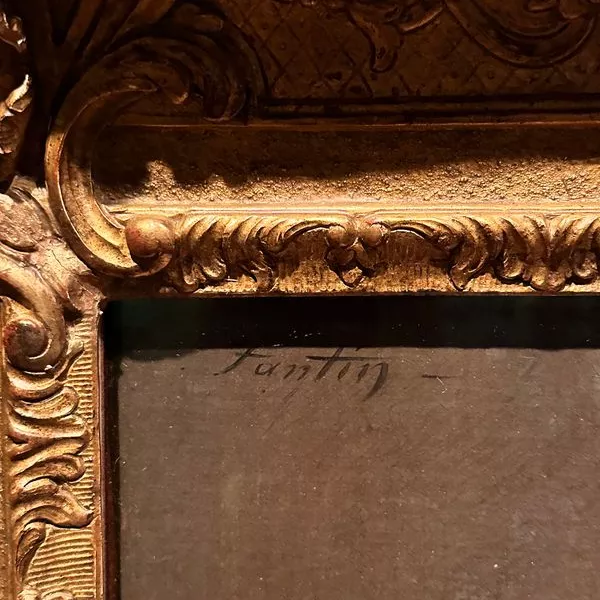
The artist doesn't always sign his works. It's best if you think you own one to have your property appraised.
The signature may differ depending on the type of work, but paintings are often signed. There are also copies, which is why expertise is important.
Knowing the value of a work
If you happen to own a work by or after Henri-Fantin Latour, don't hesitate to request a free appraisal using our form on our website.
A member of our team of experts and certified auctioneers will contact you promptly to provide you with an estimate of the market value of your work, as well as any relevant information about it.
If you're thinking of selling your work, our specialists will also be on hand to offer you alternatives for selling it at the best possible price, taking into account market inclinations.
Estimate in less than 24h
Discover in the same theme

Value and quotation of works, paintings by Ferdinand Roybet
Roybet is a 19th-century Caravaggio painter. His works are valuable and sought-after on the auction market. Estimated in 24h.
Learn more >

Rating and value of paintings by Charles Olivier de Penne
Charles Olivier de Penne is a nineteenth-century painter who produced works that are highly regarded and valued at auction. Estimate in 24h.
Learn more >

Rating and value of paintings by Edmond Aman-Jean
Edmond Aman-Jean was a 19th-century Symbolist painter whose works are highly valued at auction.
Learn more >
Paintings from the same period sold at auction

Estimated 600 - 800 €
Alexandre Gabriel DECAMPS (1803-1860) Two children reading.

Estimated 200 - 400
Joseph Gabriel TOURNY (Paris 1817-1880 Montpellier) Portrait of a painter with a moustache, in bust form, Pastel on paper, oval format

Estimated 3.000 - 5.000
Guillaume FOUACE (1837-1895), Still life with oysters, Oil on canvas

Estimated 5.000 - 10.000
Victor Gabriel GILBERT (1847-1935), Le marché aux fleurs, oil on canvas

Estimated 200 - 400
Philippe SWYNCOP (1878-1949) Portait de Madeleine Lejour, Oil on canvas

Secure site, anonymity preserved

Auctioneer approved by the State

Free and certified estimates
Frequently asked questions
-
Who was Henri Fantin-Latour, and why are his works so highly sought after?Henri Théodore Fantin-Latour (1836–1904) was a 19th-century French painter, the undisputed master of floral still lifes and a talented portraitist. His works combine realism and symbolism with near-photographic precision, which was particularly admired by English and American collectors. His artistic legacy, marked by a constant pursuit of beauty and truth, makes him one of the most important artists of the French 19th century.
-
What is the price range for Fantin-Latour's paintings?Prices for Fantin-Latour’s works vary considerably depending on the type and quality: landscapes range from €600 to €53,000, portraits from €500 to €164,270, and still lifes from €1,600 to €3,712,930. His floral still lifes, his most prestigious works, can fetch exceptional prices due to their technical finesse and international demand.
-
How do I have a Fantin-Latour work authenticated and appraised?If you own a work attributed to Fantin-Latour, we recommend that you request a free, no-obligation appraisal from Auctie's. Our team of experts and state-certified auctioneers will examine your item and provide you with an accurate estimate within 48 hours. This appraisal is important because the artist did not always sign his works, and copies do exist.
-
Is this the right time to sell a work by Fantin-Latour?Yes, this is an excellent time to sell a work by Fantin-Latour. The artist’s market value is currently very high; his floral still lifes are in particularly strong demand among British and American buyers, and the prices of his paintings regularly skyrocket at auction.
-
How does the sales process work at Auctie's?Auctie's supports you every step of the way: after a free, no-obligation appraisal by our experts, we offer you the best options for selling your artwork at the best possible price. Our specialists take market trends and collectors’ preferences into account to maximize your proceeds at auction.
