



Rating and value of paintings by Victoria Fantin-Latour

Key takeaways
- Victoria Fantin-Latour (1840–1926), a French Impressionist artist, primarily painted floral still lifes, which sell for between €100 and €75,000 at public auctions.
- Her oil-on-canvas paintings fetch between €1,800 and €71,000, while her drawings and watercolors sell for between €100 and €17,800 and are particularly sought after by Canadian buyers.
- A pioneer of the floral genre in the 19th century, she circumvented the limitations imposed on women artists by specializing in still life, a genre tolerated by social conventions.
If you own a work by or after the artist Victoria Fantin -Latour, and you'd like to know its value, our state-approved experts and auctioneers will offer you their appraisal services.
Our specialists will carry out a free appraisal of your work, and provide you with an accurate estimate of its value on the current market.
Then, if you wish to sell your work, we will direct you to the best possible arrangement to obtain the optimum price.
Rating and value of the artist Victoria Fantin-Latour
Victoria Fantin-Latour is an important artist of 19th century painting. She was part of the Realist, Impressionist and other movements. Now, prices for her works are rising at the auctioneers' gavel.
Her oil paintings are particularly prized, especially by Canadian buyers, and the price at which they sell on the art market ranges from €100 to €75,000, a considerable delta but one that speaks volumes about the value that can be attributed to Victoria Fantin-Latour's works.
In 2000, the oil on canvas Roses blanches dans un vase, dating from 1907 sold for €75,000, while it was estimated at between €36,000 and €59,000, twice the low estimate.
Order of value from a simple work to the most prestigious
Technique used | Result |
|---|---|
Drawing - watercolor | From €100 to €17,800 |
Oil on canvas | From €1,800 to €71,000 |
Estimate in less than 24h
Style and technique of artist Victoria Fantin-Latour
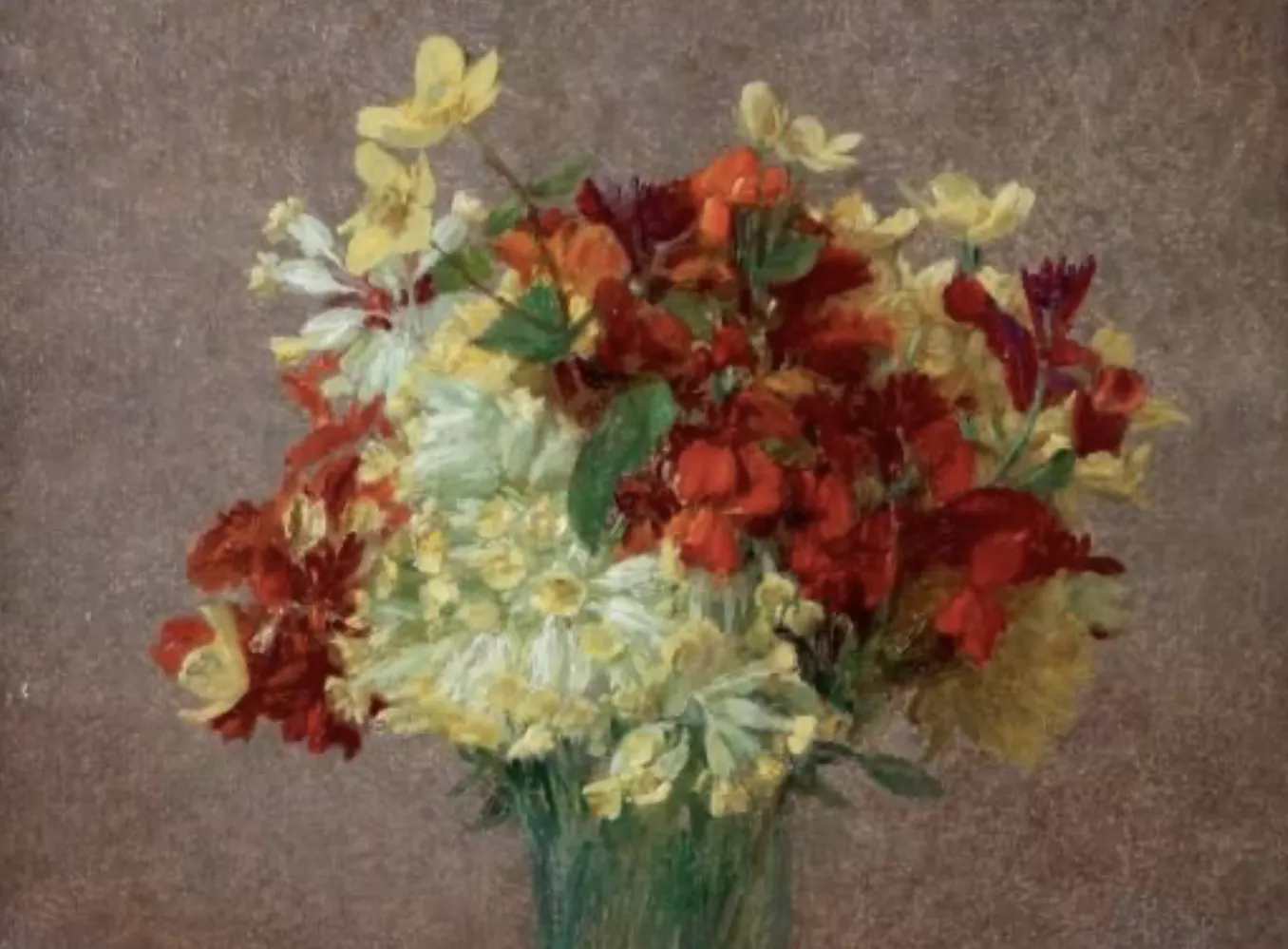
Victoria Fantin-Latour produced impressionist and realist oils on canvas and drawings, including above all, like her husband, many still lifes of flowers.
The work of her husband, Henri Fantin-Latour, exerted an influence on hers and vice versa. It is assumed that she was also inspired by artists such as Anne Vallayer - Coster or Elizabeth Vigée le Brun, who worked extensively in this genre.
The life of Victoria Fantin-Latour
Victoria Fantin-Latour (maiden name Victoria Dubourg) (1840-1926) was a French impressionist and realist artist.
She was born in Paris, into a family of artists where she was exposed to creativity from childhood. Her husband, Henri Fantin-Latour, played a leading role in her artistic career.
From 1864, she trained as a painter in her husband's studio, developing a style intimately linked to that of the Impressionists. As a woman painter at the time, she gravitated towards flower still lifes, a genre that was more open to her and less controversial.
Victoria participated in Parisian artistic life, and regularly posed for Henri, becoming his muse and a central subject of his work.
She befriended other renowned artists, such as Berthe Morisot and Édouard Manet, who gave her encouragement and inspiration. Although she was often in the shadow of her husband, her works, though less well known, show remarkable sensitivity and finesse.
She exhibited her paintings at the Salon and received praise for her delicate, poetic style. At the end of her career, she retired with Henri to the countryside, where she continued to paint, capturing the surrounding landscapes with a rich and varied palette.
Her work darkened somewhat during the First World War, reflecting the tumult of her times. Victoria Fantin-Latour died in Paris at the age of 86, leaving an artistic legacy that deserves to be rediscovered and celebrated.
Focus on Basket of Roses, Victoria Fantin-Latour
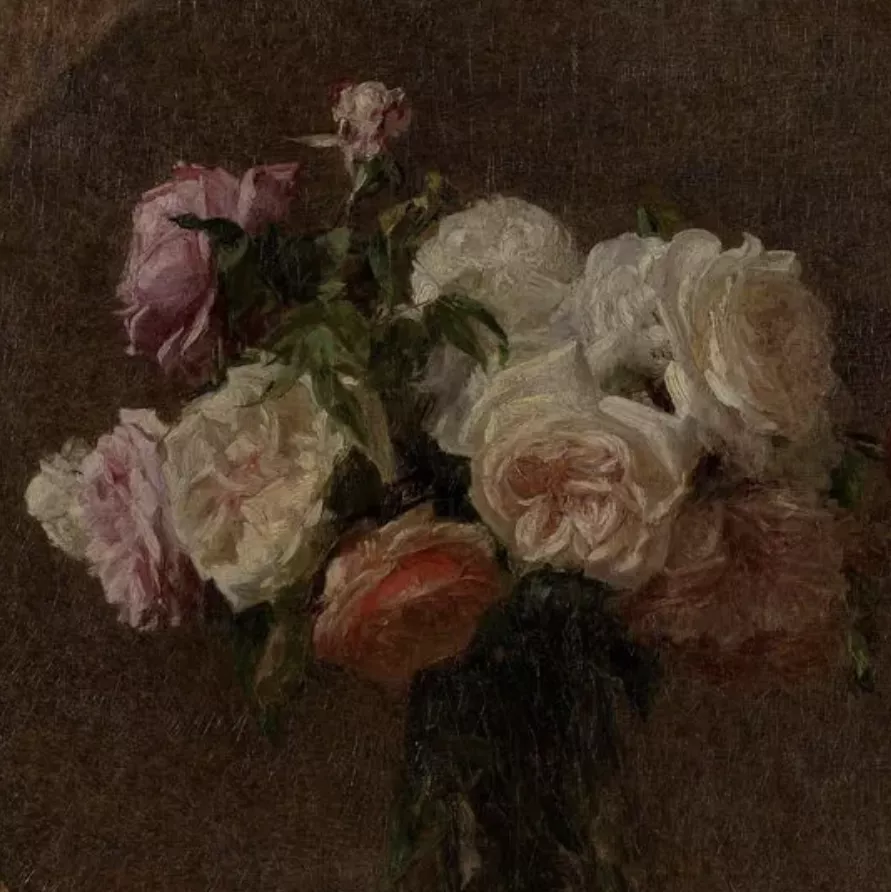
Victoria Fantin-Latour, 19th-century artist, achieves with Panier de roses a representation full of gentleness and elegance.
In this painting, she delicately captures a bouquet of roses, carefully arranged in a basket, evoking the freshness and delicacy of flowers.
The soft, muted tones of pink, white and cream create a serene, almost silent atmosphere, in which light plays a central role.
It diffuses softly over the velvety petals, bringing a subtle warmth to the composition as a whole. The simplicity of the wicker basket contrasts delicately with the richness of the roses, highlighting the fragile texture and brilliance of the flowers.
Each finely detailed rose seems almost palpable, revealing meticulous attention to form and color. The composition, though discreet, is imbued with great harmony.
The flowers seem suspended in an ephemeral moment, capturing all the beauty of a fragile, intimate moment.
Fantin-Latour excels here in capturing not only the perfection of the roses, but also the subtle emotion that emanates from this still life. The basket of roses, both simple and refined, adds a touch of naturalness that reinforces the delicacy of the work, recalling the freshness of a bouquet picked in the morning.
Through this work, Victoria Fantin-Latour demonstrates her talent for capturing the ephemeral beauty of simple things, while mastering light with great subtlety.
Every brushstroke, every nuance seems to breathe elegance, transforming this floral scene into a true ode to nature. Panier de roses testifies to his ability to render extraordinary everyday moments, revealing the quiet beauty of flowers.
This work fits naturally into its context of artistic creation, as it reflects the 19th-century tradition of floral still lifes, a genre intimately linked to the representation of everyday life and the appreciation of simple, fleeting beauties.
Women and flower still life in the 19th century
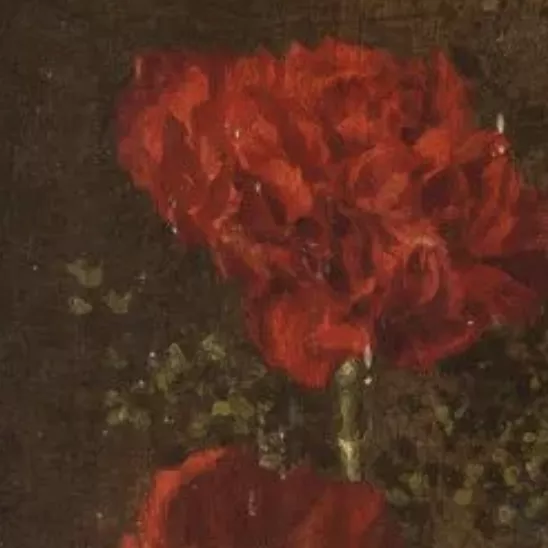
In the XIXᵉ century, women artists specializing in flower still life faced many obstacles to gaining recognition on the art scene.
Flower still life, and particularly the depiction of flowers, was often relegated to a minor genre, considered more appropriate for women, at a time when the latter were still subject to significant prejudice.
Women were often confined to this "modest" genre, as large-scale history painting was forbidden to them, as was access to full academic training.
The École des Beaux-Arts, then closed to women until 1897, deprived them of formal artistic training, forcing them to seek other means of learning. Alone, or under the tutelage of close male artists, they developed skills in private studios.
Artists such as Louise Moillon, earlier in the century, and later Rachel Ruysch or Marie Egner, excelled in the art of floral still lifes, a genre long judged by men as a mere female pastime, reinforcing the marginalization of their work.
The Salon, a key venue for gaining recognition and commissions, long refused to exhibit works by women, further limiting their visibility.
For these artists, flowers became a privileged field of expression, a space where they could demonstrate their technical mastery and sensitivity, while remaining within the limits imposed by patriarchal society.
The critics, often indifferent or even condescending towards their work, contributed to reinforcing this invisibilization, thus depriving the women of the recognition they deserved.
Despite these difficulties, some managed to make a place for themselves by exhibiting in alternative salons or thanks to the support of male artists.
They remained, however, confined to subjects deemed "feminine", such as still lifes of flowers, a genre which, although refined, was perceived as lacking the grandeur of other forms of painting.
Their works, nevertheless, testify to great sensitivity and a meticulous mastery of color and light, and continue to be rediscovered and appreciated to their full value today.
Victoria Fantin-Latour's imprint on her period
Victoria Fantin-Latour left her mark on her era as the essential muse of her husband, Henri Fantin-Latour, and as an artist herself, albeit a lesser-known one.
She is one of the few women to have navigated the artistic circles of her time, often invisibilized by an art world still reluctant to offer women the place they deserve.
Although her work often remains in the shadow of her husband's, she leaves behind a production of floral still lifes imbued with delicacy and great sensitivity.
This genre, often considered suitable for women, enabled her to develop her talent within a framework tolerated by the social conventions of the time.
Victoria Fantin-Latour, like many women artists, had to battle against rigid artistic institutions and limiting social codes, with the École des Beaux-Arts still closed to women when she began.
Her work, though modest in appearance, testifies to remarkable technical mastery and a refined taste for light and color.
While she did not enjoy the recognition of her contemporaries commensurate with her talent, her work is today being rediscovered, and her contribution to the art of floral still lifes is increasingly valued.
Like other women artists of her time, Victoria was able to find ways of exhibiting her work and making a place for herself in a milieu that was closed to her.
As her career drew to a close, she continued to perfect her style, gradually stripping her compositions of superfluous detail to make way for a deeper simplicity.
She died in 1926, leaving behind a body of work that today bears witness to her singular contribution to the history of art and floral representation in the XIXᵉ century.
Recognizing Victoria Fantin-Latour's signature
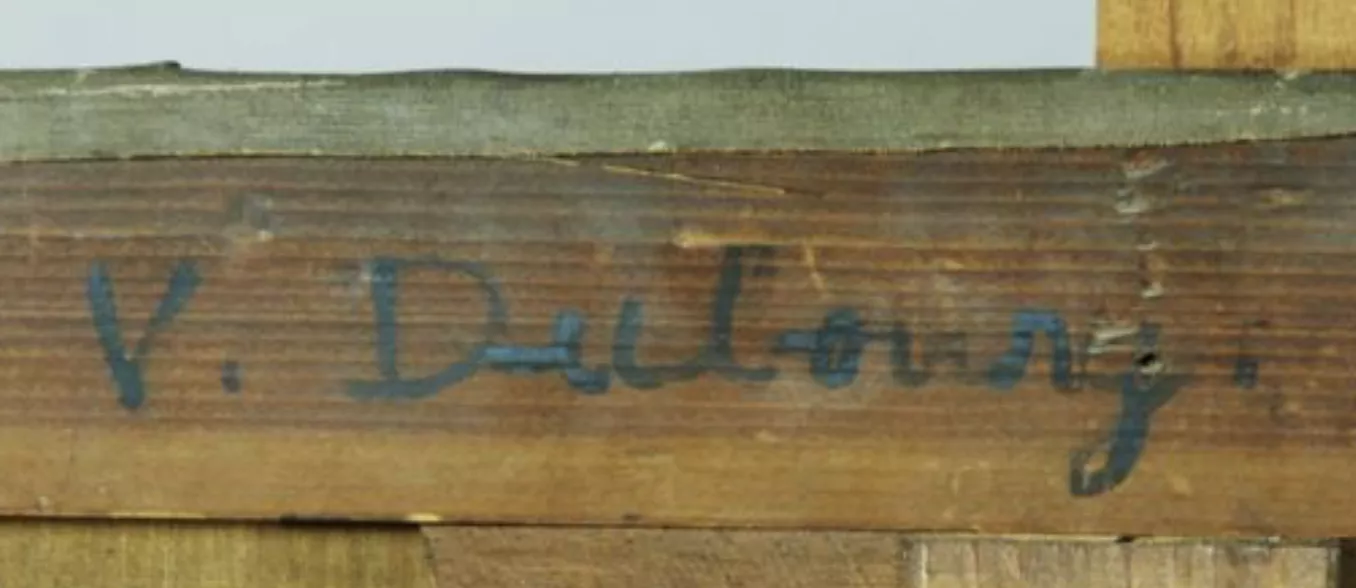
The artist often signs her full name in small, at the bottom of her paintings. Copies may exist, which is why expertise remains important.
Also, given that she began her career under her maiden name, Victoria Dubourg, some may be signed with this name. The art market has retained her married name, which serves her well since Henri Fantin-Latour is highly valued.
Knowing the value of a work
If you happen to own a work by or after Victoria Fantin-Latour, don't hesitate to request a free appraisal using our form on our website.
A member of our team of experts and chartered auctioneers will contact you promptly to provide you with an estimate of the market value of your work, as well as ad hoc information about it.
If you are considering selling your work, you will also be accompanied by our specialists in order to benefit from alternatives for selling it at the best possible price, taking into account the inclinations of the market.
.Estimate in less than 24h
Discover in the same theme

The value of Jacob Petit porcelain
Jacob Petit, a 19th-century porcelain artist, left a considerable and varied output that is highly valued. Estimate in less than 24h.
Learn more >

Rating and value of ceramics, vases and sculptures by Clémen...
Clément Massier was a 19th-century French ceramist who produced works that are highly regarded and valued at auction.
Learn more >

Rating and value of paintings by Élise Bruyère
Élise Bruyère is an artist who produced portraits and still lifes of flowers in the 19th century. Her works are highly prized.
Learn more >
Paintings from the same period sold at auction

Estimated 15.000 - 20.000
Anthony II CLAESZ (1616-1642), Still life of flowers, oil on canvas

Estimated 8.000 - 12.000
Guillaume FOUACE (1837 - 1895), Still life with lobster, oil on canvas

Estimated 8.000 - 15.000
Maurice de VLAMINCK (1876-1958), Still life with jugs and leeks, oil on canvas

Estimated 3.000 - 5.000
Guillaume FOUACE (1837-1895), Still life with oysters, Oil on canvas

Estimated 3.000 - 5.000
Guillaume FOUACE, (1837-1895) Still life with melon, Oil on canvas

Estimated 4.000 - 6.000
Guillaume FOUACE (1837-1895), Still life with Roquefort cheese, Oil on canvas

Secure site, anonymity preserved

Auctioneer approved by the State

Free and certified estimates
Frequently asked questions
-
Who was Victoria Fantin-Latour, and what was her artistic context?Victoria Fantin-Latour (1840–1926) was a French Impressionist and Realist artist, born in Paris into a family of artists. She trained in painting in the studio of her husband, Henri Fantin-Latour, and specialized in floral still lifes, a genre that was more accessible to women at the time. She was part of the 19th-century Realist and Impressionist movements and maintained ties with renowned artists such as Berthe Morisot and Édouard Manet.
-
What is the price range for works by Victoria Fantin-Latour?Prices for works by Victoria Fantin-Latour vary considerably depending on the medium and quality. Drawings and watercolors range from €100 to €17,800, while oil paintings on canvas sell for between €1,800 and €71,000. For example, the oil painting “White Roses in a Vase” (1907) fetched €75,000 at auction, far exceeding its initial estimate. Prices are rising steadily on the market.
-
How can you authenticate a work by Victoria Fantin-Latour?To authenticate a work by Victoria Fantin-Latour, we recommend requesting a free appraisal from Auctie's. The artist typically signs her full name in small letters at the bottom of her paintings, but copies may exist. Some works may be signed under her maiden name, Victoria Dubourg. Our experts and state-certified auctioneers will conduct a thorough analysis and provide you with an accurate estimate.
-
Is this the right time to sell a work by Victoria Fantin-Latour?Yes, now is an excellent time to sell a work by Victoria Fantin-Latour. The prices of her paintings are rising steadily on the market, particularly among Canadian collectors. The gradual rediscovery of her work and the growing recognition of 19th-century women artists are contributing to the rise in her value.
-
How does the appraisal process work at Auctie's?Appraisals at Auctie's are completely free and non-binding. Simply fill out a form on our website. A member of our team of experts and licensed auctioneers will contact you promptly to provide you with an accurate estimate of your artwork’s market value. If you’re considering a sale, we’ll work with you to get the best possible price based on current market trends.
