



Rating and value of works, bronzes and sculptures by Hippolyte Moreau

Key takeaways
- Sculptures by Hippolyte Moreau (1832–1927) sell for between €30 and €100,000, with considerable upside potential in the art market.
- His works explore several techniques: ceramics (€320 to €2,750), decorative objects (€20 to €1,200), and highly sought-after bronze animal sculptures.
- A renowned French artist, he won a gold medal at the 1889 World’s Fair and became a member of the Academy of Fine Arts in 1900.
If you own a work by or after Hippolyte Moreau, and would like to know its value, our state-approved experts and auctioneers will offer you their appraisal services.
Our specialists will carry out a free appraisal of your work, and provide you with an accurate estimate of its value on the current market.
Then, should you wish to sell your work, we will direct you to the best possible arrangement to obtain the optimum price.
Rating and value of Hippolyte Moreau's works
Hippolyte Moreau produced unique sculptures. Now, prices for his creations can rise considerably under the auctioneer's hammer. His sculptures are particularly prized, by buyers from all over the world.
The price at which they sell on the art market ranges from €30 to €100,000, at the moment, a consequent gap but one that says a lot about the value that can be attributed to the works of Hippolyte Moreau, whose output is very abundant.
In 2013, his marble sculpture Méditation, sold for €100,000, originally estimated at between €100,000 and €120,000.
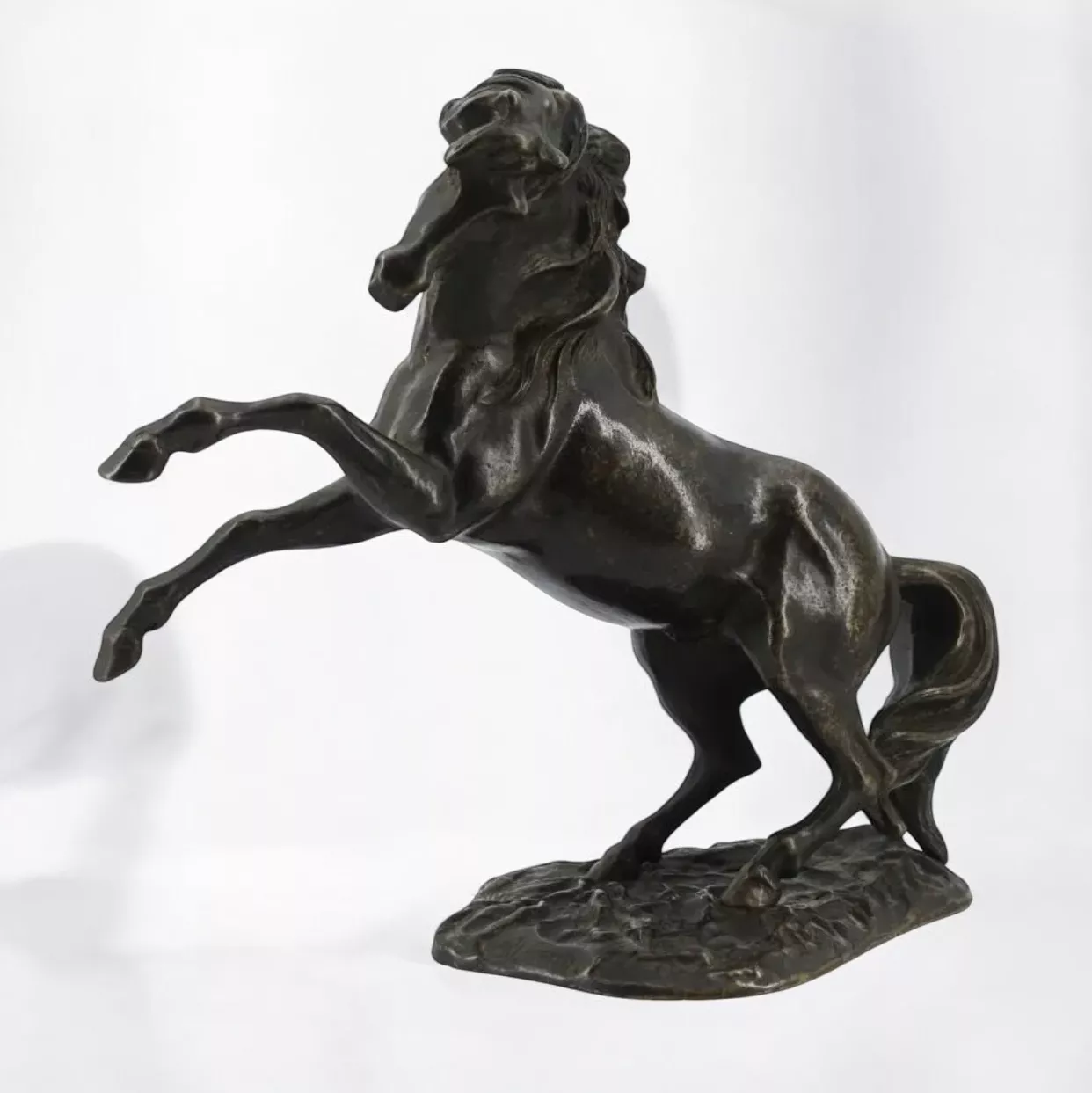
The upside potential for Hippolyte Moreau's works on the auction market is therefore enormous. Animal sculpture, particularly in bronze, has been very successful of late, setting auction records.
Order of value from a simple work to the most prestigious
Technique used | Result |
|---|---|
Ceramics | From €320 to €2,750 |
Object (vase, bookend...) | From 20 to 1,200€ |
Sculpture - volume | From 30 to 100,000€ |
Estimate in less than 24h
Style and technique of artist Hippolyte Moreau
Hippolyte Moreau is a multi-talented artist who has explored various media, including marble and ceramics, with a marked predilection for bronze.
In addition to his major sculptural works, he therefore produced a few drawings, presumably preparatory sketches for his animal sculptures characterized by a minimalist aesthetic and strong realism.
Parallel to this, he ventured into animal sculpture, particularly of birds, producing unique decorative pieces that testify to his keen sense of design, combining technique and aestheticism with remarkable precision.
His stylistic vein evokes that of artists such as Gaston le Bourgeois, Paul Landowski or Armand Petersen, creating a link between tradition and innovation, even if the latter are more contemporary.
The influence of medieval sculpture and architecture can be felt in his work, but it remains resolutely contemporary, rooted in its time while transcending it with a sensibility all his own.
Hippolyte Moreau successfully blends classical forms with modern interpretation, capturing the essence of his subjects while pushing back the boundaries of artistic representation.
Hippolyte Moreau's aesthetic is distinguished by a refined minimalism: his sculptures are carefully stripped of all superfluous elements, emphasizing the pure representation of the animal in all its majesty.
Every detail, every curve is carefully thought out, revealing a harmony between subject and material. His bold vision and innovative approach make him an artist ahead of his time.
Hippolyte Moreau's sculptures retain a striking timeliness that continues to fascinate and inspire, establishing themselves as timeless icons of modern sculpture.
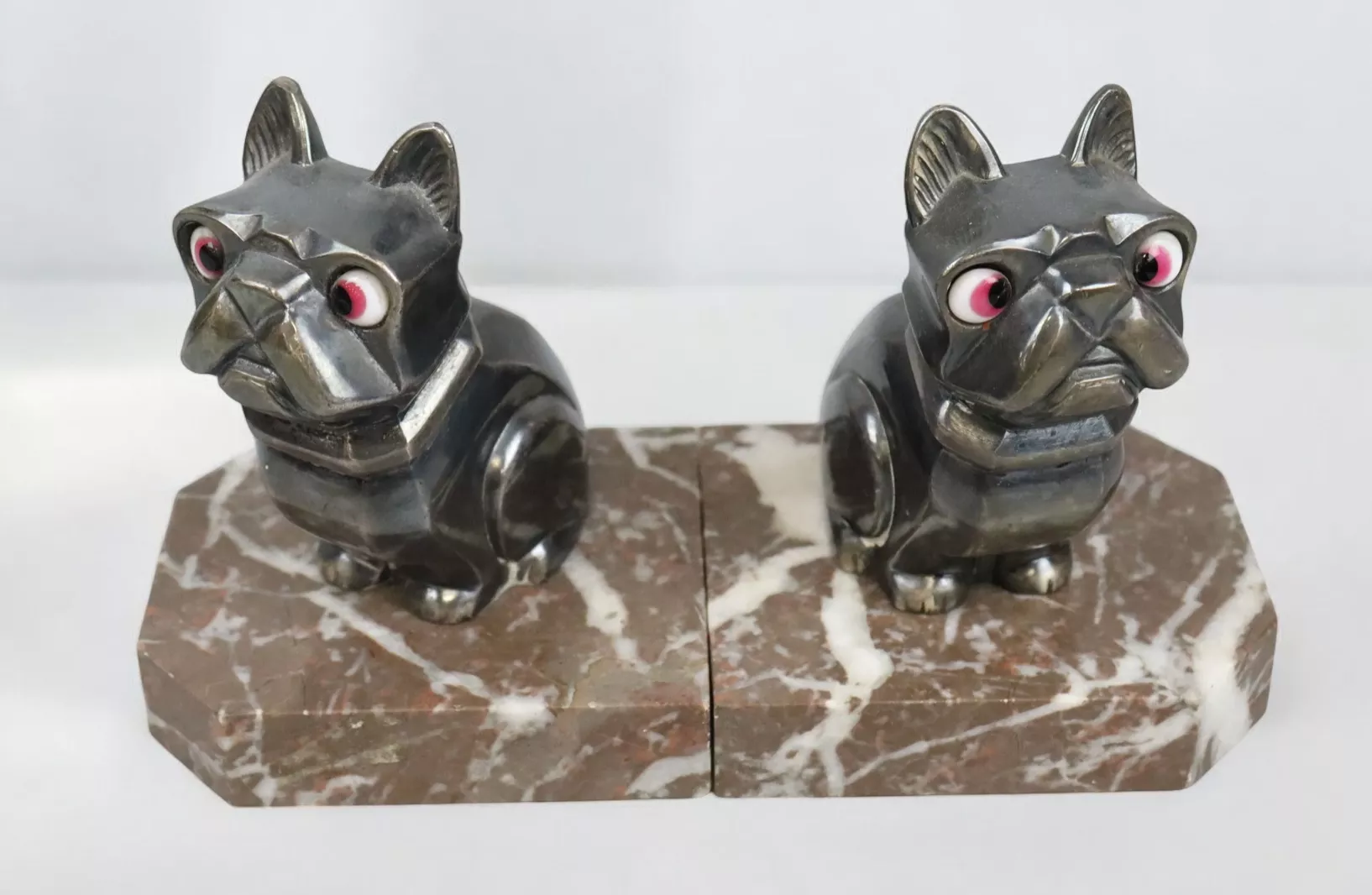
The career of Hippolyte Moreau
Hippolyte Moreau (1832-1927), of French origin, was born in Paris. He began his apprenticeship at the École des Beaux-Arts, where he studied sculpture and traditional techniques.
In 1855, he won the Prix de Rome, which enabled him to move to the Villa Medici to further his training. It was in his own studio that he perfected his art, creating works that combine classicism and innovation.
In the 1880s, he became a central figure in French sculpture, exhibiting regularly at the Paris Salon. His works, often inspired by mythology and portraits, are distinguished by their expressiveness and refinement.
In 1889, at the Exposition Universelle, Moreau received a gold medal, consolidating his reputation and attracting the attention of an international audience.
From 1892, he also asserted himself abroad, participating in exhibitions at the Chicago International Exposition, where his talent was recognized beyond borders. In 1900, he was elected a member of the Académie des Beaux-Arts, underlining the importance of his work in the artistic landscape of his time.
Parallel to his career, Moreau taught at the École des Beaux-Arts, sharing his expertise with the new generation of artists. His passion for sculpture and dedication to art enabled him to make a lasting mark on his era.
Over the decades, Hippolyte Moreau continued to create masterful works, and even after his death in 1927, his artistic legacy lives on, testifying to the beauty and depth of his creations.
Sculpting forms in the 19th century with Moreau
As the 19th century was marked by artistic and social upheaval, sculptors found an inexhaustible source of inspiration in history, mythology and nature, seeking to represent their subjects with a new sensibility.
This artistic genre, often governed by convention, experienced a revival thanks to visionary sculptors like Hippolyte Moreau, who managed to capture the essence of figures with remarkable depth and expressiveness.
During this period, sculpture reinvented itself under the impetus of emblematic figures, among whom Moreau stood out for his ability to combine classicism and innovation.
His technical approach, marked by elegant lines and harmonious volumes, enabled him to convey the emotion and character of the subjects he sculpted. His creations, inspired by mythology and historical scenes, become symbols of a distinctive style.
His sculptures, presented at the Paris Salon, arouse admiration, thanks to his ability to bring figures to life by reflecting both their grandeur and fragility.
In the 1880s and 1890s, sculpture in France entered a veritable golden age, and Moreau, alongside other artists such as Jean-Baptiste Auguste Clésinger, stands out for his mastery of human expression.
He excels in depicting female figures and action scenes, combining anatomical precision and expressive power. Through his works, he manages to evoke deep emotions, establishing a dialogue between the viewer and the sculpture.
The influence of the Symbolist movement is also felt, lending his creations a mystical dimension, where each sculpture tells a story.
Throughout his career, Moreau uses a variety of materials, such as plaster and bronze, reinforcing the visual and tactile impact of his works. The forms, though stylized, retain a strong link with reality, testifying to an era in the throes of transformation.
In the 19th century, sculpture evolved to reflect the concerns of a changing society, oscillating between the quest for beauty and the exploration of human emotions.
Each artist, and Hippolyte Moreau in particular, contributed his own vision, enriching this artistic genre with a diversity of approaches that continues to inspire and fascinate.
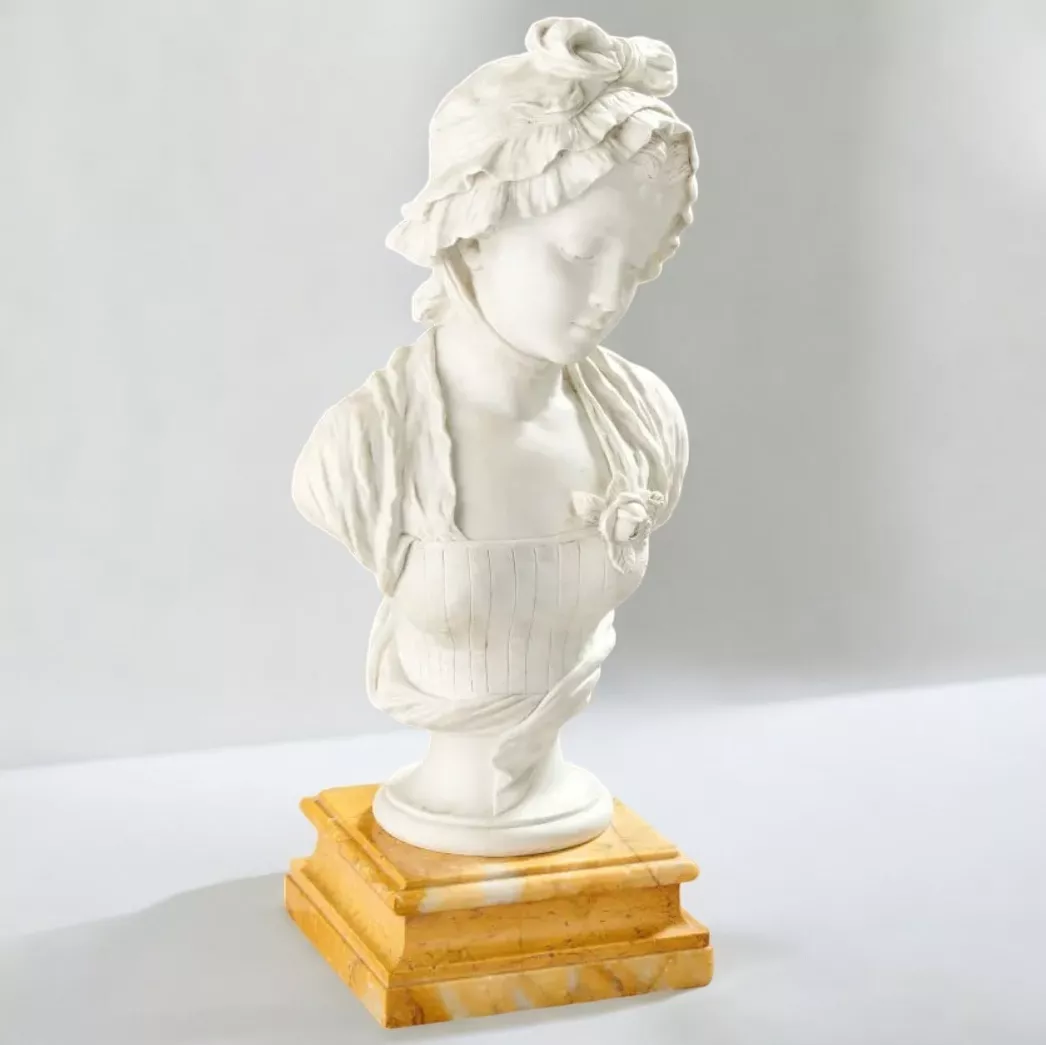
Focus on Groupe d'enfants, Hippolyte Moreau
Hippolyte Moreau's Groupe d'enfants, preserved at the Musée des Beaux-Arts de Troyes, is a perfect example of the delicacy and expressiveness that characterize his works.
Moreau, with remarkable finesse, captures here the carefree energy of childhood, while infusing his sculpture with a timeless quality.
This marble group is distinguished by the softness of its forms and the precision of its details. The children's faces, imbued with joy and innocence, are carved with meticulous attention to detail, revealing Moreau's ability to convey emotion through stone.
Each child, frozen in a natural posture, seems caught in a moment of play, offering a scene vibrant with life.
Moreau excels in the art of making emotions palpable, and in this work he succeeds in conveying the vivacity of childhood while maintaining a classical elegance.
The fluid lines and harmonious curves of the bodies create a sense of movement, while retaining a certain restraint typical of academic sculpture.
This marble, with its precision of execution and the tenderness it exudes, testifies to Moreau's technical mastery, as well as his ability to bring his subjects to life. The Group of children embodies both joie de vivre and purity, in a composition that combines grace and simplicity.
Through this sculpture, Moreau demonstrates a definite talent for capturing the moment, while allowing the emotional depth that inhabits his works to shine through.
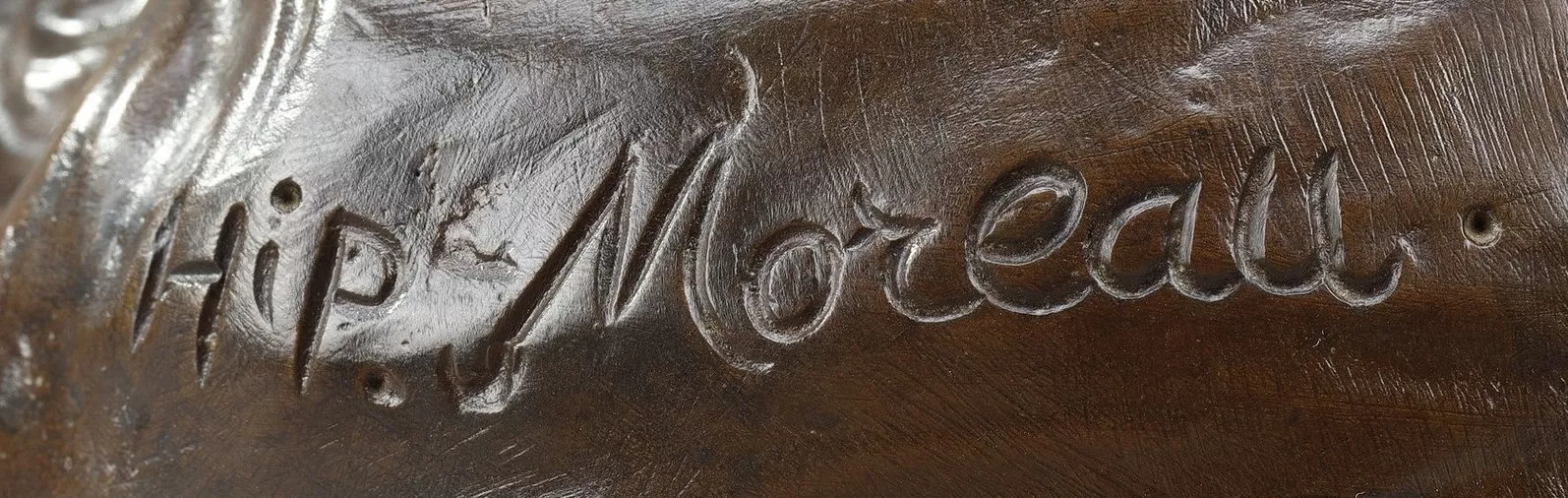
Recognize Hippolyte Moreau's signature
Hippolyte Moreau doesn't always sign his works. If you think you own one, it's best to have it appraised.
Knowing the value of a work
If you happen to own a creation by Hippolyte Moreau or think you might, don't hesitate to request a free appraisal using our form on our website.
A member of our team of experts and licensed auctioneers will contact you promptly to provide you with an estimate of the market value of your piece, as well as any relevant information about it.
If you wish to sell your property, you will also be accompanied by our specialists in order to benefit from alternatives for selling it at the best possible price, taking into account the inclinations of the market.
.Estimate in less than 24h
Discover in the same theme

Value and quotation of works, paintings by Elbridge Ayer Bur...
Burbank was a committed 19th-century American painter and portraitist. Thanks to Auctie's, the value of his works has never been so high.
Learn more >

Rating and value of works, paintings and engravings by Henri...
Henri Motte is a 19th-century neoclassical painter and engraver. His works are quoted and have value at auction. Estimate in 24h.
Learn more >

Rating and value of works, drawings, paintings by Charles An...
Charles Angrand was a neo-realist and symbolist painter of the 19th century who produced drawings and paintings with a high market value.
Learn more >
Similar works sold at auction


Secure site, anonymity preserved

Auctioneer approved by the State

Free and certified estimates
Frequently asked questions
-
Who was Hippolyte Moreau, and what is his significance in the history of sculpture?Hippolyte Moreau (1832–1927) was a leading 19th-century French sculptor who trained at the École des Beaux-Arts and won the Prix de Rome in 1855. He established himself as a central figure in French sculpture, particularly for his bronze works that combined classicism and innovation, and was awarded a gold medal at the 1889 World’s Fair. Elected to the Académie des Beaux-Arts in 1900, he also taught and left a lasting mark on the artistic landscape of his time.
-
What are the current prices of Hippolyte Moreau's sculptures?Prices for Hippolyte Moreau’s works vary considerably depending on the type and quality: ceramics range from €320 to €2,750, objects (vases, bookends) from €20 to €1,200, and three-dimensional sculptures from €30 to €100,000. His bronze animal sculptures, which are particularly sought after, are currently enjoying a very dynamic market with significant upside potential.
-
How do I have a work by Hippolyte Moreau authenticated and appraised?To authenticate and appraise a work by Hippolyte Moreau, we recommend requesting a free, no-obligation appraisal through the Auctie's form. A state-certified expert or auctioneer will contact you shortly to examine your piece and provide you with an accurate estimate of its market value within 48 hours.
-
Is this a good time to sell a sculpture by Hippolyte Moreau?Yes, now is an excellent time to sell a work by Hippolyte Moreau. Bronze animal sculptures are currently very popular on the market and regularly set record prices at auction, offering sellers an ideal opportunity to secure a favorable price.
-
How does the sale of a work of art work at Auctie's?Auctie's supports you every step of the way: after a free, no-obligation appraisal by our experts, we offer you the best options for selling your property at the best possible price. Our specialists take market trends into account and guide you through the entire process until the auction is concluded.
