



Rating and value of sculptures and furniture by Albert Féraud

Key takeaways
- Sculptures by Albert Féraud (1921–2008) sell for between €15 and €16,000, with a record price of €16,000 set in 2007 for a metal sculpture.
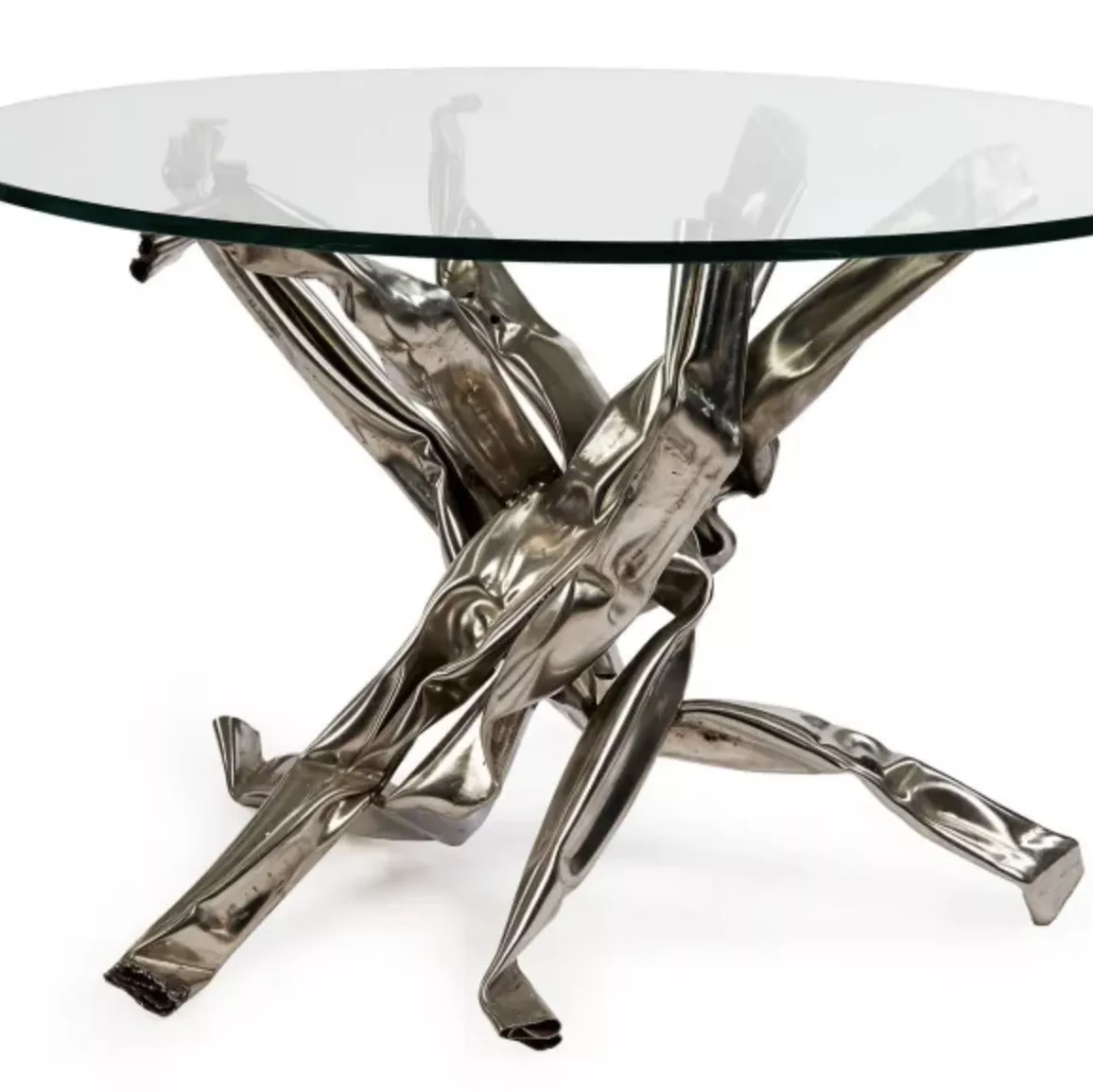
- The artist’s furniture is estimated at between €1,350 and €13,000, while his watercolor drawings range from €30 to €950.
- Éraud, winner of the Grand Prix de Rome in 1951, is known for his abstract sculptures made of stainless steel and recycled materials, which have been part of the collection at the National Museum of Modern Art since 1961.
If you own a work by or after Albert Féraud and would like to know its value, our state-approved experts and auctioneers will offer you their appraisal services.
Our specialists will carry out a free appraisal of your work, and provide you with an accurate estimate of its value on the current market.
Then, should you wish to sell your work, we will direct you to the best possible arrangement to obtain the optimum price.
Rating and value of Albert Féraud's works
Albert Féraud produced unique sculptures. Now, prices for his creations can rise considerably under the auctioneer's hammer. His sculptures are particularly prized, by buyers from all over the world.
The price at which they sell on the art market ranges from €15 to €16,000, at the moment, a consequent gap but one that says a lot about the value that can be attributed to the works of Albert Féraud, whose output is very abundant.
In 2007, his metal sculpture Sans titre sold for €16,000, originally estimated at between €10,000 and €12,000.
The upside potential for Albert Féraud's works on the auction market is therefore quite significant. Sculpture, particularly in metal, has been very successful of late, reaching auction records.
Order of value from a simple work to the most prestigious
Technique used | Result |
|---|---|
Estamp - multiple | From 15 to 100€ |
Drawing - watercolour | From €30 to €950 |
Furniture | From €1,350 to €13,000 |
Sculpture - volume | From €40 to €16,000 |
Estimate in less than 24h
Style and technique by artist Albert Féraud
Albert Féraud (1921 - 2008) is a major French abstract sculptor. Trained at the Beaux-Arts in Montpellier, Marseille and Paris in Alfred Janiot's studio, he was awarded the Grand Prix de Rome for sculpture in 1951.
He first worked in stone and bronze in the 1950s, before exploring the recovery of materials such as lead, iron and stainless steel from landfill sites and car wrecks from 1960 onwards. In this sense, his approach is somewhat similar to that of César.
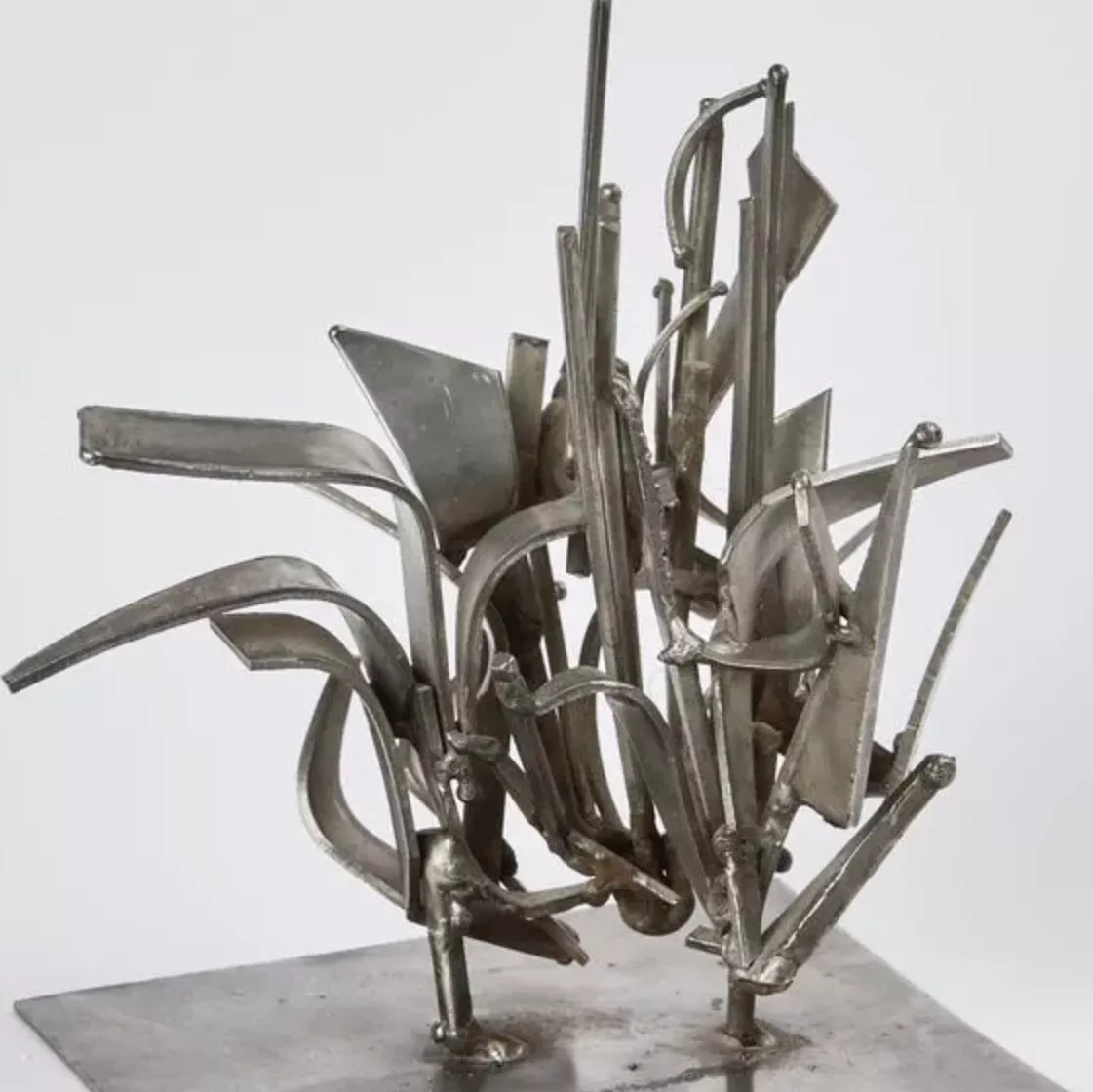
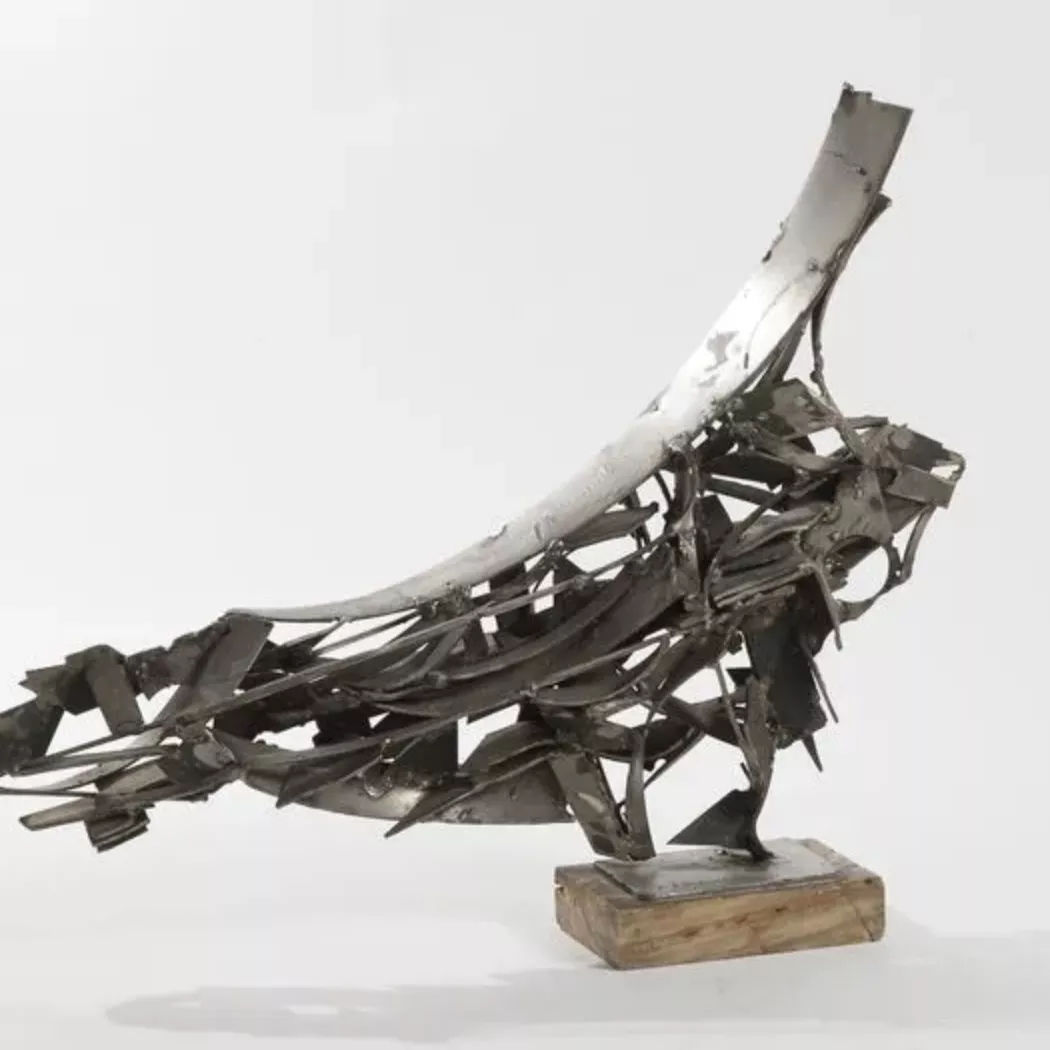
He conducts welded assembly work, creating stainless steel and ordinary steel forms, sometimes monumental, with an apparent weld as a visual signature.
His work is marked by a lyrical abstraction, composed of projected lines, curves, volutes and arabesques carried into three-dimensional space.
The structure is airy yet rigorous, and classical balance meets airy, dynamic expression, reflecting a great plastic mastery of his compositions.
There is a notable transition in his work between academic figurative art (Roman period) and post-1960 industrial fragmentary abstraction. He follows in the footsteps of the " récupérateurs " sculptors of the 60s, such as Arman or Michel Guino.
His work was exhibited in international public spaces (Basel, Zurich, Montreal, Frankfurt) and integrated into the Musée national d'art moderne from 1961. He created monumental sculptures such as Signal (1973, stainless steel) and Galaxie (1986, freeway), reflecting his interest in the impact of urban space.
The works are both technical (use of stainless steel, mastery of welded forms) and poetic, so as to question the relationship between the body and the environment. The artist was elected a member of the Académie des Beaux-Arts in 1989, sitting in the sculpture section.
He was promoted to Officier de la Légion d'honneur in 2002, thanks to his figure in 20th-century French sculpture, which blends technical innovation with visual legibility.
.
The career of Albert Féraud
Albert Féraud was born in 1921 in Paris. He trained at the Ecole des Beaux-Arts in Montpellier, then in Marseille and finally in Paris in Alfred Janiot's studio.
He won the Premier Grand Prix de Rome in sculpture in 1951, which opened the doors to the Villa Medici in Rome for several years of advanced training, between 1952 and 1956.
He began his career with works that were still figurative and classical, influenced by his academic training and the antique models he had observed in Rome. From the 1960s onwards, he made a radical turn towards abstraction.
This was when he began working with reclaimed materials: steel, sheet metal, aluminum and lead, often from industrial scrap metal. He specialized in welded sculpture, and became a major representative of the informal, abstract movement in sculpture, close to the generation of New Realists.
He began exhibiting in the 1960s in France and internationally (Basel, Zurich, Montreal, Frankfurt, New York...). His work is represented in several major public collections, including the Musée National d'Art Moderne, which acquired a work in 1961. He was elected a member of the Académie des Beaux-Arts in 1989, in the sculpture section.
Féraud thus joined a generation of artists who brought contemporary art into traditional institutions. He died in Paris in 2008, leaving behind him a body of work marked by formal audacity, the expressive power of metal and an ability to engage in dialogue with urban space.
Parallel to César or Jean Tinguely, Féraud embodies a resolutely energetic, industrial, poetic 20th-century sculpture rooted in raw material.
Focus on Galaxie, 1986, Albert Féraud
Galaxie is a polished and assembled stainless steel work of monumental dimensions, installed at the Passy freeway service area (Haute-Savoie), on the Route de la Sculpture contemporaine.
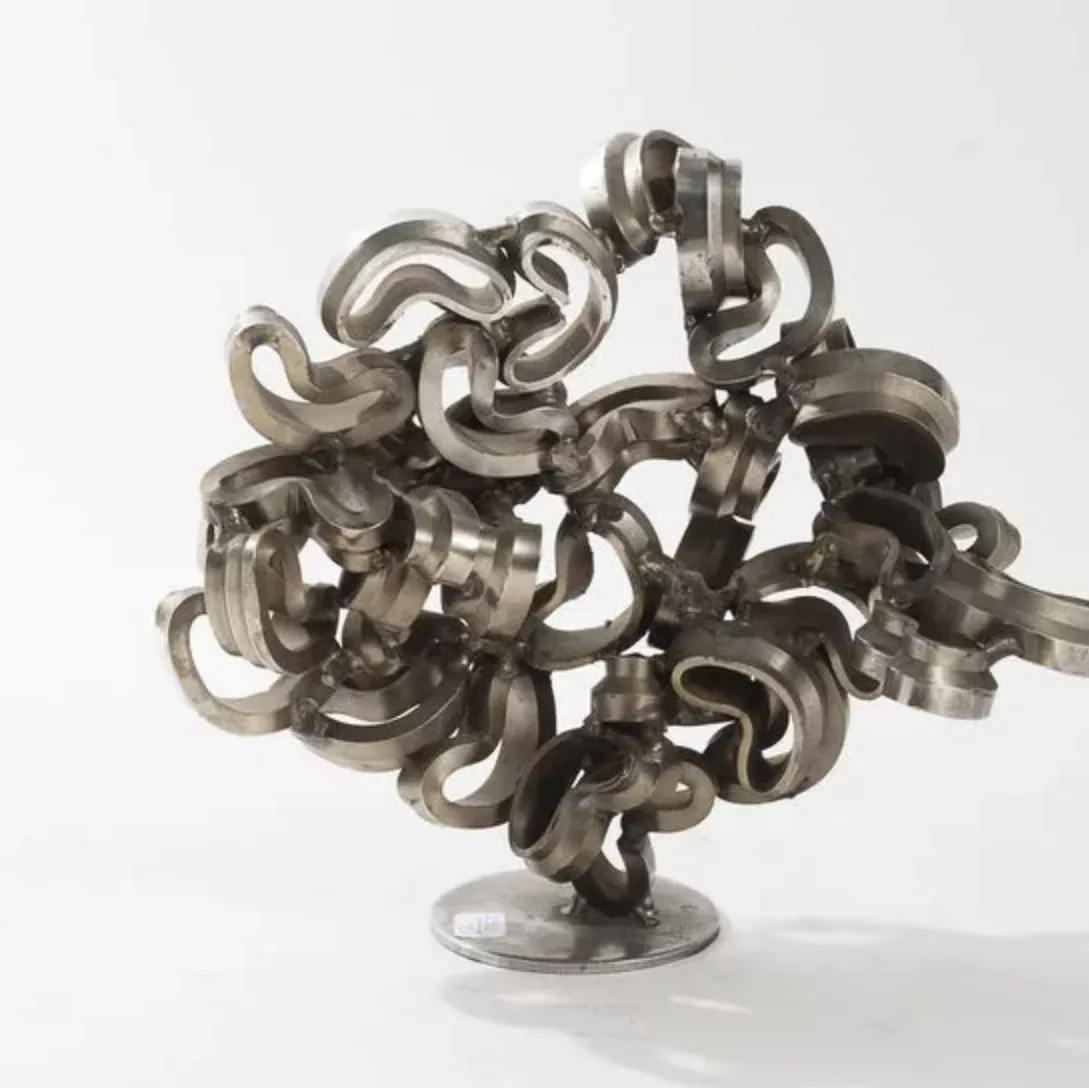
The sculpture is made up of intertwined steel blades, curves and ribbons, creating a spiraloid dynamic evoking orbital or cosmic motion. He uses arc welding, visible in certain areas. Féraud does not conceal the seam of the metal, but turns it into a plastic element.
The reflective metal surface interacts with the environment (natural light, alpine landscapes, changing skies). The piece is entirely abstract, with no direct reference to the body or the animal world, but with a strong symbolic charge.
Galaxy thus evokes both science and poetry, combining the idea of cosmic order with an explosion of form. (orbits, energy flows, stellar trajectories).
The sculpture is open, non-narrative, but its expansive form invites the eye to turn around and follow its lines like an endless spiral. The work is designed to blend into the environment, and to be a moving sight, from the road, in a mountain landscape.
By its format and brilliance, Galaxie acts as a visual beacon, a landscape sculpture that dialogues with the sky and surrounding peaks.
Féraud conceived here an accessible work that offers itself to all without museum or cartel, in a place of passage and on the scale of the territory. It synthesizes Féraud's research into energy, metal, emptiness and pure form. It extends his preoccupations with gesture, controlled imbalance and writing in space.
This work bears witness to his artistic maturity and his commitment to a public sculpture that is monumental, poetic but not decorative.
.
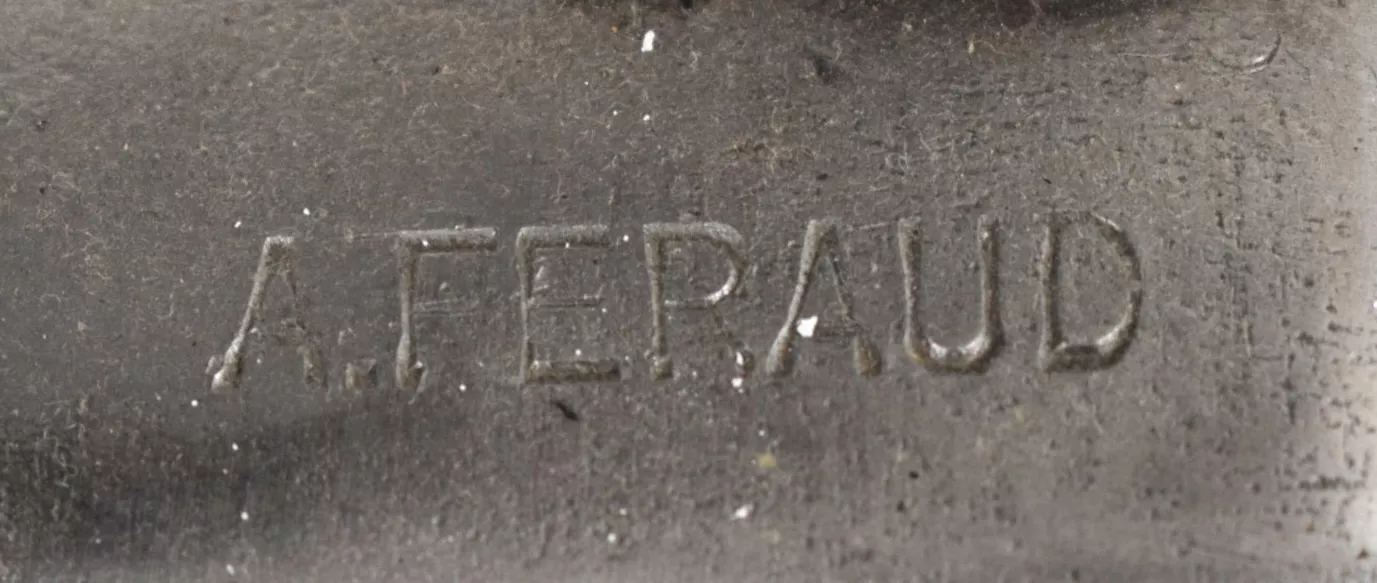
Recognizing Albert Féraud's signature
Albert Féraud doesn't always sign his works. If you think you own one, it's best to have it appraised.
Knowing the value of a work
If you happen to own a creation by Albert Féraud, or think you might, don't hesitate to request a free appraisal using our form on our website.
A member of our team of experts and licensed auctioneers will contact you promptly to provide you with an estimate of the market value of your piece, as well as any relevant information about it.
If you wish to sell your item, our specialists will also be on hand to help you find alternatives for selling it at the best possible price, taking into account the inclinations of the market.
.Estimate in less than 24h
Discover in the same theme

Rating and value of works, drawings and paintings by Elisabe...
Lilla Cabot Perry is an American Impressionist artist of the 20th century, who produced drawings and oil paintings listed at auction.
Learn more >

Rating and value of Pierre Joubert's drawings
Pierre Joubert is a French draftsman who has produced many works that are highly valued at auction. 24h estimate.
Learn more >

Rating and value of paintings and drawings by To Ngoc Van
To Ngoc Van is a Vietnamese modernist painter who has produced numerous works that command high prices at auction.
Learn more >
D'autres bronzes modernes vendus aux enchères

Estimated Between €2,000 and €4,000
Edouard Marcel SANDOZ (1881-1971) curly stingray, bronze print

Estimated Between €1,500 and €3,000
Renato CARVILLANI (1896-1986), seated woman, gilded bronze print

Estimated Between €1,500 and €3,000
César BALDACCINI dit CESAR (1921-1998), Poule Cartier, bronze print

Estimated Between €10,000 and €20,000
Baltasar LOBO (1910-1993), female nude in bronze

Estimated 5.000 - 8.000
Igor MITORAJ (1944-2014), Bust of Asclepius, Green patina bronze sculpture

Secure site, anonymity preserved

Auctioneer approved by the State

Free and certified estimates
Frequently asked questions
-
Who is Albert Féraud, and what is his artistic background?Albert Féraud (1921–2008) was a leading French abstract sculptor and winner of the Grand Prix de Rome in 1951. Trained at the École des Beaux-Arts in Paris in Alfred Janiot’s studio, he made a radical shift toward abstraction beginning in the 1960s, using recycled materials such as stainless steel and iron. He followed in the tradition of the “recycling” sculptors of the 1960s, such as César, and has been a member of the Academy of Fine Arts since 1989.
-
What is the price range for Albert Féraud's works?The prices of Albert Féraud’s works range from €15 to €16,000, depending on the type and technique. Furniture ranges from €1,350 to €13,000, large-scale sculptures from €40 to €16,000, while prints and drawings are less expensive. This wide range reflects the artist’s prolific output and the evolution of the sculpture market—particularly for metal sculptures, which are enjoying great success.
-
How can you authenticate a work by Albert Féraud and determine its value?To authenticate and appraise a work attributed to Albert Féraud, we recommend requesting a free appraisal from Auctie's using the form on the website. A certified expert or auctioneer will contact you shortly to examine the work, verify its authenticity, and provide you with an accurate estimate of its market value, with no obligation.
-
Is this a good time to sell a sculpture by Albert Féraud?Yes, now is a good time to sell. Metal sculpture—a field in which Féraud excels—is currently enjoying great success and achieving record auction prices. The upside potential for Féraud’s works is significant, as evidenced by the 2007 sale of “Untitled,” which exceeded its initial estimate.
-
How does the sales process work at Auctie's?Auctie's supports sellers from the appraisal stage through to the auction. Following a free, no-obligation appraisal by a certified auctioneer, our team of experts will present you with the best options for selling your property at the best possible price, taking market trends into account. We typically respond within 48 hours.
