



Rating and value of works, drawings, paintings by Yannis Gaitis

Key takeaways
- Yannis Gaitis’s works sell for between €10 and €99,155 at auction, with oil-on-canvas paintings fetching the highest prices.
- His compositions from the 1960s–1980s, featuring his iconic repetitive figures, are worth 50 to 100% more than his experimental works.
- A Greek artist (1923–1984) known for his critique of mass society through the serial repetition of standardized, anonymous silhouettes.
A renowned Greek artist, Yannis Gaitis (1923-1984) is best known for his influence on the "New Realism" art movement in Greece. An active member of the "Akrei" movement, he developed a unique style, a blend of abstraction and figuration.
If you own a work by or based on the artist Yanis Gaitis and would like to know its value, our state-approved experts and auctioneers will guide you. Our specialists will carry out a free appraisal of your work, and provide you with a precise estimate of its value on the current market. Thereafter, if you wish to sell your work, we will direct you to the best possible arrangement to obtain the optimum price.
Rating for the artist Yanis Gaitis
Yanis Gaitis enjoyed great success during his lifetime thanks to his participation in some of the major events of his time. He quickly established himself as a major player on the art market. Today, his works are successful in auction houses and attract a large number of collectors. His pieces are mainly traded in France and Greece. The price at which his works sell on the auction market ranges from €10 to €99,115, a substantial delta but one that speaks volumes about the value that can be attributed to the artist's works. A case in point is his oil on canvas Tourists in cape sounion, which sold for €99,155 in 2007, whereas it was estimated at between €28,300 and €42,400.
Order of value from the most basic to the most prestigious
Technique used | Result | Estamp - multiple | From €10 to €2,000 |
|---|---|
Drawing - watercolor | From €80 to €22,830 |
Sculpture - volume | From €80 to €32,000 |
Oil on canvas | From €150 to €99,155 |
Estimate in less than 24h
Artist's style and technique
Gaitis's works are often characterized by the use of clean lines, geometric shapes and bright colors. The artist often depicts stylized human figures in an allegorical or symbolic manner. Often isolated, his figures represent solitude. His works are the perfect blend of figuration and abstraction.
Yanis Gaitis's life
Yannis Gaitis was born in Athens in 1923. Supported by his parents and his teacher Johan Romanos, a non-conformist artist, Gaitis quickly developed a talent for painting. A student at the Athens School of Fine Arts, his studies were soon interrupted by the outbreak of the Second World War. Involved in the Resistance, this period of great turmoil did not prevent the young man from painting.
In 1944, Yannis Gaitis organized his first solo exhibition at his home. The precision of his line quickly made his reputation. That same year, the artist met a large number of Greek painters, poets and writers advocating a certain artistic revival. From that time on, Yannis Gaitis liked to be surrounded by people and opened his own studio. His home thus became one of the rare meeting places for emerging Greek artists.
A few years after the Liberation, civil war broke out in Greece. Because of his political convictions, Yannis Gaitis was often forced into hiding. The artist took advantage of this period to continue his artistic research. Influenced by Cubism and Surrealism, Gaitis evolved and held his first public exhibition in 1947. It was only after the civil war that Yannis Gaitis's art was finally accepted and recognized. Gaitis then joined the "Akrei" (where Extremes) movement. In the 50s, Gaitis moved to Paris with his wife. Inspired by his new Parisian life, the artist produced and exhibited extensively. His style constantly evolves, always on the lookout for the latest trend, and moves from abstract to figurative. Gaitis's art gave birth to "L'anthropakia", a little man who became his trademark. In the 1970s, his perfect stylization brought him international renown.
Yannis Gaitis died in Greece in 1984. Grateful, his native country organized a state funeral for him.
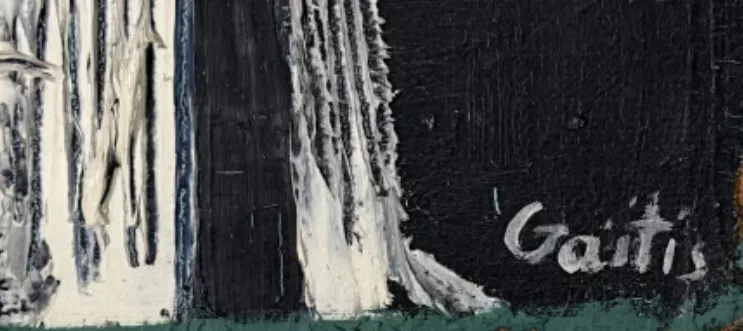
His signature
Not all of Yannis Gaitis's works are signed.
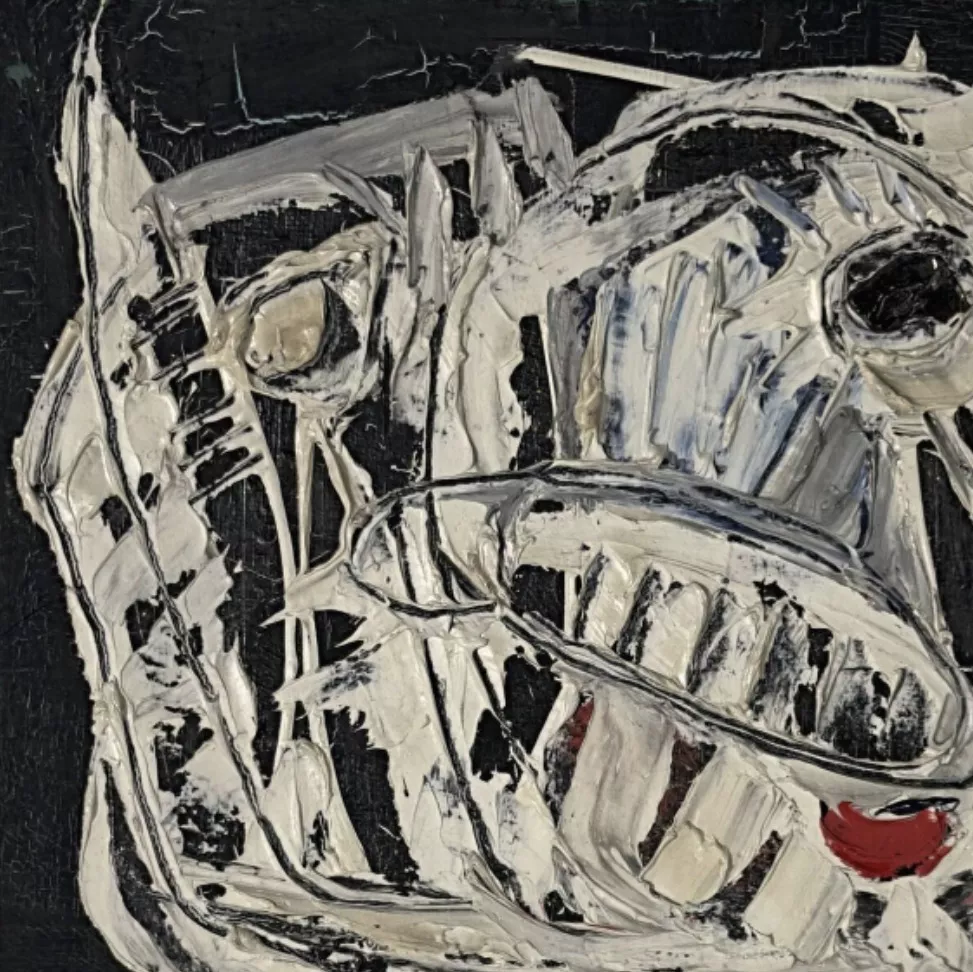
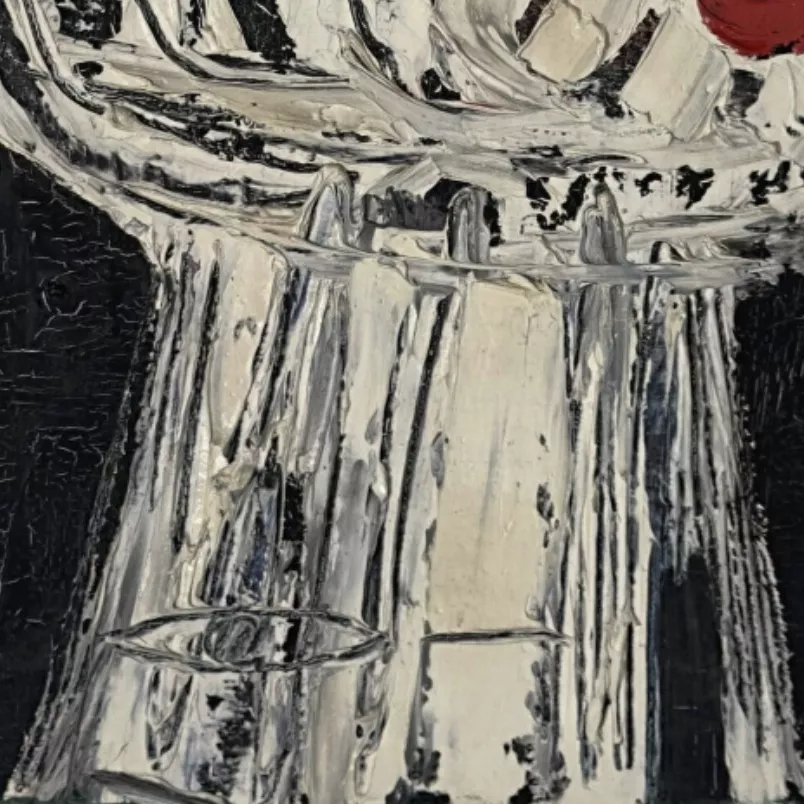
Although there are variations, here is a first example of his signature:
The Life of Yannis Gaitis
Cultural Background
Yannis Gaitis was born in Athens in 1923. With the support of his parents and his teacher Johan Romanos, a nonconformist artist, Gaitis quickly developed a talent for painting. A student at the Athens School of Fine Arts, his studies were cut short by World War II. Although he joined the Resistance, this period of great turmoil did not prevent the young man from painting.
In 1944, Yannis Gaitis organized his first solo exhibition in his own home. The precision of his brushwork quickly established his reputation. That same year, the artist met a large number of Greek painters, poets, and writers advocating for a certain artistic renewal. From that time on, Yannis Gaitis enjoyed being surrounded by others and opened his studio. His home thus became one of the few gathering places for emerging Greek artists.
Intellectual Circle
A few years after Liberation, the civil war broke out in Greece. Because of his political convictions, Yannis Gaitis was often forced to go into hiding. The artist used this period to continue his artistic exploration. Influenced at the time by Cubism and Surrealism, Gaitis evolved and exhibited his work publicly for the first time in 1947. He faced intense criticism and was forced to withdraw from the Greek art scene for a time.
It was only after the civil war that Yannis Gaitis’s art was finally accepted and recognized. Gaitis then joined the “Akrei” (meaning “Extremes”) movement. Through this, he demonstrated his faith in contemporary art and radically expressed his rejection of realism.
In the 1950s, Gaitis moved to Paris with his wife. Inspired by his new life in Paris, the artist produced and exhibited extensively. His style evolved constantly, always in search of the latest trends, shifting from abstract to figurative. From Gaitis’s art emerged “L’anthropakia,” a little figure that became his trademark. In the 1970s, his perfect stylization brought him international renown.

The Artist's Techniques
The Style of Yannis Gaitis
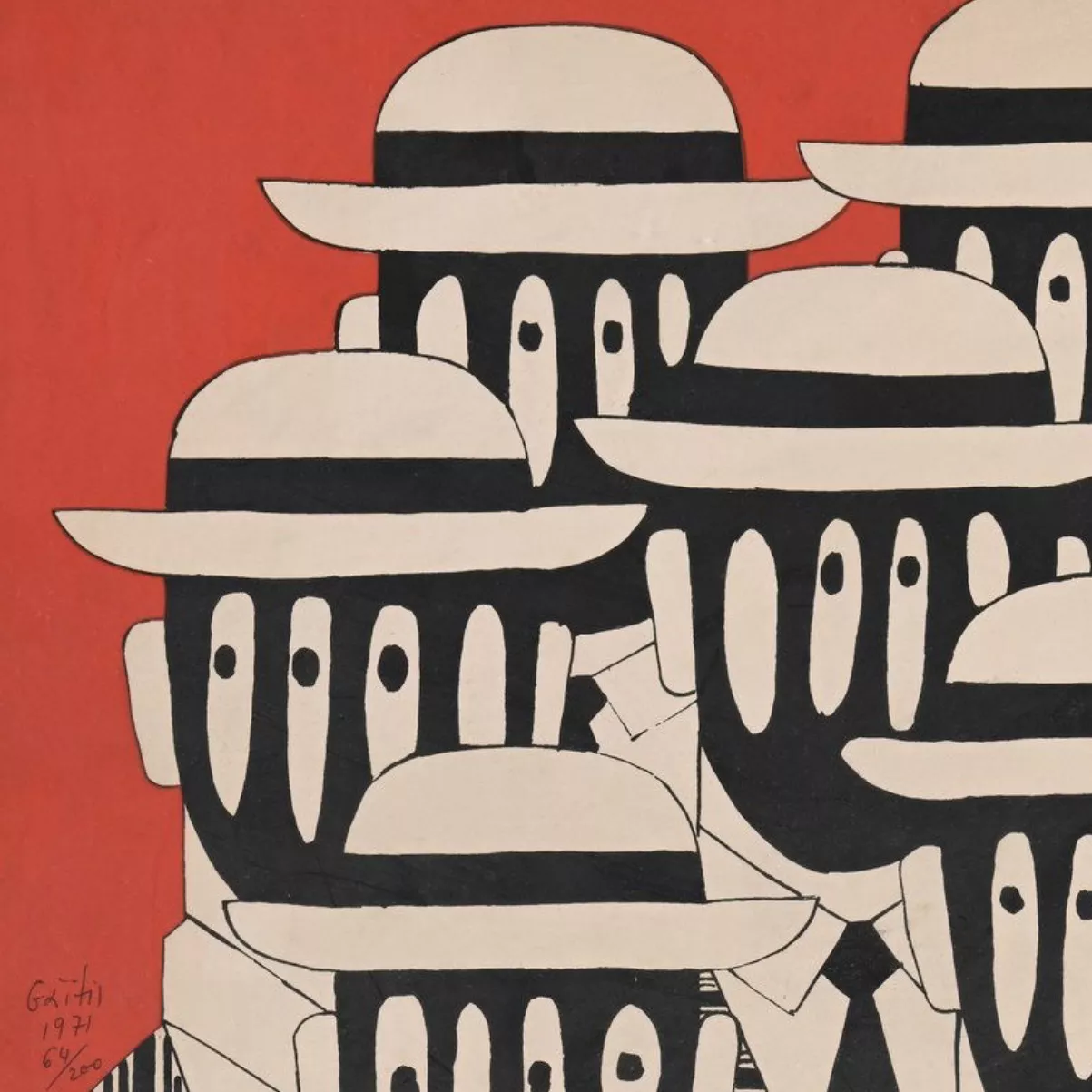
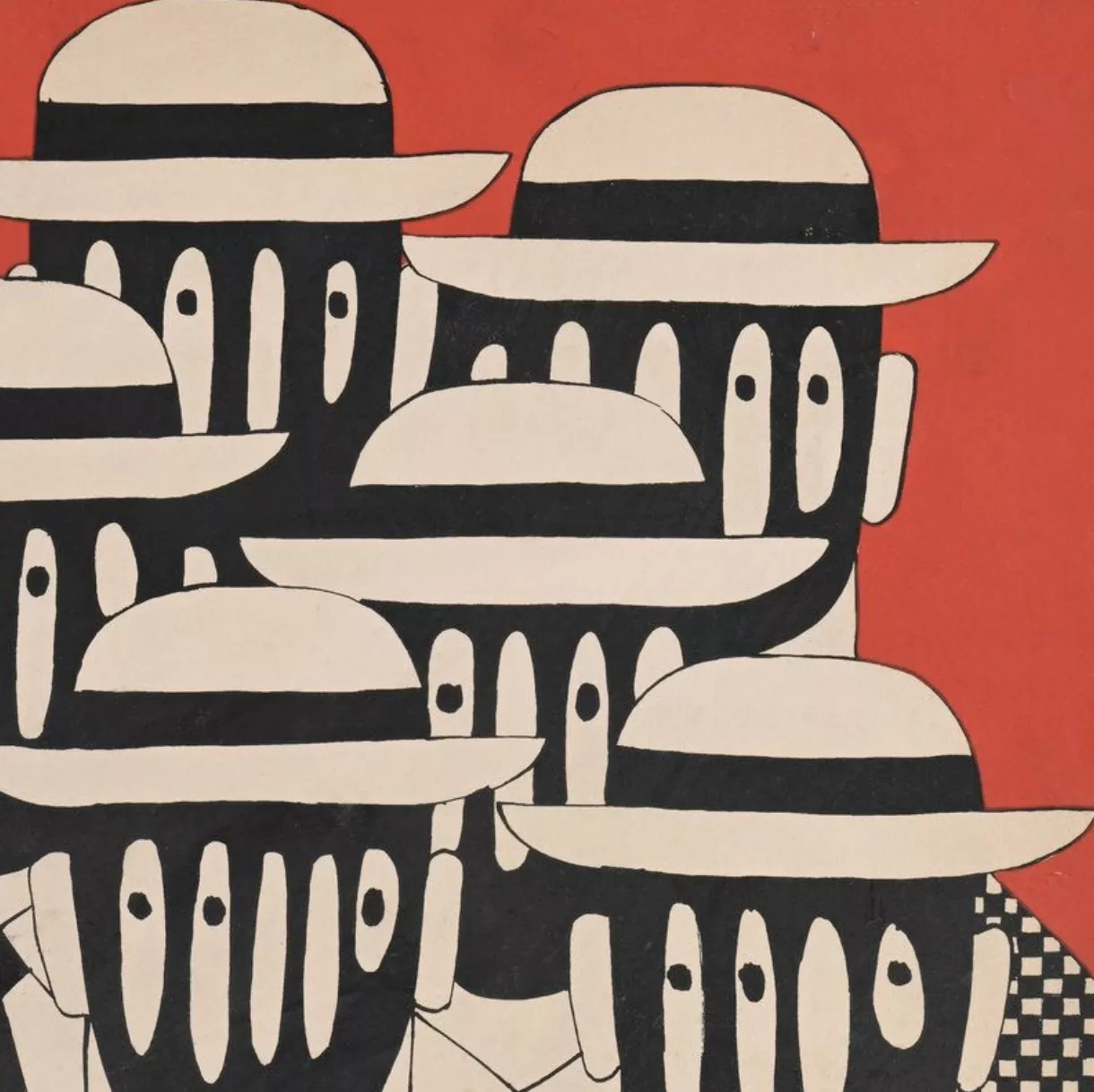
Yannis Gaitis is a Greek painter associated with the postwar European art scene, who developed a unique visual language at the intersection of figurative art and social criticism. He created an iconic recurring motif: the anonymous, standardized human figure, often dressed in a suit and hat.
He repeats these silhouettes in a serial pattern, evoking the standardization of the individual in modern societies. The forms are extremely simplified, reduced to geometric volumes and basic visual symbols. His palette is vivid and high-contrast, contributing to the graphic impact and immediate legibility of his compositions.
Focus on a Key Work
Men (series, 1960s–1970s)
These compositions are based on the repetition of identical figures, arranged in rows or grids. The stylized silhouettes are reduced to simple forms, reinforcing the effect of anonymity. The contrasting color palette accentuates the graphic and rhythmic quality of the whole.
There is no illusion of depth; the image is conceived as a structured flat surface. The repetition produces a visual effect, creating an impression of uniformity and saturation.
This work is emblematic of a visual critique of modernity, in which the human figure becomes a symbol of social standardization.
FAQ – How do you appraise a work by Yannis Gaitis?
1) What iconographic criteria specific to Yannis Gaitis are key?
The analysis focuses on the presence of repeated anonymous figures, often dressed in uniform costumes, which constitute a central motif in his work, as well as on the serial and rhythmic structure of the composition.
2) How significant is the critical and conceptual dimension of the work?
Particular attention is paid to the critical significance of these standardized figures, interpreted as a reflection on mass society and the standardization of behavior—a key factor in evaluating the work.
3) What role do the period of creation and the exhibitions play?
Dating the works allows us to distinguish the phases in the development of this formal vocabulary, with certain periods being more highly sought after due to their stylistic coherence and their visibility in international exhibitions.
Market Segmentation and Artist Rankings
Artwork Prices
Yannis Gatis is a unique figure on the European art scene, known for his repetitive aesthetic and critical take on mass society. He occupies a mid-range segment of the contemporary art market, with significant institutional recognition in Greece and France.
His iconic paintings (featuring repetitive figures) generally sell for between €20,000 and €120,000, with higher prices for large-format works. His sculptures represent an active segment often ranging between €10,000 and €60,000. His drawings and works on paper occupy a mid-range market between €2,000 and €15,000.
Factors Affecting Value
Compositions featuring repeated anonymous figures—including his small figures—form the core of the market and can fetch prices 30 to 70% higher than those of more experimental or less characteristic works.
Works from the 1960s–1980s, corresponding to the full maturity of the artist’s visual language, can fetch prices 1.5 to 2 times higher than those of his later works. The market is active in Europe, particularly in Greece and France, with regular sales and decent liquidity.
His signature
Not all of Yannis Gaitis’s works are signed.
Although there are variations, here is an example of his signature:
Expertise your property
If you own a work by Yannis Gaitis, feel free to request a free appraisal by filling in our online form. A member of our team of experts and licensed auctioneers will contact you to provide an estimate of the market value of your Gaitis work.
If you are considering selling your work, our specialists will also guide you through the various alternatives available to obtain the best possible price, taking into account market trends and the specific features of each work.
Estimate in less than 24h
Discover in the same theme

Rating and value of works, collages, paintings by Alfred Ret...
Alfred Reth was an Austro-Hungarian painter of the École de Paris. His collages, paintings and drawings are sought-after at auction.
Learn more >

Rating and value of works, drawings, paintings by Jean le Mo...
Jean Le Moal is a painter of the New School of Paris who has produced works that are sought-after on the auction market. They have a high
Learn more >

Rating and value of paintings and drawings by Le Van De
Van De is a painter from Vietnam's early modern period whose works command high prices and are highly valued at auction.
Learn more >
Works from the same period sold at auction


Secure site, anonymity preserved

Auctioneer approved by the State

Free and certified estimates
Frequently asked questions
-
Who is Yannis Gaitis, and what is his historical context?Yannis Gaitis (1923–1984) was a leading Greek painter on the post-World War II European art scene. Particularly active in the 1950s and 1960s, he settled in Paris in the 1950s, where his style evolved. He is associated with contemporary figurative art and the movement critical of mass society, developing a unique visual language based on the repetition of anonymous, standardized human figures.
-
How much do Yannis Gaitis's works sell for?Yannis Gaitis’s works sell for between approximately €10 and €100,000 at auction. His iconic paintings generally fetch between €20,000 and €120,000, his sculptures between €10,000 and €60,000, and his drawings between €2,000 and €15,000. Prices vary depending on the technique, format, period of creation, and the work’s iconic status.
-
How can you authenticate a work by Yannis Gaitis?To authenticate a work by Yannis Gaitis, we recommend having our state-certified auctioneers and experts perform a free appraisal. They examine the work’s authenticity and provenance and compare it to recent market results. This no-obligation process allows you to receive a reliable response within 48 hours.
-
Is this a good time to sell a work by Yannis Gaitis?Yes, now is a good time to sell a work by Yannis Gaitis. The market for his paintings, sculptures, and drawings remains active in Europe—particularly in Greece and France—with decent liquidity and a steady sales pace. Institutional recognition and collector interest remain strong for this major figure in modern art.
-
How does the appraisal process work at Auctie's?Appraisals at Auctie's are free and non-binding. Simply fill out an online form with information about your artwork and photos of it. Our experts and certified auctioneers will conduct a thorough appraisal and provide you with a reliable estimate of the market value within 48 hours. If you decide to sell, we’ll guide you through the process from the appraisal to the auction.
