



Rating and value of paintings by François Eberl

Key takeaways
- François Eberl, a leading painter of the École de Paris, sees his oil-on-canvas works fetch between €10,000 and €61,115 at auction, particularly his cabaret scenes from the 1920s–1940s.
- The artist’s drawings and watercolors are estimated at between €140 and €3,965, appealing more to collectors of Expressionist graphic art at lower price points.
- Parisian provenance, recent museum exhibitions, and the condition of the works are the main factors driving the value of his expressive figurative works.
If you own a work by artist François Eberl or based on his work and would like to know its value, our state-approved experts and auctioneers will guide you.
Our specialists will carry out a free appraisal of your work, and provide you with an accurate estimate of its value on the current market.
Then, should you wish to sell your work, we will direct you to the best possible arrangement to obtain the optimum price.
Artist's rating and value
A major artistic figure of the École de Paris, François Eberl is known for his figurative paintings and numerous marine pictures. His works were highly prized during his lifetime, and Eberl established himself as a sure bet on the art market.
Highly prized by collectors, his oils on canvas are the most popular in auction rooms, fetching tens of thousands of euros at auction.
As witness her painting Pardali (poisses), adjudged €61,115 in 2016, whereas it was estimated at €30,000 to €40,000.
Order of value from the most basic to the most prestigious
Technique used | Result |
|---|---|
Drawing - watercolor | From €140 to €3,965 |
Paintings | From €240 to €61,115 |
Estimate in less than 24h
The artist's work and style
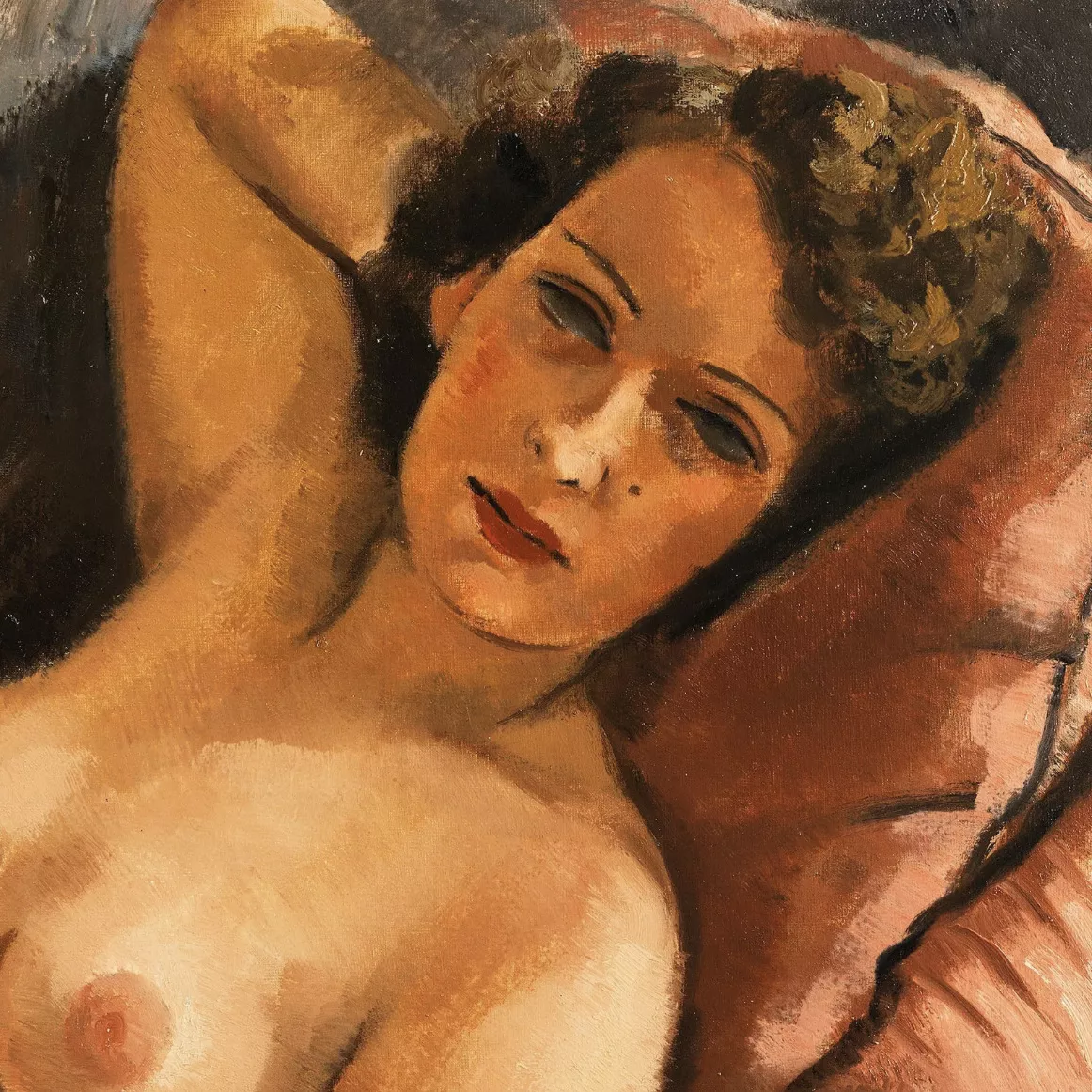
François Eberl's work is rooted in expressive figuration and exaggerated naturalism. He develops a committed figurative language, rooted in meticulous observation of reality, but highly stylized. His strokes are strong, sometimes outré, and express a desire for social truth, inherited from pictorial naturalism, while incorporating expressionist accents in the way he constructs faces and bodies.
His palette is rich and warm, and he uses an intense chromatic range, often dominated by reds, browns, ochres and blacks, which contribute to exalting flesh, the nocturnal atmosphere or excess. Color functions as a vehicle of sensuality but also of social critique, underscoring both seduction and decay.
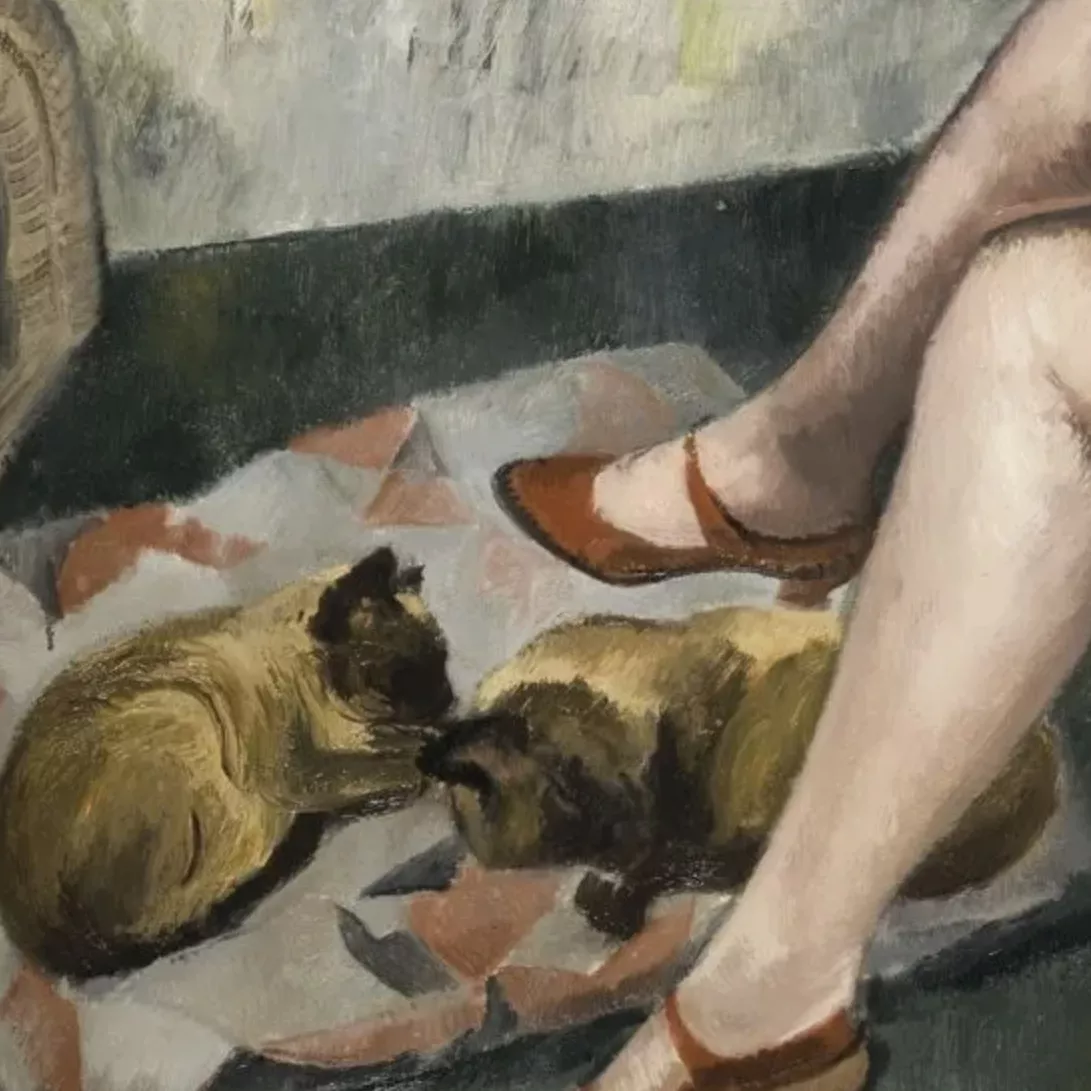
He has a generous treatment of pictorial matter, Eberl applies paint in dense, supple strokes, with sensitive brushwork. This carnal material gives his work an almost tactile presence, in keeping with themes of corporeality, pleasure, exhaustion and marginality.
His work focuses on popular scenes, cabarets, brothels, cafés, markets, where he depicts corpulent female figures, prostitutes, workers, beggars or artists, with a gaze that is both compassionate and incisive.
The tight framing, dark background, and frontal figures reinforce the effect of confrontation with the viewer. Bodies are treated in broad, sculptural volumes, often rounded with a deliberate accentuation of mass, especially in female figures.
This stylization accentuates the down-to-earth, sensual and sometimes grotesque dimension, while thwarting bourgeois aesthetic canons. Unlike academic realism, Eberl introduces a form of expressive distortion into his work, a taste for light-hearted caricature, and sometimes for social and political charge, which is in keeping with the tradition of European social realism.
He plays on a constant ambivalence between trivial beauty and moral denunciation. His style lies at the crossroads of Belle Époque realism (Steinlen, Forain, Toulouse-Lautrec), German Expressionism (notably Otto Dix) and paintings of Parisian nightlife.
He shares with them a similar desire to depict the reverse side of modern decor, between misery, excess and social truth. He also dabbles in drawing and engraving in addition to painting, he places this part of his work in a more graphic vein, marked by a nervous, incisive line.
These mediums extend his desire to document figures from the margins, with an economy of means but great expressive effectiveness.
The life of François Eberl
François Zdenek Eberl (1887 - 1962) was born in Prague into a family of Austro-Hungarian origin. His dual European and Latin culture formed a complex identity, which was reflected in the hybridity of his work, between rigorous observation and formal freedom.
He studied at the Academy of Fine Arts in Prague, then completed his training in Munich, where he attended the Royal Academy of Fine Arts. This dual training gave him a solid academic mastery, while opening him up to the emerging German Expressionist currents.
In 1908, he settled permanently in Paris, where he joined the artistic circles of Montmartre and Montparnasse, in full effervescence. He also frequented the circles of Cabaret Artistique, modern galleries and bohemian networks, which nurtured his taste for popular figuration.
Eberl became known in the 1910s for his portraits of prostitutes, cabaret scenes and characters from the margins, whom he chose to portray with realism and irony. He became one of the visual chroniclers of Parisian nightlife, in the tradition of Toulouse-Lautrec or Steinlein.
He volunteered for service during the First World War and was confronted with the violence of the front. This experience marked a darker inflection in his work, with increased attention to figures of suffering and social exclusion.
From the 1920s, Eberl exhibited regularly at the Paris Salons (Salon d'Automne, Indépendants) and in renowned galleries in France and abroad. He enjoyed a sustained reputation, particularly among collectors from the enlightened bourgeoisie, who were keen on expressive, non-conformist figurative art.
Eberl was close to republican and anti-fascist circles, and put his art at the service of social and humanist causes, without adopting a didactic militant stance. His work retains an ambivalence between social criticism and an aesthetic fascination with the margins.
His output was steady until his death in 1962, focusing on the same popular motifs in an increasingly synthetic style. Long relegated to the margins of the official history of modern art, he is today the subject of a patrimonial rereading, especially in the context of the critical re-examination of twentieth-century figuration.
Market segmentation and artist's rating
François Eberl is today identified as a major painter of the early 20th century Montmartre scene, associated with social, sensual and critical figuration, situated between popular realism, moderate expressionism and urban chronicler art.
His work stands out for its thematic coherence (prostitution, cafés, cabarets, poverty, female bodies) and pictorial richness, giving it a solid but still undervalued place on the modern figurative art market.
Eberl's market is well established, with a regular presence at public sales since the 1980s, but remains segmented according to period, format and typology of work. His most accomplished canvases, often dating from the 1920s-1940s, are enjoying growing interest, while late works or studies are attracting more moderate demand.
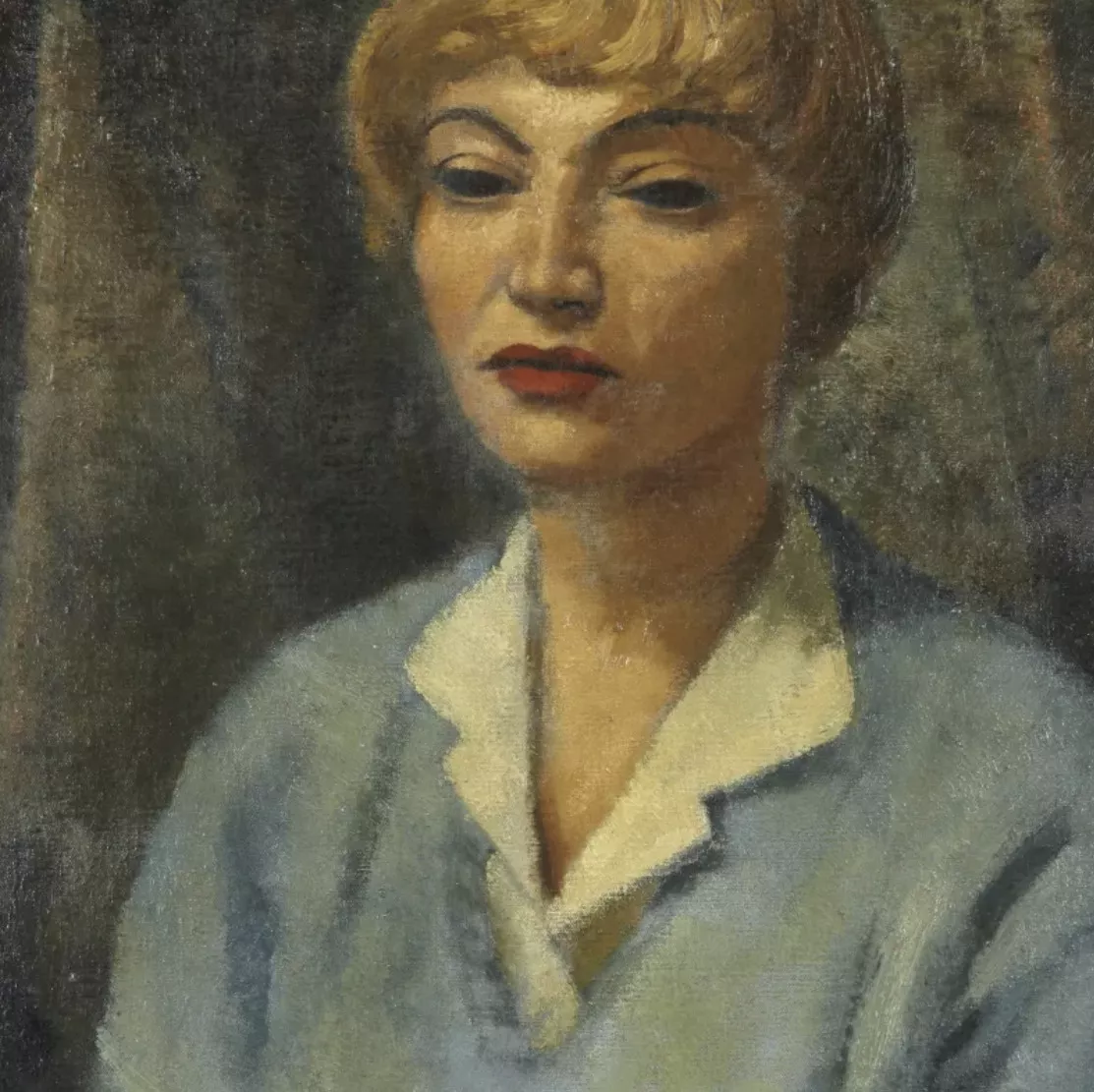
Large-format oils on canvas depicting cabaret scenes, prostitute figures, Parisian interiors or opulent still lifes form the core of the market. Expressive portraits and corpulent female nudes with generous brushstrokes are particularly sought-after.
Drawings, charcoal and works on paper are rarer and of interest to lovers of expressionist graphics, but at lower price levels. Early works (before 1920) and certain anecdotal paintings are less in demand.
Major works on canvas fetch between €10,000 and €40,000, with peaks in excess of €60,000 for museum compositions, rich in figures and well preserved. Secondary canvases and smaller formats fetch between €5,000 and €12,000.
Drawings, inks and works on paper sell for between €800 and €3,000, depending on subject, technique and provenance. Certain thematic sales (cabarets, prostitution, Parisian modernity) allow contextual enhancement, which favorably impacts prices.

Reproduction in catalogs raisonnés, old monographs or recent museum exhibitions (Musée de Montmartre in particular) are also vectors of valuation. The state of conservation, especially of works with thick pictorial matter, is a decisive criterion.
François Eberl's market thus attracts a public of traditional collectors, often sensitive to narrative, sensual or societal painting. His reputation is also supported by specialist dealers. Local institutions and museums with urban and social themes are also interested.
The artist is now well represented in several French and European public collections, but his work remains under-exploited in the narratives of modernity. The renewed interest in marginal figures, committed figurative artists and painters of the urban condition offers Eberl a significant potential for heritage and critical revaluation.
Francois Eberl's market is therefore part of a trend towards the rehabilitation of twentieth-century figuration, outside the abstract avant-gardes. Its historical roots (Montmartre, Paris of the Roaring Twenties), its proximity to great figures such as Gen Paul or Foujita and its thematic coherence make it a rising value, both for collectors and for institutions in search of alternative narratives to canonical modernity.
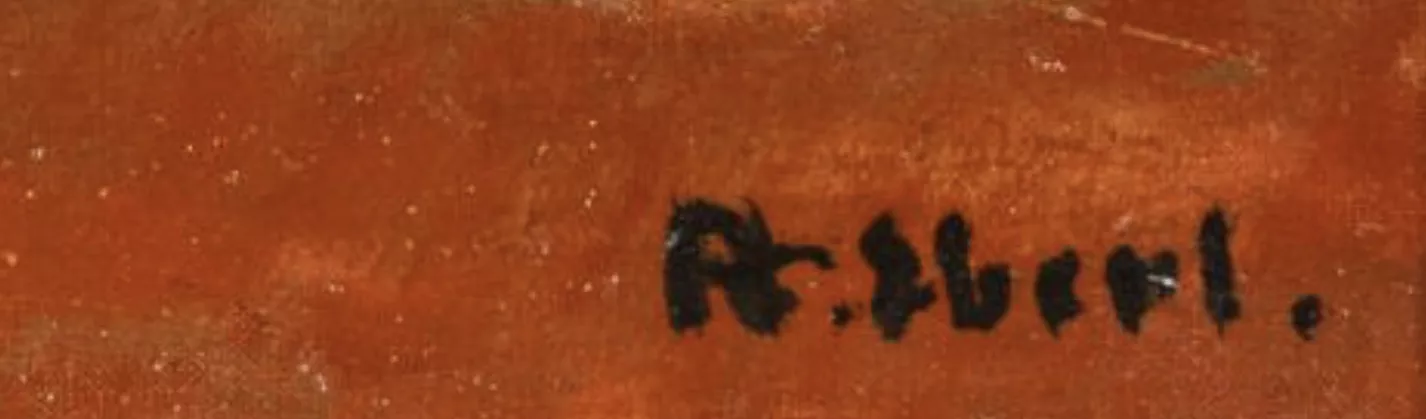
His signature
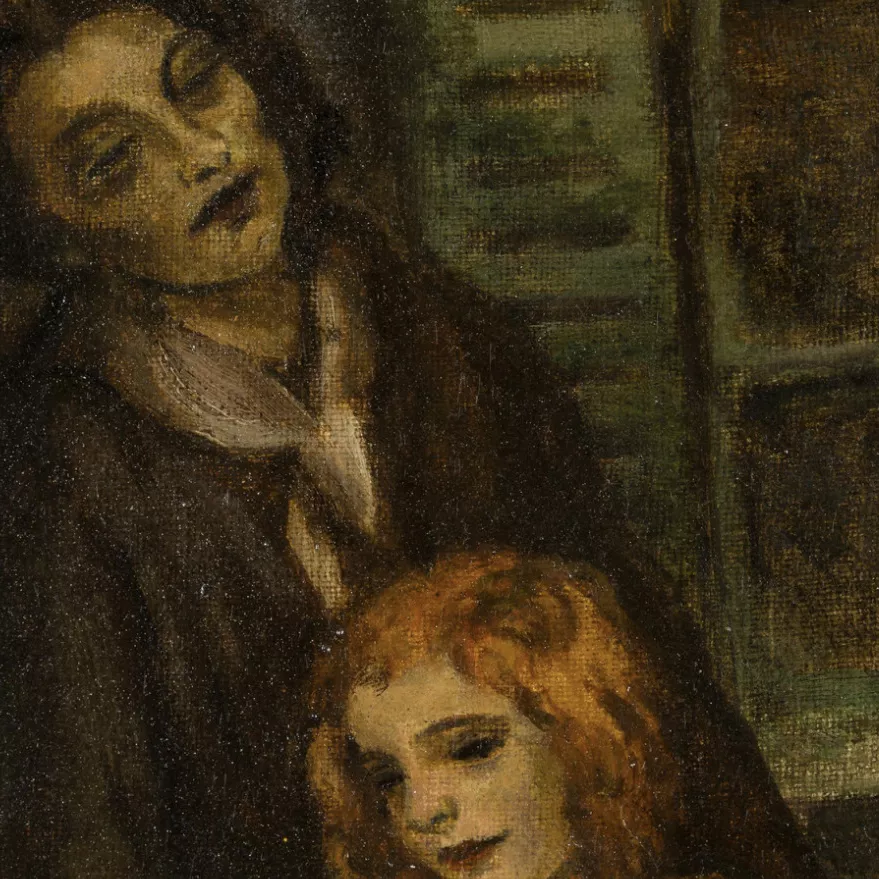
Not all of François Eberl's works are signed.
Although there are variations, here is a first example of his signature:
Expertise your property
If you own a work by François Eberl, don't hesitate to request a free appraisal by filling in our online form.
A member of our team of experts and certified auctioneers will contact you to provide an estimate of the market value of your work.
If you are considering selling your work, our specialists will also guide you through the various alternatives available to obtain the best possible price, taking into account market trends and the specific features of each work.
Estimate in less than 24h
Discover in the same theme

An Art Deco icon: Camille Fauré
Vases by the artist Camille Fauré are sought after worldwide. Camille Fauré in Limoges shines on the art market. Expertise and value in 24h
Learn more >

Rating and value of screens, paintings on lacquer by Pierre...
Pierre Dunand is a coppersmith and decorator who has produced a number of highly-regarded works of art that are valued at auction.
Learn more >

Rating and value of Amalric Walter paperweights, vides-poche...
Amalric Walter is a twentieth-century glassmaker who collaborated with Daum, producing works that are highly regarded and valued.
Learn more >
D'autres tableaux modernes figuratifs vendus aux enchères

Estimated 800 - 1.500
Jean Roger SOURGEN (1883-1978) Trees and dunes Oil on panel

Estimated 3.000 - 5.000
Georges LAPCHINE (1885-1951) The port of St Tropez Oil on canvas

Estimated 18.000 - 30.000
Charles CAMOIN (1879-1965) "Le Port de Marseille, 1928" Oil on canvas.

Estimated 1.500 - 3.000
Jean VANDEN EECKHOUDT (1875-1946), Basket of persimmons, Oil on canvas

Estimated 2.000 - 4.000
Charles LACOSTE (1870-1959) Starry night, Oil on paper mounted on canvas

Secure site, anonymity preserved

Auctioneer approved by the State

Free and certified estimates
Frequently asked questions
-
Who is François Eberl, and what is his significance in art history?François Eberl (1887–1962) was a major artistic figure of the École de Paris and the Montmartre art scene in the early 20th century. An expressive figurative painter specializing in cabaret scenes, portraits of prostitutes, and figures from the fringes of Parisian society, he followed in the tradition of Toulouse-Lautrec and Steinlen. His work, long marginalized, is now the subject of significant critical reevaluation as a testament to 20th-century urban and working-class life.
-
What are the typical prices achieved by François Eberl's works at auction?François Eberl’s major oil-on-canvas works sell for between €10,000 and €40,000, with prices occasionally exceeding €60,000 for rich, well-preserved museum-quality compositions. Secondary or smaller-format paintings sell for between €5,000 and €12,000, while drawings, ink works, and works on paper sell for between €800 and €3,000, depending on the technique and provenance.
-
How can I have a work by François Eberl appraised and verify its authenticity?At Auctie's, you can request a free, no-obligation appraisal by filling out our online form. A member of our team—composed of experts and state-certified auctioneers—will contact you within 48 hours to provide you with an accurate estimate of your artwork’s market value and verify its authenticity.
-
Is now a good time to sell a work by François Eberl?Yes, the market for François Eberl is experiencing a favorable resurgence. The growing interest in 20th-century figurative art, marginal figures, and socially engaged figurative artists—combined with the recent recognition of his work by museums—offers significant potential for appreciation. His major paintings from the 1920s through the 1940s are in particularly strong demand.
-
How does Auctie's assist sellers in selling a work by François Eberl?Auctie's guides you from the free initial appraisal all the way to the auction sale. Our specialists will advise you on the best options for achieving the highest possible price, taking into account market trends specific to François Eberl and the unique characteristics of your artwork (technique, period, condition, provenance).
