



Rating and value of sculptures and bronzes by Jean Joachim

Key takeaways
- Jean Joachim, a French animal sculptor born in 1905, is seeing his market value rise, with works ranging in price from €20 to €620,000.
- His bronzes, his preferred medium, sell for between €310 and €14,500, while his marble sculptures fetch up to €20,500, such as “Le Pélican” (1935).
- His minimalist sculptures, devoid of anecdotal details, represent a stable investment with no significant downward fluctuations since the 1930s.
If you own a work by or after the artist Jean Joachim, and would like to know its value, our state-approved experts and auctioneers will offer you their appraisal services.
Our specialists will carry out a free appraisal of your work, and provide you with an accurate estimate of its value on the current market.
Then, should you wish to sell your work, we will direct you to the best possible arrangement to obtain the optimum price.
Rating and value of the artist Jean Joachim
Jean Joachim is an animal sculptor who is fairly well known to fans of this type of work. He doesn't have a strong presence on the art market, but his works are enjoying growing success.
His legacy therefore consists mainly of sculptures made from several types of material, especially bronze. At present, the prices of his works are rising recurrently at the auctioneers' gavel.
His sculptures are prized above all by European buyers, and the price at which they sell on the art market ranges from €20 to €620,000, a considerable delta, which speaks volumes, however, about the value that can be attributed to Jean Joachim's works.
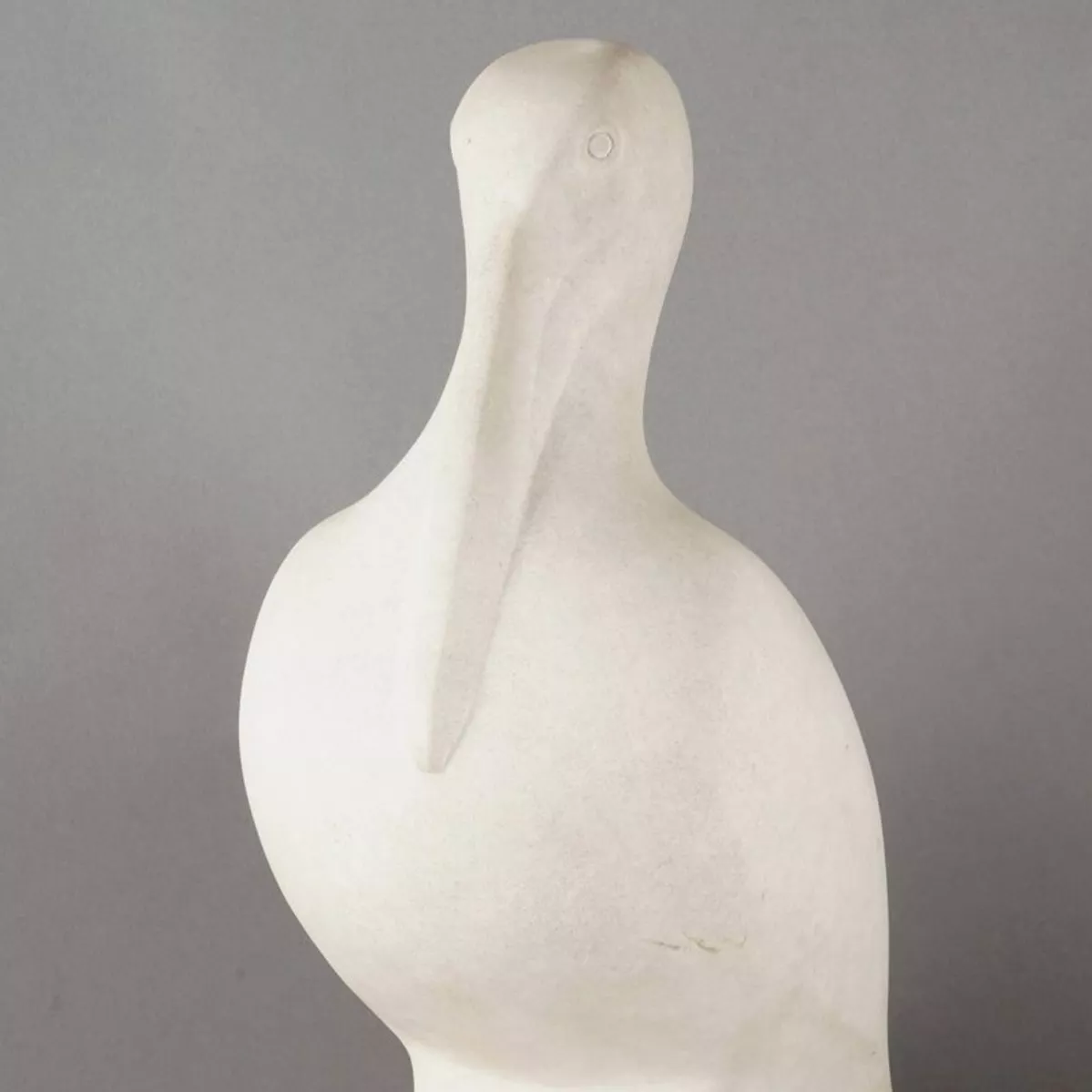
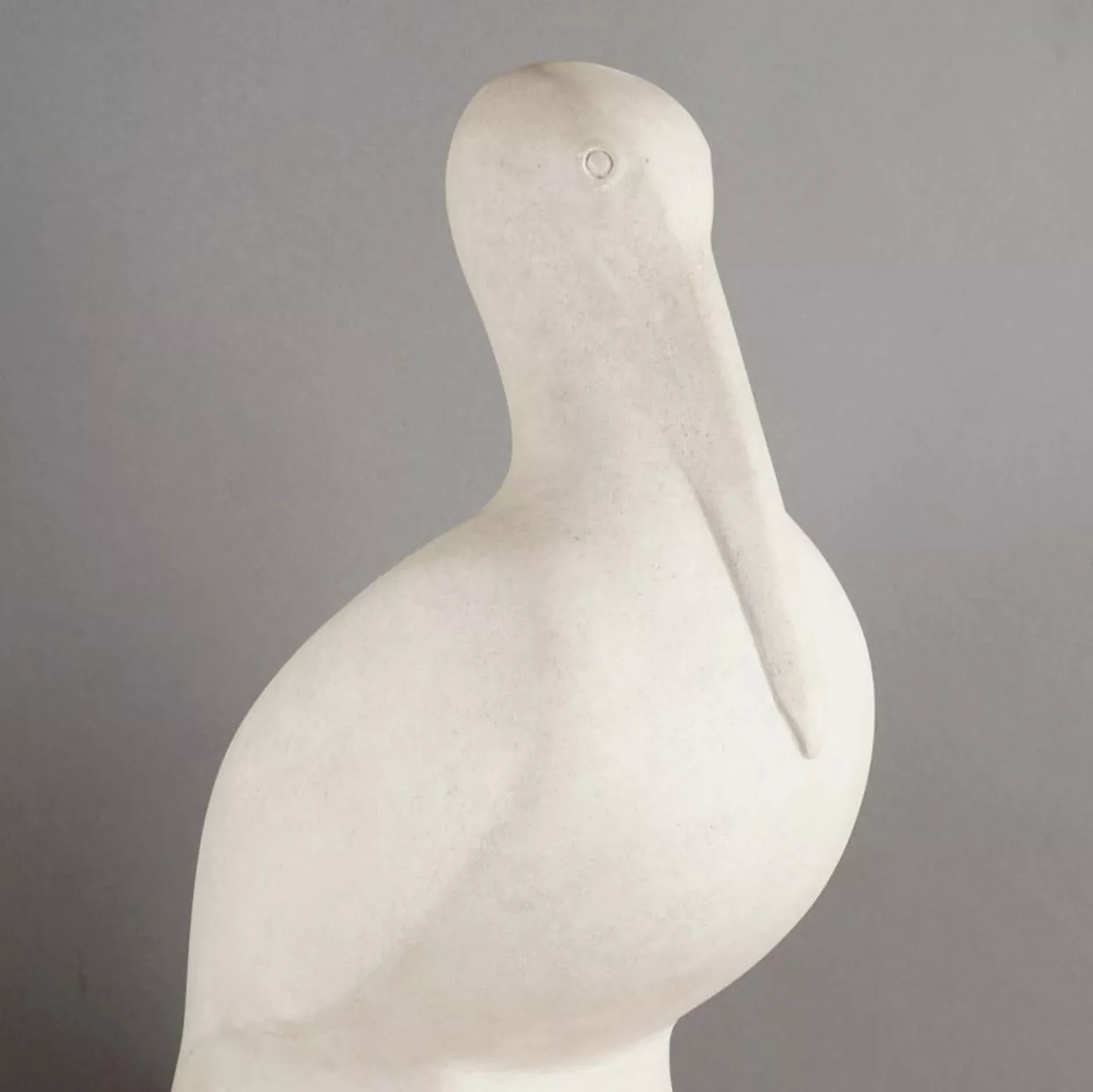
In 2025, one of his marble sculptures, Le Pélican, dating from 1935, sold for €20,500 while it was estimated at between €5,000 and €8 000.
Order of value from a simple work to the most prestigious
Technique used | Result |
|---|---|
Medal | From 20 to 160€ |
Plaster | From 60 to 800€ |
Ceramics - Stoneware | From 2,000 to 2,900€ |
Bronze | From 310 to €14,500 |
Marble | From €720 to €20,500 |
Estimate in less than 24h
Style and technique by artist Jean Joachim
In Jean Joachim's sculpture, modeling retains this property of suggesting weight, mass, anchoring to the ground.
But it's at the cost of a shift: he no longer seeks to reproduce the animal in its anatomical truth, he extracts from it a presence, a tension condensed into volume.
The line disappears, but what remains are broken surfaces, matt angles, planes that fit together without seeking fluidity. Bronze, often patinated in dark tones, does not smooth the form, but makes it vibrate, retaining it in a deliberately restrained density.
In his felines, bulls or horses (fig. 1), posture dominates over detail: no coat, no visible muscle, but a general balance, a taut structure, a movement frozen in the moment.
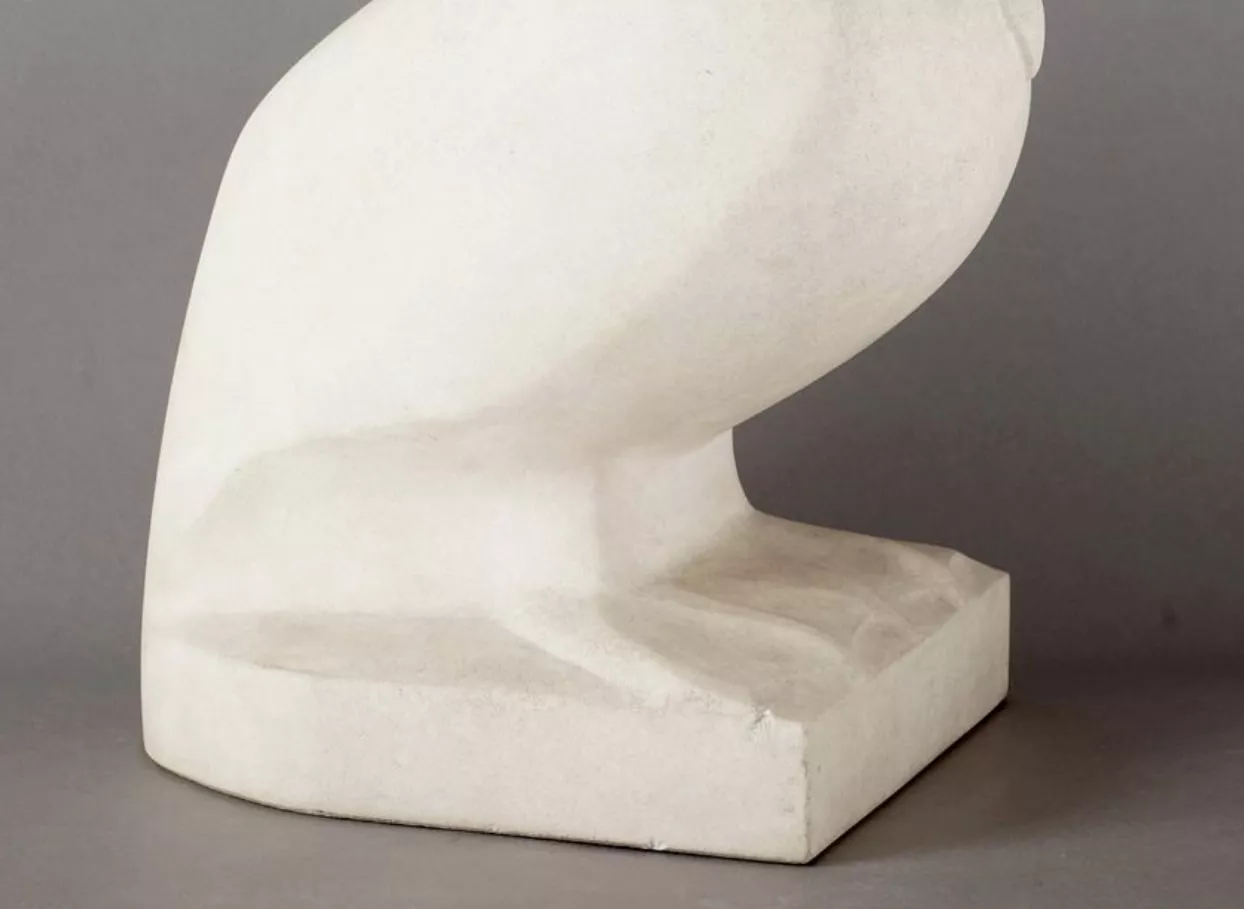
The base doesn't carry the animal, it extends it. The void around it becomes an extension of the mass. So, stripped of all anecdote, removed from the picturesque, Jean Joachim's sculpture closes in on the essential: a form, a gesture, a silent energy, offered to light as to matter.
The life of Jean Joachim
In Jean Joachim's career, classical training retains this function of mastering volume, of paying attention to structure.
This requires some changes: it doesn't lead to an academicism of representation, it opens up to a reflection on simplification, on the essential.
Born in 1905, trained at the École des Beaux-Arts in Paris, he initially followed the tradition of figurative sculpture, before devoting himself almost exclusively to the animal.
He quickly abandoned anecdotal detail in favor of compact form, taut line and inner balance. From the 1930s onwards, he exhibited regularly at the Salon des Artistes Français, where his works attracted attention for their restraint and restrained strength.
This gradual stripping down of detail became more pronounced over the decades. In the 1950s and 1960s, his animal bronzes - lions, horses, birds - imposed a synthetic, almost architectonic vision of the animal body. Nature, for him, is not imitated, it is constructed.
In contrast to naturalism, he favors the tension of form over descriptive precision. Thus, removed from the meticulous realism to which it seemed promised, his sculpture moves towards a more interior, more stable truth.
Until his death in 1990, Jean Joachim pursued this search for the right balance, for a silent density, which places his work in a discreet but lasting filiation, on the borders of classicism and abstraction.
Focus on Panthère marchant, Jean Joachim
In Panthère marchant (fig. 1), a bronze sculpture, Jean Joachim retains the silent frontality characteristic of his bestiary, the animal advancing at a slow pace, its body collected, taut.
But here, the dynamic of movement is not born from the multiplication of anatomical details, it is organized from full, closed volumes, linked with a rigorous economy of means.
The head, slightly turned, barely breaks the axis of the body; the legs, thick, almost geometric, extend a line of force that runs through the entire sculpture. The back, long and rigid, forms a continuous arch, stretching from one end of the skeleton to the other.
The coat is not indicated, the eyes barely hollowed out: all that matters is the animal's internal architecture, its weight in space. The bronze, with its deep brown patina, absorbs light more than it reflects it, accentuating the density of the form, its isolation in the void.
The surface, barely animated by a few irregularities, offers no focal point for the eye: it closes the sculpture in on itself, making it opaque, concentrated.
The base plays no decorative role; it is cut to the size of the animal, with no overhang, as if it were an extension of its material. The whole does not describe a naturalistic moment, it fixes a tension.
The movement is contained, almost thwarted, and it is this restraint that gives the sculpture its strength. No effects, no spectacular gestures, but a presence, compact, silent, self-sufficient, suspended between mass and movement.
Then, detached from any desire for illustration, the panther becomes pure form, organization of planes, geometric balance, closed density. Nothing weighs, but everything is heavy. Nothing soars, but everything is in tension.
Jean Joachim's imprint on his period
In Jean Joachim's work, the tradition of animal sculpture retains this ability to embody presence, to inscribe the living in the permanence of form.
But this loyalty to an established genre is not accompanied by any complacency: the animal is neither idealized nor naturalized, reduced to its lines of force, its silent weight in space.
This approach, at odds with the spectacular or narrative effects then in vogue, imposes another temporality: one of restraint, compact density, immobility in tension.
In a period marked by formal research into abstraction or experimentation with materials, Jean Joachim maintains a direct relationship with figuration, but without anecdote, without decoration. His sculptures don't describe a world, they extract it.
This refusal of illustration, this rigor of construction, give his work an autonomy that sculptors of his generation recognize.
Thus, detached from prevailing trends but faithful to a formal requirement, his sculpture leaves a discreet but tenacious imprint: that of a form that seeks not to seduce, but to endure.
Today, Jean Joachim's works are still rather discreet, but remain appreciated in the auction market.
More accessible than artists such as Petersen or Pompon, he remains a sought-after artist, particularly as his quotation doesn't fluctuate much, especially on the downside. Jean Joachim's sculptures therefore prove to be a profitable investment.
Animal sculpture in the 20th century
In animal sculpture of the XXᵉ century, figuration retains this function of capturing movement, restoring mass, inscribing the living in duration.
But this fidelity to the animal no longer involves meticulous description: it refocuses on the essential, on a synthetic, pared-down form, often stripped of all superfluous detail. Naturalism, without disappearing altogether, gives way to a search for structure, balance, contained tension.
At Pompon, the smooth surface erases the muscle; at Bugatti, the line fuses, carries away the material in a nervous rush; in Sandoz, stylization sometimes borders on abstraction. The subject remains, but slides towards a refined, concentrated image, detached from all decor.
Animal sculpture, without denying its foundations, is tightening up: it ceases to tell, it builds. Then, freed from its illustrative function, it retreats to form, material, the exact weighing of the body in space.
It is in this tension - between observation of reality and plastic elaboration - that its discreet but decisive evolution plays out throughout the century.
His signature
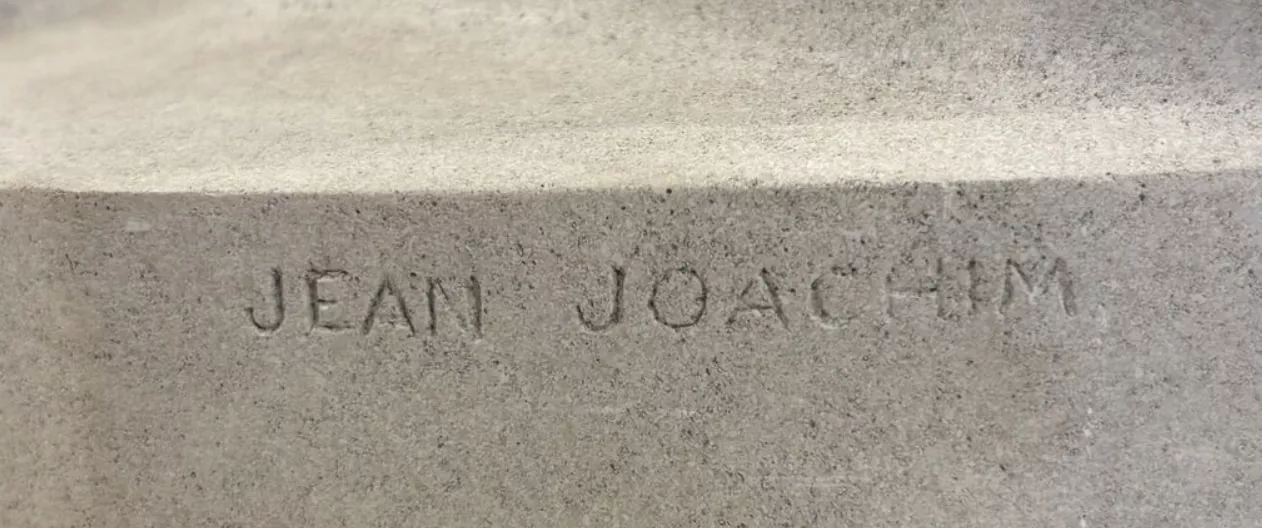
Jean Joachim signs his works most of the time. However, it's best to have them appraised if you think you might own some. Here's an example of his signature :
Knowing the value of a work
If you happen to own a work by or after Jean Joachim, don't hesitate to request a free appraisal using our form on our website.
A member of our team of experts and certified auctioneers will contact you promptly to provide you with an estimate of the market value of your work, as well as ad hoc information about it.
If you are considering selling your work, you will also be accompanied by our specialists in order to benefit from alternatives for selling it at the best possible price, taking into account market inclinations.
Estimate in less than 24h
Discover in the same theme

Rating and value of works, drawings, paintings by Chu Teh Ch...
Grand master of Chinese art, millionaire auctioneer, major figure of Asian abstract art: Focus on Chu Teh-Chun.
Learn more >

Rating and value of Jean Dunand's vases
Jean Dunand is a twentieth-century artist and coppersmith who is very successful at auction. His value is constantly rising. Estimate in 24h.
Learn more >

Rating and value of paintings by Amédée Ozenfant
Amédée Ozenfant is a cubist and purist artist of the 20th century, who produced works in a variety of media that are highly rated and valued.
Learn more >
D'autres bronzes modernes vendus aux enchères

Estimated Between €2,000 and €4,000
Edouard Marcel SANDOZ (1881-1971) curly stingray, bronze print

Estimated Between €1,500 and €3,000
Renato CARVILLANI (1896-1986), seated woman, gilded bronze print

Estimated Between €1,500 and €3,000
César BALDACCINI dit CESAR (1921-1998), Poule Cartier, bronze print

Estimated Between €10,000 and €20,000
Baltasar LOBO (1910-1993), female nude in bronze

Estimated 5.000 - 8.000
Igor MITORAJ (1944-2014), Bust of Asclepius, Green patina bronze sculpture

Secure site, anonymity preserved

Auctioneer approved by the State

Free and certified estimates
Frequently asked questions
-
Who is Jean Joachim, and what is his artistic style?Jean Joachim (1905–1990) was a French animal sculptor trained at the École des Beaux-Arts in Paris, known for his synthetic and streamlined bronze sculptures. His style is characterized by a gradual stripping away of anecdotal detail in favor of compact forms, taut lines, and an internal balance that prioritizes the architectural structure of the animal’s body over descriptive precision. He exhibited regularly at the Salon des Artistes Français beginning in the 1930s and maintained a direct connection to figurative art without narrative indulgence, placing his work at the intersection of classicism and abstraction.
-
What is the price range for Jean Joachim's sculptures?The prices of Jean Joachim's works vary widely depending on the medium and size, ranging from €20 to €620,000. Medals sell for between €20 and €160, plaster casts between €60 and €800, while bronzes fetch between €310 and €14,500 and marble sculptures between €720 and €20,500. For example, the marble sculpture “The Pelican” (1935) sold for 20,500 € in 2025, exceeding its initial estimate of 5,000 to 8,000 €.
-
How can you authenticate a work by Jean Joachim and determine its exact value?To authenticate and appraise a work by Jean Joachim, we recommend that you request a free, no-obligation appraisal from Auctie's using the form on our website. A state-certified expert or auctioneer will contact you promptly to examine the artwork and provide you with an accurate estimate of its market value within 48 hours, with no obligation to sell.
-
Is this a good time to sell a sculpture by Jean Joachim?Yes, now is a good time to sell a work by Jean Joachim. His sculptures are enjoying growing success on the market, with prices consistently rising at auction. His market value has proven stable and experiences few downward fluctuations, making him a profitable investment and more accessible than some masters of animal sculpture such as Pompon or Petersen.
-
How does the sale of a work of art work at Auctie's?The process begins with a request for a free, no-obligation estimate. After an evaluation by our experts and certified auctioneers, we guide you through the next steps by offering the best options for selling your artwork at the highest possible price, taking into account current trends in the animal sculpture market. Auctie's guides you from the initial appraisal through to the final sale.
