



Rating and value of Jacques Duval-Brasseur's furniture and sculptures

Key takeaways
- Jacques Duval-Brasseur's market value has risen sharply since 2010, driven by the popularity of 1970s organic design.
- His bronze and glass tables are among his most sought-after works, with prices ranging from €100 to €19,000 depending on complexity and condition.
- The artist (1934–2021) is known for his sculptural furniture pieces in gilded brass and hammered bronze, which blend fauna, flora, and functional structures.
If you own a work by or based on the artist Jacques Duval-Brasseur and would like to know its value, our state-approved experts and auctioneers will guide you.
Our specialists will carry out a free appraisal of your work, and provide you with a precise estimate of its value on the current market.
Then, if you wish to sell your work, we will direct you to the best possible arrangement to obtain the optimum price.
Rating and value of the artist
Thanks to his success with his innovative vision of architecture, and his conceptual talent, Jacques Duval-Brasseur has established himself since his lifetime as a sure value on the art market.
In recent years, the artist's rating has continued to evolve positively. Present on the French and American markets, Duval-Brasseur's furniture is among his most sought-after works.
In 2025, a bronze and glass table dating from 1970 sold for €19,000 while it was estimated at between €9,000 and €14,000, more than twice the low estimate.
Order of value from the most basic to the most prestigious
Technique used | Result |
|---|---|
Sculpture - volume | From €320 to €9,500 |
Table | From 100 to 19 000€ |
Lighting | From €400 to €19,200 |
Estimate in less than 24h
Artist's style and technique
Jacques Duval-Brasseur (1934 - 2021) is a French designer renowned for his furniture sculptures that blend decorative art, sculpture and design. His aesthetic lies somewhere between surrealism, late art nouveau, organic fantasy and 1970s sculptural design.
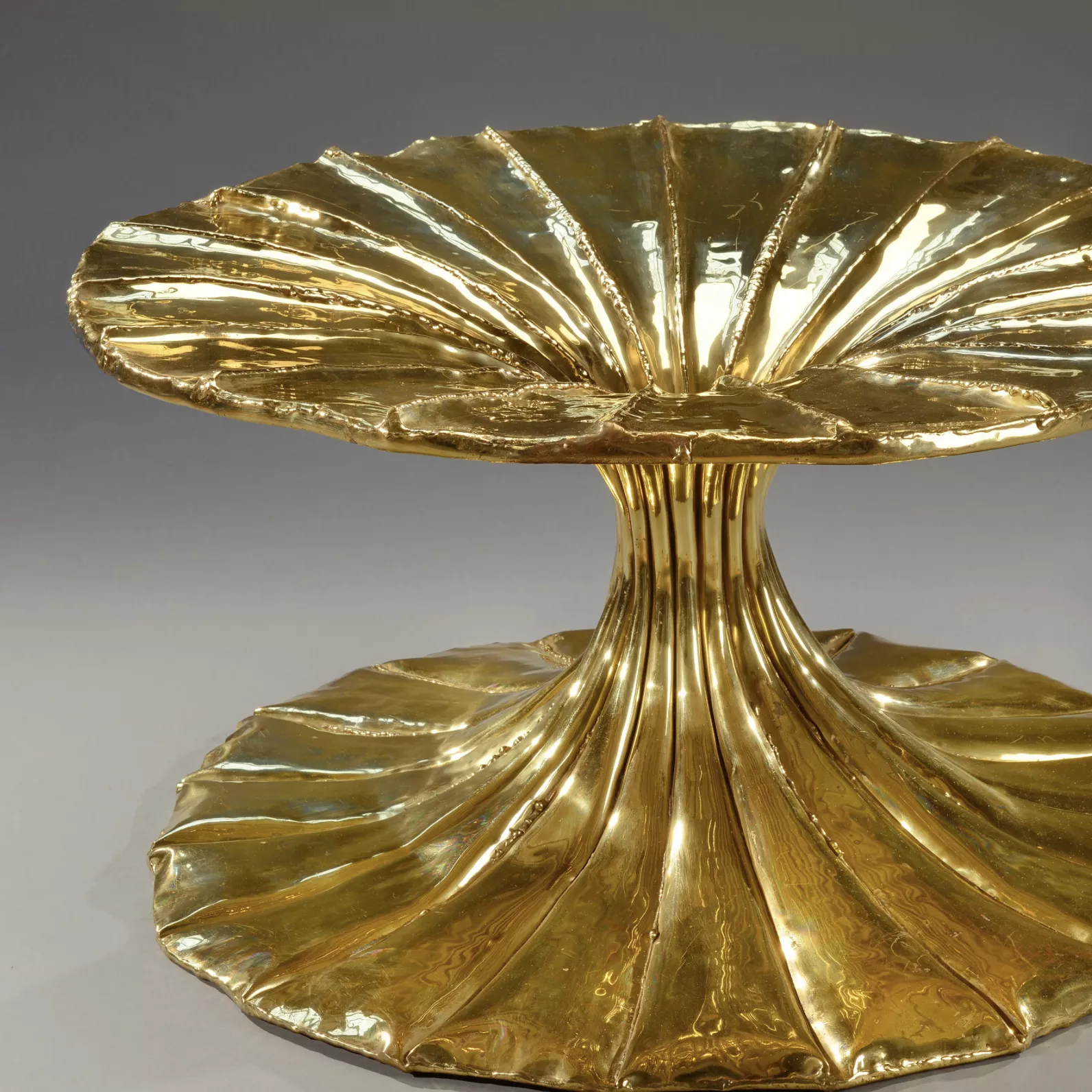
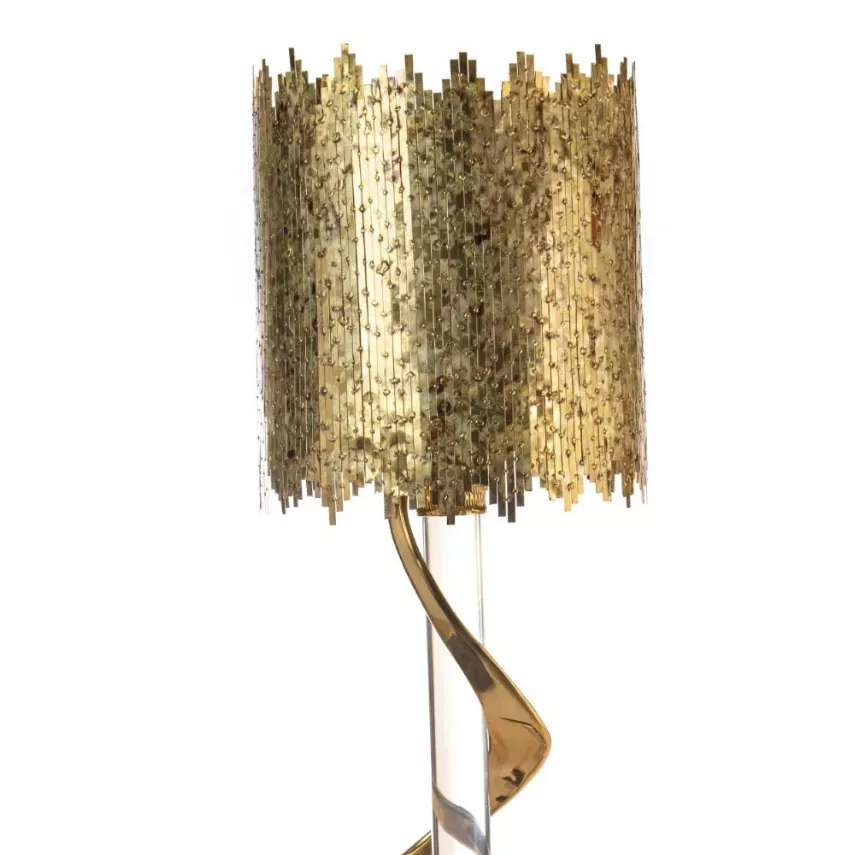
His style is immediately identifiable with animal or plant forms, integrated into functional objects (tables, consoles, lamps and mirrors). The dominant motifs are fantastical animals, plant forms and marine elements. He integrates flora and fauna into a utilitarian structure without breaking the sculptural momentum.
He achieves a deliberate fusion between decorative art and autonomous sculpture, furniture never reduced to pragmatic use. Tables become mythological scenes, lamps luminous trees and cosoles hybrid assemblages of half-animal, half-plant.
The object is conceived as a habitable sculpture and poetic environment. It shows a taste for sweeping curves, twists and organic lines inspired by nature. The rhythms are ascending, with palms and branches fanning out and slender silhouettes.
There is never strict symmetry, the compositions are dynamic and often spiral. He works in brass and gilded bronze, the artist's signature materials. He makes frequent use of associated materials : sandblasted glass, smoked glass, crystal tops for tables, shells, shagreen and natural elements in certain models.
The surfaces are striated, hammered and engraved, inspired by natural textures, with a sought-after contrast between smooth parts and chiseled areas to create plays of light. It is heir to natural art nouveau (Guimard, Gallé) for organic vitality. His work has a closeness to 1970s designer-sculptors (Ado Chale, Claude Lalanne, Garouste et Bonetti).
He is highly sought-after for the coherence of his sculptural universe, the prestige of his materials and the rarity of his pieces. Today, Duval-Brasseur is associated with the revival of organically inspired design-sculpture and decorative arts.
The life of Jacques Duval-Brasseur
Jacques Duval-Brasseur was born in 1934 in France, into a cultural environment conducive to the decorative arts and creative craftsmanship. His initial training was in applied arts and design, with an early interest in sculpture and working with materials.
He developed an early affinity for metallic materials and organic aesthetics. He began his career in the 1950s and 1960s, a period of renewal for French design. He became interested in the borderline between sculpture and furniture, a fundamental question that was to become the signature of his work.
His first creations were small decorative objects and sculptures combining metal and natural materials. In the 1960s and 1970s, he asserted his style based on fauna, flora, mythological forms and organic structures. He developed a unique sculptural vocabulary, working in brass, gilded bronze and hammered metal, which became his trademark.
He became one of the major French sculptural designers of the 1970s. He created tables, consoles, lamps and mirrors, all conceived as works of art. His organic, spectacular universe attracted an international clientele of private collectors, interior designers and specialized galleries.
He developed his own personal metalworking techniques: expressive chiseling, hammered textures, assembling metal sheets. He incorporates noble or natural materials such as smoked glass, crystal, shells and sometimes mineral fragments.
His approach is artisanal and demanding each piece is conceived as unique or in very limited production. He exhibits in France, Europe and the United States. His work appeals to collectors of 1970s design, organic art lovers and high-end decorators.
Market segmentation and artist rating
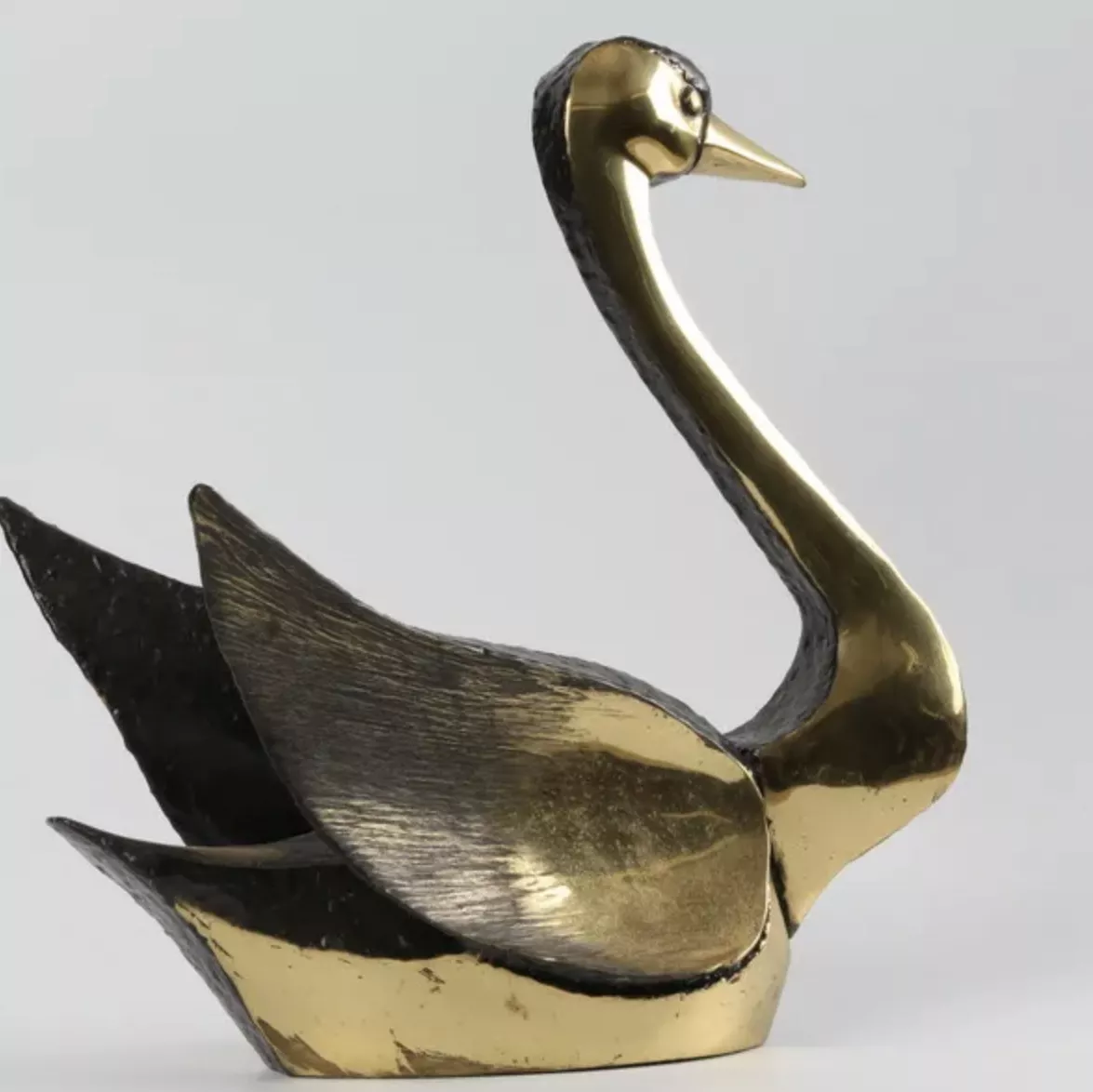
Furniture-sculpture is the main segment of circulating works, including tables, consoles, lamps, mirrors and pedestal tables. Stand-alone sculptures such as fantastical animals, plant forms, birds and hybrid creatures are also in demand.
Decorative objects are also found, smaller pieces in brass or gilded bronze, often one-offs or in very small series. Monumental pieces are rare, high-value creations destined for prestigious interiors.
Small formats (objects, table lamps, decorative sculptures) are part of an accessible, highly liquid segment. Medium formats (coffee tables, floor lamps, mirrors) form the core of the market for collectors of 20th-century design.
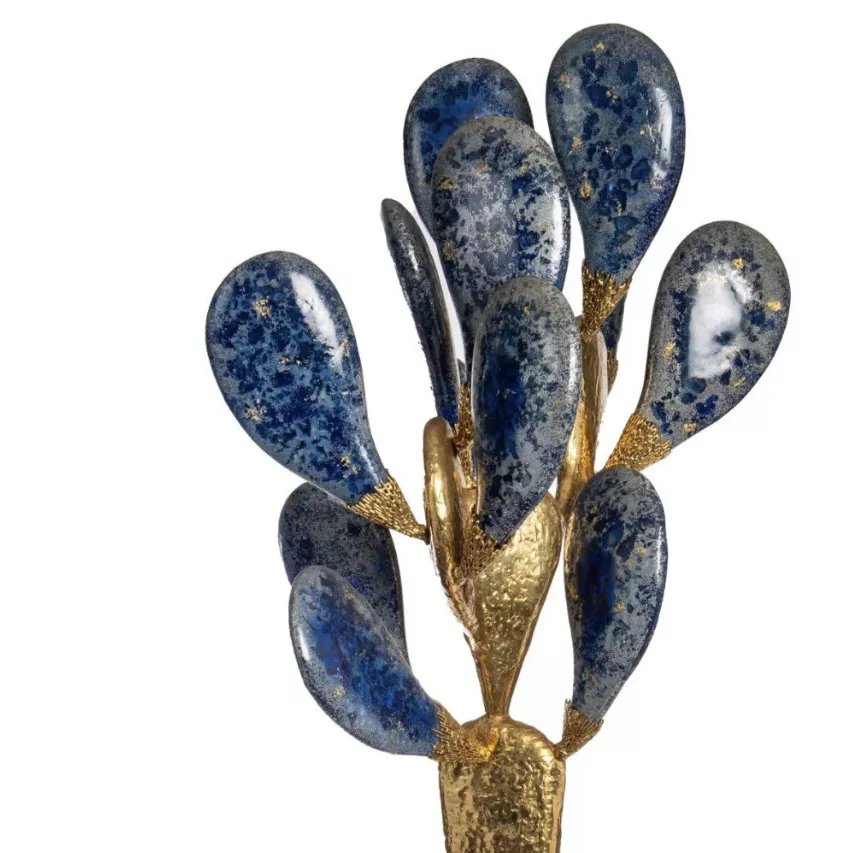
Large pieces (monumental consoles, large mirrors, wall sculptures) form a premium segment. The most sought-after subjects are palm motifs (plamiers, palm leaves, fan-shaped branches), stylized animals (eagles, fish, felines, fantastic brass birds), tables with sculptural legs, sculptural lamps and pieces from the 1970s, the period most prized for its organic radicalism.
Valuation criteria include originality and typicality (hammered brass, flamboyant organic forms, spectacular appearance), state of preservation, provenance, rarity, period and sculptural complexity.
The geographic market is mainly in France and Belgium, but also in the United States, the United Roayume, the Middle East and Asia.
Liquidity is very high for typical webbed or animal pieces, excellent for tables with carved gilded brass bases and good for lamps and mirrors. It is more variable for experimental or atypical pieces.
A strong revaluation of its value has taken place since the 2010s thanks to enthusiasm for 1970s design and spectacular organic pieces. Works in gilded brass, very much in vogue in contemporary interior design, are experiencing sustained demand.
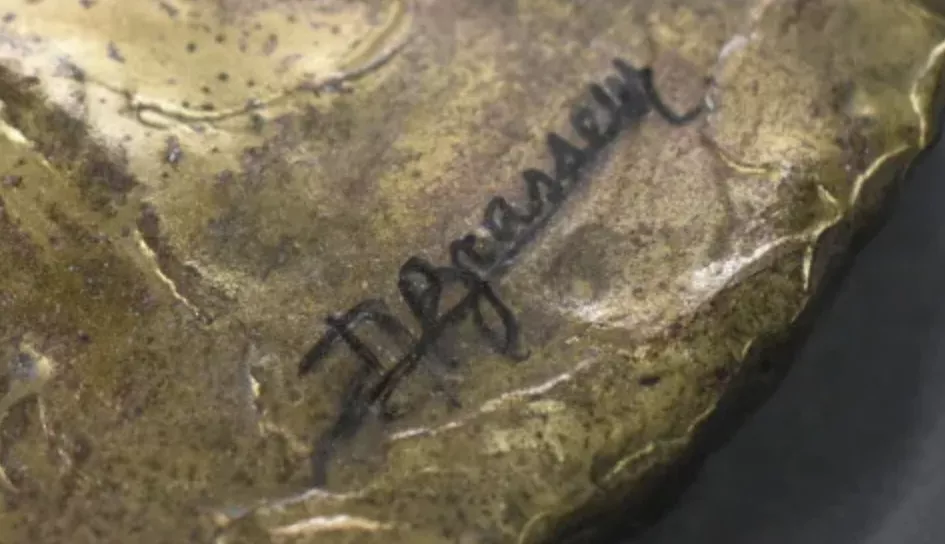
His signature
Not all works by Jacques Duval-Brasseur are signed. To be sure of the originality of your property, it is highly preferable to have it appraised.
Expertise your property
If you own a work by Jacques Duval-Brasseur, don't hesitate to request a free appraisal by filling in our online form.
A member of our team of experts and certified auctioneers will contact you to provide an estimate of the market value of your work.
If you are considering selling your work, our specialists will also guide you through the various alternatives available to obtain the best possible price, taking into account market trends and the specific features of each object.
Estimate in less than 24h
Discover in the same theme

Rating and value of works, fashion drawings, paintings by Ge...
Georges Barbier was a twentieth-century French illustrator and fashion designer who produced drawings and paintings listed at auction.
Learn more >

Rating and value of sculptures, bronzes and paintings by Pau...
Paule Bisman is a 20th-century Belgian sculptor and painter. Her works reach unprecedented heights on the art market.
Learn more >

Ratings and values of paintings by Otto Wols
Otto Wols is one of the leading exponents of informal art and lyrical abstraction, whose value increased by 27% in 2025. Estimated 24h.
Learn more >
D'autres oeuvres de mobilier design vendu aux enchères

Estimated 15.000 - 20.000 €
Charlotte PERRIAND (1903-1999) - Suite of 6 "berger" stools.

Estimated 2.500 - 5.000
Percival LAFER (b. 1936) Three-seater sofa model MP 211, circa 1975

Estimated 3.000 - 5.000
Eleanora PEDUZZI-RIVA (born 1939) Ueli BERGER (1937-2008) Klaus VOGT (born 1938) HEINZ ULRICH (20th) DE SEDE (publisher) Modular sofa model DS-600

Estimated Between €4,000 and €6,000
Pierre Chapo (1927-1987) solid elm table

Estimated Between €2,000 and €3,000
Pierre GUARICHE (1926-1995) Suite of 6 4-sided chairs

Estimated 4.000 - 6.000
Roger CAPRON (1922-2006) Soleil rectangular coffee table, circa 1965

Secure site, anonymity preserved

Auctioneer approved by the State

Free and certified estimates
Frequently asked questions
-
Who is Jacques Duval-Brasseur, and what is his artistic style?Jacques Duval-Brasseur (1934–2021) was a French artist known for his sculptural furniture pieces that blend decorative art, sculpture, and design. His distinctive style blends surrealism, late Art Nouveau, and 1970s sculptural design, characterized by organic forms inspired by flora and fauna integrated into functional objects (tables, lamps, mirrors). He primarily worked with brass and gilded bronze, using hammered and chiseled textures that create plays of light, making each piece unique and highly recognizable.
-
What is the price range for Jacques Duval-Brasseur's works?Prices vary considerably depending on the type of item: three-dimensional sculptures range from €320 to €9,500, tables from €100 to €19,000, and light fixtures from €400 to €19,200. The most sought-after pieces are those from the 1970s featuring palm or animal motifs in gilded brass. Smaller pieces are more affordable, while monumental pieces and prestigious console tables command the highest prices.
-
How can you authenticate and appraise a work by Jacques Duval-Brasseur?To authenticate a work of art and determine its exact value, we recommend that you request a free, no-obligation appraisal from Auctie's. Our state-certified experts and auctioneers will examine your item and provide you with a detailed estimate of its current market value within 48 hours. This step is particularly important because not all works by Duval-Brasseur are signed.
-
Is this the right time to sell a work by Jacques Duval-Brasseur?Yes, this is a good time. Since the 2010s, the artist’s market value has seen a sharp rise thanks to growing enthusiasm for 1970s organic design. His gilded brass works are particularly sought after in contemporary interior design, and market liquidity is very high for his signature pieces (palm-leaf motifs, stylized animals, and tables with sculpted legs).
-
How does the sale of a work of art work at Auctie's?Auctie's supports you every step of the way: start with a free, no-obligation appraisal of your artwork by an expert. If you decide to sell, our specialists will guide you through the various options available, taking into account market trends and the specific characteristics of your item, to help you achieve the best possible price at auction.
