



Value and quotation of vases, pâte de verre creations by Emille Gallé

Key takeaways
- Gallé pâte de verre pieces sell for between €150 and €190,000, with a heraldic dragon fetching €190,000 in 2019.
- Gallé pâte de verre vases are estimated at between €170 and €9,200, while sculptures range from €150 to €190,000.
- The pâte de verre technique, reinvented by Daum and adopted by Gallé, allows for the creation of approximately 200 identical vases using the lost-wax casting method.
If you own a work in pâte de verre by or after the Gallé glassworks, and would like to know its value, our state-approved experts and auctioneers will offer you their appraisal services. Our specialists will carry out a free appraisal of your work, and provide you with a precise estimate of its current market value. Thereafter, if you wish to sell your work, we will guide you towards the best possible arrangement to obtain the optimum price.
Rating and value of glass paste pieces Gallé
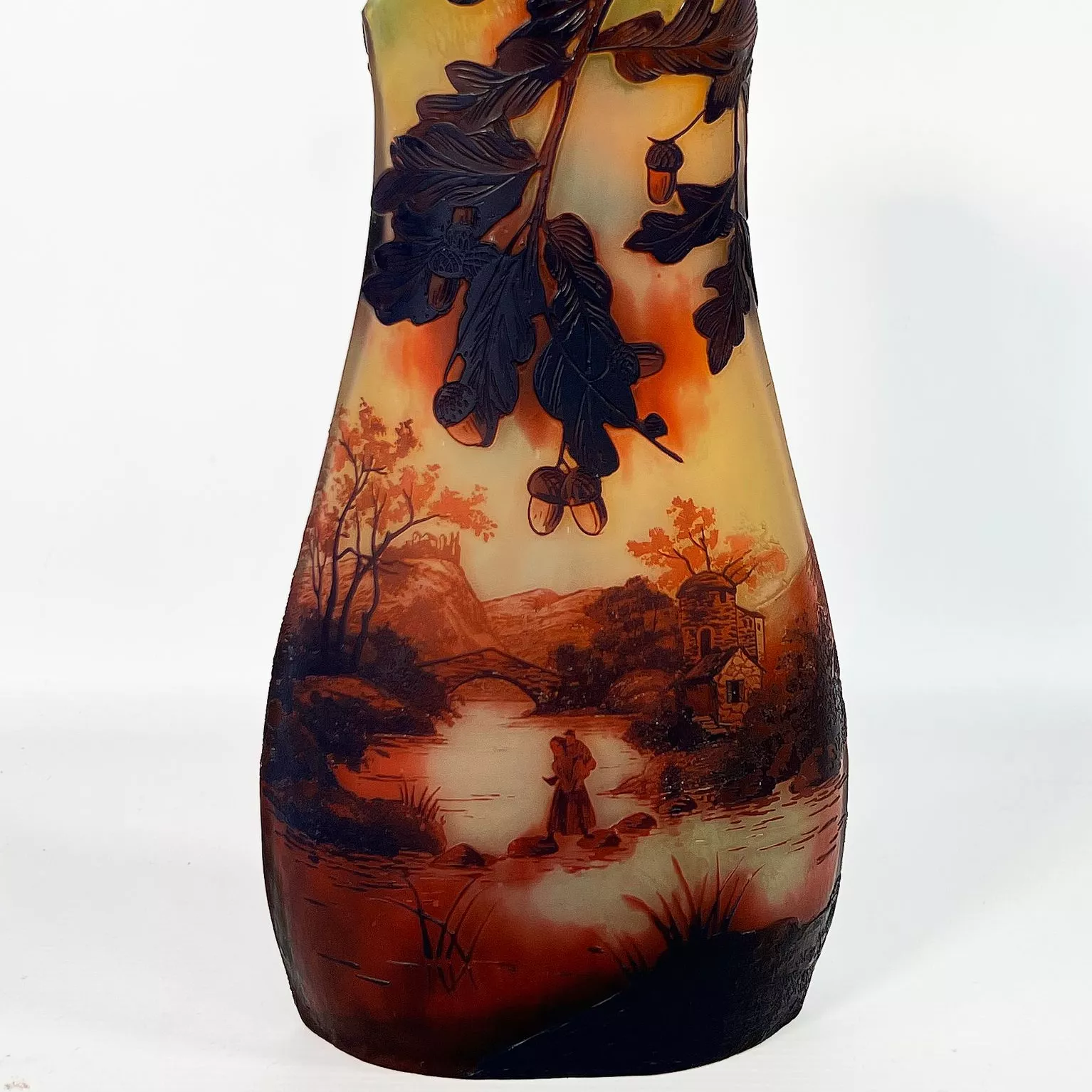
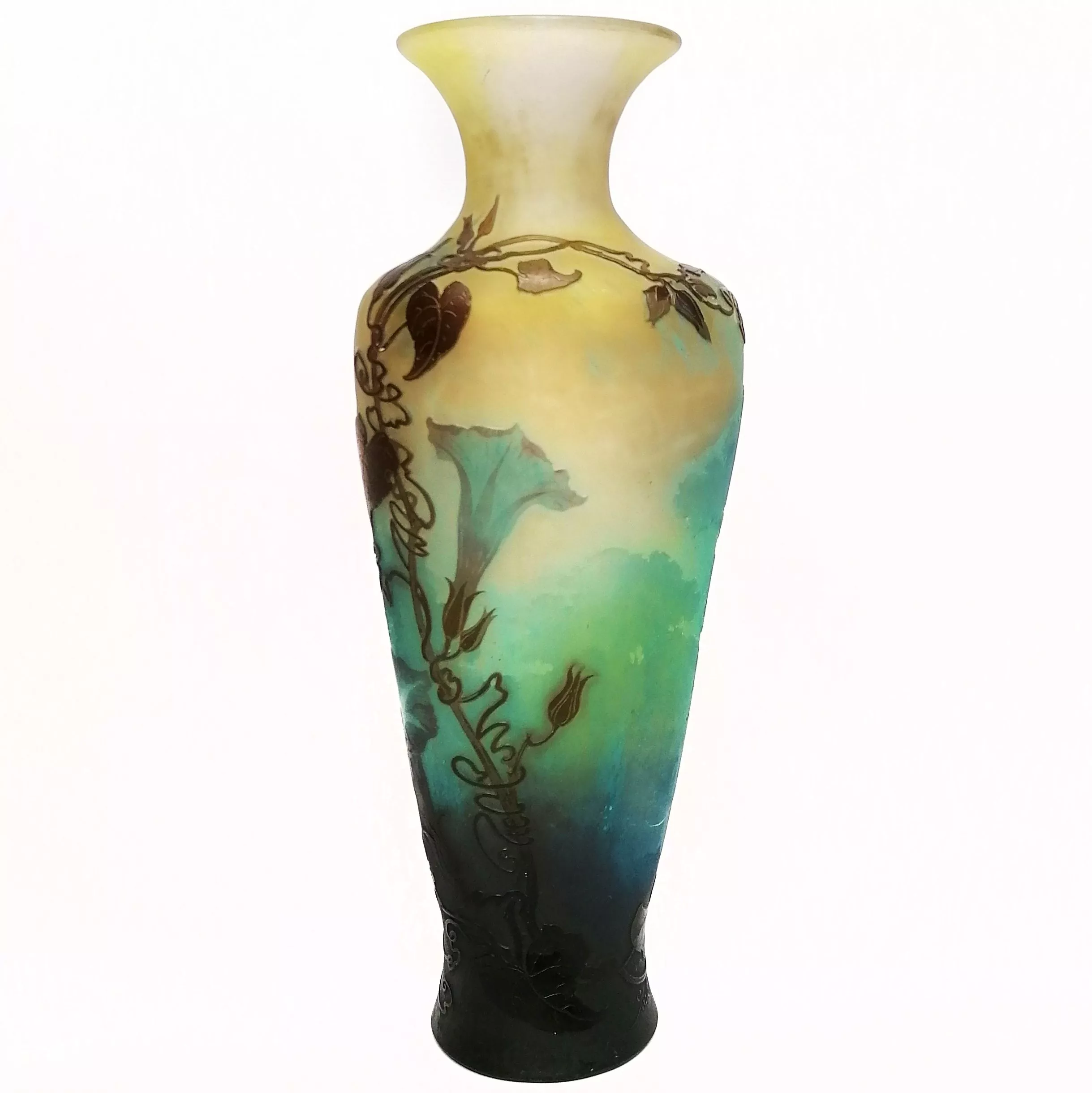
Gallé is a French glassmaker quite well known to lovers of glass services. If you own one, it may be worth more than you think. On the art market, prices for works in Gallé glass paste can be very high at the auctioneer's gavel.
Her works in pâte de verre are particularly prized, and the price at which they sell on the art market ranges from €150 to €190,000, a fairly substantial range, but one that says a lot about the value that can be attributed to pâte de verre Gallé.
In 2019, a heraldic dragon in pâte de verre sold for €190,000.
Order of value from a simple work to the most prestigious
Object type | Result |
|---|---|
Miscellaneous pieces (decanters, bouquetière) | From €1,300 to €1,750 |
Glass paste vases | From €1,170 to €9,200 |
Glass paste sculpture | From €150 to €190,000 |
Estimate in less than 24h
Style and technique of Gallé glassware
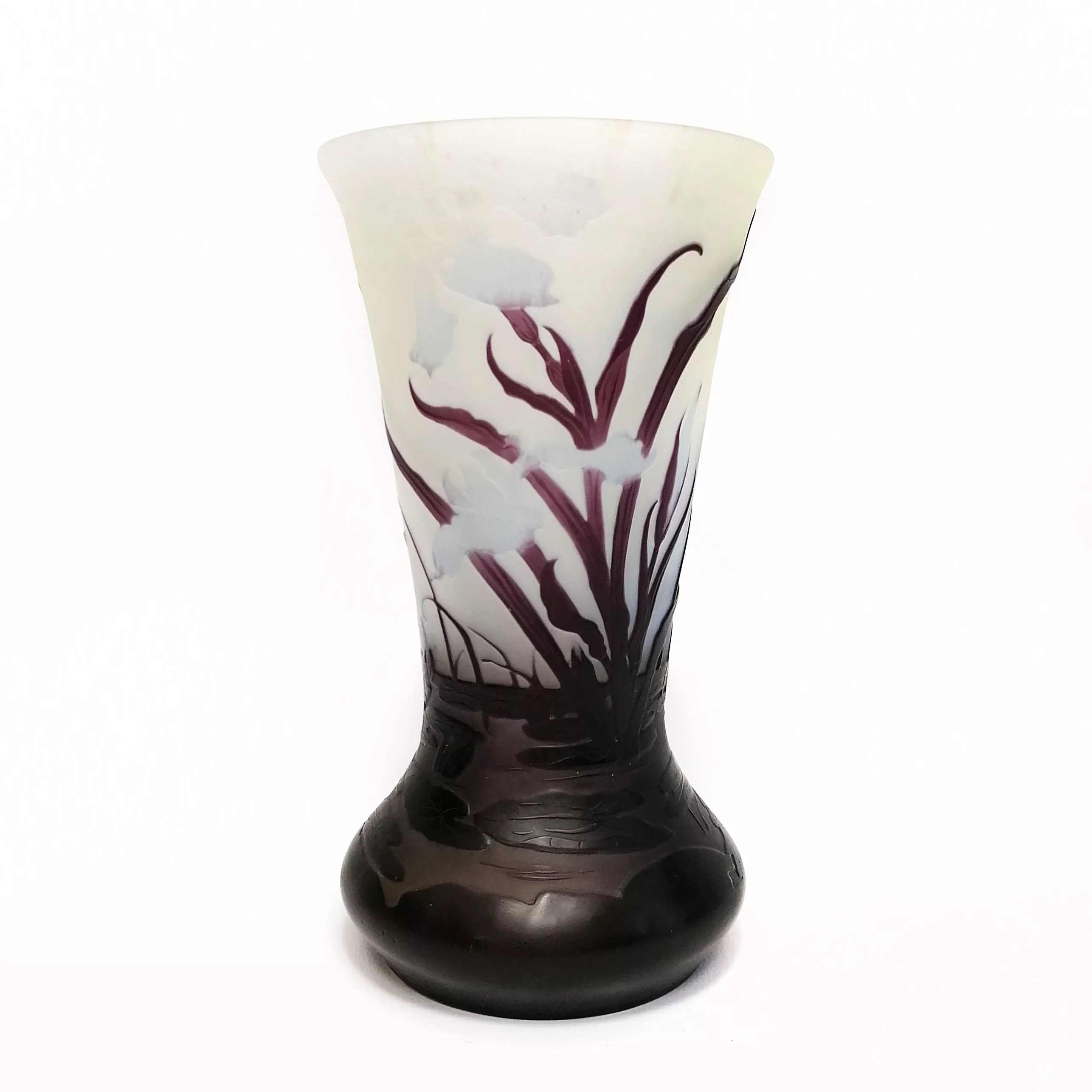
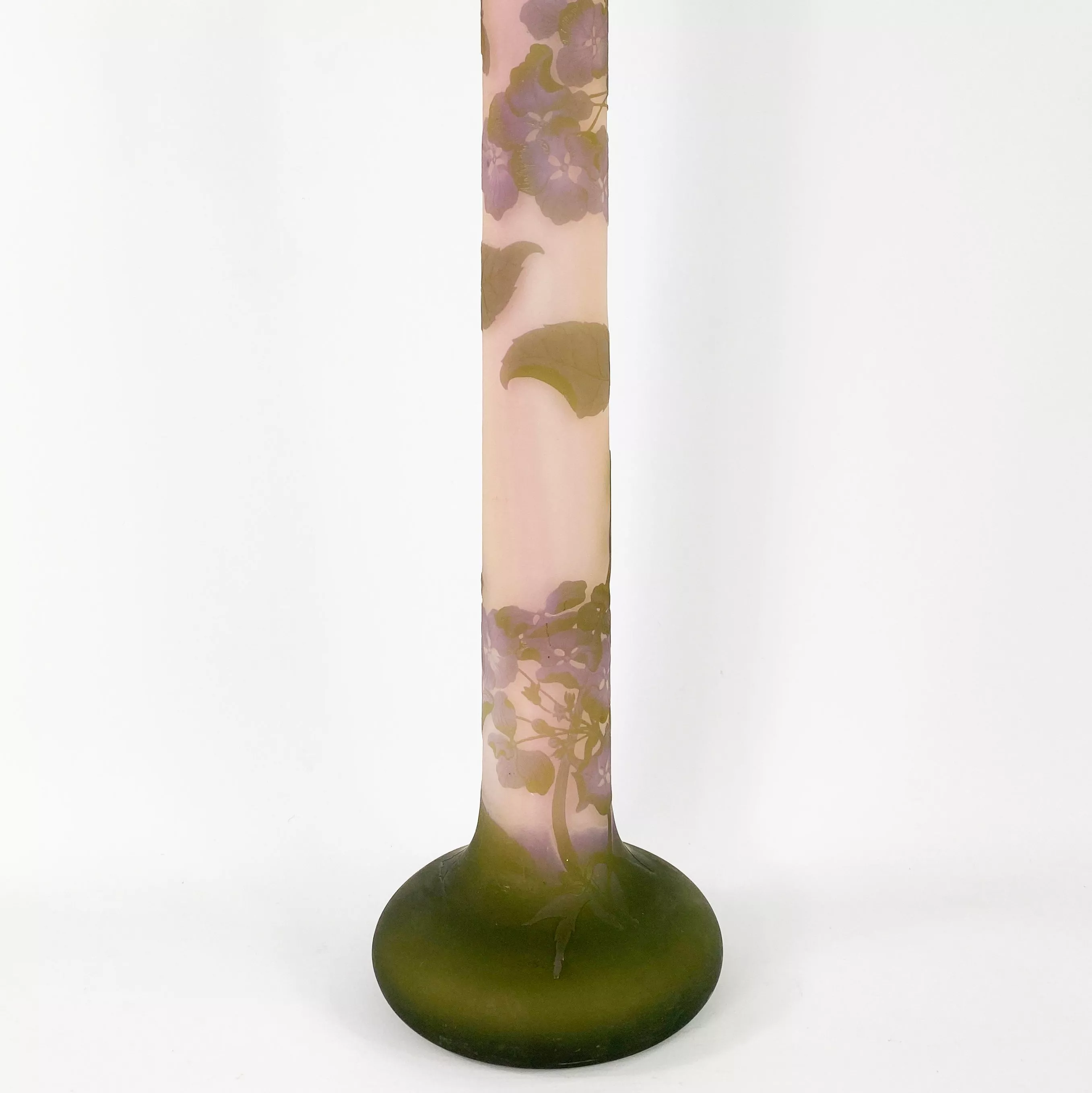
Gallé glassware is part of the Art Déco trend. Émile Gallé set up his factory in Nancy, and inspired Jean Daum and his descendants to follow his artistic trend. They also exchanged artistic techniques, with pâte de verre developed by the Daum glassworks and adopted by Émile Gallé.
Émile Gallé, a multi-talented artist
Émile Gallé was born in Nancy on May 4, 1846, the son of Charles Gallé and Fanny Reinemer, who sold crystal and porcelain. After secondary school in Nancy, he left in 1865 to study German and mineralogy in Weimar. He then trained in glassmaking at Meisenthal and in ceramics at the Faïencerie de Saint-Clément. Émile Gallé also learns to blow glass and extends his artistic skills to woodworking. His family's infatuation with the natural sciences, especially plants, leads him to drawing. His passion for travel led him to travel to various European capitals. In 1871, he settled in London, where he worked at the Kensington Museum and Botanical Gardens.
Émile Gallé joined his family's earthenware and glass decoration business in 1867. He represented his father Charles Gallé at the World's Fair in London in 1871 and in Lyon in 1872. In 1877, he took over the family business and expanded into joinery. He took part in numerous exhibitions, including the Universal Exhibitions of 1878, 1889 and 1893, where he won several prizes and medals. He was one of the most important figures in the applied arts of his time, and one of the precursors of Art Nouveau. At the same time, Émile Gallé pursued a career as a naturalist and scientist. In 1877, he founded the Société centrale d'horticulture de Nancy. Throughout his life, he pursued research into plant polymorphism and maintained scientific relations with the leading French and foreign biologists of the time.
Émile Gallé, a career on all fronts
At the start of his career, his artistic sources of inspiration were varied, but nature soon became the theme of choice for the decoration of his works, particularly earthenware. The "herbarium" service was Émile Gallé's first creation, while still a schoolboy. From 1859 to 1868, he made several trips to Savoie, roaming the mountain pastures and collecting plants for his herbarium, which he used as inspiration for his earthenware service in 1865. The Musée d'Orsay preserves the three manuscripts in which he describes it in detail. The Musée de la faïence et des Beaux-Arts de Nevers preserves in its collections twenty-two earthenware pieces from the "herbier" service and fifteen works from this famous service.
He also made lamps that were well-known and in demand on the market, especially the mushroom lamps.
Émile Gallé died in 1904 at the age of 58, taken by leukemia.
Glass paste, an innovation of the Daum glassworks taken up by Gallé
Glass paste was reinvented by the maison Daum, it was Almaric Walter who initiated it. The technique has existed since the time of the Egyptians, around the year 500,000 AC.
Glassware this technique to the taste of the day: it involves lost-wax casting. This allows extremely precise mass production and results identical to the original model, which is impossible with blown crystal.
Glass paste is composed of crystal and lead. The first model is made in terracotta, which is covered with an elastomer mold. The wax is then covered with plaster, which forms a negative mold. A 20-day firing in an oven is necessary to bring out the groisil from the plaster. This process creates around 200 identical vases of the same quality.
Gallé takes up this process and produces works that are often signed. For its part, the Daum glassworks used the acid decoration process developed by Gallé.
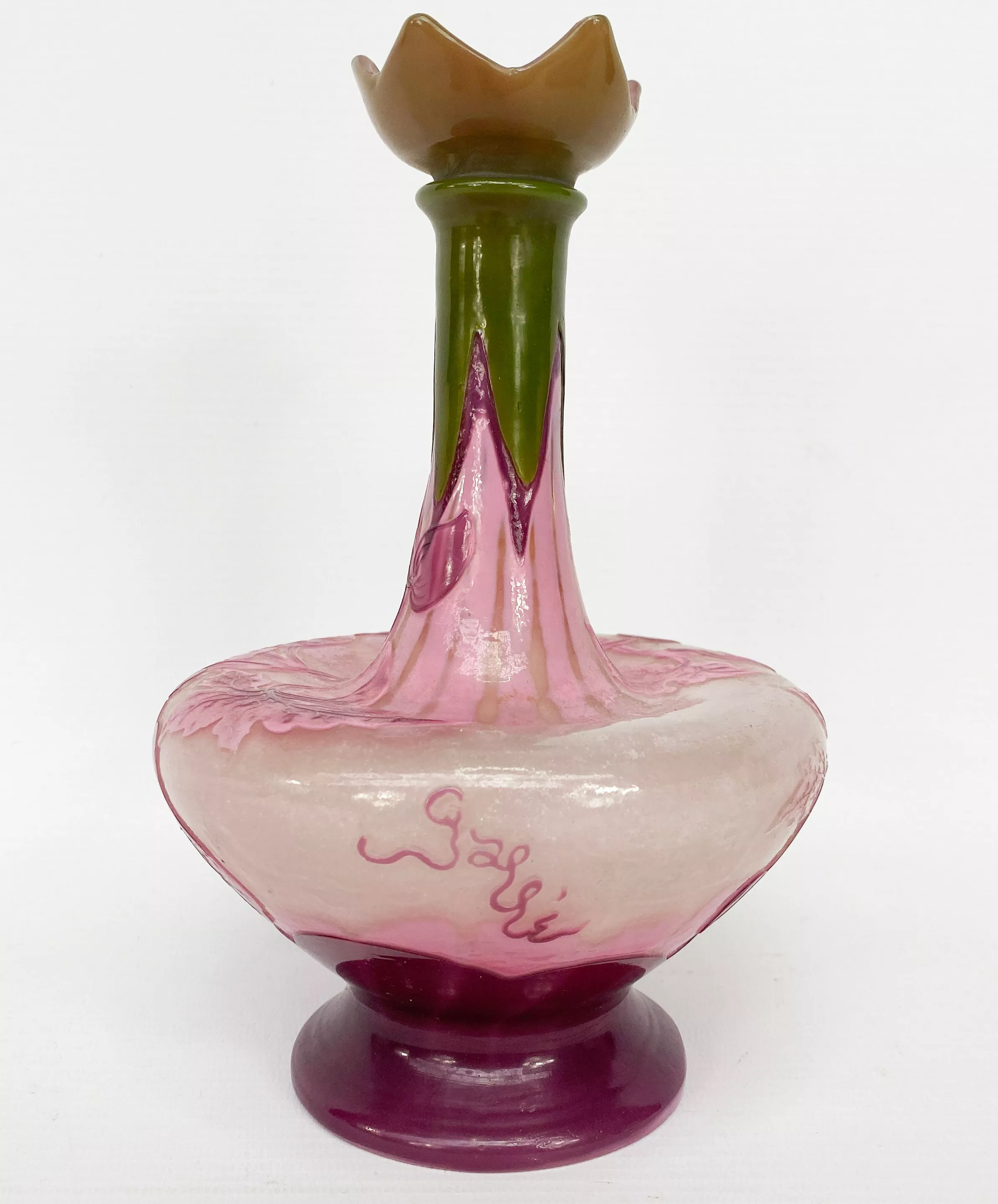
Recognizing the signature on a Gallé product
Not all pieces produced by the Gallé glassworks are signed. That's why it's important to have your pieces appraised.
Knowing the value of a work
If you happen to own a work by Gallé or after the artist, don't hesitate to request a free appraisal using our form on our website. A member of our team of experts and certified auctioneers will contact you promptly to provide you with an estimate of the market value of your work, as well as ad hoc information about it. If you are considering selling your work, you will also be accompanied by our specialists in order to benefit from alternatives for selling it at the best possible price, taking into account market inclinations.
Estimate in less than 24h
Discover in the same theme

Ratings and values of paintings by Mahmoud Said
Mahmoud Said is an Egyptian Orientalist painter who produced drawings and paintings that are highly rated and valuable at auction. Estimated in 24h.
Learn more >

Rating and value of paintings by Valerius de Saedeleer
Valerius de Saedeleer is a Belgian Expressionist painter who produced works of high value. 24h estimate.
Learn more >

Ratings and values of paintings by Yoël Benharrouche
Yoël Benharrouche is a rather unclassifiable Israeli figurative artist who has produced paintings that are highly rated and valued at auction.
Learn more >
Works by Émile Gallé sold at auction


Secure site, anonymity preserved

Auctioneer approved by the State

Free and certified estimates
Frequently asked questions
-
Who was Émile Gallé, and what was his contribution to the art of glassmaking?Émile Gallé (1846–1904) was a French glassmaker from Nancy, a leading figure of the Art Nouveau movement, and a pioneer of the applied arts of his time. Trained in glassmaking, ceramics, and woodworking, he founded a renowned workshop and won several medals at world’s fairs. Fascinated by the natural sciences, he drew inspiration for his creations from plants and nature, becoming one of the most influential artistic figures of his time.
-
What are the prices and price ranges for Gallé glass paste vases?Gallé glass paste vases sell for between €170 and €9,200, depending on their quality and rarity. Glass paste sculptures fall within a much wider price range, from €150 to €190,000 (a heraldic dragon fetched this latter price in 2019). This variation reflects differences in rarity, condition, and prestige among the individual pieces.
-
How do you authenticate and appraise a Gallé pâte de verre piece?To authenticate and appraise a Gallé piece, we recommend that you request a free, no-obligation estimate from Auctie's. Our auctioneers and certified experts will analyze your piece and provide you with an accurate appraisal within 48 hours, taking into account its authenticity, condition, and current market value.
-
What is pâte de verre, and what technique did Gallé use?Glass paste is a lost-wax casting technique reinvented by Daum. It involves creating a terracotta model, then casting a negative mold of it in plaster before firing it for 20 days. This process allows for the production of approximately 200 identical, high-quality pieces, offering a level of precision impossible to achieve with blown crystal. Gallé adopted this process for his creations, which were often signed.
-
Is now a good time to sell a Gallé piece?Yes, the art market for Gallé glass paste creations remains vibrant, and these pieces continue to be highly sought after by collectors. By entrusting your piece to Auctie's, our specialists will guide you toward the best sales options and strategies to achieve the highest possible price, taking into account current market conditions.
