



Rating and value of Claude Lalanne's sculptures

Key takeaways
- Claude Lalanne’s sculptures, particularly those in bronze and copper, sell for between €170 and €4,100,000, with prices rising steadily since the 1950s.
- The artist developed a unique electrolysis technique that fossilizes plant elements in bronze or copper, creating organic forms inspired by living things.
- Her works blend sculpture, design, and functional furniture, such as the Crocodile Desk (1963), combining naturalism and whimsy with refined detail.
If you own a work by or after the artist Claude Lalanne, and would like to know its value, our state-approved experts and auctioneers will offer you their appraisal services.
Our specialists will carry out a free appraisal of your work, and provide you with a precise estimate of its value on the current market.
Then, if you wish to sell your work, we'll direct you to the best possible arrangement to obtain the optimum price.
Rating and value of artist Claude Lalanne
Claude Lalanne is a well-known artist among lovers of contemporary sculpture. Now, prices for his sculptures are rising at the auctioneers' gavel.
His bronze and copper sculptures are particularly prized, especially by French buyers, and the price at which they sell on the art market ranges from €170 to €3,327,625, a significant delta but one that speaks volumes about the value that can be attributed to the artist's works.
In 2023, his sculpture Très grand choupatte dating from 2008 sold for €4,100,000, while it was estimated at between €1,000,000 and €1,500,000. Its value is exploding.
Order of value from a simple work to the most prestigious
Technique used | Result |
|---|---|
Metal sculpture | From 700 to 47 000€ |
Copper sculpture | From €1,000 to €1,207,480 |
Gilt bronze sculpture | From €800 to €3,327,625 |
Bronze sculpture | From €170 to €4,100,000 |
Estimate in less than 24h
Style and technique by artist Claude Lalanne
Claude Lalanne is a French artist who has produced sculptures in various materials : bronze, gilded bronze, metal, pâte de verre, marble, and many more.
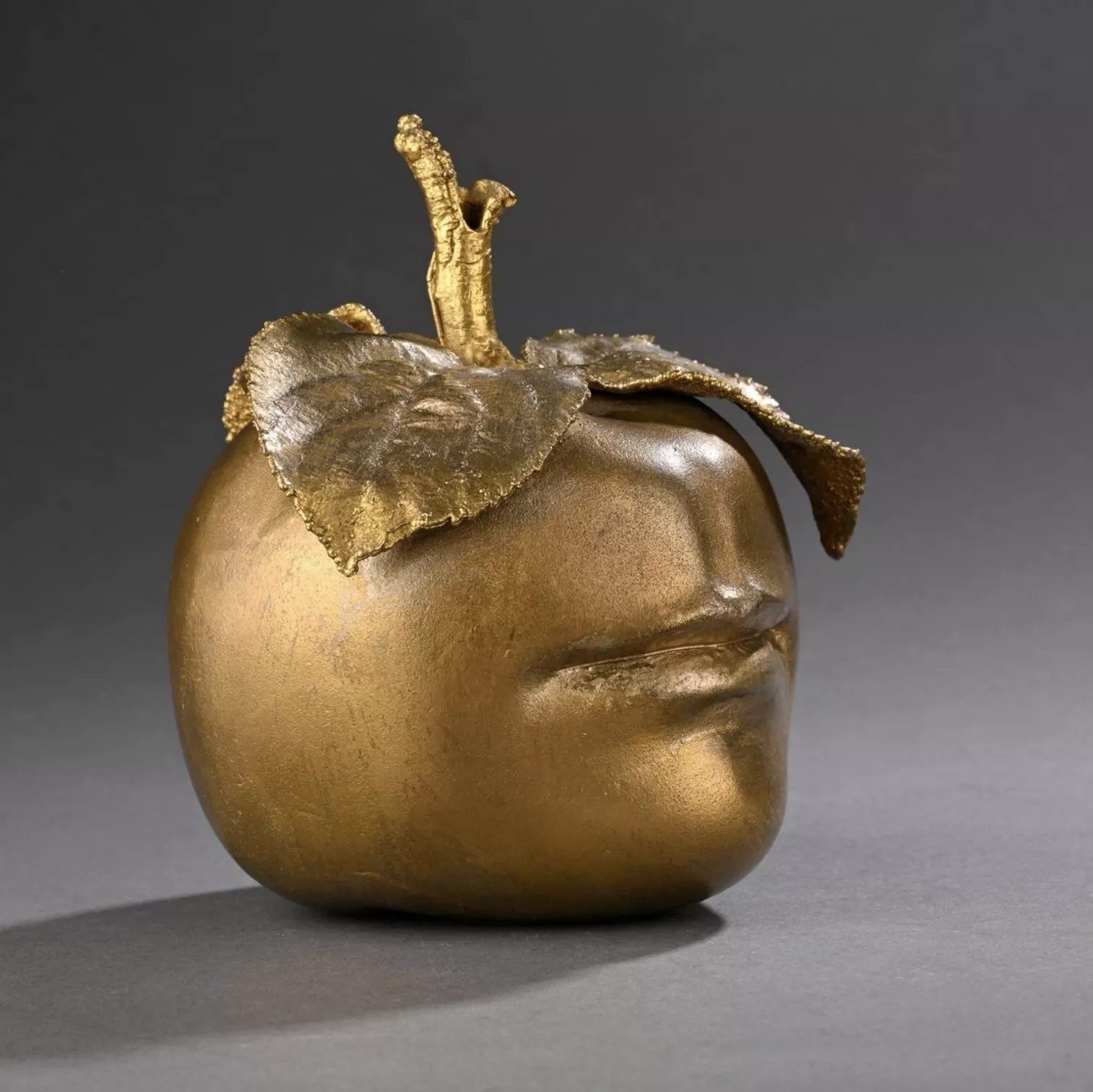
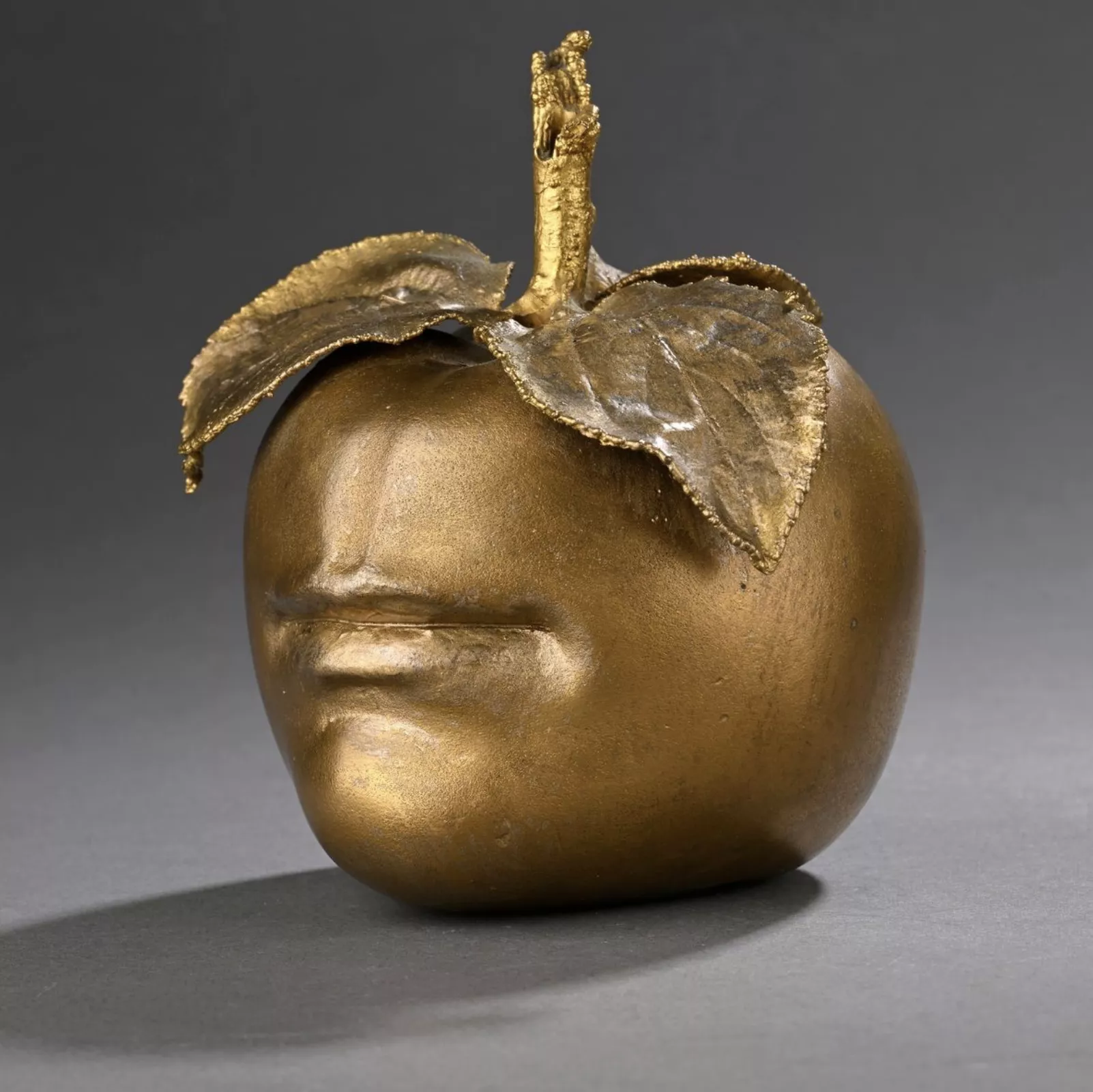
She doesn't really have a particular style, but her stylistic identity is unique, drawing on a wide range of floral inspirations, as well as the animal world, which she doesn't hesitate to modify and transform to sculpt totally unique creatures - her choupatte made from different materials is a perfect example.
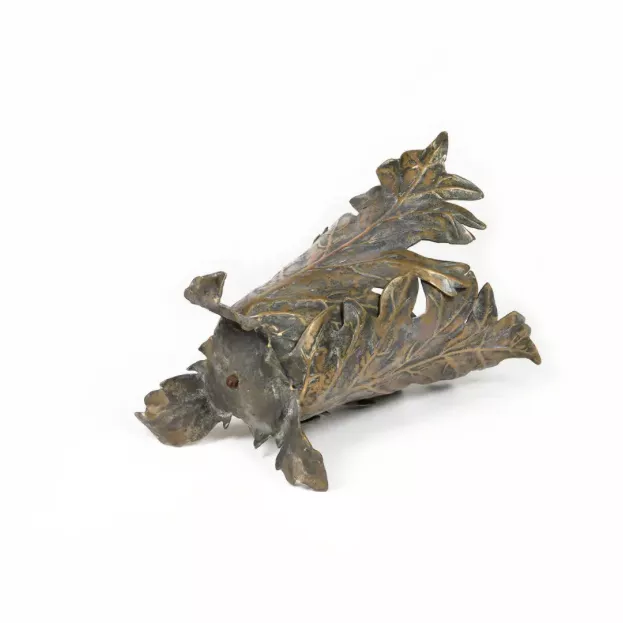
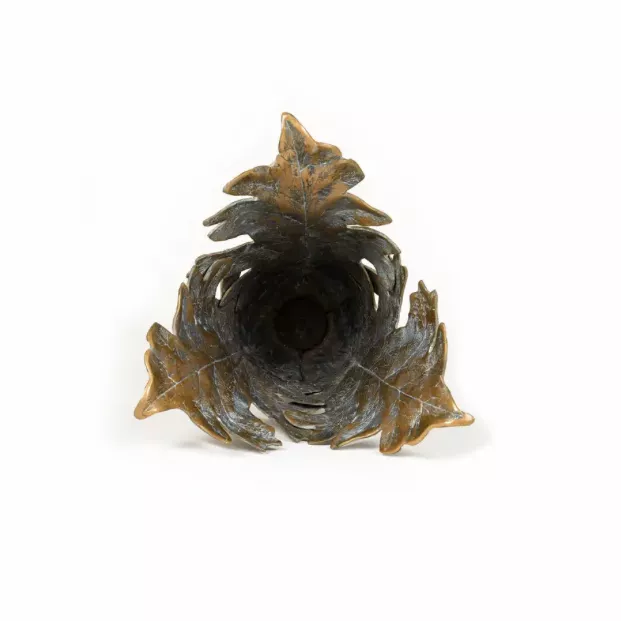
Her vocabulary is inspired by the plant and animal world. She develops poetic, organic sculpture in which natural forms (leaves, branches, flowers, shells or animals) are systematically hijacked to become decorative or functional elements.
Since the 1950s, she has distinguished herself through her electrolysis technique, which consists of " fossilizing " plant elements by coating them with metal. This process preserves their fine texture and exact form in bronze or copper.
Her sculptures thus emphasize the refinement of detail and the charm of modest forms, transforming each of her pieces into an objet d'art.
She works in dialogue with design. Naturally associated with her husband, François-Xavier Lalanne, she designs works on the border between sculpture and furniture, where function never reduces formal freedom.
If one were to describe her style, it could be said to lie on the border between Surrealism and Art Nouveau, her aesthetic evoking both a strange, symbolic world of the Surrealists (cf. the metamorphoses of the living), but also the decorative fluidity of Art Nouveau while remaining profoundly contemporary.
His work is quite tactile, as the artist attaches paramount importance to touch : volumes are rounded, polished and sometimes gilded.
By his unique use of material and his rather poetic vision of the natural world, Claude Lalanne consequently inscribes his sculpture in a tradition that is both artisanal and dreamlike.
The career and world of Claude Lalanne
Claude Lalanne is a French artist born in Paris in 1925.
She trained at the Beaus-Arts de Paris and the École des Arts décoratifs, learning sculpture and jewelry design.
Most of her work, and what she is known for internationally, is still sculpture. Her work was noticed by Yves Saint Laurent and Pierre Bergé, with whom she would collaborate.
Claude Lalanne notably created busts of the model Verushka as part of her collaboration with Saint Laurent, but also other pieces : brooches, jewelry... Part of it was part of her collaboration with Loulou de la Falaise, a model who also created jewelry.
His sculpture L'Homme à la tête de chou would be a source of inspiration for Serge Gaisbourg, who released an ablum bearing this name in 1976.
In 1952, she met her second husband in a gallery, François-Xavier Lalanne, also a sculptor. The couple became known and publicized for their work together, and were nicknamed " Les Lalanne ". Her husband was more interested in animals, she in flowers. Their best-known works date back to the series of commissions they carried out for YSL and Pierre Bergé.
Focus on Bureau Crocodile (1963), Claude Lalanne
Bureau Crocodile is both a functional piece of furniture and a sculptural work. The body of a bronze crocodile, which is treated with almost zoological precision, serves as the base for a metal desk top - melting the boundary between art and design.
Rendered in patinated bronze, the work reveals the finesse of the modeling notably in the scaly texture of the reptile's skin. She uses the casting technique to give the animal an almost living presence, sculpted with meticulous realism.
His humor is discreet and refined. The combination of the desk's utilitarian function and the rather incongruous presence of the crocodile creates a surprise effect, giving rise to a certain visual humor, typical of the Lalanne universe, which hijacks the codes of classic furniture by integrating a dreamlike dimension.
The composition is intended to be quite balanced : the animal seems both heavy and elegant, its back elongated and forming a fluid line that harmoniously supports the structure of the furniture. The whole is thus based on a subtle balance between naturalism and fantasy.
Through this work, Claude Lalanne proposes a dialogue between nature and domestication, and questions our relationship with nature and interior space by introducing a wild animal into the hushed world of furniture.
This work is an emblematic example of his approach, as Bureau crocodile perfectly embodies Claude Lalanne's aesthetic, through the transfiguration of the living in bronze, the blending of genres, and the desire to reconcile art, poetry and the everyday.
Thus, with this piece, Claude Lalanne demonstrates that sculpture can become furniture, and that the most utilitarian object can become a medium for the imaginary. She affirms her unique ability to create a dialogue between dream, elegance and material.
Claude Lalanne's imprint on her period
Claude Lalanne has made a significant contribution to art and culture, although she is not widely known to the general public.
Her own works reflect the influence of the artistic movements of her time, making her an important figure in 20th-century art, impacting a whole generation of sculptors and artists.
Her works are extremely highly rated on today's art market, the value they reach at auction is constantly rising.
In Claude Lalanne's work, the figure does not impose itself by force, it insinuates itself. It doesn't break with categories, it crosses them. Her works don't seek to define a new territory, they shift the lines between sculpture, object, décor, jewelry.
At a time dominated by abstraction, by the search for pure forms, she reintroduces the vegetal, the detailed, the ornamental, without nostalgia, in her sculptures but also in her jewelry and furniture.
The motif, always legible, serves neither reproduction nor narrative. It transforms the surface, organizes the volume. Sculpture becomes an envelope, a body, a support for possible use.
Her imprint does not pass through a school or a manifesto. It's based on a discreet method: observe, collect, mold, melt, assemble. She works from reality, but she doesn't imitate. She transposes.
She extracts a logic of growth, an organic syntax. Where design tends towards functionalism or industrial purity, she introduces a softness of form, a continuity of line, a precision of material.
This position, held without deviation, has durably modified the relationship between sculpture and decorative art. It enlarged the field not by extension, but by infiltration. It has inscribed in its time a form of presence that acts without noise.
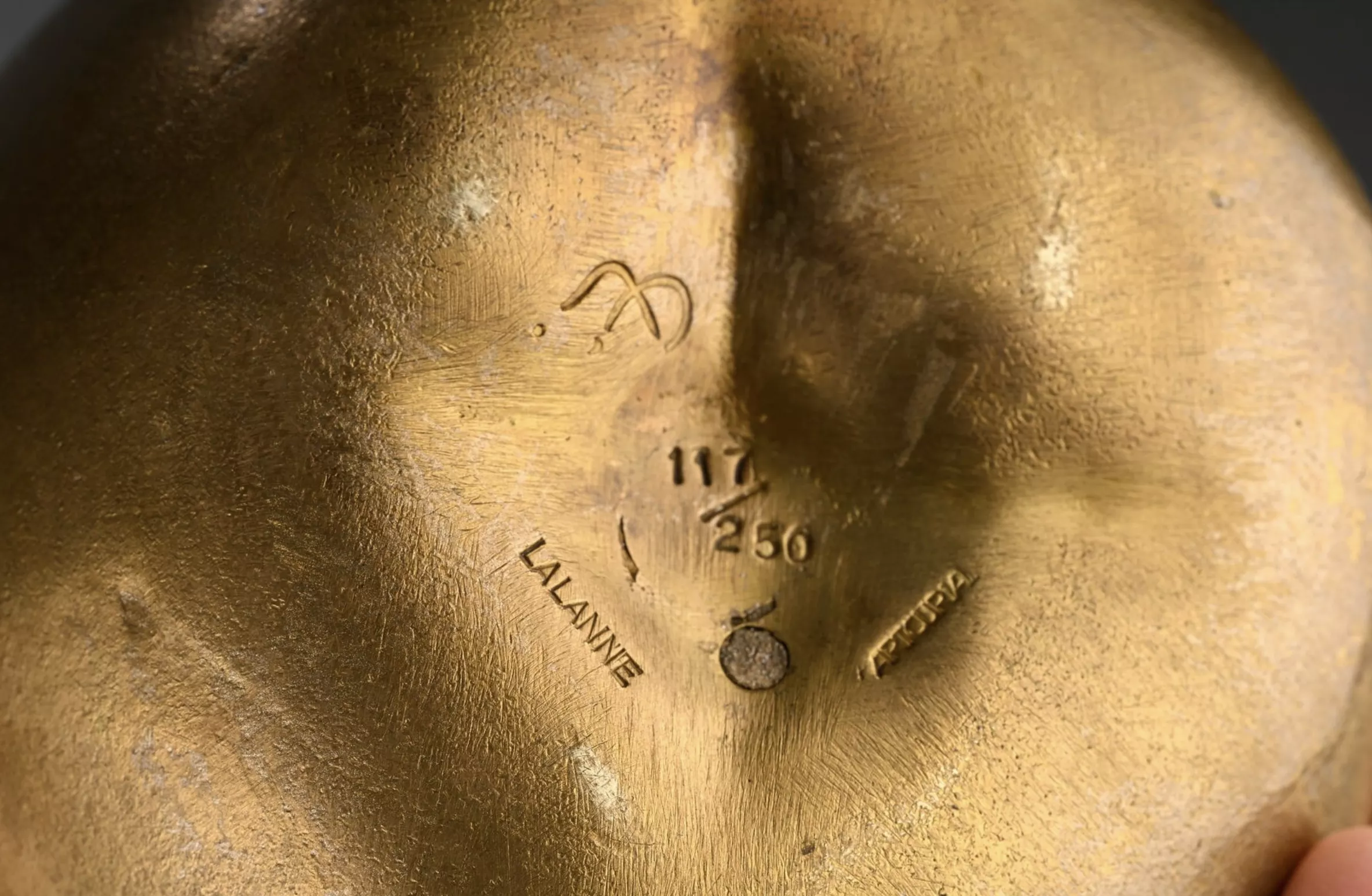
Recognizing the artist's signature
Claude Lalanne doesn't necessarily sign his works. Copies may exist, which is why expertise remains important.
Knowing the value of a work
If you happen to own a work by or after Claude Lalanne, don't hesitate to request a free appraisal using our form on our website.
A member of our team of experts and licensed auctioneers will contact you promptly to provide you with an estimate of the market value of your work, not forgetting to send you ad hoc information about it.
If you are considering selling your work, you will also be accompanied by our specialists in order to benefit from alternatives for selling it at the best possible price, taking into account market inclinations.
Estimate in less than 24h
Discover in the same theme

Rating and value of works, drawings and sculptures by Jules...
Jules Pascin was a Bulgarian artist, painter and sculptor of the 20th century, who produced drawings, paintings and sculptures listed at auction.
Learn more >

Rating and value of paintings by Charles Lacoste
Charles Lacoste is a French Impressionist painter whose works are highly regarded and valued at auction.
Learn more >

Rating and value of paintings by Charles Camoin
Charles Camoin is a twentieth-century Fauvist painter who produced works that are highly valued at auction. Estimated 24h.
Learn more >
Similar works sold at auction

Estimated 500 - 800€
Pierre Adrien Dalpayrat (1844-1910), ceramic mask

Estimated 3.000 - 5.000
Claude LALANNE (1925-2019) Mimosa necklace

Estimated 15.000 - 20.000
François-Xavier LALANNE (1927-2008) Tortue, 1973 brass patina edition no. 75/100 (traces of oxidation and minor patina damage)

Secure site, anonymity preserved

Auctioneer approved by the State

Free and certified estimates
Frequently asked questions
-
Who is Claude Lalanne, and what is his artistic style?Claude Lalanne is a French artist born in Paris in 1925, who studied at the École des Beaux-Arts in Paris and the École des Arts Décoratifs. Her unique style lies at the intersection of Surrealism and Art Nouveau, characterized by poetic and organic sculptures in which natural forms (flowers, leaves, animals) are systematically reimagined. She is particularly known for her electrolysis technique, which “fossilizes” plant elements by coating them with metal, and for her collaborations with her husband, François-Xavier Lalanne.
-
What is the price range for Claude Lalanne's sculptures?The prices of Claude Lalanne’s sculptures vary considerably depending on the technique and the piece: metal sculptures range from €700 to €47,000, copper sculptures from €1,000 to €1,207,480, gilded bronze pieces between €800 and €3,327,625, and bronze pieces between €170 and €4,100,000. The artist’s market value is steadily rising, as illustrated by the 2023 sale of “Très grand choupatte,” which sold for €4,100,000—well above its initial estimate.
-
How can you authenticate a sculpture by Claude Lalanne?Since Claude Lalanne does not always sign his works, it is important to seek professional expertise to authenticate a piece. Auctie's offers a free, no-obligation appraisal by its experts and certified auctioneers, who will examine your artwork and provide you with an appraisal within 48 hours, along with detailed information on its authenticity and provenance.
-
Is this a good time to sell a sculpture by Claude Lalanne?Yes, this is an excellent time to sell a work by Claude Lalanne. Her value is steadily rising in today’s art market, and her sculptures are highly sought after, particularly among French buyers. Prices achieved at auction continue to rise, making this a promising market for sellers.
-
How does the appraisal process work at Auctie's?Appraisals at Auctie's are free and non-binding. You can submit your artwork using the form on our website, and a member of our team of experts and licensed auctioneers will contact you promptly. You’ll receive an accurate estimate of the market value and relevant information about your sculpture within 48 hours, along with advice on how to sell it for the best price.
