



Rating and value of François-Xavier Lalanne's ceramics and porcelain

Key takeaways
- François-Xavier Lalanne (1927–2008), a renowned French sculptor, created animal-themed ceramics that sell for between €250 and €35,000, with prices skyrocketing since 2009.
- The porcelain *La Sauterelle* (1970) fetched €450,000 in 2009, far exceeding its estimate of €250,000–350,000, confirming strong market demand.
- His collaborations with the Sèvres porcelain manufactory in the 1970s are particularly sought after; 81% of his lots fall into the “sculpture-volume” category, with ceramics accounting for a major share.
If you own a work by or after the artist François-Xavier Lalanne, and would like to know its value, our state-approved experts and auctioneers will offer you their appraisal services.
Our specialists will work to carry out a free appraisal of your work, and will provide you with an accurate estimate of its value on the current market.
Then, should you wish to sell your work, we will direct you to the best possible arrangement to obtain the optimum price.
Rating and value of artist François-Xavier Lalanne
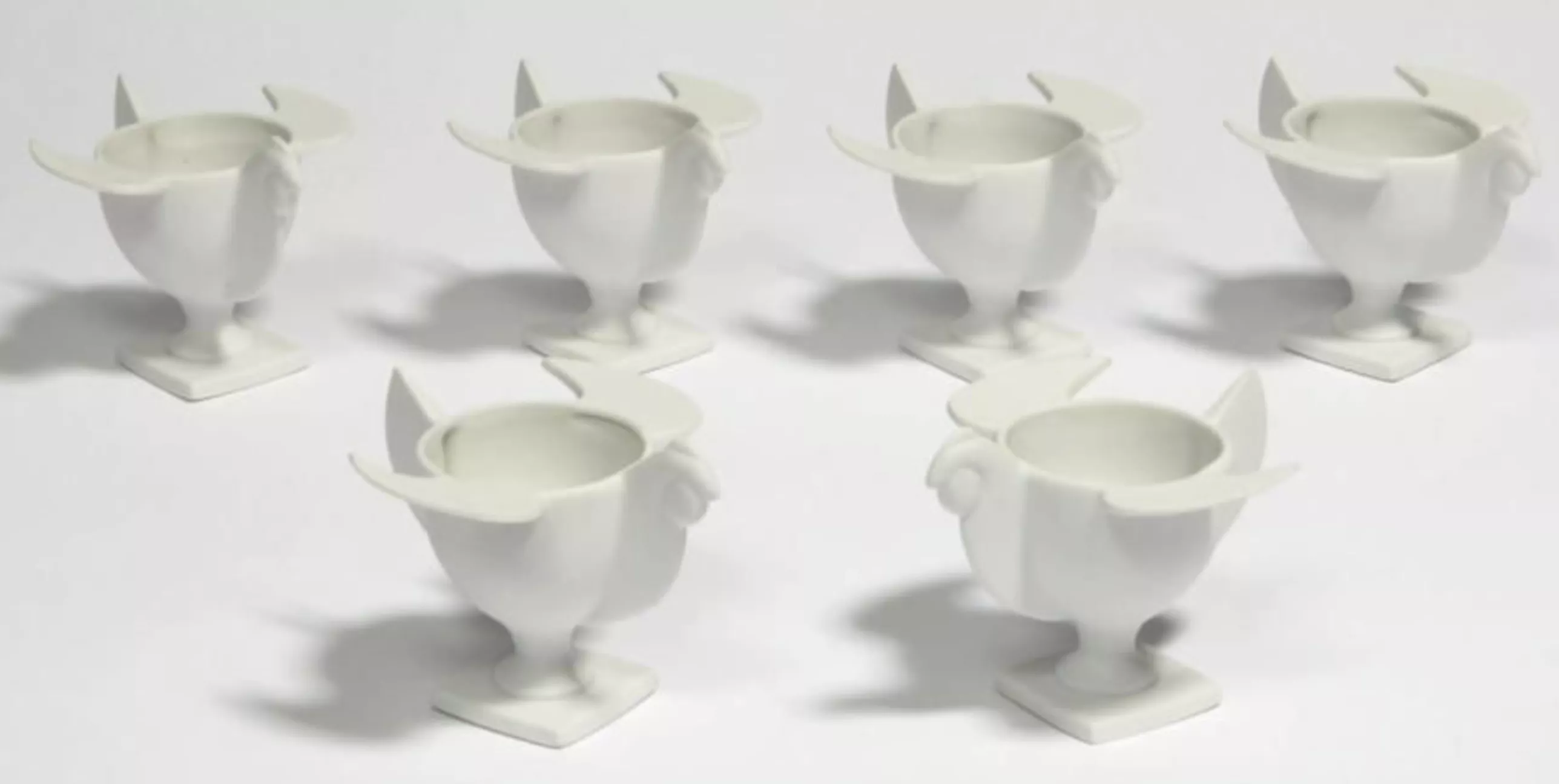
Specializing in sculpture of all kinds, François-Xavier Lalanne is a renowned French artist. In particular, he is famous for his ceramics, which sell for high prices, especially those depicting animals.
His works sell on the market for between €250 and €35,000.
In 2009, a porcelain statue, Sauterelle, dating from 1970, sold for €450,000 while it was estimated at between €250,000 and €350,000. Its value is exploding.
Order of value from a simple work to the most prestigious
Type of ceramic | Result |
|---|---|
Pottery, pots, salt shakers | From €1,500 to €3,000 |
Ceramic rhinoceros | From €7,620 to €10,560 |
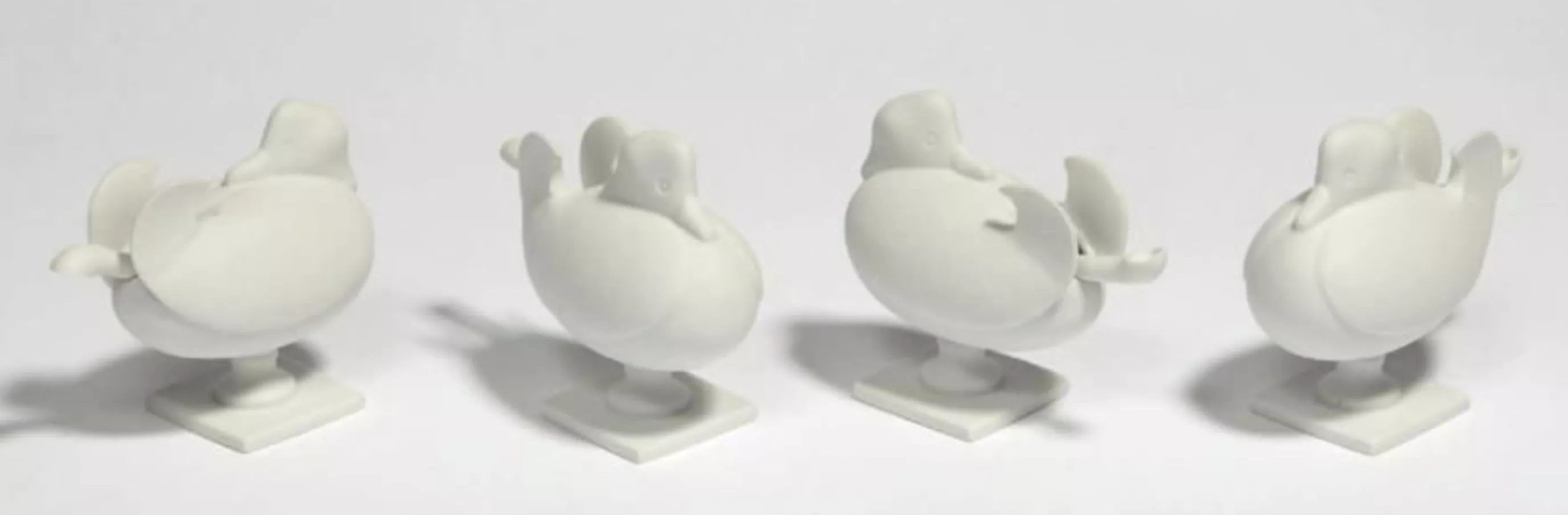
China duck | From €1,100 to €32,000 |
Ceramic birds | From €250 to €35,000 |
Estimate in less than 24h
The artist's style and technique
In François-Xavier Lalanne's ceramics, form retains this function of balance, legibility, integration of the image into the object. It does not seek the brilliance of the glaze, nor the expressive enhancement of the material.
It follows a logic of simplicity, continuity and hold. The modeling, smooth, without visible accident, imposes full volumes, precise contours, an immediate presence.
The decoration, when it appears, does not distract from the reading: it melts into the surface, it accompanies the form instead of overloading it.
Color remains sober, applied in flat tones, with no search for effect. Ceramics don't imitate the living, they translate it into calm masses, poised silhouettes, contained figures. The texture of the material is kept at a distance, without any tactile claims.
The object exists through its internal density, through its visual coherence, not through the accumulation of visible gestures.
Then, detached from technical research and material effects, François-Xavier Lalanne's ceramics assert a silent presence: a compact, precise sculpture, built to fit into space without rupture or demonstration.
François-Xavier Lalanne, his life, his work
Born in the Lot et Garonne region of France in 1927, François-Xavier Lalanne began his artistic training in 1946, first studying sculpture. He then took an interest in drawing and painting at the Académie Julian in Paris. He befriended artists such as René Magritte and Salvador Dali, two very important figures of surrealism who were to influence his work.
He began exhibiting his painting work in Paris in 1953, organizing in fact his first solo exhibition.
Following in the footsteps of important figures from the worlds of art and fashion, in the 1950s he decorated the Dior boutique on avenue Montaigne, in collaboration with the designer Yves Saint Laurent, at that time assistant to the house.
François-Xavier Lalanne works in collaboration with his wife, Claude, near the Jardin des Halles in Paris. The latter is also, and above all, a sculptor. Both artists are very focused on animal subjects, whether domestic or wild animals.
Late in his career, he produced ceramics for the Manufacture de Sèvres, but also worked on his own account with ceramics and porcelain, producing egg cups, salt and pepper shakers in addition to the simple sculptures much appreciated by collectors and private individuals.
Lalanne died in 2008 in Ury, aged 81.
Focus on Chouette en céramique, François-Xavier Lalanne
In Chouette en céramique (fig. 1), the form retains this function of stability, compact presence, immediate legibility.
But she doesn't seek to reproduce the animal in detail: she extracts a simple, poised volume, without surface variation or ornamental overload. The owl's body, oval and smooth, is balanced without tension. The wings, marked by two discreet lines, do not open, nor do they suggest any movement.
The face, reduced to two circles for the eyes and a triangle for the beak, fits into the continuity of the plane without break or deepening.
The ceramic, treated in flat areas of uniform color, refuses any vibration of matter, any demonstration of glaze. The modelling is contained, the decoration integrated, with no effect of thickness.
The figure is not animated: it stabilizes in a single, dense, autonomous volume. So, devoid of any narrative or expressiveness, the
Ceramic Owl asserts another logic: a compact, silent sculpture, where object and image coincide in the rigor of a held surface and the simplicity of a silhouette inscribed seamlessly in space.
The collaboration with Sèvres
In François-Xavier Lalanne's collaboration with the Sèvres factory, the material retains this function of precision, purity and discipline of gesture.
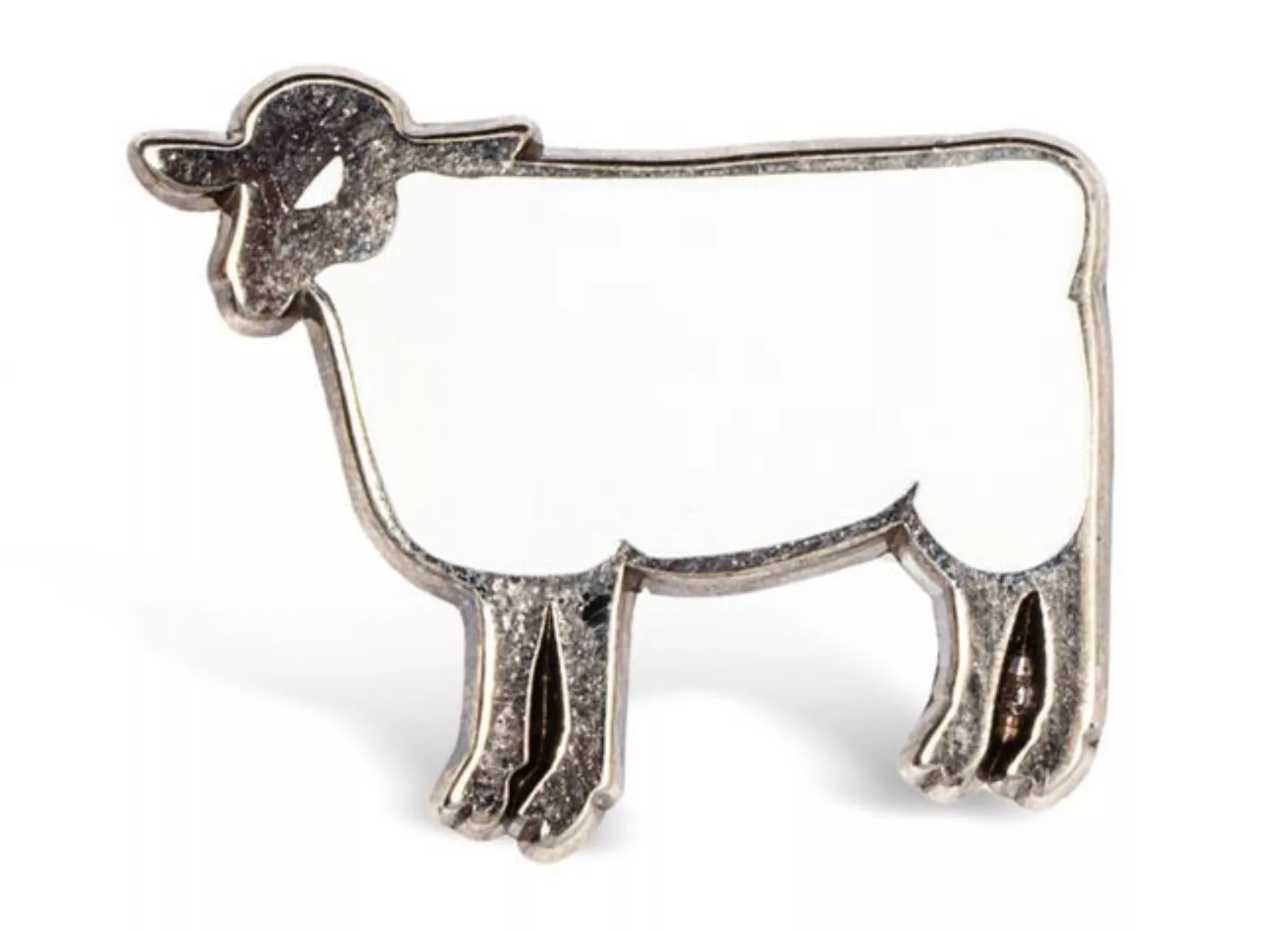
But it is no longer used to produce decorative objects in the academic tradition: it becomes a support for simplified, stable figuration, without overload. It was in the early 1970s that François-Xavier Lalanne was invited to work with the Sèvres workshops.
He accepted on condition that he retained total freedom over form and surface treatment. He then transposes his familiar motifs - sheep, birds, fish - into hard porcelain, imposing his full silhouettes, closed volumes, silent profiles.
The technique demands adjustment from him: reducing roughness, controlling extensions, simplifying lines to avoid deformations during firing. Lalanne does not seek to rival the decorative tradition of Sèvres; he imposes his forms without added ornament.
The works remain few in number, often published in small series, marking the rare encounter between a historic manufacture and a contemporary vision of sculpture.
Thus, far from stylistic effects or decorative concessions, François-Xavier Lalanne's collaboration with Sèvres affirms a silent continuity, where the tradition of the grand feu becomes the site of a stable, direct, unemphasized figuration.
François-Xavier Lalanne's imprint on his period
In the ceramics of the XXᵉ century, the work of François-Xavier Lalanne retains this function of reminding us of the clear form, the posed silhouette, the stable surface.
But it does not follow the paths explored by most of his contemporaries, between research into material effects, the bursting of volumes, the assertion of gesture. Lalanne seeks neither raw experimentation nor textural expressionism: he imposes the same demands on ceramics as he does on his metal sculptures, those of a held figure, a smooth surface, a legible volume.
Faced with the major trends pushing ceramics towards abstraction or monumentality, his work proposes another model: that of a utilitarian ceramics without functionalism, a figuration without anecdote, a surface without ostentation.
His influence, discreet, does not pass through the school or the manifesto: it is exercised in the continuity of a formal thought, where the material never overflows the figure, where the figure is never diluted in the material.
As a result, removed from the tensions of the century, François-Xavier Lalanne's imprint on the ceramics of the XXᵉ century is inscribed in a silent, regular line, where the simplicity of volume becomes a way of enduring without noise.
François-Xavier Lalanne is an artist known to lovers of sculpture and painting, he is the author of an absolutely considerable artistic output.
Most of his works are now held by private collectors, increasing the value and success of his works on the auction market.
His ceramics are particularly prized, as they are absolutely unique pieces that lend a singularity of their own to any interior.
Today, the artist's value is particularly high. It peaked in 2022, then fell back (though remaining fairly high) until 2024. Since the beginning of 2025, his rating has been rising again.
81% of his lots are auctioned in the sculpture-volume category, which includes bronze, ceramics but also lamps. Ceramics account for a sizeable proportion of his work, and those made in collaboration with the Manufacture de Sèvres are particularly sought-after.
Recognizing François-Xavier Lalanne's signature
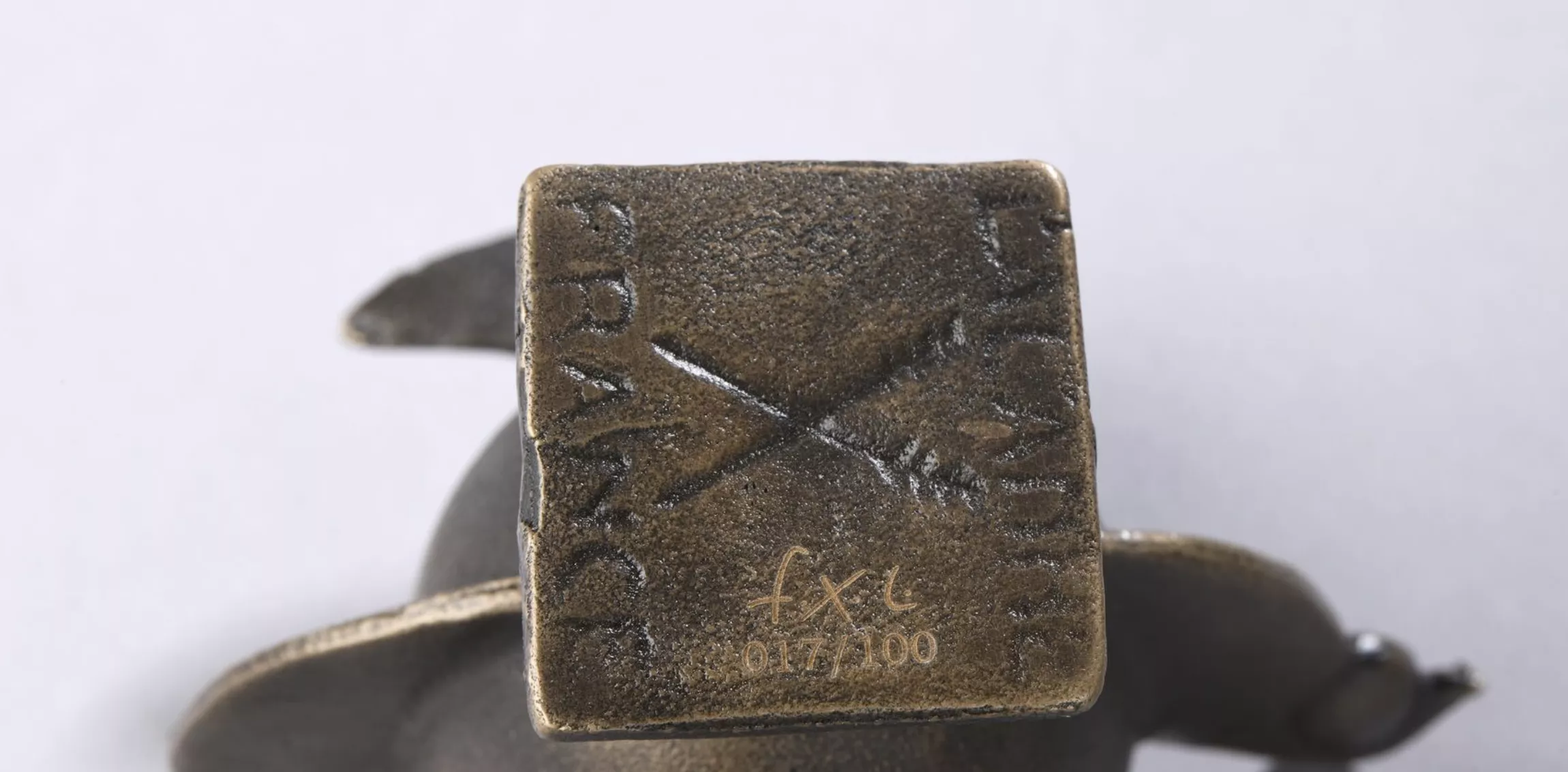
It's not always easy to decipher or even to be lucky enough to stumble across a work signed by Lalanne. He did, however, sign his work with his name in cursive letters, and often dated his sculptures.
Knowing the value of a work
If you happen to own a work by François-Xavier Lalanne, request a free appraisal without further delay via our form on our website.
A member of our team will contact you promptly with an estimate of the value of your work, not forgetting to send you ad hoc information about it.
If you are considering selling your work, you will also be accompanied by our specialists in order to benefit from alternatives to sell it at the best possible price.
Estimate in less than 24h
Discover in the same theme

Rating and value of François Raty vases
François Raty's history, the price of his works and their current market value. Ranging from 200 to 50,000 euros, only an expert can authenticate them...
Learn more >

Rating and value of works, drawings and paintings by Victor...
Victor Vasarely is a Bahaus-inspired 20th-century artist whose works are highly valued at auction.
Learn more >

Rating and value of paintings, sculptures and drawings by Ha...
Hans Bellmer is a twentieth-century surrealist painter who produced paintings and sculptures that are valued at auction.
Learn more >
Works from the same period sold at auction

Estimated 300 - 400 €
Glazed ceramic statue of Zeus

Estimated 800 € - 1 200 €
MANUFACTURE NATIONALE DE SEVRES Rare porcelain cookie obelisk.

Estimated 40 € - 60 €
A baluster-shaped ceramic vase with fishes in black and green on a white background.

Estimated 2.000 - 3.000 €
Sèvres porcelain plate from the "agronomique" service

Estimated 500 - 800€
Pierre Adrien Dalpayrat (1844-1910), ceramic mask

Secure site, anonymity preserved

Auctioneer approved by the State

Free and certified estimates
Frequently asked questions
-
Who is François-Xavier Lalanne, and why are his ceramics so highly prized?François-Xavier Lalanne (1927–2008) was a renowned French sculptor who specialized in creating ceramics and porcelain, particularly animal figures. His work is distinguished by a minimalist and formal approach, eschewing excessive ornamentation in favor of simple, smooth, and stable forms. His creations—particularly those produced in collaboration with the Sèvres porcelain manufactory—are highly sought after by collectors for their uniqueness and distinctiveness.
-
What are the price ranges for François-Xavier Lalanne's ceramic works?Lalanne's works sell for between €250 and €35,000, depending on the type and size. Egg cups and small utilitarian objects range from €1,500 to €3,000, while animal sculptures such as birds or ducks can fetch €32,000 or more. Exceptional pieces, such as the 1970 *Sauterelle*, can far exceed these estimates, as demonstrated by its sale for €450,000 in 2009.
-
How can you authenticate a ceramic piece by François-Xavier Lalanne?To authenticate a work by Lalanne, you must request a free appraisal from Auctie's, which will put you in touch with state-certified auctioneers and experts. These specialists will examine the signature (usually in cursive and often dated), the provenance, and the technical characteristics of the piece to confirm its authenticity and estimate its value. You will receive a response within 48 hours, with no obligation.
-
Is this a good time to sell a ceramic piece by François-Xavier Lalanne?Yes, the market for Lalanne’s ceramics is currently strong. After peaking in 2022 and then experiencing a slight decline, prices have been rising again since early 2025. The relative scarcity of his pieces (held mainly by private collectors), the art market’s enduring interest in his work, and the high auction success rate of his lots (81% of sales) make this an opportune time to sell.
-
How does the appraisal and sale process work at Auctie's?Auctie's offers a free, no-obligation appraisal: simply submit your piece using the online form, and an expert will contact you shortly and provide you with an appraisal within 48 hours. If you decide to sell, our specialists will guide you through the process from appraisal to auction, exploring the best options to ensure you get the highest possible price for your ceramic piece.
