



Rating and value of paintings by Bram van Velde

Key takeaways
- Bram van Velde generated more than €6 million in sales in France between 2000 and 2025, with paintings fetching up to €540,000 at auction.
- Oil paintings on canvas are the most prestigious segment, while prints and lithographs are the most accessible (€10 to €5,000).
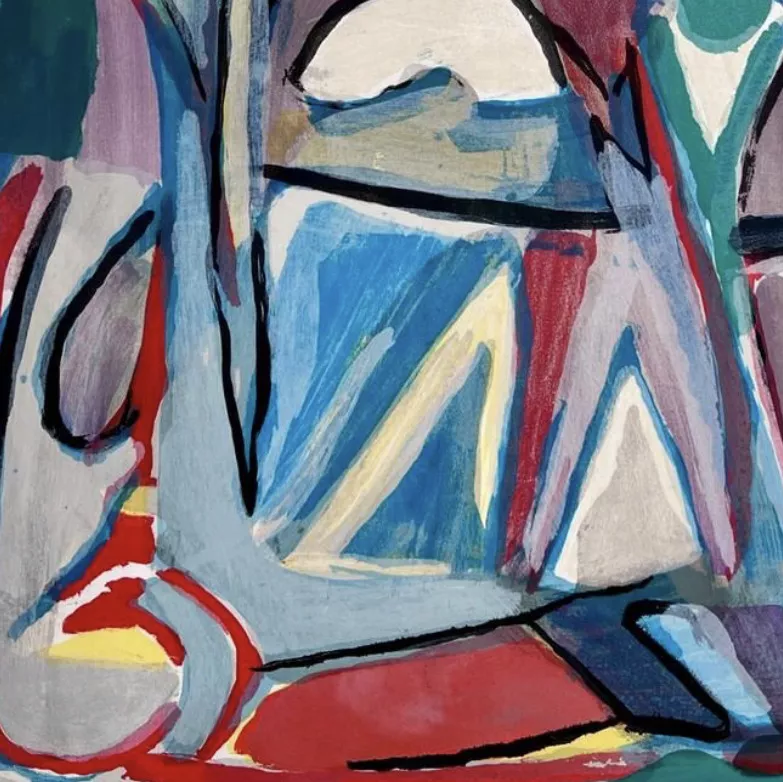
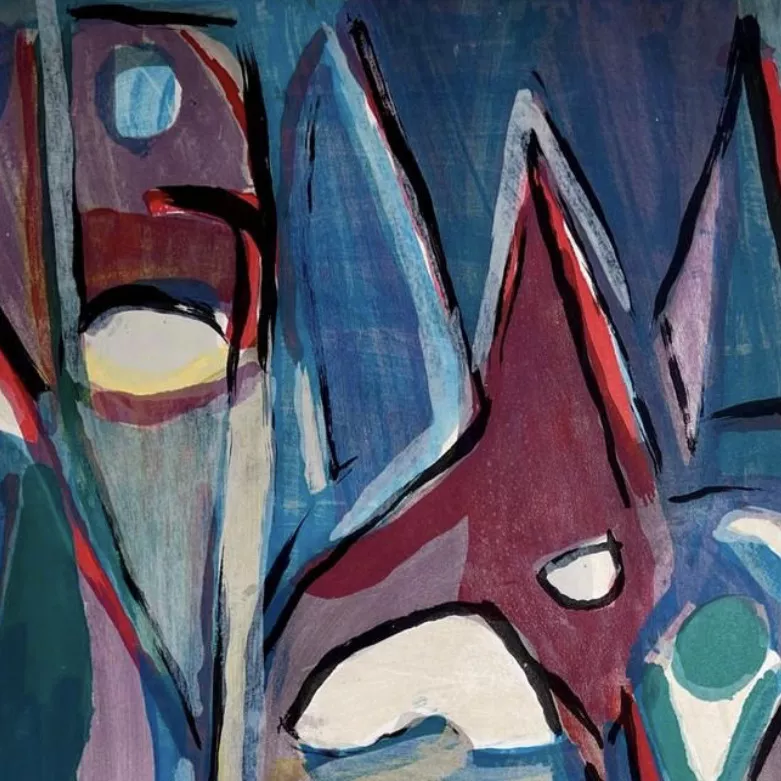
- An artist associated with lyrical abstraction and the Second School of Paris (1895–1981), his works are characterized by oblong shapes, flat areas of color, and dripping effects integrated into the composition.
If you own a work by or based on the work of the artist Abraham Geradus van Velde and would like to know its value, our state-approved experts and auctioneers will guide you.
Our specialists will carry out a free appraisal of your work, and provide you with an accurate estimate of its value on the current market.
Then, should you wish to sell your work, we will direct you to the best possible arrangement to obtain the optimum price.
Artist's rating and value
Throughout his career, Abraham Geradus van Velde produced famous abstract works that were quoted on the auction market. His international renown opened the doors of many Dutch museums.
Today, Van Velde retains a high valuation with strong potential for growth, with over €6 million worth of works sold in France between 2000 and 2025.
As such, a work signed by the artist's hand can fetch thousands of euros at auction, as evidenced by his painting Sans titre, Tardais, dating from 1959, adjudged €540,000 in 2016, while it was estimated at €300,000 to €400,000.
Order of value from the most basic to the most prestigious
Technique used | Result |
|---|---|
Estamp - multiple | From €10 to €5,000 |
Drawing - watercolor | From €40 to €285,080 |
Painting | From €85 to €540,000 |
Estimate in less than 24h
The artist's work and style
Abraham Geradus van Velde, also known as Bram van Velde, is a member of the informal art movement, lyrical abstraction and the Second School of Paris. His work is characterized by a tension between expressiveness and restraint, his pictorial gestures are spontaneous but with an economy of sign and a moderation of form.
He uses oblong shapes and colored flat tints, with extended chromatic zones structuring the composition. The colors used are vivid but nuanced, with alternating translucent washes and intensified opaque passages.
Running effects or " dripping ", are among his favorite processes, with fluid traces of paint preserved and integrated into the surface. He gradually rejected all recognizable figuration after the 1950s, moving towards pure expressive abstraction.
His compositions are sometimes compared with the intensity of works by Matisse, Picasso or Gottlieb in the 1950s by analogy of chromatic energy. His main medium is oil on canvas, and he works with gouache, creating works on paper in parallel, to experiment with effects of light color and transparency.
He superimposes layers of paint, with successive washes, retouching, and contrasts between thin and thick areas. He also plays with textural contrasts, juxtaposing fluid passages and thicker, sometimes modelled areas.
He uses gestural traces as pictorial writing, the movement of the brush remaining visible, as if it were a vestige of the gesture. Van Velde controls the support, and nuances the tension between background and motif through reflective applications of paint (thin layers, worked background).
The career of Abraham Geradus van Velde
Abraham or Bram Geradus van Velde (1895 - 1981) was a figurative painter at the start of his career, then an abstract painter, part of the Seconde École de Paris. He came from a modest family, and his childhood was marked by abandonment, instability and poverty.
In 1907, at the age of 12, he was apprenticed to the painting and decoration studio Schaijk & Kramers in The Hague, along with his brother Geer. His employers granted him financial support to propel his artistic career.
In 1922, Kramers paid him a pension so he could travel, staying in Munich and then Worpswede (a colony of expressionist artists, in northern Germany). In November 1924, he arrived in Paris with this support, and his brother joined him the following year.
In 1927, he exhibited in Bremen and Berlin, and was admitted to the Salon des Indépendants in Paris with his brother. The following year, he married Lilly, whose real name was Sophie Caroline Klöker, a German artist. After the economic crisis of 1929, he experienced increasing financial difficulties and left Paris to travel to the Mediterranean and Corsica.
In 1932, he moved to Mallorca with Lilly to cut costs, but the Spanish Civil War forced him to leave the island, the journey also resulting in the death of his wife. He was repatriated to Marseille, then returned to Paris, where he lived in precarious conditions, sometimes lodging with his brother.
In 1939, he created his first large gouaches, inaugurating his own plastic language. Between 1941 and 1945, he stopped painting because of the war and extreme living conditions, resuming in the autumn of 1945. Two years later, he signed a contract with Galerie Maeght (Paris) and began to gain recognition on the international art scene.
He presented his first museum retrospective at the Kunsthalle Bern in 1958. In 1964, he was named Chevalier de l'Ordre des Arts et des Lettres in France, and in 1969 received the Order of Orange-Nassau in the Netherlands. In 1967, he settled permanently in Geneva (Switzerland), and continued to divide his time between Geneva and Paris until the end of his life.
In 1973, he produced a number of large gouaches at La Chapelle-sur-Carouge as a final major chromatic display. In 1980, he was made a knight of the Order of the Falcon (Iceland) and died in 1981 in Grimaud, Var.
Market segmentation and artist rating
Bram van Velde is positioned in the segments of post-war abstract art, lyrical abstraction and the Second School of Paris. Oils on canvas and gouaches are the most prestigious media. Works on paper, gouaches and mixed media form the intermediate segment.
Finally, prints and lithographs are part of the most accessible segment of the secondary market. The artist mainly attracts collectors of modern and contemporary art, specialized galleries, museum institutions and foundations.

The secondary market is preponderant, his works are widely traded at public auction, and the current primary market is very weak. The majority of sales take place in France, but Western Europe in general and New York are also marketplaces where his works are traded.
The rarity of his works is relative, even if hundreds of works have been auctioned (3,702 counted), the major pieces (formats, key periods) remain limited, which reinforces the selection by collectors.
Determining factors in valuation are dimensions, support (canvas vs. paper), period of creation, provenance, signature, state of conservation and the work's importance in the artist's career.
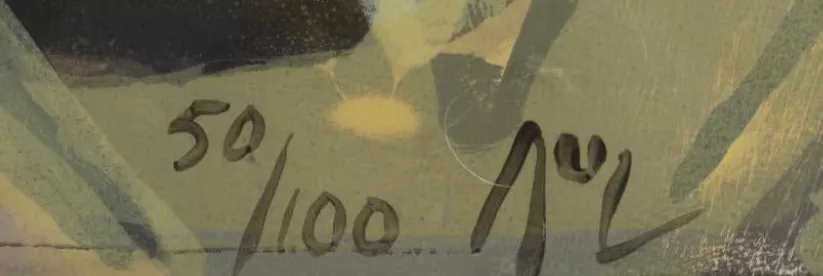
His signature
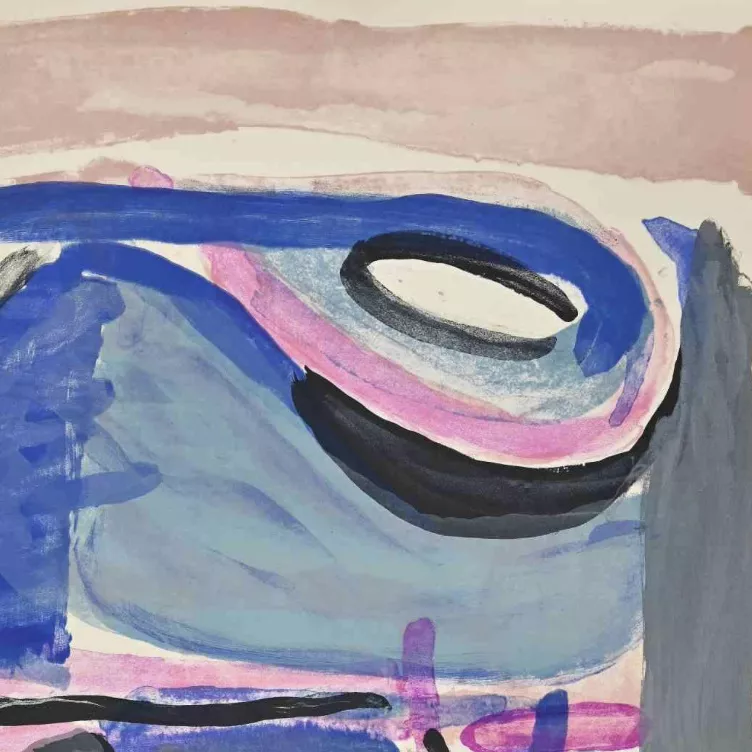
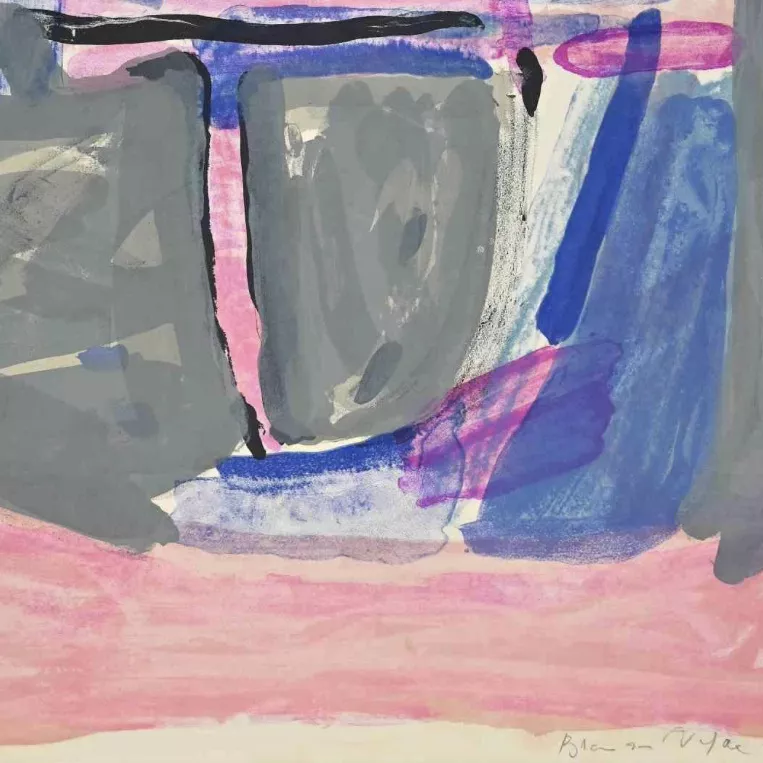
Bram van Velde's works are not all signed, which is why expertise is paramount.
Expertise your property
If you own a work by Bram van Velde don't hesitate to request a free appraisal by filling in our online form.
A member of our team of experts and certified auctioneers will contact you to provide an estimate of the market value of your work.
If you are considering selling your work, our specialists will also guide you through the various alternatives available to obtain the best possible price, taking into account market trends and the specific features of each work.
Estimate in less than 24h
Discover in the same theme

Rating and value of paintings by Max Oppenheimer
Max Oppenheimer is an Austrian Expressionist painter who produced many works that are highly valued at auction.
Learn more >

Rating and value of paintings by Igor Grabar
Igor Grabar is a Russian landscape painter who produced realistic paintings in the 20th century, which are highly valued and appreciated.
Learn more >

Rating and value of sculptures, animal bronzes by José Maria...
José Maria David is a French animal sculptor who produced mainly bronzes that are highly valued at auction.
Learn more >
D'autres tableaux abstraits vendus aux enchères

Estimated 2.000 - 4.000
Serge POLIAKOFF (1900-1969), Composition en rouge et bleu. 1965, Lithograph

Estimated Between €5,000 and €8,000
Jean MIOTTE (1926-2016), acrylic on canvas

Estimated 3.000 - 5.000
Roberto MATTA (1911-2002), Composition, Gouache on canvas

Secure site, anonymity preserved

Auctioneer approved by the State

Free and certified estimates
Frequently asked questions
-
Who was Bram van Velde, and what artistic movement did he belong to?Abraham Geradus van Velde, known as Bram van Velde (1895–1981), was a leading Dutch painter of the Second School of Paris, specializing in lyrical abstraction and Informel art. After beginning his career with figurative works, he developed, starting in the 1950s, an expressive style of abstraction characterized by oblong shapes, intense areas of flat color, and dripping effects, constantly playing on the tension between spontaneous gesture and formal restraint.
-
What are the price ranges for Bram van Velde's works at auction?Prices vary considerably depending on the type of work: prints and multiples range from €10 to €5,000, drawings and watercolors from €40 to €285,080, and paintings from €85 to €540,000. A major painting such as “Untitled, Tardais” (1959) sold for €540,000 in 2016, exceeding its initial estimate of €300,000 to €400,000.
-
How can I have a work by Bram van Velde appraised and authenticated?Auctie's offers a free, no-obligation appraisal conducted by its certified auctioneers and experts. Simply fill out the online form: a member of our team will contact you within 48 hours to provide you with an accurate estimate of your artwork’s market value—especially since not all of van Velde’s paintings are signed.
-
What factors influence the value of a work by van Velde?The value of a work depends on its dimensions, the medium (oil on canvas or gouache being the most highly valued), the period in which it was created (particularly after 1945), its provenance, the artist’s signature, its condition, and the work’s significance within the artist’s career. Major works remain rare on the market despite the 3,702 works listed.
-
Is this a good time to sell a work by Bram van Velde?Yes, Bram van Velde continues to command a high market value with strong potential for growth: works totaling more than €6 million were sold in France between 2000 and 2025, and the secondary market remains dynamic in France and Western Europe. Our experts will guide you toward the best strategy for achieving the optimal price based on current market trends.
