



Rating and value of paintings, drawings and engravings by Gustave Doré

Key takeaways
- Gustave Doré's paintings sell for between €40 and €502,240, with his oil-on-canvas works commanding the highest prices on the current market.
- Doré’s engravings and drawings, particularly his illustrations for *The Divine Comedy*, are highly sought after by French and international collectors.
- The Romantic artist produced more than 10,000 works (1832–1883), spanning painting, engraving, drawing, and sculpture, and had a major influence on illustration and the visual arts.
If you own a work by or after the artist Gustave Doré, and would like to know its value, our state-approved experts and auctioneers will offer you their appraisal services.
Our specialists will carry out a free appraisal of your work, and provide you with a precise estimate of its value on the current market.
Then, if you wish to sell your work, we will direct you to the best possible arrangement to obtain the optimum price.
Rating and value of the artist Gustave Doré
Gustave Doré is an artist from the Romantic group. His legacy includes paintings, prints and drawings. Now, prices for his works are exploding at auctioneers' gavels.
His paintings are particularly prized especially by French buyers, and the price at which they sell on the Art market ranges from €40 to €502,240, a considerable delta but one that speaks volumes about the value that can be attributed to Doré's works.
In 2023, a drawing produced using the graphite technique, Le corbeau et la Mort, sold for €75,000 while it was estimated at €50,000 to €80,000. The artist's quotation is high and varies according to the quantity of works present on the auction market.
Order of value from a single work to the most prestigious
Technique used | Result |
|---|---|
Sculpture | From €300 to €3,500 |
Estamp | From €70 to €92,000 | Drawing - watercolor | From €40 to €470,000 |
Oil on canvas | From €410 to €502,240 |
Estimate in less than 24h
Style and technique of artist Gustave Doré
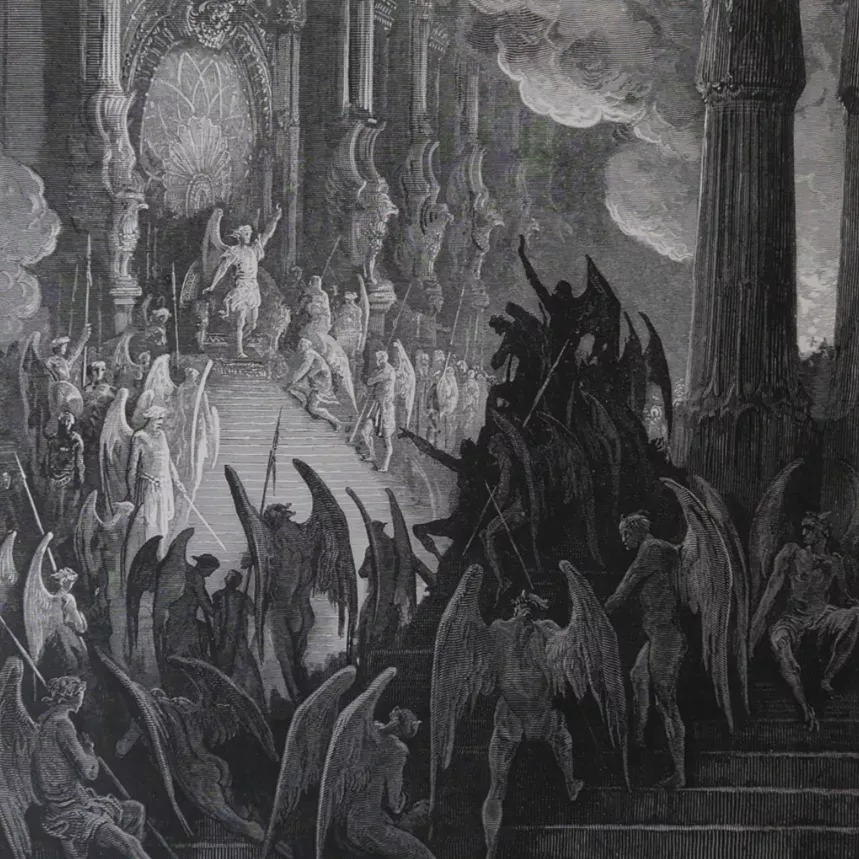
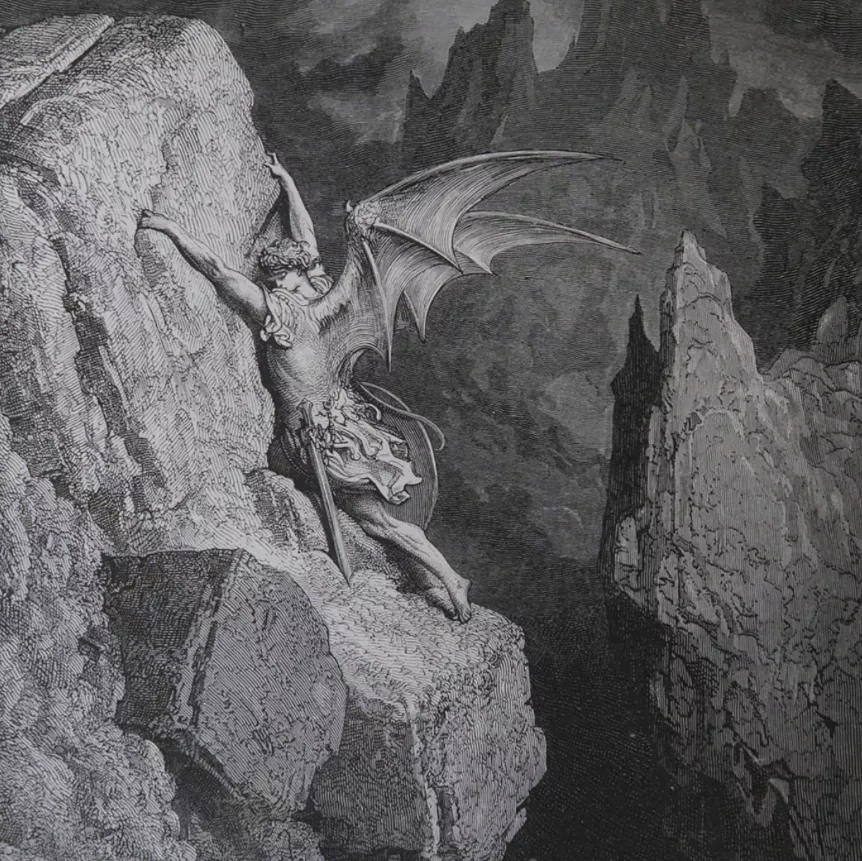
Gustave Doré's style is above all marked by an overflowing imagination and an impressive sense of detail. His works, particularly his illustrations, reveal a world both dreamlike and dramatic, in which every element seems charged with narrative energy.
This unique style enables him to capture the essence of the literary works he illustrates, adding a visual depth that amplifies the narrative.
Doré is a master of light and shadow, playing on contrasts to enhance the atmosphere of his scenes. His black-and-white etchings, particularly those from the Divine Comedy, are distinguished by their ability to evoke grandiose landscapes and expressive characters with an economy of means.
Every stroke seems meticulously thought out to add a theatrical, dramatic, sometimes almost supernatural dimension to his compositions. This is particularly true in Dante's infernal scenes, where anxiety and terror are amplified by the masterful use of chiaroscuro.
Technically, Doré excelled in the art of woodcutting, a demanding technique requiring great precision.
He collaborates with artisan engravers to transfer his designs onto wood blocks, but supervises every step of the process to ensure that his personal style is faithfully reproduced.
His engravings are rich in detail, with particular attention paid to textures and architectural elements, whether it's celestial landscapes, tormented hells or medieval cities he illustrates with incredible meticulousness.
This taste for detail can be seen as an extension of his interest in Gothic architecture, which influenced his art from an early age.
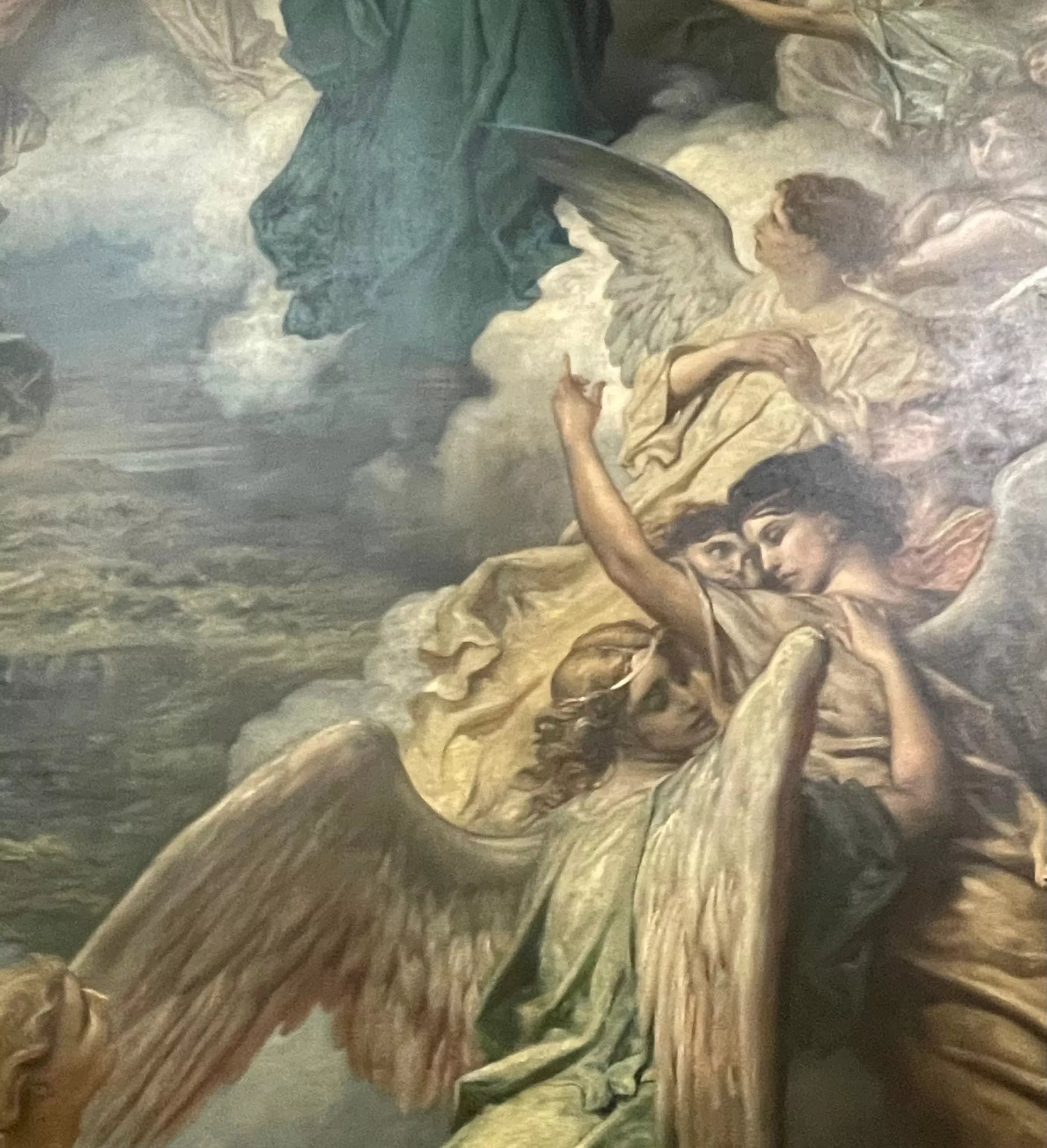
In painting, although less well known than for his engravings, Doré deploys a darker palette, often dominated by cold, dramatic tones.
His painted compositions retain the theatrical aspect of his illustrations, with characters with marked expressions and grandiose settings. The same technical rigor is found in his canvases, where he exploits contrasts in light to create powerful atmospheres, often imbued with mysticism.
The influence of the Romantic movement is also palpable in his work. Like the Romantic artists, Doré seeks to capture the raw emotion and strangeness of the world, oscillating between the sublime and the grotesque.
His figures are often imprisoned in monumental environments, which seem to crush the human with their immensity. This tension between the individual and the immensity of nature or the spiritual universe lends his work an almost epic dimension.
In short, Gustave Doré's style is that of a visionary, able to transcend the technical limitations of engraving and painting to bring to life rich, complex and often dark inner worlds.
The life of Gustave Doré
Gustave Doré (1832-1883) was a multi-talented artist: painter, draughtsman, sculptor and engraver, he left his mark on the history of art through the diversity and abundance of his work.
Born in Strasbourg into a well-to-do family, he was encouraged from an early age by his mother, who firmly believed in his artistic potential. From the age of five, he revealed a gift for drawing that surprised and sometimes frightened those around him, notably with his first drawing, a hen with a mystical air.
This precocious pencil stroke only asserted itself over time, and he began taking drawing lessons to perfect his talent.
At college, he drew his inspiration from medieval architecture and the Gothic movement, profoundly influencing his artistic style. His first caricatures already attracted attention, and at just thirteen years of age, his works were published for the first time.
This was a milestone for the young artist, who, although destined by his father for a career as a polytechnician, could not ignore the call of art.
In 1847, his life took a decisive turn when the family moved to Paris. It was here that he met Charles Philipon, director of the Albert&cie publishing house, an influential man in the world of the illustrated press.
Philipon, who had already discovered Honoré Daumier, was quick to recognize Doré's talent. At just fifteen, the budding artist was offered a contract for a weekly publication, despite his father's misgivings.
This contract, supported by his mother, opened the doors to a promising career in illustration, while requiring him to continue his studies. Doré moved to Paris, where he attended the Lycée Charlemagne, while continuing to draw prolifically.
The first years in Paris were marked by fruitful collaborations with the press, but Doré aspired to more. He began producing paintings on religious subjects, a theme he would pursue throughout his career, seeking to make a name for himself at the Salon, the annual exhibition of French artists.
Parallel to this, he made a name for himself as a talented illustrator by collaborating with various newspapers, including Le journal pour rire, for which he produced illustrations of the poem Le Juif errant.
However, it was his illustrations of Dante's Divine Comedy that were to propel him onto the international stage. These engravings, imbued with mysticism and exceptional dramatic depth, captivated audiences and critics alike.
Doré quickly became one of the most sought-after illustrators of his day, and his fame spread far beyond the borders of France. He also illustrated other literary masterpieces, such as the works of Rabelais and Cervantes, demonstrating his incredible versatility.
But Gustave Doré's career was not limited to illustration. A complete artist, he also tried his hand at sculpture and painting. Towards the end of his life, he enlisted in the National Guard during the Paris Commune, and this experience is reflected in his late works, particularly his patriotic paintings.
Although these works were not always immediately successful, they testify to his attachment to his country and his desire to contribute to national history.
Unfortunately, Gustave Doré's life was brutally cut short at the age of 51 by a heart attack. He left behind an immense legacy, with more than 10,000 works, an impressive figure that illustrates the incredible productivity and passion that animated him throughout his life.
His funeral, organized at the Basilica Sainte-Clothilde by his friend Marshal Foch, testifies to the impact he had, not only in the art world, but also in that of his contemporaries.
Gustave Doré, illustrator of genius and misunderstood painter
Gustave Doré's imprint on his time
Gustave Doré's legacy is as vast as his work, covering an impressive range of artistic fields.
With over 10,000 works to his credit, Doré leaves behind a corpus of incomparable richness, whose influence extends far beyond the borders of France and his era.
His work, particularly his illustrations, has left its mark on generations of artists, whether in illustration, painting, engraving or even film.
His epic depictions, imbued with dramatic power and narrative depth, have inspired great illustrators and painters, but also film directors who have seen his visual style as a source of inspiration for creating fantastic, cinematic worlds.
Doré's influence also extended to comics, where his dynamic use of composition and acute sense of detail paved the way for new forms of visual expression.
His etchings, with their play of light and dramatic perspectives, showed how an image could tell a story as powerfully as a text.
Many 20th-century artists, fascinated by this ability to make the invisible visible, drew on his work to enrich their own creations, including Alphonse Mucha and Erté.
It's no exaggeration to say that Doré helped transform illustration into an art form in its own right, worthy of respect and recognition similar to painting or sculpture.
Private collectors play a key role in preserving and disseminating this immense legacy. With such an abundant output, it's impossible for museums to exhibit everything, which gives collectors the responsibility of looking after a significant portion of his work.
Many of them are passionate about Doré's art and allow his illustrations and paintings to circulate in temporary exhibitions around the world, offering the public the chance to rediscover this prolific artist.
These private initiatives, as a complement to museums, help to keep Doré's spirit alive, through the preservation of his works but also by making them available to new generations of viewers.
As far as museums are concerned, a few major institutions preserve and exhibit works by Doré, even if his work has not always received the same lustre as that of other artists of his time.
However, some retrospective exhibitions have done him justice, revealing to the general public the breadth of his talent and the diversity of his creations, from etchings to sculptures to paintings.
Nowadays, the museums that exhibit his work provide a better understanding of the impact he had on the visual arts and why his work continues to resonate so strongly.
In short, Gustave Doré's legacy is not limited to his impressive artistic output.
It also lies in the lasting influence he exerted on other creators, in the passion of private collectors who preserve and exhibit his works, and in the way he redefined the boundaries between illustration, graphic art and narrative art. His imprint on the art world remains indelible.
Knowing the value of a work
If you happen to own a work by or after Gustave Doré, don't hesitate to request a free appraisal using our form on our website.
A member of our team of experts and certified auctioneers will contact you promptly to provide you with an estimate of the market value of your work, not forgetting to send you ad hoc information about it.
If you are considering selling your work, you will also be accompanied by our specialists in order to benefit from alternatives for selling it at the best possible price, taking into account market inclinations.
Estimate in less than 24h
Works from the same period sold at auction

Estimated 15.000 - 20.000 €
Alfred Auguste Janniot (1889-1968) attributed to : Very large bas-relief

Estimated 2 000 € - 3 000 €
Delphin ENJOLRAS (1857-1945) "A Midsummer Night's Dream", Oil on canvas

Estimated 600 - 800 €
Alexandre Gabriel DECAMPS (1803-1860) Two children reading.

Estimated 15 000 - 20 000 €
Jean HENNINGER (1916-1994) Hunting scene.

Estimated 9 000 - 12 000 €
Guillaume FOUACE (1837-1895) Pheasant and hare.

Estimated 1.000 - 2.000
Jean COCTEAU (1889-1963) Salut à Orphée, Mylord, 1960, Ink on paper
Discover in the same theme

Rating and value of works, tapestries and hinges by Jean Pic...
Jean Picart le Doux was a famous 19th-century painter and upholsterer. His works are very popular on the auction market.
Learn more >

Tableaux Alix Aymé - Value, quotation, artist
Alix Aymé is a 20th-century French artist. Her drawings and paintings are successful and highly prized at auction.
Learn more >

Jacques Biny luminaries and sconces: price and value
Jacques Biny is a French designer and publisher who has produced works that are highly rated and valued at auction. Estimated in 24h.
Learn more >

Secure site, anonymity preserved

Auctioneer approved by the State

Free and certified estimates
Frequently asked questions
-
Who was Gustave Doré, and what was his artistic context?Gustave Doré (1832–1883) was a French artist associated with the Romantic movement, renowned as a painter, draftsman, sculptor, and engraver. Born in Strasbourg, he established himself as a brilliant illustrator through his collaborations with the Parisian illustrated press and, above all, through his famous engravings of Dante’s Divine Comedy. With more than 10,000 works to his credit, he left a profound mark on art history and influenced generations of artists, from film to comics.
-
What are the price ranges for Gustave Doré's works based on the medium used?Prices vary considerably depending on the medium: prints range from €70 to €92,000, drawings and watercolors from €40 to €470,000, oil-on-canvas paintings between €410 and €502,240, and sculptures between €300 and €3,500. For example, in 2023, a graphite drawing titled “The Raven and Death” sold for €75,000. These variations reflect the wide range of values depending on the provenance, condition, and significance of each work.
-
How can you authenticate a work by Gustave Doré?To authenticate and appraise a work by Doré, we recommend that you request a free appraisal from Auctie's using our online form. Our state-certified experts and auctioneers will analyze your piece in detail and provide you with an accurate estimate of its current market value, with no obligation on your part.
-
Is this the right time to sell a work by Gustave Doré?Yes, now is an excellent time to sell a work by Doré. Prices for his paintings, drawings, engravings, and prints are rising significantly on the auction market, particularly among French buyers. Demand remains strong for this great master of Romanticism and illustration, which ensures a good return on your investment.
-
How does the appraisal process work at Auctie's?Appraisals at Auctie's are free and non-binding. Simply submit your request via our online form, and one of our expert auctioneers will examine your piece and provide you with an accurate appraisal within 48 hours. If you decide to sell, we’ll guide you through the entire process—from the appraisal to the auction—to help you achieve the best possible price.
