



Rating and value of works, drawings, paintings, sculptures by Honoré Daumier

Key takeaways
- Daumier's works sell for between €5 and €1,897,990, with oil-on-canvas paintings commanding the highest prices and prints being the most affordable.
- His 19th-century lithographed political caricatures, particularly those depicting the July Monarchy, established his reputation, although he is also recognized for his paintings and sculptures.
- A free appraisal allows for an accurate assessment of the market value of your Daumier works, which is essential given the many copies available on the market.
If you own a work by or after the artist Honoré Daumier, and would like to know its value, our state-approved experts and auctioneers will offer you their appraisal services.
Our specialists will carry out a free appraisal of your work, and provide you with a precise estimate of its value on the current market.
Then, if you wish to sell your work, we will direct you to the best possible arrangement to obtain the optimum price.
Rating and value of the artist Honoré Daumier
Honoré Daumier is considered one of the most versatile artists of the 19th century, He leaves behind an artistic identity of his own. This legacy consists mainly of caricatures and paintings.
At present, prices for his works are rising at auctioneers' gavels, his stock is on the rise.
His canvases and other works are particularly prized, especially by French buyers, and the price at which they sell on the art market ranges from €5 to €1,897,990, a considerable delta but one that speaks volumes about the value that can be attributed to Daumier's works.
In 2018, acaricature entitled Discussion of Lawyers, and dating from 1860 sold for €1,513,980, while it was estimated at between €841,000 and €1,260,000.
Order of value from a simple work to the most prestigious
Technique used | Result |
|---|---|
Estamp | From €5 to €54,600 |
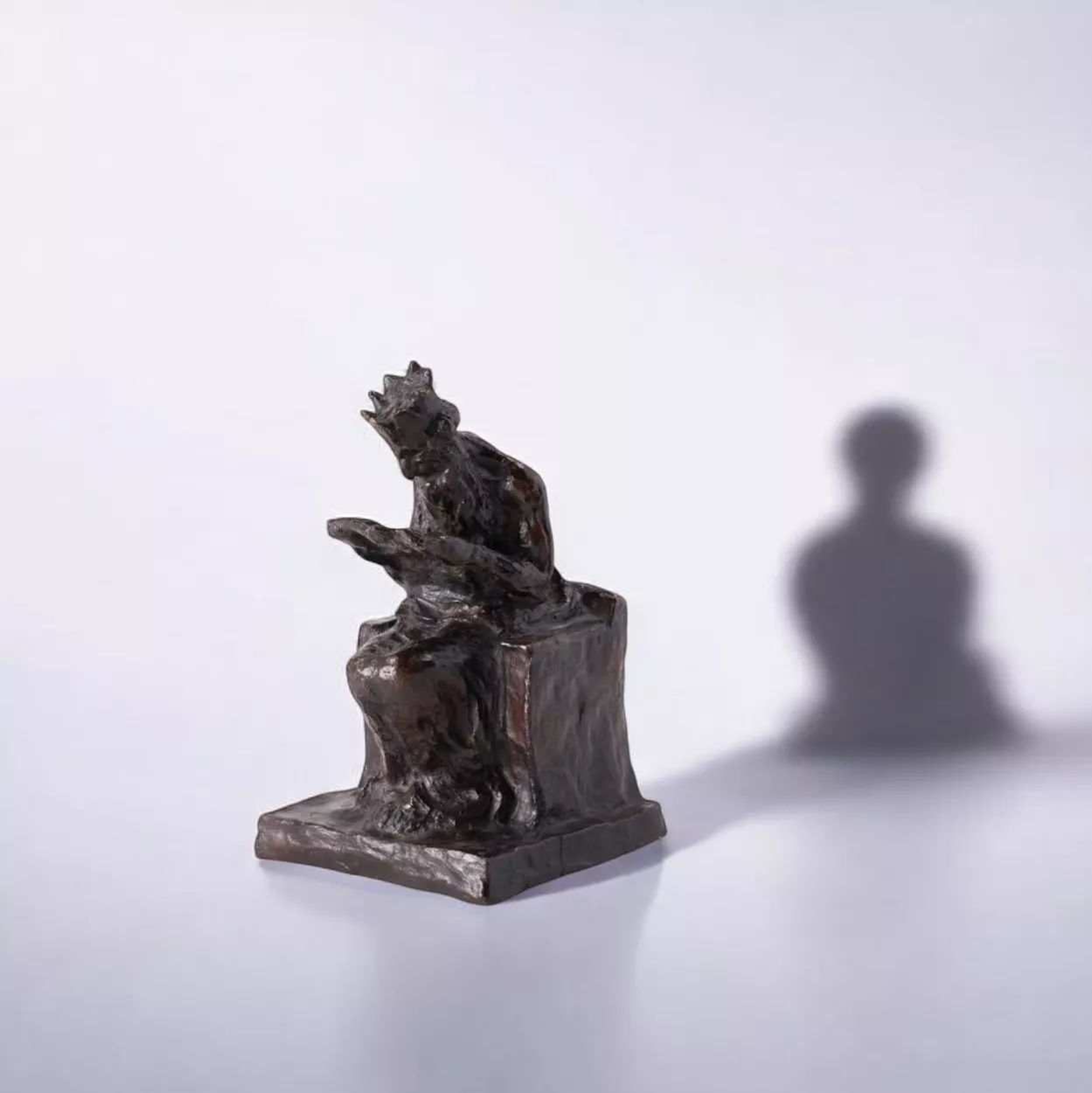
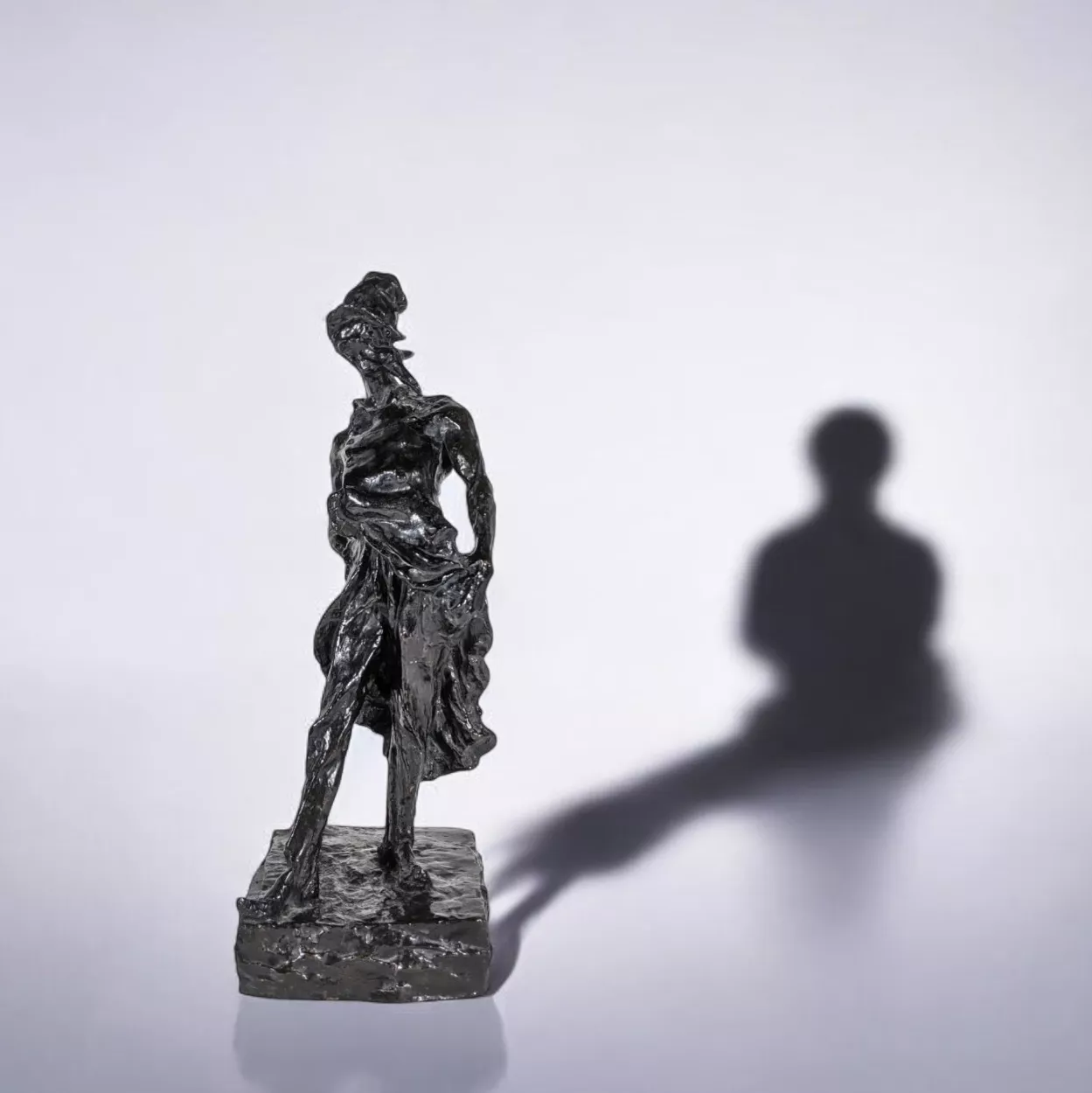
Volume sculpture | From €150 to €579,300 | Drawing - watercolor | From €50 to €1,679,040 |
Oil on canvas | From €350 to €1,897,990 |
Estimate in less than 24h
Style and technique of artist Honoré Daumier
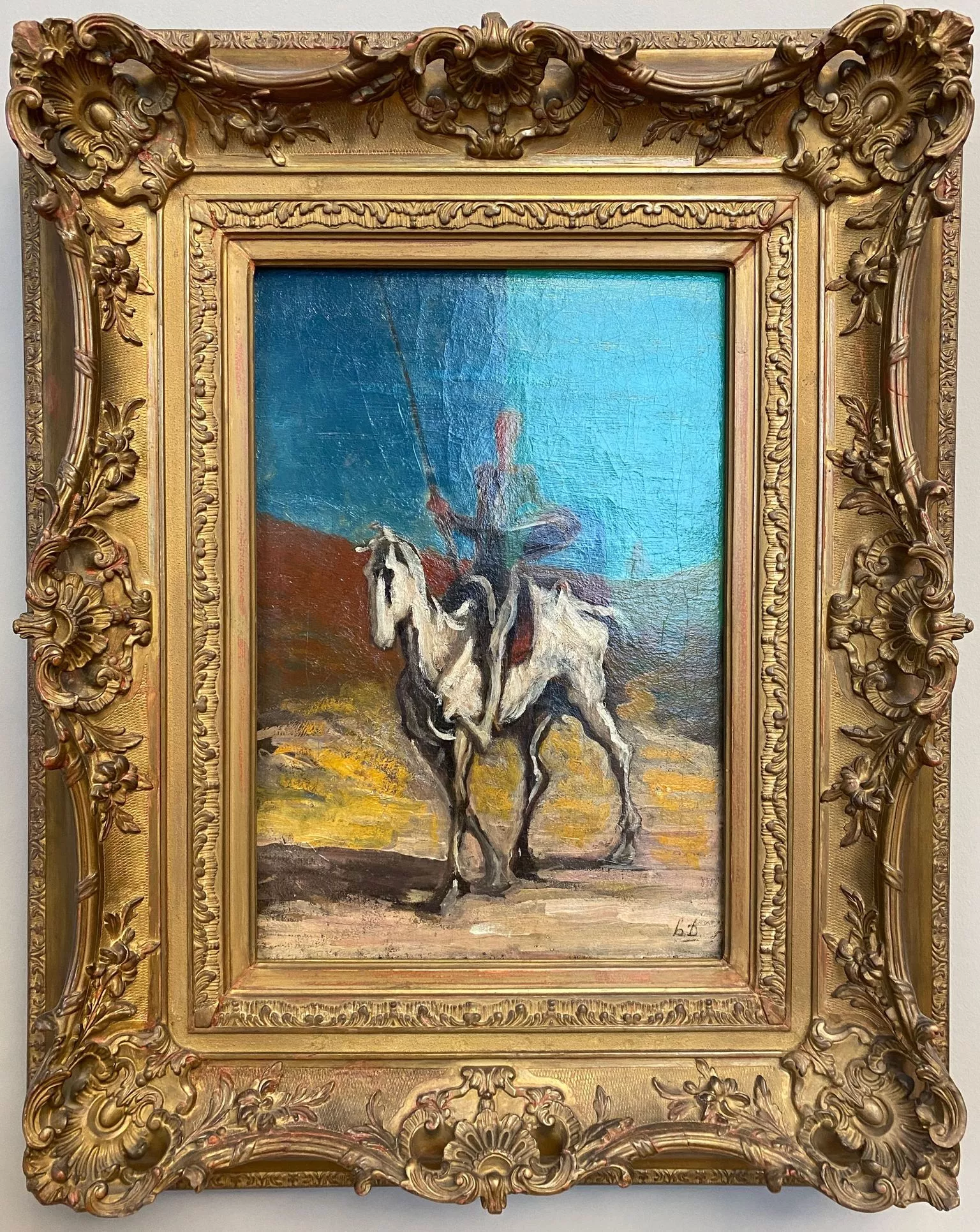
Honoré Daumier was part of the realism movement. He worked with many different techniques, including painting, drawing, engraving and sculpture, just like Degas. He also excelled in caricature, having worked for several satirical newspapers of his day.
The life of Honoré Daumier
Honoré Daumier (1808-1879) was a French painter and sculptor considered one of the leading artistic exponents of his time. He was born in Marseille, where his father was a picture framer.
His early literary ambitions took him to Paris, where he wanted to publish his poems. His parents followed him to Paris, but his father categorically refused to let him turn to art, and arranged for him to work for a bailiff.
He met Alexandre Lenoir in 1822 and became his protégé, beginning his training as an artist at the Académie Suisse. He chose lithography to begin his career, a choice by default that proved productive. At the time, he worked anonymously and did not sign his works.
He made the acquaintance of Charles Philipon, and worked for his newspaper La Silhouette.
It was thanks to his political caricatures that he made a name for himself. Published in the newspaper La Caricature, his lithographs on the July monarchy and his pear-shaped faces quickly caused a scandal. He was convicted for a caricature of Louis-Phillipe d'Orléans as Gargantua, and spent six months in prison.
It was mainly these caricatures that made him famous, although he was also in demand for his sculptures and paintings, most of which had nothing to do with satyrdom.
It was this experience that inspired his caricatures of biting lawyers. From prison, he rubbed shoulders with Paul Huet and encouraged him to turn to the caricature genre.
After 1835, he had to stop caricaturing because the press was censored by the Law. He therefore decided to mock the bourgeoisie, which was in line with his political convictions, even though he could no longer mock the regime in power.
He painted more pictures at the end of his career, sharing social realism with Gustave Courbet.
He spends the end of his career in Valmondois, then in financial difficulties, in a house that Camille Corot has lent him.
He died shortly afterwards, his body resting alongside his painter friends in Père-Lachaise.
Caricature in the 19th century
Caricature in the 19th century, a veritable distorting mirror of society, developed as an art form in its own right, finding particularly fertile ground in France.
Under the sharp pens of masters such as Honoré Daumier, it became a formidable weapon against the powerful and the shortcomings of society.
Daumier, himself, distinguished himself with his biting depictions of the July monarchy, where his lithographs reveal a Louis-Philippe grotesquely transformed into a pear, a symbol of the regime's gentrification and ineptitude.
These kinds of works, published in satirical journals such as La Caricature, contributed to the birth of a militant press, where humor blended with social criticism.
Caricature, often repressed and censored at the time, became a vehicle for expressing popular frustrations, giving a voice to those whom society sought to stifle.
Despite the censorship that weighed on the press after 1835, caricaturists found roundabout ways to continue their art, now mocking the bourgeoisie, witnesses to a society in the throes of change.
Thus, nineteenth-century caricature, beyond its playful aspect, establishes itself as a living testimony to the political and social tensions of its time, where art becomes resistance.
Honoré Daumier and political cartooning
Focus on The Defender, Honoré Daumier
The Defender, an iconic work by Honoré Daumier, embodies with striking force the social satire that permeates his work.
Painted with deliberate sobriety, this painting depicts a lawyer in the midst of a closing argument, his theatrical posture contrasting with the apparent indifference of the audience around him.
The defender's face, marked by exaggerated eloquence, betrays both the ardor and the ridiculousness of a profession that Daumier never ceases to deride.
The painting's coarse, almost caricature-like strokes and dark palette highlight the vacuity of legal discourse, often detached from the human realities it is supposed to represent.
The work, in its tight composition, where the characters seem crammed into a suffocating space, recalls the theater of the absurd, where roles are overplayed, but nothing truly significant is played out.
Daumier, as an acute observer of the courts, captures here the essence of a judicial system he deems disconnected from the people, more preoccupied with verbal jousting than the quest for justice. Le Défenseur is therefore not just a courtroom scene; it's a scathing critique of an institution which, under the trappings of grandeur, often masks futility and complacency.
In this painting, Daumier doesn't just paint a scene. He captures, with biting irony, the soul of an age when words take the place of action, when representation prevails over reality.
Thus, Le Défenseur becomes an allegory of 19th-century bourgeois society, which Daumier never ceases to depict, sometimes with humor, sometimes with bitterness, but always with uncompromising lucidity.
Daumier's imprint on his time
Honoré Daumier, a deeply committed artist, established himself throughout his career as the voice of the underprivileged and oppressed, using his art as a means of social denunciation.
Like Gustave Courbet or John Constable, Daumier always sought to depict the raw reality of his time, eschewing academic ideals in favor of biting realism.
His caricatures, often virulent, point the finger at the failings of bourgeois society and the injustices done to the working classes.
This boldness often landed him in the crosshairs of the authorities, prompting him to publish his works anonymously to avoid reprisals.
The artist was thus able to circumvent censorship, but at the cost of a certain personal invisibility, which only reinforces the aura of mystery surrounding his work.
This choice of anonymity also contributed to the dispersal of his creations, which today are mainly preserved by private collectors.
Although some of his pieces have found refuge in museums, it's thanks to these enthusiasts that Daumier's legacy endures.
These collectors play a crucial role in preserving an artistic heritage that continues to resonate with relevance and critical depth.
Recognizing the artist's signature
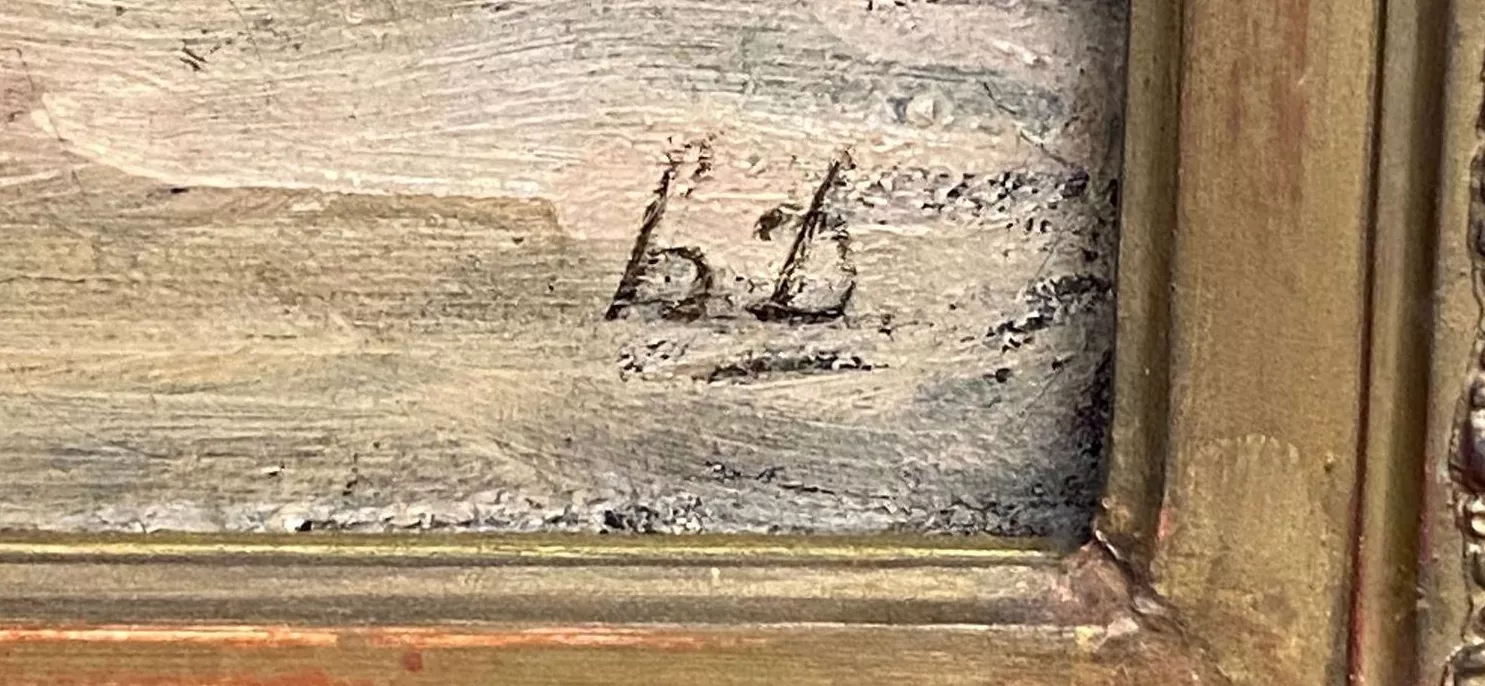
Daumier sometimes signs his works, mostly at the bottom of the painting, in a color that contrasts with the background. Here's an example. Sculptures can also be signed.
However, there are many copies, which is why expertise is important. As a rule, caricatures are not signed, as he published them anonymously.
Knowing the value of a work
If you happen to own a work by Daumier or after the artist, don't hesitate to request a free valuation using our form on our website.
A member of our team of experts and certified auctioneers will contact you promptly to provide you with an estimate of the market value of your work, not forgetting to send you ad hoc information about it.
If you are considering selling your work, you will also be accompanied by our specialists in order to benefit from alternatives for selling it at the best possible price, taking into account market inclinations.
Estimate in less than 24h
Works from the same period sold at auction

Estimated 2 000 € - 3 000 €
Delphin ENJOLRAS (1857-1945) "A Midsummer Night's Dream", Oil on canvas

Estimated 9 000 - 12 000 €
Guillaume FOUACE (1837-1895) Pheasant and hare.

Estimated 600 € - 800 €
Henri ZUBER (1844-1909), Bridge at Artemare. Oil on canvas.

Estimated 800 - 1.500€
Barye, seated lion
Discover in the same theme

Rating and value of works, paintings by Léon Lhermitte
Léon Lhermitte was a 19th-century naturalist painter who produced drawings and oil paintings that are highly prized at auction.
Learn more >

Rating and value of paintings by Hippolyte Lazerges
Hippolyte Lazerges was a painter of religious and Orientalist subjects who produced paintings of high value.
Learn more >

Rating and value of paintings by Clémentine Hélène Dufau
Clémentine Hélène Dufau is an artist who has produced paintings and illustrations that are highly rated and valued at auction.
Learn more >

Secure site, anonymity preserved

Auctioneer approved by the State

Free and certified estimates
Frequently asked questions
-
Who is Honoré Daumier, and what is his artistic context?Honoré Daumier (1808–1879) was a French painter, sculptor, and caricaturist considered one of the leading figures of Realism in the 19th century. Known for his scathing political lithographs published in satirical newspapers, he established himself as the voice of the oppressed, using art to denounce the failings of bourgeois society and injustices against the working classes. His caricatures of the July Monarchy earned him a prison sentence but ensured his lasting fame.
-
What are the selling prices of Daumier's works?The value of Daumier’s works varies considerably depending on the medium and their significance: prints range from €5 to €54,600, sculptures between €150 and €579,300, drawings and watercolors between €50 and €1,679,040, and oil paintings on canvas between €350 and €1,897,990. His market value is currently on the rise, with a notable record set in 2018 for the caricature “Discussion d’avocats” (1860), which sold for €1,513,980, exceeding its initial estimate.
-
How do you authenticate a work by Daumier?To authenticate a work by Daumier, we recommend requesting a free appraisal from Auctie's, which works with state-certified experts and auctioneers. Please note: caricatures are generally unsigned (published anonymously); paintings may be signed at the bottom; and there are many copies in circulation. Our team of experts will contact you within 48 hours to provide an estimate and key information regarding the work’s authenticity.
-
Is this the right time to sell a Daumier work?Yes, now is a good time to sell a work by Daumier. His market value is currently on the rise, and his works are particularly sought after, especially by French buyers. The prices at which they are selling reflect strong demand for his caricatures, sculptures, and paintings.
-
How does the sale of a Daumier work at Auctie's take place?At Auctie's, the process is simple and secure: you request a free, no-obligation estimate using our online form. A certified expert or auctioneer will contact you within 48 hours to appraise your artwork and provide you with an estimate. If you decide to sell, our specialists will guide you through the process from appraisal to auction, offering you options to achieve the best possible price based on current market trends.
