



Rating and value of works, drawings, paintings by Jean-Baptiste Camille Corot

Key takeaways
- Corot’s oil-on-canvas paintings are fetching record prices, such as “Venice, View from the Quai des Esclavons,” which sold for 6.5 million euros at Christie’s in 2018.
- Prices vary considerably depending on the medium: prints range from €11 to €46,000, watercolors from €250 to €205,806, and oil paintings up to €6.5 million.
- Approximately 3,000 paintings falsely attributed to Corot are circulating on the market, although he actually painted far fewer during his lifetime (1796–1875).
Master of the natural scene and source of inspiration for the Impressionists, Jean-Baptiste Camille Corot (1796-1875) brought a revival to the traditional landscape genre. As an avid traveler, this artist succeeded in freeing himself from the teachings of the École des Beaux-Arts in order to paint nature in a more authentic way.
If you own a work by or based on the artist Jean-Baptiste Camille Corot and would like to know its value, our state-approved experts and auctioneers will guide you.
Our specialists will carry out a free appraisal of your work, and send you a precise estimate of its value on the current market.
Then, if you wish to sell your work, we will direct you to the best possible arrangement to obtain the optimum price.
Artist's rating and value
Jean-Baptiste Camille Corot produced a variety of works, including paintings, watercolors and prints. He mainly depicted travel landscapes, portraits and genre scenes.
His views of Italy are particularly sought-after at auction and can fetch several hundred million euros at auction.
As evidenced by his oil on canvas Venice, vue du quai des Esclavons, adjudged over 6 million euros at Christie's in 2018.
Order of value from the most basic to the most prestigious
Technique used | Result |
|---|---|
Estamp | From €11 to €46,000 |
Drawing - watercolor | From €250 to €205,806 |
Oil on canvas or panel | From €400 to 6,502,550 |
Estimate in less than 24h
Corot's style and technique
Corot, a master of artistic values, creates realistic landscapes that reflect his respect for nature. His compositions balance light and shadow, with slightly gray skies and integrated human figures.
He also excelled in delicate portraits, particularly of women and children. Corot uses drawing, particularly graphite and charcoal, and explores the cliché-glass technique.
From 1850, he reached artistic maturity, creating poetic landscapes inspired by his memories.
The life of Jean-Baptiste Camille Corot
Jean-Baptiste Camille Corot was born in 1796 into a wealthy family of fashion merchants. Although his father did not support his passion for painting, the young man finally managed to obtain a pension from his father.
First apprenticed to a draper, he did not enjoy his work and took evening classes in drawing at the Académie Suisse, quai des Orfèvres.
Corot soon joined the studio of Achille-Etna Michallon, who specialized in historical landscapes. The young artist thus began the first part of his career as an itinerant painter in Italy.
With financial help from his parents, he rented a studio on Quai Voltaire, which he used as his studio. He learned neoclassical principles and followed Michallon's advice, who encouraged him to paint in nature. After the death of his first master, he continued to train with Jean-Victor Bertin.
His interest in nature led him to paint in the Fontainebleau forest, and more particularly in the village of Barbizon, which gave its name to the school of painters who came to work there for many years.
Between 1825 and 1828, Corot traveled to various Italian cities, including Naples, Rome and Venice. He also took advantage of these productive years for his painting to travel to Auvergne, Brittany, Provence and Burgundy to capture as many landscapes as possible.
A few years later, Jean-Baptiste Camille Corot founds the Barbizon School. At the Salon of 1835, he first exhibited a painting entitled Hagar, now at the MET in New York, illustrating an episode from Genesis.
It wasn't until 1847 that he was finally honored with the Légion d'honneur. As a devout Catholic, he led a life on the fringes of society. In the 1850s, his painting is considered to have reached a certain maturity : he detaches himself from the landscape painted on the motif.
Close to Gustave Courbet, he painted with him in Saintes. An exhibition of works produced during this period bringing together 170 works will be organized, including their respective works as well as those of two other artists, Louis-Augustin Auguin and Hippolyte Pradelles.
He is particularly well known for having been the victim of forgers, with around 3,000 paintings attributed to him circulating on the market, whereas he actually painted fewer.
He ended his career renowned and very famous, earning a lot of money in the process. Known for his generosity, he in fact bought Honoré Daumier a house and gave money to Jean-François Millet, who lacked enough to raise his children.
He died in 1875, a year after the first Impressionist exhibition, where two of his students, Berthe Morisot and Pissarro, are represented.
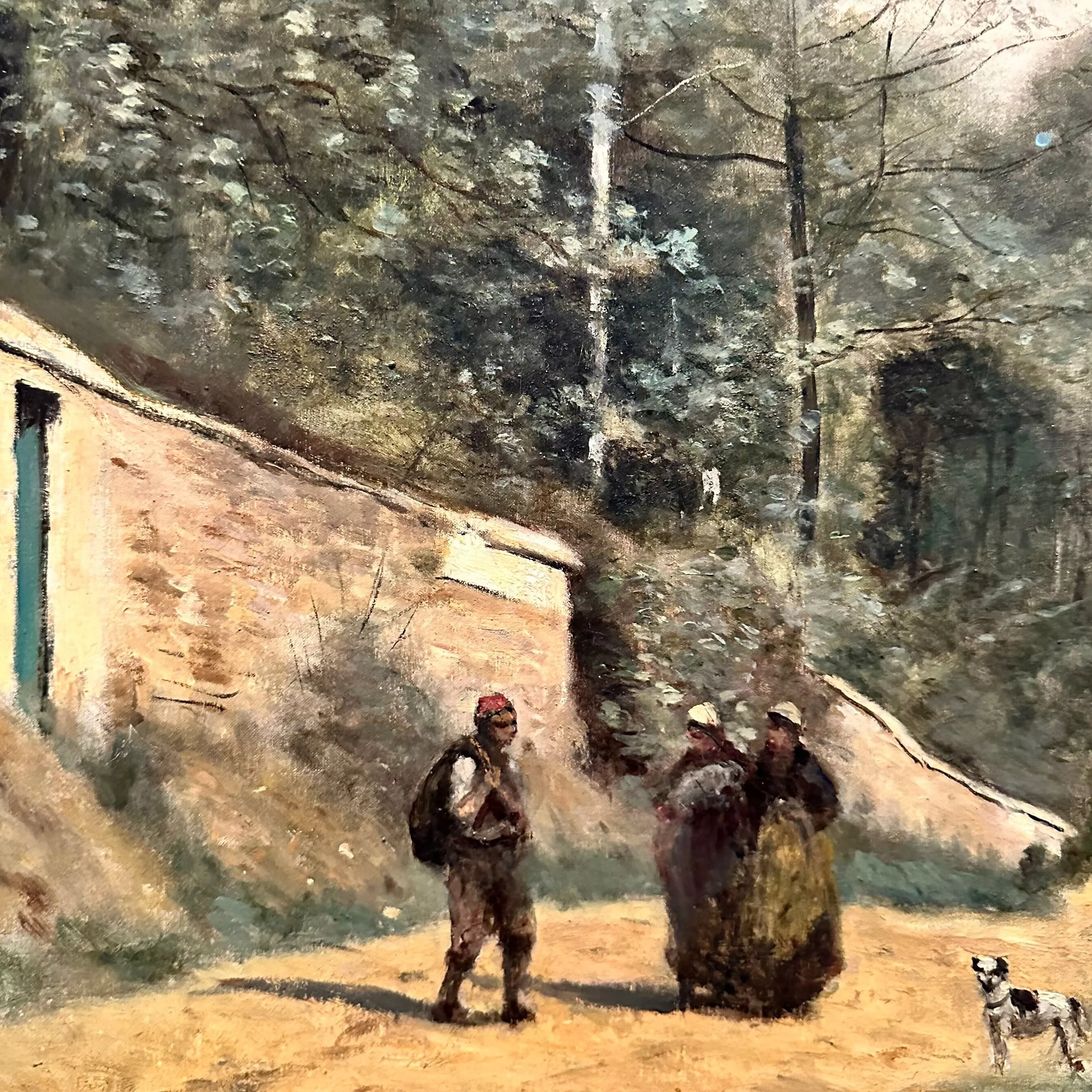
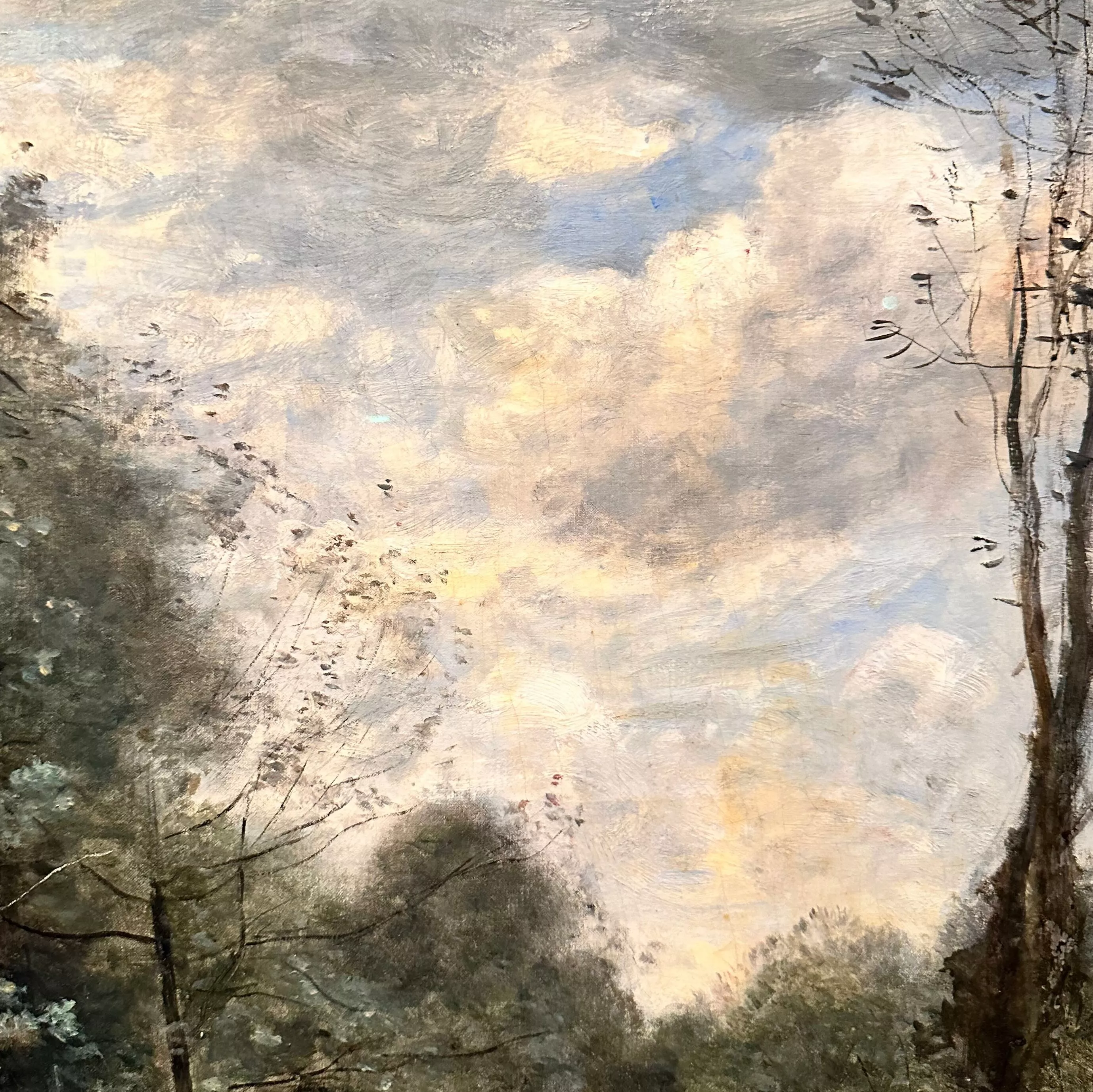
Focus on Le coup de vent, JBC Corot, Musée de Reims
In this work by Jean-Baptiste Camille Corot, everything seems to vibrate under the powerful breath of the wind. The tree, leaning, almost bending, captures our gaze with its imposing strength, but also with its suppleness.
There's a palpable, almost dramatic tension in this scene, but without ever tipping over into exaggeration.
The cloud-laden sky foreshadows a storm, but Corot doesn't turn it into a terrifying spectacle. He maintains a subtle balance between the agitation of the elements and the tranquility of the earth.
Muted tones, between gray and brown, dominate this composition. Here, Corot is not looking for the bright light of Mediterranean skies, but rather a soft, enveloping atmosphere.
The ground, both muddy and desert-like, almost merges with the sky, creating a visual continuity that accentuates the impression of immensity. We sense the humidity in the air, a sensation of autumnal freshness that blends with the harshness of the elements.
The figure in the distance, almost insignificant in the face of nature, seems absorbed by the immensity of the landscape. Far from being a mere supporting figure, this human silhouette participates in the story told by Corot.
It recalls the smallness of man in the face of nature, a theme dear to the artist who, without ever sinking into the grandiose, succeeds in delicately evoking the power of the natural elements.
The tree, for its part, becomes almost a protagonist, with its tormented, wind-beaten branches. It embodies resilience, the ability to stand firm in the face of external forces, a theme that Corot subtly explores, all in simplicity.
It's not so much a tree that we see, but a symbol of nature's silent, ongoing struggle.
And so, Corot here offers us both a realistic and poetic vision of a landscape subjected to the whims of the wind. Nature, raw and unidealized, takes its rightful place in this composition.
Far from bright skies or shimmering lights, the artist opts for a dark palette, almost melancholy, but imbued with a profound serenity.
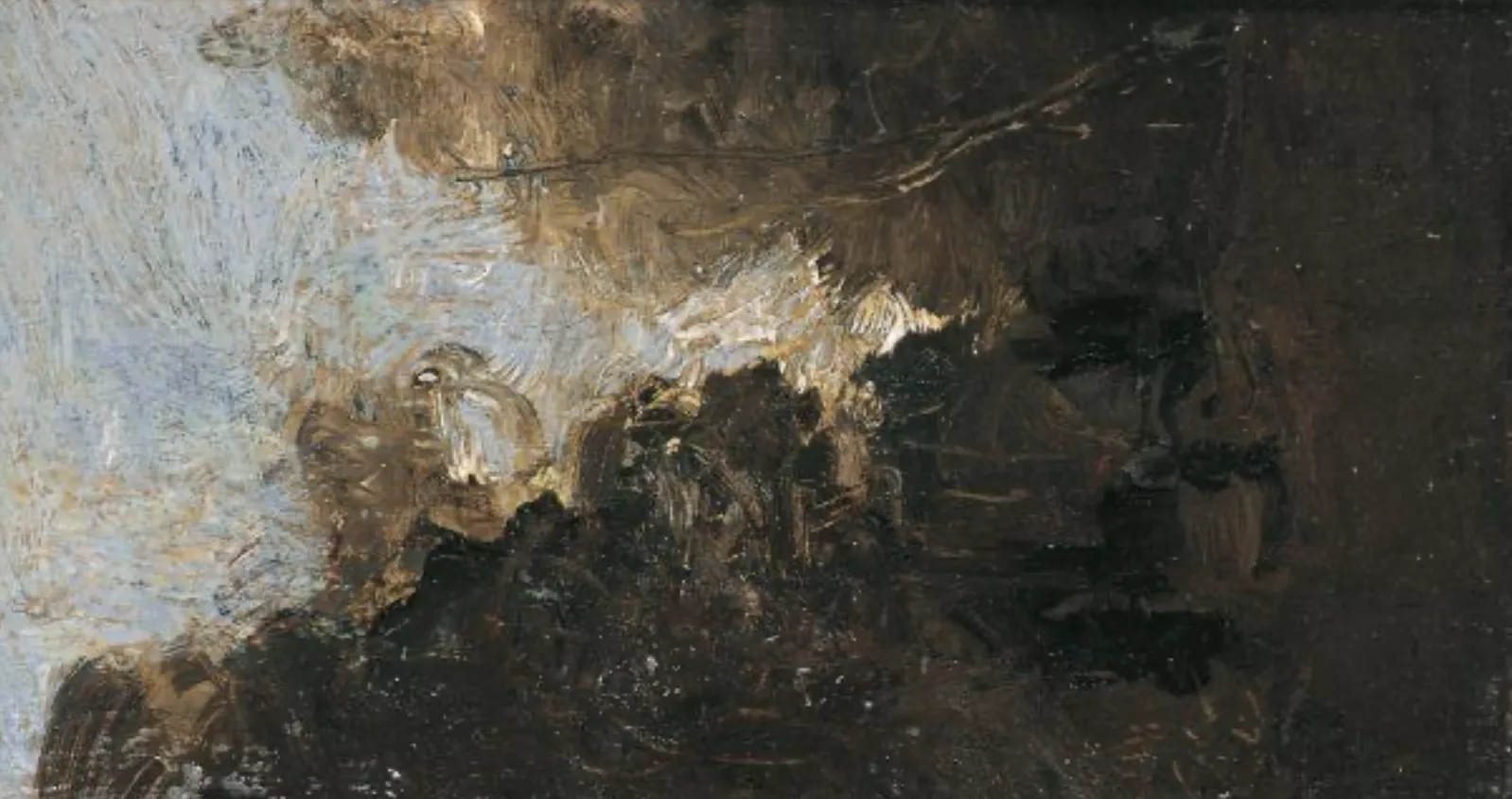
Gigapixel, Corot, Wheat field in the Morvan
The birth of the Barbizon School
This painting by Corot, with its vibrant, living nature, fits directly into the movement that was to give rise to the Barbizon School.
This group of painters, of which Corot was one of the pioneers, sought to capture nature in its rawest state, far removed from the idealized or heroic representations of landscape offered by academic painting.
Here, in this work, we can already see the beginnings of this approach: the attention paid to simple details, to the tree beaten by the wind, to the diffuse light of a sky laden with clouds. There is no quest for the spectacular, but rather a desire to do justice to the ordinary beauty of everyday landscapes.
Barbizon, a small village nestled on the edge of the Fontainebleau forest, became a gathering place in the 1830s for those artists eager to paint en plein air, directly confronted with nature. Corot, with his sensitive, intimate approach to landscape, was a source of inspiration for many of these painters.
He didn't just observe nature, he lived it, feeling its breath, its quiet strength, its changing character. In this work, we perceive this search for sincerity, a desire to show nature as it is, in all its silent splendor.
The Barbizon School was born precisely from this philosophy: to paint without artifice, to capture the moment, the atmosphere, the changing light.
Corot, through his travels in the forest of Fontainebleau and his love of rural landscapes, played a major role in this pictorial revolution.
He paved the way for a new way of seeing the natural world, closer, more authentic, and deeply respectful of the environment that surrounded it.
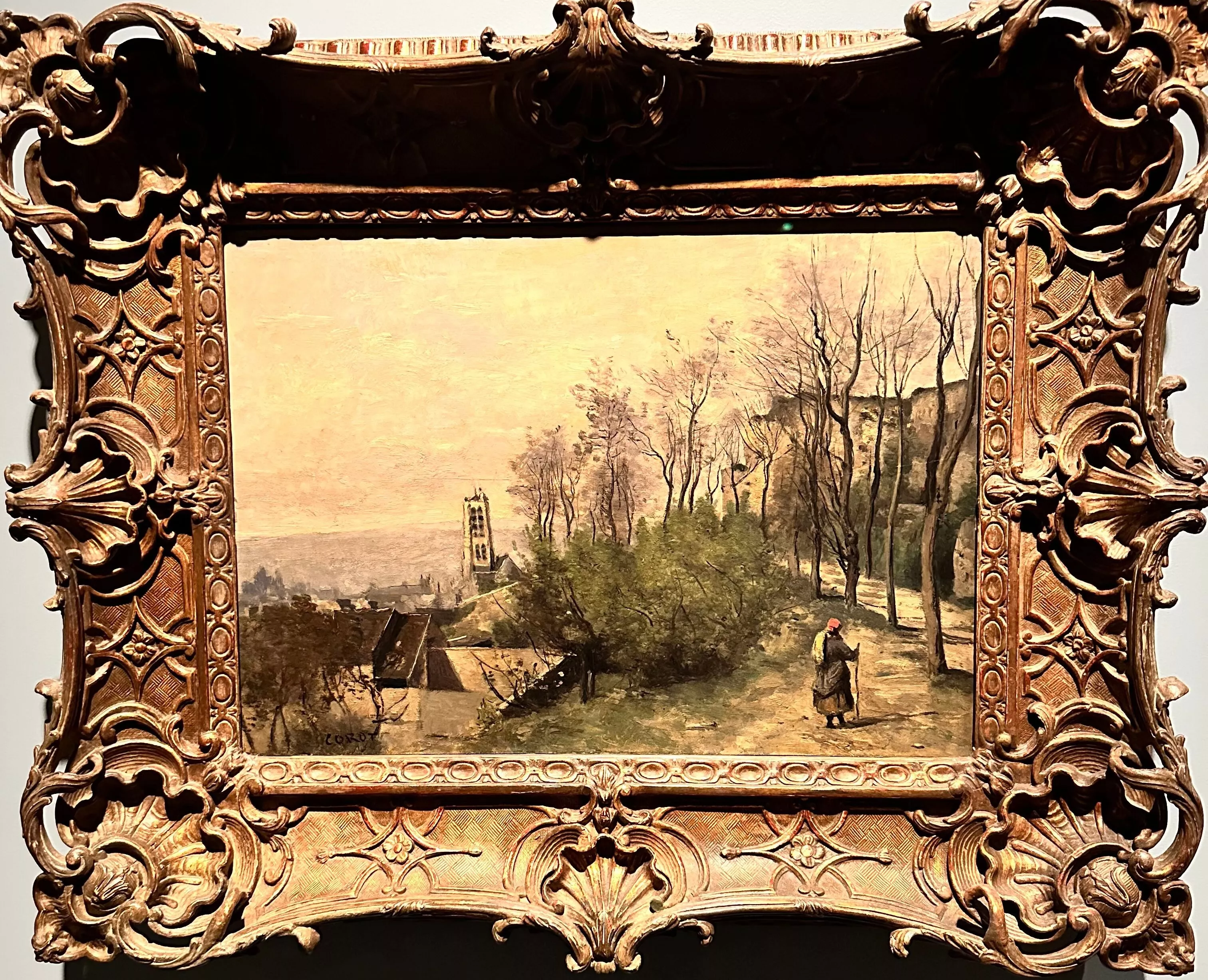
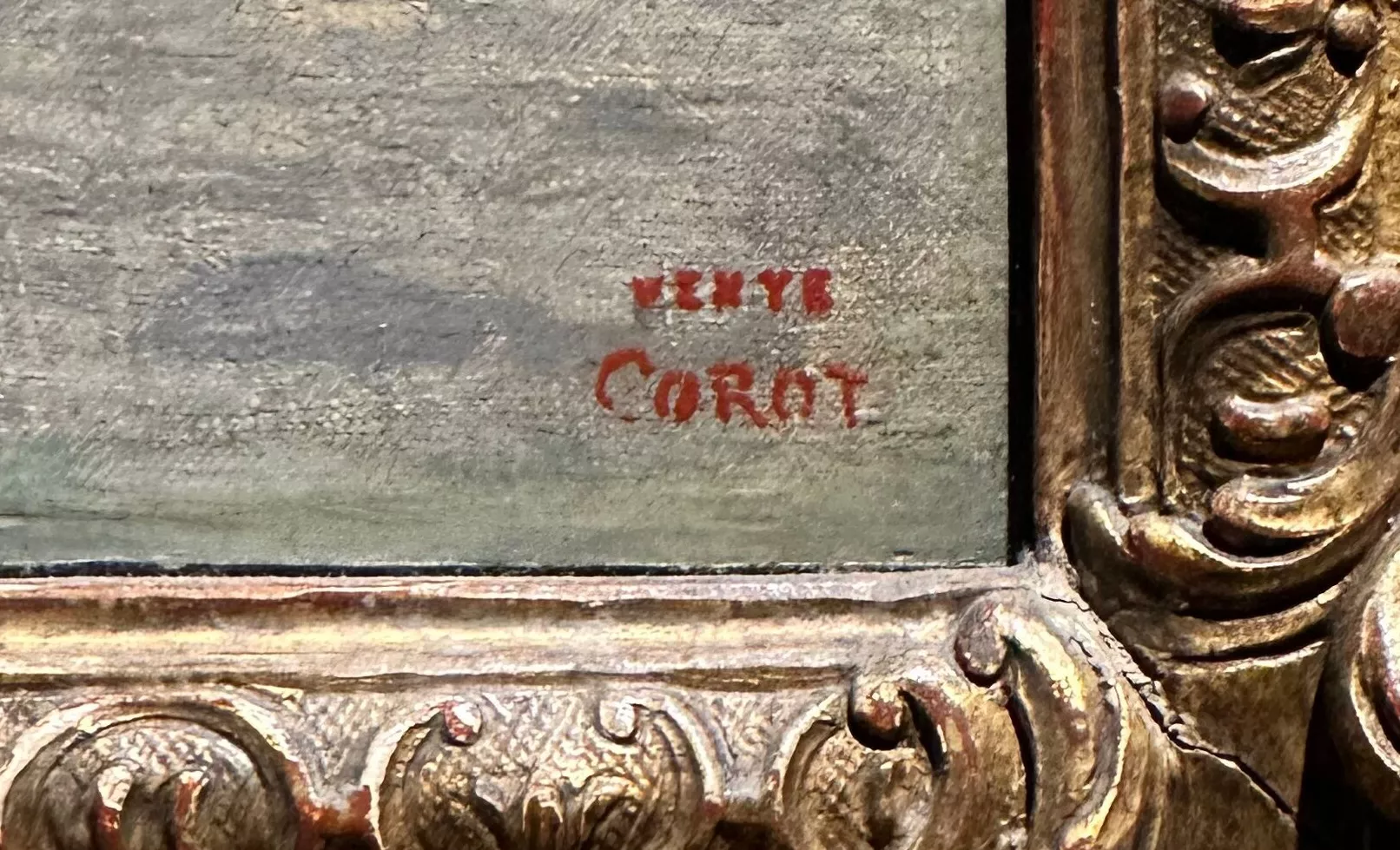
His signature
Not all of Jean-Baptiste Camille Corot's works are signed.
Although there are variations, here is a first example of his signature:
Expertise your property
If you own a work by Jean-Baptiste Camille Corot, don't hesitate to request a free appraisal by filling in our online form.
A member of our team of experts and chartered auctioneers will contact you to provide an estimate of the market value of your Corot-signed work.
If you are considering selling your work, our specialists will also guide you through the various alternatives available to obtain the best possible price, taking into account market trends and the specific features of each work.
Estimate in less than 24h
Discover in the same theme

Rating and value of works, drawings, paintings by Lazare Bru...
Lazare Bruandet was a landscape painter of the early 19th century. His paintings are appreciated and sought-after at auction.
Learn more >

Rating and value of paintings by Clémentine Hélène Dufau
Clémentine Hélène Dufau is an artist who has produced paintings and illustrations that are highly rated and valued at auction.
Learn more >

Rating and value of Fabergé objets d'art
Pierre-Karl Fabergé is a master goldsmith who has produced numerous works of high value at auction. 24h estimate.
Learn more >
Works from the same period sold at auction

Estimated 9 000 - 12 000 €
Guillaume FOUACE (1837-1895) Pheasant and hare.

Estimated 600 € - 800 €
Henri ZUBER (1844-1909), Bridge at Artemare. Oil on canvas.

Estimated 1000 - 2000€
Alfred Stevens (1817 - 1875), marine painting, oil on canvas

Estimated 5.000 - 8.000
Robert PINCHON (1886-1943) View of a port on the banks of the Seine, Oil on canvas

Secure site, anonymity preserved

Auctioneer approved by the State

Free and certified estimates
Frequently asked questions
-
Who is Jean-Baptiste Camille Corot, and what is his significance in art history?Jean-Baptiste Camille Corot (1796–1875) was a master French landscape painter who revolutionized the genre by breaking free from academic conventions to paint nature in an authentic way. A pioneer of the Barbizon School and a major source of inspiration for the Impressionists, he brought an intimate and poetic vision to landscape painting, emphasizing direct observation of nature and the subtle balance between light and shadow.
-
What is the range of prices and values for Corot's works?The value of Corot’s works varies considerably depending on the medium used: prints range from €11 to €46,000, drawings and watercolors from €250 to €205,806, and oil paintings on canvas or panel from €400 to €6,502,550. His views of Italy, which are particularly sought after, can fetch several million euros, as evidenced by the sale of “Venice, View from the Quai des Esclavons” for over 6 million euros at Christie’s in 2018.
-
How can you authenticate a work attributed to Corot and verify its value?To authenticate a work by Corot and determine its exact market value, we recommend requesting a free, no-obligation appraisal from Auctie's. Our team of experts and state-certified auctioneers will examine your artwork and provide you with a detailed appraisal within 48 hours, taking into account the piece’s specific characteristics and current market trends.
-
Why is now a good time to sell a Corot painting?The market for Corot’s works remains very vibrant, and figurative landscapes by Old Masters continue to be in high demand among collectors. Now is the ideal time to sell, particularly because his travel sketches and poetic landscapes continue to fetch significant prices at auction, and interest in the Barbizon School and the precursors of Impressionism remains strong.
-
How does the process of selling a work of art at Auctie's work?Auctie's supports sellers every step of the way: after a free appraisal and a no-obligation estimate, our specialists will guide you toward the best sales option based on your artwork and the market. We optimize the marketing strategy to achieve the best possible price at auction, taking into account provenance, condition, and current trends in the art market.
