



Rating and value of works, tables, saddles, cupboards by Gabriel Viardot

Key takeaways
- Gabriel Viardot, a 19th-century cabinetmaker, commands prices ranging from €400 to €26,820, with his cabinets being his most prestigious pieces.
- A specialist in the Japanese-inspired style, he mastered lacquer, gilded bronze, and panels of precious wood, creating refined hybrid pieces of furniture.
- A self-taught craftsman who became a master at age 19, he founded his workshop in 1860 and was awarded the Legion of Honor for his exceptional technical innovations.
If you own a work by or after Gabriel Viardot, and would like to know its value, our state-approved experts and auctioneers will offer you their appraisal services.
Our specialists will carry out a free appraisal of your work, and will provide you with a precise estimate of its value on the current market.
Then, if you wish to sell your work, we will direct you to the best possible arrangement to obtain the optimum price.
Rating and value of the artist Gabriel Viardot
The artist Gabriel Viardot leaves behind a unique body of work, in the Japanese style. An outstanding cabinetmaker, he already had his own team by the age of 19. Now, prices for his works are reaching unprecedented amounts at auctioneers' gavels.
His works are particularly prized above all by French and American buyers.The price at which they sell on the art market ranges from €400 to €26,820, a considerable delta but one that speaks volumes about the value that can be attributed to Gabriel Viardot's works.
In 2017, a wooden library table sold for €6,500 while it was estimated at between €4,000 and €6,000.
Order of value from a simple work to the most prestigious
Type of furniture | Result |
|---|---|
Wooden chairs | From €400 to €3,000 |
Wooden fifth wheel wood | From €500 to €2,500 |
Wooden table | From 420 to 12,500€ |
Wooden cabinet | From 1,020 to 26,820€ |
Estimate in less than 24h
Style and technique by artist Gabriel Viardot
Gabriel Viardot, a renowned cabinetmaker of the XIXᵉ century, is distinguished by an exceptional mastery of classical cabinetmaking techniques, while incorporating bold elements of his own.
Accomplished craftsman, he skillfully combines woodwork and wrought iron, demonstrating an expertise not unlike that of such great metal masters as Raymond Subes or Vasilev Slavik.
His personal touch lies in his penchant for Japanese aesthetics, an influence reflected in his creations as early as the 1870s, a period when a taste for the Orient was gaining ground in Europe.
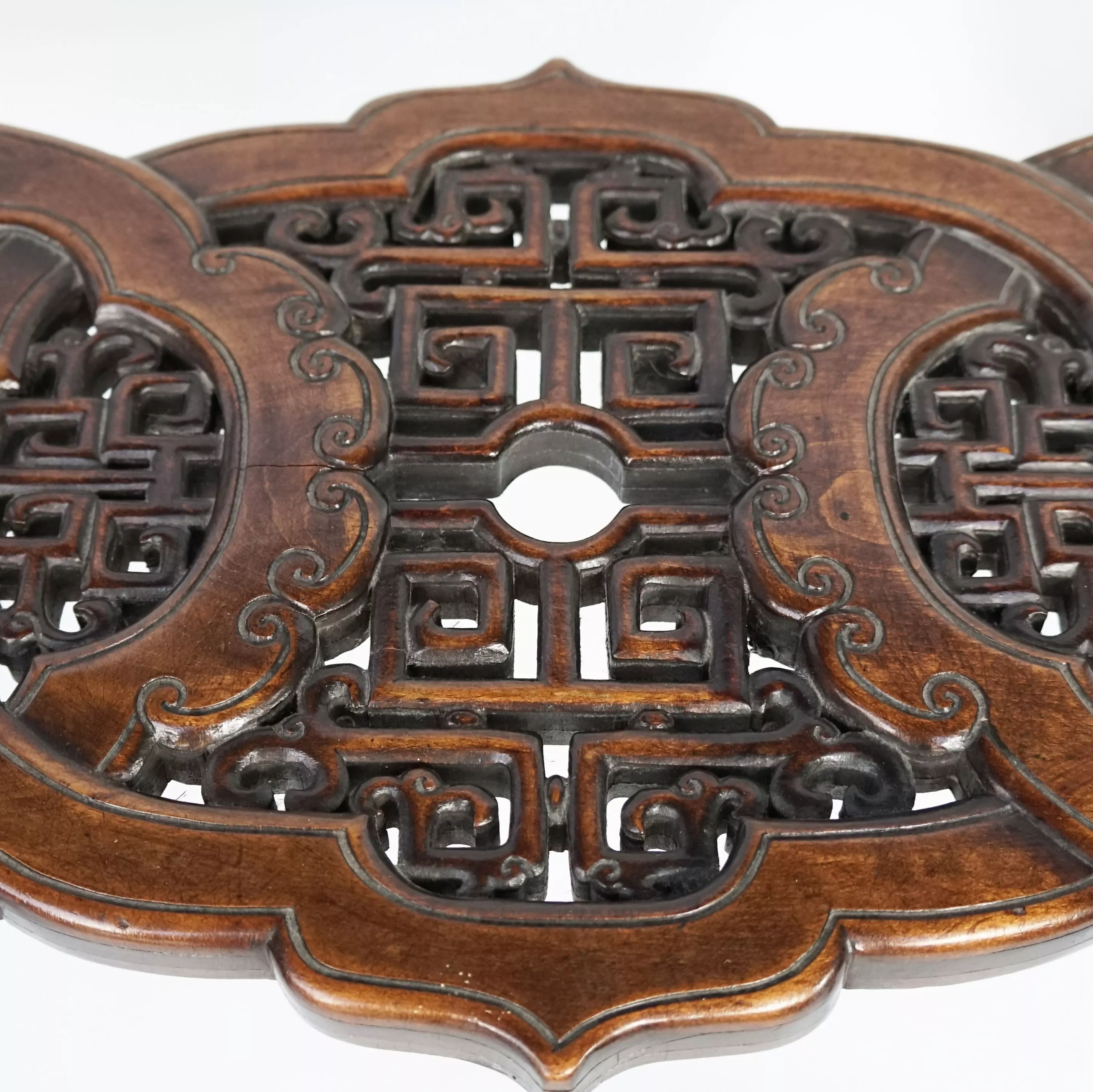
Viardot's style is characterized by elegant lines, harmonious proportions and meticulously sculpted details.
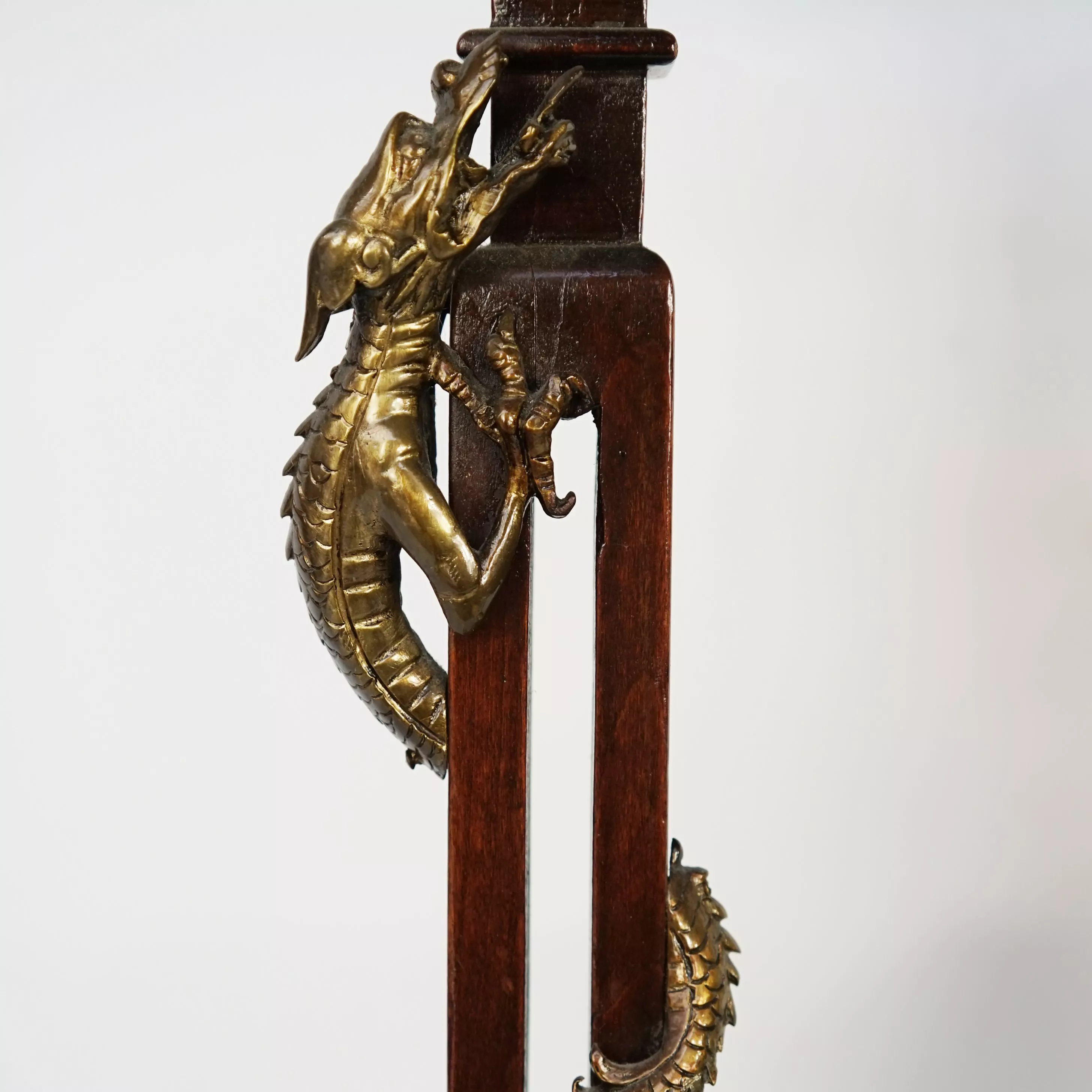
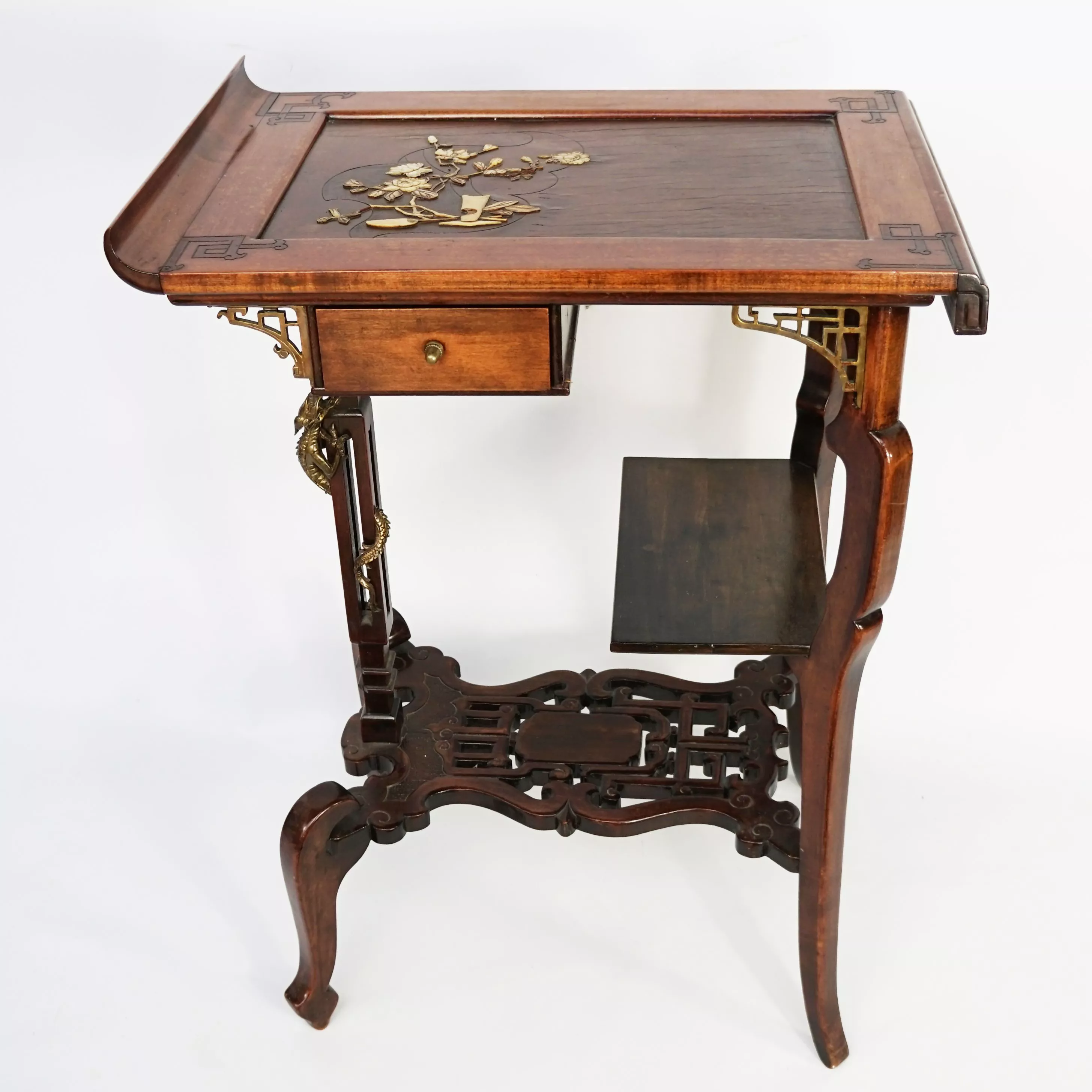
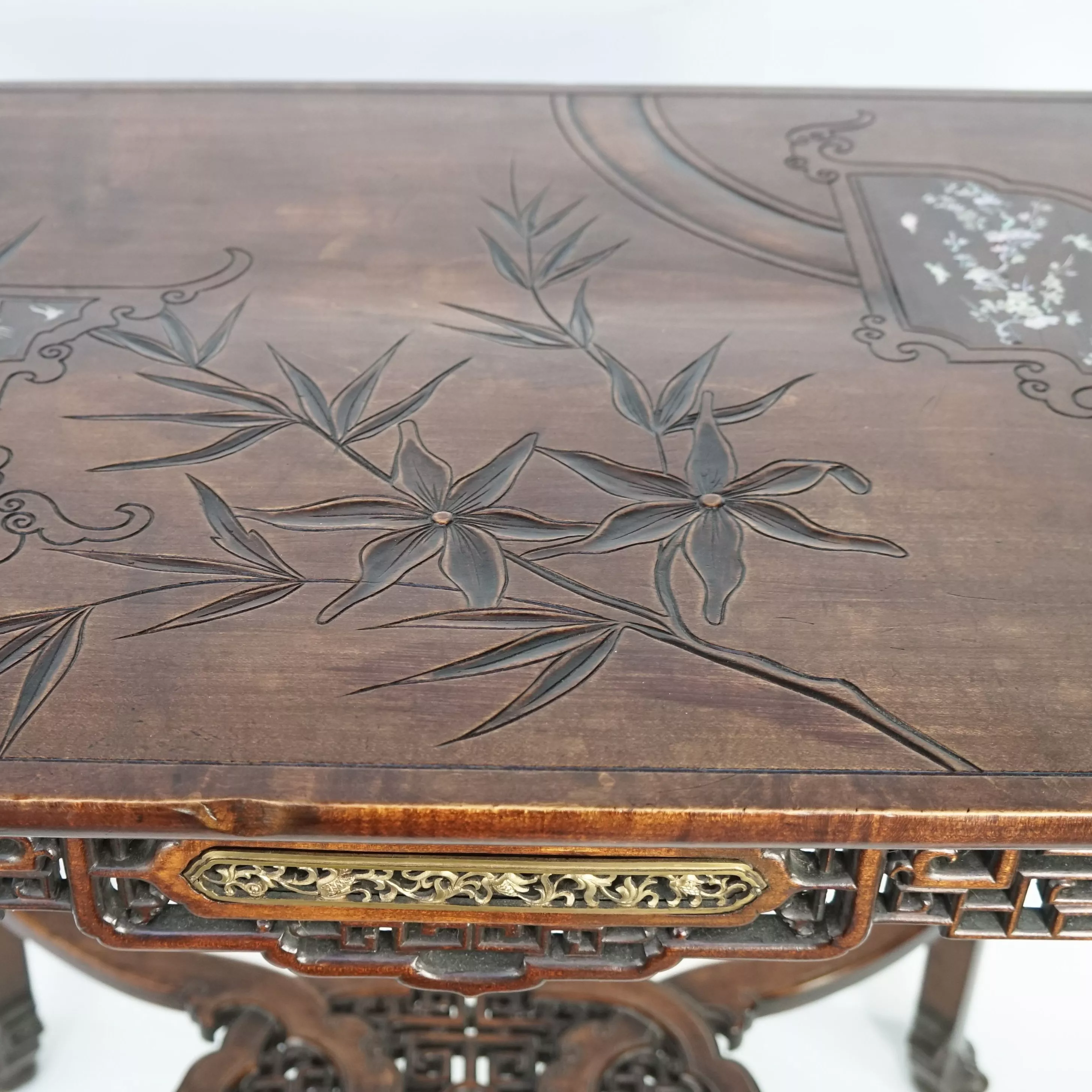
He draws on Japanese iconography, incorporating motifs such as dragons, exotic birds, cherry blossoms or stylized landscapes, which he engraves and inlays with precision.
The use of lacquer, a delicate technique he masters in the manner of Gaston Suisse, lends his furniture unrivalled depth and brilliance.
These lacquered surfaces, often enhanced with gold or mother-of-pearl, add a luxurious touch to his creations, while respecting the restrained elegance of Japanese art.
Gabriel Viardot doesn't hesitate to experiment with materials, incorporating carved wood panels, chased bronze, and even ivory elements to enrich his pieces.
His ability to marry these diverse materials with finesse testifies to his technical ingenuity and eye for detail.
Each piece of furniture, whether a chest of drawers, a cabinet or a display case, becomes a work of art in its own right, where ornamentation always serves to underline the quality of the construction and the beauty of the materials.
His production straddles the border between decorative art and fine cabinetmaking, making Gabriel Viardot an emblematic figure of the Japanese style in Europe, and his influence extends far beyond his era.
The life of Gabriel Viardot
Gabriel Viardot (1830-1904), French artist and cabinetmaker, became a key figure in the world of 19th-century decorative arts. Born in Paris, he discovered a passion for cabinetmaking at an early age.
Autodidact, he taught himself the techniques of his trade and, by the age of 19, had succeeded in building up his own team of craftsmen.
In 1853, he joined forces with his brother to found a furniture factory, Viardot frères & cie, where he was already developing a taste for innovation and quality.
Seven years later, in 1860, he decided to follow his own path and opened his own workshop, "G. Viardot". It was then that he devoted himself entirely to Asian-inspired furniture, a passion that would never leave him.
Fascinated by the aesthetics of the Far East, he chose to import lacquer panels directly from China and Japan.
He transformed them into refined pieces of furniture, adding precious wood inlays from Tonkin and finely crafted details.
Viardot also incorporates ornamental bronzes, often gilded, to enhance the elegance of his creations and make them unique pieces.
The Exposition Universelle of 1867 marks a turning point in his career. His works, noted for their finesse and originality, attracted the attention of critics and the public alike.
It was at this exhibition that l'Escalier de Cristal, a famous Parisian house specializing in luxury objects and art furniture, noticed his work.
This encounter opened up new perspectives for Gabriel Viardot, and his creations began to be marketed in the most refined circles of Paris, reaching a demanding and international clientele.
With his unique approach, Gabriel Viardot succeeds in fusing the tradition of European cabinetmaking with the exotic influences of Asia, a blend that seduces with its boldness and refinement.
The furniture he creates are not just utilitarian objects, but true works of art, testifying to exceptional technical mastery and a rare aesthetic sensibility.
This ability to reinvent furniture codes enabled him to become one of the leading exponents of Japanese taste in Europe, leaving a lasting imprint on the history of the decorative arts.
Focus on the creations of Gabriel Viardot
Gabriel Viardot is an artist whose work has made a lasting impression, particularly with his Asian-inspired furniture.
An emblematic example of his talent is a Chinese-style cabinet a piece of furniture in which Eastern influences and European technical expertise blend harmoniously.
First and foremost, this cabinet catches the eye with its lacquer panels, of Chinese origin, in deep, luminous colors.
The scenes decorating these panels, often landscapes or animals, are executed with such finesse that every detail seems to come to life under the viewer's fingers.
The intensely brilliant lacquer contrasts subtly with the warmth of the carved wood of the furniture. This marriage of materials, perfectly mastered by Viardot, creates a fascinating play of light, capturing the eye while lending the cabinet great elegance.
The gold bronzes applied to the cabinet's corners and handles add a further touch of refinement.
These elements, often carved with floral or geometric motifs, recall the Asian ornamental style, while being adapted to 19th-century European taste.
Viardot, as a master cabinetmaker, combined the beauty of the materials and the precision of the forms to create a piece that was not only decorative but also functional.
The use of bronze in this work is not merely decorative: it emphasizes and enhances the structure of the furniture, while adding luminosity to the dark parts of the lacquer.
The interior of this cabinet is no less fascinating. It is ingeniously arranged, with secret drawers and compartments, all made with great attention to detail.
This layout recalls the ingenuity of traditional Chinese furniture, which often offered discreet storage to hide precious objects and secrets.
Each drawer, each shelf is carefully thought out to maximize use while preserving a meticulous aesthetic.
Viardot's work is therefore a perfect illustration of his unique talent for combining Orientalism and French craftsmanship.
This piece of furniture not only reproduces Asian motifs and forms, it reinterprets and integrates them into a European context, creating a hybrid, yet perfectly harmonious work.
Through this cabinet, Gabriel Viardot demonstrates his mastery of materials and techniques while affirming his taste for refinement and elegance.
His work continues to influence the history of decorative art and remains a testament to the ingenuity and genius of this 19th-century craftsman.
Gabriel Viardot's imprint on his period
Gabriel Viardot marked his period with his talent and the grandeur of his production. Self-taught, he in turn trained numerous cabinetmakers who passed on his techniques of cabinetmaking and ornamental bronzes.
He was one of the few at the time to devote himself solely to the Far Eastern style, and excelled in his field, earning him several awards as well as the rank of Chevalier de la Légion d'Honneur.
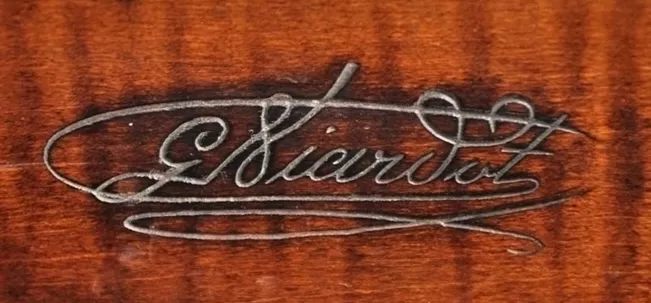
Recognizing the artist's signature
Gabriel Viardot's works are usually signed. There may be the inscription " Viardot frères & cie " or the inscription " G. Viardot ".
However, there are many copies. That's why, if you think you own a work by or after the artist, it's essential to have it appraised by an expert who will be able to authenticate it.
Knowing the value of a work
If you happen to own a work by or after Gabriel Viardot, don't hesitate to request a free appraisal using our form on our website.
A member of our team of experts and certified auctioneers will contact you promptly to provide you with an estimate of the market value of your work, not forgetting to send you ad hoc information about it.
If you wish to sell your work, you will also be accompanied by our specialists in order to benefit from alternatives for selling it at the best possible price, taking into account market inclinations.
Estimate in less than 24h
Discover in the same theme

Rating and value of works, drawings, paintings by Lazare Bru...
Lazare Bruandet was a landscape painter of the early 19th century. His paintings are appreciated and sought-after at auction.
Learn more >

Rating and value of Charles Greber's vases and ceramics
Charles Greber is a French ceramist who has produced works that can be highly valued at auction. 24h estimate.
Learn more >

Rating and value of drawings and paintings by Jules Jacques...
Jules Jacques Veyrassat was a 19th-century painter associated with the Barbizon School whose works command high prices and are highly valued.
Learn more >
Similar works sold at auction

Estimated 1 500 € - 2 000 €
Attributed to Jacques ADNET (1900-1984) Chest of drawers with wood structure and base sheathed in black saddle-stitched leather and imitation leather.

Estimated 3 000 - 5 000
Gaston SUISSE (1896-1988), Engraved polychrome lacquer panel on tortoiseshell lacquer background.

Estimated 1.800 - 2.500
DHIEL Paris, architectural day-light, blackened wood

Estimated 400 - 600
Work of the 18th century, Louis XV period Wood and veneer curved corner cabinet

Estimated 300 - 600
CHINA, 19th century. Large 8-leaf folding screen in red lacquered wood

Secure site, anonymity preserved

Auctioneer approved by the State

Free and certified estimates
Frequently asked questions
-
Who was Gabriel Viardot, and what is his artistic style?Gabriel Viardot (1830–1904) was a self-taught French cabinetmaker who became an iconic figure in 19th-century Japanese-style furniture. An undisputed master of his craft, he specialized in creating furniture that blended European cabinetmaking with Asian influences, incorporating lacquered panels, gilded bronze, and finely carved details inspired by Japanese iconography (dragons, birds, cherry blossoms). His work was recognized at the 1867 World’s Fair, and he was awarded the Legion of Honor for his innovations and exceptional technical mastery.
-
What are the retail prices of Gabriel Viardot's furniture?The prices of Gabriel Viardot’s furniture vary considerably depending on the type and complexity of the piece. Wooden chairs sell for between €400 and €3,000, armchairs for between €500 and €2,500, tables between €420 and €12,500, and cabinets between €1,020 and €26,820. This wide range reflects the rarity of the pieces, their condition, and their specific characteristics (materials, ornamentation, provenance).
-
How can you authenticate a work by Gabriel Viardot?To authenticate a work by Gabriel Viardot, an appraisal by a qualified professional is essential, as there are many copies of his works. Auctie's offers a free, no-obligation appraisal via a form on its website: a certified expert or auctioneer will contact you within 48 hours to examine the work and confirm its authenticity before providing you with a precise appraisal.
-
How do you sell a work by Gabriel Viardot?To sell a work by Gabriel Viardot, Auctie's guides you every step of the way: a free, no-obligation appraisal by an expert, followed by personalized advice on the best sales options to get the highest possible price based on market trends. The auction house manages the entire process through to the final sale.
-
Is this the right time to sell a piece of furniture by Gabriel Viardot?Yes, now is an excellent time to sell a work by Gabriel Viardot. Demand remains strong, particularly among French and American collectors, and prices are reaching unprecedented levels. 19th-century Japanese-style furniture is seeing a significant rise in value on the art market, making sales very favorable for sellers.
