



Rating and value of sculptures and bronzes by Isidore Bonheur

Key takeaways
- Bronze sculptures by Isidore Bonheur (1827–1901) sell for between €50 and €177,000, with *Le grand jockey* fetching €177,000 at auction.
- The 19th-century animal sculptor created more than 1,100 cataloged works, primarily bronze sculptures of horses and animals cast by the Peyrol foundry.
- Value depends on authenticity, the condition of the original patina, the signature, and provenance; signed pieces with well-developed patina offer the greatest potential for appreciation.
If you own a work of art by or after Isidore Bonheur, and would like to know its value, our state-approved experts and auctioneers will offer you their appraisal services.
Our specialists will carry out a free appraisal of your work, and provide you with an accurate estimate of its value on the current market.
Then, if you'd like to sell your work, we'll direct you to the best possible arrangement to get the best price for it.
Rating and value of the artist Isidore Bonheur
The artist Isidore Bonheur leaves in his wake a very singular body of work, composed mostly of animal subjects in bronze. A talented artist, he creates numerous sculptures that are particularly sought-after at auction.
The prices of his works are now skyrocketing under the auctioneer's hammer. They are particularly prized by French and European buyers.
The price at which they sell on the art market ranges from 50 to 177,000€, a significant delta but one that speaks volumes about the value that can be attributed to Isidore Bonheur's works.
One example of his bronze Le grand jockey, has already sold for €177,000, while it was estimated at between €100,000 and €150,000.
Order of value from a simple work to the most prestigious
Technique used | Result |
|---|---|
Plaster | From €50 to €500 |
Baseliftrelief | From 90 to 900€ |
Bronze | From 50 to 177 000€ |
Estimate in less than 24h
Style and technique of Isidore Bonheur
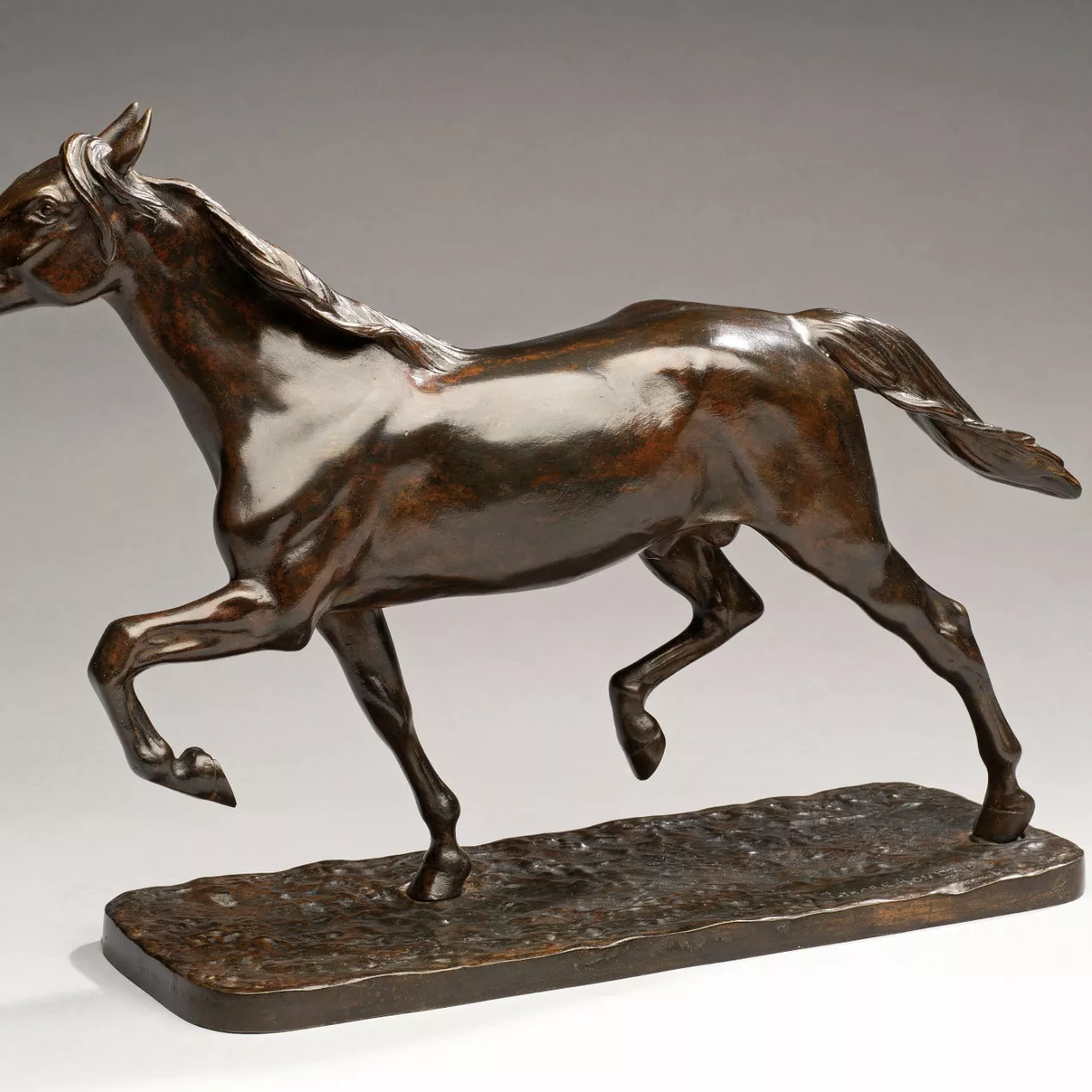
Isidore Bonheur follows in the footsteps of 19th-century animal sculptors, favoring subjects such as horses, bulls, oxen and wildfowl hunting.
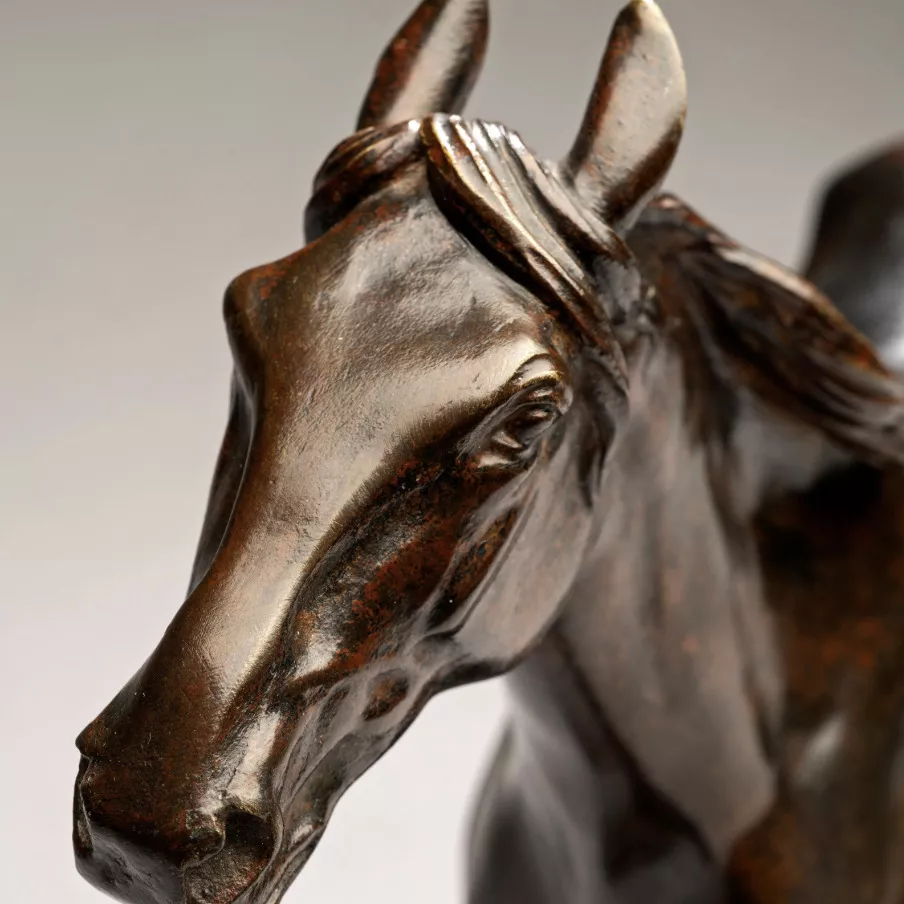
Naturalistic realism is at the heart of his approach, with careful observation of the anatomy, movement and attitudes of animals in their environment. The compositions are often stabilized and the animals monumentalized.
The volumes are well defined, the silhouettes are strong, and the objects are not fragmented but presented as powerful sculptural entities. The animal motif is employed not only for decorative purposes, but also as an expression of dynamism and a living presence in the material.
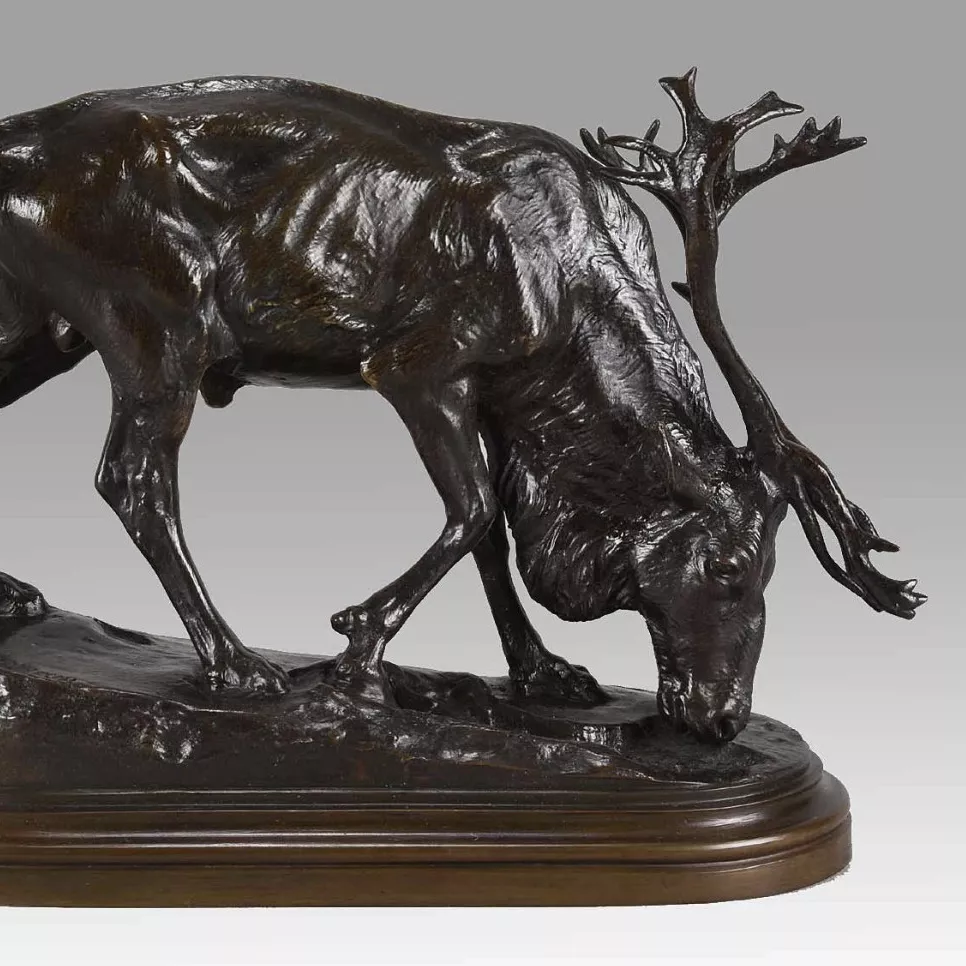
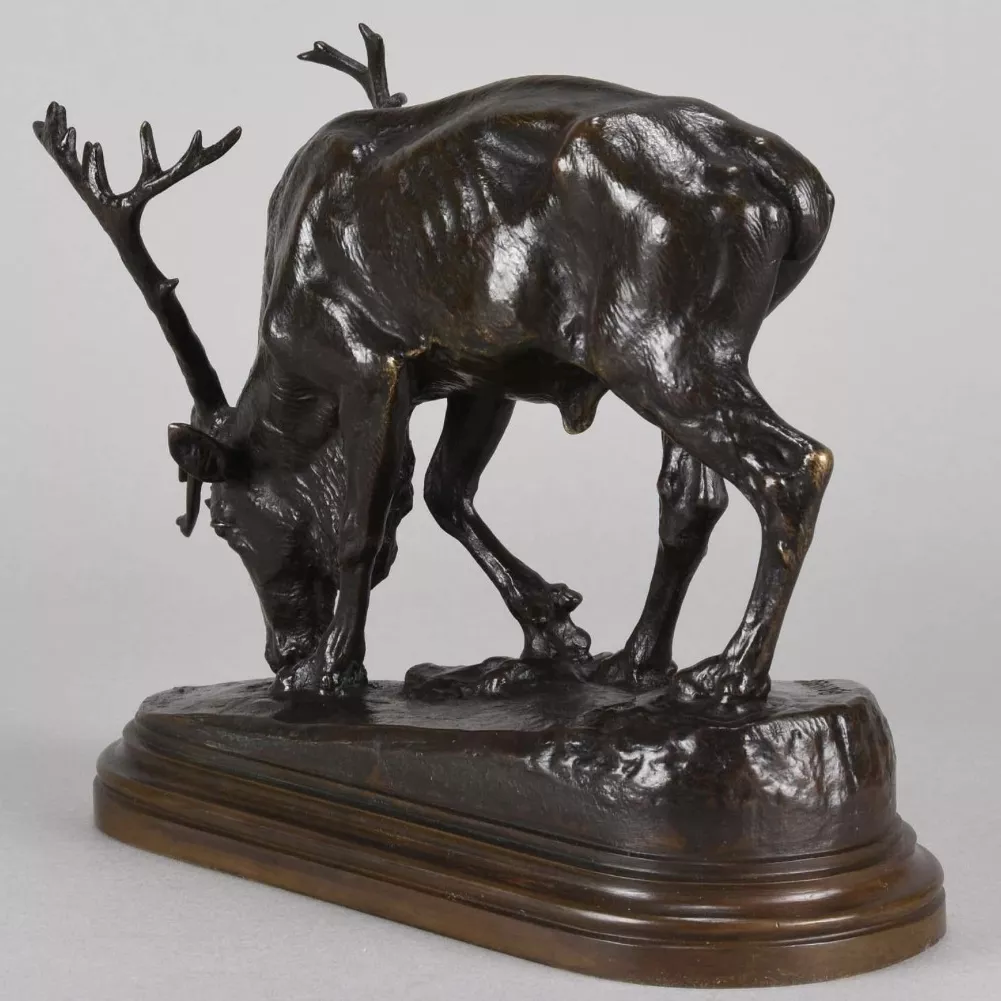
Some contextual insertions are noted, with stones, naturalistic decoration and a worked base. The environment is not simply a background. Bonheur's main medium is cast bronze, with a patina, but he also uses cast iron for some of his monumental sculptures.
He regularly collaborates with the Peyrol Foundry foundry, producing meticulous prints with rich patinas. The rendering of animal textures is precise (fur, muscles, taut skin), with careful treatment of volumes and real anatomical articulation (tension in the paws, loading attitude, latent movement).
He works with both group compositions and single figures; some works are groups of interacting animals (hunting, fighting), requiring complex spatial organization and dynamics.
Bonheur's style allows us to address the question of the animal statue in the 19th century, where the animal is not caricatured but dignified and strongly present. On a technical level, it offers a fine example of the mastery of animal bronze casting, which is very demanding in terms of anatomy and finish.
.
The career of Isidore Bonheur
Isidore Jules Bonheur (1827 - 1901) was the son of Oscar-Raymond Bonheur (painter) and Christine Dorothée Sophie Marquis. He was the brother of Rosa Bonheur, one of the greatest figures of animal painting in the 19th century.
He was first taught by his father and in the family studio, and entered the École nationale supérieure des Beaux-Arts de Paris in 1849. He made his debut at the 1848 Salon with a painting and plaster model, African Horseman Attacked by a Lioness.
He gradually turned to animal sculpture, winning a gold medal at the 1889 Exposition Universelle for Cavalier Louis XV. His workshop was located in Paris, impasse du Moulin-Joly, at the corner of rue du Faubourg-du-Temple.
His most important public work is Les Taureaux (1865), painted cast iron, Parc Georges Brassens in Paris. Several bronzes of animals and animal groups are kept in museums in France and abroad.
Market segmentation and artist's rating
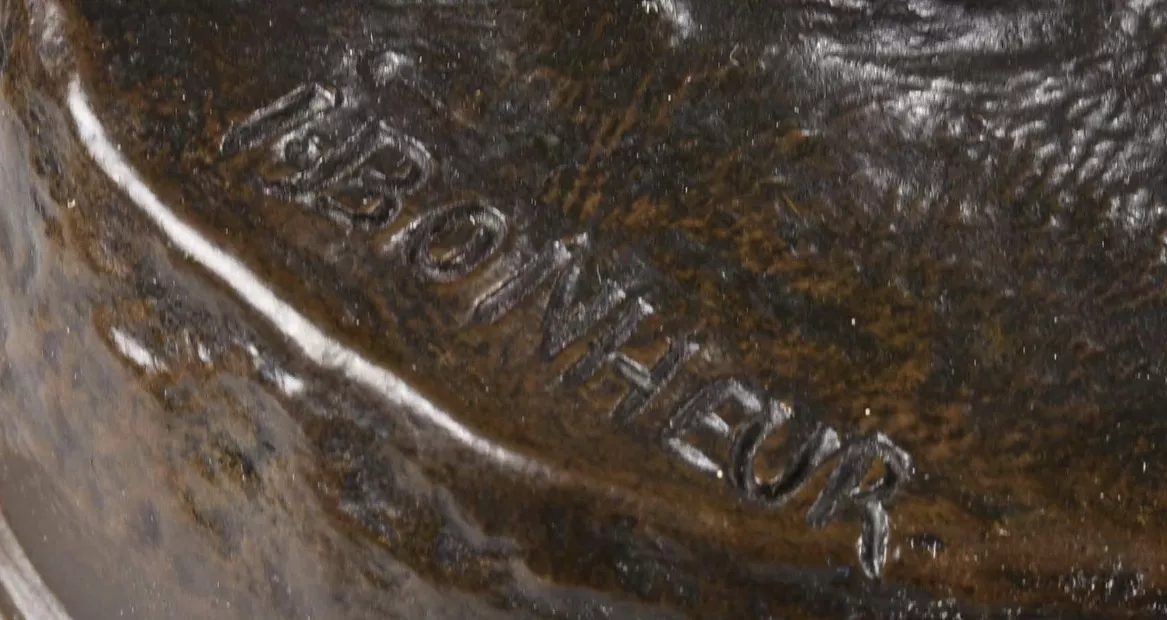
Isidore Bonheur's major medium is bronze (antique cast). The pieces are signed " I. Bonheur ", and the Hippolyte Peyrol Foundry editions are highly sought-after.
Small subjects (animals alone, up to around 30cm are the entry segment. Medium to large subjects such as horses, jockeys, bulls and animal groups make up the main segment.
Monumental pieces in cast iron are very rare and constitute the high-end segment for the artist. The " signature " subjects enhance the appeal of the lot and favorably influence the value, it is an important valuation criterion.
The market is active in France, but also in the United States and the United Kingdom. Typical buyers are collectors of 19th-century animal art, French bronze enthusiasts, specialist galleries and museums of 19th-century sculpture.
Major valuation factors are original signature and patina, the presence of the Peyrol foundry mark or stamp, good condition (patina, minimal wear, original base), provenance (early edition rather than late reissue), as well as signature motifs.
Small objects or unsigned pieces come in at moderate prices, while large formats can go quite high. This market is sensitive to condition and authenticity (animal bronzes are subject to reproductions).
More than 1,100 auction results are listed for Isidore Bonheur. The artist is moderately to highly rated for the 19th-century animal bronzes market (artists such as Barye, Guyot, Cain), but offers an accessible entry.
The wide dispersion of prices (from a few hundred to > €15,000 depending on format and quality for most lots) shows that condition, size, provenance and edition are essential. Valuation potential is strongest for " signature " pieces and early editions, signed and well patinated.
Late or unsigned editions present a lower value risk. The market is stable but sensitive to condition and editions. For exceptional pieces, the value could still rise, but the increase depends on the artist's visibility and the segment of animal bronze enthusiasts.
Recognizing the artist's signature
Not all Isidore Bonheur's works are signed, and different variants exist. That's why, if you think you own a work by or after the artist, it's essential to have it appraised by an expert who will be able to authenticate it.
Knowing the value of a work
If you happen to own a work by or after Isidore Bonheur, don't hesitate to request a free appraisal using our form on our website.
A member of our team of experts and chartered auctioneers will contact you promptly to provide you with an estimate of the market value of your work, as well as ad hoc information about it.
If you wish to sell your work, you will also be accompanied by our specialists in order to benefit from alternatives for selling it at the best possible price, taking into account the inclinations of the market.
.Estimate in less than 24h
Discover in the same theme

Rating and value of works, drawings, paintings by Nicolas To...
Nicolas Toussaint Charlet was a 19th-century Neo-Impressionist artist who produced drawings and oils on canvas that are listed at auction.
Learn more >

Ratings and values of paintings by Armand Guillaumin
Armand Guillaumin was a 19th-century Impressionist painter who produced drawings and oil paintings that are highly prized on the auction market.
Learn more >

Rating and value of paintings by Alphonse Osbert
Alphonse Osbert was a 19th-century Symbolist painter who produced paintings that are highly valued at auction.
Learn more >
D'autres bronzes anciens vendus aux enchères

Estimated Between €5,000 and €8,000
Agathon LEONARD (1841-1923), Dancer with scarf, bronze lamp, ed. Susse frères

Estimated 3.000 - 5.000
Raoul LARCHE (1860-1912) The fisherman, Bronze with green patina

Estimated 600 - 800
Hercules Farnese, bronze, reproduction after Glycon of Athens

Estimated 1.500 - 3.000
Jules FRANCESCHI (1825-1893) Hébé et l'aigle de Jupiter, gilded bronze

Estimated 800 - 1.500
Henry Étienne DUMAIGE (1830-1888), bronze print

Estimated 1.500 - 3.000
Antoine Louis BARYE (1796-1875) Eagle and heron, bronze print with shaded brown-green patina

Secure site, anonymity preserved

Auctioneer approved by the State

Free and certified estimates
Frequently asked questions
-
Who is Isidore Bonheur, and what is his historical context?Isidore Bonheur (1827–1901) was a 19th-century French sculptor who specialized in animal sculpture. The son of painter Oscar-Raymond Bonheur and brother of the famous painter Rosa Bonheur, he trained at the École nationale supérieure des Beaux-Arts in Paris and won the gold medal at the 1889 World’s Fair. His major work, *Les Taureaux* (1865), is on display at Parc Georges Brassens in Paris.
-
What is the price range for Isidore Bonheur's bronze sculptures at auction?Isidore Bonheur's bronze sculptures sell for between €50 and €177,000, depending on the size, quality, and age of the edition. Smaller pieces (up to 30 cm) represent the entry-level range, while large-scale works and signature pieces such as *Le grand jockey* can fetch much higher prices. The condition of the piece, the presence of the Peyrol foundry mark, and the original patina are key factors.
-
How can you authenticate a sculpture or bronze by Isidore Bonheur?To authenticate a work by Isidore Bonheur, it is essential to consult a certified expert, as some works are unsigned and variations exist. At Auctie's, our auctioneers and experts provide a free, no-obligation appraisal that includes authentication of your artwork. By requesting an appraisal through our form, you’ll receive a detailed response within 48 hours.
-
Is this the right time to sell a sculpture of Happiness?Yes, now is a good time to sell a work by Isidore Bonheur. The market for 19th-century animal bronzes remains active in France, the United States, and the United Kingdom, with strong demand from collectors and museums. Signed pieces with a well-developed patina from early editions retain a stable or rising value, particularly if they bear the Peyrol foundry mark.
-
How does the appraisal and sale process work at Auctie's?Appraisals at Auctie's are free and non-binding. You submit your artwork via our form, and a certified expert or auctioneer will review it and provide you with an accurate appraisal within 48 hours. If you wish to sell, we’ll guide you through the process from the appraisal to the auction, offering you the best options to achieve the highest possible price based on current market trends.
