



Rating and value of works, paintings, drawings by René Magritte

Key takeaways
- Prices for Magritte's works range from €10 to €61,972,885, with his market value reaching an all-time high in recent years.
- Oil-on-canvas paintings command the highest prices (up to €61,972,885), while photographs range from €50 to €8,600.
- A major figure of Surrealism born in 1898, Magritte juxtaposes ordinary elements in extraordinary contexts with photographic precision.
If you own a work by or after René Magritte, and would like to know its value, our state-approved experts and auctioneers will offer you their appraisal services.
Our specialists will carry out a free appraisal of your work, and provide you with a precise estimate of its value on the current market.
Then, if you wish to sell your work, we will direct you to the best possible arrangement to obtain the optimum price.
René Magritte artist's rating and value
The artist René Magritte leaves behind a unique body of work, composed mainly of surrealist paintings. Now, prices for his works are exploding at auctioneers' gavels.
His paintings are highly prized, especially by English and American buyers. The price at which they sell on the art market ranges from €10 to €61,972,885, a very substantial range but one that speaks volumes about the value that can be attributed to Magritte's works.
In 2022, his oil on canvas La voix du sang sold for €22,936,635, while it was estimated at between €12,000,000 and €17,000,000. Its value is at its highest in recent years.
Order of value from a single work to the most prestigious
Technique used | Result |
|---|---|
Photography | From 50 to 8 600€ |
Estamp | From 10 to 191 045€ | Drawing - watercolor | From 200 to 5,818,740€ |
Oil on canvas | From 170 to 61,972,885€ |
Estimate in less than 24h
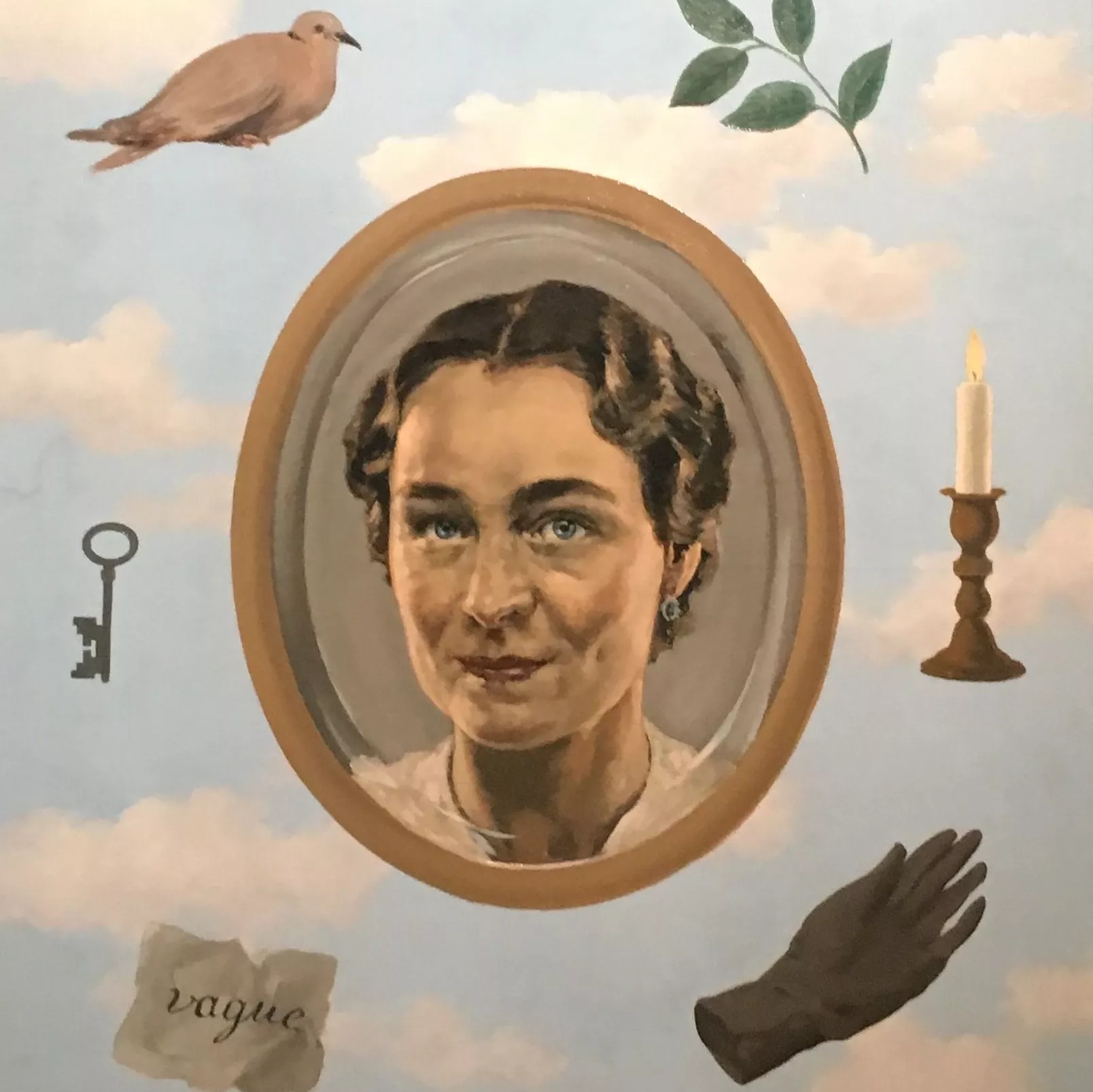
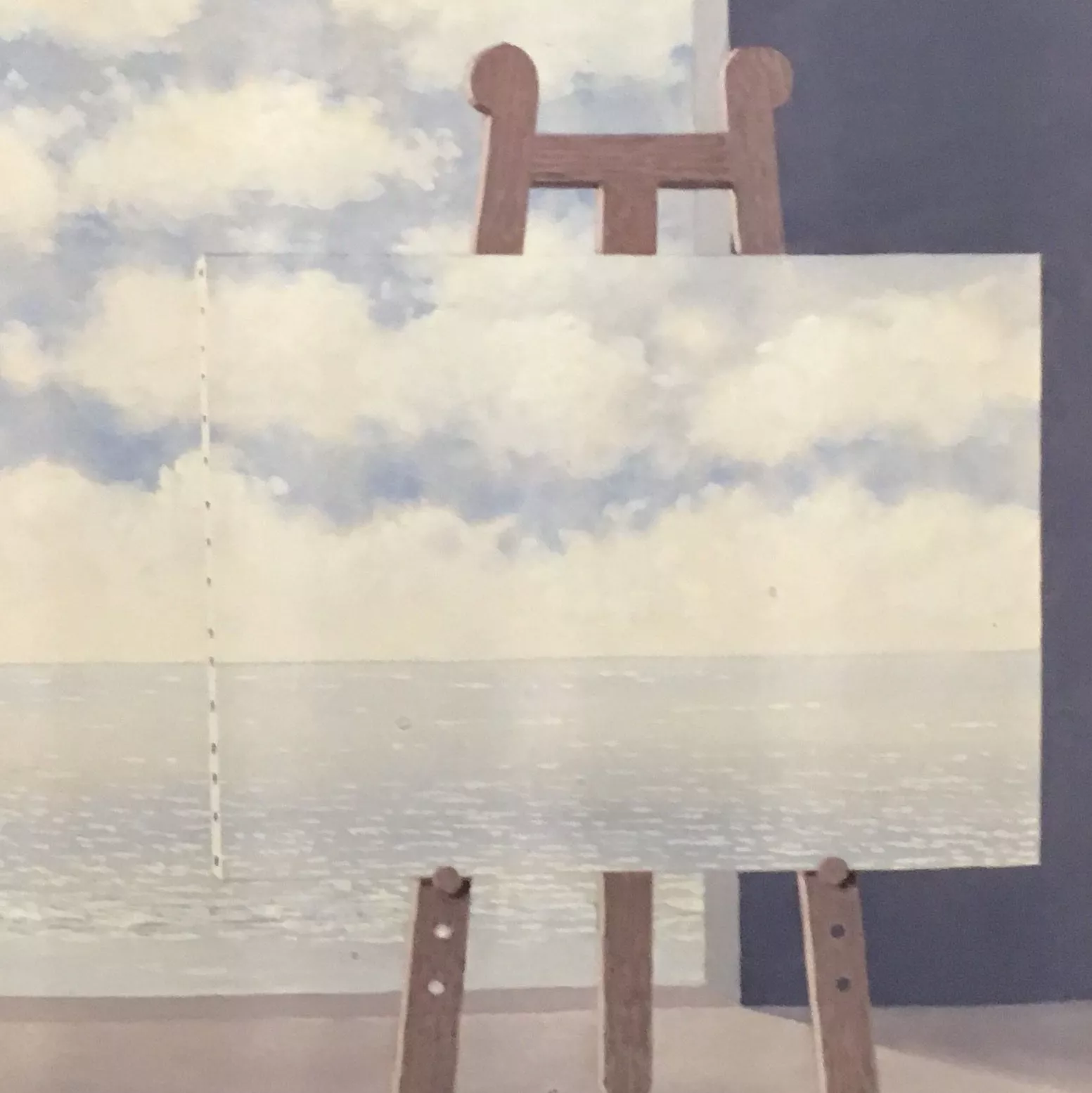
Style and technique of artist René Magritte
Magritte worked with printmaking, drawing, but also photography and sculpture. He is one of the leading exponents with Dali and Ernst of the Surrealist movement. He was also very gifted at writing and would produce poems, and punchy titles for his works.
Magritte, major figure of surrealism
René François Ghislain Magritte, Belgian artist, was born in Belgium in 1898. His parents were tailors and milliners, and fashion had a major influence on his work. He grew up in Châtelet, Belgium, where he took painting lessons from Félicien Defoin.
He takes an early interest in cinema and photography thanks to an exhibition, later producing posters for advertising and cinema. In 1912, his mother committed suicide when he was just 14.
Contrary to the tragedies suffered by Dali, Magritte did not believe in psychoanalysis, and his work was above his traumas. He produces work that is almost mechanical in essence, imbued with a certain transcendence in order to represent the unrepresentable.
The work that probably best testifies to his way of working is La condition humaine, which takes on its full meaning when you read the title.
After his mother's death, his upbringing was entrusted to a governess whom Leopold, his father, married. Tired of his life in Charleroi, after the war he moved to Brussels and settled near the Ecole des Beaux-Arts to take drawing and painting classes.
He also took courses in literature. He lives in financial opulence thanks to his father and meets several art world figures, cubists and futurists. He married Georgette Berger in 1922, whom he had met six years earlier and lost touch with.
She was to have a great influence on his work, and he painted several portraits of her. He stays briefly in Paris following his father's incarceration, and sets up on his own in Brussels, where he works for advertising agencies.
His career really takes off when he meets the Surrealists in Paris. André Breton, Salvador Dali and Max Ernst were to influence him greatly. He held numerous exhibitions back in Brussels until the end of his life. He is very famous and appreciated by the general public.
He died of cancer at the age of 68.
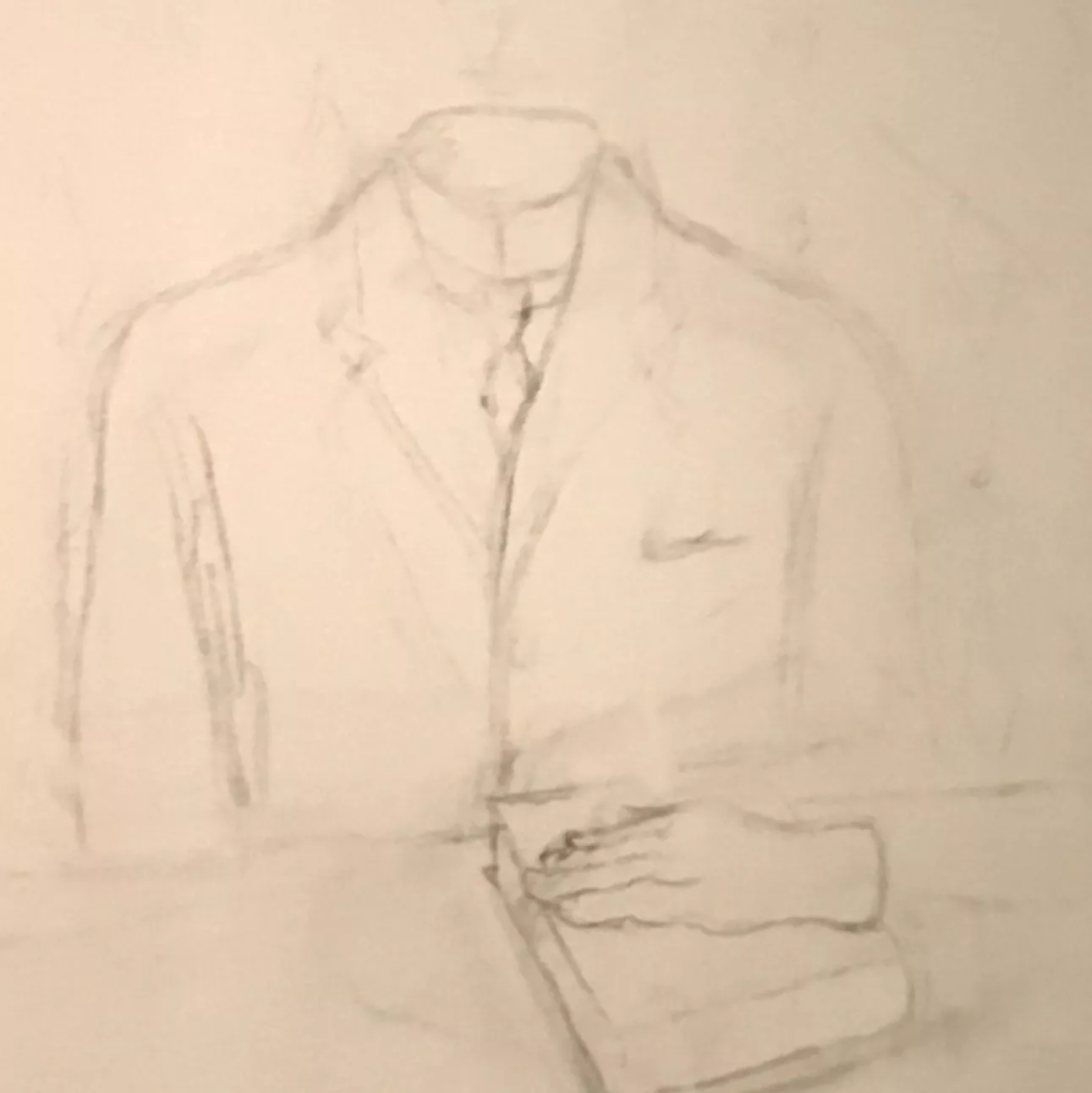
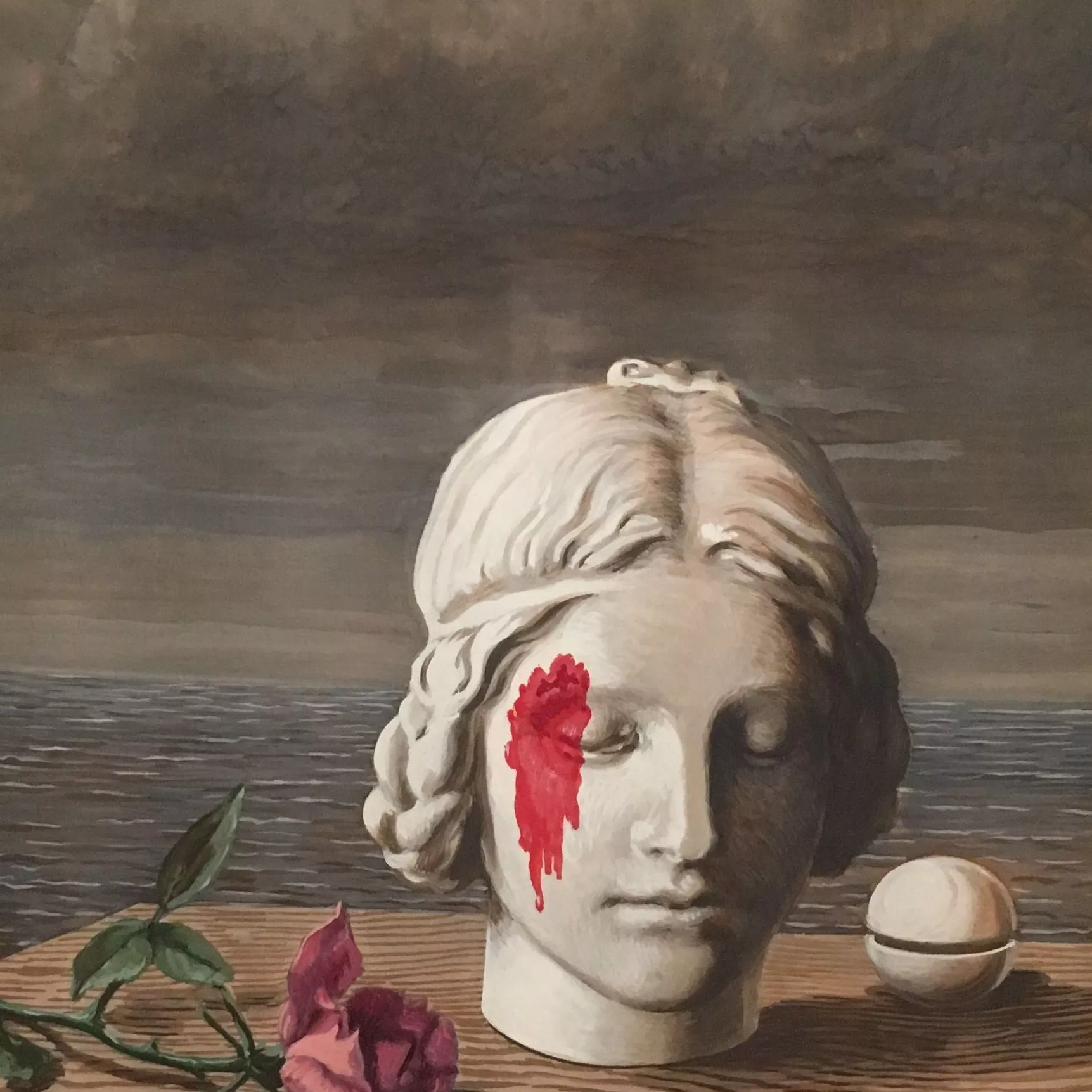
The birth, history and role of surrealism
At the end of the First World War, a group of avant-garde artists emerging from Expressionism was born in Berlin this was Dada (not a movement as such, but a gathering of artists each working with their own diverse and varied influences).
Dada dates back to 1915, when Hugo Ball and Richard Huelsenbeck published their Literary Manifesto. They consider themselves to be negativists - saying they don't believe in progress. In reality, it's about rejecting reason and established conventions in art and society.
Tristan Tzara came up with the group's name after pondering a simple word in all languages and rummaging through a dictionary, needing to put a qualification on the growing group of artists.
Dada was originally inspired by the mechanisms of dreams, automatism and the unconscious. Magritte rejected these highly psychic origins, even though surrealism followed on from Dada and its need for revolt.
Surrealism was really born in 1924, with a manifesto by André Breton. He spoke of " pure psychic automatism - through which we propose to express the real functioning of thought ".
The aim, according to Breton, was to " definitively ruin all other psychic mechanisms and to substitute ourselves for them in solving the main problems of life ". This part of the manifesto is particularly relevant to Magritte's approach.
It's about bringing painting and poetry together, in order to represent what cannot be represented. Surrealism has very writing-oriented sources (poetry, literature, philosophy) in Baudelaire, Mallarmé, Richter and Hoffman.
These are then combined with the painting influences of certain symbolist artists such as Odilon Redon, of Gustave Moreau but also of Jérôme Bosch. It was actually Guillaume Apollinaire who first used the word in place of supernaturalism.
Magritte's working method
René Magritte imposed a unique style through the way he composed his paintings and chose his subjects. Contrary to the common idea that surrealist art must be ethereal or irrational, Magritte adopted a methodical and precise approach.
His works are characterized by a juxtaposition of ordinary elements in extraordinary contexts, defying habitual perceptions of reality. Each painting appears to be a visual enigma, a puzzle in which everyday objects are depicted with photographic clarity, but placed in disconcerting situations.
The artist plays with ambiguity, transforming banal scenes into something disquieting or mysterious. For example, in La Trahison des images, he depicts a pipe with the caption This is not a pipe, illustrating the difference between the real object and its representation.
Magritte often explores themes of identity, illusion and consciousness through repeated images such as bowler hats, windows, or human figures whose faces are concealed.
The often poetic titles of his works add a layer of complexity, forcing viewers to question what they see and wonder what these unusual combinations might mean.
Through this approach, Magritte deconstructs reality to reveal what he calls "the mystery", a reality hidden beyond appearances. His paintings, far from being mere surrealist representations, thus become philosophical instruments, inviting everyone to a profound reflection on the nature of perception and of reality itself.
René Magritte in ten secrets
René Magritte's imprint on his period
Magritte marked his time with his provocative spirit and his permanent artistic renewal. He played a major role in the evolution of the surrealist group of the 20th century and experimented with new artistic techniques throughout his life.
He is one of the few artists to have been able to conciliate painting and writing, which helps to make his work unique and particularly famous.
His work is now highly prized at auction, and collectors play a big part in preserving his work, even though some of it is exhibited in museums.
Recognizing the artist's signature
Not all of Magritte's works are signed. They may be at the bottom of the painting, but if you think you own one, it's best to have it appraised to be sure of its originality. What's more, there are an enormous number of copies.

Knowing the value of a work
If you happen to own a work by or after René Magritte, don't hesitate to request a free appraisal using the form on our website. A member of our team of experts and certified auctioneers will contact you promptly to provide you with an estimate of the market value of your work, as well as any relevant information about it. If you wish to sell your work, you will also be accompanied by our specialists in order to benefit from alternatives to sell it at the best possible price, taking into account the inclinations of the market.
Estimate in less than 24h
Discover in the same theme

Rating and value of Otto Dix's paintings, drawings and print...
Otto Dix was a 20th-century German Expressionist artist who produced drawings, prints and paintings that are highly regarded.
Learn more >

Rating and value of paintings by Jamini Roy
Jamini Roy is a modern Indian painter of the 20th century who has produced works that are highly rated and valued at auction.
Learn more >

Rating and value of sculptures, ceramics and bronzes by Arma...
Armand Petersen is a twentieth-century animal sculptor whose works are highly regarded and valued at auction. Estimate.
Learn more >
Works from the same period sold at auction

Estimated 15 000 - 20 000 €
Jean HENNINGER (1916-1994) Hunting scene.

Estimated 2500 - 5000 €
Henri EPSTEIN (1892-1944), View of the village through the trees, Oil on canvas

Estimated 4.000 - 6.000 €
GASTON CHAISSAC (1910-1964) Composition 1947, Gouache and Indian ink on paper.

Estimated 100-200€
Vassiliew Slavik, Oil on canvas

Secure site, anonymity preserved

Auctioneer approved by the State

Free and certified estimates
Frequently asked questions
-
Who is René Magritte, and what is his role in the Surrealist movement?René Magritte was a Belgian artist (1898–1966) and one of the leading figures of Surrealism, alongside Dalí and Ernst. He distinguished himself through a methodical and precise approach to Surrealism, juxtaposing ordinary elements in extraordinary contexts and combining painting and writing in a unique way. His work explores the themes of identity, illusion, and consciousness through visual puzzles that question the nature of reality.
-
What is the price range for René Magritte's works?Prices for works by René Magritte vary considerably depending on the medium and the artist’s prestige: photographs range from 50 to 8,600€, prints between €10 and €191,045, drawings and watercolors between €200 and €5,818,740, and oil paintings on canvas between €170 and €61,972,885. His market value has been at an all-time high in recent years, as demonstrated in 2022 by the sale of “La Voix du Sang,” which exceeded its initial estimate.
-
How can you authenticate a work by Magritte and verify that it is an original?Not all of Magritte’s works are signed, and there are a large number of copies in circulation. To verify the authenticity of a work you own, we recommend requesting a free appraisal from our certified auctioneers and experts. They will examine your item and provide you with an accurate estimate along with the necessary authentication information.
-
How does the appraisal process work at Auctie's?The appraisal is free and non-binding: simply fill out a form on our website with information about your artwork and photos of it. An expert or auctioneer from our team will contact you shortly to provide you with an estimate of your item’s market value. If you’d like to sell, we’ll help you explore the best options to get the highest price.
-
Why is now the right time to sell a Magritte painting?Magritte’s market value is currently at an all-time high, with strong demand from British and American collectors. The market for his works remains very dynamic, offering optimal conditions for a sale. Our specialists will identify the best timing and sales strategy to maximize the value of your acquisition.
