



Rating and value of paintings, drawings and photographs by Pierre Molinier

Key takeaways
- Pierre Molinier (1900–1976), a leading French painter in the field of body art, has seen his works from the 1960s become the most sought-after on the international art market.
- Prices range from €30 for a print to €100,000 for a painting, as exemplified by “Le rêve de l’Ange,” which sold for €100,000 in 2024 despite an initial estimate of €25,000–35,000.
- Influenced by Surrealism and André Breton, Molinier explores androgyny and fetishism through oil painting and photomontage, combining fragmented bodies with photographic collage.
If you own a work by or after the artist Pierre Molinier, and would like to know its value, our state-approved experts and auctioneers will offer you their appraisal services.
Our specialists will carry out a free appraisal of your work, and provide you with an accurate estimate of its value on the current market.
Then, should you wish to sell your work, we will direct you to the best possible arrangement to obtain the optimum price.
Artist's rating and value
An important artistic figure of his time, Pierre Molinier has established himself as a sure bet on the art market. Constantly evolving, his value remains high and his works are sold internationally.
In the auction room, his canvases, part of the body art movement, painted in the 1960s, are the most sought-after and therefore prized. Watercolors are also very popular with collectors.
A work by Molinier can fetch a hundred thousand euros at auction, as demonstrated by his oil on isorel, Le rêve de l'Ange, which fetched €100,000 in 2024, whereas it was estimated at between €25,000 and €35,000.
Order of value from the most basic to the most prestigious
Technique used | Result |
|---|---|
Estamp - multiple | From €30 to €5,000 |
Sculpture - volume | From €100 to €11,400 |
Photographs | From €60 to €17,000 |
Drawing - watercolor | From €300 to €32,000 |
Painting | From €150 to €100,000 |
Estimate in less than 24h
Artist's style and technique
Pierre Molinier would explore several mediums and styles before finding the stylistic vein that would define him, working on different overlapping subjects : firstly a fetishism on legs, but also androgyny and transvestism.
Although he was a house painter, specializing in trompe l'oeil like his father, he began producing figurative canvases in the 1920s, until the 1940s. During this period, he produced mainly landscape paintings and still lifes.
However, he was already beginning to work on portraits, taking his wife and daughter, as well as himself, as his first models. He worked from nature and sought above all structure in his portraits, joining the Cubist and Expressionist avant-gardes on this point.
However, with regard to his landscape paintings, he is closer to the Impressionists in the facture, particularly in his approach to light and landscape. As a member of the Société des Artistes Bordelais Indépendants, he exhibited his paintings regularly from 1928.
His work and career took a decisive turn in 1951, when he created a scandal with one of his first erotic canvases, Le Grand Combat, which depicts both intertwined body parts and undefined limb parts.
In this context, this painting crosses both the figuratism of his early career and abstraction, which he would work on until the end of his career, incorporating notable expressionist influences. The painting was very poorly received and considered indecent. It was acquired by the politician Roland Dumas.
In 1989, as attitudes and art criticism had evolved, his painting was once again unveiled to the public at the Musée des Beaux-Arts in Bordeaux.
The influence of André Breton and surrealism
Pierre Molinier's style was also strongly influenced by poetry. A poet himself, he sent reproductions of his paintings and handwritten poems to André Berton, a leading Surrealist, for advice.
Breton, despite his reputation as a fierce critic, gave Molinier's work an enthusiastic welcome. He offered him his support and the chance to exhibit his work in Paris. He thus exhibited 18 canvases at the À l'étoile scellée gallery, and his show was prefaced by Breton himself.
Pushed by the poet, he committed himself to Surrealism in painting as well as poetry, and became a member of this group from 1955 to 1969 - and even drew the second issue of the magazine Le surréalisme même, and at the same time exhibited a canvas at the 8th edition of the Exposition Internationale du Surréalisme.
Pierre Molinier was not, however, an active member of the movement, and Breton distanced himself from the artist - some sources recount that he received a greeting card deemed too pornographic.
.
The practice of collage
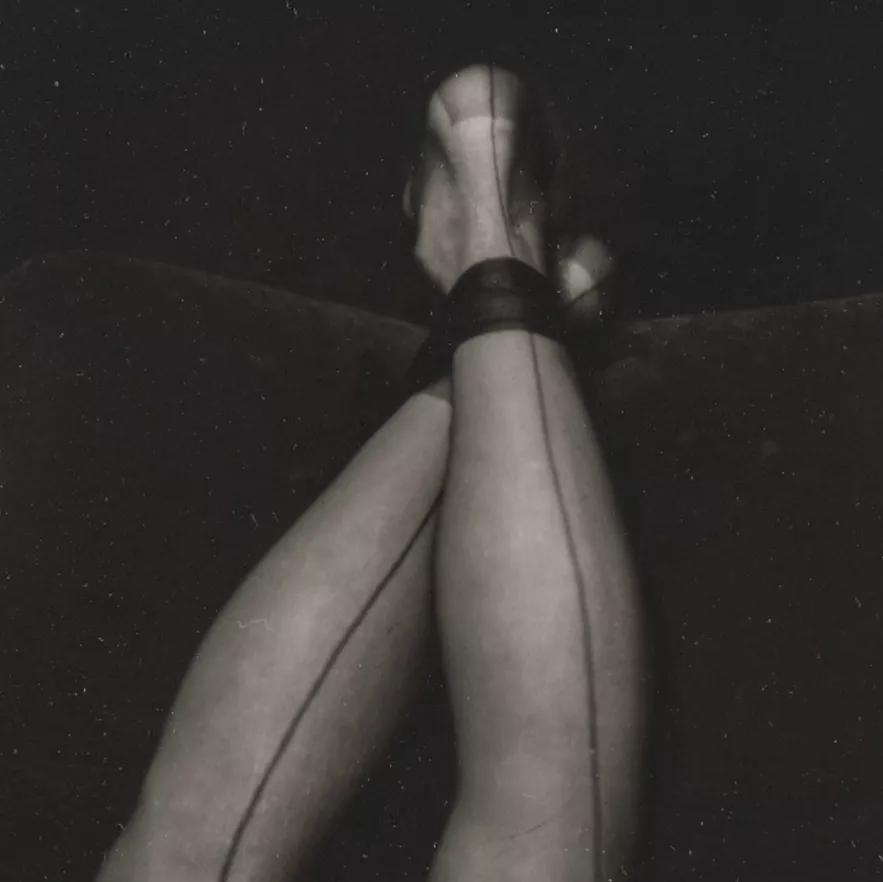
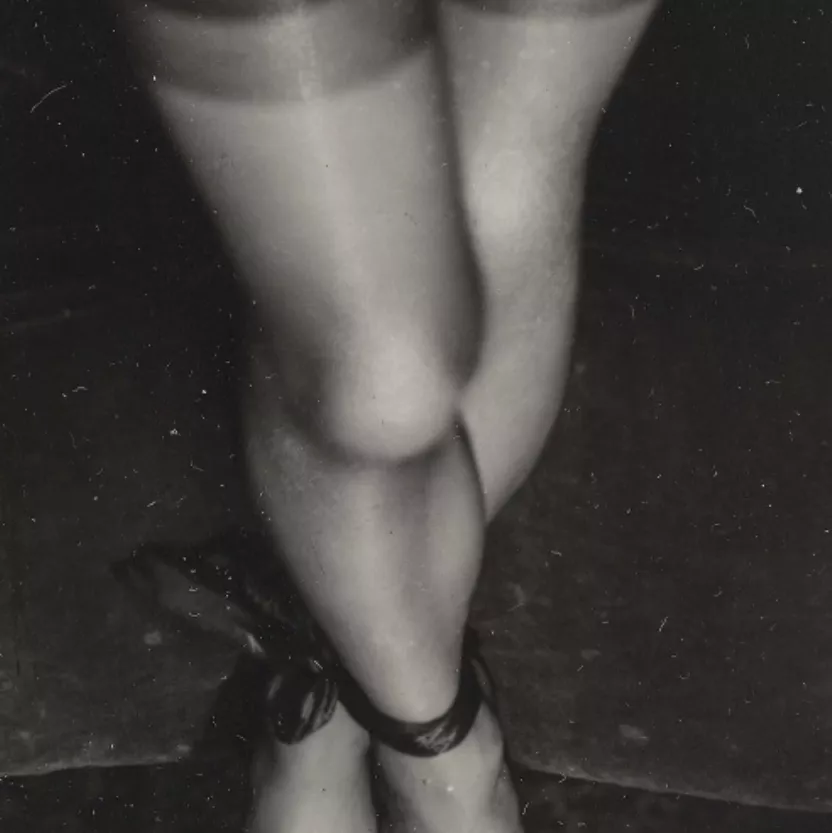
Aside from his work in painting, where the artist mainly uses oil on canvas and oil on isorel, he also works extensively with photography, and more specifically with the photomontage technique.
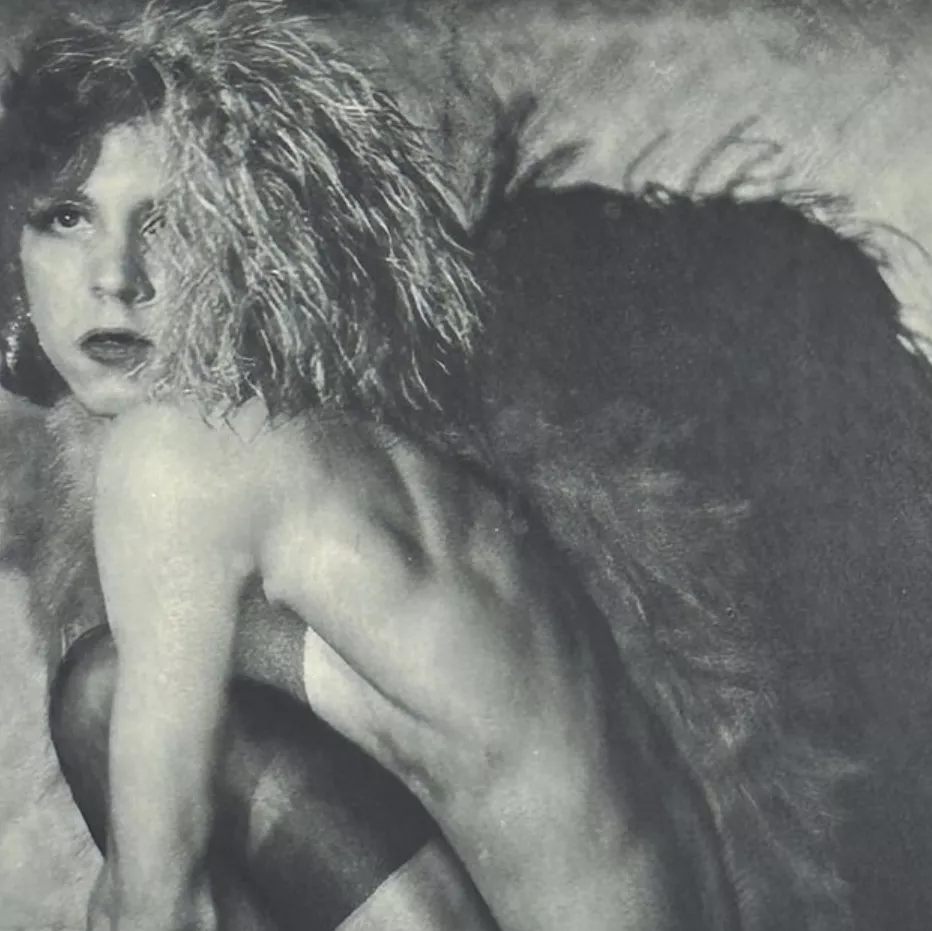
He creates a series of self-portraits based on photographs of himself wearing stilettos, corsets, stockings and gloves. He is also waxed, made-up and sometimes wears a wolf, and works with fabric textures such as fishnet, or felt hats.
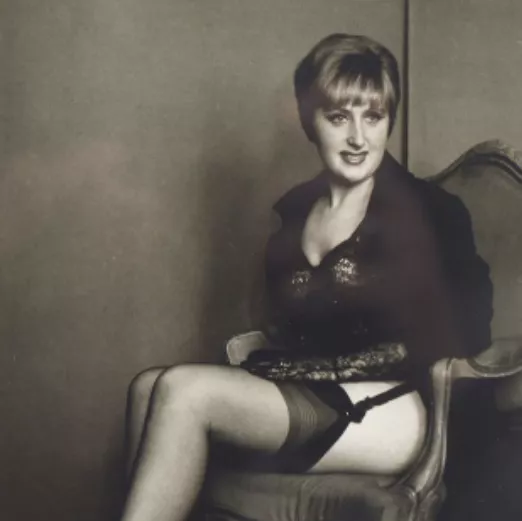
He also integrates photographs of his friends and models into his photomontages, deliberately cutting them out to keep only certain body parts. He then recomposes a body using the elements he has cut out.
At the end of his career, he concentrated mainly on the themes of eroticism and androgyny, creating various collage series while not neglecting oil on canvas. He took as his model Thierry Agullo, also an artist - whom he photographed before cutting out the clichés, and dedicated an entire series to him in the year of his death.
.The life of Pierre Molinier
Pierre Molinier (1900-1976) was a French artist, painter, sculptor and photographer, who did not fit into any particular movement but produced numerous works around eroticism, themes of androgyny, and transvestism.
Born in Agen, his father was a house painter and decorator who specialized in trompe-l'œil, particularly marble and wood. He learned this trade alongside his father from 1913 onwards, and at the same time took drawing and painting classes at the Agen municipal school.
From 1919 onwards, he settled in Bordeaux as an artisan painter, a trade he practiced until 1960. He married in 1931, and had two children. The 1940s were difficult for the artist, as he lost his father to suicide and his wife left the marital home.
The dramas of his life fed into his painting, as he created a scandal in 1951 by exhibiting Le Grand Combat, one of his first erotic canvases. The Salon boycotted his painting and he was forced to cover his canvas with a veil, on which he hung a manifesto so that visitors and critics alike would understand his approach.
He displayed a lifetime of unstable behavior, being violent with his wife and family, slapping the former and attempting to shoot his cousin with a revolver. These events earned him a month's imprisonment.
At the end of his life, he gave up his job as a house painter completely in order to devote himself entirely to painting and photography.
He committed suicide in 1976 by shooting himself in the mouth.
.
Focus on Le Grand Combat numéro 1, Pierre Molinier, 1951
In his painting Le Grand Combat, exhibited in 1951 at the Salon des artistes indépendants de Bordeaux, creating an unprecedented scandal and forcing the artist to cover his painting with a veil, Molinier innovates and signs one of his most famous paintings.
Representing contorted body parts, whose nature is hard to guess, he explores his fantastical world through the technique of photomontage mixed with oil paint.
The atmosphere of the work is quite unsettling, almost suffocating, representing the twisted, fetishistic universe of the artist. He plays with the codes of sexuality and identity, in a transgressive eroticism, to create ever greater confusion.
He plays with double and symmetry, resorting to compositions that confuse the viewer's perception. He multiplies shapes and body parts to create a hypnotic, unsettling and disturbing vision.
The palette is dark and the lighting dramatic to intensify the phantasmagorical side. It is not, however, a complete break with all photographic practices, as the play of light recalls certain 19th-century photographs.
The Surrealist heritage is assumed, particularly that of Hans Bellmer,Yves Tanguy, René Magritte, Alberto Savinio and André Breton. Through this prism, Molinier plays on the distortion of bodies and their assembly in order to better question identity disorder.
Recognizing the artist's signature
Not all of Pierre Molinier's works are signed, and copies may exist. Here's an example of his signature.
Expertise your property
If you happen to own a work by Pierre Molinier, request a free appraisal without further delay via our form on our website.
A member of our team will contact you promptly to provide you with an estimate of the value of your work, not forgetting to send you ad hoc information about it.
If you are considering selling your work, you will also be accompanied by our specialists in order to benefit from alternatives for selling it at the best possible price.
.
Estimate in less than 24h
Discover in the same theme

Rating and value of Charles Catteau's ceramics, vases, stone...
Charles Catteau is a Franco-Belgian ceramist of the Art Nouveau and Art Deco periods, who produced works of great value.
Learn more >

Rating and value of paintings by Pierre Alechinsky
Pierre Alechinsky is a founding member of the CoBra group. His works are highly valued. Estimated 24h.
Learn more >

Rating and value of sculptures and bronzes by Georges Chauve...
Georges Chauvel is a figurative sculptor of the first half of the 20th century, and has produced some highly-rated and valuable works.
Learn more >
D'autres tableaux modernes figuratifs vendus aux enchères

Estimated 800 - 1.500
Jean Roger SOURGEN (1883-1978) Trees and dunes Oil on panel

Estimated 3.000 - 5.000
Georges LAPCHINE (1885-1951) The port of St Tropez Oil on canvas

Estimated 18.000 - 30.000
Charles CAMOIN (1879-1965) "Le Port de Marseille, 1928" Oil on canvas.

Estimated 1.500 - 3.000
Jean VANDEN EECKHOUDT (1875-1946), Basket of persimmons, Oil on canvas

Estimated 2.000 - 4.000
Charles LACOSTE (1870-1959) Starry night, Oil on paper mounted on canvas

Secure site, anonymity preserved

Auctioneer approved by the State

Free and certified estimates
Frequently asked questions
-
Who is Pierre Molinier, and what is his artistic background?Pierre Molinier (1900–1976) was a French painter, sculptor, and photographer known for his works exploring eroticism, androgyny, and cross-dressing. Influenced by Surrealism and supported by André Breton, he revolutionized the art scene in 1951 with his painting “Le Grand Combat,” which combined photomontage and oil painting. His unique style blends figuration, abstraction, and expressionism, leaving a profound mark on the body art of the 1960s.
-
What is the price range for Pierre Molinier's works, by type?The value of Molinier’s works varies considerably depending on the medium: prints and multiples sell for between €30 and €5,000, sculptures for between €100 and €11,400, photographs between €60 and €17,000, watercolors between €300 and €32,000, and paintings between €150 and €100,000. His body art canvases from the 1960s are particularly sought after and command the highest prices.
-
How can you authenticate a work by Pierre Molinier?To authenticate a work by Molinier, we recommend that you request a free, no-obligation appraisal from our state-certified auctioneers and experts via our online form. Our team will contact you shortly to assess the authenticity and value of your artwork, taking into account its signature (note that not all works are signed) and its characteristics.
-
Is this a good time to sell a work by Pierre Molinier?Yes, this is an excellent time to sell a work by Molinier. His market value remains high and is constantly rising on the international market, with sustained demand from collectors. His body art paintings from the 1960s and his watercolors are particularly sought after, as evidenced by recent auction results that have at times exceeded initial estimates.
-
How does the appraisal and sale of a work of art take place at Auctie's?The appraisal is completely free and non-binding: simply fill out an online form, and an expert from our team will contact you within 48 hours with an accurate appraisal. If you decide to sell, our specialists will guide you through the process from the appraisal to the auction, offering you the best options to get the highest possible price at auction.
