



Rating and value of furniture, table, bench Claude Lalanne

Key takeaways
- The prices of Claude Lalanne’s furniture vary considerably, ranging from €3,000 to €3,600,000 depending on the technique and complexity of the piece.
- His Ginko table with four gilded bronze chairs sold for €820,000 in 2020, exceeding its initial estimate of €600,000 to €800,000.
- Furniture accounts for 51% of the artist’s works at auction, with hammer prices often exceeding one million euros thanks to strong collector interest.
If you own a work by or after the artist Claude Lalanne, and would like to know its value, our state-approved experts and auctioneers will offer you their appraisal services.
Our specialists will carry out a free appraisal of your work, and provide you with a precise estimate of its value on the current market.
Then, should you wish to sell your work, we will direct you to the best possible arrangement to obtain the optimum price.
Rating and value of artist Claude Lalanne
Claude Lalanne is an artist known to contemporary furniture enthusiasts. Now, prices for her furniture and furniture objects are rising at auctioneers' gavels.
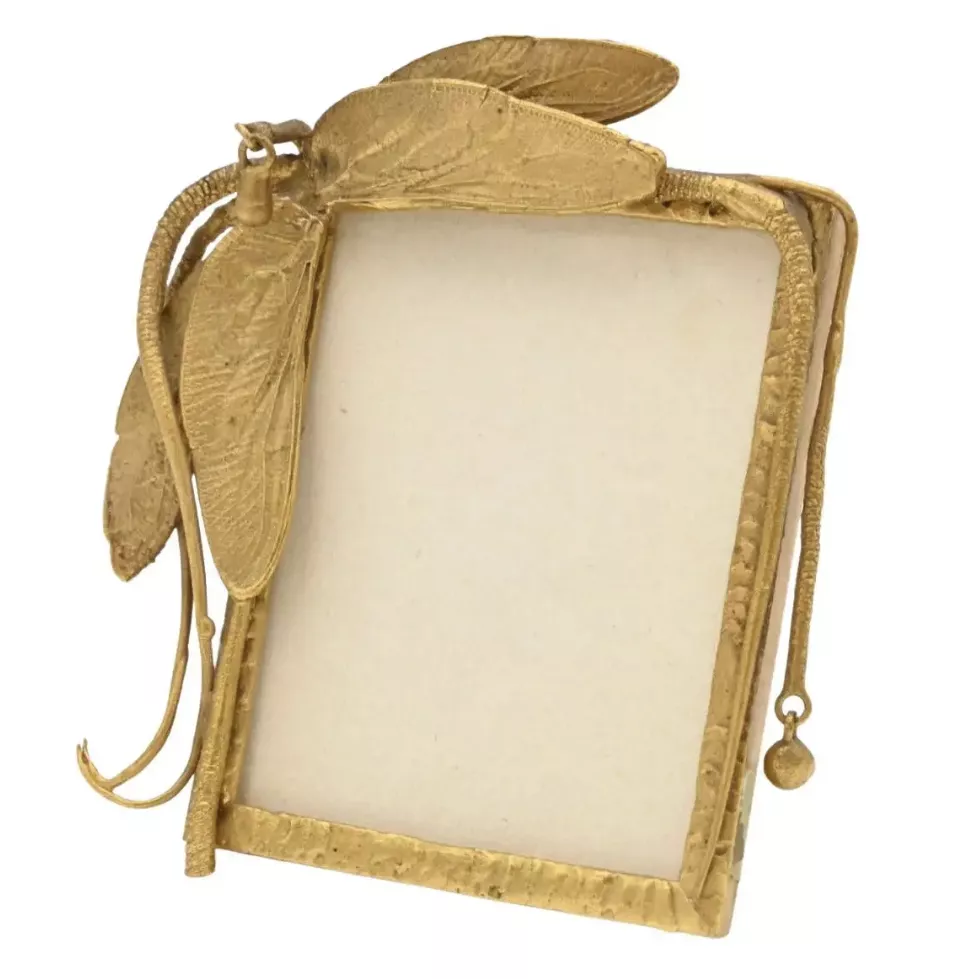
His frames are particularly prized, especially by French buyers, and the price at which they sell on the art market ranges from €9,000 to €3,600,000, a significant delta but one that speaks volumes about the value that can be attributed to the artist's works.
In 2020, his Ginko table,along with four gilded bronze chairs dating from 2009, sold for €820,000, while they were estimated at between €600,000 and €800,000. His stock is exploding.
Order of value from a simple work to the most prestigious
Technique used | Result |
|---|---|
Gilt bronze furniture | From €9,000 to €820,000 |
Copper furniture | From €15,000 to €1,500,000 |
Bronze furniture | From €3,000 to €2,000,000 |
Furniture in patinated bronze | From €11,500 to €3,600,000 |
Estimate in less than 24h
Style and technique of artist Claude Lalanne
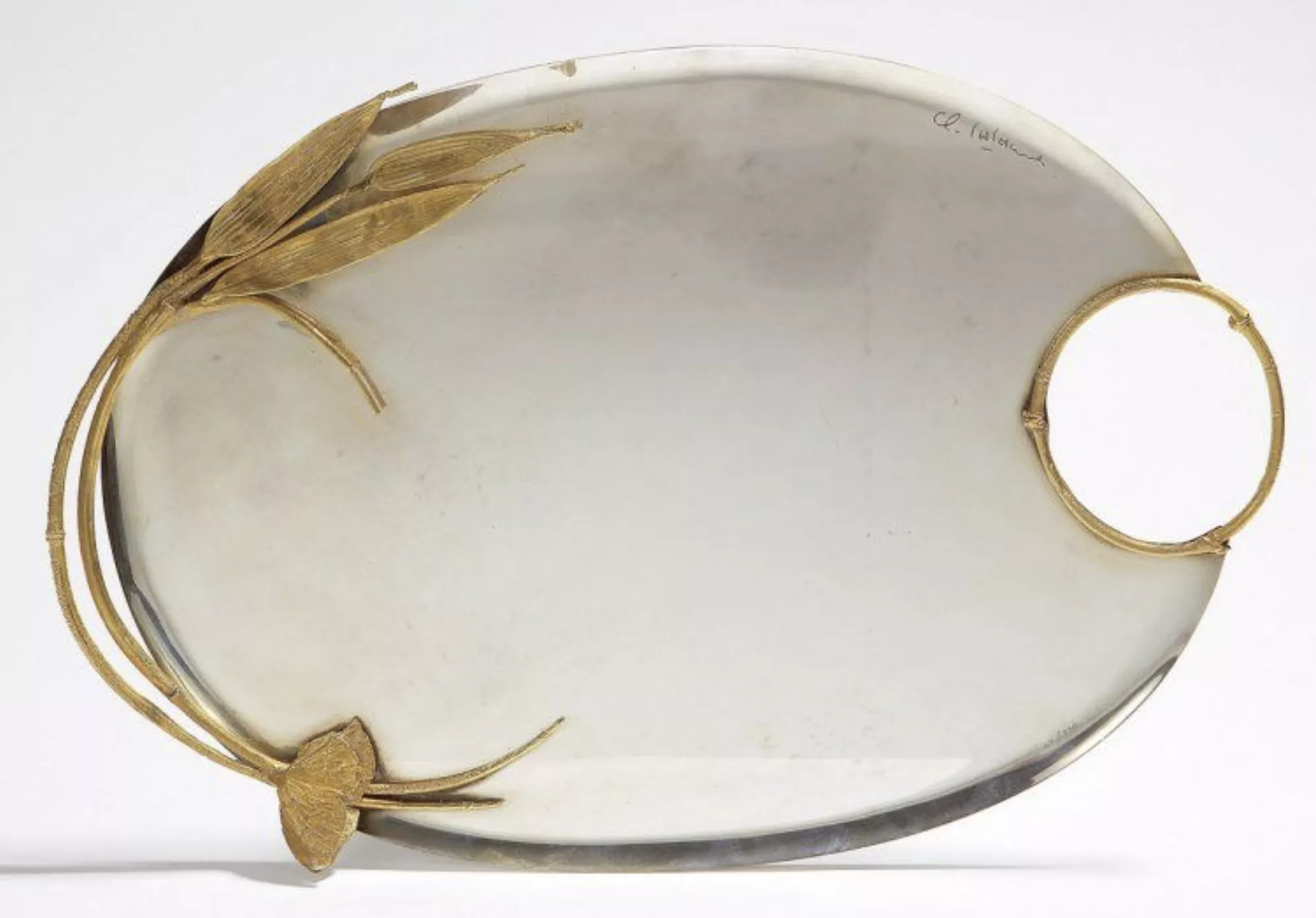
Claude Lalanne is a French artist whose work includes furniture in a variety of materials : bronze, gilded bronze, metal, pâte de verre, marble, and many more.
There's no particular style she's known for: her unique stylistic identity is inspired by the world of flowers and animals, which she never hesitates to modify and transform into unique sculptures - her famous crocodile bench being a perfect example.
In Claude Lalanne's furniture, function doesn't precede form, it follows from it. The furniture is not organized around a utilitarian structure, it is built from a plant, animal or hybrid motif, extended into the space.
The surface is not reduced to a plane, it unfolds, it envelops. The material, often bronze, is not worked for its brilliance or mass, but for its ability to retain an imprint.
Each leaf, each branch, each stem is molded onto the real, then fixed in a formal network that constitutes both the object and its decoration.
The drawing doesn't seek simplification, it follows the sinuosities of the living. The assembly hides nothing; it becomes visible, articulated, organic. The table, the armchair, the chest of drawers are never standard volumes adorned with motifs.
They are produced by these motifs, entirely made up of them. Furniture doesn't impose itself by its geometry, but by its internal balance, by the coherence of its lines, by the continuity of its surfaces.
At Claude Lalanne, furniture doesn't complete a space, it transforms it. It imposes a rhythm, a density, a texture. It doesn't summon a style, it installs a presence.
The artist's career and the world of Claude Lalanne
The artist's career and the world of Claude Lalanne
Claude Lalanne is a French artist born in Paris in 1925.
She trained at the Beaus-Arts de Paris and the École des Arts décoratifs, learning sculpture and jewelry design. She also acquired architectural skills, designing the Lalanne garden among other projects.
The major part of her work, and what she is known for internationally, remains sculpture. Her work was noticed by Yves Saint Laurent and Pierre Bergé, with whom she would collaborate.
Claude Lalanne notably created busts of the model Verushka as part of her collaboration with Saint Laurent, but also other pieces : brooches, jewelry... Part of it was part of her collaboration with Loulou de la Falaise, a model who also created jewelry.
His sculpture L'Homme à la tête de chou would be a source of inspiration for Serge Gaisbourg, who released an ablum bearing this name in 1976.
In 1952, she met her second husband in a gallery, François-Xavier Lalanne, also a sculptor. The couple would become known and publicized for their work together, and were nicknamed " Les Lalanne ".
Her husband would be more interested in animals, she in flowers. Their best-known works date from the series of commissions for YSL and Pierre Bergé.
She made more furniture than her husband; over 300 pieces have already gone to auction in this category, giving an idea of the consequence of her production. Auctions for the artist's works often exceed the million euro mark, with Baroque inspiration a recurring theme among today's collectors.
Focus on Banc Ginko, Claude Lalanne
In Banc Gingko, the structure doesn't rest on a hidden framework, it organizes itself from the motif itself.
The bench is not conceived as a functional volume to which a decoration has been applied: it is born from a deployment of leaves, molded onto the plant, assembled in a dense, regular network, without mechanical repetition.
The backrest, seat and legs are integrated into a formal continuity, where each element derives from the previous one without rupture. The metal doesn't mask the plant, it extends it.
The surface retains its veins, hollows and irregular contours. Nothing is smoothed out. Bronze is treated to preserve the trace of life, not to freeze it. The bench doesn't rest, it rises.
It doesn't illustrate a form, it embodies it. With Claude Lalanne, Banc Gingko is not given as a piece of furniture, but as a fixed growth. It doesn't complete a setting, it transforms it. It doesn't serve a function, it organizes a space.
What the object preserves is not the image of the leaf, but its logic: expansion, repetition, variation. A way of making furniture not a support, but an active form, built in the discreet rhythm of the living.
The stylistic influences of Claude Lalanne
In Claude Lalanne's furniture, influences are not expressed by quotation, they are guessed at by affinity. The work is not built against a model, but at a distance.
Against the modernist rationalism carried by Jean Prouvé or Charlotte Perriand, she rejects purity, industrial lines and standardization. She does not seek to simplify, but to extend. Her relationship with nature is not one of abstraction, but of direct transposition.
Where Diego Giacometti breaks down furniture into linear, light, almost graphic structures, Claude Lalanne prefers fullness, surface, density. With her, the motif is not an accent, it is the structure.
The link with Art Nouveau, with Hector Guimard or Louis Majorelle, can be evoked, but it's not a return. The decor doesn't wrap around the form, it engenders it. The line is not curved to signify nature, it follows an internal organic logic.
The plant is not stylized, it is molded. Furniture doesn't dialogue with history, it settles into a different relationship with reality. With Claude Lalanne, influence is not a matter of schools or styles, but of shapes and materials.
Continuity rather than heritage, use rather than reference. A way of building from the living, without rupture, without hierarchy, in a language where every form becomes structure.
Claude Lalanne's imprint on his period
Claude Lalanne has made a significant contribution to art and culture, albeit one not widely known to the general public.
Her own works reflect the influence of the artistic movements of her time, making her an important figure in twentieth-century art, impacting a whole generation of sculptors and artists. Her works are extremely highly rated on today's art market, the value they reach at auction is constantly rising.
Her furniture is particularly sought after by collectors, although some pieces are kept in prestigious museums such as the Musée des Arts Décoratifs.
Furniture occupies a very important share of the auction market, with 51% of the artist's works that come up for sale being sold in this category.
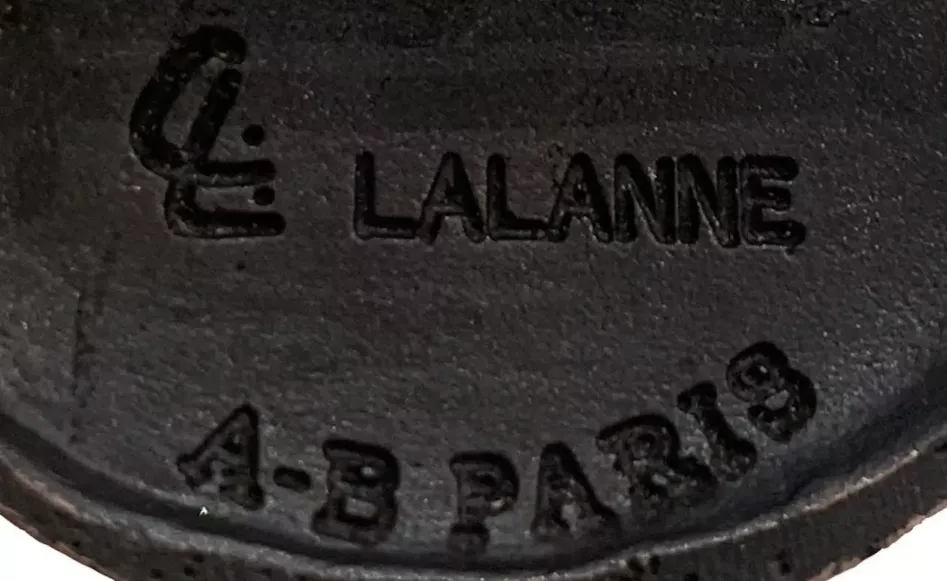
Recognizing the artist's signature
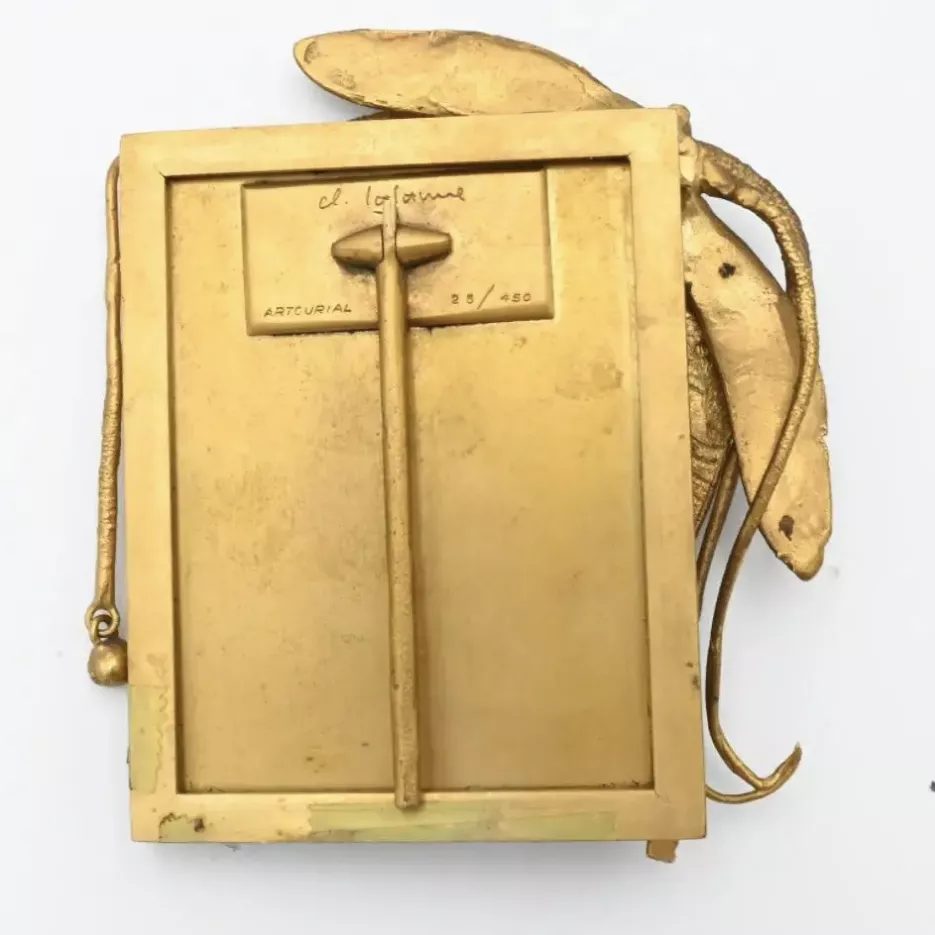
Claude Lalanne doesn't necessarily sign his works. Copies may exist, which is why expertise remains important.
Knowing the value of a work
If you happen to own a work by or after Claude Lalanne, don't hesitate to request a free appraisal using our form on our website.
A member of our team of experts and licensed auctioneers will contact you promptly to provide you with an estimate of the market value of your work, not forgetting to send you ad hoc information about it.
If you are considering selling your work, you will also be accompanied by our specialists in order to benefit from alternatives for selling it at the best possible price, taking into account market inclinations.
Estimate in less than 24h
Discover in the same theme

Rating and value of works, drawings, paintings by Henry Emil...
HenriyEmile Vollet is a 20th-century Orientalist painter whose drawings and oil paintings are highly prized at auction.
Learn more >

Rating and value of paintings and laquers by Nguyen Gia Tri
Nguyễn Gia Tri is a leading artist of Vietnamese modernism, who has produced numerous works that are highly prized and valuable.
Learn more >

Rating and value of vases by Lucien Levy Dhurmer and Clément...
Clément Massier and Lucien-Lévy Dhurmer collaborated on Art Nouveau vases, which command high prices and are highly valued at auction.
Learn more >
Contemporary furniture at auction

Estimated 1 500 € - 2 000 €
Attributed to Jacques ADNET (1900-1984) Chest of drawers with wood structure and base sheathed in black saddle-stitched leather and imitation leather.

Estimated 10.000 - 15.000 €
Marcel COARD (1889-1974) - Pair of black patinated wrought-iron curule armchairs with oval backs.

Estimated 15.000 - 20.000 €
Charlotte PERRIAND (1903-1999) - Suite of 6 "berger" stools.

Estimated 1500 - 3000€
René Coutelle (1927-2012), console, dove model

Secure site, anonymity preserved

Auctioneer approved by the State

Free and certified estimates
Frequently asked questions
-
Who is Claude Lalanne, and what is his artistic style?Claude Lalanne is a French artist born in Paris in 1925, who studied at the École des Beaux-Arts in Paris and the École des Arts Décoratifs. She is famous for her furniture and sculptures, which are characterized by organic forms inspired by nature: flowers, leaves, and transformed animal creatures. Her unique style rejects modernist standardization and constructs furniture from plant or animal motifs modeled after reality, where function derives from form rather than the other way around.
-
What is the price range for Claude Lalanne's furniture?Prices for Claude Lalanne’s furniture vary considerably depending on the material and the piece, ranging from €3,000 to €3,600,000. Furniture made of patinated bronze commands the highest prices (€11,500 to €3,600,000), while gilded bronze pieces range from €9,000 to €820,000. His market value is steadily rising, with some auction sales exceeding one million euros.
-
How can you authenticate a work by Claude Lalanne?Claude Lalanne does not always sign her works, and copies may exist. To authenticate a piece and determine its exact value, we recommend that you request a free appraisal from Auctie's using our online form. Our team of experts and state-certified auctioneers will contact you promptly to provide a detailed appraisal of your artwork.
-
Is this the right time to sell Claude Lalanne's furniture?Yes, this is an excellent time to sell. Claude Lalanne’s market value is currently rising significantly in the art market, with collectors showing particular interest in his baroque and organic furniture. His works are increasingly sought after, and auction prices regularly exceed initial estimates.
-
How does the appraisal process work at Auctie's, and how do I sell a piece of art?The appraisal is free and non-binding: simply request an appraisal through our online form, and an expert will contact you within 48 hours with a market estimate. If you’d like to sell, our specialists will guide you through the process from appraisal to auction, offering you the best options to achieve the highest possible price while taking market trends into account.
