



Rating and value of sculptures and bronzes by Paul Howard Manship

Key takeaways
- Paul Howard Manship’s sculptures and bronzes sell for between €40 and €958,500, with major works fetching between €200,000 and €500,000.
- An American sculptor of the 20th century (1885–1966), Manship fused classical antiquity with Art Deco aesthetics, particularly through his mythological compositions and stylized figures.
- The first prints produced during the artist’s lifetime command a significant premium, with value differences of up to 2 to 4 times between copies depending on the print run.
Paul Howard Manship’s sculptures and bronzes fetch up to €958,500 at auction. An appraisal allows us to accurately determine the current market value of your Paul Manship artwork and, if applicable, optimize the sale of the piece.
If you own a work by Paul Manship and would like to know its value, our state-certified auctioneers will provide a free appraisal based on authenticity, market rating, and recent auction results.
Market Value and Appraisal of Artist Paul Howard Manship
Considered one of the masters of modern American sculpture, Paul Howard Manship was recognized during his lifetime. His legacy therefore consists primarily of sculptures created using various materials, particularly bronze.
Currently, prices for his works are consistently rising at auction. His sculptures are particularly sought after by European buyers, and the prices at which they sell on the art market range from €40 to €958,500—a considerable spread that nonetheless speaks volumes about the value that can be attributed to Paul Howard Manship’s works.
In 2013, one of his bronze sculptures, *Indian Hunter and His Dog*, sold for €958,500, despite an estimate of between €221,200 and €370,000.
A range of values from a simple work to the most prestigious
Technique used | Result |
|---|---|
Sculpture - three-dimensional | From €40 to €958,500 |
Estimate in less than 24h
Placing the Artist in Context
Period
Paul Howard Manship (1885–1966) was a 20th-century sculptor who worked primarily in the United States during the revival of American monumental sculpture between the two world wars.
His work was particularly influential between the 1920s and 1940s, a period marked by the rise of monumental architecture and public decorative projects.
He was part of the American modernist art scene, while maintaining a constant dialogue with the traditions of ancient and Renaissance sculpture.
Artistic Movements
He was part of the Art Deco movement, contributing to the decorative and monumental aesthetic characterized by stylized forms, symmetry, and linear elegance.
His modernized classicism is seen as a reinterpretation of ancient and archaic models (particularly Greek ones) in a simplified and stylized formal language.
He creates public works intended for architecture and urban spaces, combining decorative and symbolic dimensions. He shows a predilection for subjects drawn from classical mythology, treated with formal simplification and a strong decorative sensibility.
The artist occupies an intermediate position between the legacy of classical sculpture and the stylistic explorations of 20th-century American modernism.
The Artist's Life
Cultural Context
Paul Manship was born in 1885 in the United States and was part of the artistic scene of the early 20th century, a period marked by the rediscovery of ancient forms and the rise of a modernized classicism.
He trained in sculpture within an academic setting and spent time in Rome. This experience was formative and fueled his interest in archaic Greek art and classical models.
His work is characterized by an elegant stylization of figures, clean lines, and a rhythmic composition inspired by ancient reliefs. He became one of the leading figures of the Art Deco movement, incorporating into his sculptures a synthesis of classical tradition and modern aesthetics.
His body of work includes numerous monumental public commissions, in which decorative and symbolic elements play a central role.
Artistic and Intellectual Circle
His artistic career unfolded in an environment marked by the influence of American and European academic institutions, particularly those associated with the classical training of sculptors.
He moved in artistic circles close to the creators associated with Art Deco and the monumental decorative programs of the United States during the interwar period.
His works were commissioned by public institutions, architects, and private patrons involved in the major artistic and urban projects of the first half of the 20th century.

The Artist's Techniques
Style
Paul Manship was a major American sculptor of the first half of the 20th century, associated with the Art Deco aesthetic. His body of work blends references to classical antiquity (Archaic Greek and Etruscan art) with a modern simplification of forms.
His body of work as a whole reflects a preference for linear and decorative compositions, characterized by the stylized elegance of his silhouettes. He emphasizes the continuous line and clean contours, giving his figures a high degree of graphic clarity.
He frequently used bronze and mastered sculptural relief, creating subtle interplay between volume and surface. He drew on recurring themes from ancient mythology, rendered in a refined and synthetic aesthetic.
His body of work reflects an exploration of the balance between naturalism and stylization, producing figures that are both dynamic and idealized.
Focus on a Key Work
Prometheus, 1934
This monumental gilded bronze sculpture is installed in the center of the Rockefeller Center. It features a dynamic circular composition in which the mythological figure appears to project itself into space.
An ornamental ring surrounds the figure, integrating the sculpture into an overall decorative structure. It renders the movement fluidly, reinforcing the sense of rotation and momentum.
This work is emblematic of 20th-century public sculpture, illustrating Manship’s synthesis of classical tradition and decorative modernity.
FAQ – How do you appraise a work by Paul Howard Manship?
1) What stylistic criteria specific to Paul Howard Manship are key?
The analysis focuses on the stylization of the figures, the linear elegance of the silhouettes, and the inspiration drawn from ancient and archaic art—characteristics of a visual language often associated with the Art Deco aesthetic.
2) How important is the distinction between an original cast and a later reproduction?
For bronze sculptures, particular attention is paid to the presence of a foundry mark, the number of existing copies, and the date of the casting, as the distinction between an original cast and a later cast directly influences the value.
3) How does the art market influence the appraisal?
The valuation is based on a comparative analysis of auction results for Manship’s sculptures and reliefs, taking into account the work’s dimensions, the quality of the casting, its condition, and the enduring interest in early 20th-century American sculpture.
Market Segmentation
Prices of Artworks
Manship is a major figure in early 20th-century American decorative sculpture; he occupies the upper-middle segment of the modernist sculpture market, supported by enduring institutional recognition and the widespread availability of his bronze casts.
There is a clear hierarchy among monumental bronze sculptures, medium-sized bronzes, and works on paper. Major bronzes or iconic models generally sell for between €200,000 and €500,000, depending on the size and rarity of the edition.
Medium-sized bronzes constitute the core segment of the market, often ranging from €40,000 to €250,000. Preparatory drawings and works on paper represent a more accessible market, ranging from €2,000 to €20,000.
Factors Affecting Value
Mythological compositions (figures of Diana, Actaeon, centaurs, or winged figures) form the core of demand. These subjects can command prices 30 to 60% higher than those of simpler decorative compositions.
First editions or bronzes cast during the artist’s lifetime command a significant premium: differences in edition can result in value disparities of 2 to 4 times between individual pieces, as is the case with French animal sculptors such as Guyot, Paul Jouve, and Barye.
The market is relatively active, and liquidity depends mainly on the quality of the model and the size of the bronze. The rarity of the model, the quality of the casting, historical provenance, and inclusion in institutional exhibitions are the main factors determining value.
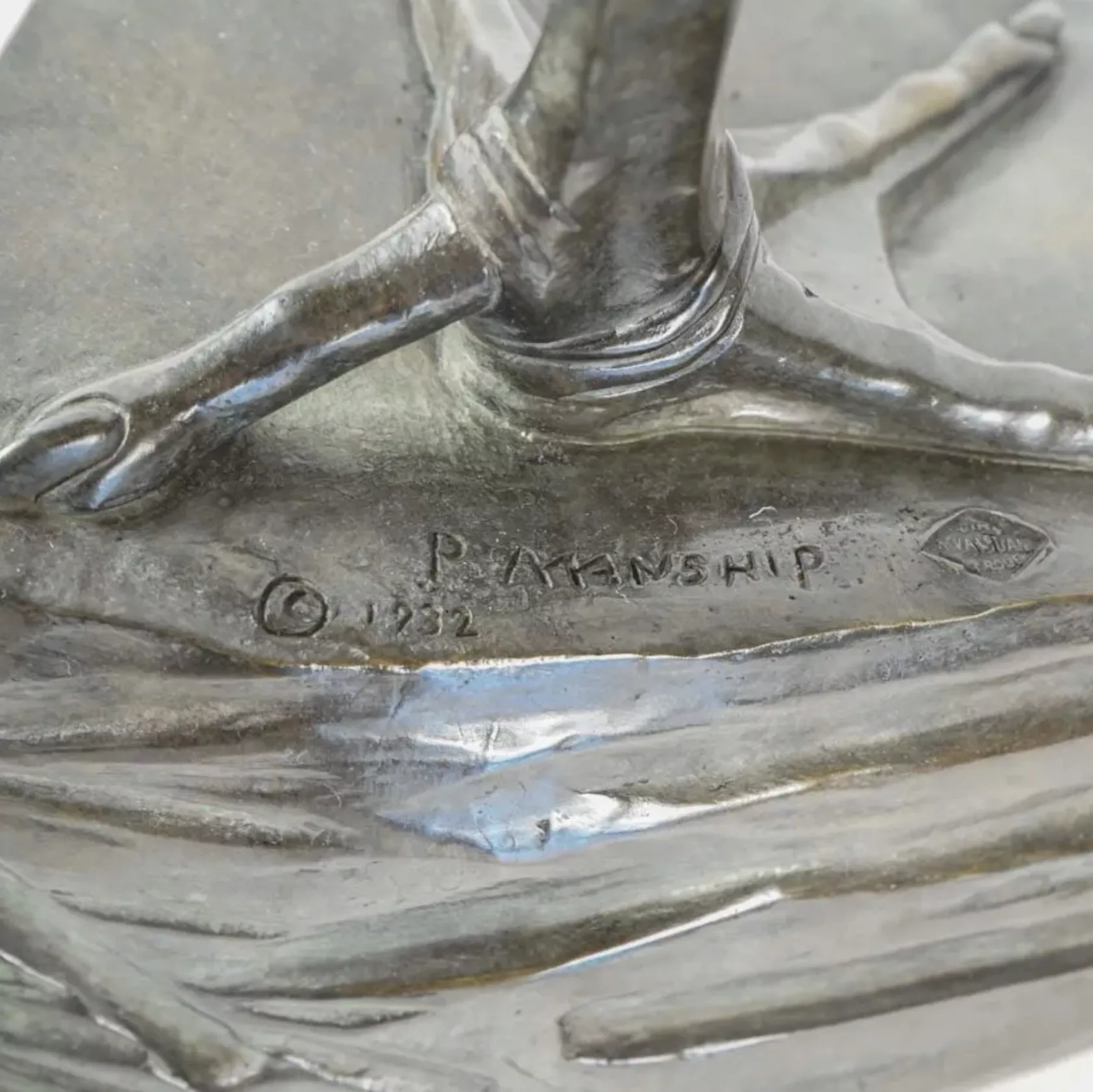
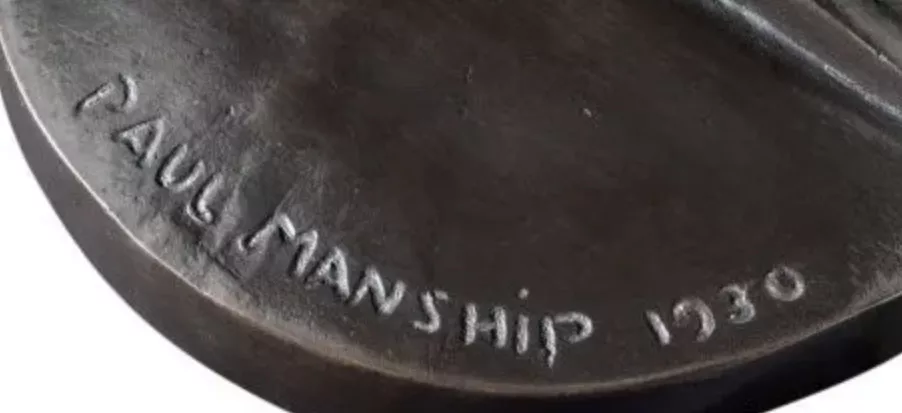
Recognizing Paul Manship’s Signature
Paul Howard Manship usually signs his sculptures “PH Manship.” However, there are many copies, which is why expert appraisal is essential.
Get Your Paul Manship Sculpture Appraised
If you own a Paul Manship sculpture, a valuation will help you determine its current market value.
Using our online form, our experts and certified auctioneers will conduct a free appraisal and provide you with a reliable estimate of your artwork’s market value.
If you’re considering selling it, we’ll guide you through the process to ensure you get the best possible price.
Estimate in less than 24h
Discover in the same theme

Rating and value of Tiffany lamps, objects and creations
Tiffany creations are esteemed for their excellence and exceptional craftsmanship, with high values. Find out more.
Learn more >

Rating and value of works, drawings and paintings by André H...
André Hambourg is a twentieth-century marine painter who produced drawings and oils on canvas listed at auction. Estimated in 24h.
Learn more >

Rating and value of paintings by Jean Carzou
Jean Carzou is a painter of the Paris School who has produced works that are highly valued on the auction market.
Learn more >
D'autres bronzes modernes vendus aux enchères

Estimated Between €2,000 and €4,000
Edouard Marcel SANDOZ (1881-1971) curly stingray, bronze print

Estimated Between €1,500 and €3,000
Renato CARVILLANI (1896-1986), seated woman, gilded bronze print

Estimated Between €1,500 and €3,000
César BALDACCINI dit CESAR (1921-1998), Poule Cartier, bronze print

Estimated Between €10,000 and €20,000
Baltasar LOBO (1910-1993), female nude in bronze

Estimated 5.000 - 8.000
Igor MITORAJ (1944-2014), Bust of Asclepius, Green patina bronze sculpture

Secure site, anonymity preserved

Auctioneer approved by the State

Free and certified estimates
Frequently asked questions
-
Who is Paul Howard Manship, and what is his historical context?Paul Howard Manship (1885–1966) was a major American sculptor of the 20th century, recognized as one of the masters of modern American sculpture. Trained in an academic setting and having spent time in Rome, he was part of the Art Deco movement and modernized classicism, and was particularly active between the 1920s and 1940s. He created numerous monumental public commissions that combined classical traditions with modern aesthetics.
-
What is the price range for Paul Howard Manship's sculptures and bronzes at auction?Paul Manship's sculptures and bronzes sell for between €40 and €958,500, depending on their size and rarity. Monumental bronzes or iconic models generally range from 200,000 to 500,000 €, while medium-sized bronzes sell for between 40,000 and 250,000 €. Preparatory drawings and works on paper represent a more affordable segment, ranging from 2,000 to 20,000 €.
-
How can you authenticate a work by Paul Howard Manship?Authenticating a work by Manship requires professional expertise. Our state-certified auctioneers provide a free, no-obligation appraisal based on an analysis of authenticity, verification of the signature (usually “PH Manship”), the quality of the casting, and recent market trends. You’ll receive an expert response within 48 hours via our online form.
-
Is this a good time to sell a sculpture by Paul Manship?Yes, the market for early 20th-century American sculpture remains particularly active and robust. Prices for Manship’s works consistently rise at auction, particularly among European buyers. The artist’s enduring institutional recognition and the constant interest in Art Deco decorative sculpture ensure good liquidity for high-quality works.
-
What are the main factors that influence the value of a work by Manship?The value depends on several factors: mythological compositions (Diana, Actaeon, centaurs) are particularly sought after and can fetch 30 to 60 percent more than simpler compositions; first editions and bronzes cast during the artist’s lifetime command a significant premium; finally, the rarity of the model, the quality of the casting, historical provenance, and institutional exhibitions are the main factors determining the value.
