



20th-Century German Art: Appraisal and Expertise

Expressionism, Bauhaus, and the avant-garde: the value of 20th-century German art varies greatly depending on the artist, the period, and the history of the work.
Below you’ll find all our valuation guides dedicated to 20th-century German art—Expressionism, the Bauhaus, New Objectivity, and postwar art. Each guide details the price ranges observed at auction and the factors that determine a work’s value before it is entrusted to our state-certified auctioneers.
Guides on this art movement
See all guides >
Rating and value of drawings and paintings by Hermann Nitsch
Hermann Nitsch is the founder of Viennese Actionism. His works command high prices and have significant value at auction. 24-hour estimate.
Learn more >

Estimate and value of paintings, drawings by Hans Thoma
Discover the prices and values of works by Hans Thoma (1839–1924), a German Symbolist painter. Appraisals, art market trends, and expert advice.
Learn more >

Rating and value of paintings by Emil Schumacher
Emil Schumacher is a German painter of informal art who has produced numerous works that are highly valued at auction.
Learn more >

Rating and value of paintings by Max Beckmann
Max Beckmann is one of the best-known and most famous German Expressionist painters. His value is very high.
Learn more >

Rating and value of drawings, prints and sculptures by Käthe...
Käthe Kollwitz is a German Expressionist artist who worked extensively in drawing and printmaking. Her works are highly prized.
Learn more >

Rating and value of paintings by Gabriele Münter
Gabriele Münter is an Expressionist artist who has produced many works that are highly valued at auction. 24h estimate
Learn more >

Rating and value of paintings by Friedrich Friedrich Vordemb...
Friedrich Vordemberge Glidewart was a painter of the German avant-garde who produced many works of high value.
Learn more >

Rating and value of paintings by Otto Manigk
Otto Manigk was a Polish and German Expressionist painter who produced paintings that are highly valued at auction.
Learn more >

Ratings and values of paintings by Alberto Savinio
Alberto Savinio is a twentieth-century Italian surrealist painter whose paintings are highly prized at auction.
Learn more >

Rating and value of paintings by Max Oppenheimer
Max Oppenheimer is an Austrian Expressionist painter who produced many works that are highly valued at auction.
Learn more >

Rating and value of paintings by Oskar Kokoschka
Oskar Kokoschka is a 20th-century Austrian Expressionist painter whose works are highly valued at auction.
Learn more >

Rating and value of sculptures and bronzes by Arno Breker
Arno Breker is a twentieth-century neoclassical sculptor whose sculptures and bronzes are highly valued at auction.
Learn more >
Understanding the Value of 20th-Century German Art
What Is the Market Value of a German Work of Art?
The market value of a 20th-century German artwork refers to the benchmark value assigned to it by the secondary market at a given moment, based on the artist’s identity, the artistic movement to which it belongs, the medium and technique used, its condition, the strength of the documentation, and the current state of international demand.
20th-century German art constitutes an exceptionally rich segment, encompassing the Expressionism of the early avant-garde movements, the revolutionary teachings of the Bauhaus, the explorations of New Objectivity during the Weimar Republic, and the developments in postwar abstraction.
This market has one notable characteristic: the considerable importance of works on paper.
Drawing, watercolor, and printmaking played—particularly among the German Expressionists—a creative role as central as that of oil painting, which distinguishes this market from many other segments of modern art where works on paper remain secondary.
This distinctiveness has direct implications for pricing dynamics, as German Expressionist drawings enjoy greater recognition and higher valuations than those of other national schools.
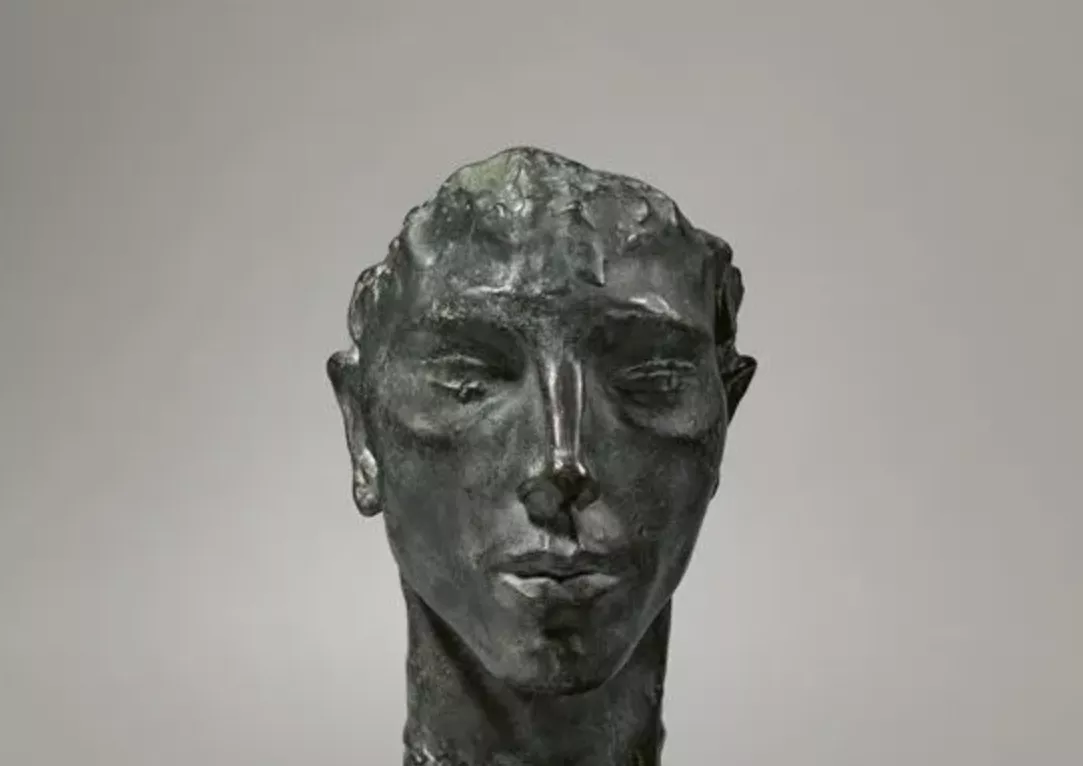
Why 20th-Century German Art Captivates the Art Market
20th-century German art captivates with the intensity of its expressive commitment and the diversity of its successive aesthetic breakthroughs.
Expressionism, spearheaded by the groups Die Brücke and Der Blaue Reiter, established a vision of color and form marked by an unprecedented emotional intensity, which left a lasting mark on the history of Western art.
The Bauhaus, a school of art and design founded in Weimar in 1919, revolutionized the relationship between art, craftsmanship, and industry, exerting an influence whose reach extended far beyond Germany’s borders. Finally, New Objectivity documented the social upheavals of the Weimar Republic with often fierce critical acuity.
This richness is accompanied by a particularly dense historical dimension, marked by the National Socialist regime’s designation of these works as “degenerate art” beginning in 1933, which led to confiscations, destruction, and forced exile for many artists.
In retrospect, this tragic history imbues these works with an additional layer of historical significance and necessitates particular vigilance regarding provenance issues, as certain pieces may have been subject to looting—a fact that provenance research must now rigorously account for.
Period | Period | Key Artists | Market Demand Level |
Die Brücke | 1905–1913 | Ernst Ludwig Kirchner, Erich Heckel, Karl Schmidt-Rottluff, Emil Nolde | Exceptional, very high auction prices |
Der Blaue Reiter | 1911–1914 | Wassily Kandinsky, Franz Marc, August Macke, Paul Klee | Exceptional, very active international market |
New Objectivity | 1920–1933 | Otto Dix, George Grosz, Max Beckmann, Christian Schad | Very strong, with significant recent growth |
Bauhaus | 1919–1933 | Paul Klee, Wassily Kandinsky, László Moholy-Nagy, Josef Albers | Very active, including design and applied arts |
Postwar German abstraction | 1945–1970 | Willi Baumeister, Ernst Wilhelm Nay, Gerhard Richter (early works) | Stable, with the market consolidating |
German contemporary art | 1970–present | Gerhard Richter, Anselm Kiefer, Georg Baselitz, Sigmar Polke | Exceptional, among the highest-valued in the world |
Estimate in less than 24h
The Criteria That Determine the Value of a German Work of Art
The market value of a 20th-century German work of art is determined first and foremost by the artist’s identity, which has a considerable impact: the gap between the market value of works by Kirchner, Kandinsky, or Klee and that of an artist from their immediate circle—even one of high formal quality—often amounts to several orders of magnitude.
For contemporary artists such as Gerhard Richter, Anselm Kiefer, or Georg Baselitz—whose works rank among the most expensive on the global contemporary art market—the period in which the work was created and the series to which it belongs are key factors in determining its value.
The price ranges observed on the secondary market illustrate this considerable disparity. An Expressionist drawing or watercolor by a second-tier artist can range from 3,000 to 30,000 euros.
A work on paper by a major artist from Die Brücke or Der Blaue Reiter ranges from 30,000 to 500,000 euros, depending on the quality and rarity of the subject. A medium-sized oil on canvas by a New Objectivity artist such as Otto Dix or George Grosz sells for between 200,000 and 5 million euros.
Large canvases by Kirchner, Kandinsky, or Beckmann, as well as major works by Gerhard Richter or Anselm Kiefer, frequently exceed several million euros and can reach tens of millions for the most exceptional pieces.

From Expressionist Drawing to Contemporary Art: Contextualizing a Work
German Expressionism: Die Brücke and Der Blaue Reiter
Die Brücke, founded in Dresden in 1905 by a group of young architects who had become painters, favored a raw, angular style, garish colors, and a deliberate primitivism inspired in particular by African and Oceanic art.
Kirchner, Heckel, Schmidt-Rottluff, and Nolde are its most iconic figures, and their works—particularly those from the decade 1905–1915—constitute the most sought-after core of this segment of the German art market.
Der Blaue Reiter, founded in Munich in 1911 by Kandinsky and Marc, adopted a more spiritual and theoretical approach, oscillating between expressive figuration and nascent abstraction, which would culminate in Kandinsky’s purely abstract explorations.
Although both groups are classified as Expressionists, they exhibit distinct sensibilities that the market values differently depending on collectors’ tastes: Die Brücke for its urban energy and chromatic intensity, and Der Blaue Reiter for its contemplative dimension and philosophical depth.
Paul Klee, who was associated with the second group before becoming a central figure at the Bauhaus, occupies a unique position at the intersection of these different movements, which is reflected in a particularly high and stable market value over the long term.
Movement | Characteristics | Indicative Price Range | Market Demand |
Die Brücke (painting, major artist) | Vibrant colors, primitivism, urban energy | €500,000 — tens of millions | Exceptional, institutional |
Der Blaue Reiter (painting, major artist) | Spirituality, emerging abstraction, theorization | €1 million — tens of millions | Exceptional, global market |
Expressionist work on paper (major artist) | Woodcut, drawing, watercolor | €30,000 — €500,000 | Very active, sought-after segment |
New Objectivity (painting, major artist) | Social criticism, clinical precision of line | €200,000 — €5 million | Very strong market, rapid growth |
Bauhaus (graphic work, design) | Geometry, functionalism, formal experimentation | €10,000 — €300,000 | Active, including the design market |
German contemporary art (major artist) | Richter, Kiefer, Baselitz, Polke | €1 million — tens of millions | Exceptional, among the highest on the market |
Drawings and works on paper: the most sought-after pieces
German Expressionist drawing occupies a unique place in the hierarchy of the 20th-century art market: unlike many other movements where works on paper remain secondary to painting, drawing and woodcut printmaking—particularly among the artists of Die Brücke—constitute a medium of expression in their own right, possessing a graphic intensity often comparable to that of canvases.
Kirchner, whose body of print work is considered one of the most significant of the 20th century, has seen his woodcuts fetch prices that rival those of many paintings from other schools.
The watercolors of Kandinsky and Klee, which document their theoretical explorations of color and form with a freedom often absent from their more mature paintings, are also highly sought after by specialized collectors.
These works on paper, which offer direct insight into the thought processes of these major artists, provide an ideal entry point into collecting German Expressionism for budgets more modest than those required to acquire a large canvas.
Estimate in less than 24h
Get a Free Appraisal of a German Work of Art
A certified appraisal by a licensed auctioneer in less than 24 hours
Appraising a 20th-century German work of art requires a detailed understanding of the many aesthetic shifts that shaped that century in Germany, as well as particular attention to issues of provenance, given the tragic history of the label “degenerate art ” under the National Socialist regime, which led to seizures, forced sales, and spoliation—the legal consequences of which may still affect the circulation of certain works today.
A licensed auctioneer has the necessary training to conduct this dual assessment—both aesthetic and historical—with the rigor it demands.
Auctie’s offers this appraisal free of charge, with a certified response within 24 hours.
Whether you’ve inherited an Expressionist drawing, wish to have a painting or print from this period appraised, or are considering compiling an inventory of your family’s art collection, the process is the same: submit your piece to a trained eye capable of accurately assessing its value.
What You Need to Provide for an Online Appraisal
For a painting, clear photographs of the front and back of the work are essential, along with a close-up of the signature and any inscriptions on the back of the support, the precise dimensions of the composition, and any known provenance information: a gallery label, purchase invoice, previous certificate of authenticity, or reference in an exhibition catalog or specialized publication.
For works whose history may be linked to the period 1933–1945, any available information regarding their whereabouts during that period must be provided—even if fragmentary—as it may prove crucial for ensuring the legal soundness of the transaction.
For drawings, watercolors, and prints, the condition of the paper must be precisely documented: pinholes, foxing, creases, discoloration.
For engravings, the edition number and any mention of a proof must be specified. In case of doubt regarding attribution or provenance, a thorough examination will be offered before any steps are taken to put the item up for sale.
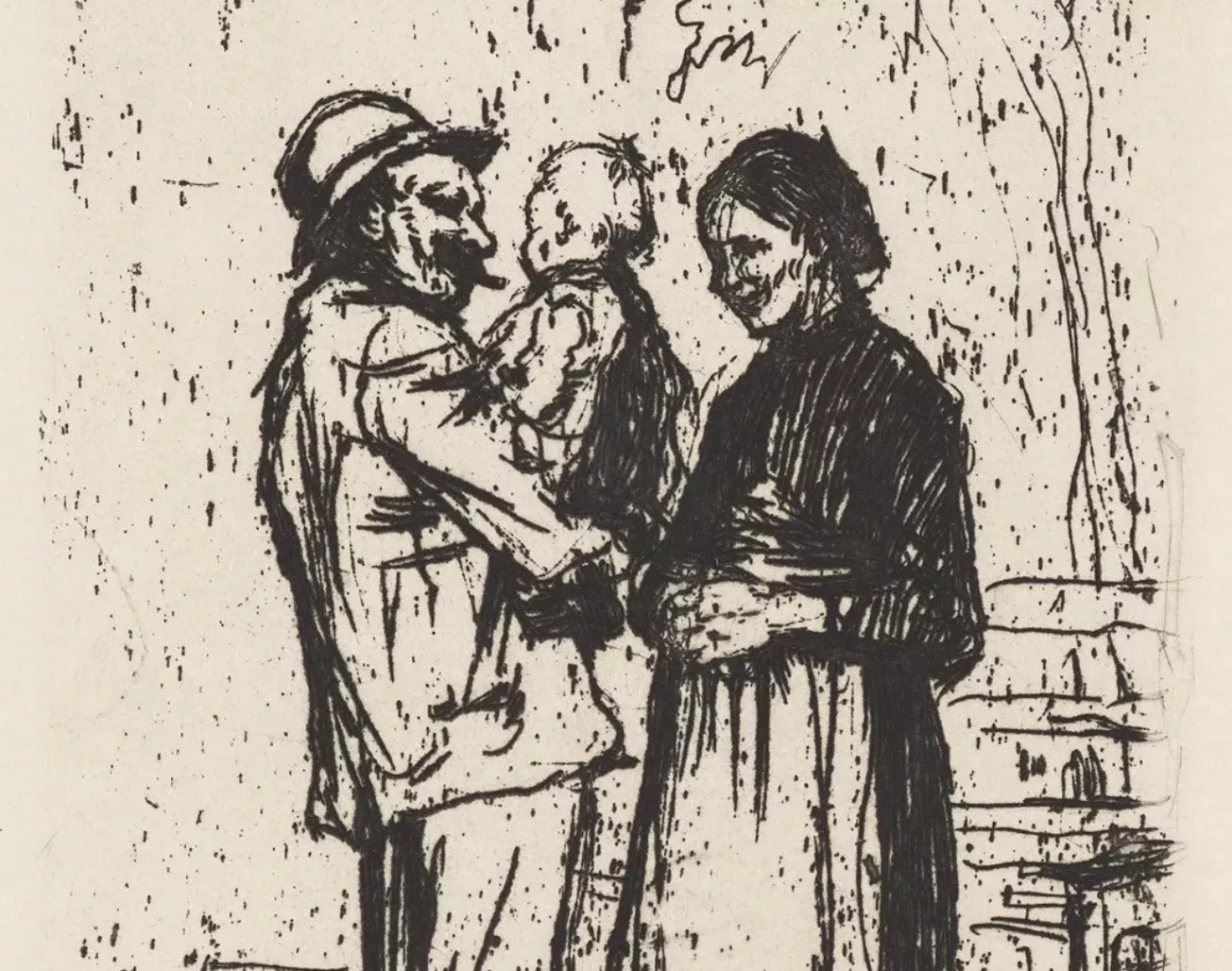
Signature, Provenance, and Authenticity: The Pillars of Valuation
Signature, Attribution, and Authentication: Their Impact on Value
The authentication of a 20th-century German work of art relies on a set of converging indicators, the rigor of which must be proportional to the artist’s renown.
The signature, when present, is an initial indicator, but it is never sufficient on its own for the most highly valued artists, particularly for contemporary figures such as Gerhard Richter, whose global fame has given rise to a sophisticated market for forgeries.
Comparison with documented works, stylistic and material analysis, and consultation of archives are essential steps in any serious authentication process.
For the movement’s major artists, catalogs raisonné or foundations serve as the authoritative sources in the market. Kirchner’s work is documented by the catalog compiled by Donald Gordon, Kandinsky’s by Vivian Endicott Barnett, Klee’s by the Zentrum Paul Klee in Bern, and Gerhard Richter’s by the archives maintained under the artist’s own supervision.
A work listed in one of these collections enjoys the highest level of scholarly credibility, which directly translates into its market value and greatly facilitates its sale.
Level of Documentation | Impact on Market Value |
Work listed in the catalogue raisonné or validated by the artist’s foundation | Maximum assurance; often an essential condition for sale |
Work published in specialized literature or exhibited in a major retrospective | Strong scholarly backing; value highly sensitive |
Provenance verified as free of any looting during the period 1933–1945 | Essential legal safeguards; a prerequisite for a smooth sale |
Work accompanied by a written appraisal from a recognized expert on the body of work | Good guarantee; facilitates the sale and reduces risk |
Work with a legible signature and documented provenance | Solid foundation; reliable estimate and a narrow price range are possible |
Work without documentation or verifiable provenance | Maximum uncertainty; sale not recommended without thorough provenance research |
Provenance and Condition: Their Impact on Value
The provenance of a 20th-century German work of art is of particular importance due to the specific history of this body of work.
Provenance research must systematically include a verification of the work’s status during the Nazi era, particularly for works classified as “degenerate art,” many of which were confiscated from German museums beginning in 1937 and subsequently dispersed, sold abroad, or destroyed.
A documented provenance, verified as free from any looting, is now virtually indispensable for a smooth sale on the international market.
The condition of the artwork also requires specific attention depending on the medium. Works on paper, which are particularly numerous in this collection, are sensitive to light, humidity, and the acidity of certain period papers, which can cause discoloration or embrittlement of the support.
For oil paintings, examination under raking light and ultraviolet light reveals craquelure, overpainting, or previous restorations, all of which can have a significant impact on the work’s value.
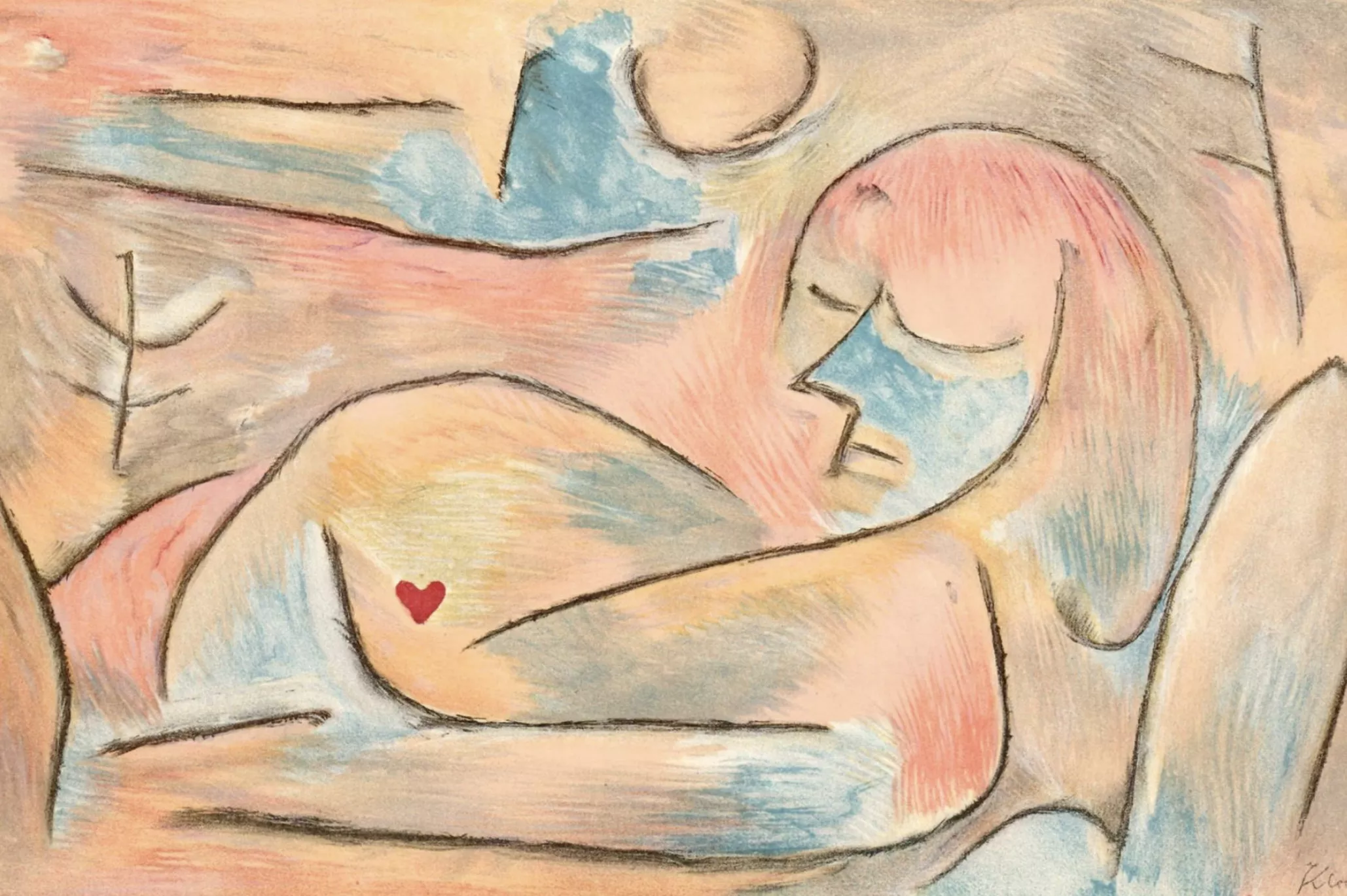
Selling a German Work of Art at Auction with Auctie's
From the reserve price to the hammer price: how the price is determined
Auctions are the preferred method of sale for high-quality German artworks, particularly for major pieces whose international renown warrants exposure to the entire global market.
It yields a public price certified by a court-appointed auctioneer, resulting from the direct interplay of supply and demand. The reserve price, set in consultation with the seller, must be carefully calibrated, taking into account the specific art movement to which the work belongs and the strength of its documentation, particularly regarding provenance.
For leading contemporary artists such as Gerhard Richter or Anselm Kiefer, the sale is accompanied by a sophisticated communication strategy, given the intense global demand—both institutional and private—for their major works.
For historic Expressionist works, the quality of the cataloging and the thoroughness of the provenance research remain the most decisive factors in achieving a strong result.
Hôtel Drouot and online auctions: reaching the right bidders
Auctie’s holds its auctions at Hôtel Drouot, the leading auction venue in continental Europe, founded in 1852 and frequented by a dense network of dealers, collectors, and specialists in modern and contemporary art.
For a German work of art, Drouot offers visibility among European connoisseurs in this segment, complemented by online promotion that significantly broadens the reach of each auction on an international scale.
An American collector passionate about German Expressionism, an Asian museum seeking a work by Gerhard Richter, or a German art lover eager to bring a heritage piece back to its country of origin can bid in real time from their home countries.
For 20th-century German art—whose renown and historical significance extend far beyond the circle of specialists—this international dimension is almost always decisive in securing the highest hammer price.
Estimate in less than 24h
Estate Planning, Inheritance: Valuing an Inherited German Work of Art
Inventory and Distribution of an Estate
20th-century German works of art are often found in the estates of families with ties to Germany or who have built up a collection through travel or acquisitions over the course of the century.
These pieces, sometimes kept without their current owners knowing their precise value or exact history, can represent a significant estate asset, especially since this market has seen notable growth over the past few decades, particularly for Expressionism and German contemporary art.
Auctie’s regularly works alongside notaries to compile comprehensive estate inventories that include German works of art.
Each piece is appraised individually, with particular attention paid to issues of attribution and provenance—factors that are absolutely critical to determining value in this segment, which is marked by a complex history. The resulting report is an official document that is legally enforceable and can be included in the estate file without reservation.
Confidentiality and Anonymity Preserved
The circumstances leading to the appraisal of a German work of art are often personal and sometimes sensitive: discovery in a family inheritance, reorganization of a collection, or a decision to sell after a long period of ownership.
Auctie’s handles each case with absolute discretion. The owner’s identity is never disclosed to third parties without their explicit consent, and works may be offered for sale under complete anonymity if the owner so desires.
This confidentiality is a fundamental commitment of Auctie’s, applicable at every stage of the relationship, from the initial contact through to the receipt of the proceeds from the sale.
Entrust the appraisal of your German artwork to Auctie’s
A 20th-century German work of art deserves an appraisal that reflects the richness of its successive aesthetic shifts and the historical complexity unique to this body of work. The diversity of movements—from Expressionist drawing to contemporary art—the critical importance of provenance research, and the extreme sensitivity of valuations to documentation: these are all factors that only a licensed auctioneer, well-versed in the specifics of this segment, can assess with the rigor they require.
Auctie’s guides you from the initial appraisal through to the final auction, offering the expertise of a state-certified appraiser and the discretion your financial decisions deserve. The appraisal is free, confidential, and non-binding, and you’ll receive a response within 24 hours.
Discover in the same theme
Rating and value of paintings by Friedrich Friedrich Vordemb...
Friedrich Vordemberge Glidewart was a painter of the German avant-garde who produced many works of high value.
Learn more >
Ratings and values of paintings by Alberto Savinio
Alberto Savinio is a twentieth-century Italian surrealist painter whose paintings are highly prized at auction.
Learn more >

Rating and value of paintings by Gerhard Richter
Gerhard Richter is a German abstract painter who has produced works that are highly valued on the auction market.
Learn more >
Estimate in less than 24h
Frequently asked questions
-
Quelles sont les fourchettes de prix pour l'art allemand du XXe siècle selon le courant artistique ?Les prix varient considérablement selon le mouvement et l'artiste. Une œuvre sur papier expressionniste d'un artiste majeur oscille entre 30 000 et 500 000 euros, tandis qu'une peinture de la Nouvelle Objectivité se négocie entre 200 000 et 5 millions d'euros. Les grandes toiles de Kirchner, Kandinsky ou les œuvres majeures de Gerhard Richter dépassent fréquemment plusieurs millions d'euros. L'identité de l'artiste reste le facteur déterminant : l'écart entre la cote d'un maître et celle d'un artiste de second rang se chiffre en plusieurs ordres de grandeur.
-
Comment authentifier une œuvre d'art allemande du XXe siècle et vérifier son attribution ?L'authentification repose sur un faisceau d'indices convergents : signature, provenance documentée, examen du support et de la technique, et vérification historique. Pour les artistes très cotés comme Gerhard Richter, la signature seule ne suffit pas en raison des risques de faux. Auctie's propose une expertise gratuite et certifiée par un commissaire-priseur agréé en moins de 24 heures, qui conduit une double vérification esthétique et historique avec la rigueur nécessaire, notamment pour les questions de provenance liées à la période 1933-1945.
-
Pourquoi est-ce un bon moment pour vendre une œuvre d'art allemand du XXe siècle ?Le marché de l'art allemand du XXe siècle présente une demande exceptionnelle et soutenue, notamment pour les expressionnistes et la Nouvelle Objectivité qui enregistrent une forte progression récente. Les collectionneurs internationaux recherchent activement ces œuvres, particulièrement le dessin expressionniste et les peintures majeures. La reconnaissance croissante de ce segment, associée à sa richesse historique et esthétique, garantit une visibilité et une valorisation optimales lors d'une vente aux enchères.
-
Comment se déroule une estimation gratuite chez Auctie's et quel est le délai ?L'estimation est entièrement gratuite et sans engagement. Vous devez soumettre des photographies nettes du recto et verso de l'œuvre, un cliché de la signature, les dimensions précises, et tout élément de provenance disponible (étiquette de galerie, certificat antérieur, références d'exposition). Un commissaire-priseur agréé examine votre pièce et vous remet une estimation certifiée en moins de 24 heures. En cas de doute sur l'attribution ou la provenance, un examen approfondi sera proposé avant toute démarche de mise en vente.
-
Quels sont les critères qui déterminent la valeur d'une œuvre d'art allemande du XXe siècle ?La valeur dépend d'abord de l'identité de l'artiste, dont l'impact est considérable. Interviennent ensuite l'état de conservation, la technique employée (peinture, dessin, gravure), le support, la période de création, l'importance de la série à laquelle appartient l'œuvre, et la solidité de la documentation de provenance. Pour les œuvres liées à la période 1933-1945, la provenance revêt une importance capitale en raison des saisies et spoliations, et sa vérification est déterminante pour sécuriser juridiquement la transaction.
