



Rating and value of sculptures and bronzes by Arno Breker

Key takeaways
- Arno Breker's sculptures sell for between €40 and €214,950 at auction, with monumental bronzes fetching the highest estimates.
- A German sculptor (1900–1991) associated with monumental neoclassicism, trained in Paris under Maillol, and recognized as a master of Expressionism prior to his controversial collaboration with the Nazi regime.
- His postwar works, particularly busts of political figures, exceed the estimates of his Nazi-era pieces thanks to their historical and diplomatic value, which transcends ideology.
If you own a work by or after the artist Arno Breker, and would like to know its value, our state-approved experts and auctioneers will offer you their appraisal services.
Our specialists will carry out a free appraisal of your work, and provide you with a precise estimate of its value on the current market.
Then, if you wish to sell your work, we will direct you to the best possible arrangement to obtain the optimum price.
Rating and value of the artist Arno Breker
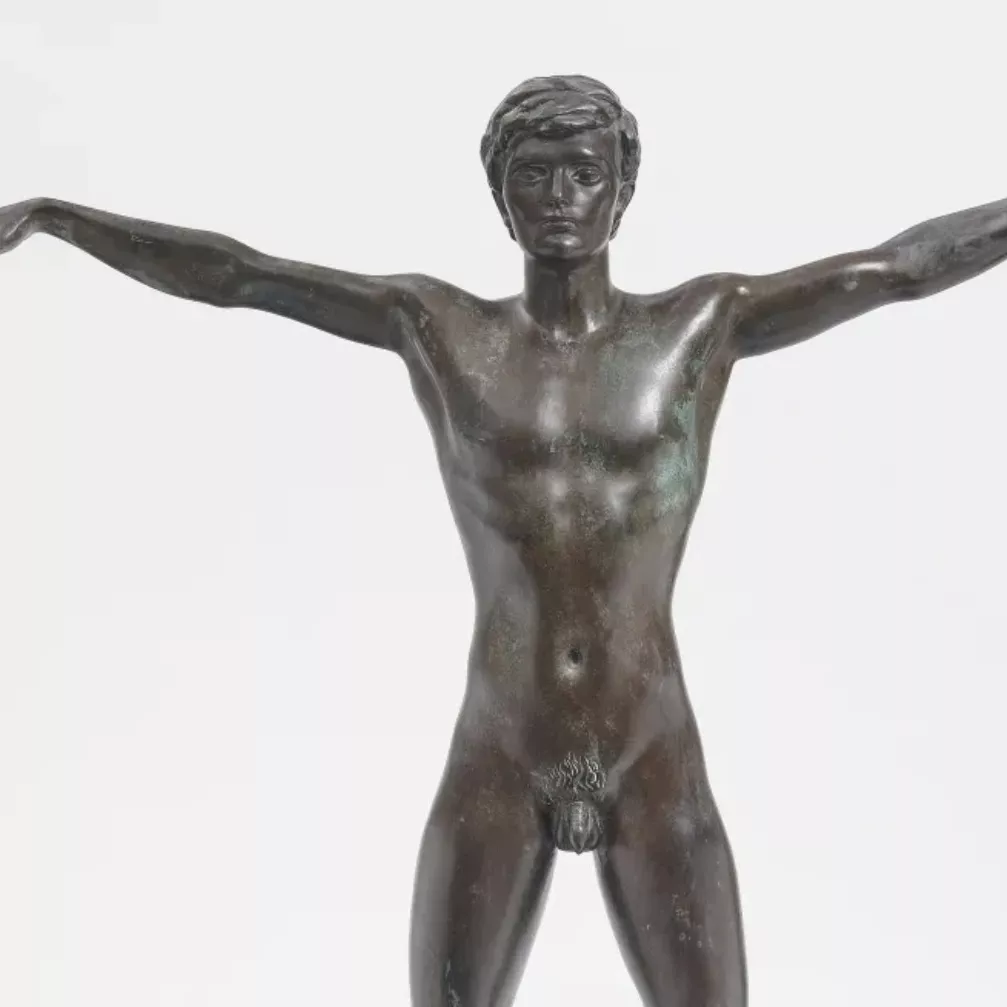
Considered one of the masters of expressionist sculpture, Arno Breker was recognized during his lifetime. He followed in the artistic vein of Maillol and Rodin. His legacy therefore consists mainly of sculptures in a variety of materials, especially bronze. Today, the prices of his works are steadily rising under auctioneers' gavels. His sculptures are prized above all by European buyers, and the price at which they sell on the art market ranges from €40 to €214,950, a considerable delta, which nevertheless speaks volumes about the value that can be attributed to Arno Breker's works. In 2019, one of his bronze sculptures, Schreitende, sold for €165,000 while it was estimated at between €145,000 and €165 000.
Order of value from a single work to the most prestigious
Technique used | Result |
|---|---|
Estamp - multiple | From €20 to €2,050 |
Drawing - watercolor | From €100 to €3,300 |
Sculpture - volume | From €40 to €214,950 |
Estimate in less than 24h
Style and technique of the artist Arno Breker
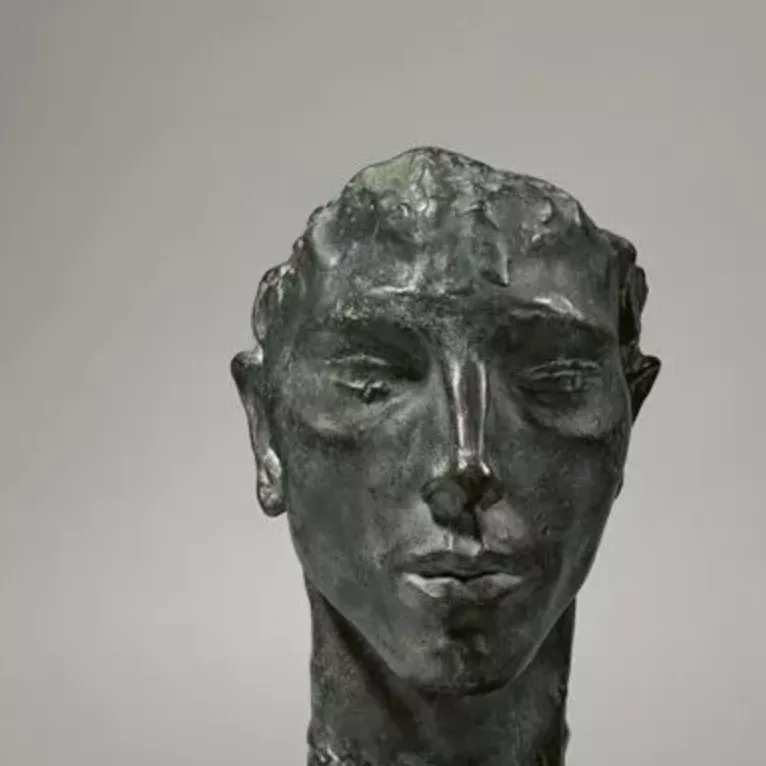
Breker is part of the sculptural neoclassicism, having produced some abstract and expressionist works, becoming one of the most famous and sought-after sculptors of his time in Germany. He works in marble and terracotta, but also in bronze, the latter being the material most frequently featured in his works on the auction market.
.
Arno Breker, a divisive figure from the Third Reich to the FRG
Arno Breker (1900-1991), a German artist, became an important figure in 20th-century neoclassical and expressionist sculpture.
Born in Elberfeld, he was the son of a sculptor. His path was clear, and he studied anatomy and sculpture at the Beaux-Arts in his native town. He continued his training at the Düsseldorf Art Academy, where he became interested in abstraction.
Breker soon returned to Hellenistic subjects, deciding at the same point in his career to move to Paris. There, he studied under Maillol, and shared his studio with Alexander Calder. The sculptor rubbed shoulders with the greatest artists of his time : Cocteau, Brancusi, Picasso ...
In 1932, his talent was recognized by Prussia's Prix de Rome.
At the same time, totalitarian regimes were spreading across Europe and Nazi theorists, anxious to control German art, detected a strong propaganda potential in Arno Breker's sculpture. In 1936, he created two monumental statues for the stadium at the Berlin Olympic Games. Commissioned by the Reich Propaganda Ministry, he produced numerous sculptures designed to popularize the image of the athlete in Nazi Germany. After working on several urbanization projects with Albert Speer, he was sent back to Paris by the Nazis. His studio in Germany was destroyed in 1945.
However, Arno Breker was never prosecuted for collaborating with the Third Reich, claiming that he accepted the job out of opportunism and megalomania.
After the Liberation, Breker reopened a studio in Düsseldorf, continued to receive commissions and exhibit until his death.
Arno Breker's imprint on his period
Arno Breker, sometimes dubbed the German Michelangelo, was one of the most important sculptors of his time. Like the Italians of the Renaissance, he drew inspiration from antique subjects and used their techniques. On today's art market, his bronzes are highly prized, and his marbles even more so. Although his life and career have been punctuated by divisive issues surrounding his work, this hasn't done his reputation any harm.
Recognizing Arno Breker's signature
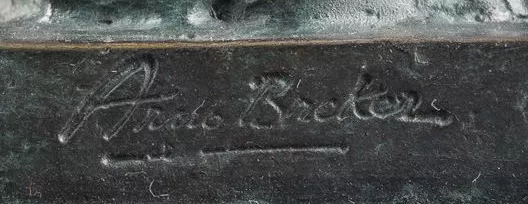
Arno Breker sometimes signs his sculptures. There are, however, many copies, which is why expertise is important.
The cult of physical force during totalitarian regimes
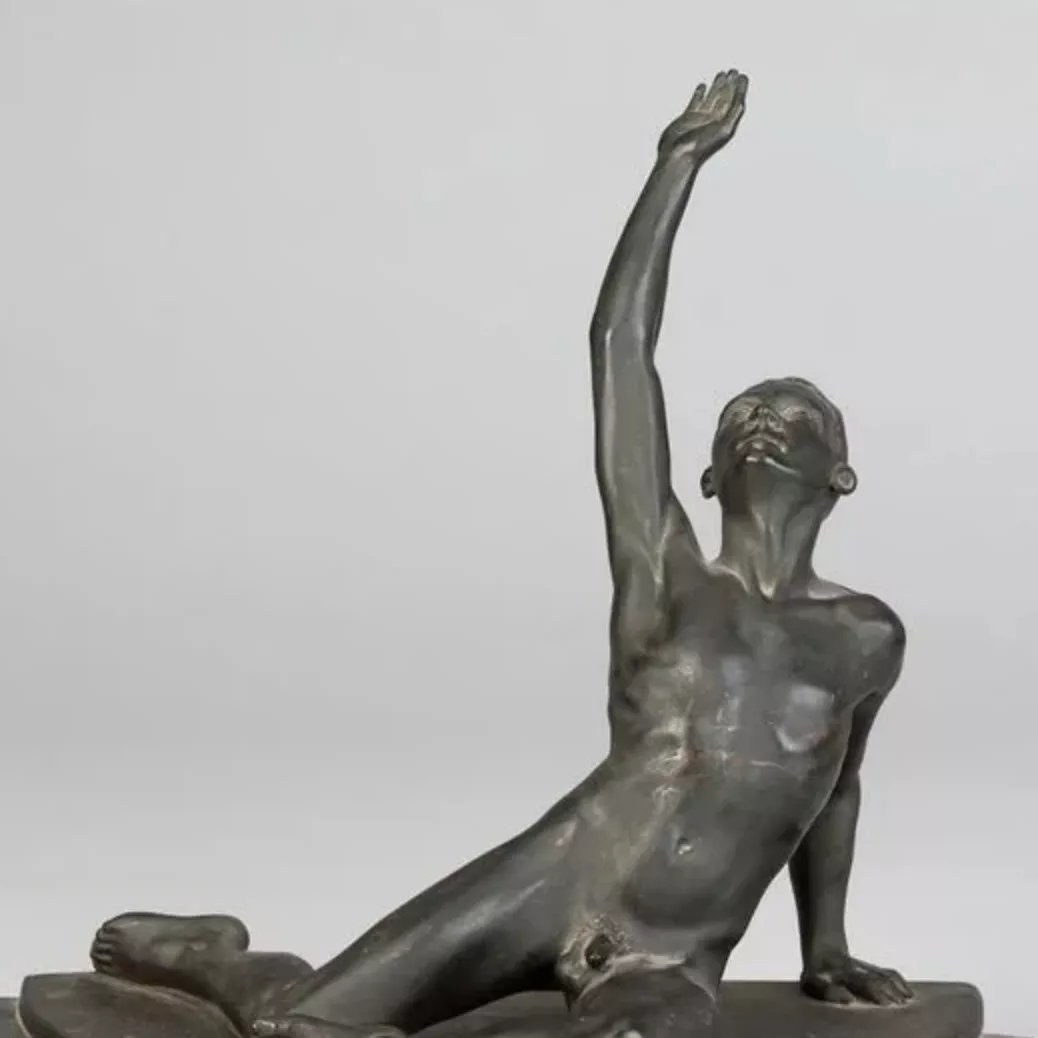
A first observation takes place at the 1937 World's Fair : in all mediums, we find the deployment of physical force. It's the homo sovieticus that first appears, with a spirit of rupture, and the ambition to embody a better future.
Faces are sculpted in a perfectly symmetrical manner, generally presented in three-quarter view. The square jaws and attitude of movement are designed to suggest men ready for battle.
The muscle here has a social and political function, intended to gain time and burn steps to build the totalitarian ideal as quickly as possible.
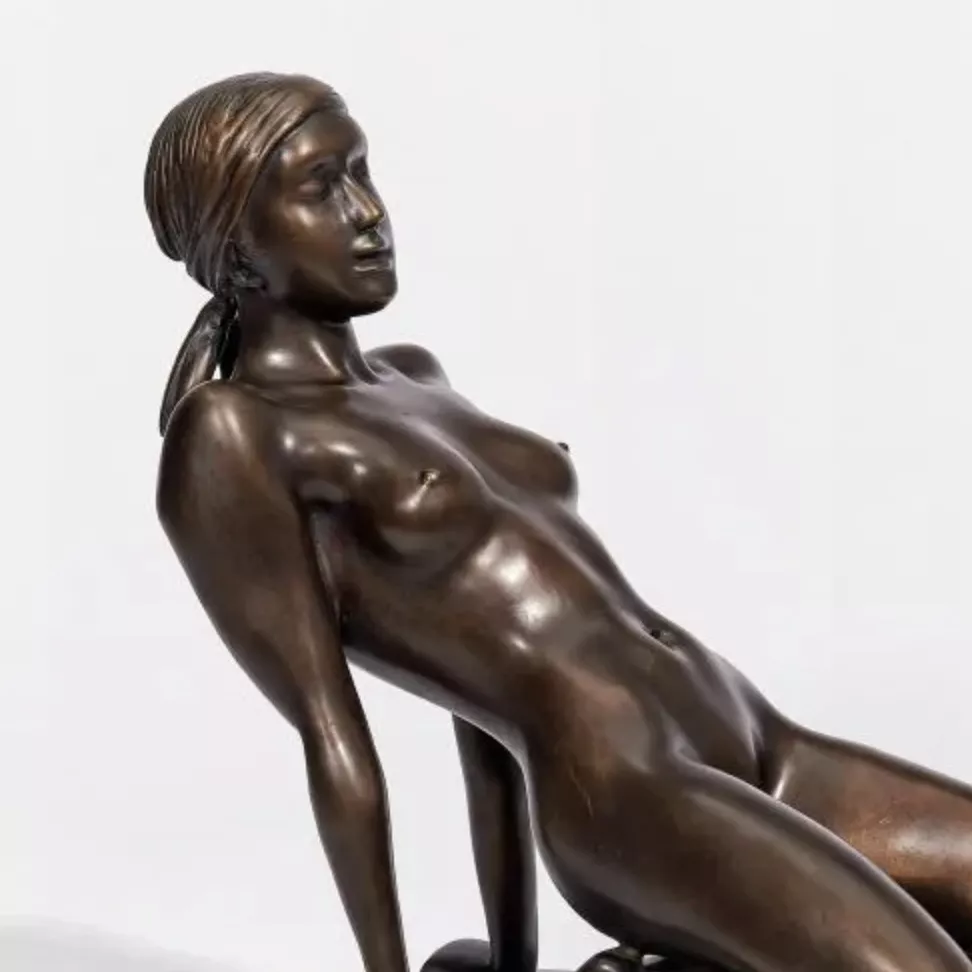
The woman has a more discreet place in these productions, since she is intended to fulfill the roles of wife, mother and worker all at once. What's more, totalitarian regimes described make-up as bourgeois, which did not correspond to the propaganda intended by the regimes.
She must therefore represent everything but remain discreet at the same time; their hair is no longer highlighted. However, sculptors were faced with a problem, in that they were unable to depict both the genitress with wide hips and the ideal, rather dry female worker at the same time.
Female nudity was also outlawed in totalitarian regimes, which explains the presence of more male sculptures.
It's not a question of individualism, but of translating the vision carried on the body. The Nazis in turn copied this propaganda idea in order to bring out the figure of a " new man ".
Arno Breker's imprint on his period
Arno Breker, sometimes dubbed the German Michelangelo, was one of the most important sculptors of his time. Like the Italians of the Renaissance, he drew his inspiration from antique subjects and used their techniques.
On today's art market, his bronzes are highly prized, and his marbles even more so. His life's trajectory and his career, punctuated by divisive issues surrounding his work, have not detracted from his standing and notoriety.
Recognizing Arno Breker's signature
Arno Breker signs " A. Breker" on most of his sculptures. There are, however, many copies, which is why expertise is important.
Knowing the value of a work
If you happen to own a work by or after Arno Breker, don't hesitate to request a free appraisal using the form on our website. A member of our team of experts and certified auctioneers will contact you promptly to provide you with an estimate of the market value of your work, as well as any relevant information about it. If you are considering selling your work, you will also be accompanied by our specialists in order to benefit from alternatives for selling it at the best possible price, taking into account the inclinations of the market.
Estimate in less than 24h
Discover in the same theme

Rating and value of paintings by Joseph Sima
Joseph Sima is a 20th-century Czech artist whose paintings and drawings are highly prized and sought-after at auction. Estimated in 24h.
Learn more >

Rating and value of paintings by Émile Aubry
Émile Aubry is a French muralist who produced many works that are highly valued at auction. 24H estimate.
Learn more >

Rating and value of paintings by Le Tri Dung
Le Tri Dung is a modern Vietnamese painter known for his depictions of horses. His works have a rising reputation.
Learn more >
Similar sculptures sold at auction

Estimated Between €1,500 and €3,000
Renato CARVILLANI (1896-1986), seated woman, gilded bronze print

Estimated Between €10,000 and €20,000
Baltasar LOBO (1910-1993), female nude in bronze

Estimated 600 - 800
Hercules Farnese, bronze, reproduction after Glycon of Athens

Estimated 500 - 1.000
After Stefano MADERNO (1575-1636), Hercules and Antaeus, bronze with brown patina

Secure site, anonymity preserved

Auctioneer approved by the State

Free and certified estimates
Frequently asked questions
-
Who is Arno Breker, and what is his artistic background?Arno Breker (1900–1991) was a German sculptor considered one of the masters of 20th-century Expressionist and Neoclassical sculpture. Trained in Paris under Maillol, he rubbed shoulders with the great artists of his time (Cocteau, Picasso, Brancusi) before becoming the official sculptor of the Nazi regime. After the war, he continued his career in West Germany until his death, receiving commissions from diplomatic figures, among others.
-
What is the price range for Arno Breker's sculptures?Arno Breker's sculptures sell for between €40 and €214,950, depending on size, period, and provenance. Small- and medium-sized bronzes (busts, academic nudes) make up the majority of the lots sold. Postwar works, created for diplomatic or industrial commissions, generally fetch higher estimates than those from the Nazi period.
-
How can you authenticate a sculpture by Arno Breker?Arno Breker usually signs his sculptures “A. Breker,” but there are many copies. To authenticate a work with certainty, we recommend requesting a free appraisal from our state-certified auctioneers, who will analyze the authenticity, technique, patina, and provenance of your piece.
-
Is this a good time to sell an Arno Breker sculpture?Yes, now is a good time to sell. Prices for Arno Breker’s works are consistently rising on the auction market, particularly among European buyers. The recognized artistic quality of his sculptures and their historical value—especially those created for postwar diplomatic commissions—are generating sustained interest among collectors.
-
How does the appraisal and sale process work at Auctie's?The appraisal is free and non-binding: simply fill out an online form, and our expert auctioneers will provide you with a reliable appraisal within 48 hours. If you decide to sell, we’ll guide you through the process from the appraisal to the auction to ensure you get the best possible price for your artwork.
