



Rating and value of drawings, prints and sculptures by Käthe Kollwitz

Key takeaways
- Drawings by Käthe Kollwitz, a leading artist of German Expressionism, fetch prices ranging from €200 to €1,081,400 on the current market.
- In 2022, her drawing “Pietà” (1903) sold for €1,081,380, far exceeding its estimate of €200,000 to €250,000, confirming the rise in her market value.
- Kollwitz possessed exceptional mastery of drawing, engraving, lithography, and etching, developing a socially engaged figurative style that denounced social injustices and wars.
If you own a work by or after the artist Käthe Kollwitz, and would like to know its value, our state-approved experts and auctioneers will offer you their appraisal services.
Our specialists will work to carry out a free appraisal of your work, and will provide you with an accurate estimate of its value on the current market.
Then, if you wish to sell your work, we will direct you to the best possible arrangement to obtain the optimum price.
Rating and value of the artist Käthe Kollwitz
Käthe Kollwitz is a well-known artist among collectors of German Expressionism. Now, prices for her creations are rising at the auctioneers' gavel.
Her drawings are particularly prized, especially by German buyers, and the price at which they sell on the art market ranges from €200 to €1,081,400, a significant delta but one that speaks volumes about the value that can be attributed to the artist's works.
In 2022, a color chalk drawing, Pièta, dating from 1903 sold for €1,081,380, while it was estimated at between €200,000 and €250,000. Its value is on the rise.
Order of value from a simple work to the most prestigious
Technique used | Result |
|---|---|
Sculpture - volume | From €300 to €150,000 |
Estamp - multiple | From €10 to €667,900 |
Drawing - watercolor | From €200 to €1,081,400 |
Estimate in less than 24h
Style and technique by artist Käthe Kollwitz
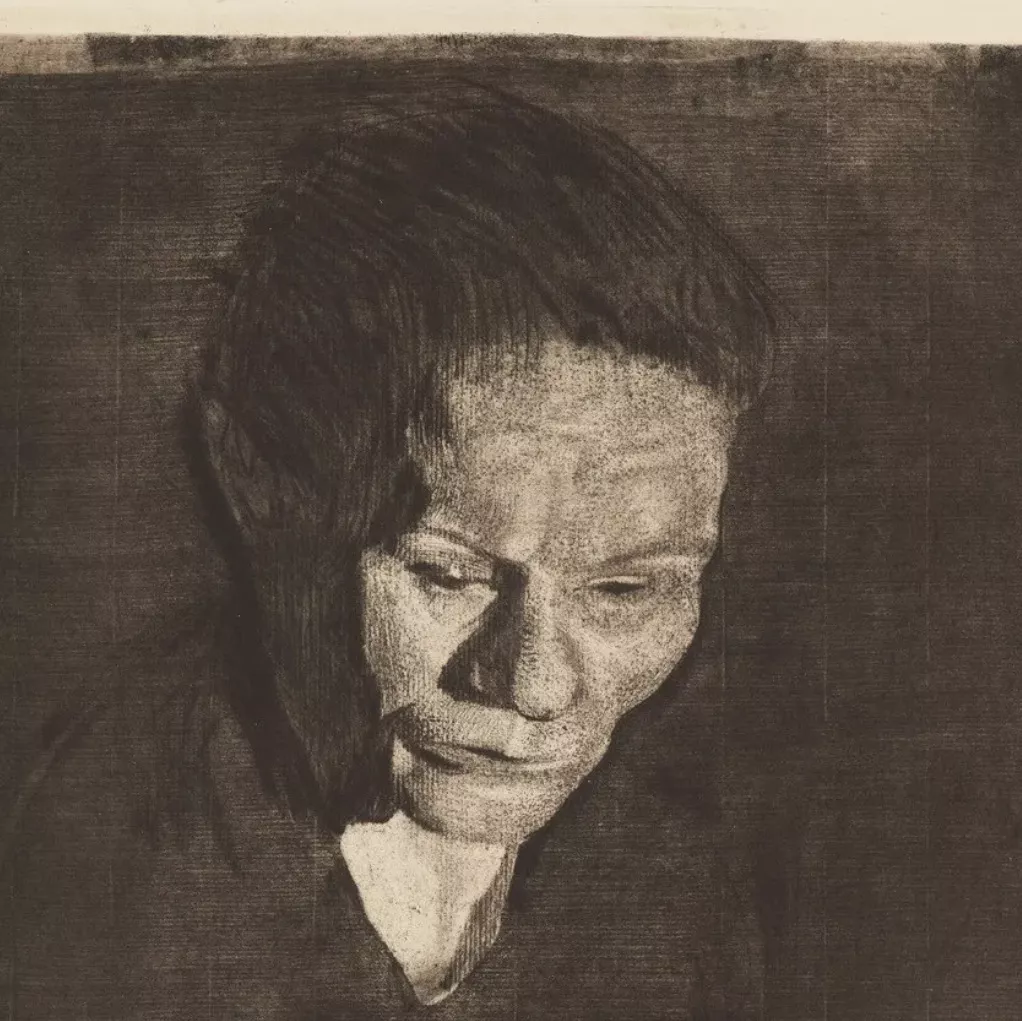
Käthe Kollwitz is a major artist of the turn of the 20th century, known for her profoundly humanist work. Her work displays an exceptional mastery of drawing, as well as etching, lithography and etching, often enhanced with drypoint or aquatint.
She developed an expressive graphic style, with dark contours, vibrant lines and powerfully contrasting values. She also created a few sculptures, especially towards the end of her career, but remained above all a drawing artist.
Her style is figurative, with intense realism, but transcended by a strong emotional charge and simplification of form. There is little background or anecdotal detail in her works, everything is concentrated on the face, gesture and expression in order to capture the essential.
She emphasizes areas of shadow, strong plays of chiaroscuro, which convey the moral gravity of her subjects. The characters Käthe Kollwitz depicts are often poor, bereaved or overwhelmed, but always portrayed with great dignity.
She focuses particularly on the condition of women, children, the open and victims of war. Emotion is at the heart of her approach, but never pathetic. She aims for a form of compassion that is lucid and without exaggeration.
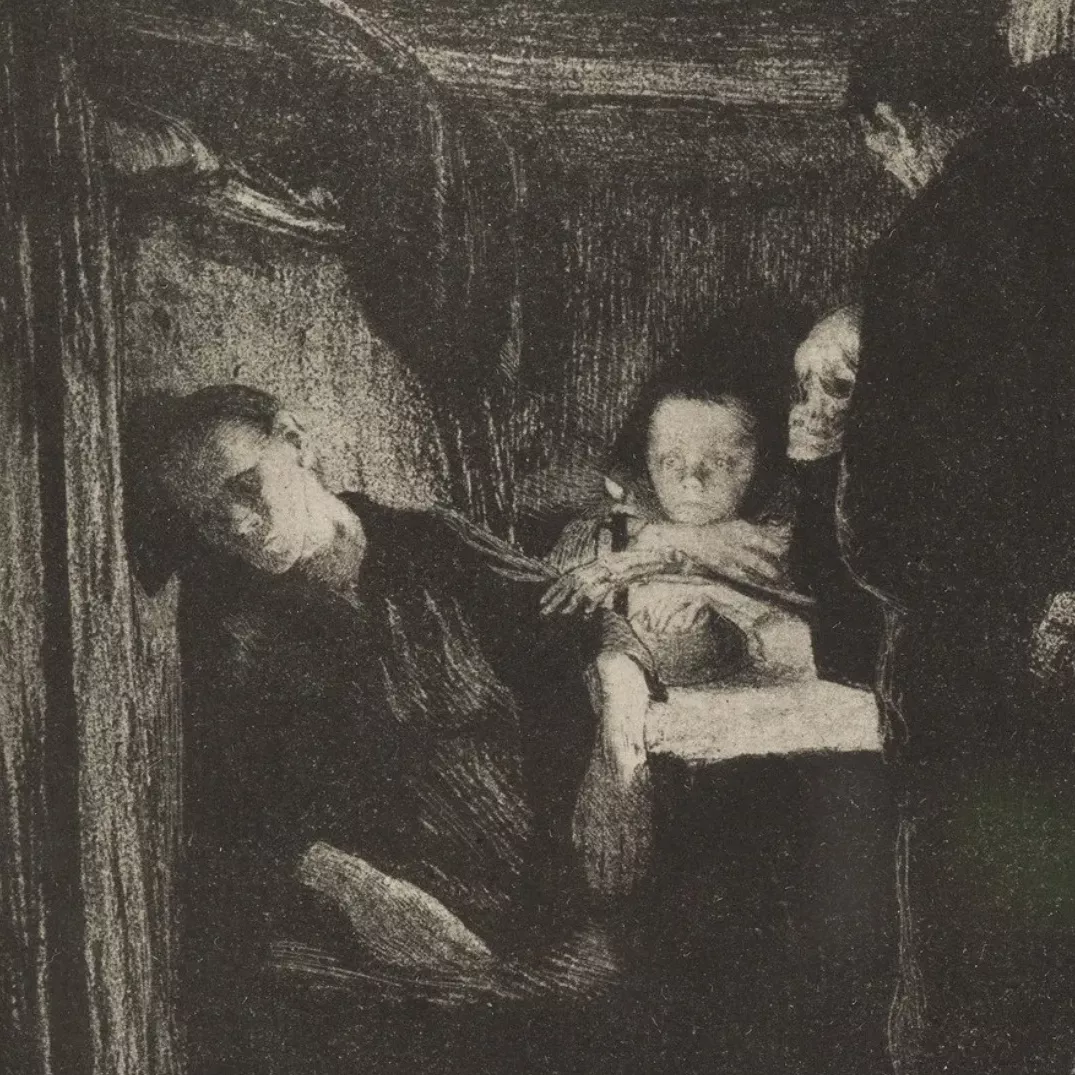
Kollwitz uses etching as a tool to denounce social injustice, urban misery and armed conflict. The work is often conceived in series, such asThe War (1922 - 23), The Weavers' Revolt (1893 - 1897) or Death (1934 - 1937).
She thus develops an aesthetic of ethics : style is always put at the service of a political or human content. She is influenced by Goya, Menzel and Leibl, but also by the socialist and pacifist thinking of her time.
The artist remains at a distance from pure German expressionism, preferring a symbolic, serious and restrained realism. Her technique evolved little during her career, but she managed to deepen and refine it, establishing her own artistic language.
The artist's career and the world of Käthe Kollwitz
Käthe Kollwitz (1867 - 1945) was a committed German artist. Born Käthe Schmidt in Königsberg, East Prussia (in present-day Kalingrad), she was the daughter of a socialist master mason and a mother from a Lutheran religious background.
She was trained in drawing and engraving at a very early age, at private women's schools in Berlin and Munich, at a time when women had no access to academies. In 1891, she married the doctor Karl Kollwitz, with whom she lived in a working-class district of Berlin.
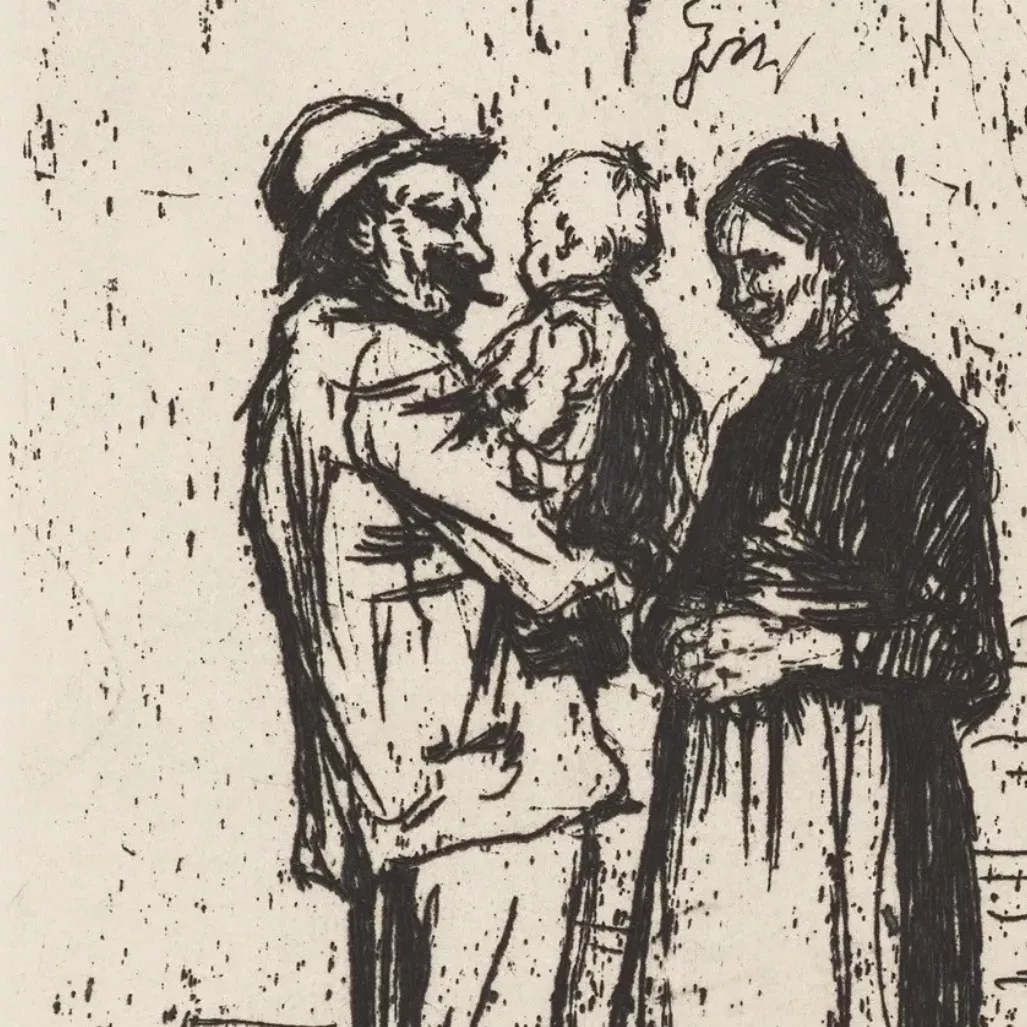
The draughtswoman was soon inspired by the social misery she observed around her. She first gained recognition with The Weavers' Revolt, a series of engravings inspired by a play by Gerhart Hauptmann.
In 1919, she became the first woman elected to the Prussian Academy of Arts, which was an exceptional event at the time. Her personal life was marked by war and bereavement. She lost her son Peter in the First World War in 1914. This tragic event was to be a decisive experience in her artistic and human trajectory.
She became a figure of pacifism, committed against the rise of fascism. She refused to celebrate militarism or heroism, preferring to depict pain, loss and memory, notably in her memorial works such as the monument to grieving parents at Dixmude.
Käthe Kollwitz was active for much of her life in German socialist, anti-militarist and feminist circles. She suffered censorship under the Nazi regime, which forced her into silence and exclusion from all public office.
Despite this, she continued to produce powerful works, often through drawing or lithography, in retreat but without renouncing her convictions.
Three years before her death, in 1942, she lost her grandson, also killed in action. She died in April 1945, a few days before the end of the Second World War. Today, her work is recognized as seminal for twentieth-century engaged art, at the crossroads of artistic expression and historical testimony.
Focus on Die Mutter, 1922, Käthe Kollwitz
The work Die Mutter is an etching dating from 1922 - 23, from the series or cycle Der Krieg (the war), a series of seven prints dedicated to the human consequences of the First World War.
The work shows a seated, huddled mother clutching her children, in a posture of protection, fear and withdrawal. The composition is very tight, with no background. The space is saturated by the bodies, entangled, as if to express urgency and suffocation.
The mother figure is monumental and angular, dominating the composition like a dark, almost sculptural block. There is a strong contrast between the shadowy areas and the rare bursts of light, creating dramatic tension in the image.
The line is nervous, supported and highly expressive. Emotion is conveyed by the density of the black and the work on volumes. Here, the mother embodies the survival instinct, the dull pain and anxiety of a ravaged era.
Kollwitz does not depict the battlefield but its intimate, silent and invisible effects. The work evokes both the Christian Pietà and universal motherhood, but also the moral exhaustion of a generation. It's also a reference to the loss of his son Peter.
Kollwitz explicitly rejects heroism here, since there are no flags, no soldiers and no nameable battles. The Der Krieg series is a silent but implacable indictment, a work of mourning and moral resistance.
This print has become an iconic image of German pacifism between the wars. It was reproduced in numerous ouvrgaes, exhibitions and militant posters. Today, it remains a visual symbol of the memory of the First World War, joining the approach of artists such as Otto Dix, Max Oppenheimer or Oskar Kokoschka.
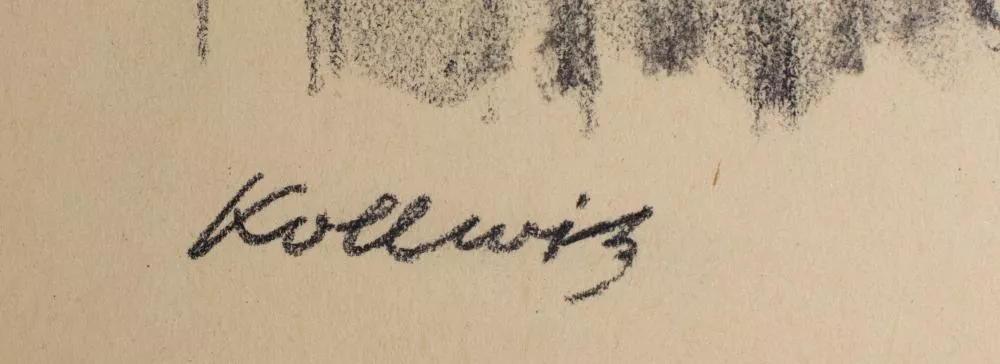
Recognizing the artist's signature
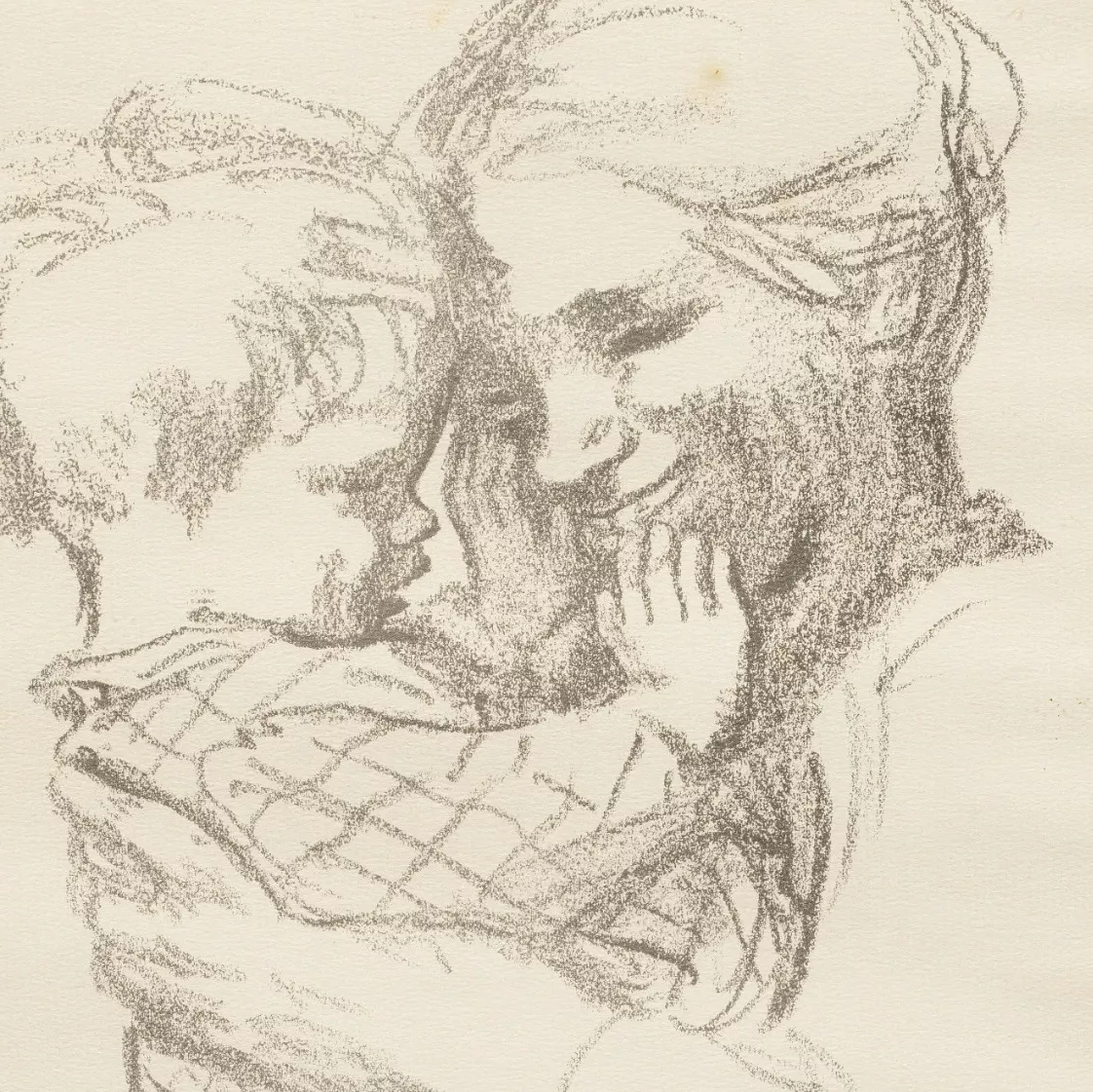
Käthe Kollwitz does not necessarily sign her works. Copies may exist, which is why expertise remains important.
Knowing the value of a work
If you happen to own a work by or after Käthe Kollwitz, don't hesitate to request a free valuation using our form on our website.
A member of our team of experts and chartered auctioneers will contact you promptly to provide you with an estimate of the market value of your work, as well as ad hoc information about it.
If you are considering selling your work, you will also be accompanied by our specialists in order to benefit from alternatives for selling it at the best possible price, taking into account market inclinations.
Estimate in less than 24h
Discover in the same theme

Paintings Vu Cao Dam - Value, price, artist
Cao Dam Vu is a 20th-century French-Vietnamese artist who has produced works that are sought-after on the auction market. His value is on the rise.
Learn more >

Rating and value of paintings by Georges Lapchine
Georges Lapchine is a 20th-century Russian painter who produced Russian Impressionist canvases that were highly successful at auction.
Learn more >

Rating and value of paintings by Jean-Louis Paguenaud
Jean-Louis Pagunaud is a French marine painter who has produced a number of paintings that are highly valued at auction.
Learn more >
D'autres tableaux expressionnistes vendus aux enchères


Secure site, anonymity preserved

Auctioneer approved by the State

Free and certified estimates
Frequently asked questions
-
Who is Käthe Kollwitz, and what is her artistic context?Käthe Kollwitz (1867–1945) was a major German artist at the turn of the 20th century, known for her humanistic and socially engaged work. A feminist pioneer, she was the first woman elected to the Prussian Academy of Arts in 1919. Her figurative and expressive style, influenced by Goya and socialist thought, focuses on the plight of women, children, workers, and war victims, whom she depicts with intense dignity and profound emotional depth.
-
What are the prices and price range for works by Käthe Kollwitz?Prices for works by Käthe Kollwitz vary considerably depending on the medium and quality: sculptures sell for between €300 and €150,000, prints for between €10 and €667,900, and drawings for between €200 and €1,081,400. Her drawings are particularly sought after, especially by German collectors. The artist’s market value has been steadily rising for several years.
-
How can you authenticate a work by Käthe Kollwitz?Since Käthe Kollwitz did not always sign her works, there are copies and doubts regarding their authenticity. To verify the authenticity and determine the value of your artwork, we recommend requesting a free appraisal from Auctie's by filling out our form. A certified expert or auctioneer will contact you to authenticate the artwork and provide you with an accurate estimate within 48 hours.
-
Is this the right time to sell a work by Käthe Kollwitz?Yes, the market for Käthe Kollwitz’s works is currently strong. The artist’s market value is rising steadily, and her drawings are in high demand among collectors, particularly in Germany. This is therefore a good time to sell, especially if you own a high-quality drawing or a work from the *War* series.
-
How does the appraisal and sale process work at Auctie's?The appraisal is free and non-binding: simply submit your artwork via our form, and an expert or auctioneer will contact you within 48 hours to provide you with an accurate appraisal. If you decide to sell, we’ll guide you every step of the way, offering the best options to help you get the best price based on current market trends.
