



Rating and value of paintings by Max Oppenheimer

Key takeaways
- Works by Max Oppenheimer, an Austrian Expressionist painter, sell for between €80 and €446,000 at auction, with canvases commanding the highest prices.
- His painting *Die Geisselung* (1913) fetched €446,000 in 2009, confirming the artist’s exceptionally high market value.
- His Expressionist portraits and self-portraits, characterized by vivid colors and intense psychological exploration, are his most sought-after works.
If you own a work by or based on the work of artist Max Oppenheimer and would like to know its value, our state-approved experts and auctioneers will guide you.
Our specialists will carry out a free appraisal of your work, and provide you with an accurate estimate of its value on the current market.
Then, should you wish to sell your work, we will direct you to the best possible arrangement to obtain the optimum price.
Artist's rating and value
On the art market, Max Oppenheimer's rating is extremely high. His most prized works are his expressionist canvases, both portraits and self-portraits.
The artist is particularly prized among 20th-century Austrian painters and draughtsmen. Works by Max Oppenheimer, for example, sell for between €80 and €446,000 at auction.
In 2009, his painting Die Geisselung (oil on canvas), dating from 1913, sold for €446,000, whereas it was estimated at between €350,000 and €700,000.
Order of value from the most basic to the most prestigious
Technique used | Result |
|---|---|
Estamp - multiple | From €80 to €8,000 |
Drawing - watercolor | From €140 to €45,000 |
Painting | From €600 to €446,000 |
Estimate in less than 24h
Style and technique of artist Max Oppenheimer
Max Oppenheimer, an iconic figure of Expressionism, is distinguished by a unique technique that seeks to capture the turbulent essence and torments of his time.
Born in Vienna, Oppenheimer was influenced by the European avant-gardes, but quickly set himself apart from his contemporaries with a personal approach.
His canvases reveal a bold use of color, where bright, saturated hues dominate. Bright reds, vibrant yellows and deep blues make up a palette that energizes the composition and accentuates the emotional intensity of his works.
Oppenheimer doesn't just depict reality: he seeks to reveal the inner tension of his subjects. His portraits, in particular, depict stark faces, almost distorted by harsh light, giving the impression of unvarnished introspection.
The thick, deliberate black outlines delineate the forms in a manner reminiscent of stained glass techniques, giving his figures a presence that is both dramatic and fragile. The bodies, often stylized, seem caught in suspended movement, betraying a latent agitation.
His use of color, far from being merely aesthetic, aims to underline violent contrasts and heightened emotions. The brushstrokes, sometimes rapid and nervous, sometimes heavy and supported, convey an almost feverish energy, as if each gesture sought to extract a truth buried beneath the surface.
Like Oskar Kokoschka, Oppenheimer favors raw sincerity over ideal beauty, not hesitating to explore disturbing or complex subjects.
He often features solitary figures, immersed in their thoughts, isolated by abstract backgrounds or geometric compositions, reinforcing the sense of unease or contemplation that his works evoke.
His style, marked by a constant tension between order and chaos, reveals a fascination for the expression of human emotions in all their intensity.
Through a technique that seems to vibrate with a life of its own, Max Oppenheimer inscribes his art in a quest for authenticity, refusing any concession to a pre-established aesthetic order.
His works, imbued with an almost theatrical dynamic, bear witness to an era in turmoil, in which the artist is both witness to and interpreter of the anxieties of his time.
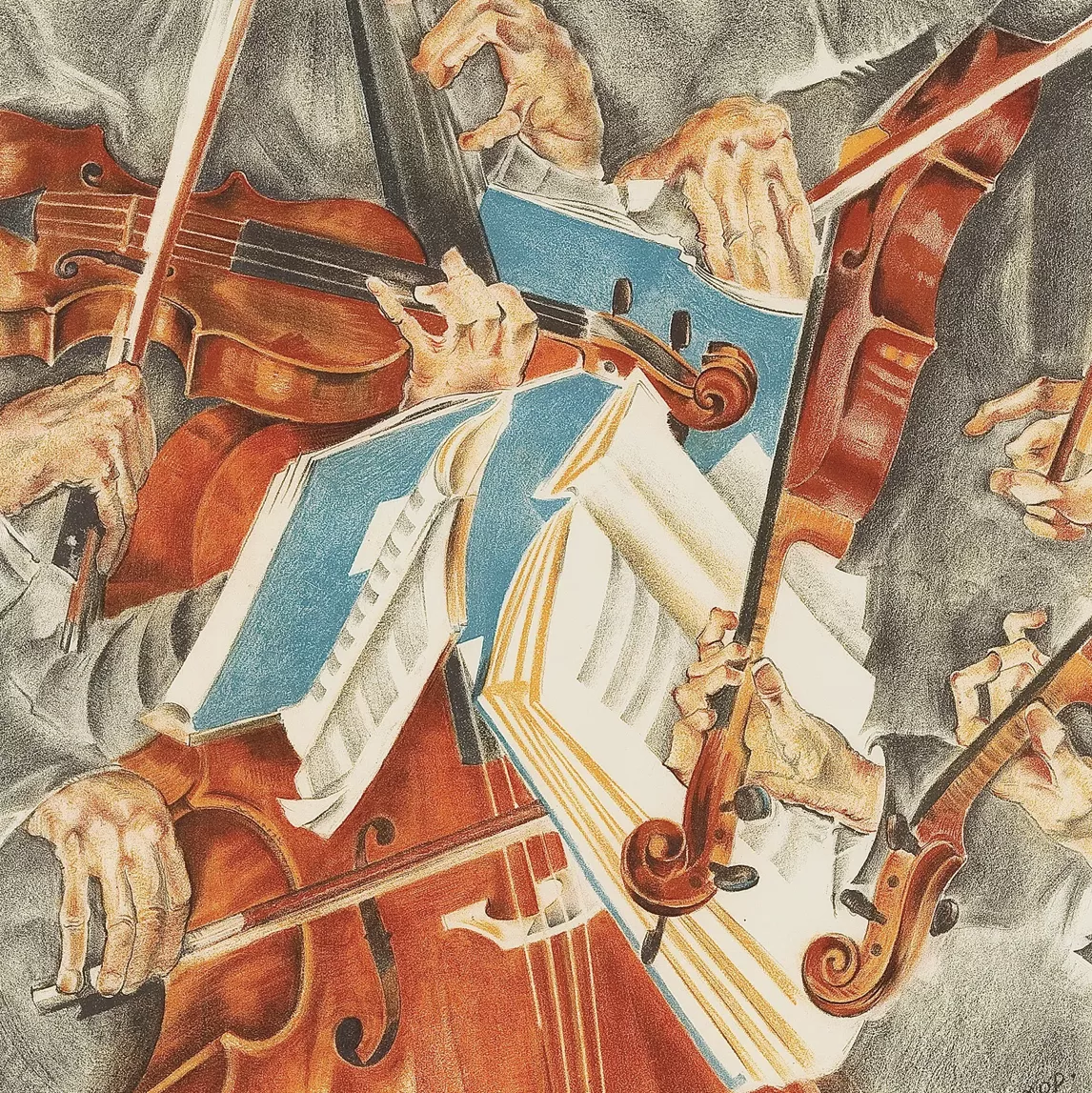
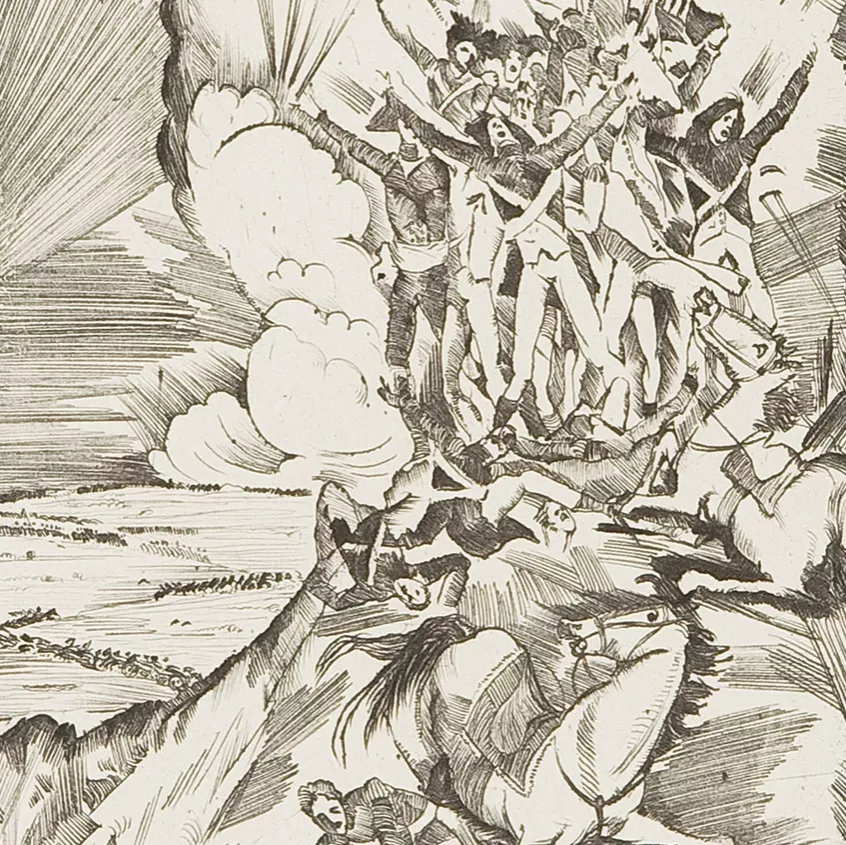
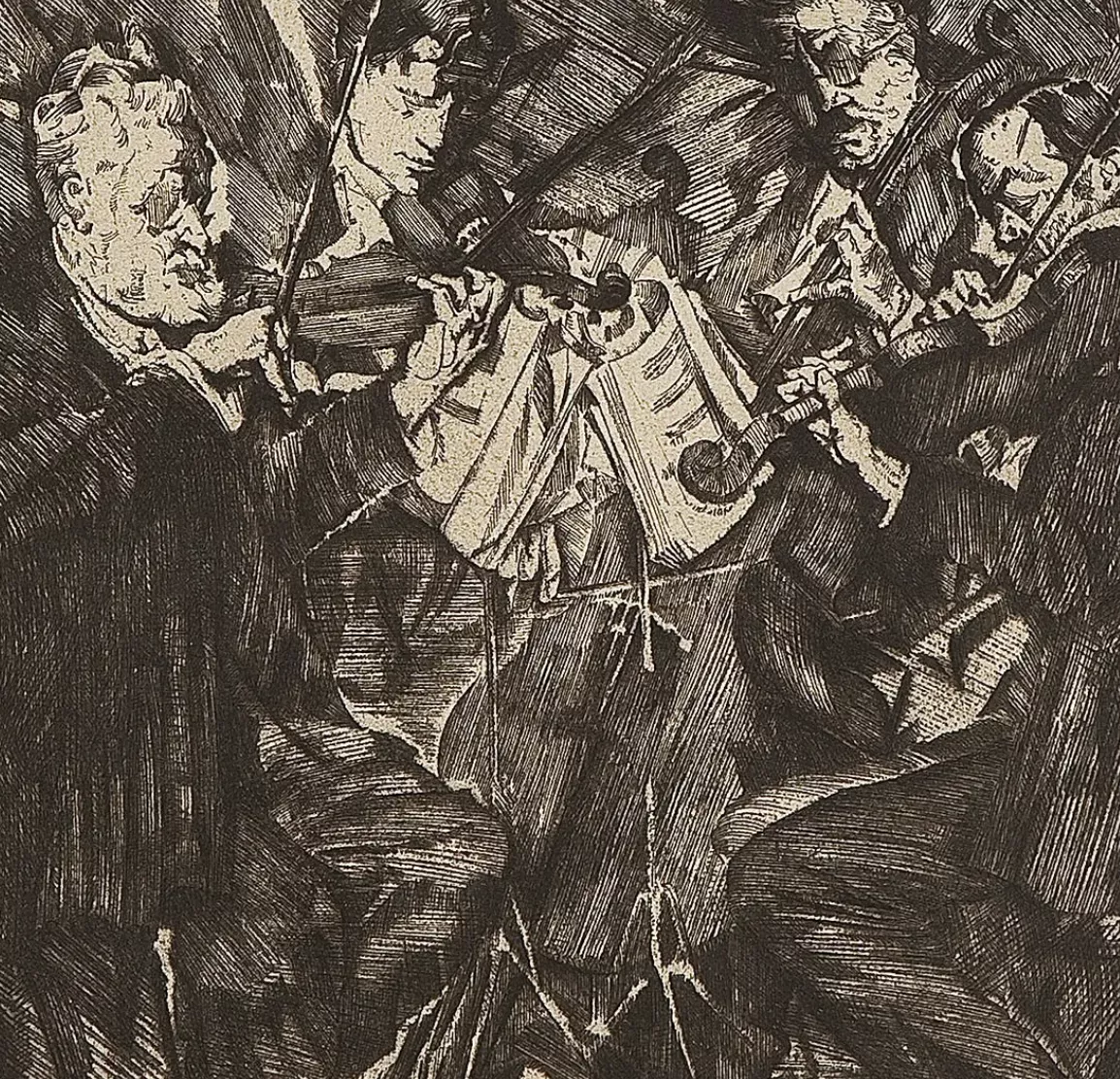
Max Oppenheimer, painter of intensity and inner turmoil
Max Oppenheimer (1885-1954) was an Austrian painter of the 20th century, a central figure of the Viennese Expressionist movement, whose work is distinguished by psychological depth and a constant exploration of the human soul.
Born in Vienna into a middle-class family, he embarked on artistic training at the Academy of Fine Arts at an early age, where he developed a bold technique and a unique sensitivity to the inner torments of his subjects.
Highly influenced by Expressionism, Oppenheimer quickly distinguished himself with a fresh approach to color and form, where human figures are often captured in a raw, intense and disturbing light.
The artist made a name for himself in Viennese circles by refusing to follow academic conventions, seeking instead to depict the raw, unvarnished individuality of his models.
His art is characterized by the use of energetic brushstrokes and vivid colors that seek not to flatter but to capture the essence of his subjects, whether portraits or genre scenes.
Each canvas then becomes an intimate confrontation between artist and subject, a means of expressing what is deeply human, but also often chaotic and disturbing.
Oppenheimer is marked by a tormented vision of the human condition, where suffering, isolation and solitude often emerge as dominant themes.
Like his contemporaries such as Oskar Kokoschka, he explored the psychological depths of his models, seeking not only to capture their appearance but also to reveal their inner states of mind.
Oppenheimer's portraits, for example, are more than mere representations: they are illuminations of human frailty, where pain and vulnerability are palpable, made visible through dramatic hues and nervous features.
The psychological aspect of Oppenheimer's work
The impact of the First World War on Oppenheimer is undeniable and his work, after the horrors of the conflict, takes an even darker and more introspective direction.
The artist now explores the physical and psychological wounds of his subjects, treating the war not only as a historical event but also as a human trauma, an invisible but indelible scar.
His art, now more tormented, adopts a darker, more distorted tone, where anguish and suffering are expressed through distorted figures and dark, almost earthy color palettes.
It was during this period that he created works gripping with violence and chaos, such as the series of portraits of soldiers and figures emaciated by war, marked by devastation.
Oppenheimer's forced exile to Prague, then to Paris after the Anschluss of 1938, marked another turning point in his work. Far from his native land, he seems to lose himself in a deep sense of nostalgia and melancholy, while continuing his exploration of the themes of exile and loss.
His landscapes then become veritable allegories of absence, canvases where emptiness seems to invade the composition, where human figures become rare and color becomes more sober, more contemplative.
Max Oppenheimer's work, both poignant and full of passion, lies at the crossroads between an aesthetic quest and an uncompromising search for psychological truth.
By offering us a radical and emotive vision of the human condition, he joins artists such as Kokoschka, Otto Dix and Georges Rouault in their exploration of the darker aspects of human existence.
His art, both violent and tender, confronts us with our own frailties and the beauty of the human soul in its moments of absolute bareness.
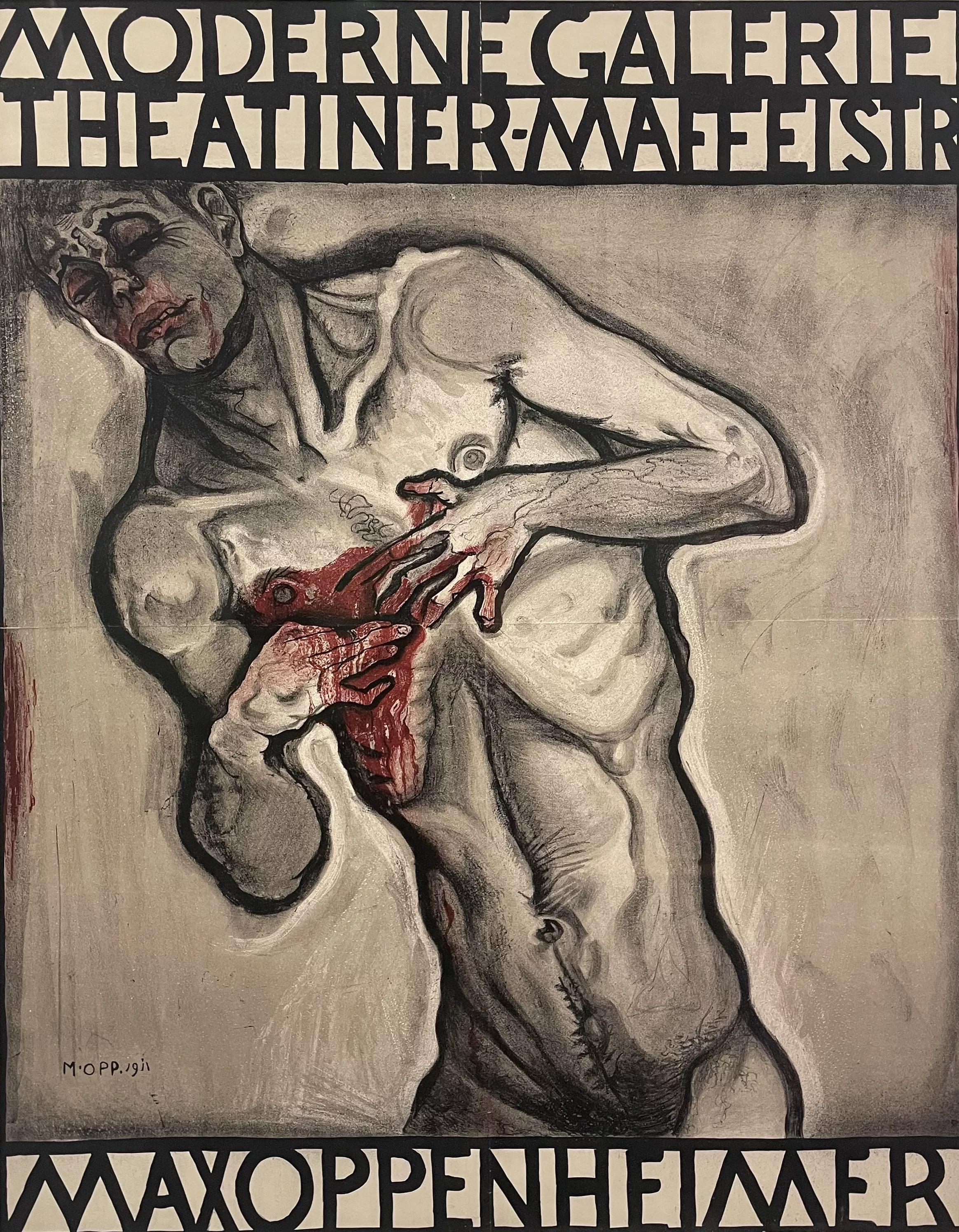
Focus on The Portrait of the Artist (circa 1911), Max Oppenheimer
The artist here paints himself, his silhouette cut out against a dark background, almost invaded by darkness. The face, centered and luminous, captures the attention, but everything around seems to dissolve into a heavy atmosphere, marked by palpable tension.
The facial features are rendered with nervous, vigorous brushstrokes, which accentuate the depth of the emotions. Oppenheimer is not trying to flatter his appearance, but to capture the essence of his own inner struggle.
The use of light on his face, raw and uncompromising, contrasts with the darkened background. This light, intensely illuminating her gaze, also seems to reveal a hidden suffering, a kind of unspoken, almost imperceptible torment.
The colors, dominated by earthy, dark tones, reinforce the atmosphere of distress and solitude emanating from the work. Red and black mingle in a dance of dramatic hues, capturing both the artist's violence and vulnerability.
Each plastic choice in the painting aims to convey an inner conflict, a tension between the will to show oneself and the desire to disappear.
The psychological aspect of this work is important : Oppenheimer doesn't just produce a portrait, he turns it into an exposure of his being, an exploration of the darkest zones of his own psyche.
His gaze, intense and penetrating, seems to go beyond appearance, towards an inner abyss. The face, almost distorted by light and shadow, reveals an exacerbated human fragility, where pain seems almost palpable.
Through this portrait, Oppenheimer confronts us with a brutal vision of the human condition. It's a work in which the quest for personal truth mingles with a depiction of isolation, of unease.
He doesn't seek to embellish or soften, but rather to capture the essence of the human being in its rawest, most tormented aspect.
This portrait, like others by the artist, invites us to explore the fragility of the individual, to confront ourselves with our own contradictions, and to see art as a means of expressing not only what is visible, but also what remains hidden behind the social mask.
Oppenheimer, in this way, joins artists like Kokoschka or Dix, who are interested in inner violence and the deconstruction of the self-image.
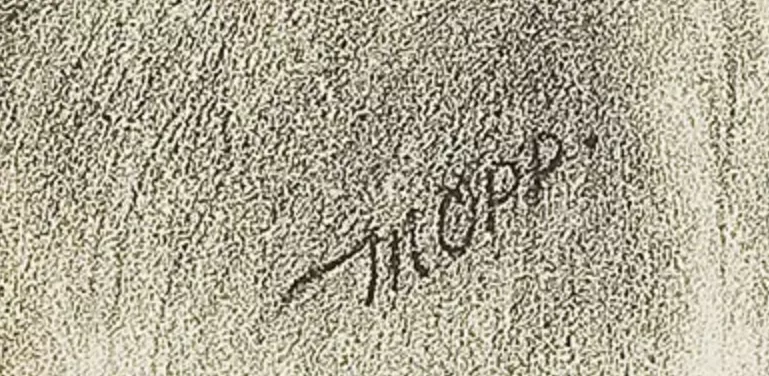
His signature
Although there are variations, here's a first example of his signature:
Expertise your property
If you happen to own a work by or after Max Oppenheimer, don't hesitate to request a free appraisal by filling in our form on our website.
A member of our team of experts and certified auctioneers will contact you promptly to provide you with an estimate of the value of your work, not forgetting to send you ad hoc information about it.
If you're thinking of selling your work, our specialists will also be on hand to provide you with alternatives for selling it at the best possible price, taking into account the inclinations of the market and its specific features.
Estimate in less than 24h
Discover in the same theme

Rating and value of sculptures and bronzes by Roger Godchaux
Roger Godchaux is an animal sculptor who has produced works that are highly rated and valued at auction. Estimate in 24h.
Learn more >

Rating and value of paintings by Pierre Hodé
Pierre Hodé is a Cubist painter who produced paintings that are now highly valued at auction. Estimate in 24h.
Learn more >

Rating and value of drawings and paintings by Gustave Madela...
Gustave Madelain is a Post-Impressionist artist whose paintings command high prices at auction.
Learn more >
Works from the same period sold at auction

Estimated 2.500 - 5.000
Alfred RETH (1884-1966) Composition, 1959, Oil and sandblasting

Estimated 20.000 - 30.000
Chaffic ABBOUD (1926-2004) "La visite", Oil on canvas

Estimated 2.000 - 4.000
Serge POLIAKOFF (1900-1969), Composition en rouge et bleu. 1965, Lithograph

Estimated 1.000 - 2.000
Georges Hanna SABBAGH (1887-1951), Portrait of a woman in a red tunic, Oil on cardboard

Estimated 4.000 - 6.000
Pierre HODÉ (1889-1942) Vue de Port, Oil on canvas

Estimated 3.000 - 5.000
Wladimir de TERLIKOWSKI (1873- 1951), Roulotte dans un paysage, oil on canvas

Secure site, anonymity preserved

Auctioneer approved by the State

Free and certified estimates
Frequently asked questions
-
Who is Max Oppenheimer, and what is his artistic background?Max Oppenheimer (1885–1954) was a leading Austrian painter of the 20th-century Viennese Expressionist movement. Born in Vienna, he distinguished himself by rejecting academic conventions to explore the human soul through psychologically intense portraits, vivid colors, and energetic brushstrokes. Influenced by World War I and his forced exile after 1938, his work is characterized by a quest for authenticity and a raw depiction of the human condition, much like that of his contemporaries Oskar Kokoschka and Otto Dix.
-
What is the price range for Max Oppenheimer's works at auction?Prices for works by Max Oppenheimer vary considerably depending on the medium and the artist’s reputation: print multiples sell for between €80 and €8,000, drawings and watercolors for between €140 and €45,000, and paintings for between €600 and €446,000. In 2009, his painting *Die Geisselung* (1913, oil on canvas) fetched €446,000 at auction. His Expressionist paintings, particularly his portraits and self-portraits, are the most sought-after on the market.
-
How can you authenticate a work by Max Oppenheimer and determine its exact value?To authenticate a work by Max Oppenheimer and obtain an estimate of its value, Auctie's offers a free, no-obligation appraisal conducted by its experts and state-certified auctioneers. Simply fill out the form available on the website, and a member of the team will contact you promptly to provide you with a precise estimate of your item’s value based on current market conditions.
-
When is the best time to sell a work by Max Oppenheimer?Yes, now is a good time to sell a work by Max Oppenheimer. His market value remains extremely high, particularly for his Expressionist paintings and portraits. As an iconic figure of 20th-century Viennese Expressionism, his works remain in high demand among collectors, especially in Europe and on the international modern art market.
-
How does the sale of a work of art work at Auctie's?Auctie's guides you from the free appraisal to the final bid at auction. Once the appraisal is complete, our specialists will present you with the best options for selling your artwork at the best possible price, taking current market trends into account. You benefit from the expertise of a licensed auction house and the know-how of renowned auctioneers to maximize the proceeds from your sale.
