



Rating and value of paintings by Georges Rouault

Key takeaways
- Georges Rouault, a 20th-century Fauvist and Expressionist artist, commands high and rising prices on the auction market, with works selling for between €20 and €255,000.
- His paintings are his most valuable works, fetching between €400 and €1,213,000, while his watercolor drawings sell for between €50 and €704,000.
- His oil on canvas “Church Interior” sold for €963,000 in 2016, illustrating the economic potential of this spiritual artist’s major works.
If you own a work by artist Geroges Rouault or based on his work and would like to know its value, our state-approved experts and auctioneers will guide you.
Our specialists will carry out a free appraisal of your work, and provide you with an accurate estimate of its value on the current market.
Then, if you wish to sell your work, we will direct you to the best possible arrangement to obtain the optimum price.
Artist's rating and value
An important Fauvist and Expressionist artist of the 20th century, Georges Rouault has a high and growing rating on the auction market. Uncommon in auction rooms, Rouault's paintings attract a large number of collectors, particularly landscape enthusiasts.
Thus, the painter has established himself as a sure bet on the art market, with prices for his works ranging from €20 to €255,000, a substantial delta but one that speaks volumes about the value that can be attributed to the artist's works. Witness his oil on canvas Church Interior, adjudged €963,000 in 2016.
Order of value from the most basic to the most prestigious
Technique used | Result |
|---|---|
Ceramics | From 260 to 79 000€ |
Estamp - multiple | From €10 to 146 000 |
Drawing - watercolor | From €50 to €704,000 |
Painting | From €400 to €1,213,000 |
Estimate in less than 24h
The artist's works and style
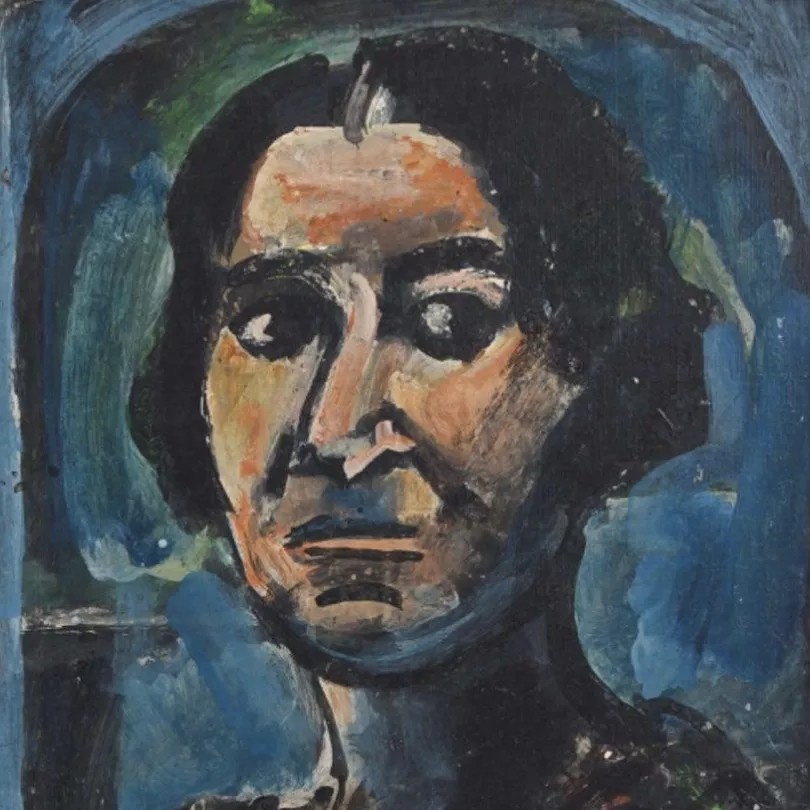
Deeply spiritual and imbued with emotion, Georges Rouault's style is distinguished by marked black lines and intense use of color, which almost seem to vibrate from within, giving his compositions a unique dramatic force.
Rouault, although often classified as an expressionist, develops a pictorial language of his own, shaped by his meticulous apprenticeship in the technique of stained glass, which he uses to accentuate contrasts and luminosity.
This mastery of light, combined with his concern for psychological depth, makes his works visual meditations on human suffering.
His relentless quest for the sacred and his deep religious feeling shine through in every brushstroke. Rouault doesn't simply seek to represent reality; he aspires to reveal what is most intimate and tragic in the human soul.
His figures, whether sad clowns, ruthless judges or silent martyrs, are like mirrors of human misery. Their deliberate distortion, often accentuated by heavy black outlines, reinforces this impression of tormented souls, of characters torn between beauty and pain.
Rouault hijacks the principles of the Fauvists, for whom color bursts into freedom, and uses it as an instrument of revelation. He uses it not for its visual beauty alone, but to accentuate the tragic dimension of the human condition, adding an emotional layer to his compositions.
Each canvas thus becomes a space of confrontation between the sacred and the profane, light and darkness, grace and suffering. Through this omnipresent dramatic tension, his works achieve a singular, almost mystical harmony, where spiritual depth and the brutality of existence come together.
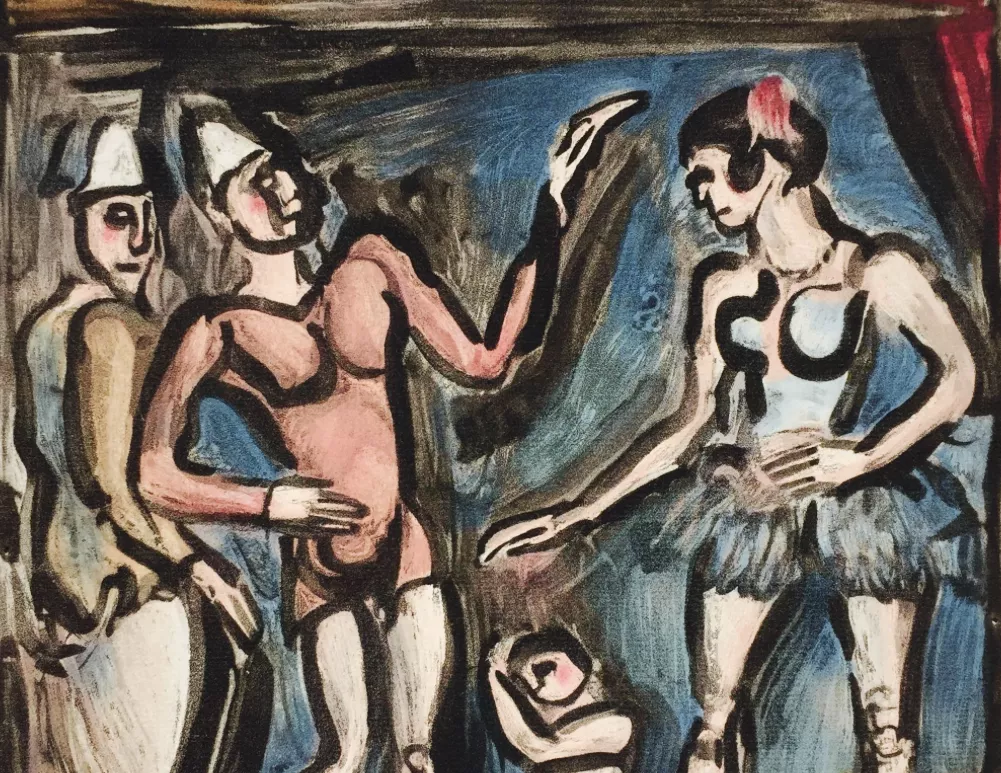
The life of Georges Rouault
Georges Rouault (1871-1958) was a French painter and engraver of the early 20th century. Born into a modest family, Rouault trained from an early age in the art of stained glass, an apprenticeship that would have a lasting influence on his work.
Born into a modest family, Rouault trained from an early age in the art of stained glass, an apprenticeship that would have a lasting influence on his art, particularly in his use of intense colors and thick black outlines, reminiscent of the lead lines in stained glass.
After losing his father, he was raised by his mother, a very pious woman whose religious devotion played a central role in the spiritual orientation of his work. He moves to Paris, where he joins the École des Beaux-Arts and enters the studio of Gustave Moreau.
As with other artists of his generation, Moreau plays a crucial role in his artistic training, but dies shortly after taking him under his wing.
Gustave Moreau's death in 1898 left a deep imprint on the artist, who plunged further into a reflection on human misery and the sacred.
Rouault met artists such as Charles Camoin and Albert Marquet, but his darker, more introspective approach soon set him apart from his comrades. He borrowed certain color techniques from the Fauvists, while orienting them towards a deeper spiritual quest.
Rouault took part in the major Parisian Salons, notably the Salon d'Automne and the Salon des Indépendants, but turned away from the prevailing artistic fashions. His style, influenced by stained glass, is characterized by thick black outlines and a palette of vivid colors, often in the service of religious or social themes.
Thanks to his dealer Ambroise Vollard, Rouault quickly found an audience. He exhibited not only in France, but also abroad, notably in Germany and the United States. The series of clowns and judges became emblematic of his work, reflecting his tragic vision of the human condition.
His art, at once imbued with mysticism and compassion, reveals a unique sensibility that makes him a key figure in twentieth-century art.
#ArtMinute : Inside A Modern Vision: Rouault
The importance of religious iconography in the work of Georges Rouault
Religious iconography plays a fundamental role in the work of Georges Rouault, marking a decisive break in his approach to the human condition. Early on, the artist drew on biblical narratives and sacred figures to express his spiritual concerns.
By moving away from simple pious representation, Rouault transforms these themes into powerful symbols, where suffering and redemption become central elements of his work. This was the case for many artists of his time, who updated religious subjects with the aim of rearranging space.
Influenced by his apprenticeship in stained glass, he adopted thick black lines and intense colors to evoke a mystical, almost dramatic atmosphere, underlining the tension between the sacred and the profane.
The religious figures he paints, whether Christ on the cross or martyrs, are always imbued with deep emotion, revealing human vulnerability while questioning notions of justice and grace. His work also questions the role of religious subjects in modern art.
In fact, the twentieth century marks a real turning point in the reappropriation of religious subjects, which become a reason to reform artists' working methods, and allows a recomposition of space, a certain return to order.
This process is particularly visible in the creation of contemporary stained glass, and the work of Georges Rouault is a glaring example of this, which can also be seen in artists such as Jacques Villon, who devoted part of his career to religious subjects.
Although religious iconography is central to his work, Rouault does not use it solely to illustrate scenes of faith. On the contrary, he uses it as a visual language to evoke the ills of society and the torments of the soul.
His characters - often judges, clowns or prostitutes - are modern embodiments of spiritual struggle, beings in search of meaning in a world in perpetual search of justice.
By placing religious iconography at the center of his artistic production, Georges Rouault offers a unique vision in which the sacred transcends convention and becomes a key to understanding human tragedies.
This approach distinguishes him in the history of modern art and makes him a key figure in twentieth-century spiritual expression.
.
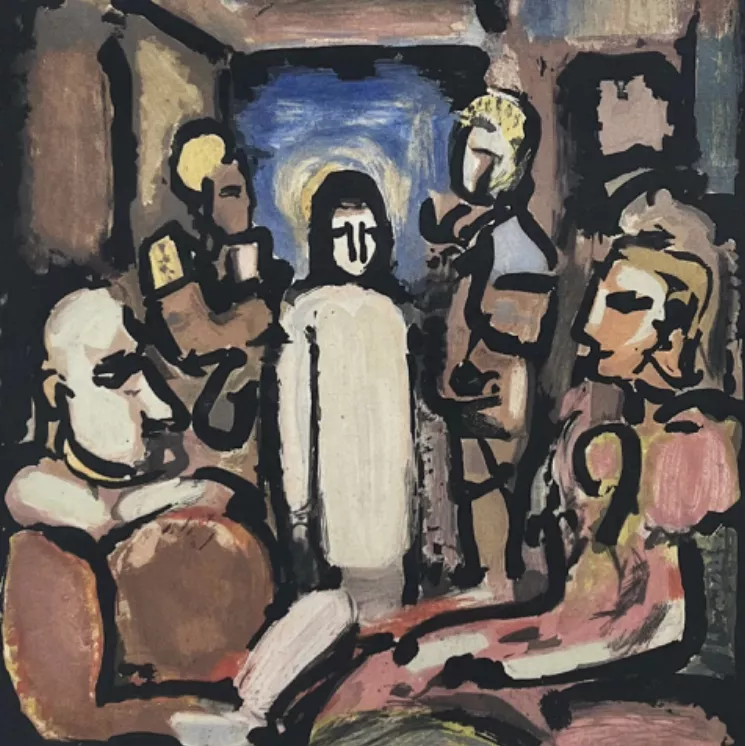
Georges Rouault's imprint on his period
Georges Rouault is an artist who left his mark on twentieth-century painting through his unique approach and spiritual vision. He is the author of a vast and intense body of work.
Some of his works are held in prestigious museums in France and abroad, but the bulk of his paintings are owned by private collectors - who regularly bring them back into circulation on the auction market.
Far from limiting himself to a single aesthetic, Rouault explores profound themes such as suffering, the quest for redemption and the human condition, transforming his characters into powerful symbols of existence.
His technique, characterized by pronounced black outlines and vibrant colors, enables him to create an emotionally charged atmosphere that still resonates powerfully with viewers.
Rouault's impact extends far beyond his period, influencing generations of artists who followed him. His works continue to provoke admiration and questioning, making him a key figure in modern art.
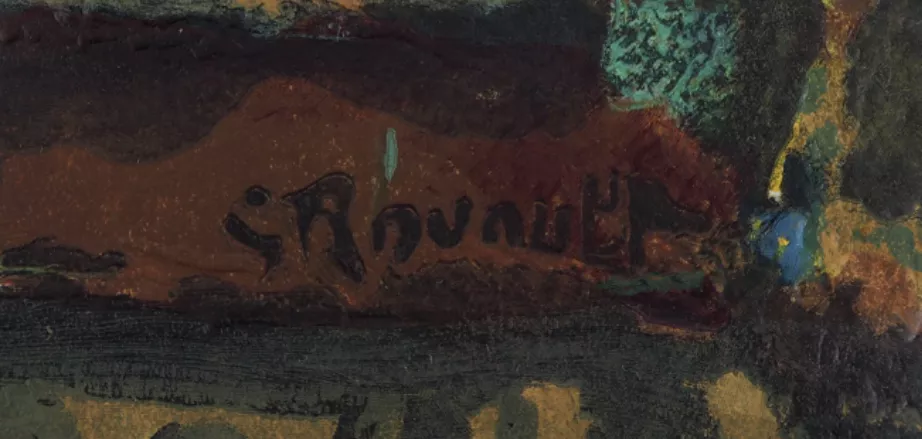
His signature
Not all of Georges Rouault's works are signed, and there are an enormous number of forgeries.
Although there are variants, here is a first example of his signature:
Expertise your property
If you own a work by Georges Rouault, don't hesitate to request a free appraisal by filling in our online form.
A member of our team of experts and licensed auctioneers will contact you to provide an estimate of the market value of your work.
If you are considering selling your work, our specialists will also guide you through the various alternatives available to obtain the best possible price, taking into account market trends and the specific features of each work.
Estimate in less than 24h
Discover in the same theme

Rating and value of works, drawings, sculptures by Ossip Zad...
Ossip Zadkine is a 20th-century abstract artist whose paintings, drawings and sculptures are highly regarded at auction.
Learn more >

Rating and value of Caesar's sculptures, jewelry and expansi...
César is a French sculptor of the Nouveau Réalisme movement who has produced works that are highly valued on the auction market.
Learn more >

Rating and value of paintings by Marie Raymond
Marie Raymond is an abstract artist who has produced many works that are highly valued at auction. 24h estimate
Learn more >
Similar works sold at auction


Secure site, anonymity preserved

Auctioneer approved by the State

Free and certified estimates
Frequently asked questions
-
Who was Georges Rouault, and what was his artistic style?Georges Rouault (1871–1958) was a French painter and printmaker, a leading figure in 20th-century Fauvism and Expressionism. His distinctive style combines thick black outlines (influenced by his training in stained glass) with intense colors to explore spiritual and tragic themes. His works, often imbued with mysticism and compassion, reveal a profound vision of the human condition, particularly through his series depicting sad clowns, merciless judges, and religious figures.
-
What are the typical selling prices for works by Georges Rouault?Georges Rouault's works range in price from €20 to €255,000, depending on the medium and the artist's reputation. Drawings and watercolors sell for between €50 and €704,000, while paintings range from €400 to €1,213,000. Ceramics and prints are more affordable, ranging from €260 to €79,000 and from €10 to €146,000, respectively. Some major works, such as the oil on canvas “Church Interior,” have fetched much higher prices, selling for 963,000 € in 2016.
-
How do you authenticate a work by Georges Rouault?To authenticate a work by Rouault, consult Auctie's certified experts and auctioneers. Please note that not all works by Rouault are signed, and there are many forgeries in circulation. We offer a free, no-obligation appraisal: simply fill out our online form, and one of our specialists will contact you to evaluate your artwork within 48 hours.
-
Is this the right time to sell a work by Georges Rouault?Yes, now is a good time to sell a work by Rouault. The artist commands a high and rising price on the auction market; his paintings are rarely seen at auction and attract a large number of collectors. Rouault is considered a safe bet in the art market, with steady demand, particularly for his landscapes and works featuring religious themes.
-
How does the sale of a work of art work at Auctie's?At Auctie's, the process is simple and transparent: start by requesting a free, no-obligation estimate by filling out our form. An expert will contact you within 48 hours. If you decide to sell, our state-certified auctioneers will guide you from the appraisal through to the auction, offering you the best strategies to achieve the highest possible price based on market trends and the unique characteristics of your artwork.
