



Rating and value of paintings by Gerhard Richter

Key takeaways
- Prices for works by Gerhard Richter range from €20 to €36.3 million, with a record set in 2015 for an abstract oil on canvas from 1986.
- Oil-on-canvas paintings are the most valuable segment, while drawings, watercolors, and prints are more affordable for collectors.
- His market value has shown steady growth since the 1990s, with total auction sales reaching $247.3 million in 2021, up 89% from 2019.
If you own a work by or based on the artist Gerhard Richter and would like to know its value, our state-approved experts and auctioneers will guide you.
Our specialists will carry out a free appraisal of your work, and provide you with a precise estimate of its value on the current market.
Then, if you wish to sell your work, we will direct you to the best possible arrangement to obtain the optimum price.
Artist's rating and value
A polymorphic painter, Gerhard Richter won over the art critics, dealers and collectors of his day. Since then, the artist's works have established themselves as sure values on the art market.
From the 1990s onwards, his stock exploded and showed steady growth, particularly for his works produced from the 50s onwards. Thus, the price at which Richter's works sell ranges from €20 to €36,328,500.
In 2015, an oil on canvas from 1986 entitled Abstract Painting was sold for €36,328,500, while it was estimated at €18,837,000 to €26,910,000.
Order of value ranging from the most basic to the most prestigious
Technique used | Result |
|---|---|
Photography | From 150 to 516,800 € |
Drawing - watercolor | From €370 to €720,000 |
Estamp - multiple | From €20 to €1,117,560 |
Oil on canvas | From €40 to €36,328,500 |
Estimate in less than 24h
The artist's works and style
Gerhard Richter is a polymorphic painter who works with a variety of materials. He produces many prints, but also drawings and oils on canvas, which are his most highly regarded works. He moved from figuratism to abstraction. In some of his works, we can discern a neo-plastic influence.
So, he moves between figuration (painting from photographs, portraits, landscapes) and abstraction (abstract panels, colored bands, scraped surfaces). The blurred works, also known as " blur " consist of applying paint and then blurring it in order to erase the sharpness and question photography as mimesis.
He also works with abstraction by scraping " sqeegee ", a large tool slid over the still-fresh paint, revealing its layers and mixing control and chance. He seeks an ambivalence between reality and image, believing that " what appears to capture the truth is often uncertain ".
Richter varies media, from the photographs on which he paints to the Cologne stained-glass window in 2007. His work reflects a diversity of scale and style, with landscapes, still lifes and historical series dealing with collective memory.
For figurative works, he uses the projection of photographs onto canvas, sketching, painstaking painting and then fading or blurring. For abstractions, he applies successive layers of paint (often oil-based), followed by scraping with a sqeegee or spatula. He works the surface until the underlying colors are revealed.
In the abstractions, Richter develops superimpositions, eliminations, scrapings and erasures with the aim of creating a surface rich in traces of gesture.
His technique blends control and chance. Much of his work focuses on the theme of historical imprint and memory. In the " Birkenau " series, he starts with documentary photographs of the Holocaust, paints them and then covers them, scraping the surface to abstraction, while ensuring the visual trace of erasure.
He varies the media in addition to canvas and photography, and also uses glass, stained glass and reflective installations.
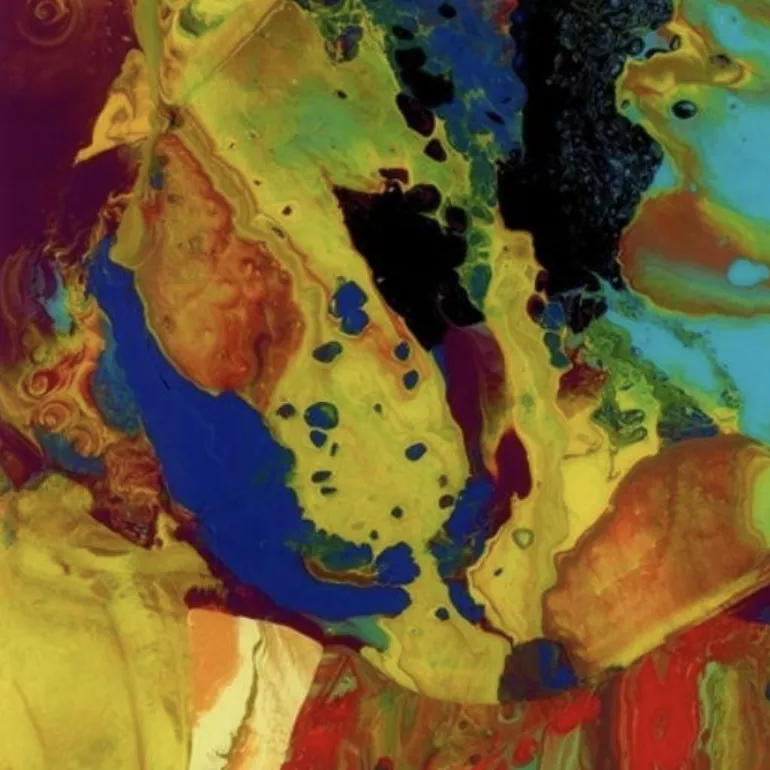
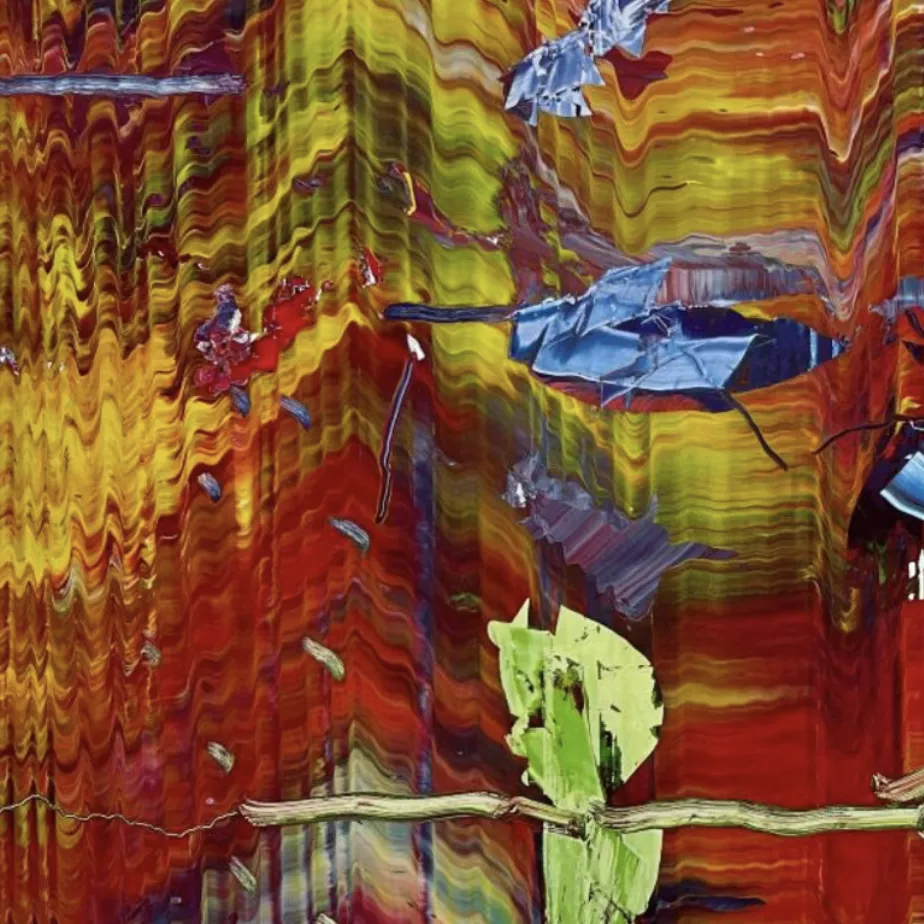
Gerhard Richter, German abstraction
Gerhard Richter was born in Dresden (Germany) in 1932. He initially trained as a painter, entering the Dresden Academy of Fine Arts. There he obtained a Master's degree, which granted him access to a studio for three years.
He was greatly influenced early in his career by Jackson Pollock and Lucio Fontana.
His first works are based on press photographs. Working as a photographer in parallel, he drew inspiration from the subjects he photographed to produce his first canvases. Later, he began to direct his pictorial approach towards abstraction, invariably naming his canvases " Abstraktes Bild " -
His talent was quickly recognized, which is why he went on to teach and gain great legitimacy as a Professor in Hamburg, Düsseldorf and Canada.
Under West Germany, he continued to work from his photographs, while the Nouveaux Fauves were gaining notoriety. During this period, Richter is fascinated by the skulls he paints upside down - paying homage to fellow artist Georg Baselitz.
He remains active until 2018.

Market segmentation and the artist's rating
The works by Gerhard Richter that are valued on the auction market are first and foremost the large abstract canvases such as Abstraktes Bild, with their premium support. Figurative paintings are also important, with blurred landscapes known as " photo-paintings) making up a high segment.
Works on paper, limited editions and prints then make up the most accessible segment. Typical buyers are high-end international collectors, major museum institutions, contemporary art collectors and investors.
The secondary market is predominant, with many transactions via auction houses. The primary market is less accessible and highly controlled. Overall, his works sell mainly in Europe, the United States, and Asia.
The influencing factors are the size of the work, the period (e.g. 1960s vs. 1980s+), the style (abstraction vs. figuration), provenance, condition, and the presence of an exhibition or catalog raisonné.
The record bid is held by Abstraktes Bild (1986) sold for around 45,356,000 USD. Domplatz, Mailand, dating from 1968 went for 37.1 USD in 2013.
In 2021, Richter's total auction sales amounted to 247.3 M USD, up 89% on 2019. The " sold lot " rate in 2018 was around 14% by value, according to one analysis.
For medium-sized works, prices can start in the hundreds of thousands of euros (or even less for editions or secondary works). Richter is sometimes considered Europe's most expensive living painter.
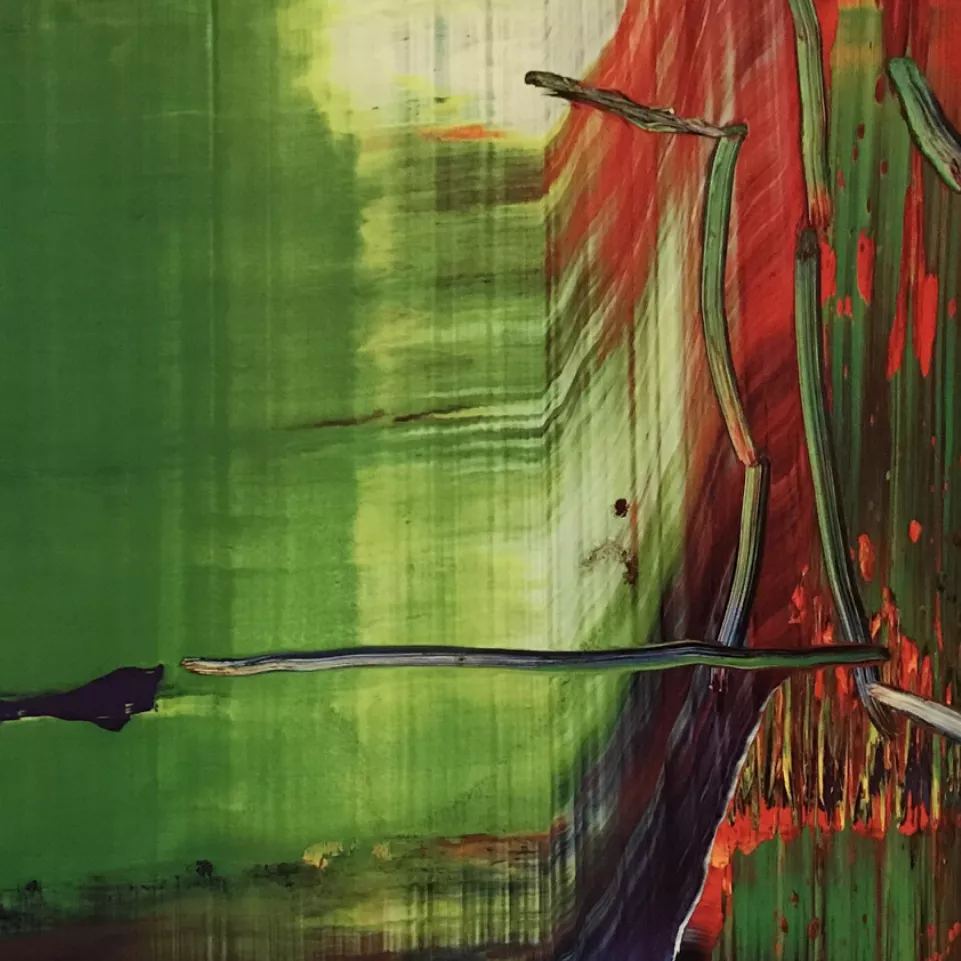
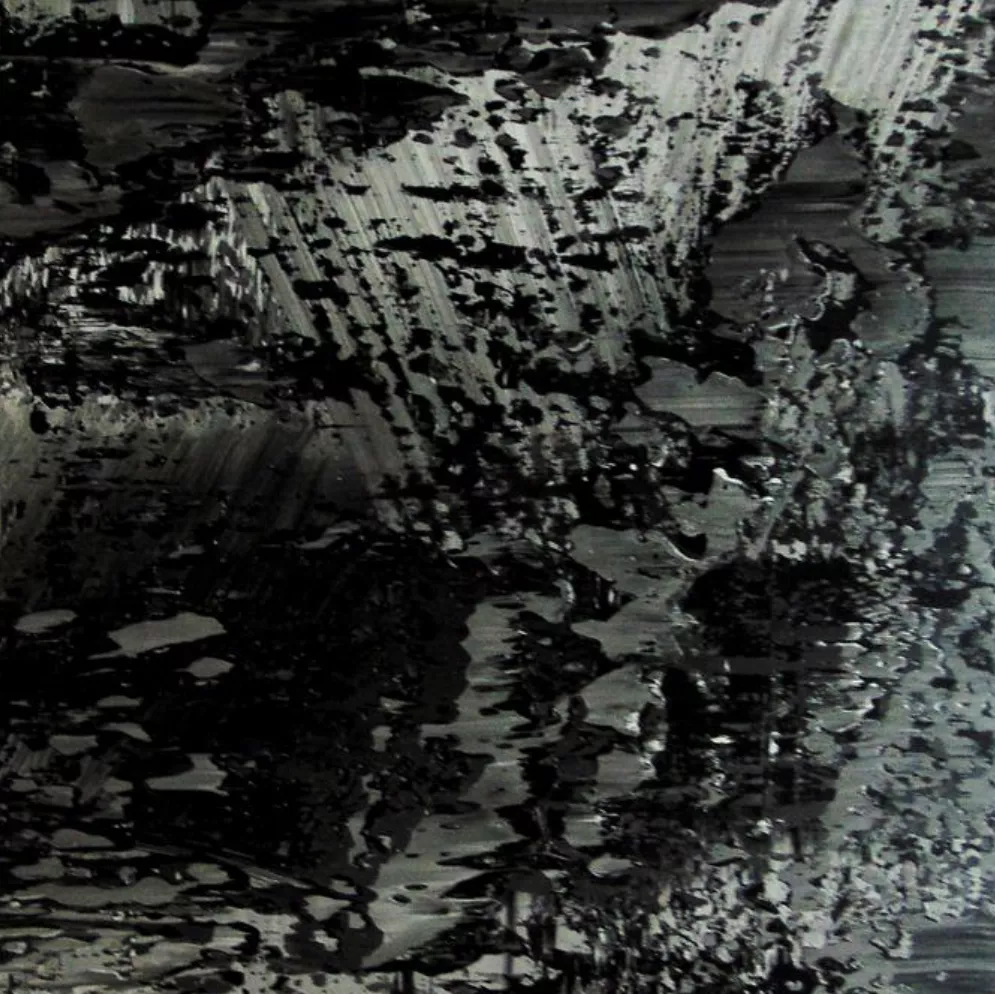
Gerhard Richter's imprint on twentieth-century German art
Gerhard Richter has left a colossal imprint on the history of art, making a major contribution to German abstraction. His artistic approach of working from photographs is rather unconventional, establishing a clear porosity between his photographs and his canvases.
In 2012, he was the world's most expensive living artist. His considerable output is one of the most highly rated on the auction market.
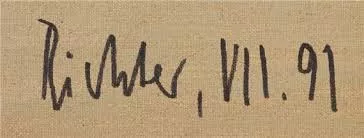
His signature
Not all of Gerhard Richter's works are signed.
An example of his signature can be seen in the drawing below.
Expertise your property
If you own a work by Gerhard Richter, don't hesitate to request a free appraisal by filling in our online form.
A member of our team of experts and licensed auctioneers will contact you to provide an estimate of the market value of your work.
If you are considering selling your work, our specialists will also guide you through the various alternatives available to obtain the best possible price, taking into account market trends and the specific features of each object.
Estimate in less than 24h
Discover in the same theme

Value and rating of Édouard Cazaux's ceramics
Édouard Cazaux, a 20th-century ceramist, produced a significant body of ceramics. His works are highly valued and appreciated.
Learn more >

Rating and value of works, drawings, paintings by Leonor Fin...
Leonor Fini is a 20th-century Surrealist artist whose drawings, prints and paintings are sought-after and highly prized at auction.
Learn more >

Rating and value of paintings by Martial Raysse
Martial Raysse is a twentieth-century New Realist painter whose drawings and oil paintings are highly regarded and valuable.
Learn more >
Works from the same period sold at auction


Secure site, anonymity preserved

Auctioneer approved by the State

Free and certified estimates
Frequently asked questions
-
Who is Gerhard Richter, and what is his artistic background?Gerhard Richter is a German painter born in Dresden in 1932, considered one of the most important living European artists of the 20th century. He is known for his multifaceted approach combining figuration and abstraction, particularly his abstract works titled “Abstraktes Bild” and his blurred “photo-paintings.” Influenced by Jackson Pollock and Lucio Fontana, he revolutionized German abstraction by working from photographs and developing innovative techniques such as squeegee scraping.
-
What are the price ranges for Gerhard Richter's works, broken down by medium?The prices of Gerhard Richter’s works vary considerably depending on the medium: photographs range from €150 to €516,800, drawings and watercolors from €370 to €720,000, prints and multiples between €20 and €1,117,560, and oil-on-canvas paintings between €40 and €36,328,500. Oil-on-canvas paintings—particularly large abstract canvases and blurred landscapes—represent the most valuable segment of the market.
-
How do you authenticate and appraise a work by Gerhard Richter?To authenticate and appraise a work by Gerhard Richter, we recommend that you request a free, no-obligation appraisal from Auctie's. Our certified auctioneers and experts will examine your artwork and provide you with an accurate estimate of its current market value within 48 hours. This evaluation takes into account the technique, period, provenance, condition, and whether the work is listed in a catalogue raisonné.
-
Is this the right time to sell a work by Gerhard Richter?Yes, now is an excellent time to sell a work by Gerhard Richter. The auction market for his works has shown steady growth since the 1990s, with a significant increase in total sales (+89% between 2019 and 2021). Richter’s works are considered safe bets in the art market, particularly his large abstract canvases and photo-paintings, which are in high demand among international collectors.
-
How does the sale of a work of art work at Auctie's?At Auctie's, we support you every step of the way: after a free, no-obligation appraisal of your artwork by our experts, we guide you toward the best sales option to maximize your price. Our specialists advise you, taking into account market trends, provenance, condition, and the unique characteristics of your artwork, before proceeding with the auction sale to a clientele of international collectors.
