



Rating and value of works, sculptures and bronzes by Camille Alaphilippe

Key takeaways
- Camille Alaphilippe (1874–1934), a French Art Nouveau sculptor, worked primarily in bronze, creating works featuring animal and mythological subjects.
- His works sell for between €100 and €3,500 at auction, with bronze pieces fetching up to €3,500, compared to €100 to €640 for works in other materials.
- His market value is currently stable and rising in the art market, as his sculptures are highly sought after by collectors.
If you own a work by or after the artist Camille Alaphilippe, and would like to know its value, our state-approved experts and auctioneers will offer you their appraisal services.
Our specialists will carry out a free appraisal of your work, and provide you with an accurate estimate of its value on the current market.
Then, should you wish to sell your work, we will direct you to the best possible arrangement to obtain the optimum price.
Rating and value of Camille Alaphilippe's works
French Art Nouveau sculptor, Camille Alaphilippe works mainly in bronze. Lately, his stock has been rising on the art market.
His works are sold for between €100 and €3,500 on the auction market, a sizeable delta but one that speaks volumes about the value that can be attributed to the artist's works.
A bronze sculpture, Bacchante, sold for €3,500 whereas it was estimated at between €3,500 and €4,000.
Order of value from a simple work to the most prestigious
Technique used | Result |
|---|---|
Other mediums (sandstone, marble...) | From €100 to €640 |
Bronze | From €120 to €3,500 |
Estimate in less than 24h
Style and technique of artist Camille Alaphilippe
Camille Alaphilippe is a French sculptor who works mainly in bronze. His sculptures are characterized by animal subjects, dancers and mythological subjects.
He is part of the Art Nouveau movement.
He has produced a few marbles and ceramics, but is best known and sought after for his bronzes.
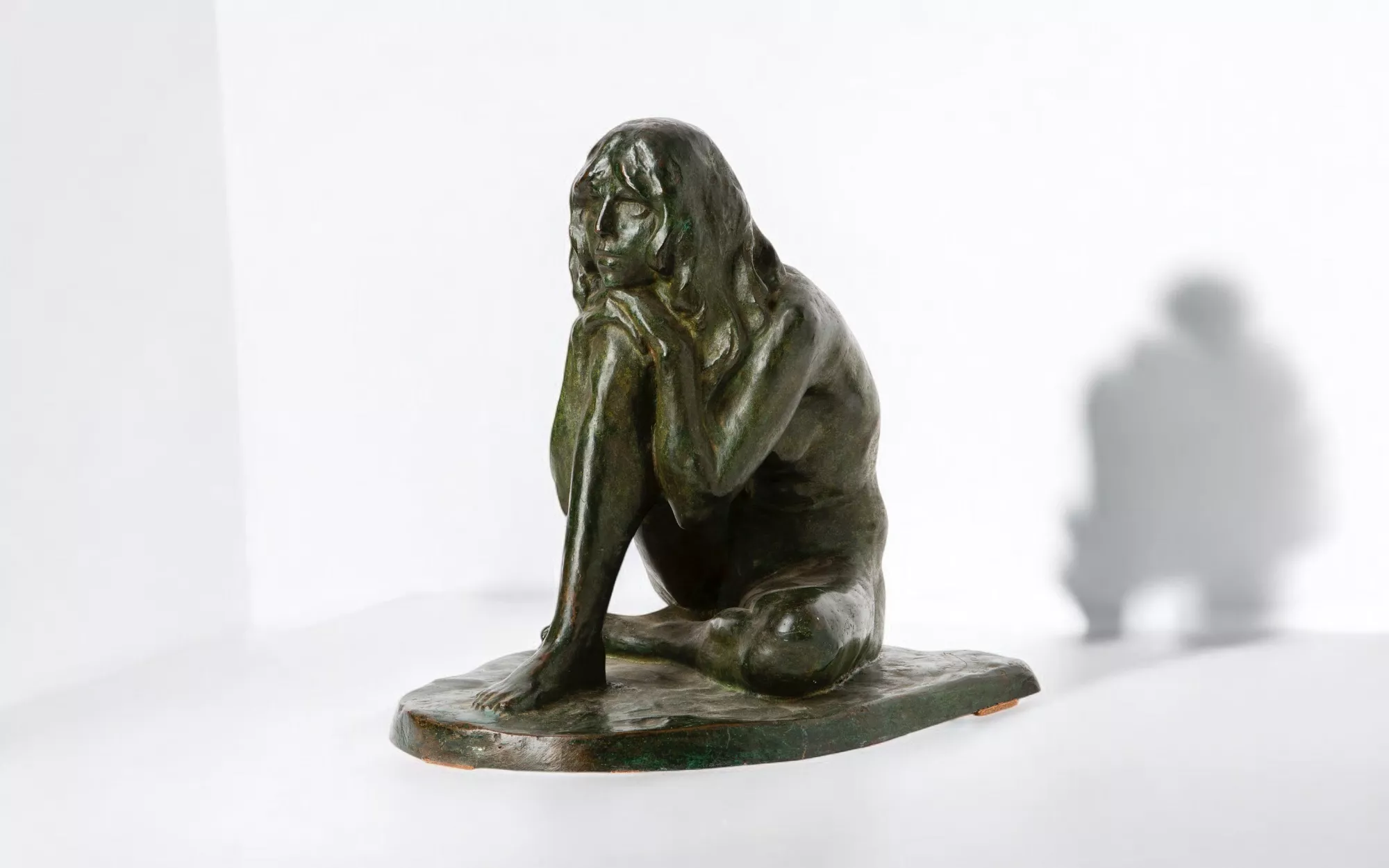
The career of Camille Alaphilippe
Camille Alaphilippe (1874 - 1934), was a French Art Nouveau sculptor and ceramist, born in Tours.
He moved to Paris fairly quickly, as he studied at the Académie des Beaux-Arts de Paris in the studios of Jean-Paul Laurens and Louis-Ernest Barrias.
In 1898, aged just 24, he won the Prix de Rome in sculpture. The theme he had chosen was a classic, but a difficult one, as it was very common throughout the history of art, being Cain killing Abel.
From 1901, his career took a different direction, as he became very interested in ceramics. It was from this period onwards that he found his true artistic identity, namely the Art Nouveau movement, which was just emerging.
He also tried his hand at decoration, married to an artist who also practiced sculpture, creating decorations for the stores of Félix Potin and François Carnot, among others.
Shortly afterwards, in 1914, he was appointed director of Alexandre Bigot's flamed stoneware factory in the Loir-et-Cher region.
The First World War, however, put a considerable brake on his career. He was demobilized, had little money and had fallen ill. In need of new horizons, he decided to settle in Algeria.
There, he headed the section of the Algiers School of Fine Arts, where he trained the French sculptor André Greck. He is notably famous for having created numerous monuments in Algeria in memory of the various conflicts that took place there at the beginning of the 20th century.
He died in Algiers in 1934, aged 60.
.
The plaster cast of his Prix de Rome at the Beaux-Arts de Tours
Focus on La Femme au Singe, sandstone and bronze, Camille Alaphilippe
La Femme au Singe by Camille Alaphilippe, exhibited at the Petit Palais, is a sculpture that embodies all the delicacy and poetry characteristic of the early 20th century and the artist's current.
Alaphilippe, an artist influenced by Art Nouveau, offers us here a work in which the elegance of the forms blends perfectly with a subtle symbolism, the curves are light and the subject light, allowing the sculpture to fit perfectly into its current.
The female figure, slightly inclined, seems lost in thought, while the monkey at her feet adds an unexpected, almost mischievous touch. This unlikely duo evokes a silent complicity that piques the viewer's curiosity.
Alaphilippe favors pared-down forms and soft lines, characteristic of his style. The woman, wrapped in a flowing drape, seems almost to float in space.
This artistic choice allows focusing attention on the figure's posture and expression, while evoking a soothing lightness.
The monkey, on the other hand, is more lively in its movement, creating an interesting contrast with the woman's more poised attitude. This contrast makes the scene both peaceful and dynamic.
The influence of Art Nouveau can also be seen in the attention paid to decorative details, without overloading the whole. The simplicity of the scene leaves room for the imagination: what does this monkey symbolize?
Is it a reflection of the woman's free spirit, or simply a faithful companion? This ambiguity is part of the charm of the work, which invites different interpretations without ever imposing a single reading.
The material, certainly bronze, lends the sculpture a timeless quality. The soft patina and fine lines reinforce the impression of serenity that emanates from the female figure.
Bronze, often associated with heroic or monumental representations, is used here to capture a more intimate, almost introspective moment.
This subtle use of material is a testament to Alaphilippe's skill in infusing a cold, rigid material with an emotional dimension.
Another fascinating aspect of this work is the way Alaphilippe plays with the body's posture. The woman is slightly bent over, as if in deep reverie, while the monkey, at her feet, seems curious and attentive.
This interaction between the two protagonists suggests a strong, perhaps symbolic, link between the human figure and the animal. This recalls the preoccupations of the time, when art often sought to explore the relationship between nature and culture, human and animal.
The woman's gaze, serene and detached, contrasts with the monkey's restrained energy, creating a kind of silent dialogue between the two.
Alaphilippe manages to capture this duality with great finesse, without falling into excess or detail overload. This simplicity makes the sculpture all the more powerful, as it leaves everyone free to interpret this scene in their own way.
Finally, La Femme au Singe is a work that testifies to Alaphilippe's talent for combining symbolism and aestheticism. It embodies an era when art was seeking to represent beauty in new forms, favoring fluid lines and more intimate subjects.
Edgar Degas had already begun, as an Impressionist, to move in this direction.
The work, with its harmonious composition and poetic theme, is fully in line with this trend, while affirming the singular artistic personality of its creator.
Art Nouveau sculpture of the 20th
Sculpture in Art Nouveau, which appeared at the end of the 19th century, is distinguished by a clear break with classical conventions.
This artistic movement, whose leading exponents include sculptors such as Agathon Léonard and Alexandre Charpentier, gives pride of place to organic, flowing forms, directly inspired by nature.
Themes chosen are often plant or animal, and the sinuous lines that characterize these works evoke natural curves, reminiscent of stems and leaves that seem to blossom with lightness.
From the early years of the 20th century, Art Nouveau sculpture was also part of a decorative approach, where the role of the sculpted object went beyond mere representation.
Thus, many artists joined forces with architects to decorate building facades, such as those by Hector Guimard, or to create furniture elements or objets d'art for bourgeois interiors.
The materials, too, varied: bronze and marble were used, but also more innovative materials such as ceramics, which allowed for a play of colors and textures.
However, despite the enthusiasm for this bold style, Art Nouveau in sculpture remained a short-lived art form. The movement quickly ran out of steam with the emergence of Art Deco, but it left behind works that continue to impress with their refinement and quest for a perfect balance between art and nature.
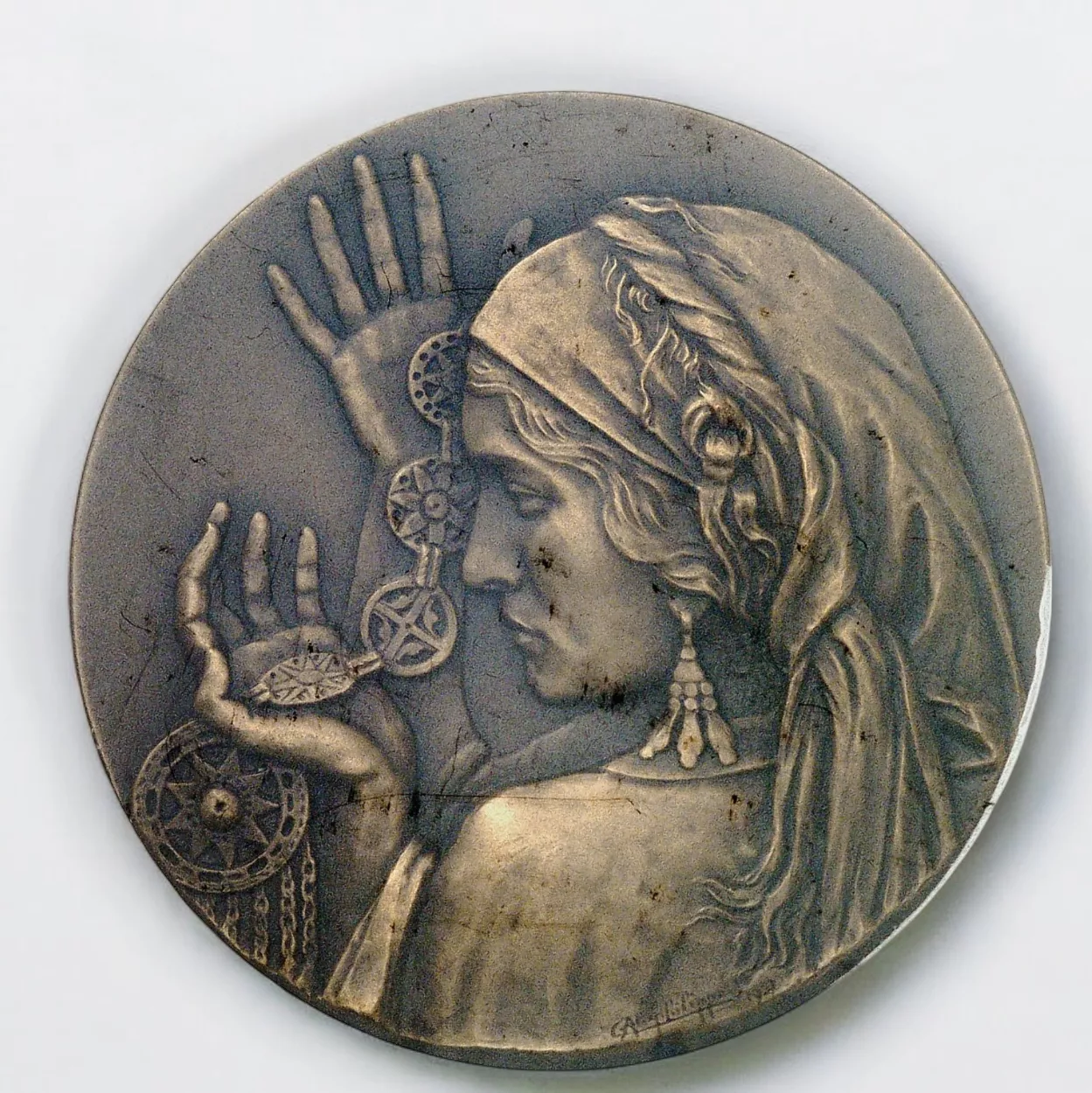
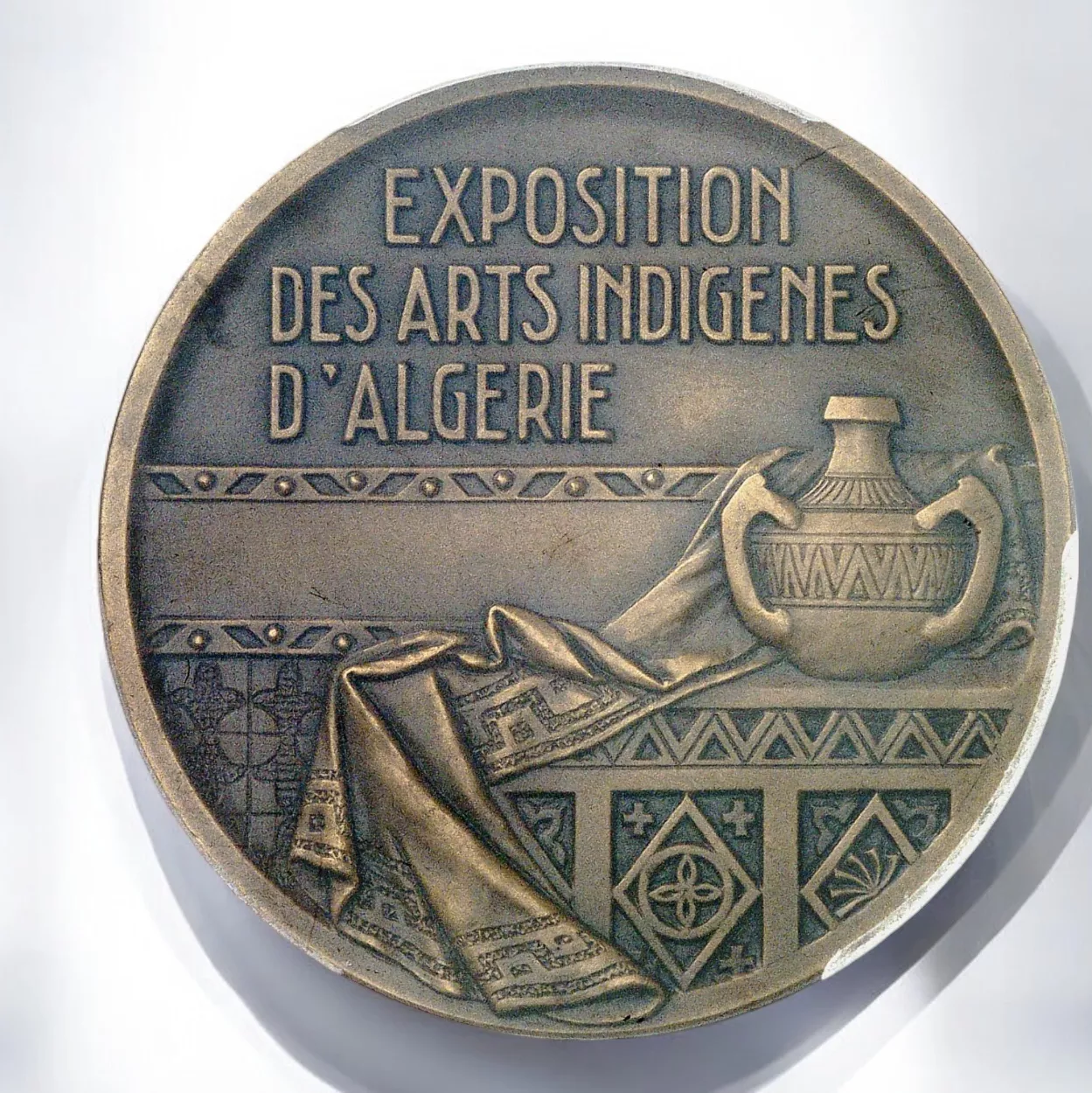
Camille Alaphilippe's imprint on his period
Camille Alaphilippe was a well-known and sought-after artist during his lifetime, selling works at high enough prices to make a living from the various commissions he received. Today, his quotation is stable on the auction market.
Although little known today by the general public, his works are very successful on the art market, his statues being prized by many collectors.
Recognizing the signature of the artist
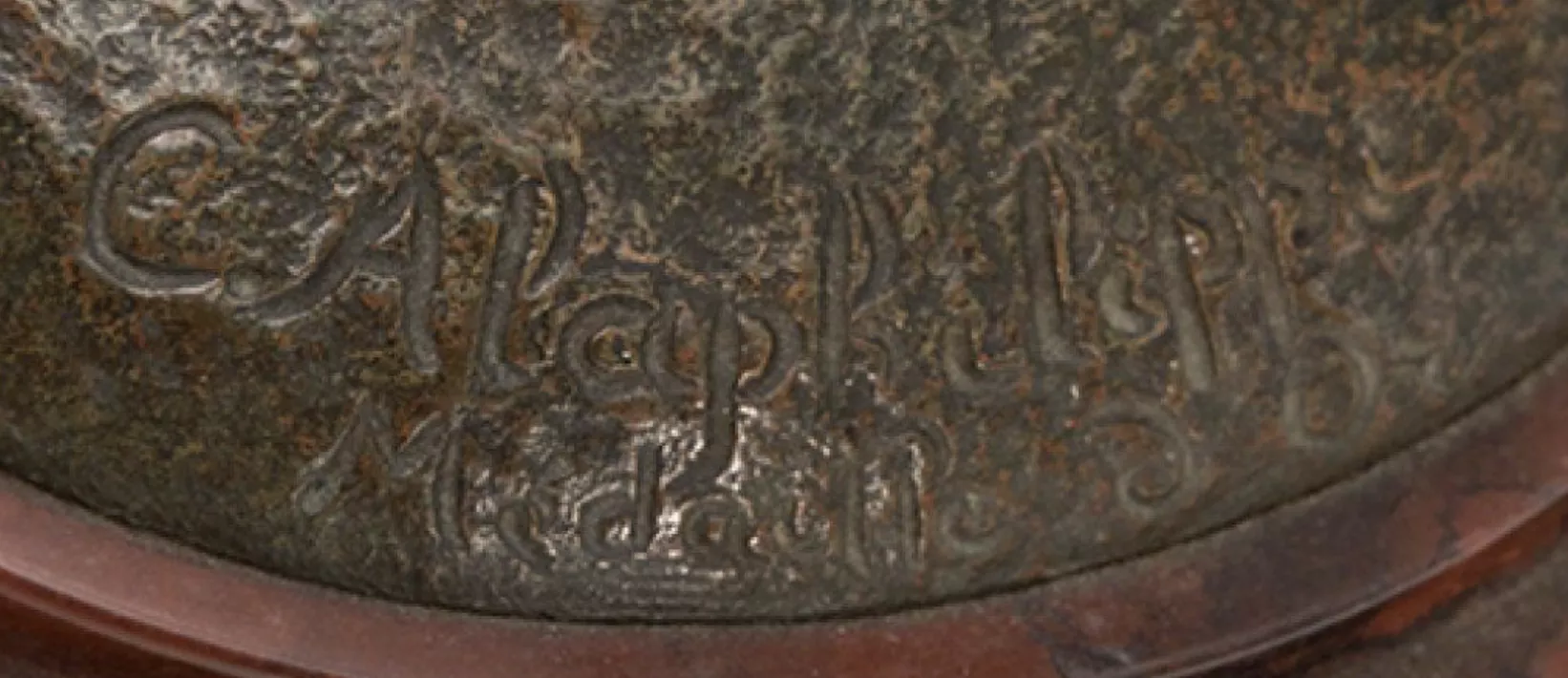
Camille Alaphilippe signs his works in cursive script, often with his surname. Expertise remains essential to authenticate your property.
Knowing the value of a work
If you happen to own a work by Camille Alaphilippe, don't hesitate to request a free appraisal via our form on our website.
A member of our team of experts and chartered auctioneers will contact you promptly to provide you with an estimate of the value of your work, as well as ad hoc information about it.
If you are considering selling your work, you will also be accompanied by our specialists in order to benefit from alternatives for selling it at the best possible price.
.Estimate in less than 24h
Discover in the same theme

Rating and value of Amedeo Modigliani's works
Amedeo Modigliani is a 20th-century painter, draughtsman and sculptor. The value of his works may surprise you!
Learn more >

Rating and value of works, drawings, paintings by Raphaël De...
Raphaël Delorme is an Art Deco painter who produced paintings and drawings sought after at auction. Estimated in 24h.
Learn more >

Rating and value of paintings by Jean Soubervie
Jean Sourbevie is a twentieth-century figurative painter who produced drawings, prints and oil on canvas listed at auction. Estimate in 24h
Learn more >
Other bronzes sold at auction

Estimated Between €2,000 and €4,000
Edouard Marcel SANDOZ (1881-1971) curly stingray, bronze print

Estimated Between €5,000 and €8,000
Agathon LEONARD (1841-1923), Dancer with scarf, bronze lamp, ed. Susse frères

Estimated Between €1,500 and €3,000
Renato CARVILLANI (1896-1986), seated woman, gilded bronze print

Estimated Between €800 and €1,500
Claude Victor BOELZ (b. 1937), gilt bronze and quartz centerpiece

Secure site, anonymity preserved

Auctioneer approved by the State

Free and certified estimates
Frequently asked questions
-
Who was Camille Alaphilippe, and what is his artistic background?Camille Alaphilippe (1874–1934) was a French sculptor and ceramicist of the Art Nouveau movement, born in Tours. Trained at the Académie des Beaux-Arts in Paris, he won the Prix de Rome in 1898 at the age of just 24. He then turned to Art Nouveau beginning in 1901, working primarily in bronze and creating animal subjects, dancers, and mythological figures characterized by clean forms and flowing lines.
-
What is the price range for Camille Alaphilippe's works on the market?Camille Alaphilippe’s works sell for between €100 and €3,500, depending on the type and medium. Bronzes, his specialty, generally sell for between €120 and €3,500, while works in other media, such as stoneware or marble, range from €100 to €640. This range reflects variations due to the size, condition, and reputation of each piece.
-
How can you authenticate a work by Camille Alaphilippe?Authentication involves a thorough appraisal conducted by our state-certified auctioneers and experts. You can request a free, no-obligation appraisal via our online form; an expert will contact you within 48 hours to examine your artwork and provide you with a detailed estimate as well as relevant information regarding its authenticity.
-
Is this the right time to sell a work by Camille Alaphilippe?Yes, this is a good time: Camille Alaphilippe’s value is currently on the rise in the art market, and his bronze sculptures are particularly sought after by collectors. Although he is not well known to the general public, his sculptures are among the most sought-after works on the auction market for this period and style.
-
How does the sales process work at Auctie's?Auctie's supports you every step of the way: you start with a free, no-obligation appraisal by our experts (response within 48 hours), and then, if you decide to sell, our specialists will guide you in choosing the best approach to ensure your artwork sells for the highest possible price at auction.
