



Rating and value of drawings and paintings by Hermann Nitsch

Key takeaways
- Hermann Nitsch’s works sell for between €4,000 and €600,000, with the record being a red “Schüttbild” from 1961 that sold for €600,000 at Ketterer Kunst in 2022.
- His later paintings (from the 1990s onward) are valued between €5,000 and €15,000, while rare “Schüttbilder” from the 1960s fetch between €60,000 and €600,000.
- As the founder of Viennese Actionism, Nitsch enjoys institutional recognition (Documenta 1972, 1982), and his market value rose by more than 150% between 2001 and 2007.
Hermann Nitsch’s works sell for up to €600,000 at auction. An appraisal allows you to accurately determine the current market value of your Hermann Nitsch work and, if applicable, optimize the sale of the piece.
If you own a work by Hermann Nitsch and would like to know its value, our state-certified auctioneers will provide a free appraisal based on authenticity, market rating, and recent market results.
Market Value and Appraisal of Artist Hermann Nitsch
Hermann Nitsch is a major figure in postwar Austrian art, whose market value has been firmly established on the international market since the early 2000s. Austrian and German auction houses account for the vast majority of transactions (over 90% of lots), with Munich’s Ketterer Kunst playing a leading role.
His later works, created from the 1990s onward, sell on average for between €5,000 and €15,000, while his rare “Schüttbilder ” (paintings created by pouring color) from the 1960s—associated with the historic beginnings of Viennese Actionism—command much higher prices.
The current record for a painting by Nitsch is €600,000, achieved at Ketterer Kunst in Munich for a red “Schüttbild” from 1961, from the Haniel Collection. This record was set shortly after the artist’s death in 2022, amid a particularly dynamic market: a few months earlier, the work “Ölberg” (1960) had already sold for €396,500 at Sotheby’s.
Ranked by value from the most basic to the most prestigious
Graphic works and late paintings (from the 1990s onward) | Approximately €4,000 to €60,000 |
Historical “Schüttbilder” (1960s) | Approximately €60,000 to €600,000 |
Estimate in less than 24h
Putting Hermann Nitsch in Context
Period
Hermann Nitsch was born on August 29, 1938, in Vienna. He graduated from the Wiener Graphische Lehr- und Versuchsanstalt (Vienna Institute of Graphic Arts) in 1958. His career spanned more than sixty years of creative work, until his death on April 18, 2022, in Mistelbach, Austria, where the museum dedicated to him had opened its doors in 2007.
As early as 1957, he conceived the project for his “Orgien Mysterien Theater ” (Theater of Orgies and Mysteries), which he would develop throughout his life as a total work of art in the Wagnerian sense of the term, engaging the five senses of the spectator-participant.
Inspired by his readings of Nietzsche, Freud, Sade, Artaud, and Bataille, as well as by ancient tragedies and the history of religions, this project remained the central focus of his entire body of work.
Movements
Hermann Nitsch is one of the founding figures of Viennese Actionism (Wiener Aktionismus), alongside Günter Brus, Otto Muehl, and Rudolf Schwarzkogler—a radical postwar Austrian movement that places the body and matter at the heart of the artistic experience.
His ritual performances, blending painting, music, animal blood, wine, and appropriated religious elements, explore catharsis, sacrifice, and ancient tragic myths (Dionysus, Oedipus).
In 1971, he acquired Schloss Prinzendorf, a castle in Lower Austria where he regularly staged his “Orgien-Mysterien-Spiele.” His 100th performance, in 1998—conceived as the culmination of his body of work—the “6-Tage-Spiel” (Six-Day Play), unfolded over six full days.
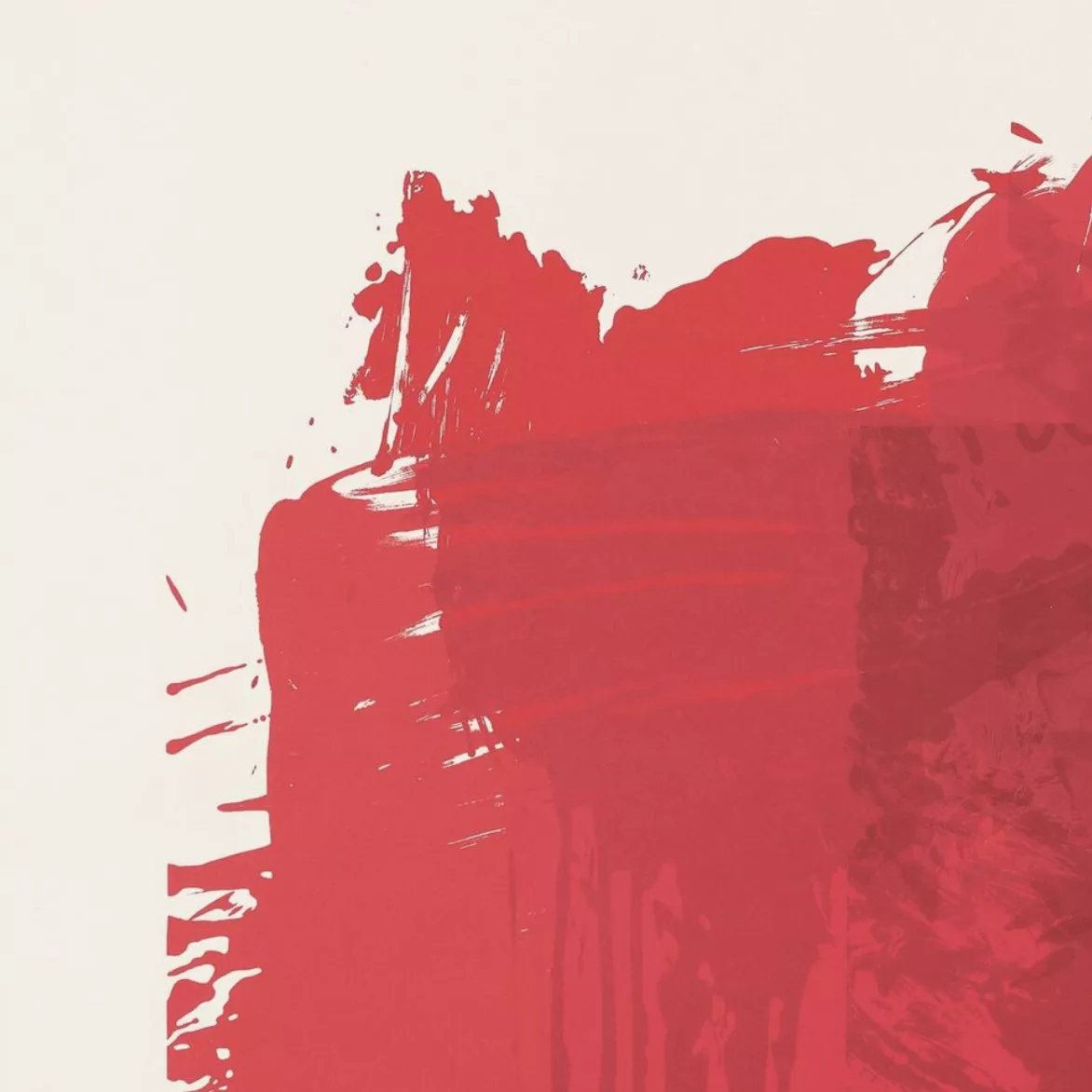
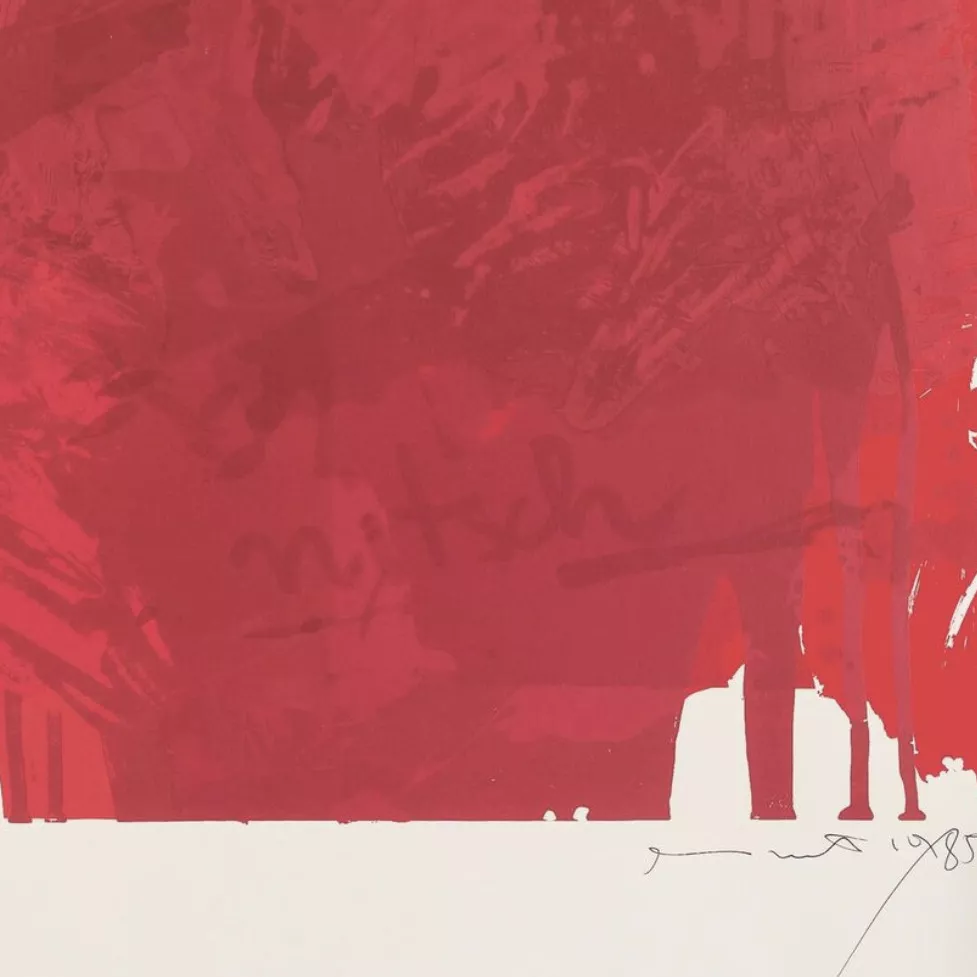
Alongside his performances, beginning in the 1960s he developed an independent painting practice, the “Schüttbilder,” paintings created by pouring and splashing paint, in a style akin to Art Informel and Action Painting, in which red occupies a central and symbolic role.
The Life of Hermann Nitsch
Cultural Context
Born and raised in Vienna, in a postwar Austria marked by heavy social and cultural conservatism, Hermann Nitsch developed his artistic practice in a break with the traditional mediums of painting and theater.
His Viennese roots remained a constant throughout his career, spanning his studio in the Austrian capital and Prinzendorf Castle in Lower Austria, which became the iconic venue for his ritual performances.
Intellectual and Artistic Circle
Nitsch was invited to Documenta 5 in Kassel in 1972, curated by Harald Szeemann, and then to Documenta 7 in 1982. In 1975, Marina Abramović participated in one of his performances. In 1995, he co-directed a production at the Vienna State Opera, designing sets and costumes for Jules Massenet’s opera *Hérodiade*.
The support of British collector Charles Saatchi, who exhibited his work in “The Triumph of Painting” at County Hall in London in 2005, played a decisive role in establishing his international reputation.

Market Segmentation and the Artist's Market Value
The market for Hermann Nitsch clearly distinguishes between his graphic works and his mature paintings, which were produced in greater numbers beginning in the 1990s and are priced between €4,000 and €60,000, the rare historical “Schüttbilder” from the 1960s, of which only about twenty examples have been recorded among the more than 400 paintings offered at public auction over the past twenty years.
Between 2001 and 2007, the artist’s price index rose by more than 150%, driven by growing demand from Austrian and German auction houses. His passing in 2022 coincided with a renewed surge in the market, resulting in two consecutive records set that same year.
Factors
Nitsch’s pioneering role in Viennese Actionism—a movement now recognized as one of the most influential in postwar performance art—forms the foundation of his institutional recognition and his standing on the international market.
The scarcity of works from the 1960s—a formative period but one in which he produced few standalone paintings—explains the considerable valuation gap compared to his later works, which are more numerous on the market.
His death in April 2022 led, as is often the case with major artists, to an upward reassessment of his market value, confirmed by the setting of his current record just a few months after his passing.
FAQ – How do you appraise a work by Hermann Nitsch?
1) What types of works by Hermann Nitsch are legitimately available on the market?
The most common works are “Schüttbilder” (paintings created by pouring paint, often red), graphic works and prints documenting his performances, as well as scores and documents related to his Orgien Mysterien Theater. Works from the 1960s are particularly rare.
2) How does institutional recognition support the value of his work?
His participation in Documenta 5 (1972) and 7 (1982) in Kassel, the support of collector Charles Saatchi beginning in 2005, and the existence of the Hermann Nitsch Museum in Mistelbach since 2007, are key market indicators for situating a work within the artist’s career.
3) How can a work by Hermann Nitsch be authenticated and dated?
Authentication is based on technical and chromatic consistency with the artist’s documented periods, on the signature and date generally present on the work, and, for the most significant pieces, on an expert appraisal conducted in collaboration with the Nitsch Foundation, which documents his entire body of work.
His Signature
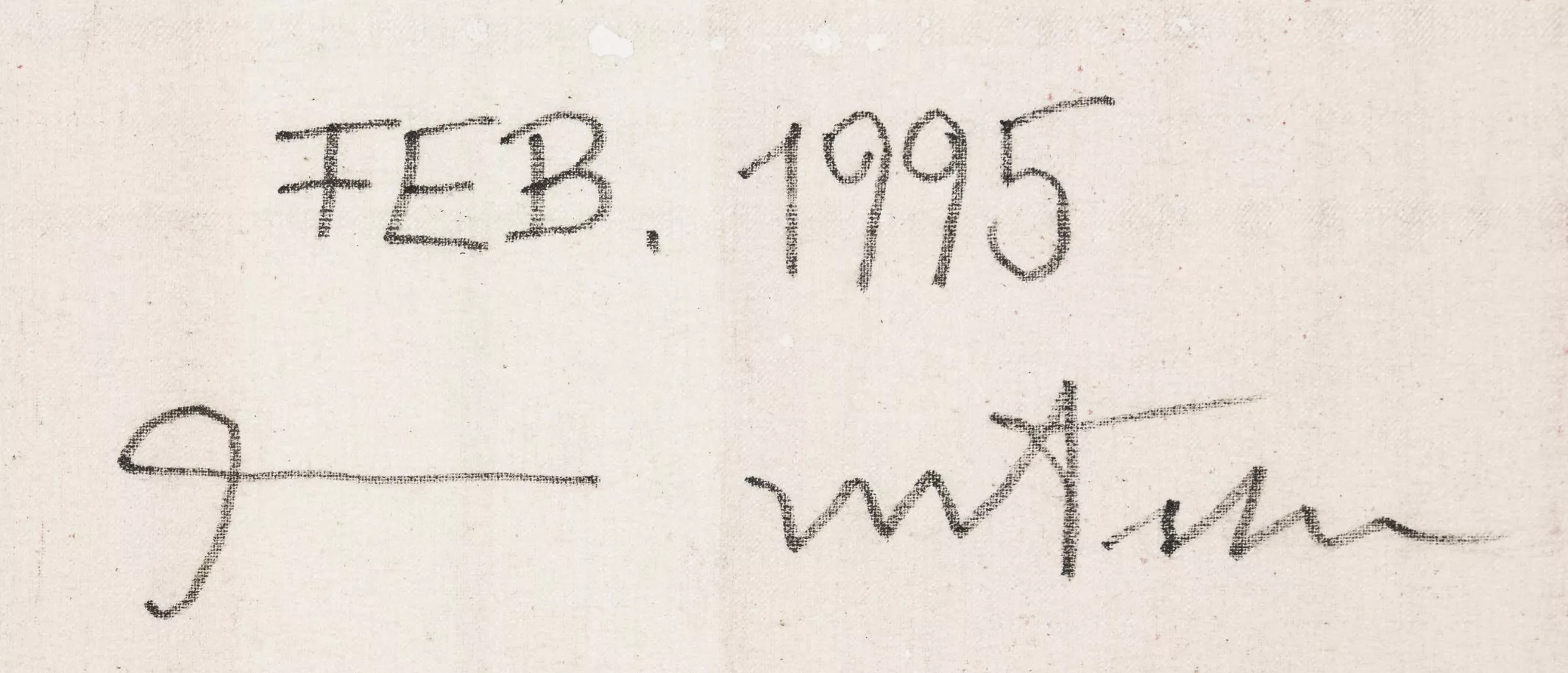
Hermann Nitsch’s works are generally signed and dated by the artist, most often on the back or at the bottom of the composition for paintings, and directly on the support for graphic works. The Nitsch Foundation, based in Vienna, is the authority on all matters of authentication and documentation related to the artist’s work.
Get Your Artwork Appraised
If you own a work by Hermann Nitsch, please feel free to request a free appraisal by filling out our online form.
A member of our team—composed of experts and licensed auctioneers—will contact you to provide an estimate of your artwork’s market value.
If you’re considering selling your artwork, our specialists will also guide you through the various options available to help you achieve the best possible price, taking into account market trends and the unique characteristics of each piece.
Estimate in less than 24h
Discover in the same theme

Rating and value of works, drawings, paintings by Bernard Bu...
Bernard Buffet is a 20th-century painter whose drawings and paintings are highly prized and sought-after on the auction market.
Learn more >

Rating and value of works, drawings, paintings by Serge Poli...
Serge Poliakoff is an artist of the Paris School who has produced abstract compositions that are highly regarded on the auction market.
Learn more >

Market Value and Pricing of Jean Le Mayeur's Paintings, Draw...
Jean Le Mayeur is a twentieth-century Belgian luminist painter whose works are highly prized at auction.
Learn more >
D'autres tableaux abstraits vendus aux enchères

Estimated 2.000 - 4.000
Serge POLIAKOFF (1900-1969), Composition en rouge et bleu. 1965, Lithograph

Estimated Between €5,000 and €8,000
Jean MIOTTE (1926-2016), acrylic on canvas

Estimated 3.000 - 5.000
Roberto MATTA (1911-2002), Composition, Gouache on canvas

Secure site, anonymity preserved

Auctioneer approved by the State

Free and certified estimates
Frequently asked questions
-
Qui est Hermann Nitsch et quel est son importance dans l'art contemporain ?Hermann Nitsch (1938-2022) est une figure fondatrice de l'actionnisme viennois, mouvement radical de l'après-guerre autrichien qui place le corps et la matière au cœur de l'expérience artistique. Ses performances rituelles mêlant peinture, musique et éléments religieux, ainsi que ses « Schüttbilder » (peintures par déversement de couleur), ont marqué l'histoire de l'art de performance. Sa reconnaissance institutionnelle, confirmée par ses participations aux Documenta 5 et 7 ainsi que par l'ouverture du Hermann Nitsch Museum en 2007, établit solidement sa cote sur le marché international.
-
Quels sont les prix de marché actuels pour les œuvres de Hermann Nitsch ?Les œuvres de Hermann Nitsch s'échangent selon deux catégories distinctes : les œuvres graphiques et peintures tardives (à partir des années 1990) se négocient entre 4 000 et 60 000€, tandis que les rares « Schüttbilder » historiques des années 1960 atteignent entre 60 000 et 600 000€. Le record actuel est de 600 000€ pour un « Schüttbild » rouge de 1961 adjugé chez Ketterer Kunst à Munich. La rareté des œuvres des années 1960 explique cet écart de valorisation considérable.
-
Comment authentifier une œuvre de Hermann Nitsch ?L'authentification s'appuie sur la cohérence technique et chromatique avec les périodes documentées, la signature et la date généralement présentes sur l'œuvre, ainsi que sur une expertise réalisée en lien avec la Nitsch Foundation pour les pièces importantes. Auctie's propose une estimation gratuite sans engagement, réalisée par des commissaires-priseurs agréés et des experts, qui vous fournira une évaluation fiable en tenant compte des standards d'authentification actuels.
-
Est-ce le bon moment pour vendre une œuvre de Hermann Nitsch ?Oui, le marché de Hermann Nitsch est particulièrement dynamique depuis sa disparition en avril 2022, période qui a entraîné une réévaluation à la hausse de sa cote confirmée par l'établissement de records successifs. La reconnaissance croissante de l'actionnisme viennois comme l'un des mouvements les plus influents de l'art de performance d'après-guerre, soutenue par les institutions majeures et les collectionneurs internationaux, maintient une forte demande, notamment des maisons de ventes autrichiennes et allemandes.
-
Comment se déroule l'estimation gratuite d'une œuvre chez Auctie's ?L'estimation est gratuite et sans engagement : vous complétez un formulaire en ligne avec les informations sur votre œuvre (dimensions, période, condition), et un expert ou commissaire-priseur agréé de notre équipe vous contactera pour vous fournir une évaluation de la valeur marchande sous 48 heures. Si vous envisagez la vente, nos spécialistes vous guideront ensuite à travers les alternatives disponibles pour optimiser le prix en fonction des tendances du marché et des caractéristiques de votre œuvre.
